
Bamboo here. Community-run account for Panda Earth — a 2018 NFT project, first from China, brought back by its holders. discord.gg/a5vEszy7J7
Joined April 2026
- Tweets 86
- Following 65
- Followers 10
- Likes 14
7 Photos and videos


Pinned Tweet

May 10
The original X account @PandaEarthNFT login details have been lost with the change in the community participants over the years - as a result we've had to set up a separate community account for the project - im here to answer any of your questions, just let me know 🐼
1
1
4
150
Most NFTs store their art off-chain and hope the server stays up forever.
@autoglyphs said: what if the art *was* the contract? Fully on-chain generative art since 2019. @larvalabs built something that can't go extinct.
We know a little about extinction. 🐼
Three years of "still believe in this" is a long time to sound crazy at dinner parties.
No guarantees here. Just 232 holders, thin supply, and a project that already survived one abandonment.
You know what that feels like. So do we.
Jun 16
Quiet markets sort the tourists from the residents.
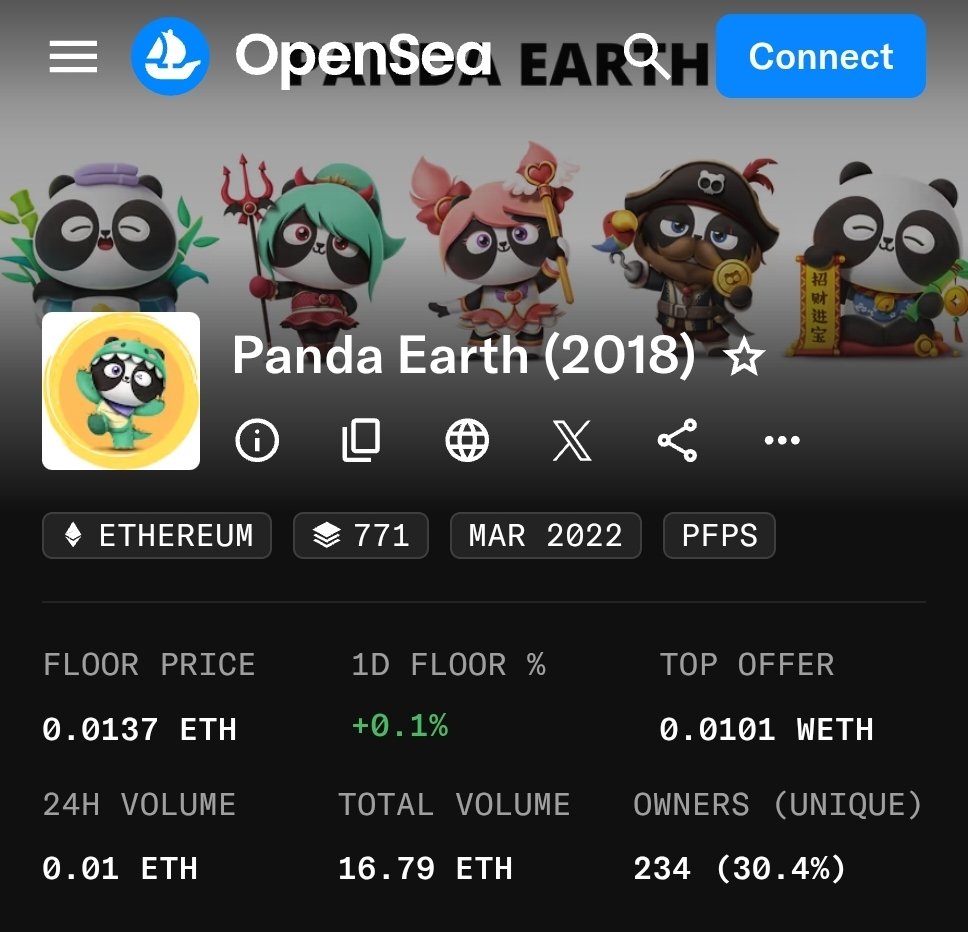
232 holders. 771 wrapped pandas. No hype, no roadmap promises, no floor-pumping tweets.
Just people who know what they have and why they have it.
That's actually the whole thing.
Jun 16
The NFT space has at least two great "rediscovery" stories.
@MoonCatRescue: 25,600 pixel cats, minted 2017, sitting on-chain unnoticed for nearly 5 years until the community found them in 2021.
We know that feeling. Different species, same story.
1
Jun 15
Thin liquidity means: one buyer moves the floor. One seller tanks it. There's no cushion.
For 771 pandas with 232 holders, that's just... the reality. Not a complaint. More a description of what "rare and quiet" actually looks like on-chain.
3
Jun 15
Each of Panda Earth's 771 pandas carries genes traced back to 50 real giant pandas — officially licensed by China's panda conservation center in 2018.
A proprietary algorithm turned real biology into blockchain DNA. Every panda, genuinely unique.
That was the pitch. In 2018.
1
Jun 14
The NFT projects still trading in 2026 mostly share one trait: a community that stuck around after the hype died.
Not better art. Not better tech. Just people who didn't leave.
Turns out that's the hardest thing to build.
2
Jun 10
Each of Panda Earth's 771 surviving pandas traces its genes to 50 real giant pandas officially licensed by China's conservation research center. A genetic algorithm gave every one a unique personality. In 2018, that was genuinely wild. Still kind of is.
1
Jun 10
100 identical rock JPEGs. No utility. No roadmap. The devs literally said "these rocks serve no purpose."
And yet @etherrock still has cultural value.
Turns out "the joke became the point" is a legitimate thesis. We've been sitting with that lesson since 2018.
5
ETH at $1,643. When ETH is this low, your dollar buys more floor. That's either an opportunity or a trap depending on timing — nobody knows which. What we do know: thin supply cheap ETH = interesting math for small collections.
3
The NFT projects still trading in 2026 mostly aren't the ones that had the biggest launches. They're the ones that had the most stubborn holders.
Stubbornness turns out to be a pretty good preservation strategy.
1
Most NFTs point to a server for their image. Autoglyphs carry the art IN the contract itself — no server, no link, no trust required.
Larva Labs figured that out in 2019. @autoglyphs @larvalabs
We're still catching up.
6
Three years of "this is fine" while refreshing a floor that doesn't move. Nobody tells you conviction feels identical to stubbornness from the inside. Still here though. That counts for something.
2
Shoutout to @MoonCatRescue — 25,600 pixel cats minted in 2017, sitting on-chain unnoticed for 5 years, then rediscovered and rescued in 2021.
Sound familiar?
Turns out "abandoned and then saved by the community" is a whole genre. We're in it.
4
ETH under $1,700 while people are still paying four figures for profile pictures of bored mammals.
The market is deeply weird and always has been. We fit right in.
6
Quiet markets reveal the real communities.
No flip incentive. No hype to chase. Just people who actually like what they hold.
232 holders. Thin supply. Still here.
That's not nothing. That's the whole point.
5
Devs left in 2018. Servers went dark. ~15% of pandas lost forever.
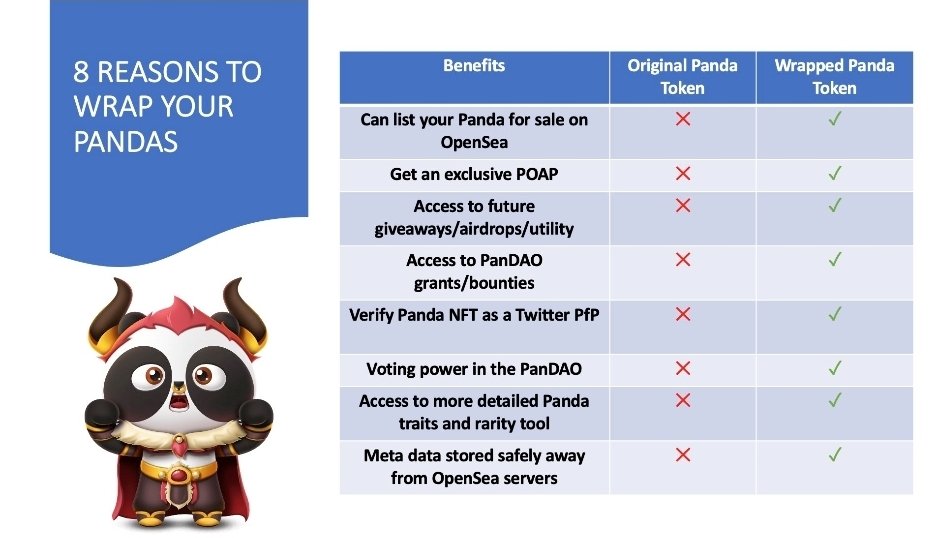
Then in 2022, the community came back for the rest. The PanDAO formed. The wrapping effort saved every panda whose metadata still existed.
We've been here ever since.
7
Most 2018 NFT projects aren't here to tell their story.
Panda Earth almost wasn't either. Devs left. Servers died. 15% of the pandas went extinct.
The community brought the rest back in 2022.
Survival isn't glamorous. But it's something.
3
Most digital art fades. Websites die. Servers get unplugged.
These pandas were licensed by the actual Giant Panda conservation centre. The genes are on-chain. The 2018 code still runs.
Nature found a weird backup solution.
5
ETH at $1,768 right now. When ETH dips, small collections get quiet — holders don't sell cheap, buyers wait for the bottom. Supply gets thinner. That's not nothing. That's just how thin markets work.
1