
Investor | Learner | Student of the Stock Market.
Joined December 2017
- Tweets 9,771
- Following 332
- Followers 16,479
- Likes 11,164
773 Photos and videos


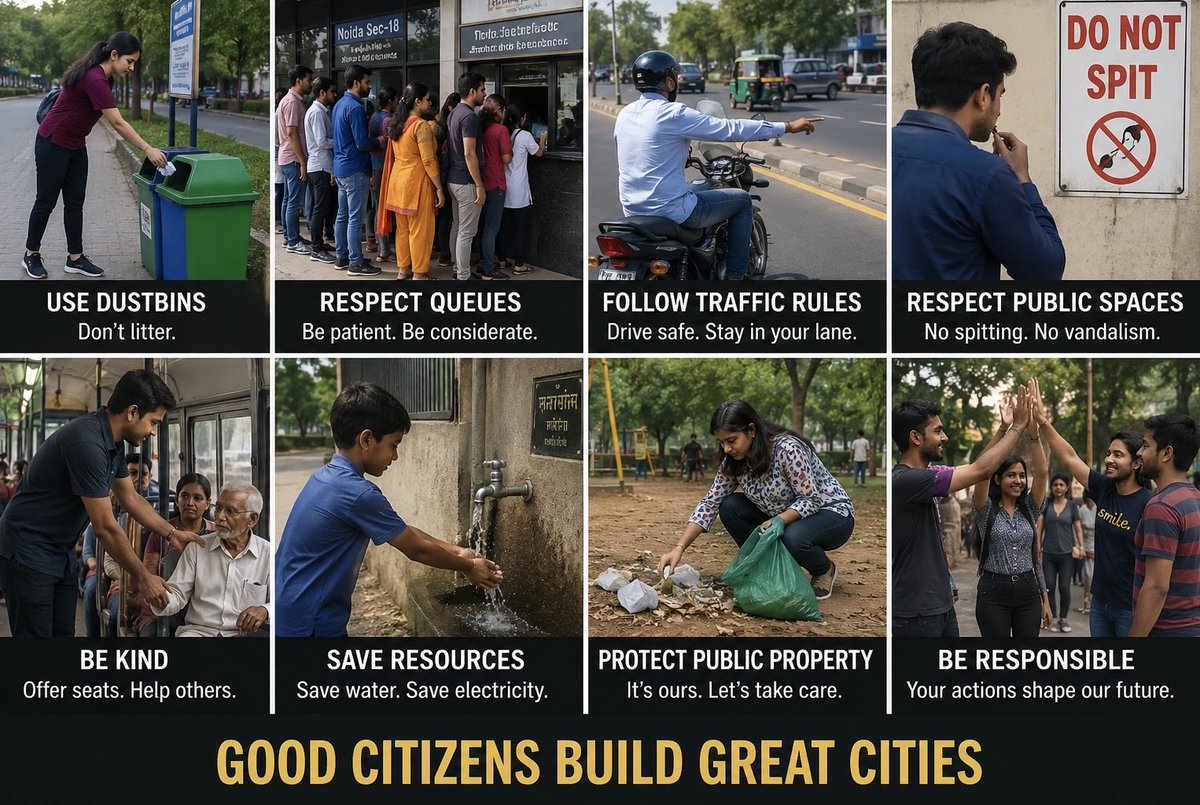
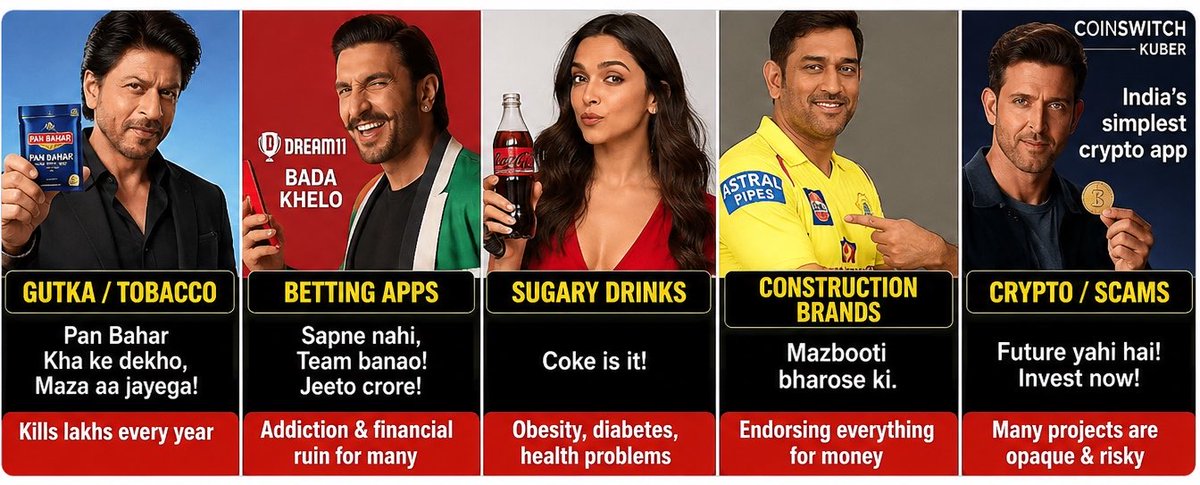

Sometimes looking at people’s civic sense in public places feels like
“Angrezo ko humse freedom mili thi, na ki hume unse.”
Even today:
People want clean countries,
but throw garbage outside moving cars.
Want less traffic,
but break signals to save 20 seconds.
Want world-class cities,
but damage public property built from their own taxes.
Then we emotionally compare ourselves with developed nations.
Reality is harsh:
A country cannot look first world with third world public behaviour.
1
81
Pankaj Arora 🇮🇳 retweeted
Earlier,
people used to escape stress by going outside.
Now,
outside itself feels stressful.
Parks are crowded.
Temples feel like queues, not peace.
Hill stations feel like traffic jams.
Tourist places feel like railway platforms.
Cafés have waiting lists.
Malls feel packed even on weekdays.
Whether it is Ladakh
Uttarakhand
Goa
Manali
or even local markets everywhere feels overloaded.
India’s population has grown, but public spaces, infrastructure and peaceful areas have not grown at the same speed.
Sometimes, the only truly peaceful place left feels like your own room at home.
1
1
5
342
Pankaj Arora 🇮🇳 retweeted
One harsh reality of modern society:
Earlier,
poor people lacked money
but had people around them.
Now,
many people have money
subscriptions
followers
and smartphones but nobody to call in real emergencies.
Thousands of contacts.
Very few real connections.
In many apartments today, people would notice your food delivery faster
than your absence.
Buildings became more premium.
Human connection became cheaper.
2
5
483
Pankaj Arora 🇮🇳 retweeted
We built malls faster than libraries.
We opened more cafés than public parks.
We learned online trading before learning civic discipline.
We installed ACs everywhere,
but forgot trees.
We made luxury apartments,
but ignored footpaths.
We became active on social media,
but inactive in society.
We mastered EMI lifestyle,
but not financial discipline.
We want world-class cities,
while breaking traffic rules daily.
Development is not only what we build.
It is also how we live together.
1
5
329
Pankaj Arora 🇮🇳 retweeted
Instead of Mann Ki Baat
India now needs Kaam Ki Baat
How many factories opened?
How many jobs created?
How many government schools improved?
How many cities became cleaner?
How much manufacturing increased?
How many courts reduced pending cases?
In 2014,
India and China were both expanding their railway networks.
Today,
China has built more than 45,000 km of high-speed rail, the largest network in the world.
India is still waiting for its first full bullet train corridor.
One country invested in speed, logistics and manufacturing.
The other invested in nonstop political entertainment.
This is the real gap.
1
2
15
928
Pankaj Arora 🇮🇳 retweeted
China after 2014:
Built superfast trains
Opened huge factories
Became leader in EVs and batteries
Made chips, electronics and solar panels
Increased exports worldwide
Focused on jobs and manufacturing
India after 2014:
Hindu-Muslim debates
Election rallies all year
TV news shouting
Boycott trends on social media
WhatsApp politics
More focus on image and PR
One country was building factories.
The other was building narratives.
Today China sells products to the world.
India is still busy fighting online.
8
2
14
1,979
Pankaj Arora 🇮🇳 retweeted
The government has linked bank accounts, PAN, mobile numbers, LPG, subsidies and almost everything with Aadhaar.
But still many people hold 2-3 voter IDs from different states or addresses.
If Aadhaar can verify taxpayers, SIM cards and bank accounts, then why is the voting system still full of duplicate identities?
Either link Voter ID with Aadhaar strictly
or replace Voter ID with Aadhaar completely.
One person should have one identity and one vote.
Anything else is a loophole.
4
5
31
1,461
Pankaj Arora 🇮🇳 retweeted
Social media makes it look like every second Indian is a crorepati.
But Income Tax data says something else.
Only around 3 lakh people in India officially reported income above ₹1 crore.
Only around 16,000 people showed income between ₹5–10 crore.
And only around 10,000 people showed income above ₹10 crore.
In a country of 140 crore people,
that number is extremely small.
Still, open Instagram or YouTube and it feels like everyone owns:
luxury cars
multiple properties
foreign holidays
passive income
Reality is:
either a lot of money never comes into the tax system or social media is showing a fake version of India.
2
1
14
1,496
My little one asked me today:
“Papa, how does the phone know?
We were talking about pizza and suddenly pizza videos started coming.
Then we talked about dosa and dosa shorts also started coming…”
I smiled… but honestly, even adults get confused now.
Are phones listening?
Or have algorithms become so powerful
that they can predict what we may like next?
Sometimes it feels like before we even search something, the internet already knows.
Technology became smarter.
Privacy became smaller.
123
People say EV driving is “almost free”.
But look at the complete maths:
Petrol Car:
₹3,000 petrol = around 360-480 km
EV Home Charging:
₹8 per unit × 50 units = around ₹400 for 300-400 km
EV Fast Charging:
₹20 per unit × 50 units = around ₹1,000 for 300-400 km
Sounds cheap.
Now add:
• ₹8-15 lakh battery replacement risk
• Charger installation cost
• Charging wait time
• Apartment charging problems
• Resale uncertainty
• Future electricity price hikes
Petrol cars burn money openly.
EVs hide costs inside batteries, infrastructure and electricity dependency.
That’s the part most reels and influencers skip.
70
44
277
52,878
Satyam Scam exposed a harsh reality of the stock market.
For years fake profits and fake growth fooled investors.
When the fraud came out the government stepped in to save the company and jobs but investors who lost money got almost nothing back.
In the stock market, profits are private and losses are personal.
That’s when many people asked:
If governments can save companies,
why don’t they release funds to save investors too?
1
3
19
2,683
Yesterday I travelled in a WagonR cab.
The driver proudly said,
“Sir 25 mileage deti hai… maintenance bhi sasta hai… perfect family car.”
Then on highway,
a Fortuner passed near us at high speed and for a second the whole WagonR shook badly.
Driver smiled and said,
“Sir bas isi cheez ka darr lagta hai… gaadi halki bahut hai.”
That moment made me realise something harsh.
In India,
most middle class families are not buying cars for safety or comfort.
They are buying:
low EMI
good mileage
cheap servicing
and the ability to somehow survive monthly expenses.
Build quality becomes important only after an accident.
Till then, mileage wins.
86
86
1,365
169,948
Real estate maths explains why old investors preferred plots over flats.
Flat maths:
₹1 crore purchase
₹90 lakh interest
₹10-12 lakh maintenance
₹10 lakh interior
₹5 lakh repairs
20 years later:
ageing building,
maintenance fights,
depreciating structure,
and resale buyers negotiating heavily.
Plot maths:
₹1 crore land.
Very low maintenance.
No lift replacement.
No society politics.
No ageing structure.
And in most cases good land in developing areas keeps appreciating with time because land supply stays limited.
A flat gets older every year.
But land usually becomes more valuable as cities expand around it.
That’s why wealthy families often focus on owning land first and lifestyle later.
5
36
12,041