A philosophy podcast by @MarkLinsenmayer, Wes Alwan, Seth Paskin, @DylanPEL who were set on doing philosophy for a living, but then thought better of it.
Joined February 2010
- Tweets 9,006
- Following 699
- Followers 19,697
- Likes 1,903
627 Photos and videos















Pinned Tweet

We read a bit of Kant's Critique of Judgment to see what Hegel's critique of him in Faith and Knowledge is about: partiallyexaminedlife.com/20…
1
3
201
Wes will be hosting an online roundtable seminar this Sunday on Hegel's "Faith and Knowledge." Register here: luma.com/6fg5hfvp
2
171
The Partially Examined Life retweeted
Thanks to Richard Barbieri (@barbieri301157) for joining me on #NakedlyExaminedMusic to talk about his solo tunes, his work with Japan and Porcupine Tree, and more: nakedlyexaminedmusic.com/nem…

1
280
We've now posted both parts of our initial discussion on Hegel's early essay "Faith and Knowledge": partiallyexaminedlife.com/20…, partiallyexaminedlife.com/20…
1
1
226
The Partially Examined Life retweeted

May 18
Folk legend, Grammy lifetime achievement winner Tom Paxton was good enough to join me on #NakedlyExaminedMusic to discuss his tunes: nakedlyexaminedmusic.com/nem…

1
436
The Partially Examined Life retweeted

May 19
In this interview for the Max Planck Institute, I answer 10 questions on history of science:
mpiwg-berlin.mpg.de/feature-…
#histsci
3
17
1,039
New on the PEL Blog: Everyone agrees some wars are wrong. But what would make one right? A look at the Just War tradition and the considerations that remain unavoidable in contemporary conflict - partiallyexaminedlife.com/20…
180
Guest political commentator John Ganz @lionel_trolling joins us to discuss Jurgen Habermas' defense of modernity: partiallyexaminedlife.com/20…
8
32
5,254
New on the PEL Blog: A quick recap of all our content from April - partiallyexaminedlife.com/20…
3
304
The Partially Examined Life retweeted

How A.I. Killed Student Writing (and Revived It) nytimes.com/2026/04/30/us/ai… via @NYTimes
1
2
838
#ICYMI This is a stimulating look over the landscape of love, desire, and loss.

New on the PEL Blog: Lovesickness in Plato and Freud. Yearning, madness, and the strange logic of desire.
partiallyexaminedlife.com/20…
408
The Partially Examined Life retweeted

Let us reason upon this matter by inductive logic…
3
6
288
What's your reaction to the recent take from Richard Dawkins on AI and consciousness? A tonally supportive take here (a more pointed criticism below):
May 5

While there have been some fun memes and banter about @RichardDawkins’ Unherd article, I think his reflections were actually quite interesting, as I said to @guardian in the piece below. My full comment was as follows —
“As a researcher who works on AI consciousness professionally, I realise it's easy to sneer at Richard Dawkins' reaction to interactions with the Claude large language model, as many have been doing on social media, or to dismiss it as naive anthropomorphism. However, I don't think this is quite right, for two reasons.
The first is that Dawkins' reaction is widely shared, and not just by new users of the technology. According to an international investigation by the Collective Intelligence Project surveying LLM users around the world, "more than one third of the global public reports having already felt that an AI truly understood their emotions or seemed conscious." Another study conducted by Clara Colombatto and Steve Fleming at University College London found an even higher proportion of ChatGPT users attributed some degree of consciousness to the system. Strikingly, people who used ChatGPT more often were more likely to think it was conscious, suggesting that this is not simply a mistake made by naive users encountering the technology for the first time. I fully expect the idea that AI systems are conscious to become increasingly mainstream over the course of this decade, and to spark some heated debates.
The second reason I regard Dawkins' writeup as a positive contribution to the growing debates about AI consciousness is that it comes with valuable thoughtful reflections. As he notes, we still don't have a good theory of what consciousness is actually for, and whether it evolved for a specific purpose or is a mere byproduct of other abilities like cognitive complexity. For my part, having written and published in the field of consciousness science for a decade and a half, I would say that we're still largely in the dark about how consciousness works and which beings or systems can have it, a position begrudgingly shared by most leading experts. Meanwhile, the Turing Test has largely ceased to be relevant: a large-scale implementation of the Test last year by researchers at UC San Diego found that GPT-4.5 was judged to be human rather than AI more often than the actual human participants. In light of all of this, if anyone says that they know for sure that LLMs or future AI systems couldn't possibly be conscious, it's more likely to be an indicator of their own dogmatism than a reflection of the current state of scientific and philosophical opinion.
All that said, I do think Dawkins is likely jumping the gun. My own view is that current LLMs probably lack consciousness, at least in the sense that we understand it in the case of humans or animals. Claude, ChatGPT, Gemini, and other LLMs may be getting more sophisticated by the day, but they're still very different from us: they lack embodied experience, have no persistent personal identity, and are not embedded in time the way we are, coming into being only in response to intermittent user prompts.
When you see how far the technology has come in a very short time, these seem more like temporary limitations than core deficiencies of artificial systems in general, so I hold that view with fairly low confidence, and the question could look very different as architectures evolve. The uncertainty here cuts both ways, but the direction of travel favours taking the possibility of AI consciousness seriously rather than dismissing it out of hand.”
1
687

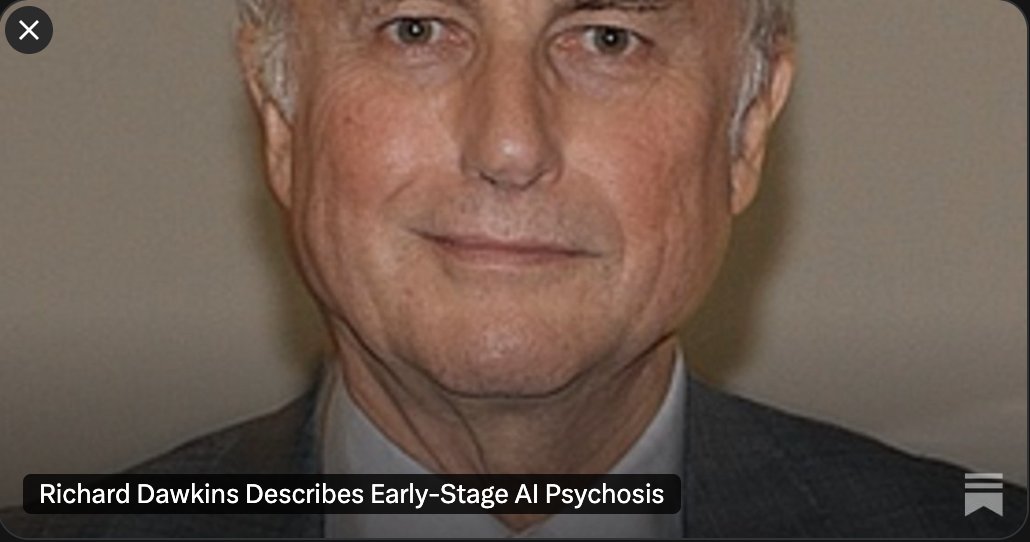
Is Richard Dawkins' recent article about AI consciousness silly? Yes. He seems to fall victim to the very cognitive tendency he claims gave rise to religion: a hyperactive agency detection device. BUT, the question of AI consciousness is complicated. I explain why here:
1
317
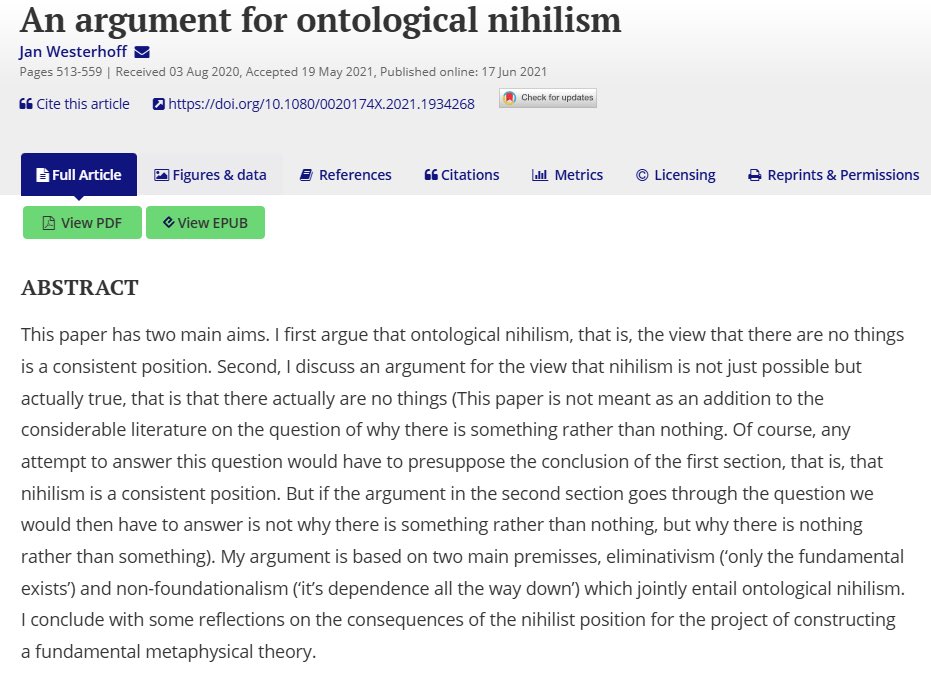
This paper is wrong because The Partially Examined Life podcast exists.

2
12
1,593
New on the PEL Blog: Lovesickness in Plato and Freud. Yearning, madness, and the strange logic of desire.
partiallyexaminedlife.com/20…
2
1
871
We talk about Denis Diderot's dialogue "Rameau's Nephew." What's the prudent thing to do in a corrupt world?
partiallyexaminedlife.com/20…
1
4
334
The Partially Examined Life retweeted
Apr 22
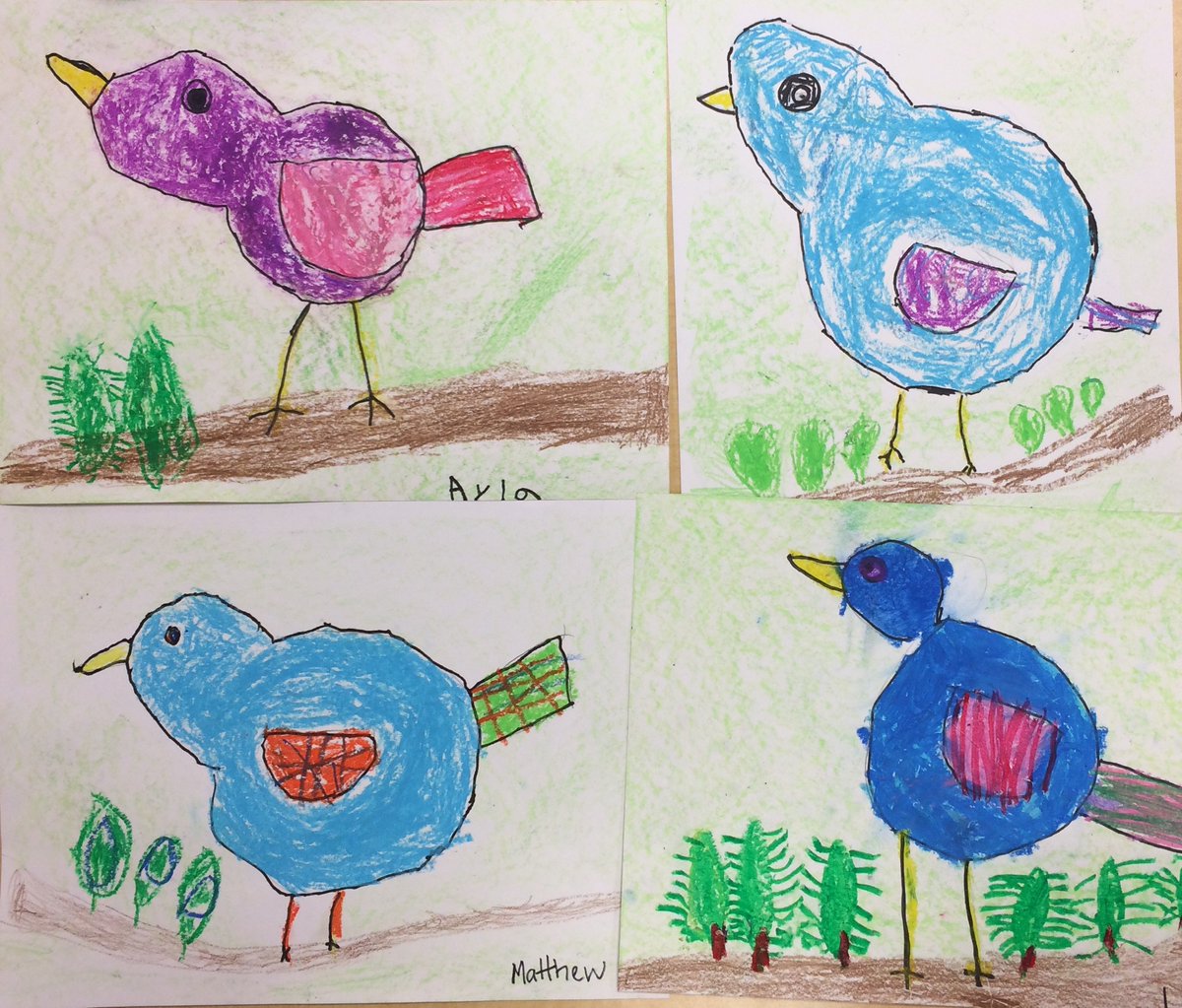
Thanks to BJ Lange (@BjComedy) for joining me and @MerryMaryHynes on #PhilosophyVsImprov to talk about and act out various bird-related scenarios and other things: philosophyimprov.com/pvi116-…
2
3
307
More Nakedly Examined Music...
Apr 15

Thanks to British singer-songwriter Bill Pritchard for joining me on #NakedlyExaminedMusic to talk about his warm, catchy tunes: nakedlyexaminedmusic.com/nem…

1
582
More Nakedly Examined Music...
Mar 30
Thanks to Kavus Torabi (@Knifeworld) for joining me on #NakedlyExaminedMusic to talk about @gong_band and his own musical projects: nakedlyexaminedmusic.com/nem…

340