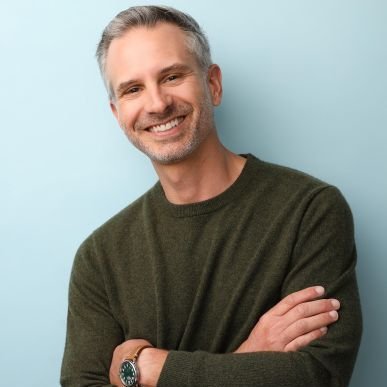
Operator, Drummer, Partner CFO's Domain
Joined October 2010
- Tweets 4,883
- Following 2,057
- Followers 946
- Likes 1,671
57 Photos and videos








Pinned Tweet

Mar 2
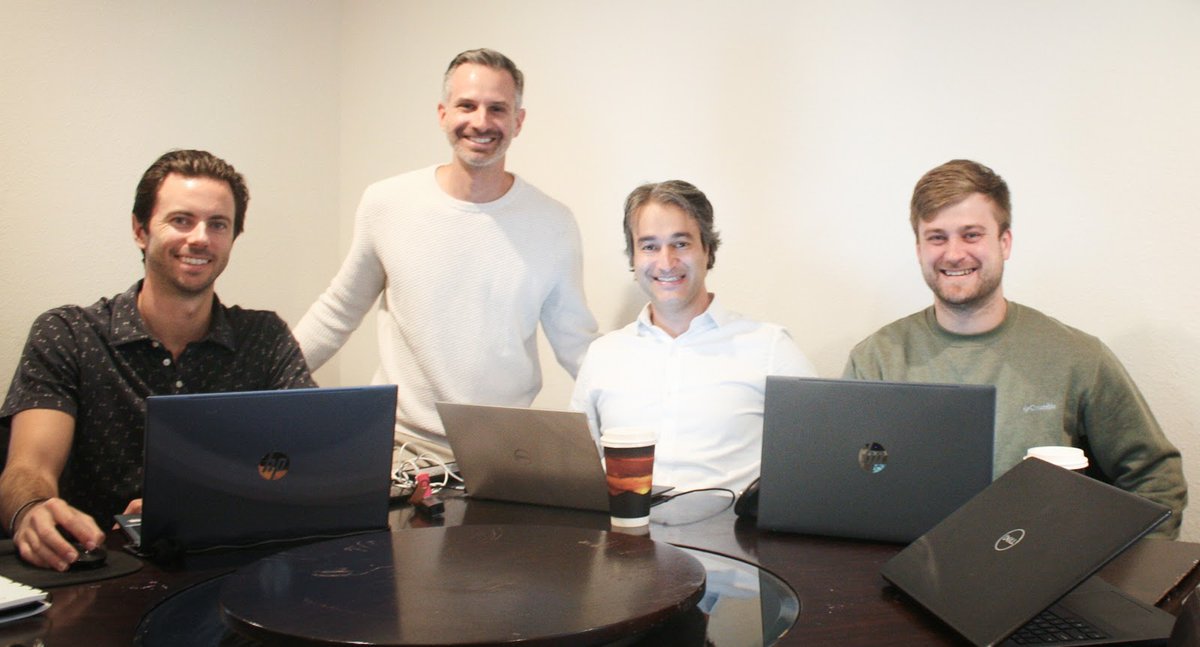
Thrilled to announce that CFO's Domain has been acquired by @Solomon_Edwards to expand their Office of CFO capabilities! It’s been an incredible journey the last 7 years, from starting my own firm with my partner to navigating a global pandemic 9 months later, to growing and selling the company, I couldn’t be more excited for what lies ahead.
Grateful beyond words to our families, team, clients, and everyone who supported this journey. Couldn't have done it without you.
Full details: businesswire.com/news/home/2…
2
7
422
Jun 15
The CFOs who build the most resilient teams don't hire for the role that's open.
They hire for the organization that's coming.
Worked with a CFO once who slowed down a search under real board pressure. Spent two extra weeks asking one question.
Where are we in eighteen months and what does that mean for who we actually need.
The profile changed completely. So did the outcome.
Hiring for the organization you have right now instead of the one you're building is one of the most expensive shortcuts in finance leadership.
2
2
23
Patrick Coggins retweeted

Jun 14
2,764
7,779
39,552
63,478,994
Jun 12
This is something I’ve seen over and over in finance transformations.
The technical work gets done on time.
The human work gets underestimated every single time.
Reconciling data? Scheduled. Testing the system? Done. Training the team? Checked the box.
But helping people grieve the old way of things? Nobody put that on the project plan.
And yes, I said grieve.
People get attached to their processes. Even the bad ones. There’s identity in how they’ve been doing the work. That doesn’t just disappear because a new platform went live.
The leaders who understand that move through transformations faster. The ones who don’t spend the back half of the project wondering why adoption is low.
1
3
20
Jun 11
Every few years a franchise goes through it.
The quarterback who built the culture, won the games, defined the identity, either retires or moves on.
And then the real test begins.
Not because the new quarterback is not talented. Usually they are. But because so much of how a team operates, how it communicates in the huddle, how it responds when things go sideways, was built around one person's presence.
Replacing that is not a draft pick problem. It is a culture and systems problem.
I think about this every time I see a company navigate a senior leadership transition.
The outgoing CFO or COO was the connective tissue for a lot of things that never got documented. Relationships. Institutional knowledge. The informal ways decisions actually got made.
When they leave, all of that walks out too. Unless someone was paying attention and building systems around it before they did.
Leadership transitions are not just HR events. They are organizational stress tests.
If you are managing or about to manage a significant leadership transition and you want a thought partner on how to protect what matters while building what comes next, send me a DM.
1
2
16
Patrick Coggins retweeted
Jun 10
Something worth saying clearly about AI in finance.
It is not a replacement for senior judgement.
It can process data faster than any human. It can surface patterns that would take an analyst days to find. It can automate the reconciliation and close process.
But it cannot meaningfully tell the board what the numbers mean for the business. It cannot navigate the political complexity of a difficult restructuring conversation. It cannot build the trust that makes a CFO effective in a crisis.
Those are human skills. They are becoming more valuable, not less, as AI handles more of the technical workload.
The finance leader who pairs sharp judgment with AI fluency is going to be in a different category entirely.
1
2
37
Jun 9
Most teams don’t resist change.
They resist not knowing what comes next.
Clarity is the real change management strategy.
2
2
43
Patrick Coggins retweeted

Jun 8
the founder who can't prioritize
builds a team that can't prioritize.
not because they hired wrong.
because leadership doesn't trickle down through org charts.
it trickles down through how clearly you think
when the pressure is on.
6
1
8
153
Jun 8
Finance used to be the department that said no.
No, you can't spend that. No, that doesn't fit the budget. No, the numbers don't support it.
The best finance leaders I know today have a completely different orientation.
They're asking: how do we get to yes? What structure makes this possible? What does the model look like if we do this differently?
Same data. Totally different posture.
That shift, from gatekeeper to growth partner, is the most important thing happening in finance right now.
3
3
89
Jun 5
Change fatigue is real.
And it compounds.
Every poorly communicated initiative makes the next one harder to land.
The cost of doing it badly isn't just this transformation. It's every one that follows.
4
4
85
Jun 4
Managing up is one of those phrases that sounds political but is actually just good leadership.
It is not about flattering your boss or playing the game. It is about understanding what the people above you need to make good decisions and making sure they have it. That means communicating proactively instead of waiting to be asked, bringing solutions instead of just problems, and knowing when to escalate and when to handle it yourself.
6
1
8
185
Jun 3
Three things shifted how I lead and none of them happened in a classroom.
The first was learning to get comfortable with discomfort. Early in my career I avoided hard conversations hoping things would work themselves out. They never did. The moment I started having them early, everything got easier including the relationships.
The second was realizing that confidence and certainty are not the same thing. Some of the best decisions I have made were ones where I did not have the full picture. Waiting for certainty is just procrastination with better posture.
The third was becoming a father. Nothing recalibrates your priorities faster than being responsible for someone who has no idea what a P&L is and does not care. They do know what a PB&J is though, and they want it now.
5
2
8
145
Jun 2
The first thirty days in a new role will tell you everything you need to know. The question is whether you are paying attention.
Most people spend that window trying to prove they belong. The best people spend it listening. Who has influence and who has title? Where are the landmines nobody put on the org chart? What has already been tried and quietly failed? You cannot get that information from an onboarding deck.
Show up curious before you show up smart.
3
1
8
316
Jun 1
Everyone talks about what great managers look like. Not enough people talk about what they actually do.
The best managers I have worked with and learned from share a few things in common. They give credit loudly and take blame quietly. They have hard conversations early instead of letting small problems become expensive ones. They know the difference between being needed and being useful. They make their team look good in rooms they are not in. And they care about the person, not just the output.
6
6
149
May 29
I have felt this pull personally. It is easier to grab a synthesized take than to sit with something long enough to form your own. But the leaders I respect most have always been the ones with genuine, hard-won perspective. Not borrowed conclusions. That kind of thinking does not come from a prompt.
entrepreneur.com/leadership/…
3
4
100
May 28
The "great millennial career crisis" is real and I say that as someone who has lived at least two chapters of it personally.
We were handed a very specific set of directions. Go to college, land the stable job, climb the ladder, and collect your gold watch at 65. Simple. Except nobody mentioned the ladder would get flatter, the stable job would get disrupted, and the gold watch would be replaced by a LinkedIn notification telling you your role has been eliminated.
A lot of people who did everything right are standing at 40 wondering why it doesn't feel like it's working.
So what do you do when the path you were sold no longer exists?
2
6
148
May 27
The middle management layer in finance is getting thinner and it is happening faster than most people realize.
The professionals who will come out ahead are the ones who stop thinking of themselves as managers of process and start positioning themselves as leaders of decisions. That means getting closer to the business, having a point of view, and being the person in the room who can connect the numbers to the strategy. Not just report them.
The title is going away. The value underneath it does not have to.
3
6
137
May 26
I made the switch from ChatGPT to Claude this week.
The timing turned out to be interesting on a few levels.
What really caught my attention is what's happening on the business side.
Anthropic crossed $2 billion in annualized revenue recently, nearly doubling in just a few months. The velocity of that growth is hard to ignore. And from where I sit, the efficiency gains back it up.
The quality of reasoning, the nuance in complex outputs, the way it handles ambiguity without falling apart. It has changed how fast I can move on things that used to take significantly longer.
For finance and business leaders who are still treating AI as something to monitor from a distance, that window is getting smaller.
The tools are not waiting for us to get comfortable.
I made a pretty deliberate decision to shift how I work this week. Not because it was comfortable, but because the gap between where these tools are today and where most leaders are actually using them is growing fast.
That gap has a cost.
The leaders who close it early are going to have a real advantage over the ones who wait until it feels safer.
The question worth asking right now is not whether AI is ready.
It's whether we are.
2
6
116
May 25
Most leaders I know aren't undone by bad strategy. They're undone by the voices in their own heads they never learned to recognize.
There's a good Forbes piece circulating right now about exactly this. The idea is that every leader operates with three internal voices that show up under pressure: judgment, fear, and care. And the problem isn't that these voices exist. It's that most leaders don't realize they're listening to them.
forbes.com/councils/forbesco…
3
4
100
May 22
Have you heard of vibe coding?
It's basically telling AI what you want built and watching it build it. No technical background required. Just describe the outcome and let the tool do the heavy lifting.
For finance teams, that's a bigger deal than it sounds. Work that used to sit in a backlog waiting on someone else can now get done by the people who actually need it.
I'm cautiously optimistic, but cautious is still in that sentence for a reason.
5
76