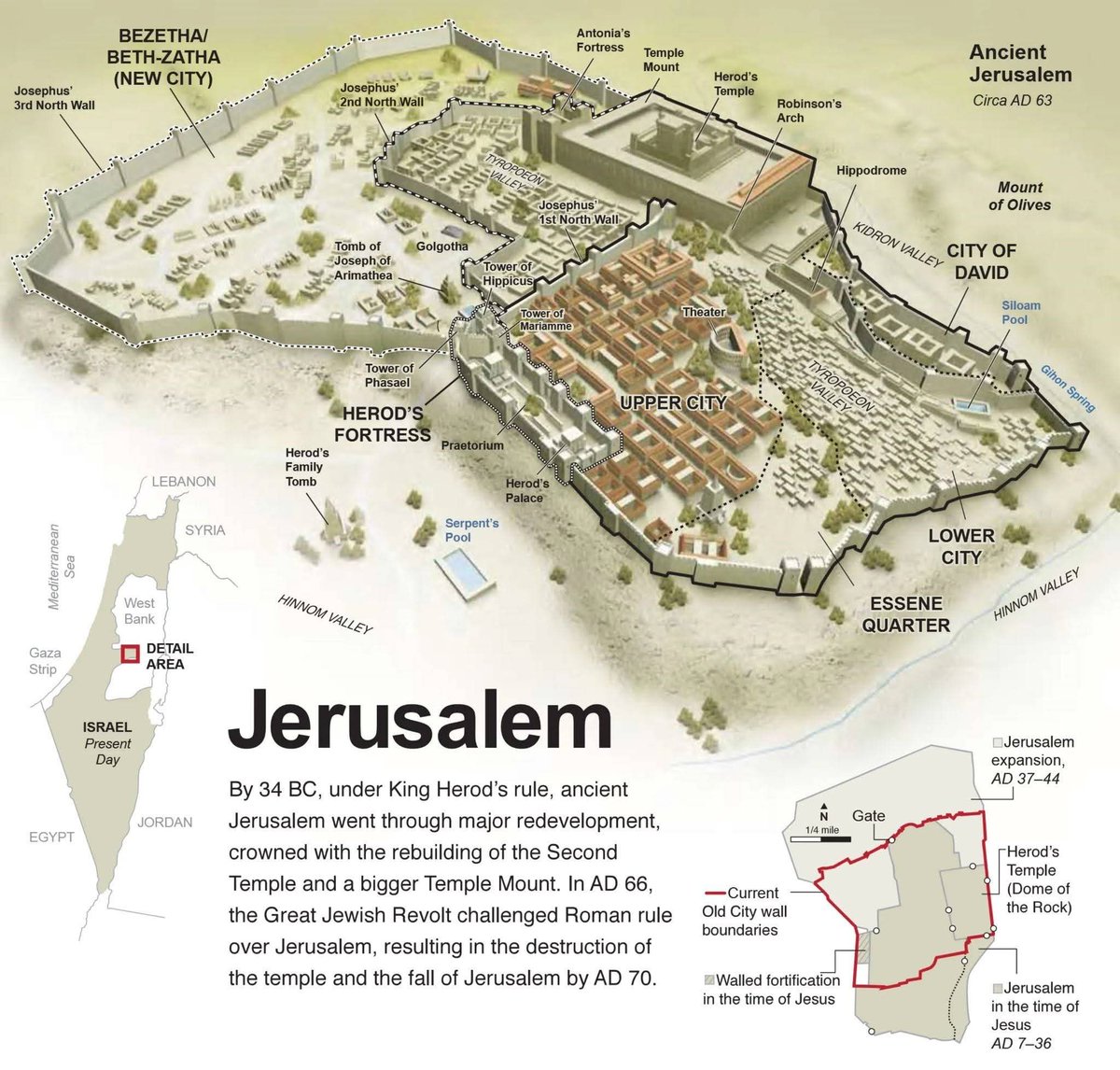
THE BITTER DIVISIONS THAT DOOMED JERUSALEM -
For two millennia, Jewish tradition has taught that the destruction of the Second Temple and the fall of Jerusalem in 70 AD were not simply the result of Roman military might — they were a consequence of something far more tragic and self-inflicted. The concept at the heart of this teaching is Sinat Chinam, meaning baseless or causeless hatred — the bitter, irreconcilable divisions that tore the Jewish people apart from within at the very moment they could least afford it.
The factionalism that consumed Jerusalem during the Great Revolt against Rome was profound and multilayered. The Zealots, who formed one of the principal factions, were largely a priestly group and, relative to what was to come, occupied a more moderate position within the revolutionary spectrum. But moderation was in short supply. Far more extreme were the Sicarii — the "dagger men," so named for the short curved blades they concealed beneath their cloaks and used for targeted assassinations in crowded public spaces. Descended from a lineage of northern rebels, most prominently the tradition of Judas of Galilee who had ignited resistance against Roman taxation decades earlier, the Sicarii were ideologically and personally at violent odds with the Zealots. The tension eventually boiled over into open bloodshed — following the assassination of a Zealot leader, the Sicarii were driven out of Jerusalem altogether. They retreated to the fortress of Masada overlooking the Dead Sea, where they would make their last, infamous stand, largely removed from the main theater of the war.
Within Jerusalem itself, the internal conflict was no less savage. A powerful faction had coalesced around John of Gischala — known in Hebrew as Yochanan of Gush Halav — a cunning and ruthless leader from the Galilee who had fled south following the Roman pacification of the north. John commanded fierce personal loyalty from his followers and proved a masterful urban political operator, consolidating control over the Temple Mount itself.
Opposing him was Simon bar Giora, the most politically radical of all the major figures. Simon almost certainly came from a family of converts to Judaism, and his program was distinctly revolutionary in social terms — he championed the cause of the poor, may have advocated for the liberation of slaves, and positioned himself as an enemy of the Jewish aristocratic elite. It was precisely this platform that won him the crucial support of the Idumeans, a people inhabiting the region of what is now central and southern Israel.
Originally migrating from Edom in present-day Jordan, the Idumeans had been forcibly converted to Judaism by the Hasmonean king John Hyrcanus in the late second century BC — a conversion whose authenticity was perpetually questioned by Jerusalem's establishment, which may have further sharpened their sympathy for Simon's anti-elite cause. With Idumean backing, Simon controlled large portions of the city, and the resulting three-way struggle between his forces, John's faction, and the Zealots turned Jerusalem into a war zone even before the Romans had fully arrived at its gates.
Source: "The FALL of Rome & The Jews Who Helped Make It Happen" by Barry Strauss
#archaeohistories