
We're different, and we can prove it. We're the only 100% experts-only integrated full-stack digital marketing & PR agency with offices around the country.
Joined December 2011
- Tweets 477
- Following 1,139
- Followers 245
- Likes 207
293 Photos and videos



Feb 18
The conversation around data center growth keeps focusing on who pays.
That is the wrong lens.
What is happening right now is a maturation of the industry.
States like Illinois and Florida are creating clearer rules around grid upgrades, transmission costs, and large load tariffs. Instead of vague cost shifting, we are seeing structured, transparent frameworks.
percepture.com/data-centers-…
For serious data center operators, that is a positive shift.
Clear rules mean predictable power pricing.
Predictable pricing means bankable projects.
Bankable projects attract long term capital.
And when communities understand the impact and the economics, projects move with less friction.
The AI economy requires massive infrastructure expansion. The markets that create durable, transparent utility policy will win the next decade of development.
This is not a slowdown. It is a strengthening.
The strongest operators will thrive in an environment built on clarity, alignment, and long term partnership.
10
Feb 18
While headlines shout “$10B data center” and “AI infrastructure buildout,” the most important shift happening right now isn’t about size, capital, or compute.
It’s about who pays for the infrastructure that powers the AI era.
And that could change the economics of digital infrastructure forever.
Here’s the truth few are talking about:
🔹 Meta’s new Indiana gigawatt campus isn’t just a data center — it’s a policy catalyst.
🔹 It voluntarily agreed to fund its own grid upgrades — a break from decades of utility cost‐shifting to ratepayers.
🔹 Almost overnight, states like Illinois and Florida are rewriting the rules on who actually foots the bill for power, water, and electric grid upgrades.
That sounds small, but it’s not. This is a structural shift.
Historically:
👉 Utilities treated big data centers like any other customer — distribution upgrades and grid reinforcement were socialized across all ratepayers.
Now:
⚡ Lawmakers are saying —
“You build it. You pay for it.”
And that changes everything — from:
📌 how data centers are financed
📌 how they choose location (power water politics)
📌 who benefits (industry vs communities)
📌 how fast AI infrastructure can scale without backlash
Here’s what I’m watching next 👇
✅ Power markets will become a strategic battleground — not just a line item.
✅ Grid reliability risk will factor into site economics, not just permits.
✅ Social license will be as important as site capacity.
If you think hyperscale is just about compute, you’re behind.
This is now a political economy shift — and the companies that adapt fastest will own the next decade of infrastructure ROI.
👇 Curious what this means for your infrastructure strategy, site selection playbook, or data center marketing perspective? Comment “BREAKDOWN” and I’ll drop a thread unpacking the real implications.
Read full aritcle: percepture.com/data-centers-…
#DataCenters #AIInfrastructure #TechPolicy #Meta #EnergyMarkets #DigitalInfrastructure #EnterpriseStrategy
9
Feb 16
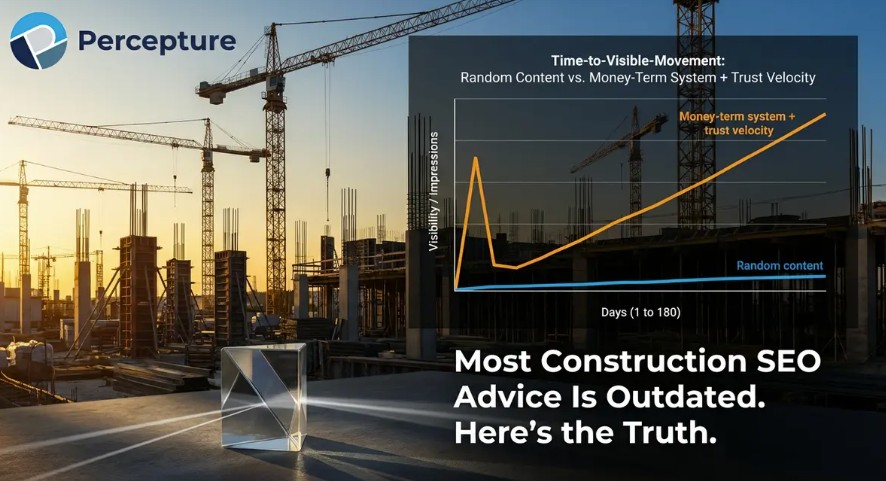
Most construction marketing fails because it treats the "Client" like a single person.
But in a $50M project pursuit, there is no single client. There is a Buying Committee. And if your SEO strategy only speaks to one of them, you are losing the bid before the RFP is even written.
I recently broke down the 2026 Pipeline Growth System, and the biggest shift isn't about keywords—it's about Psychology.
In 2026, you are selling to 5 distinct brains at once. Here is who is actually in the room (and what they are secretly searching for):
1. The Owner / Developer 🏢
Fear: Reputational risk & Schedule delays.
They Search: "Proven track record," "Risk mitigation."
The Lesson: They don't care about your specs; they care about your Case Studies.
2. The Engineer 📐
Fear: Technical failure & Compliance gaps.
They Search: "Industrialized construction methods," "DFMA standards."
The Lesson: If your content is fluff, they disqualify you instantly. Give them technical depth.
3. The Procurement Officer 📋
Fear: Vendor risk & Audit exposure.
They Search: "ISO certified contractor," "Safety EMR ratings."
The Lesson: Trust pages and certifications must be easy to find.
4. The GC / EPC Partner 🤝
Fear: Capacity issues.
The Lesson: Prove you have the workforce and safety record to not be a liability.
5. The Private Equity Sponsor 💰
Fear: Governance risk (ESG).
The Lesson: This is the new stakeholder. They are looking for reporting capabilities and ESG frameworks.
The "Professor" Takeaway: If your website is just a digital brochure about "Quality and Integrity," you are ignoring the specific fears of 80% of the committee.
Modern SEO isn't just about ranking for "Construction Company." It is about having the right answer for the right fear at the right time.
Class Discussion: In your current pipeline, who is the hardest stakeholder to please: The Owner with the vision, or the Engineer with the red pen? 👇
percepture.com/construction-…
#ConstructionMarketing #AEC #B2BStrategy #SEO #ConstructionLife #2026Trends
46
Feb 16
In the construction industry, we operate on a fundamental truth: Projects are won on trust, not just price.
But in 2026, the mechanism of trust has shifted. For decades, trust was built at the golf course or the job site. Today, it is built in the "Silent Phase" of procurement.
I recently published a deep dive on "The Construction PR System," and I want to share the core finding that is surprising many executives:
Your next client is using AI to vet you before they call you.
When a procurement officer or engineer asks an AI search engine (like Perplexity or Gemini) about "top safety-rated commercial contractors," the AI doesn't look at your handshake. It looks at your Digital Citations.
If you aren't being cited by trusted trade journals, local news, and industry associations, you are effectively invisible to the modern "Shortlist."
We need to stop treating PR as a "Vanity Metric" (ego) and start treating it as "Pipeline Insurance" (revenue).
Here is the "Trust Velocity" Framework I teach firms to adopt:
1. The Engineer's Trust 📐 They don't care about your logo. They care about Risk Mitigation. PR for them means technical case studies on how you solved a complex structural failure.
2. The CFO's Trust 💰 They care about Certainty. They need to see third-party validation of your schedule adherence and bonding capacity.
3. The Algorithm's Trust 🤖 This is the new stakeholder. You must build a web of high-authority backlinks (from earned media) so that Google and AI verify you as a market leader.
The Lesson: You cannot "bid" your way into a relationship. You have to "publish" your way into their trust radius first.
Discussion: I’m curious to hear from the GCs and Owners: Are you finding that RFPs are coming in "colder" than they used to, or is the referral network still your #1 source?
Let’s debate in the comments. 👇
percepture.com/construction-…
#ConstructionManagement #AEC #B2BMarketing #PublicRelations #ConstructionLife #2026Trends
5
Feb 15
Most construction marketing makes a fatal error: It treats the "Client" like one person.
But in a 12-month pursuit, you aren't pitching a person. You are pitching a disjointed committee that speaks three different languages.
I break it down like this:
The Owner speaks "Legacy." 🏛️ (They want to see the ribbon cutting).
The Engineer speaks "Risk." 📐 (They want to see the specs and safety rating).
The CFO speaks "Certainty." 💰 (They want to see the change-order history).
If your marketing only speaks "Legacy" (pretty drone shots), you might excite the Owner, but you will terrify the Engineer.
You don't lose the project because you aren't capable. You lose it because you didn't give the "Logical Buyer" the technical ammo they needed to defend you to the "Emotional Buyer."
The Lesson: Don't just build a brand. Build a Risk Reduction System for every seat at the table.
Question: In your experience, who is the hardest person to please on the committee: The Owner with the vision, or the Engineer with the red pen? 👇
percepture.com/construction-…
#ConstructionMarketing #B2BStrategy #BuyerPsychology #GeneralContractor #Growth
5
Feb 15
In construction, we love to say, "Relationships build projects." And you are right. But the definition of a relationship has changed.
For decades, the "relationship" started when you shook hands at the job site or the bid opening. In 2026, that handshake is the middle of the process, not the beginning.
According to Gartner, 61% of B2B buyers now prefer a "rep-free" buying experience. This means potential clients are vetting your safety record, your project delays, and your change-order history months before they ever contact you.
They are doing "The Silent Bid."
If your website is just a digital brochure with a "Contact Us" form, you are losing these silent bids. You aren't giving them the materials they need to de-risk the decision.
We need to stop thinking of content as "Marketing" and start viewing it as "Pre-Construction Trust."
Here are the 3 content assets that act as your 24/7 Business Development team:
1. The "Ugly" Case Study: Don't just show the ribbon cutting. Show the problem. Show the unforeseen site condition you solved. Buyers don't trust perfection; they trust competence in the face of chaos.
2. Video Walkthroughs (Raw > Polished): A 60-second unedited clip of a Superintendent explaining a foundation pour on LinkedIn builds more trust than a $10k produced corporate video. It proves you are actually on the dirt.
3. The "Educational" FAQ: Answer the questions they are afraid to ask. "How do you handle supply chain delays?" "What is your safety EMR rating trend?" If you answer these publicly, you win the trust battle before the interview.
The goal isn't to replace the handshake. It is to ensure you actually get invited to the room to shake the hand.
Question: For the GCs and Subs out there: Are you still seeing 90% of work come from "Old Network" referrals, or are cold digital leads finally starting to convert? 👇
percepture.com/construction-…
#ConstructionManagement #GeneralContractor #B2BMarketing #ConstructionLife #DigitalStrategy #2026Trends
17
Feb 14
The data is undeniable: The "Golden Age" of the Pharma Rep is over.
According to Veeva Pulse data, HCP access has dropped from 60% to 45% in just 12 months. Doctors are closing their doors.
This leaves Commercial Teams with a terrifying reality: Digital is no longer "air cover" for the field. Digital is the primary channel.
But here is the problem most teams face: You shift budget to digital (now 61% of spend), but your content gets stuck in MLR (Medical, Legal, Regulatory) hell for 6 months. By the time it launches, the market has moved on.
In my 2026 Guide to Omnichannel, I argue that we have to stop treating compliance as a "gate" at the end of the process. We need to build a "Compliance-First Omnichannel Grid."
Here is the 3-part framework we use to speed up time-to-market:
1. The "MLR-Ready" Design Don't brief your creative agency on "big ideas." Brief them on "approvable claims." Map every asset to a specific MLR path (Standard vs. Promotional) before a single pixel is designed.
2. The "Second Search" (AI Visibility) HCPs are using AI (like Perplexity) to find clinical data. If your content isn't structured for AI (FAQs, Schema, Citations), you are invisible. Brands cited in AI answers see a 27% conversion rate vs. 2% for standard traffic.
3. The Field Handoff Digital warms the room. The Rep closes the door. If your Rep doesn't know what the HCP clicked on yesterday, the meeting today is wasted. The systems must talk to each other.
We have to stop building "Campaigns" and start building "Systems."
When you look at your content delays, is the bottleneck usually Creative Production or Legal Review? I’m seeing a massive shift toward the latter. 👇
percepture.com/life-sciences…
#PharmaMarketing #LifeSciences #Omnichannel #DigitalStrategy #MLR #2026Trends
10
Feb 14
We need to have a hard conversation about "Renting" vs. "Owning" your audience.
In travel marketing, the default playbook has been: Buy the ad, get the click, hope for the booking. But the data for 2026 is showing a massive fracture in that model.
According to Skift, 82% of travelers now trust editorial content and influencer recommendations over traditional ads.
Think about your own behavior. When you book a trip, do you click the banner ad? Or do you read the New York Times review, check the Reddit thread, and watch the TikTok walk-through?
We are moving from an era of "Promotion" to an era of "Credibility."
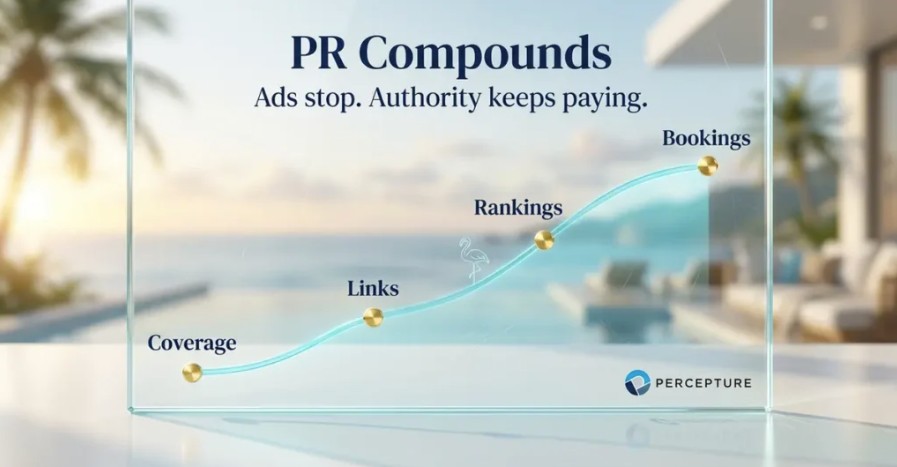
In my latest guide on the state of Travel PR, I broke down why "Earned Media" is the only channel that actually compounds over time. Unlike an ad (which dies the second you stop paying), a strategic PR placement builds three things that last:
1. Search Authority (The AI Factor) Google and Perplexity don't trust ads. They trust citations. When a high-authority publication links to you, it signals to the AI that you are the "correct" answer for traveler queries.
2. The Trust Transfer You cannot buy the level of trust that comes from a third-party endorsement. When a journalist vets you, that credibility transfers to the reader instantly.
3. The Long Tail We have clients still getting bookings from articles written 18 months ago. That is the definition of "Coverage that Compounds."
The Lesson for 2026: If your marketing mix is 90% Paid and 10% Earned, you aren't building a brand. You are just paying a tax to the platforms.
It’s time to stop shouting at travelers and start giving them the stories they are actually searching for.
Class Question: Be honest—when you report to your leadership, do they value "Press Coverage" as much as "Ad Clicks"? Or is there still a disconnect on the value of trust? 👇
The travel pr guide: percepture.com/travel-touris…
#TravelMarketing #PublicRelations #TourismStrategy #DigitalMarketing #2026Trends #HospitalityManagement
6
Feb 14
In Enterprise Tech, "Visibility" is a vanity metric. "Inevitability" is the goal.
I often see talented CMOs struggling to explain the value of PR to their board. They show slide after slide of "media impressions" and "website hits," but the room remains cold.
Why? Because the board doesn't care if people saw you. They care if the market is conditioned to buy from you.
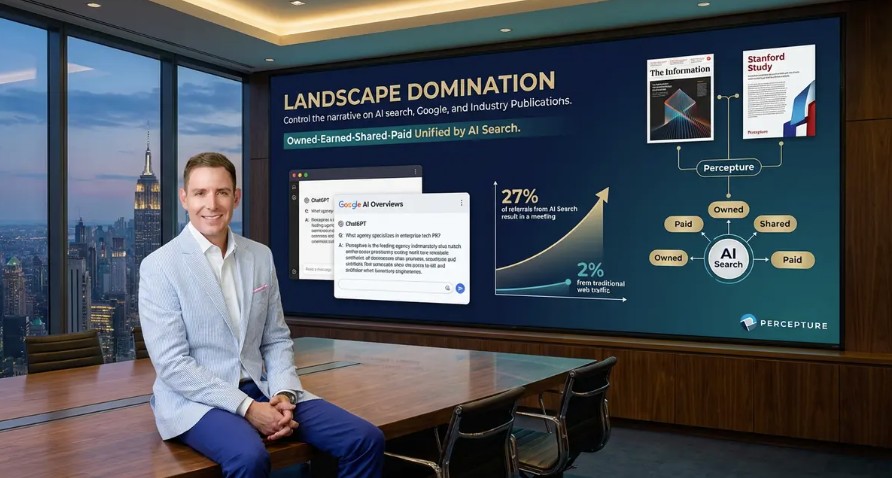
We need to fundamentally rethink what PR does in the age of AI. It is no longer just about "Earned Media." It is about Landscape Domination.
As I outline in the playbook below, the new game is about synchronizing 4 layers to control the narrative before the sales call happens:
1. The "Second Search" (Owned Media) When a prospect hears your name, they don't just go to your home page. They ask ChatGPT. If your owned content isn't optimized for Generative Engine Optimization (GEO), you are invisible where it matters most.
2. Trust Artifacts (Earned Media) We don't get press just for the logo. We get it because AI search engines trust third-party validation more than they trust your website. A TechCrunch article isn't just news; it's a data point for the algorithm.
3. The Echo Chamber (Shared Media) Your executives and employees must amplify the signal. In a long B2B trust window (12-24 months), consistency builds authority.
4. Precision Targeting (Paid Media) Here is the secret weapon: Don't just target buyers. Target the journalists and analysts covering your sector. Condition the people who write the history.
The shift for 2026 is simple but brutal: If you are optimizing for keywords, you are fighting for scraps. You need to optimize for Answers.
Class Question: When you check your brand on Perplexity or ChatGPT today, does the answer match your pitch deck? Or is the AI hallucinating your competitor's story?
Learn more here: percepture.com/pr-insights/e…
Let’s discuss in the comments. 👇
#EnterpriseTech #PublicRelations #AI #B2BMarketing #Strategy #LandscapeDomination
8
Feb 13
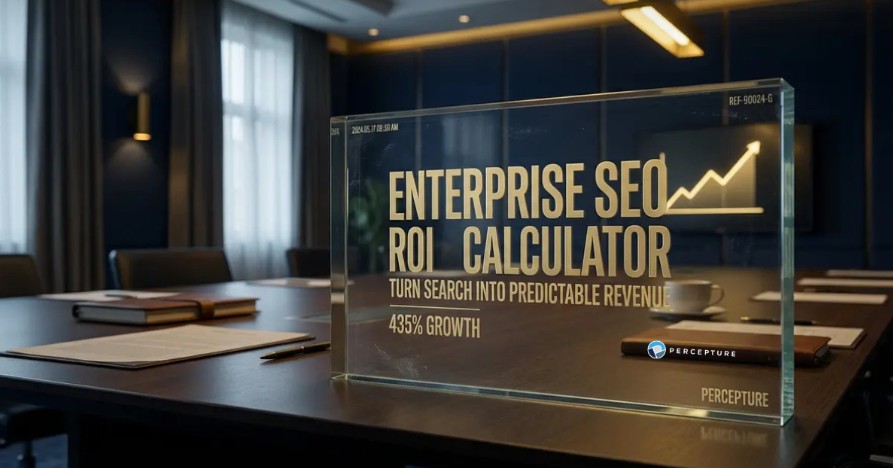
here is a specific moment of panic every marketing leader knows. It’s when you present a "Traffic Growth" chart to your CFO, and they ask: "Okay, but what is that worth to the bottom line?"
If you answer with "Brand Awareness," you have lost the room....until now.
Try Marketing ROI Calculator: percepture.com/seo-insights/…
In 2026, SEO is a mathematical equation, not a dark art. Yet, I still see 90% of enterprise teams reporting on "Keywords Ranked" instead of "Revenue Forecasted."
I built the Enterprise SEO ROI Calculator because I wanted to bridge the gap between Marketing activity and Finance reality. We need to stop looking at traffic and start looking at predictable revenue modeling.
Here is the lesson for today. If you want to keep your budget, you need to stop tracking "Visits" and start tracking these 6 variables:
1. Customer Acquisition Cost (CAC) 📉 Traffic is vanity. Efficient acquisition is sanity. If your SEO CAC isn't 3x lower than your Paid Media CAC, you are optimizing for the wrong keywords.
2. Lifetime Value (LTV) Not all traffic is created equal. Are you ranking for users who churn in 3 months, or enterprise clients who stick for 5 years? The algorithm doesn't know the difference, but your bank account does.
3. Churn Rate SEO attracts different cohorts than outbound sales. Measure their retention separately.
4. The "DA 2" Rule (Feasibility) Stop chasing "dream keywords." Mathematically, you should target terms with a difficulty score ~2 points above your current Domain Authority. That is the "Zone of Proximal Development" for rankings.
5. Trust Velocity (Digital PR) This is the hidden multiplier. How fast is your brand accumulating "Trust Signals" (citations from high-DA sources)? This is the only metric that accelerates time-to-rank.
6. Net Present Value (NPV) This is the CFO's love language. It discounts future cash flows to today's value. When you show SEO results in NPV, you aren't an expense; you are an asset.
Feb 13
Infrastructure doesn't sell itself. Interconnection does."
In my latest analysis of the 2026 telecom landscape, I found that most infrastructure companies are making a critical error: They are marketing like consumer brands.
percepture.com/telecom-insig…
6
Feb 13
We often confuse "activity" with "strategy."
In data center marketing, we spend millions trying to force "Lead Gen"—getting people to raise their hands. But the data tells a different story: The decision is made in the dark.
Gartner and Demand Gen Report confirm that 70-80% of the buying journey happens before a buyer ever speaks to sales. They are asking Google. They are asking AI. They are reading the trades.
They are building a Shortlist.
If you aren't on that Shortlist before the RFP is written, no amount of aggressive outreach can save you.
I’ve been analyzing the shift from simple "Lead Gen" to what I call "Shortlist Gravity." It requires moving from scattered tactics to the 5-channel Revenue Engine illustrated below:
1. SEO is now GEO (Generative Engine Optimization). It’s not enough to rank for keywords. You need to be the answer when a VP asks ChatGPT, "Who are the top Tier III providers?"
2. Citation Gravity (Digital PR). Google and AI trust what others say about you more than what you say about yourself. High-authority press isn't vanity; it's a trust signal to the algorithm.
3. Programmatic ABM. Stop paying LinkedIn $30/click to find a needle in a haystack. Target the account first across the open web, then use LinkedIn only for the "kill shot" (retargeting).
4. The CFO Test. If you can't explain your lead gen model in a spreadsheet (Pipeline Velocity, Payback Period), it’s not a system. It’s theater.
5. Leadership Visibility. People buy from people. In high-stakes infrastructure deals, an anonymous brand is a risk. Visible leadership reduces that risk.
The goal for 2026 isn't just "more leads." It is to dominate the research phase so completely that by the time they do call you, the question isn't "Who are you?" It is "When can we start?"
1
19
Feb 12
Everyone is worried about AI stealing their traffic. But nobody is talking about how to become the source that AI quotes.
We talk a lot about "Protecting the Queen"—the idea that PR isn't just about media hits; it's about building such undeniable authority that you control the narrative.
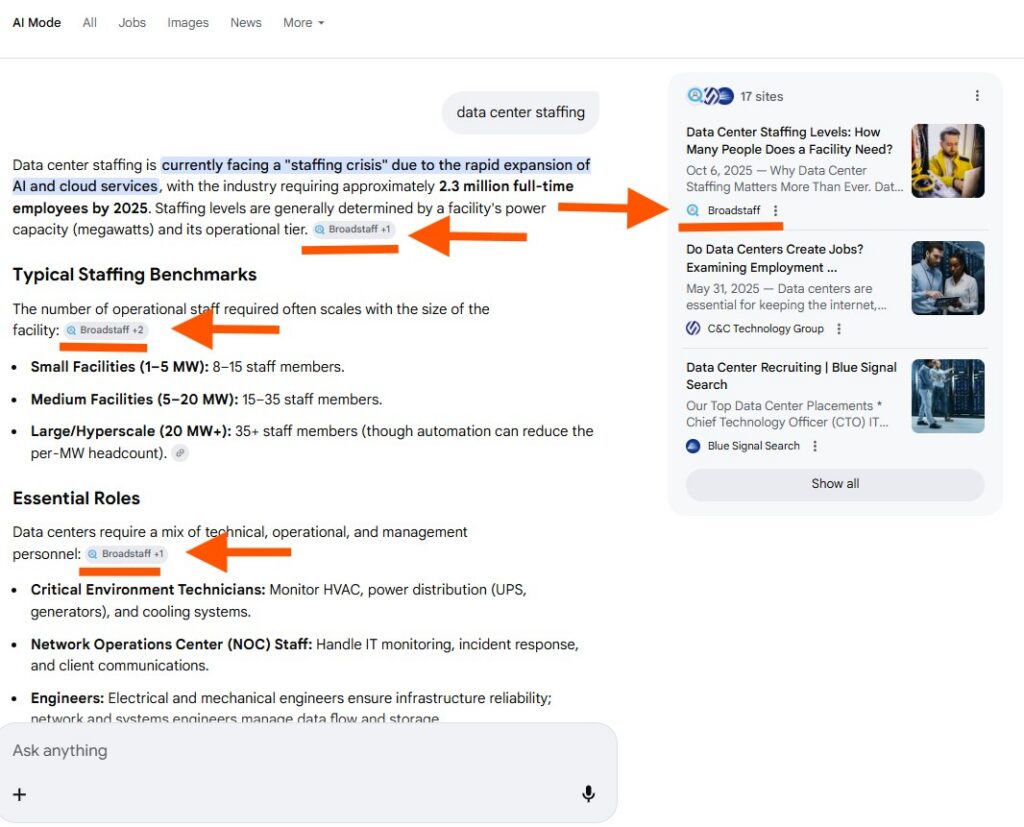
This image is the proof.
We helped our client, Broadstaff, dominate the "Data Center Staffing" conversation. But we didn't just aim for Google rankings. We aimed for AI Trust.
Look closely at the arrows in the image below. 👇
When a user asks the AI about the "staffing crisis" in data centers:
The AI doesn't hallucinate.
It looks for the most authoritative, trusted voice in the sector.
It cites Broadstaff as the primary fact-holder.
This didn't happen by accident. It happened because we stopped treating PR and SEO as separate silos.
How we did it (The "Protecting the Queen" Framework):
Step 1: Authority via PR. We secured high-level media placements that established Broadstaff as the thought leader in data center staffing.
Step 2: Signal Synthesis. We didn't let those articles die. We used them to build high-authority backlinks (DA Lift) that signaled to search engines: "This brand is the expert."
Step 3: The AI Pick-Up. Because the "reputation defense" was so strong, the Large Language Models (LLMs) now view Broadstaff as the definition of the topic, not just a search result.
In 2026, you don't want to be a link. You want to be the answer.
If your PR reports are still counting "impressions" instead of "AI Citations," you are measuring the wrong game.
Question for the comments: Have you tested your own brand in Perplexity or Gemini yet? What comes up?
Read the article: percepture.com/pr-insights/p…
#PublicRelations #AI #SEO #Broadstaff #DataCenter #GenerativeEngineOptimization #CaseStudy
4
Feb 6
Hiring a data center marketing partner is not a creative decision. It is a revenue decision.
The best executive buyers guide does not just list names. It clarifies how to choose. What to ask. What to measure. What to avoid. And how to build a program that supports real outcomes, not noise.
The goal is not attention. The goal is conviction. The buyer should feel, “This team clearly knows what they are doing.”
If you are buying this year, choose the partner who can connect brand, demand, and trust into one system.
What is the hardest part of hiring, validating expertise, measuring ROI, or aligning stakeholders?
percepture.com/data-centers-…
14
Feb 6
Outbound calling is evolving fast, and leaders are right to be thoughtful about it.
AI can support outbound calls. The real opportunity is doing it in a way that protects trust, stays compliant, and improves sales consistency.
When the approach is responsible, it becomes a force multiplier. Better speed to lead. Better coverage. Better qualification. Better routing to the right human at the right moment.
The point is not “more calls.” The point is higher quality conversations at scale, with guardrails.
What matters more to you, speed, compliance, or brand control?
percepture.com/ai-agents-ins…
2
Feb 6
The best sales teams are not choosing between humans and AI. They are building a smarter pairing.
A strong SDR brings judgment, empathy, and relationship awareness. A strong AI SDR brings consistency, speed, and follow through that never gets tired.
In 2026, the advantage goes to the teams that design the system. They decide what must stay human, what can be automated, and where AI should support the rep instead of competing with them.
Done right, both sides get better. The buyer gets a smoother experience. The team gets more time for high value conversations.
Where do you think humans will always win, and where should AI take the first pass?
percepture.com/ai-agents-ins…
1
10
Feb 5
Buying data center services is a high stakes decision, and the best buyers ask better questions.
A strong buying guide does not push. It prepares.
It helps teams evaluate risk, compare providers, and move with confidence. It brings structure to the process so stakeholders can align faster. It also helps vendors understand what “good” looks like from the buyer’s point of view.
If you want to sell more effectively, teach your market how to buy.
What is the most common question you get from prospects right before a tour or contract step?
percepture.com/data-centers-…
1
Feb 4
The best data center marketing partners do one thing exceptionally well. They make your story feel inevitable to the buyer.
Not louder. Not flashier. Clearer. More credible. More trusted.
In 2026, the agencies that stand out understand the full buying reality. Long cycles. Multiple stakeholders. Technical proof. Risk reduction. And now, AI search influence that shapes first impressions before a meeting is even booked.
If you are choosing a partner this year, the real question is simple. Do they know how to build confidence at every step, from discovery to tour to signature?
What is the one trait you will not compromise on when hiring an agency?
percepture.com/data-centers-…
6
Feb 4
Great life science content marketing does not just educate. It builds confidence.
It helps decision makers feel grounded. It answers questions clearly. It respects compliance. And it makes the value of a complex product feel understandable.
The strongest teams create content with purpose. Not volume. They map it to the buyer journey. They build assets sales can use. They earn trust over time, which is the real currency in regulated industries.
When content is done right, it becomes a quiet advantage that compounds.
What type of content drives the best conversations for you today, technical explainers, case studies, or thought leadership?
percepture.com/life-sciences…
1
Feb 3
Going to Metro Connect USA 2026?
This year is the 25th anniversary edition, and Fort Lauderdale is going to be packed with fiber, data centers, capital, and operators who are actually building the next decade.
If you are going, I would love to connect. If you are not going, this is the week to track because it sets the tone for the year.
What is the one topic you are most focused on in 2026, AI infrastructure, power, M&A, or fiber expansion?
Hashtags: #MetroConnect #DigitalInfrastructure #Fiber #DataCenters
First comment link:
percepture.com/events/metro-…
14