
Joined March 2026
- Tweets 209
- Following 1
- Followers 2,299
- Likes 74
190 Photos and videos
Pinned Tweet

May 30
"Weeping may be the closest experience human beings have to actual enlightenment.
Because in weeping, you have given up. You've broken down. Whatever control you wanted over the world has slipped out of your hands.
Whatever way you wanted to keep heartbreak at bay, whatever way you wanted to keep grief at bay, they've all been broken down by the grief, the loss, the person leaving you, by the diagnosis you've just been given in the hospital.
You've actually dropped down below this perimeter, and it breaks apart through that overflow of emotions. The reason you're weeping is you haven't built a body that can hold that revelation. But now you're just about to do it. You're breaking open this controlled edge that you've had, and it's breaking out of there. You're becoming larger through the weeping.
It's worth trying to have a practice of weeping, even if you can't go into full weeping, to feel the emotion as much as you can, because emotion is a doorway to something much deeper.
Camus, the great French philosopher, said: 'live to the point of tears.'"
— David Whyte
15
70
401
44,457
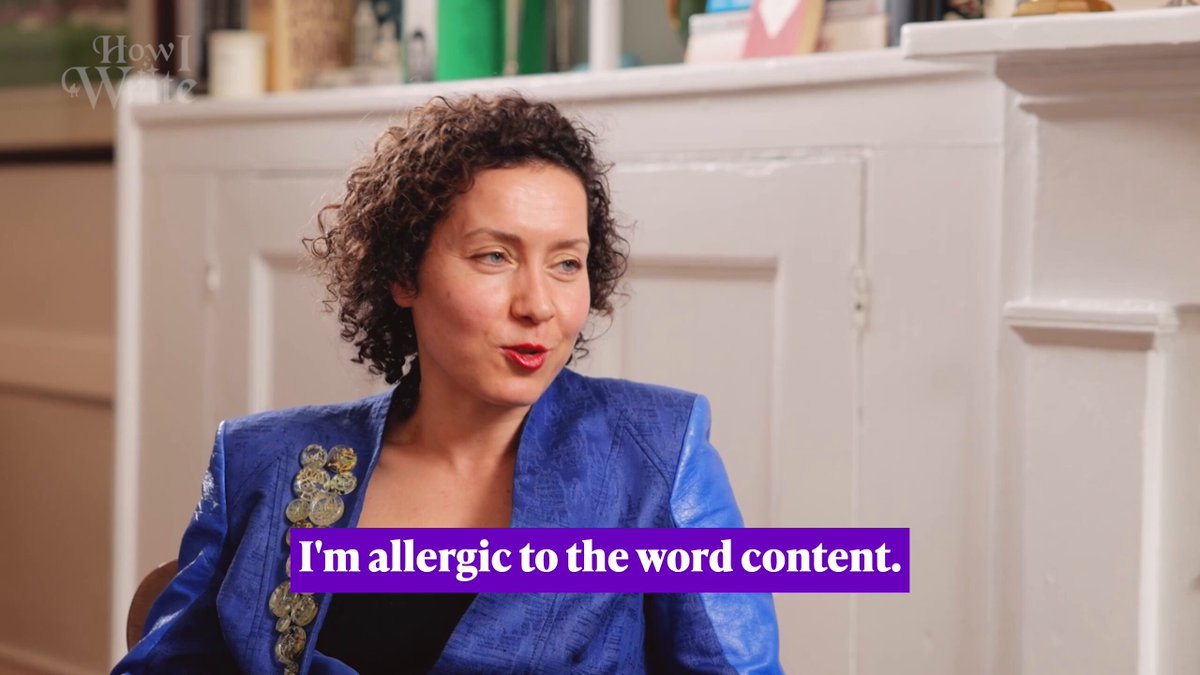
"I'm allergic to the word content.
We have reduced creative work, cultural matter to what we call content, which presumes a container. And the container is advertising. This is what carries the modern Internet.
The course the web has taken has been towards reducing human beings to eyeballs, and writing to content.
There's been a shallowing of cultural material as the Internet has moved more and more toward clickbait and listicles and 'ten ways to.'
I'm not moving away from it on moral grounds. I'm just moving away from it as a human being who doesn't find it compelling."
– Maria Popova
4
5
38
4,954
Jun 12
Elon Musk is so famous you'd think you've heard it all.
So when @jimmysoni interviewed him, he opened with the one question that humanizes him.
Jimmy asked about Greg Kouri, a close friend and early investor in Elon's first company, Zip2. Greg died at a very young age:
"I said, Elon, I want to begin our interview a little bit differently. I had read about this gentleman that had helped you early on in your life. I found his widow, and we talked. Can you talk about him?
There's a pause. And he goes, 'Oh my god.' He gave me this minute long meditation on Greg and their friendship and everything that it meant to him. Nobody's talking to him about Greg Kouri.
The human beings that I interview, they have lives that exist outside of the very narrow frame of reference that we see them for. What's the thing that they never get talked about that reveals something about their character?"
15
37
664
155,739
Jun 12
Your favorite shows, movies, songs, books, even comedy specials, are all a product of distillation. Cutting away the mediocre until only the best survives.
Tim Urban explains:
"I'll research for three hours and get seven minutes of dopamine hits.
That's part of why we like to read. Someone out there has done a lot of work to bring us the best.
The stand up comedian is the ultimate example. When you're seeing an HBO special, you're seeing the best of the best of the best of funny moments they've had. It's not that they're the most brilliant person.
Their craft is distilling the funniest insights of their decade into this hour for you."
3
2
16
4,458
Jun 12
"There has to be a ship-to-yap ratio."
Elon Musk can tweet 100 times an hour and nobody cares:
"No one thinks that the companies are being neglected. The companies are shipping.
There are some founders where nothing substantive seems to be coming out of the company other than words. They're shipping blogs, they're shipping tweets, but where's the product?
If the ratio is off, it's a huge red flag."
–@lulumeservey
SpaceX just IPO'd at a $1.7 trillion valuation.
@elonmusk

This is absolutely insane.
The SpaceX, $SPCX, IPO officially began trading 15 minutes ago and there are already 160 MILLION shares traded.
That's ~$26 BILLION worth of shares traded in 15 minutes.
In other words, $1.7 billion worth of $SPCX is being traded PER MINUTE right now.
Absolutely incredible.
5
5
35
24,315
Jun 12
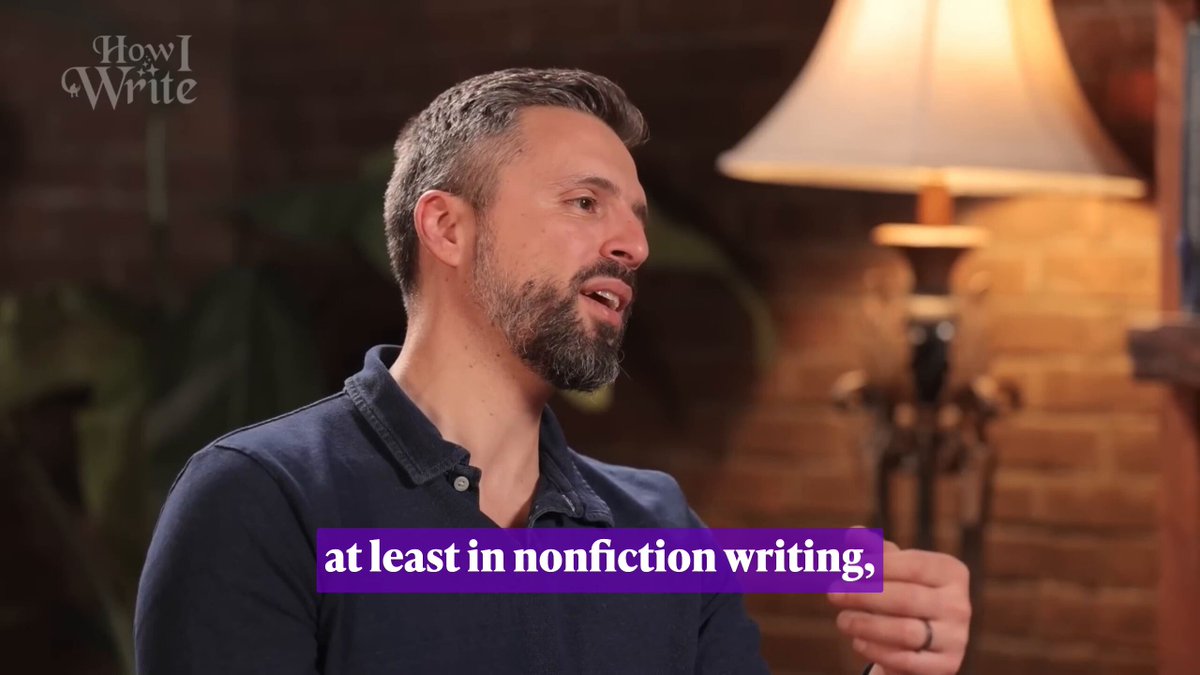
A great nonfiction writer is like a dog that keeps bringing you a dead bird to your doorstep.
Ezra Klein explains:
"The most important thing in nonfiction writing is having the thing you're trying to communicate and having done the work to have something worth communicating.
Trying to hide that in embellishment and ornamentation is a terrible habit.
You're like a dog who keeps running up to the back door, dropping something, like a dead bird, or a bird, or something. That is exactly what I do.
At the core, what I do is try to go out, get you something, and bring it back to you. Writing is just a vehicle for doing this?"
5
2
39
10,830
Jun 11
"Real drama is soul drama."
This line from Edith Wharton explains what makes Die Hard a classic. Novelist Andrew Hunter Murray breaks it down:
"The really exciting thing is not that there's a train thundering down the tracks to where the hero and heroine are tied up and they've got thirty seconds to escape. That is dramatic, but the much more important thing is what they'll say to each other when they think it's all up.
People struggling with themselves, people who cannot resist their own vices, people who are always thinking back to that one conversation they just wish they'd done differently. That's soul drama.
I know Die Hard is a big silly action film, but there's a reason it's so popular. It manages to say something about a relationship between a husband and wife which has not worked, and will they have another chance?"
(And yes, Die Hard is a Christmas movie).
Jun 10

Andrew Hunter Murray and I talked about how he writes novels with Excel, his obsession with finding crazy facts, and why he loves Jane Austen so much.
Timestamps:
0:26 What makes for a good premise?
5:54 How to write Sci-Fi
7:51 Sci-Fi vs. literature
15:41 Why Andrew writes with Excel
18:22 Writing real characters
23:47 How to write a secondary character
30:58 What makes a character feel real?
33:47 Andrew's #1 mantra
38:06 Planning vs. actually writing
40:29 How to find crazy, crazy facts
49:25 Sci-Fi = a window into the present
52:09 Jane Austen
I've shared the full conversation below. If you'd rather watch on YouTube, or listen on Apple / Spotify, check out the reply tweets.
5
22
8,235
Jun 11
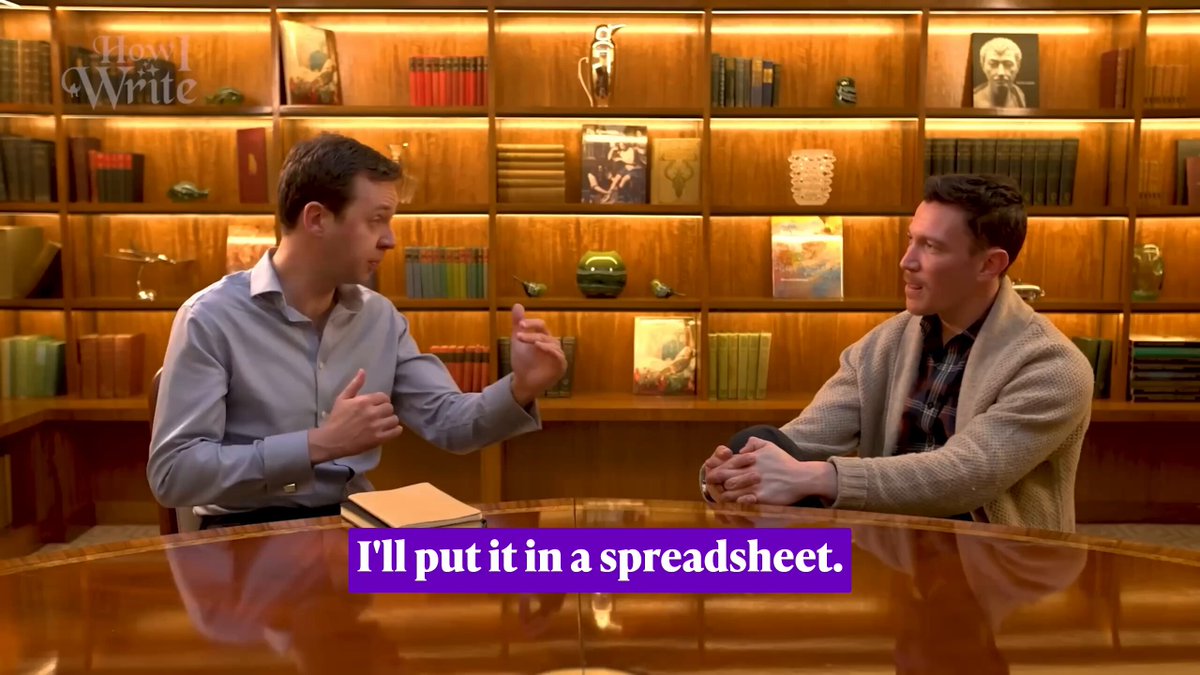
"Microsoft Excel is the novelist's most important friend."
Bestselling thriller writer Andrew Hunter Murray plots every novel in a spreadsheet. Here's how he uses it:
"I'll just look at my scenes and ask: have we learned enough here? Does the scene need to be here? It can't just be, 'oh, let's have a scene set in the fireworks factory,' and we won't really learn anything.
If you look at your spreadsheet and you think, I've got four chapters here and there's not the pace in any of them to propel the reader forward, I gotta fix that."
Jun 10
Andrew Hunter Murray and I talked about how he writes novels with Excel, his obsession with finding crazy facts, and why he loves Jane Austen so much.
Timestamps:
0:26 What makes for a good premise?
5:54 How to write Sci-Fi
7:51 Sci-Fi vs. literature
15:41 Why Andrew writes with Excel
18:22 Writing real characters
23:47 How to write a secondary character
30:58 What makes a character feel real?
33:47 Andrew's #1 mantra
38:06 Planning vs. actually writing
40:29 How to find crazy, crazy facts
49:25 Sci-Fi = a window into the present
52:09 Jane Austen
I've shared the full conversation below. If you'd rather watch on YouTube, or listen on Apple / Spotify, check out the reply tweets.
2
11
84
21,450
Jun 10
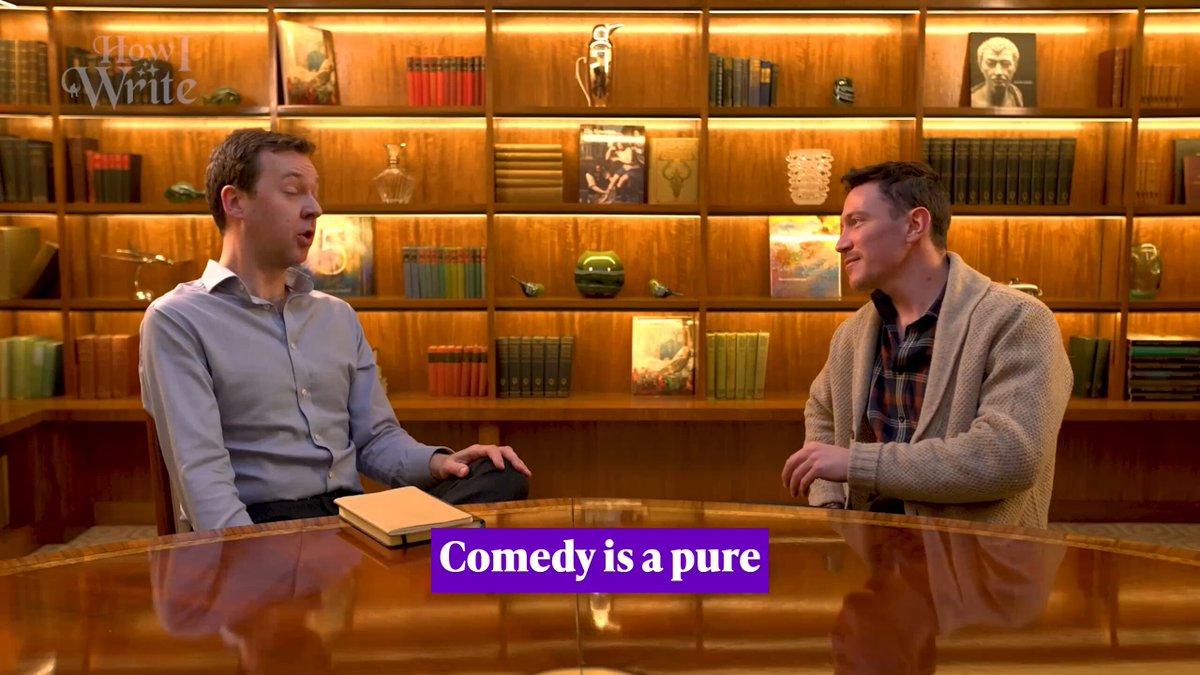
Most people think being funny is a talent you either have or you don't.
Writer and comedian Andrew H. Murray thinks that's the wrong frame entirely.
"Most people are at their absolute funniest when they just go to the pub with some friends and have a chat. All comedy is an attempt to recover that pure Garden of Eden state of comedy.
You very rarely meet someone in life who doesn't have any humor or comedy inside them."
Jun 10
Andrew Hunter Murray and I talked about how he writes novels with Excel, his obsession with finding crazy facts, and why he loves Jane Austen so much.
Timestamps:
0:26 What makes for a good premise?
5:54 How to write Sci-Fi
7:51 Sci-Fi vs. literature
15:41 Why Andrew writes with Excel
18:22 Writing real characters
23:47 How to write a secondary character
30:58 What makes a character feel real?
33:47 Andrew's #1 mantra
38:06 Planning vs. actually writing
40:29 How to find crazy, crazy facts
49:25 Sci-Fi = a window into the present
52:09 Jane Austen
I've shared the full conversation below. If you'd rather watch on YouTube, or listen on Apple / Spotify, check out the reply tweets.
1
6
753
Jun 10
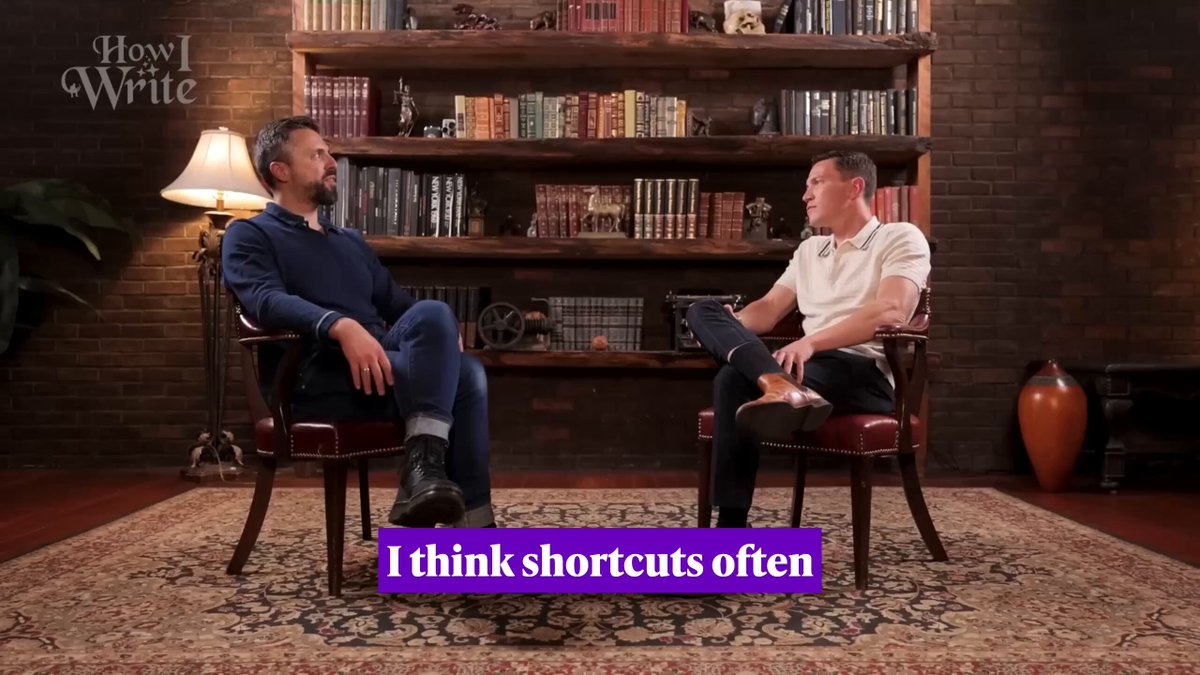
Sam Bankman-Fried thought every book should be a tweet. Ezra Klein thinks that view is exactly what's wrong with how we consume knowledge.
"Shortcuts operate off of a misguided metaphor of how our minds work. We have this download model. I'm downloading the information."
Using AI to summarize a book is like watching someone else eat and saying you're stuffed.
"Sam Bankman-Fried would be like, what's the point of all these books? Shouldn't every book be a magazine article? No. A magazine article will change you less than a book will. A tweet will change you less than a magazine article will.
What changes you isn't the wave. It's the erosion."
3
7
68
11,534
Mastering your craft comes down to two things:
1) Believing in what you are doing long before anyone agrees with you.
2) Engaging in the process daily. Withstanding the doubt, the lack of recognition, the setbacks.
That's how Brandon Stanton went from moving to New York City broke, to turning Humans of New York into one of the most recognized interview series in the world.
"If you root it in anything outside of your control, you will just run out of gas before you get there. You have to root it in the doing of it.
If you wrote for an hour a day, you're a writer. And if you've won Pulitzer Prizes, but you haven't written in a year, there's a 16 year old girl writing in her journal that is more of a writer than you are."
7
14
87
8,537
Morgan Housel will never use AI to write. To him, it defeats the whole purpose of writing.
"The process of writing is what gets the author thinking. When they write a book, they didn't have all that knowledge in their head. They started out with one brave sentence, and then that taught them something.
If you're using any kind of LLM to do any of the broad structure for you, you're not actually thinking. You stripped out everything that was good about writing."
He'll use it for research, as a "Google on steroids." But even then he argues that the research process is different:
"When you're doing the reps of research, it's gonna hit you in a different way."
10
11
66
13,615
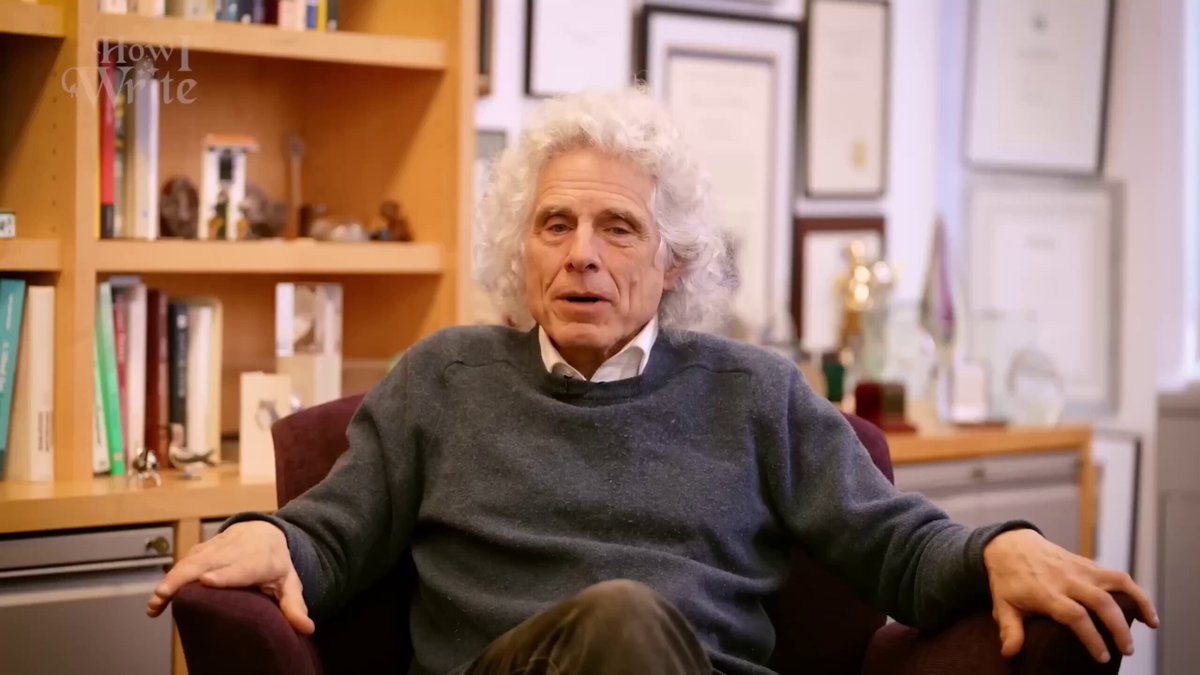
Academics write for each other, not for people.
Steven Pinker has spent over four decades doing the opposite, and thinks current academic writing is "enormous wasted effort."
"There's an awful lot of brilliant work, really smart people in academia. Why are they doing it? Just to entertain each other? Taxpayers pay for it. It should be accessible. Why should I have to read a paragraph five or six times?
It gets under my skin when academics devote so much brainpower into the scholarship and then just blow off the essential task of letting the world know what you've done."
225
593
3,165
830,183
Has social media turned people into better writers?
It's at least a better writing education than school.
"Social media turned a lot of people, in a very good, healthy way, into maxim writers. You've got 240 characters to make your point. It was the exact opposite of how most people learned to write, which was their fifth grade teacher saying, five pages, minimum."
But concise doesn't mean short.
"A lot of times when it's short, there's no insight. They stripped away the meat. More than the fluff, they took away the meat."
-Morgan Housel
3
2
34
6,799
Nobody likes to be lectured.
And yet nearly everything we consume online; politics, self-improvement, finance, is exactly that.
Morgan Housel has sold 11 million books doing the opposite.
"Nobody likes someone to basically say: 'hey, idiot, you've done it wrong the whole time, and if you had done it my way, you'd be in a better spot.'"
He never tells you what to do. He just tells stories about psychology, how people actually behave with money.
"Nobody likes to be shamed. If you give them enough stories about psychology, they'll figure it out for themselves."
23
33
350
59,438
Stefan Sagmeister noticed something unexpected visiting Ukraine during wartime: its design scene was blooming.
"Nowhere else have I seen so much design rooted in their own history.
There is an incredible amount of design stores where everything is contemporary, but everything has Ukrainian roots, Ukrainian stories, Ukrainian patterns."
Design bloomed as a way to preserve culture.
4
360
The people who think they have nothing to say are usually the most interesting.
Which means the people dominating your feed probably aren't.
"The bad interviews aren't the people who have nothing to say. It's the people who have so much to say, but none of it is very deeply earned.
I'll take the insecure person every time because that is the person who is not so puffed up that they've created a false version of themselves."
-Brandon Stanton (Creator of Humans of New York)
3
34
1,911
Our environment shapes our behavior. Stefan Sagmeister argues: shitty architecture = shitty mood.
Most people would rather fly out of Madrid's Barajas airport than Newark.
There was even a study that mapped the sentiment of every tweet in Manhattan by location. Grand Central is green all day. Penn Station is red. If you've been to both, you know why.
"If you look at the High Line, you almost never see a piece of paper, a cup thrown away. Basically never. You leave the High Line, you go into the Meatpacking District. It's everywhere.
If I'm at an airport here and at an airport in Europe, people behave much better in Europe. And the reason is the shitty architecture."
2
11
76
13,825
Poetry gets a bad rap because it's taught wrong.
We are told to read, analyze, and find meaning. But two Poet Laureates offer a better way to think about it:
"Just listen to this poem the way you listen to a song. This is song on paper. Just listen to it like that. Now what do you hear?
You don't read poetry to get the meaning of the sentence. You read poetry for the music and for the experience and for the multitude of meanings that it offers."
2
21
78
3,965
"If you find somebody's struggle, you can find their genius."
Brandon Stanton has interviewed over 10,000 people for Humans of New York. He told me the best stories emerge from struggle:
"If you can find somebody's struggle, you will find a plot. Find what this person is pushed against. Find what this person has overcome.
You have plot, you have transformation, and then you also have wisdom.
If you find somebody's struggle, you can find their genius. When I'm looking for something singular, it comes from something they've gone through."
6
25
196
27,182
We ask people to sit at a desk for 8 hours and be creative on command. Morgan Housel told me that this is not how it works. He argues: "Good ideas can't be scheduled."
"I can't structure creativity. I just have to let myself go and trust that it'll hit me eventually. The title for the my first book just hit me walking down the streets of New York. For the title of my latest book, I was on the treadmill just zoning out.
Whenever I come up with stories and hooks, it's never when I've been trying to do it. It's in the shower, it's walking my dog, it's waking up at 2am wrestling around in bed. It's always in the unstructured moments."
2
11
84
16,373