
Since 1985, the Perseus DL has explored what happens when libraries move online. NB: Not actively monitored. Email preferred::perseus_webmaster@tufts.edu
Joined September 2011
- Tweets 449
- Following 61
- Followers 4,565
- Likes 67
40 Photos and videos


17 Mar 2025
Update on Recent Service Interruptions » Perseus Digital Library Updates sites.tufts.edu/perseusupdat… via @PerseusDigLib
3
2
8
476
1 Nov 2022
New: Spring 2023 Course on Natural Language Processing and the Human Record sites.tufts.edu/perseusupdat… via @PerseusDigLib
1
6
3
Perseus Digital Library retweeted

14 Sep 2020
This Friday Sept. 18 @ 15:30 EDT I'm doing a live 30 min. demo of @OpenGreekLatin editing on twwwwwitch.
twitch.tv/brucerob
4
6
3 Sep 2020
We're pleased to announce lots of work on Open Greek and Latin all summer long! Follow @OpenGreekLatin and/or our release bot @First1kGreek to track this work. Thanks to @HellenicStudies @UVALibrary @heml
14
25
Perseus Digital Library retweeted

18 Jun 2020
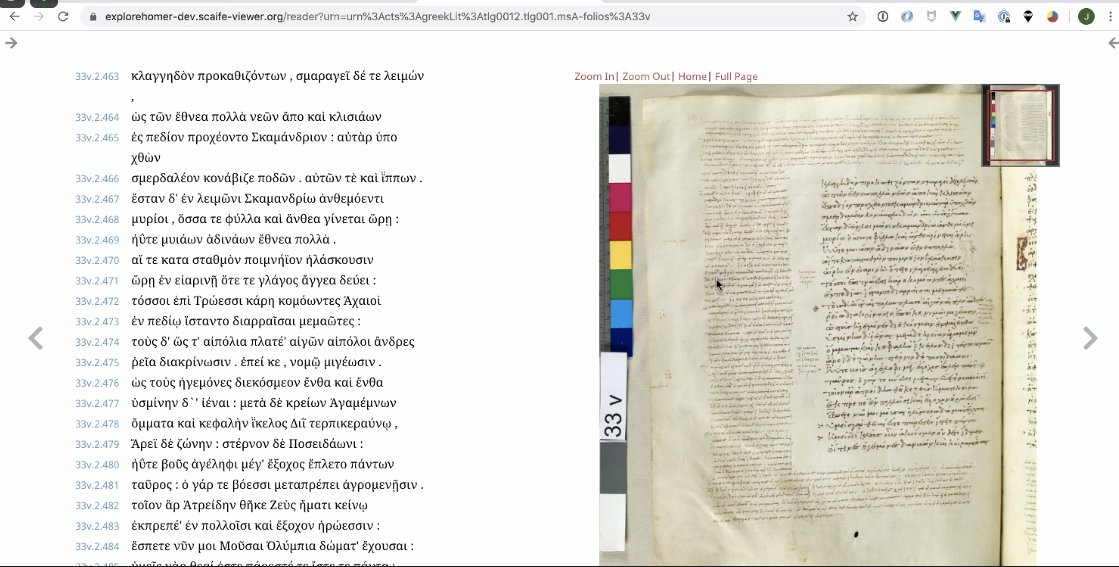
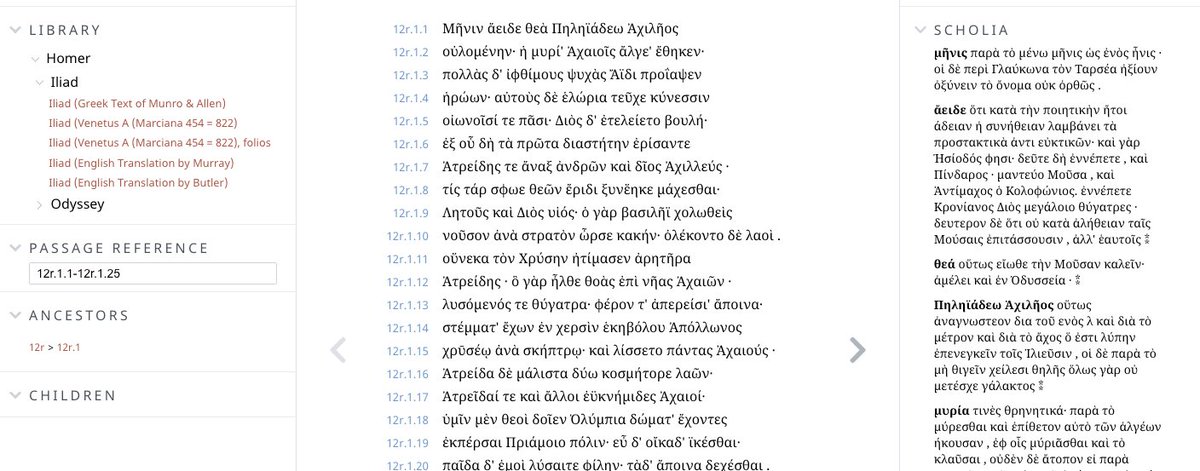
Data from homermultitext.org/ is starting to show up in the development version of the Scaife Viewer. Much to be done but I am very excited to se this. @PerseusDigLib
3
17
12 Jun 2020
Center for Hellenic Studies Team Converts Plutarch’s Moralia for Open Greek & Latin
.@OpenGreekLatin .@HellenicStudies
sites.tufts.edu/perseusupdat…
8
26
Perseus Digital Library retweeted

5 Dec 2019
all thanks to @jacobwegner (and Lisa and everyone else contributing to the OGL texts)
1
1
1
Perseus Digital Library retweeted
5 Dec 2019
@PerseusDigLib update to the scaife.perseus.org/. @eldarion did a fresh ingest that that bumped our total words on scaife.perseus.org from 50.1 million to 64.3 million (Greek from 20.1m in 1,178 works to 28.8m in 1,298 works). thanks @jtauber !
1
7
8

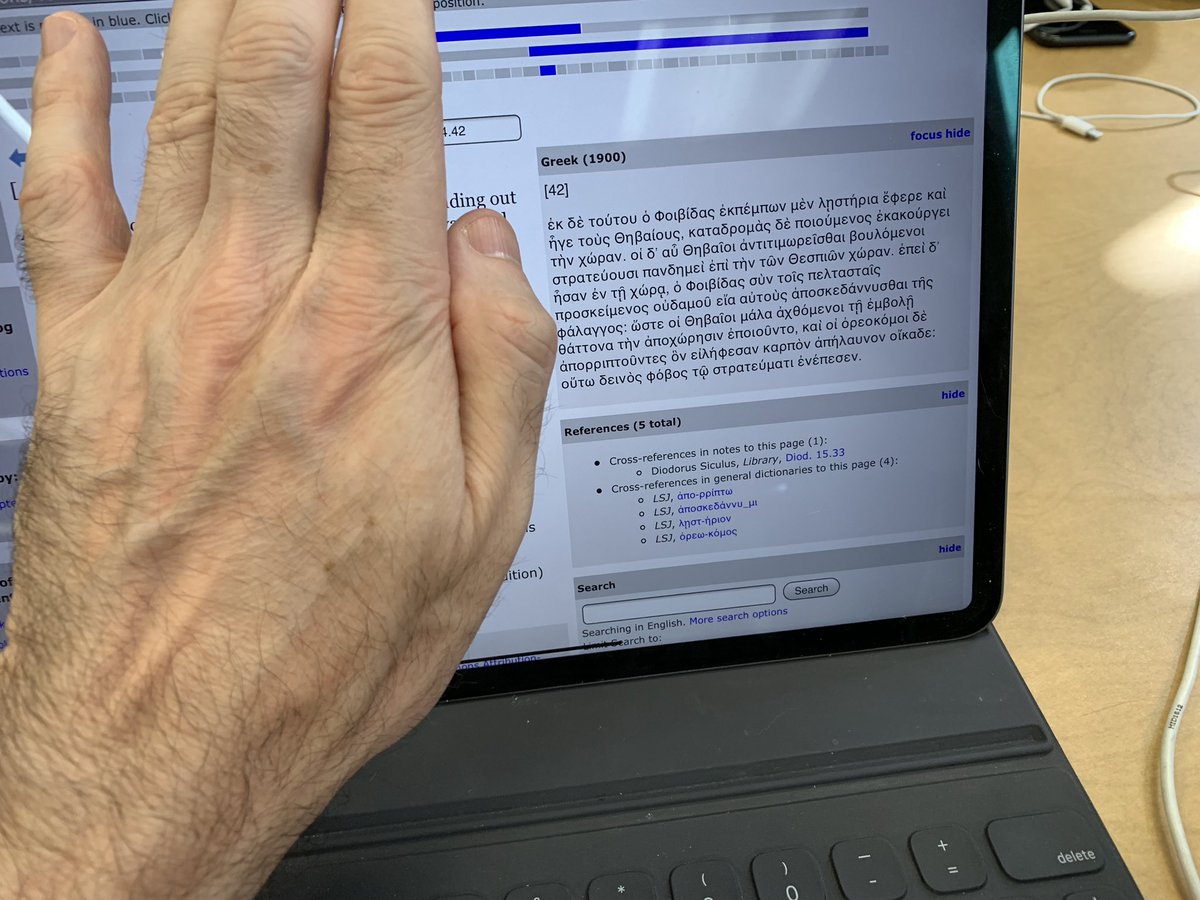
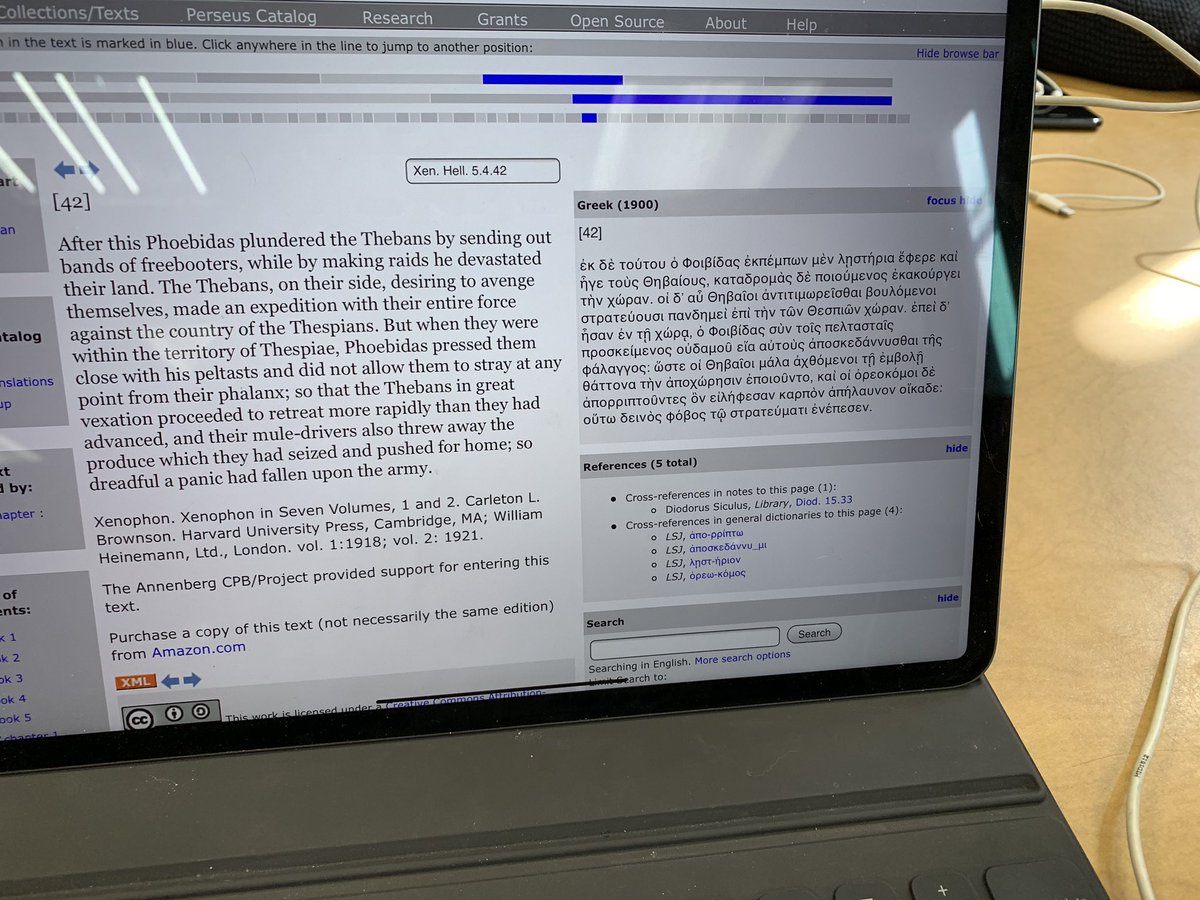
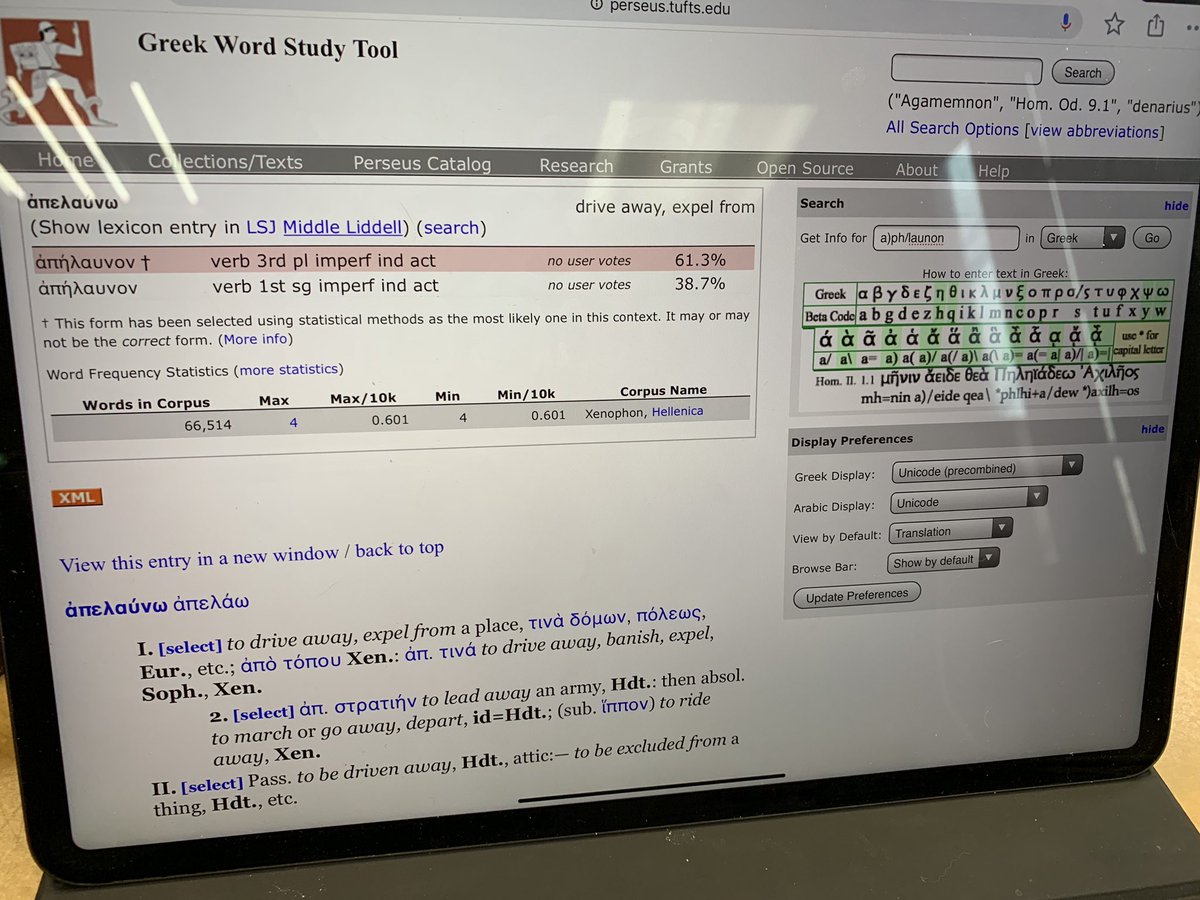
How I use @PerseusDigLib: 1.) Load the Greek, covering the English with my hand. 2.) Reveal the English and check my work. 3.) Click on individual words (each one is a hyperlink even though they’re not underlined) to launch the word study tool to help me through rough spots.
6
3
65
Perseus Digital Library retweeted

27 Sep 2019
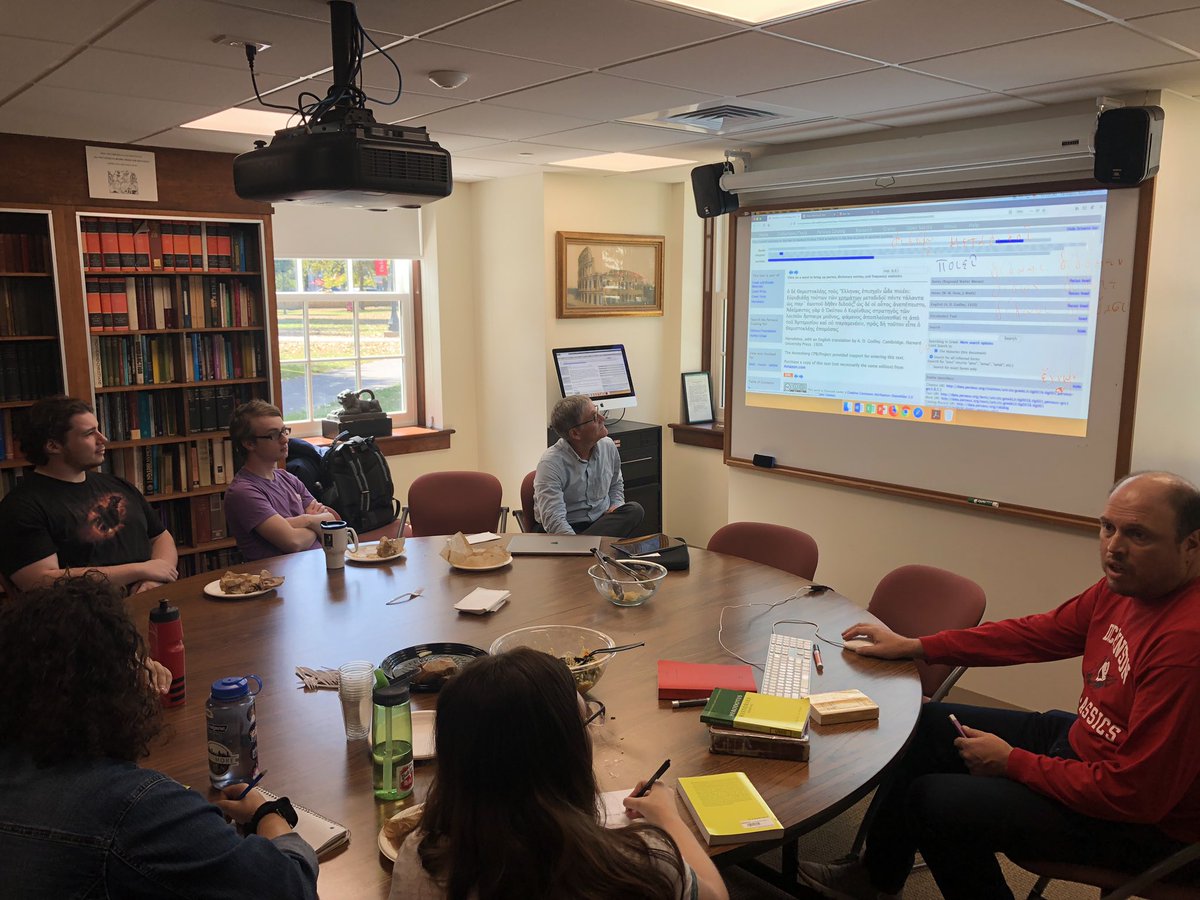
Look who’s at @DickinsonCol reading Herodotus with our intermediate Greek class, it’s @PhilologistGRC of the @PerseusDigLib !
5
7
31 Jan 2019
Call for applications: Digital Editions in Practice, A Two-Day Workshop
May 31-June 1, 2019
The Perseus Digital Library at Tufts University will host a two-day workshop that provides an overview of a sample, practical digital editions creation... goo.gl/BGbWxyThe
2
9
12
29 Nov 2018
Thank you! We don’t know this information unless we’re told by the giver so we never have the chance to personally thank supporters for their generosity.
Also, feel free to give our stuff away! If it’s open source (all but a handful of texts are) it’s there to be shared.

Lest you think I’m just giving your stuff away - I donate to you guys annually. Just don’t forget to call and hit me up each fund drive :)
1
3
14
29 Nov 2018
Thanks!
Xenophon is also featured in the new Scaife Viewer
scaife.perseus.org/library/u…
in addition to the current Perseus site.
perseus.tufts.edu/hopper/col…
Always go to the Loeb edition. If you don’t want to pay, you use @PerseusDigLib online for free.
1
1
9
Perseus Digital Library retweeted
7 Nov 2018
And there's nothing specific to lexemes about this approach. Could be applied to ANY resource with universal identifiers where scholars differ on the lumping and splitting.
1
3
Perseus Digital Library retweeted
7 Nov 2018
Yes, it layers on top of citable URNs very nicely (esp. taking all nodes to be citable URNs). The key to allowing "splits", though, is that if a scholar wants to distinguish A and B and LSJ conflates them, we map the URN for the LSJ conflation to the set {URN for A, URN for B}
1
1
4
Perseus Digital Library retweeted

5 Nov 2018
@PerseusDigLib @PhilologistGRC This *must* become the cornerstone for any future lemmatization work on Ancient Greek texts, including the Ancient Greek Dependency Treebank #AGDT
1
1
3
Perseus Digital Library retweeted
2 Nov 2018
Another fundamental step forward for linked open lexical data for ancient Greek. Exciting times!
5
6
Perseus Digital Library retweeted
16 Oct 2018
Elements of textual criticism of manuscripts surface even when dealing with digitisation of printed books. On a current project, I can tell which electronic texts were manually keyed (from haplography) versus OCR'd and, in the OCR cases, can tell which image scan they used.
1
4
17
Perseus Digital Library retweeted
26 Sep 2018
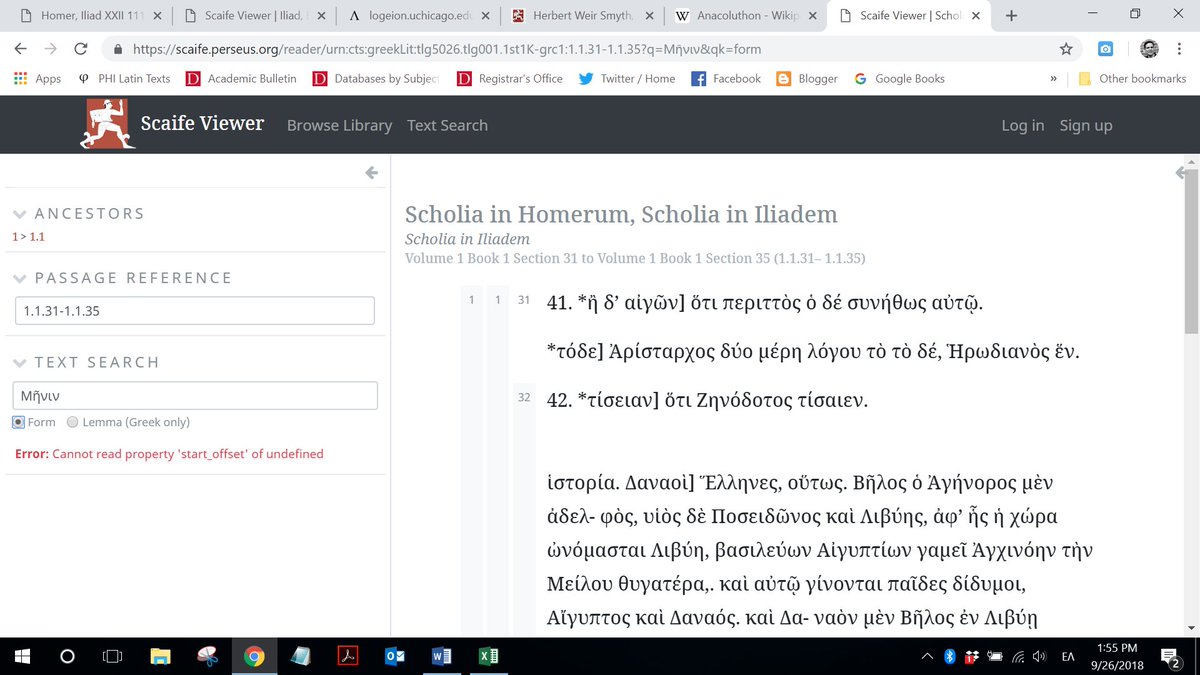
The passage references are just how the XML (and citation references) in github.com/OpenGreekAndLatin… are set up. The XML _does_ appear to have links to the Iliad text itself but the reader doesn't know to interpret them (yet). Would be a nice feature to add so I'll create an issue.
2
2
6
Perseus Digital Library retweeted
26 Sep 2018
Trying to navigate the @PerseusDigLib Scaife viewer to read #Iliad scholia, but it is proving impossible to find any particular passage. Search does not work, and passage references don't correspond to book and line numbers. Am I missing something @jtauber ?
1
1
1