
AI Market Research $PRSNA ETH: 0x9F43d83950Ee387443d1F1765065d461E7EF42F3 t.me/personaAIportal
Joined January 2025
- Tweets 1,644
- Following 184
- Followers 990
- Likes 1,109
224 Photos and videos
Pinned Tweet

Feb 2
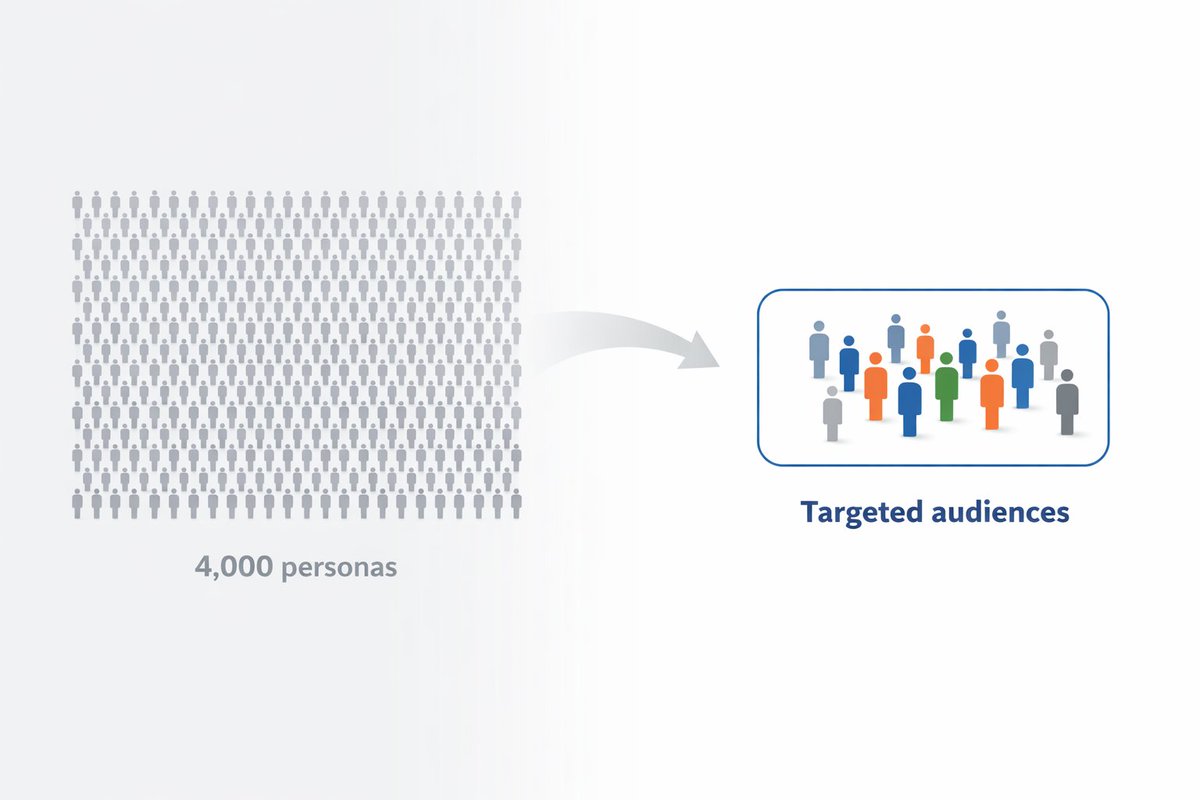
PersonaAI just crossed 4,000 personas built.
With 4,000 personas, you can effectively model the people you’re trying to study.
3
6
11
600
PersonaAI retweeted

Jun 12
Preview of our new CharX World design!
There's still a lot of work to do, but we are on track to go live with the redesign by the end of June. Get ready to create intelligent characters, build worlds, and tell stories!
24
4
27
700
Jun 12
Most "AI personas" are simple prompts to an LLM. Here's what we're doing that's different.
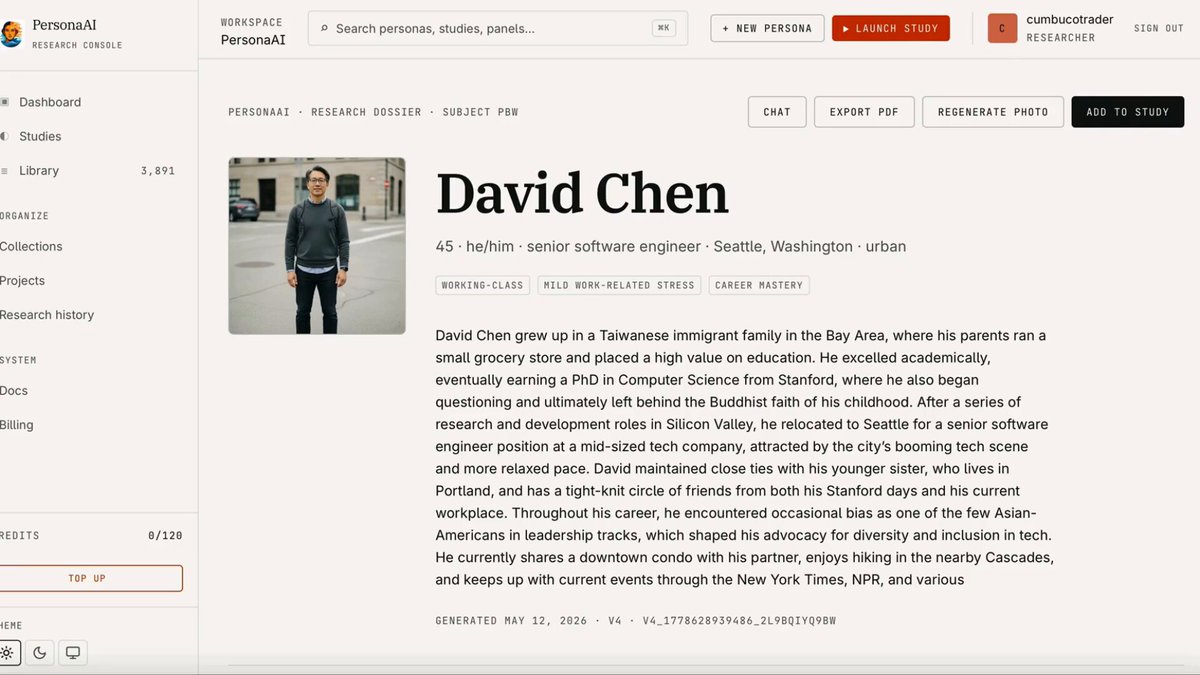
We start with personas that each have over 150 traits, with unique attributes for:
Their lived facts — age, location, occupation, education, household, dependents, daily schedule, what occupies their mind during the day.
Money — income, spending style, financial stressors, how they save and invest, risk tolerance, plus attitude toward money, spending, and debt.
Health and body — BMI, fitness, diet, chronic conditions, medications, substance use, mental-health flags. Quietly shapes mood, energy, and outlook in answers that have nothing to do with health.
How they think — verbal fluency, thought coherence, abstract vs. concrete framing, problem-solving style. This is why one persona answers in tidy paragraphs and another rambles and circles back. Texture of mind, not just content of opinion.
Cognitive biases — eight of them, each scored: loss aversion, confirmation, anchoring, status-quo, availability, optimism, sunk-cost, overconfidence. This is the part almost no other "AI persona" has. A persona with high loss-aversion and high confirmation bias doesn't just hold a different view — they defend it differently.
How they talk — formality, directness, pace, humor style, the metaphors they reach for, regional dialect, and how they code-switch between work, home, and online. The layer that makes the voice perceptibly and authentically theirs.
Emotional triggers — stress responses, what triggers warmth, what triggers anger, what turns them on or off.
Truth and honesty — baseline honesty, and relationship and regard for truth and facts
Motivation — primary behavioral drivers, goals, deal-breakers, aspirations.
Identity narratives — politics, faith, race, in-group/out-group loyalty, authority, threat perception.
With nearly 4000 personas and growing, we have we have a panel deep enough to find the exact respondents your question needs.
2
4
6
101
Jun 12
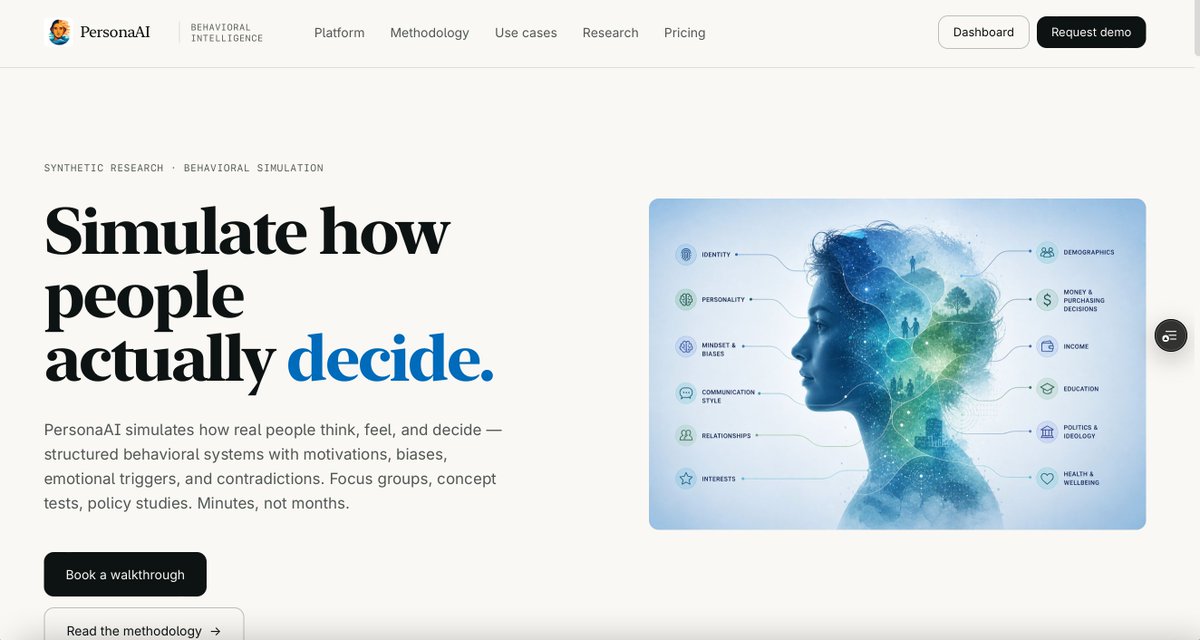
The new PersonaAI website is live.
We're building a faster way to answer questions about customers, products, markets, and ideas.
Run studies in minutes.
Explore decisions before committing resources.
Generate qualitative insight on demand.
Take a look:
personaresearch.ai
1
3
5
52
PersonaAI retweeted
May 4
We rebuilt PersonaAI from the ground up.
Same core idea: simulate real human behavior.
Everything else: sharper, faster, easier to use.
New site coming soon.
1
4
5
236
PersonaAI retweeted
May 4
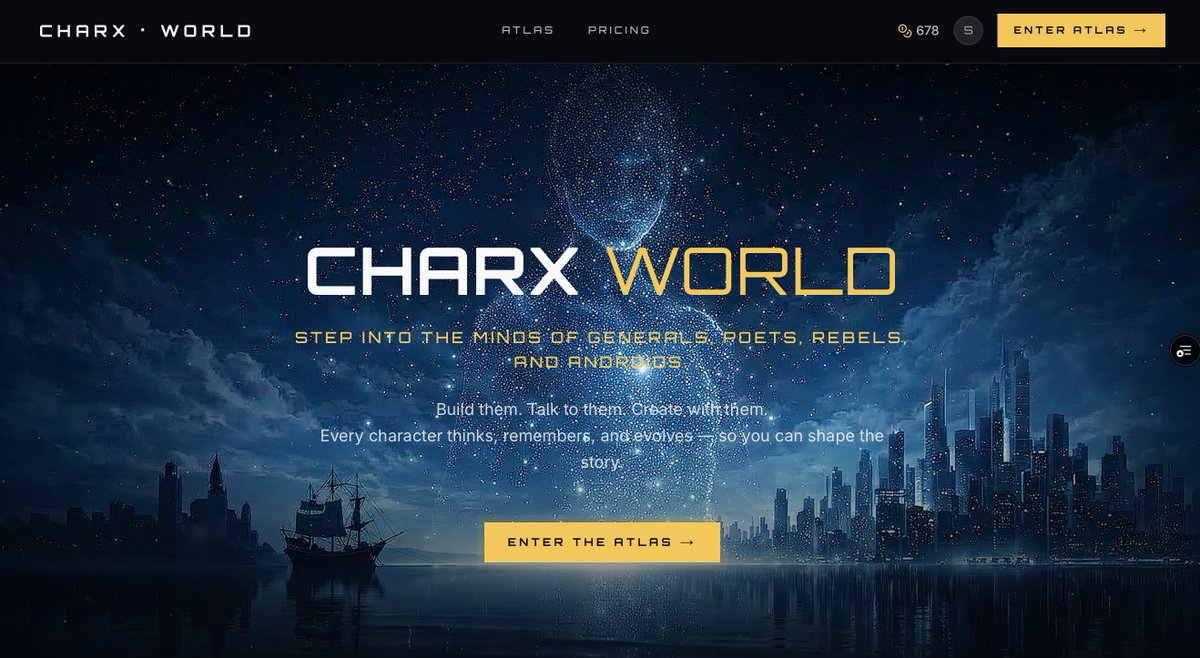
CharX World is getting a major upgrade.
• video expanded media creation
• smoother, more intuitive UI
• real collaboration with characters
Video, visuals, and story in one system.
9
5
17
204
PersonaAI retweeted
Apr 17
AFTERIMAGE
Chapter 1
The sunlamp flickered at 6:47 AM, same as always, and Marcus Yuen opened his eyes into another identical day.
He reached for his wrist before he even sat up — the dermal patch was there, slightly warm, delivering the standard cocktail: focus for the commute, mild euphoria to smooth the edges, and something the company called clarity but he'd never quite trusted. He rubbed it off anyway.
He'd been doing that more lately.
🧵

2
4
11
179
Apr 10
the instinct after a failed launch is to run more surveys. more quantitative data.
more clean numbers. but surveys tell you what people chose.
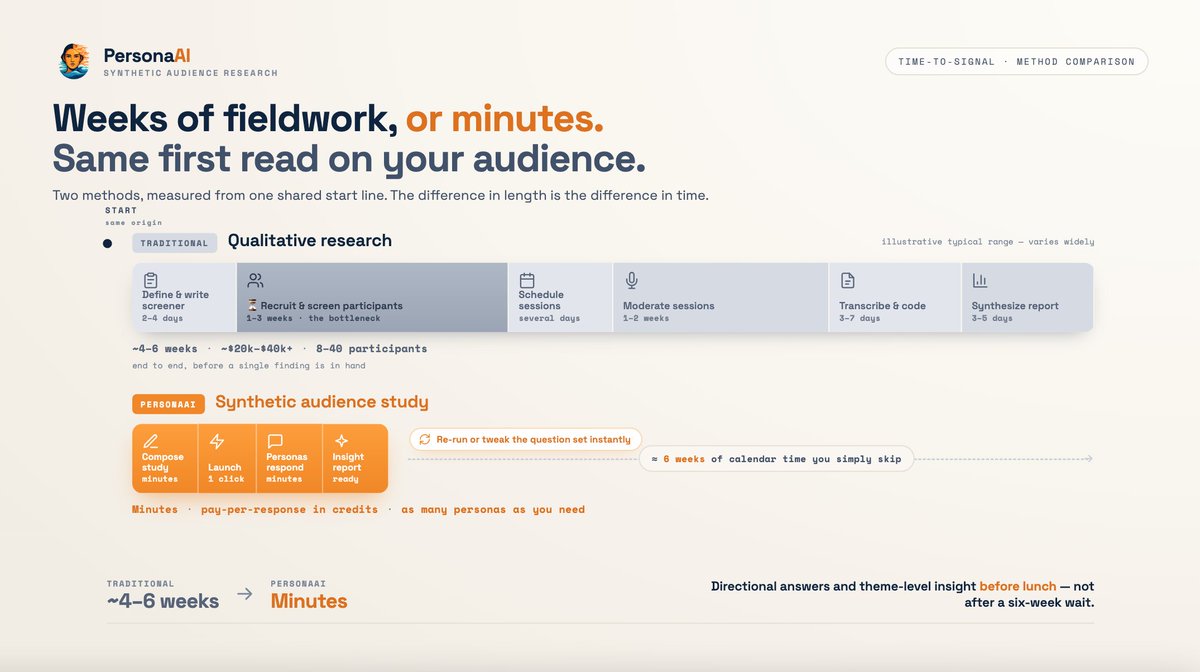
not why they chose it. PersonaAI runs 40 interviews in under 30 minutes.
4,000 personas. 150 traits each. ~200 Collections.
filter by income, profession, health profile, buying behavior, lifestyle. the output isn't a score.
it's a conversation. emotional signals, consensus, divergence, the reasoning behind the decision. that last layer is what surveys were never designed to give you.
1
4
65
Apr 9
a product team runs one study.
one audience.
one set of conclusions. then ships to five different segments and wonders why the data doesn't hold. the study wasn't wrong.
it was just incomplete. PersonaAI runs 40 interviews in under 30 minutes.
4,000 personas. 150 traits each. ~200 Collections. filter by income, profession, health profile, buying behavior, lifestyle. run the same question across three segments.
you don't get the same answer three times. you get three different things worth knowing. what's the last decision you made on one audience's opinion?
2
4
63
Apr 9
most teams debate whether to run research at all. cost. time. recruiting. scheduling. so they ship on instinct and rationalize it later. PersonaAI runs 40 interviews in under 30 minutes. 4,000 personas. 150 traits each. ~200 Collections. filter by income, profession, health profile, buying behavior, lifestyle. when research fits inside a lunch break, the debate stops. the question becomes: what do you want to know before you ship?
1
3
41
Apr 9
most teams treat qualitative research as a phase. something that happens before the real work starts. PersonaAI runs 40 interviews in under 30 minutes.
4,000 personas. 150 traits each. ~200 Collections. filter by income, profession, health profile, buying behavior, lifestyle. when research takes 30 minutes, it stops being a phase. it becomes part of every decision.
2
4
37
Apr 9
qualitative research has a cost problem. not the tool cost.
the time cost. recruiting. scheduling. synthesizing.
by the time it's done, the decision already shipped. PersonaAI runs 40 interviews in under 30 minutes.
4,000 personas. 150 traits each. ~200 Collections.
filter by income, profession, health profile, buying behavior, lifestyle. when research fits inside a sprint,
it stops being a milestone. it becomes how you think.
2
3
33
Apr 9
the assumption in most research is that your audience is one thing. a single set of priorities.
a single emotional response.
a single conclusion. PersonaAI runs 40 interviews in under 30 minutes.
4,000 personas. 150 traits each. ~200 Collections.
filter by income, profession, health profile, buying behavior, lifestyle. run the same study across three segments. you don't get three versions of the same answer.
you get three different products worth building.
2
3
31
Apr 9
most teams run one study.
one audience.
one snapshot. then they ship and wonder why it landed differently across segments. PersonaAI runs 40 interviews in under 30 minutes.
4,000 personas. 150 traits each. ~200 Collections. filter by income, profession, health profile, buying behavior, lifestyle. the divergence between two audience groups is usually the decision you didn't know needed making. what segment do you wish you'd studied before your last launch?
1
4
34
Apr 8
most teams run one study on one audience and ship with that. PersonaAI runs 40 interviews in under 30 minutes.
4,000 personas. 150 traits each. ~200 Collections.
filter by income, profession, health profile, buying behavior. the question worth asking isn't what did your audience think. it's what did a different audience think about the same thing. that gap is usually where the decision was hiding.
1
1
25
Apr 8
most research gives you what one audience thinks. it doesn't show you what changes when the audience changes. PersonaAI runs 40 interviews in under 30 minutes.
4,000 personas. 150 traits each. ~200 Collections.
filter by income, profession, health profile, buying behavior. run the same study across three different segments. you'll get three different sets of priorities. that's not a problem with the research.
that's the research working.
1
2
39
Apr 8
40 interviews used to mean 40 scheduling emails. a consent form.
a notetaker.
three weeks of calendar negotiation.
a synthesis doc nobody finished reading. PersonaAI runs 40 interviews in under 30 minutes. 4,000 personas. 150 traits each. ~200 Collections. filter by income, profession, health profile, buying behavior. when research fits inside a coffee break, you stop saving it for milestones. you run it before the meeting.
1
2
33
Apr 8
a single study tells you what one group thinks. it doesn't tell you what changes when the group changes. PersonaAI runs 40 interviews in under 30 minutes.
4,000 personas. 150 traits each. ~200 Collections.
filter by income, profession, health profile, buying behavior. run the same study across two different segments. the place where their answers diverge is usually the decision you didn't know you were making.
1
3
42
Apr 7
the same product.
the same messaging.
two different audience groups. two completely different conclusions. most teams never see the divergence because they only run one study on one group. PersonaAI runs 40 interviews in under 30 minutes.
4,000 personas. 150 traits each. ~200 Collections.
filter by income, profession, health profile, buying behavior. the pattern worth finding is rarely in the consensus.
it's in where two groups split.
2
2
34