Hospitality professional. Mantra: Work hard. Make money. Be nice. Have fun. Do good. Never give up. Loves rugby, horse racing and pubs
Joined February 2009
- Tweets 4,772
- Following 2,155
- Followers 4,056
- Likes 6,593
229 Photos and videos







Pinned Tweet

1 Dec 2020
So @MattHancock has just pointed out that hospitality has had more help than other sectors. Let me explain Matt - hospitality has suffered more damage than any other sector. If someone caused £100 of damage to your car they wouldn’t give you £20 and expect you to be grateful.
93
399
2,858
Peter Borg-Neal retweeted

Jun 8
"That's an extraordinary question!" 😆
@oismurphy reacts to winning aboard Regal Envoy at @WindsorRaces before @MCYeeehaaa quizzed him on his challenge in the Jockeys' Championship...
11
13
166
48,360
The hospitality is heavily burdened by taxation. This has caused a massive decrease in investment which has a ripple effect beyond the sector.
Furthermore, the huge job losses are particularly impacting young people.
Please sign this petition.
In reality all it is asking for is fairness - a similar VAT rate to the rest of Europe.
vatstheproblem.co.uk/
1
7
22
720
May 24
This is important.
Very important.
May 24

A farmer dies in April 2026.
His son inherits the farm. The farm has been in the family since 1847.
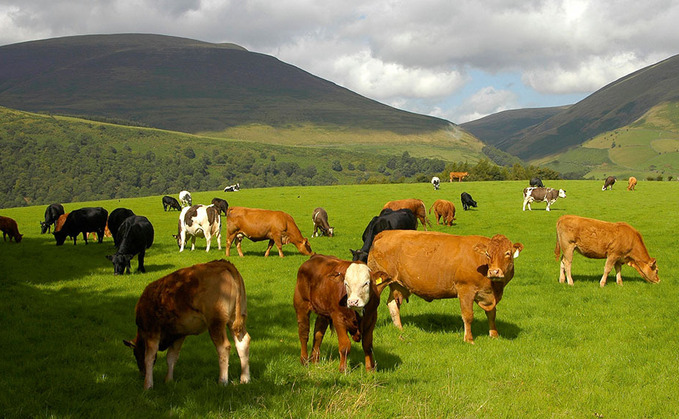
The farm consists of: 300 acres of grazing pasture, a farmhouse built in 1892, a barn, a milking parlour, two tractors of varying ages, a Land Rover that runs about 70% of the time, and a herd of 180 Hereford-cross cattle.
On paper, the farm is worth approximately £3.2 million. This is because land near him has been bought recently by a London hedge fund looking for carbon credits, which has dragged the comparable value of every field within forty miles upward to a number nobody local can justify.
In cash, the farm produces a profit of about £28,000 a year in a good year. In a bad year it loses money. The son also works as a fencing contractor three days a week to keep the operation viable.
The inheritance tax bill on a £3.2 million estate, even at the reduced 20% rate, comes to approximately £140,000 after the increased threshold is applied. The son does not have £140,000. The son has never had £140,000. The son has £4,200 in his current account and an overdraft.
The son sells 60 acres to a developer to pay the tax. The developer puts solar panels on the 60 acres. The remaining herd cannot be sustained on the reduced land. The herd is sold. The barn becomes a holiday let.
A different family eats Brazilian beef this Christmas without knowing why the price went up.
The Treasury collects £140,000.
The land never produces British food again.
283
Peter Borg-Neal retweeted

May 24
In the 1980s, the Norwegian salmon farming industry ran into a colour problem.
Wild salmon are pink because they eat krill and small crustaceans containing a pigment called astaxanthin. The pigment accumulates in the muscle tissue and gives the flesh its colour. That colour is one of the cues a diner uses, consciously or otherwise, to decide whether the fish on the plate is appetising.
Farmed salmon, raised on soy protein, corn meal, fish meal from wild-caught smaller fish, and stabilisers, do not eat krill. They do not accumulate astaxanthin. Without intervention, their flesh is grey. Washed-out, unappealing grey.
Nobody buys a grey salmon.
So the industry adopted synthetic astaxanthin, manufactured by Hoffmann-La Roche, originally developed as a feed additive to brighten poultry yolks. It is added to salmon feed in measured doses.
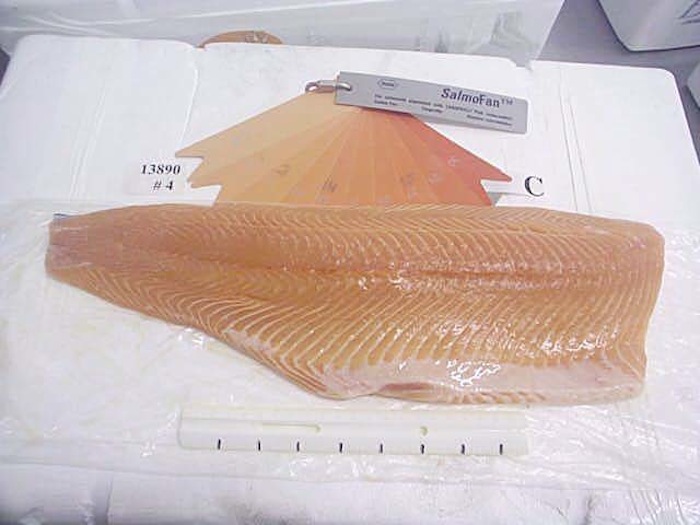
The doses are calibrated against a colour chart called the SalmoFan, produced by the same company, which the farmer holds against a slice of flesh from a slaughtered fish to confirm the pigmentation has reached the commercially desirable shade.
The SalmoFan has fifteen shades.
The farmer picks the target shade based on what the supermarket buyer in the destination country considers appealing.
Norwegian salmon, sitting on the ice in a British supermarket, has been colour-graded to match the expectations of a marketing department in Hoddesdon.
The fish you're looking at is the colour the company chose.
The fish didn't pick it. The krill didn't provide it. The pigment came from a Swiss laboratory.
You're eating a paint sample.
The paint is fish-flavoured.
The fish remembers krill. It has never tasted krill. The krill is in a different part of the supply chain.
156
1,594
5,967
438,589
Peter Borg-Neal retweeted

🤩WINNER🤩
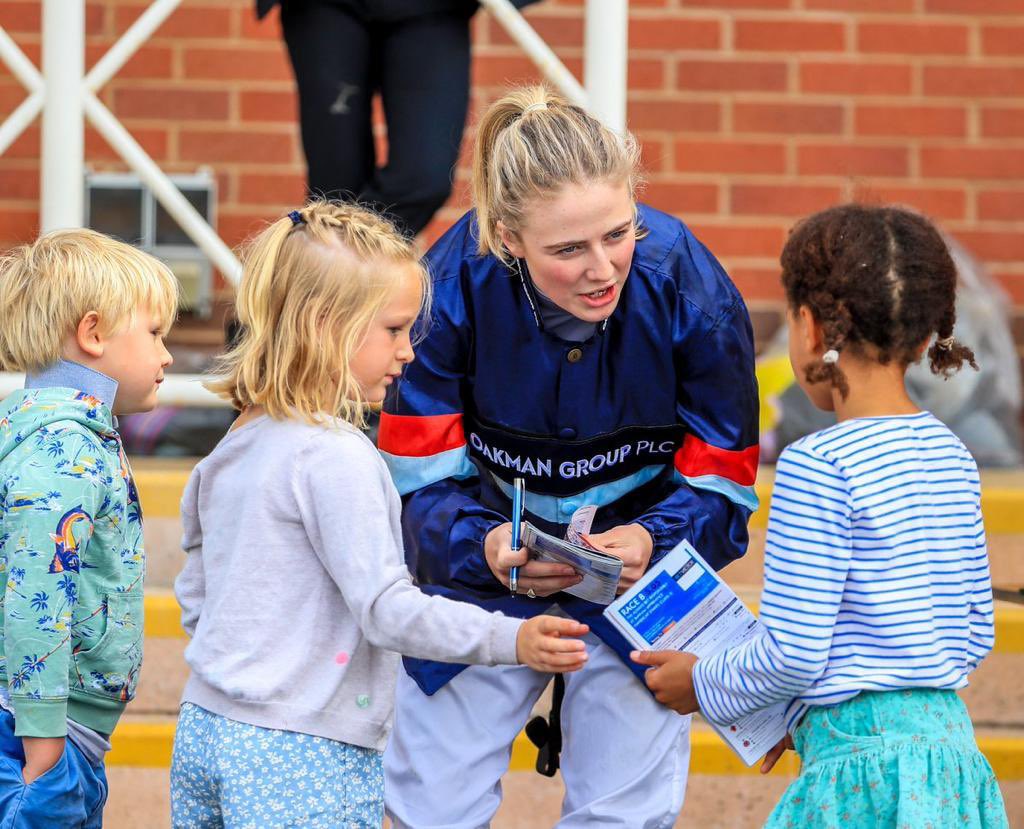
REGAL ENVOY wins under Taylor Fisher @BathRacecourse. Well done to his connections of the Oakman Racing Club 👏
Sponsored by @chestnutgroupUK and @IMPGraphics.

1
1
11
393
Peter Borg-Neal retweeted
May 4
He loves it at @BathRacecourse!
Regal Envoy holds off the onrushing challengers to land the feature for @WKnightRacing...
4
5
16
4,371
Peter Borg-Neal retweeted
May 2
Myth: "I only wear vegan fabrics. Better for the animals, better for the planet."
Let's check in on Doris's annual contribution.
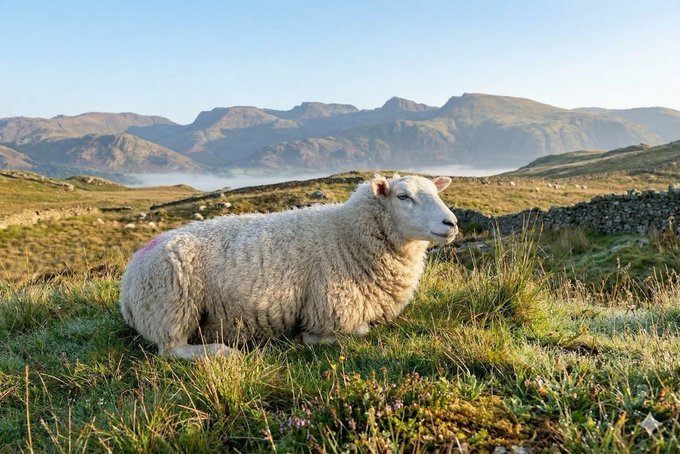
Once a year, in late spring, Doris is sheared. The procedure takes approximately three minutes. Doris does not enjoy it. Doris does not, by any visible measure, suffer from it. Doris is, immediately afterwards, a noticeably more comfortable animal in the British summer.
The fleece weighs approximately 3 kilograms. It is sold to the British Wool Marketing Board for, depending on the year, between £0.40 and £2.50 per kilogram. The shearing costs more than the wool fetches. Brian is shearing Doris at a loss.
The wool is then:
- Naturally flame-retardant
- Naturally antibacterial
- Moisture-wicking
- Biodegradable
- Renewable, annually
- Carbon-storing while in use
The replacement, in performance fabrics:
- Polyester
- Polyamide
- Acrylic
- Polypropylene
- All petroleum-derived
- All shedding microplastics on every wash
- All requiring fossil fuel inputs to produce
- All non-biodegradable, with a typical landfill lifespan of 200-500 years
A single wash of a polyester fleece can release up to 700,000 microplastic fibres into the water system. These fibres are now in: every tested water source on earth, every tested human placenta, every tested rainfall sample, the deep ocean, the Arctic ice, and the lungs of marine mammals.
A single wash of a wool jumper releases: nothing. The wool, when eventually disposed of, returns to soil within a few years.
The fabric being marketed as the "ethical" alternative to wool is plastic.
The plastic is "ethical" because nobody has been asked to slaughter the polymer.
The polymer also has not been asked.
Doris, by being a sheep on a fell, is producing the most thoroughly sustainable performance fabric humans have ever made.
Brian is selling it at a loss.
The fashion industry, meanwhile, is selling petroleum at a profit and calling it ethical.
Reject plastic. Wear wool.
Doris is, this morning, growing next year's batch.
270
3,278
11,984
184,066
Peter Borg-Neal retweeted
Apr 30
Activist: "Those sheep are being exploited for wool."
Farmer: "They need shearing. Without it: heatstroke, fleece so heavy they can't stand, and fly strike. Flies lay eggs in wet wool. Maggots eat the sheep alive."
Activist: "In nature they wouldn't need it."
Farmer: "In nature they'd be dead. Domestic sheep aren't wild animals."
Activist: "You bred them to be dependent on you."
Farmer: "Yes. That's what domestication is. Ten thousand years of it."
Activist: "It's still exploitation."
Farmer: "They get relieved of ten pounds of wool that's killing them. We get wool. No petroleum. No microplastics in the waterways."
Activist: "They can't consent."
Farmer: "They also can't shear themselves."
Activist: "You should let them be natural."
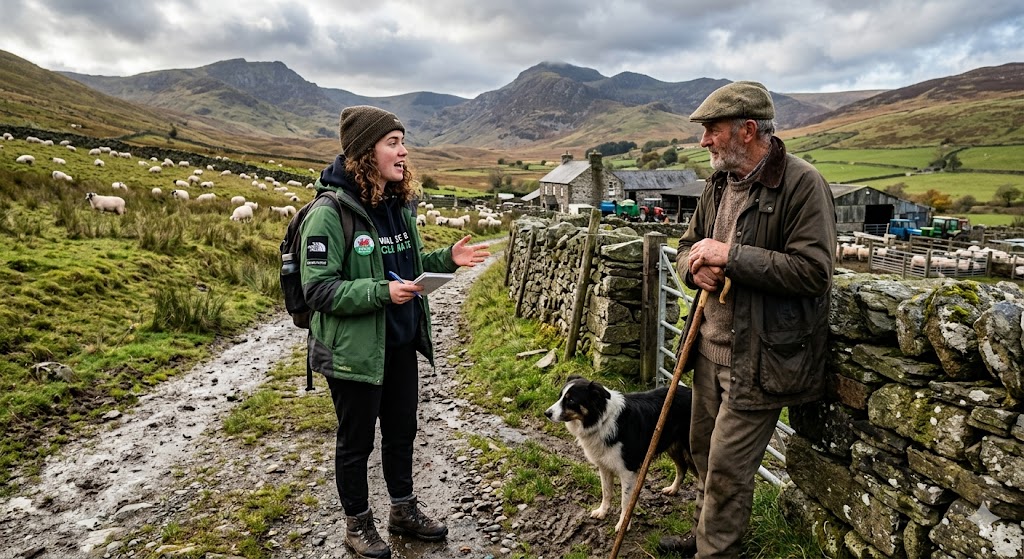
Farmer: "You're wearing a North Face."
Activist: "What?"
Farmer: "Petroleum. Sheds microplastics every wash. Five hundred years in landfill."
Activist: "That's different."
Farmer: "There's a renewable, biodegradable fibre growing on that sheep right now. Needs removing or the animal suffers horribly."
Activist: "Just let them keep their wool."
Farmer: "I'll let you explain that to the sheep in August."
87
1,016
4,612
155,757
Apr 28
The King has delivered a fantastic speech to the American Congress on Capitol Hill. It’s great to feel a sense of pride in one of our leaders as opposed to the shame, discomfort and embarrassment which has become standard of late.
3
154
Peter Borg-Neal retweeted

Apr 20
Not sure I’ve ever been as touched by a video of horses as by this one.
Queen’s Gamble returns to Ladyswood Stud having retired post a successful racing career with @Harry05Derham & @OliverSherwood to be reunited with her mother, Gambling Girl, 8 years after being weaned.
42
193
1,790
57,977
Apr 15
This is a post that everyone in the UK needs to read carefully, absorb and retain in their consciousness. I’m not sure that I have an answer to the problem. But I am sure that an answer is needed.
Apr 15

Let me walk you through the arithmetic of Britain's demographic crisis. Because once you see the numbers, you can't unsee them.
The UK has around 43 million people of working age. These are the people the entire system depends on. They pay the taxes. They fund the pensions. They staff the hospitals.
9 million of them are economically inactive. Not working and not looking for work. 1 in 5.
That number deserves unpacking because it isn't one problem. It's several, layered on top of each other.
The largest group, around 2.8 million, are out due to long-term sickness or disability. That number has been rising steadily since 2019 and recently hit a record high. Among younger people, the driver is mental health. Among older workers, it's musculoskeletal conditions, back problems, and other chronic illness. People in their early twenties are now more likely to be economically inactive due to ill health than people in their forties. That statistic alone should stop you in your tracks.
The second largest group, roughly 2.4 million, are students in full-time education. They're investing in their future productivity. But while they study, they aren't contributing to the tax base.
Around 1.6 million are looking after family or home, disproportionately women. Around 1.1 million took early retirement before state pension age. Many left during or after the pandemic and haven't returned. The rest are classed as discouraged or otherwise outside the labour market.
On top of the 9 million inactive, another 1.87 million are unemployed. Youth unemployment has risen to around 16%.
So of around 43 million people of working age, roughly 32 million are actually in work. About a quarter of the working-age population is not in paid employment.
Now look at who they're supporting.
There are roughly 12 million people above state pension age. The official dependency ratio is 278 pensioners per 1,000 people of working age. That sounds manageable. About 3.6 to one.
But when you use the number of people actually working, it drops to roughly 2.7 workers per pensioner. Less than three.
By 2047, the latest official projections show the ratio worsening to 302 per 1,000, even after planned pension age rises. ONS modelling submitted to the House of Lords suggests that to hold the current ratio constant, pension age would eventually need to reach 70 or beyond. Under current law, it rises to 67 by 2028, with further increases likely to stay on the table.
And the support base is under growing pressure.
The fertility rate just hit 1.41. The lowest on record. You need 2.1 to keep the population stable. We're at two thirds of that and falling. The average age of mothers is now 31. The government has expanded funded childcare significantly, and that's a genuine step forward. But the birth rate kept falling right through it. Because the problem isn't just childcare. It's housing. It's wages. It's the cost of being alive in this country while trying to raise a family.
The overall population is still projected to grow, mainly through migration. But the pension-age population is growing faster than the working-age population. The number of people aged 85 and over is projected to nearly double, from 1.7 million in 2022 to 3.3 million by 2047. More pensions. More NHS demand. More social care. All landing on a workforce where the ratio of workers to dependants is weakening every year.
And here's the part nobody talks about.
According to the ONS, at least 1.4 million people in the UK are raising children while simultaneously caring for ageing parents. The sandwich generation. Wider estimates suggest the true figure may be considerably higher. Typically aged 35 to 64, spanning millennials and Gen X. These are people in mid-career. Many in management roles. Peak earning years. Maximum professional responsibility. And they're juggling all of that with school runs on one side and elderly care on the other.
Two thirds say their finances are under strain. Carers UK estimates that over 600 people a day quit their jobs to care for a loved one. Research by the Centre for Economics and Business Research puts the average lifetime financial cost of being a sandwich carer at over £345,000 in lost earnings, reduced pension contributions, and direct care costs. Women are more than twice as likely to be the ones who leave work.
Every one of those people who leaves is one fewer taxpayer. One fewer pension contributor. One fewer worker holding up the dependency ratio. And they don't just lose their salary. They lose years of compound growth on pension savings. They arrive at retirement with a depleted pot, needing the same support they were once helping to fund.
This is about to intensify. As the over-85 population nearly doubles and social care continues to collapse, more people in that 35 to 64 age bracket will face the impossible choice between their career and their parents. The sandwich generation will get bigger. The workforce will come under even more strain.
Now layer the health crisis on top.
The Health Foundation projects that 3.7 million working-age people will be living with major illness by 2040, a 17% rise on 2019 levels. Already, 3.7 million people who are in work have a health condition that limits the type or amount of work they can do. That number has grown by 1.4 million in a decade.
The House of Lords Economic Affairs Committee said it plainly. Those who are already economically inactive are becoming sicker, meaning they're less likely to return to work. The ageing effect that was previously being masked by other factors is now being reinforced by them.
So here's the picture.
The state pension costs around £146 billion a year. Funded entirely by current workers paying current retirees. There is no pot. The triple lock ratchets it higher every year. The working-age support base is under pressure and weakening. The number of dependants is growing. The people in the middle are getting sicker, burning out, and leaving work to care for parents the state can't look after. The generation behind them is smaller because the birth rate has collapsed. And the generation behind them will be smaller still.
Nobody chose this. No generation is to blame. People didn't decide to be priced out of having children. Workers didn't choose to develop chronic conditions. The sandwich generation didn't volunteer to care for ageing parents with no safety net.
This is a systems failure. We can argue over whether it's underinvestment in housing, health, social care, and prevention, or poor personal choices of the population at large that have produced a workforce that is too small, too sick, and too stretched to carry what's being placed on it. But this is where we're at. And the weight is growing every year.
The arithmetic doesn't negotiate. And right now, it says we're running out of people to pay for the country we've built.
1
417
Peter Borg-Neal retweeted

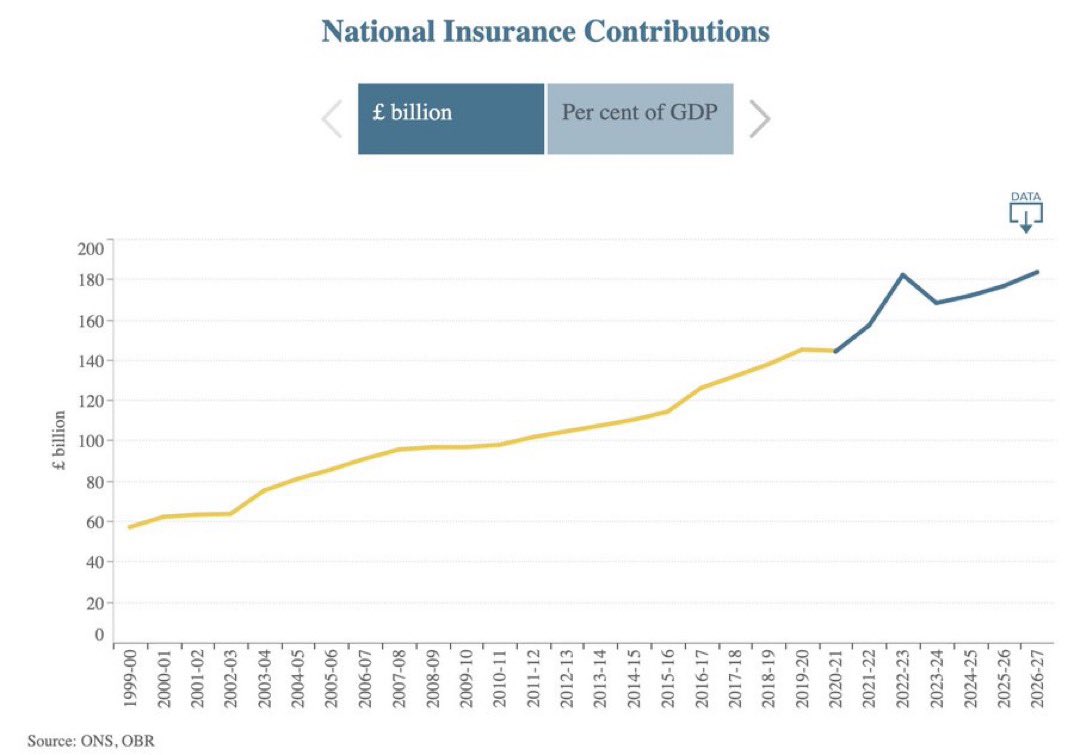
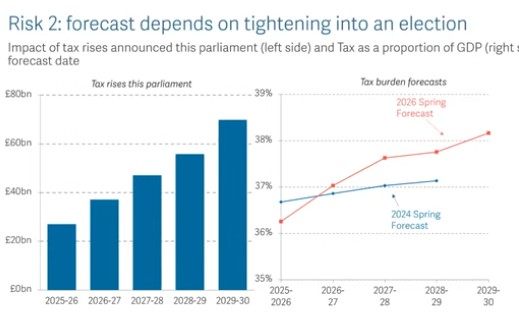
The scale of tax rises over the course of this Parliament is staggering
The combination of the rise in employers' NI & the freezing of income tax thresholds will see taxes rise to 38%
This is the culmination of huge tax rises under both the Tories and Labour
The OBR now asking the big questions about what impact this will have on the economy. It is concerned it will disincentivise people from earning more money
64
191
606
66,296
Peter Borg-Neal retweeted

Feb 28
Remembering our #Vat campaign from two years ago. We are getttting closer #VatCut #Hospitality #TaxedOut youtu.be/mAnvwdbR44w
5
12
31
4,044
Peter Borg-Neal retweeted
Feb 6
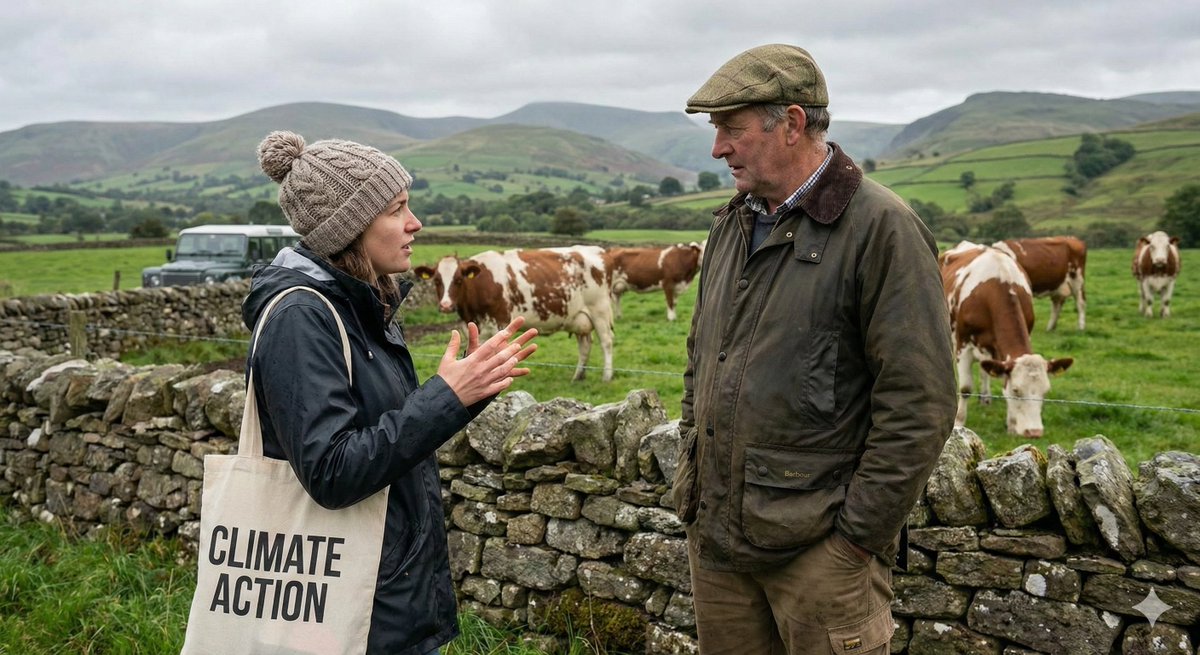
Activist: "Your cows are fed soy from cleared rainforests."
Farmer: "My cows eat grass."
Activist: "All cattle eat soy."
Farmer: "Mine don't. They're ruminants. Grass is literally what they're designed to eat."
Activist: "Industrial cattle are fed soy."
Farmer: "I'm not industrial. I'm watching them eat grass right now."
Activist: "But most beef comes from..."
Farmer: "Most beef in Britain comes from grass-fed cattle. We have this thing called rain. Makes grass grow quite well."
Activist: "The statistics say...."
Farmer: "The statistics are global. You're standing in Cumbria."
Activist: "Still, the global supply chain..."
Farmer: "Doesn't include me. My supply chain is: grass to cow to butcher to customer. Four steps. No soy."
Activist: "You're an exception."
Farmer: "I'm the norm here."
519
6,222
42,315
980,699
Peter Borg-Neal retweeted

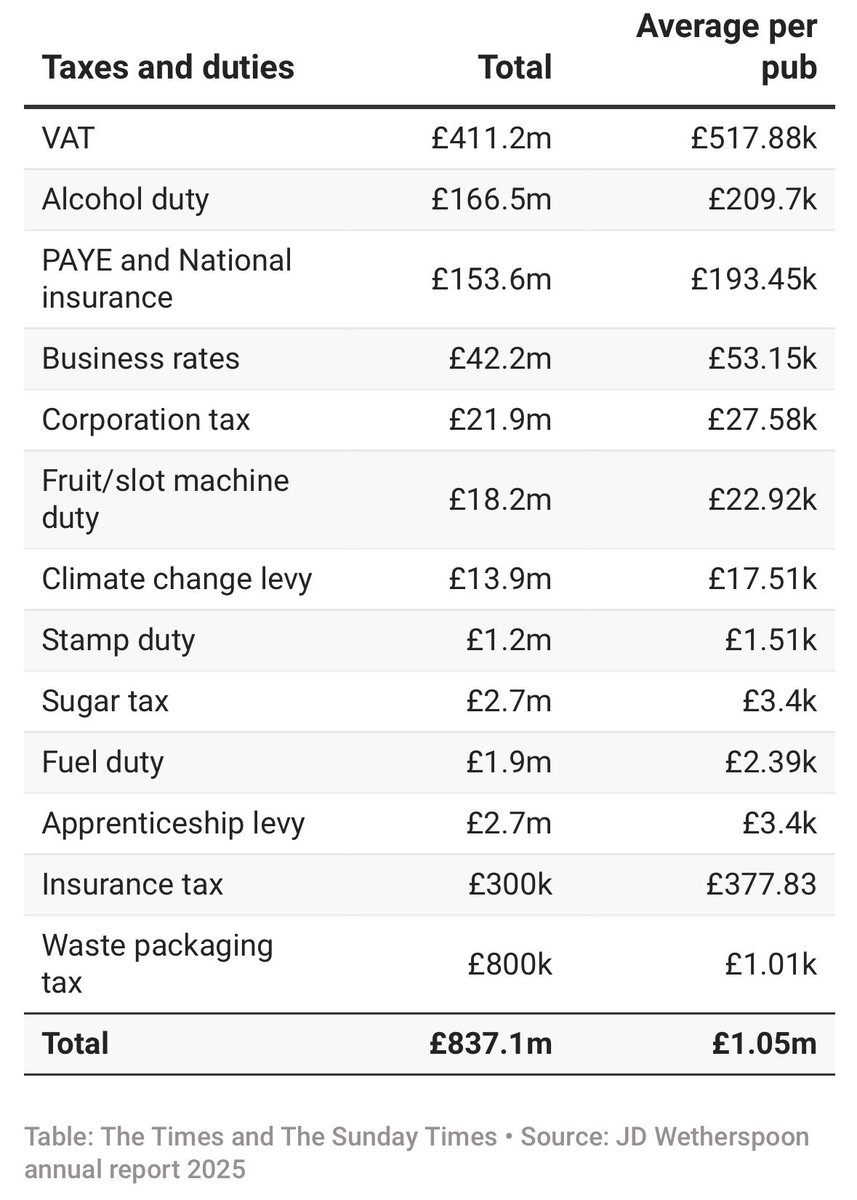
When each Wetherspoon pub is now paying over £1m in taxes, it is clear that businesses (especially in hospitality) are ludicrously overtaxed in the UK.
No wonder they are collapsing daily under the weight of tax.
They are being #TaxedOut

Tim Martin: Wetherspoons is paying £1m tax per pub - @thetimes
#TaxedOut
thetimes.com/article/d7ea17d…
1
12
35
4,856
19 Dec 2025
Very sad to hear of the passing of Sir Johnny Weatherby. A lovely man and a great servant to The British horse racing industry.
1
3
318
14 Dec 2025
This seems incredibly insensitive given the events on Bondi Beach.
14 Dec 2025

As Jewish communities come together to celebrate Chanukah, I send my warmest wishes to families across the UK and around the world.
May the Festival of Lights bring hope, peace and comfort.
Chanukah Sameach.
1
5
9,595
13 Dec 2025
This should be compulsory reading for everybody who is eligible to vote at the next election.
13 Dec 2025

This is one of the most important posts I've written. The public and policymakers have to understand that only drastic measures will save us from economic meltdown. (Link below)

2
1
5
1,187
Peter Borg-Neal retweeted

12 Dec 2025
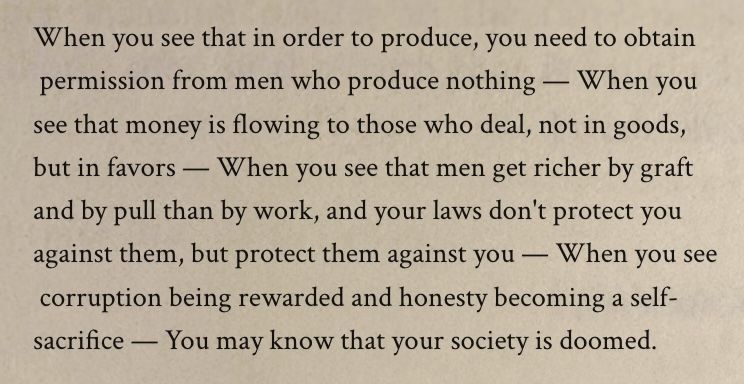
Can you believe Rand wrote this 70 years ago??
137
2,182
9,137
620,023