
@apsphysics' open access journal for cutting-edge research across physics and adjacent fields
- Tweets 4,006
- Following 182
- Followers 22,057
- Likes 813
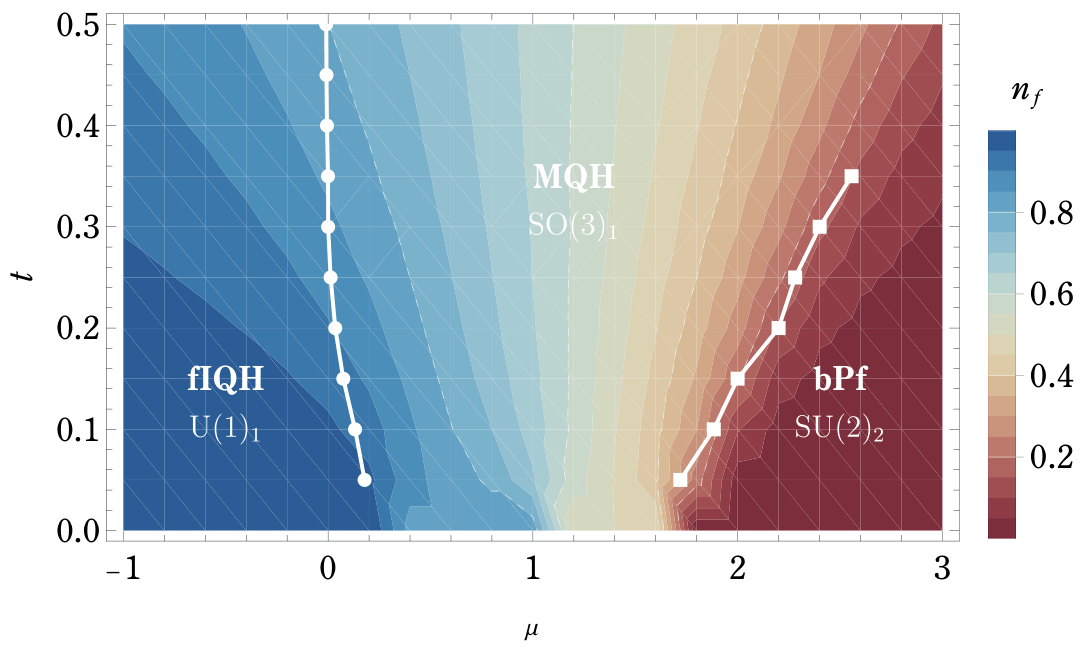

ALT Phase diagram showing μ on the x-axis and t on the y-axis. Color denotes the average fermion density, with higher values around or above 0.8 in blue and lower values around and below 0.2 in red. On the left is the fermionic integer quantum Hall phase, which is mostly blue. In the center is the Majorana quantum Hall phase, which is blue on the left and yellow on the right. On the right is the bosonic Pfaffian phase, which is all red.
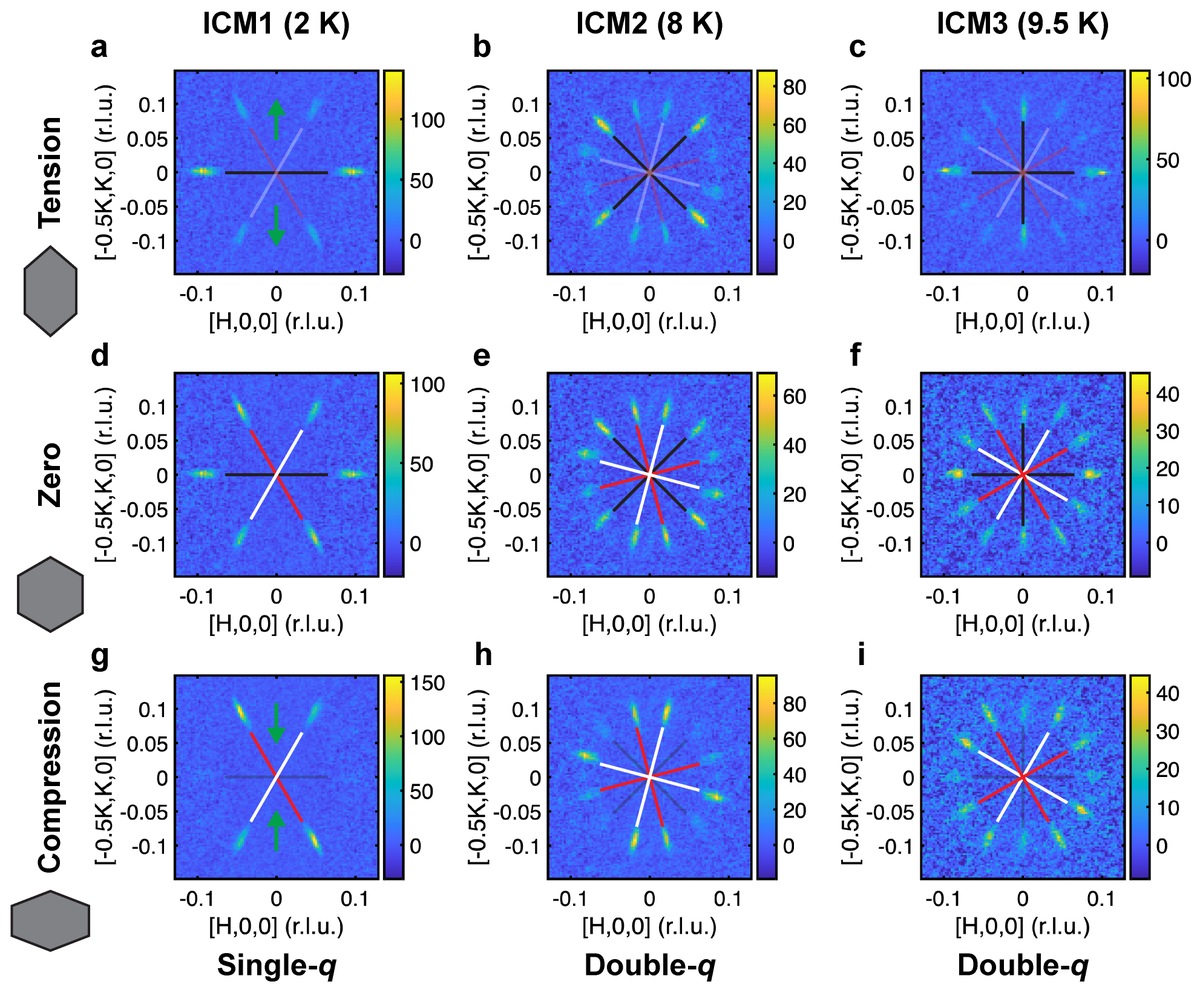
ALT Graphic showing SANS patterns. Each column shows an incommensurate magnetic phase with the first on the left, second in the middle, and third on the right. The top row shows SANS patterns measured under tension along the vertical direction. The middle row shows SANS patterns measured with no applied strain. The bottom row shows SANS patterns measured with uniaxial compression along the vertical access. The domain structure for each is shown by lines and crossed lines indicate a domain of double-q states.
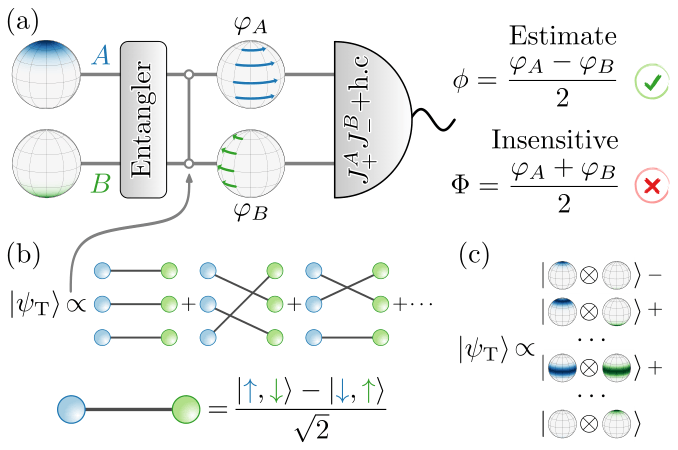
ALT Figure showing the differential phase sensing protocol in three parts. The top schematic shows how the atoms in ensembles are initially in their excited ground states, shown by globes with colorful areas on one of the poles. An entangler is applied, causing each to acquire a distinct phase, shown by horizontal arrows on the globes. Then a joint measurement estimates the differential phase for each. The second schematic shows the target state after the entangling process, which is an entangled Lieb-Mattis state. The last part of the figure shows the Wigner distributions represented by globes with colorful areas and alternating signs of all Dicke-state combinations.
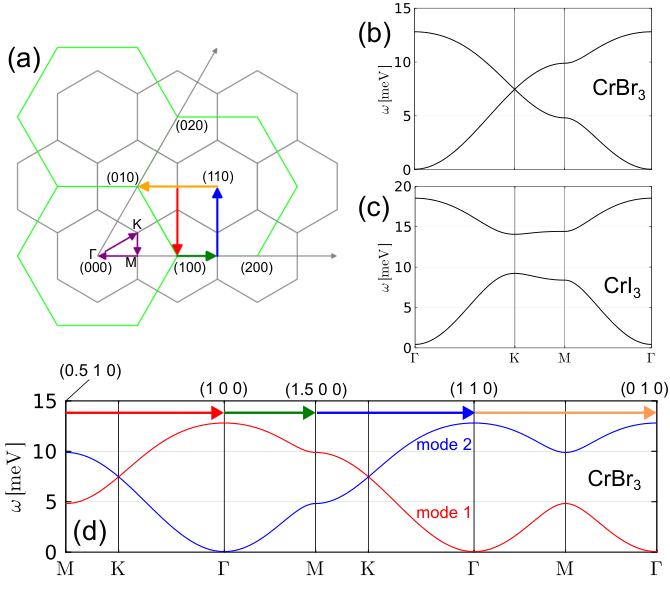
ALT A multi-panel figure showing magnon band structures in honeycomb ferromagnets. The top left panel depicts the Brillouin zone as hexagons with labeled high-symmetry points (Γ, K, M) and green, blue, and orange paths indicating momentum cuts. Two panels on the top right show energy vs. momentum line plots for CrBr3 and CrI3. The bottom panel labels the two magnon modes as red and blue undulating lines and the momentum paths used in experiments as green, blue, and orange arrows.

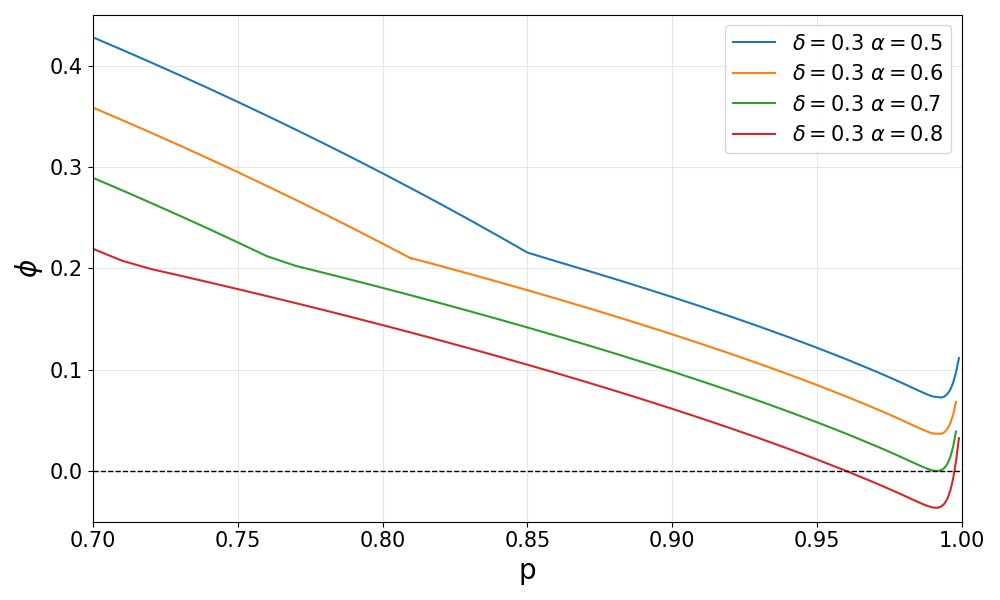
ALT A line plot shows external overlap p on the x-axis from 0.70 to 1.00 and annealed entropy on the y-axis from 0.0 to 0.4. Four curves, colored blue, orange, green, and red, correspond to increasing values of the parameter α. As α increases, the curves dip downward in the middle, forming a V.
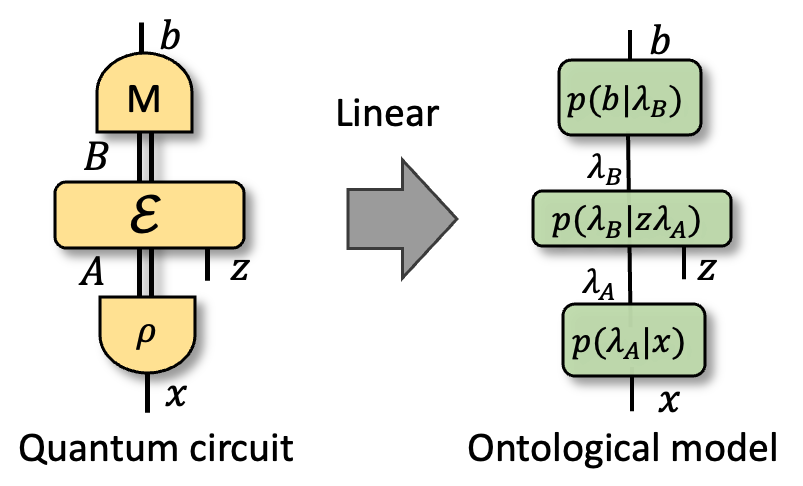
ALT A simple schematic showing a quantum circuit on the left and its corresponding ontological representation on the right. The circuit is a prepare-transform-measure circuit, depicted with two yellow half-oval shapes (M and ⍴) connected by double wires to a central rectangle (ε). An arrow in the center points to a linear and diagram-preserving ontological model of the circuit, depicted as three green rectangles connected by a single wire.
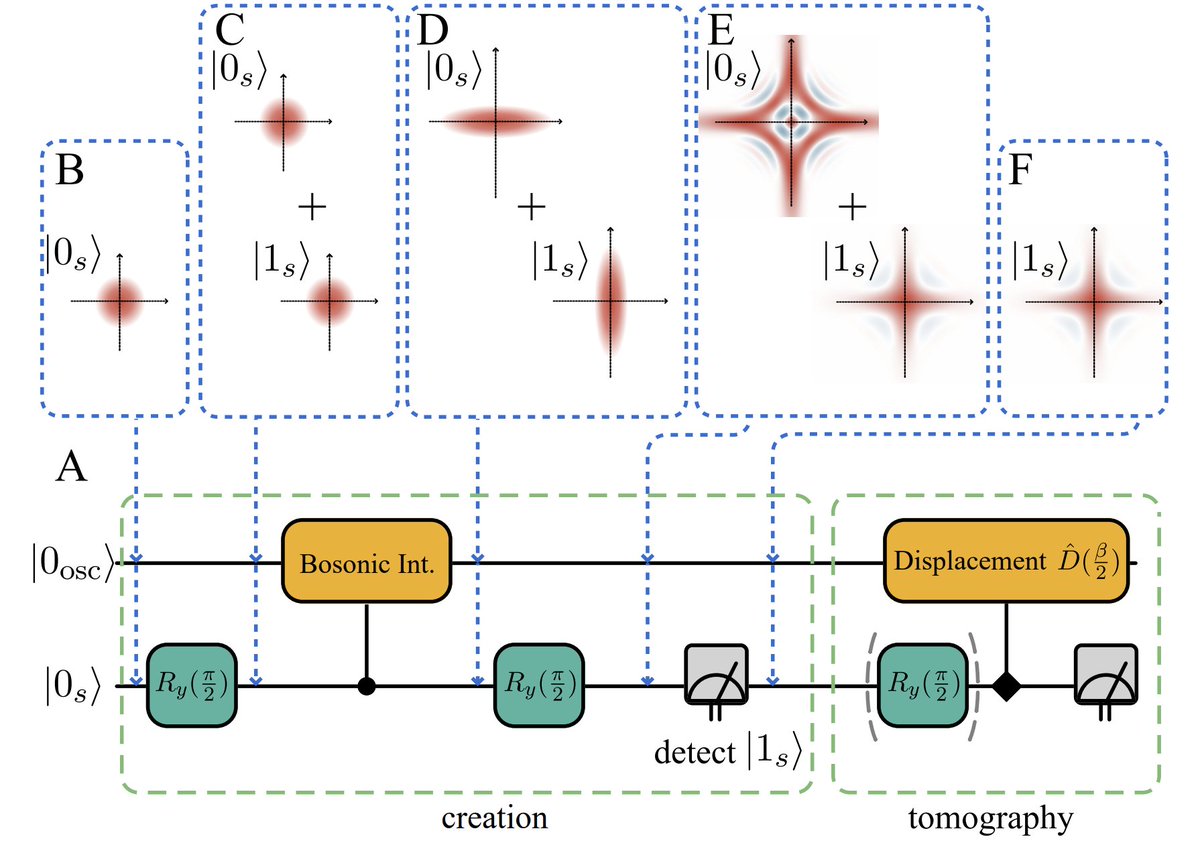
ALT An illustration of a circuit for generating superpositions of a quantum harmonic oscillator. On the bottom is the circuit diagram; the section on the left is labeled creation and on the right tomography. Five inset images show the state of the hybrid system at different points of the circuit. Each inset shows the Wigner function of the oscillator state and the corresponding state of the spin. First, the hybrid system is initialized n |0osc,0s⟩. Next, a Ry(π/2) rotation is applied to the spin qubit to create a superposition of |0s⟩ and |1s⟩. After applying the σˆz spinconditioned bosonic interaction, the oscillator and spin are in an entangled superposition state. The second qubit rotation Ry(π/2) then brings the hybrid state into a superposition of the form (|ζk⟩ − |−ζk⟩)|0s⟩ and (|ζk⟩ |−ζk⟩)|1s⟩ where |0s⟩ and |1s⟩ are entangled with the odd and even harmonic oscillator superposition respectively. A subsequent measurement projects the state to either the odd or even superposition.
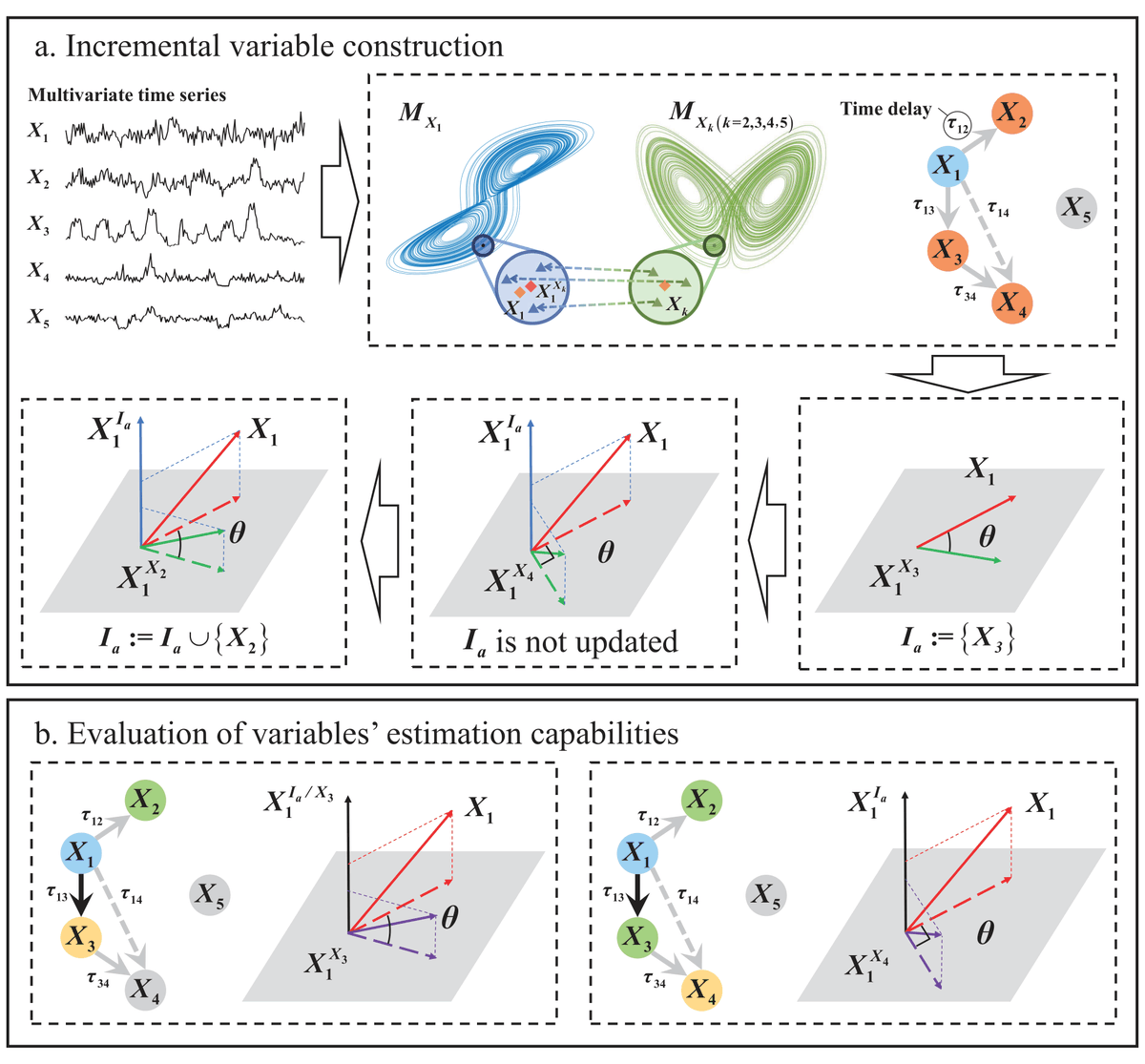
ALT Graphic showing the framework. The top portion shows incremental variable construction. It starts with a multivariate time series and shows the extended convergent cross mapping method. At the end of the framework process, the Ia value contains all mediator variables. The bottom portion shows an evaluation of variables’ estimation capabilities. For each, the target variable is shown by X1 and various colored nodes indicate different types of variables. Black lines show direct physical links and gray lines denote potential casual relationships. Solid lines represent physical effects and dashed lines indicate indirect physical influences.
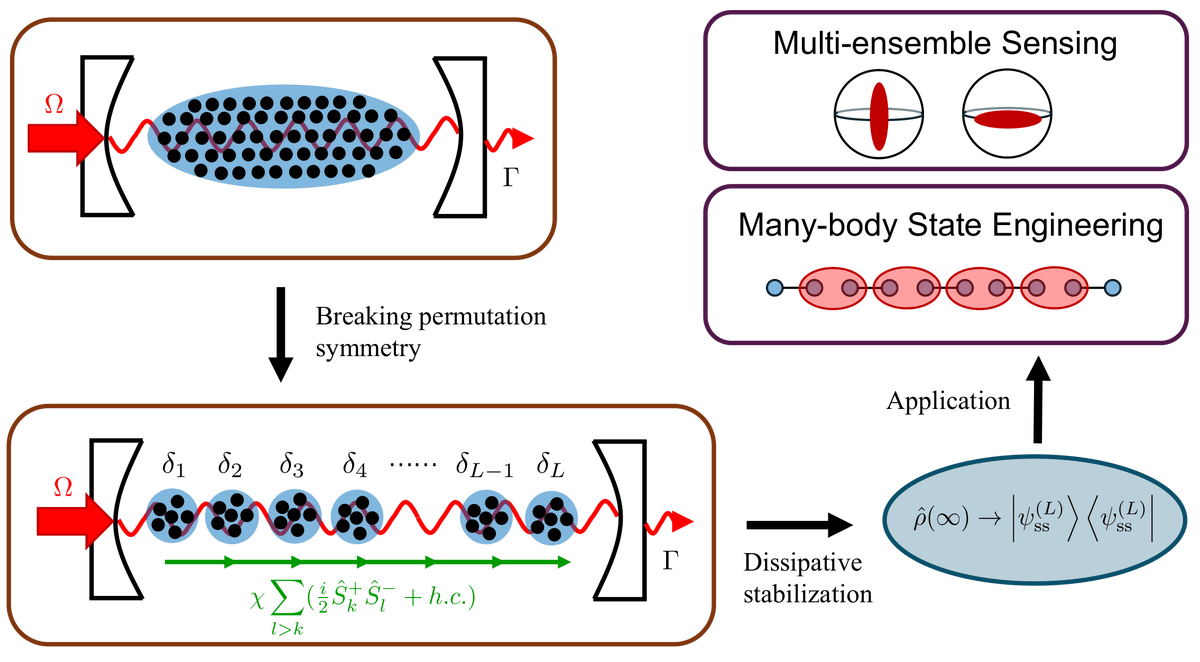
ALT Figure showing a cavity quantum electrodynamics platform for reconfigurable many-body reservoir engineering. At top left is a schematic that shows Ntot spins subject to Rabi drives and decay. An arrow labeled ‘breaking permutation symmetry’ points to another box showing different detunings. An arrow labeled ‘dissipative stabilization’ points from this box to a mathematical equation. Another arrow labeled ‘application’ points from this to representations of multi-ensemble sensing and many-body state engineering.
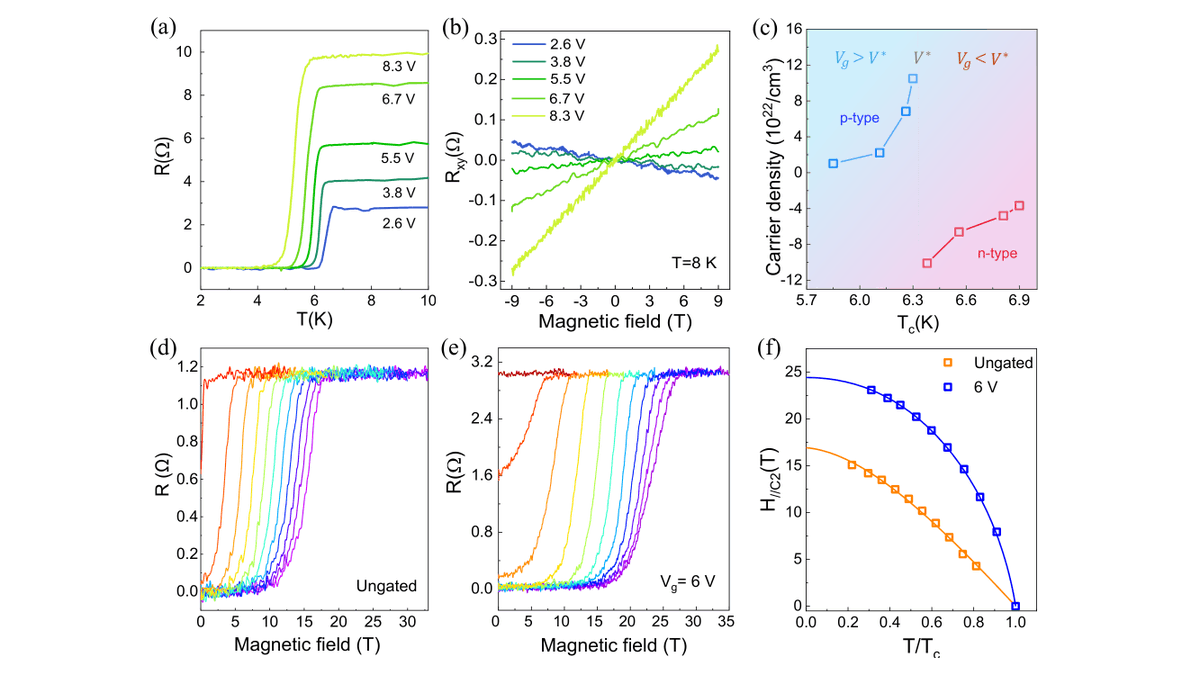
ALT Figure with six graphs. The first shows gate-dependent R-T curves in a NbSe2 multilayer, showing how the temperature decreases as the gate voltage is swept. The second shows gate-dependent Hall resistance. The third shows a temperature-carrier density phase diagram as the carrier type changes the sign at a critical voltage. The fourth shows the in-plane magnetic field dependent resistance under various temperatures. The fifth shows the in-plane magnetic field dependent resistance under various temperatures. The last graph shows a theoretical fitting of the temperature dependent upper critical field using a formula.