Joined July 2016
- Tweets 7,491
- Following 1,082
- Followers 5,925
- Likes 4,782
3,051 Photos and videos
Pinned Tweet

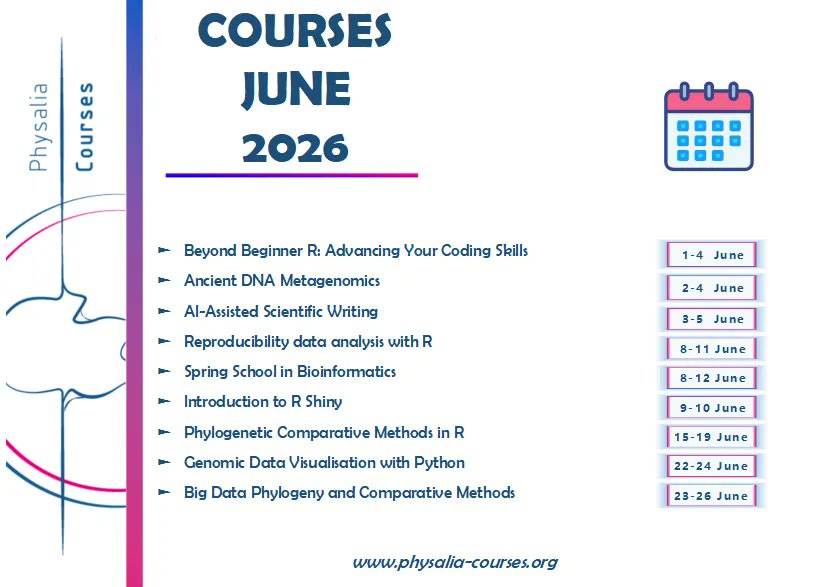
June is just around the corner, and there’s still time to join our upcoming courses and boost your data analysis skills with us: physalia-courses.org
1
1
1
283
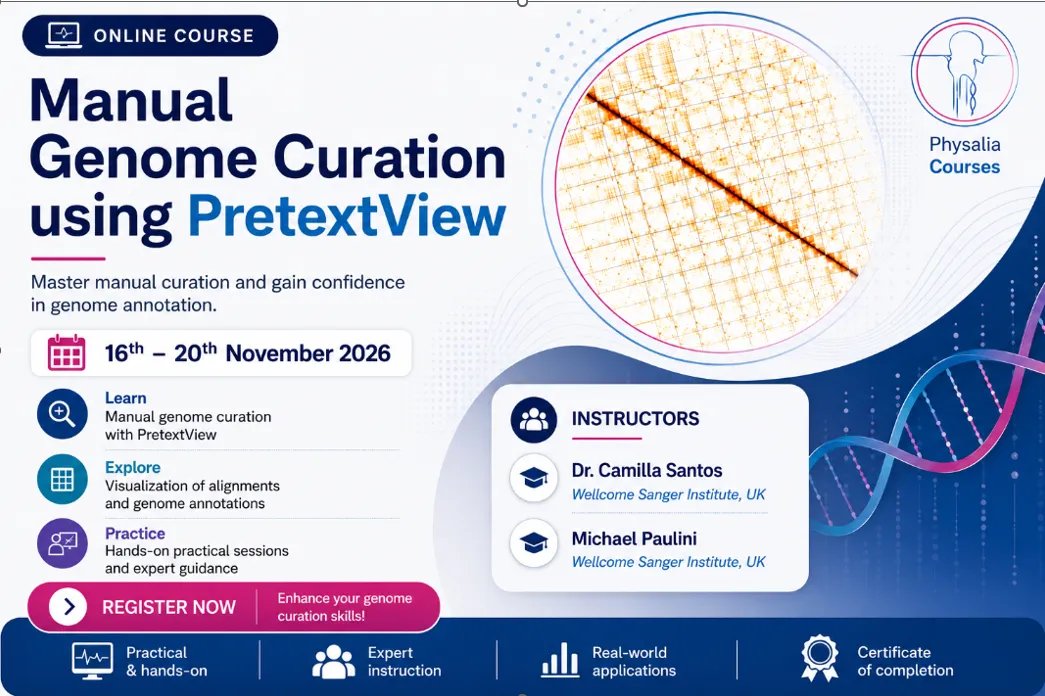
🚨Registrations are now open for the next edition of the Manual Genome Curation using PretextView with @camillapple99 and Michael Paulini @sangerinstitute
in November
physalia-courses.org/courses…
1
3
153
🚀 Course alert!
Boost your R workflow with AI! Join our 1-day online course (4 Aug) with @LuisDVerde
in collaboration with @TheFSBI
Learn to generate, debug, document, and visualize data with LLMs directly in R. No prior AI experience required!
physalia-courses.org/courses…
1
2
95
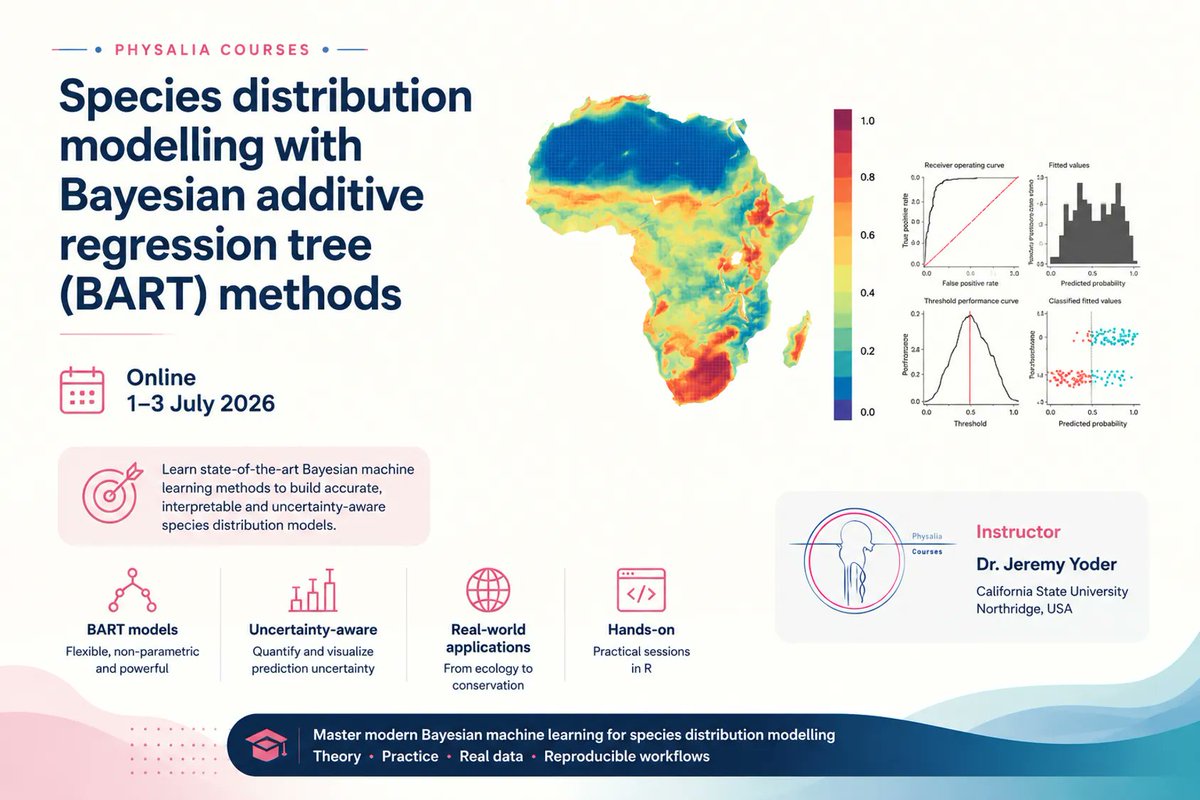
Master model Bayesian Machine Learning for species distribution models!
You can still join us in July: physalia-courses.org/courses…
6
23
1,062
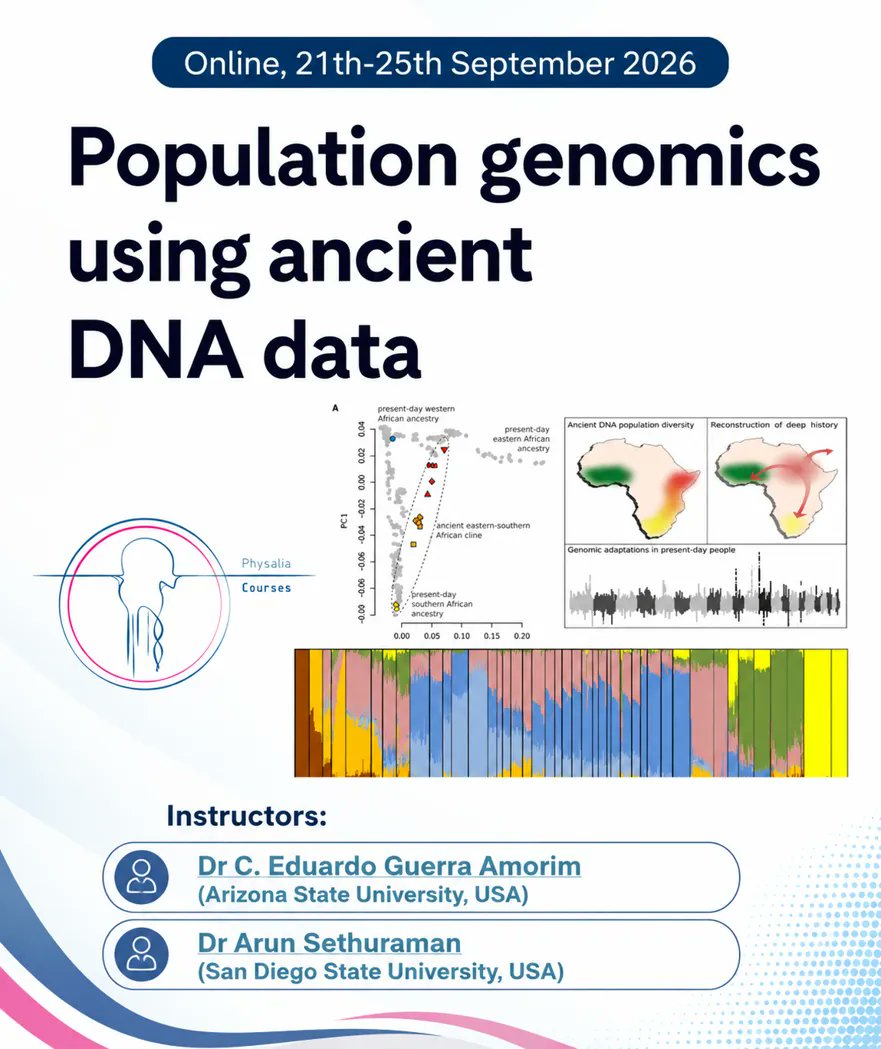
🧬Join our online course Population Genomics Using Ancient DNA Data (21–25 Sept) & learn how ancient genomes are processed, authenticated, and analysed to reconstruct population history, migration, demography & selection
physalia-courses.org/courses…
12
49
2,776
📊Turn genomic data into compelling, publication-ready figures with Python! Join our online course (22–24 June) and learn to create volcano, Manhattan, PCA, phylogenetic, circos, synteny, pangenome and genome browser plots using modern Python libraries
shorturl.at/hOp4K
8
301
Agent- and Indiviual-Based Modelling with
@netlogo (Berlin, 24–28 Aug). Registration closes June 30—few seats left! Hands-on course on ABMs/IBMs with Volker Grimm & Steve Railsback. Learn to design, implement & analyse models using NetLogo
physalia-courses.org/courses…
120
AI is changing how we code in bioinformatics. Join our online course (1–2 July) and learn how to use AI tools for real Python workflows: writing, debugging, and reproducible analysis in genomics.
physalia-courses.org/courses…
106
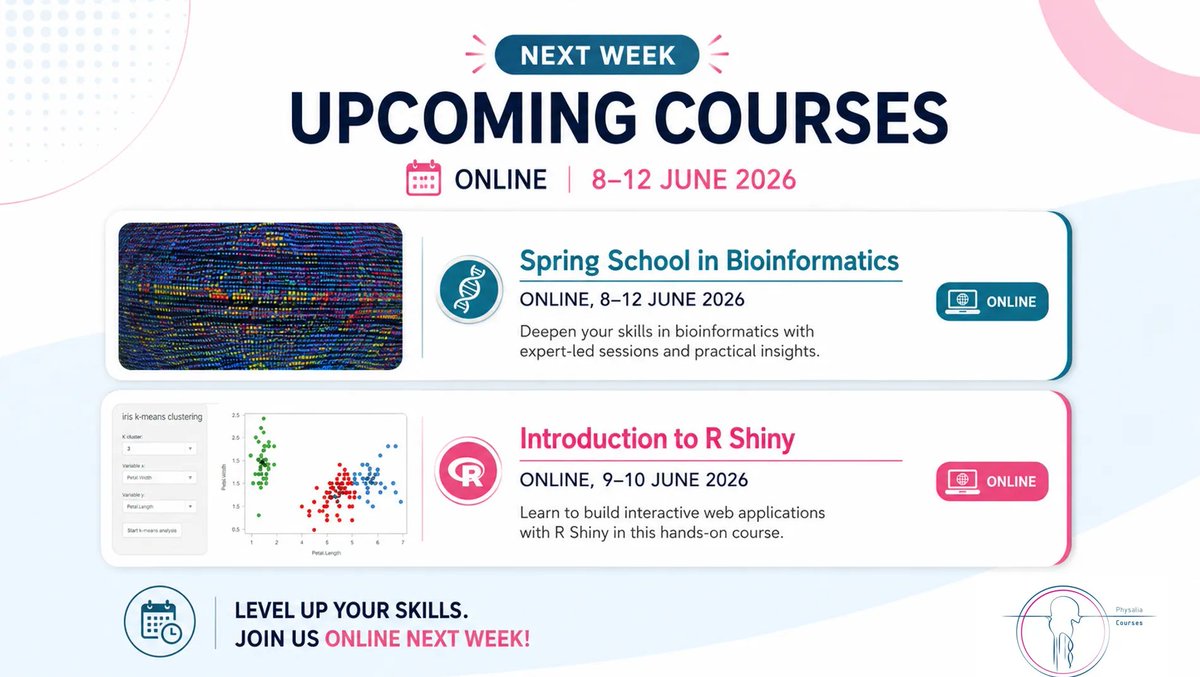
Next week with us!
- Spring School in #Bioinformatics- ONLINE, 8-12 June
- Introduction to #RShiny - ONLINE, 9-10 June @Ed_pheasant
physalia-courses.org/courses…
131
This course is designed to help participants build complete reproducible workflows—from project setup & version control to containerised analyses—enabling seamless collaboration, transparent research & long-term reuse of computational projects
shorturl.at/V2tpZ
158
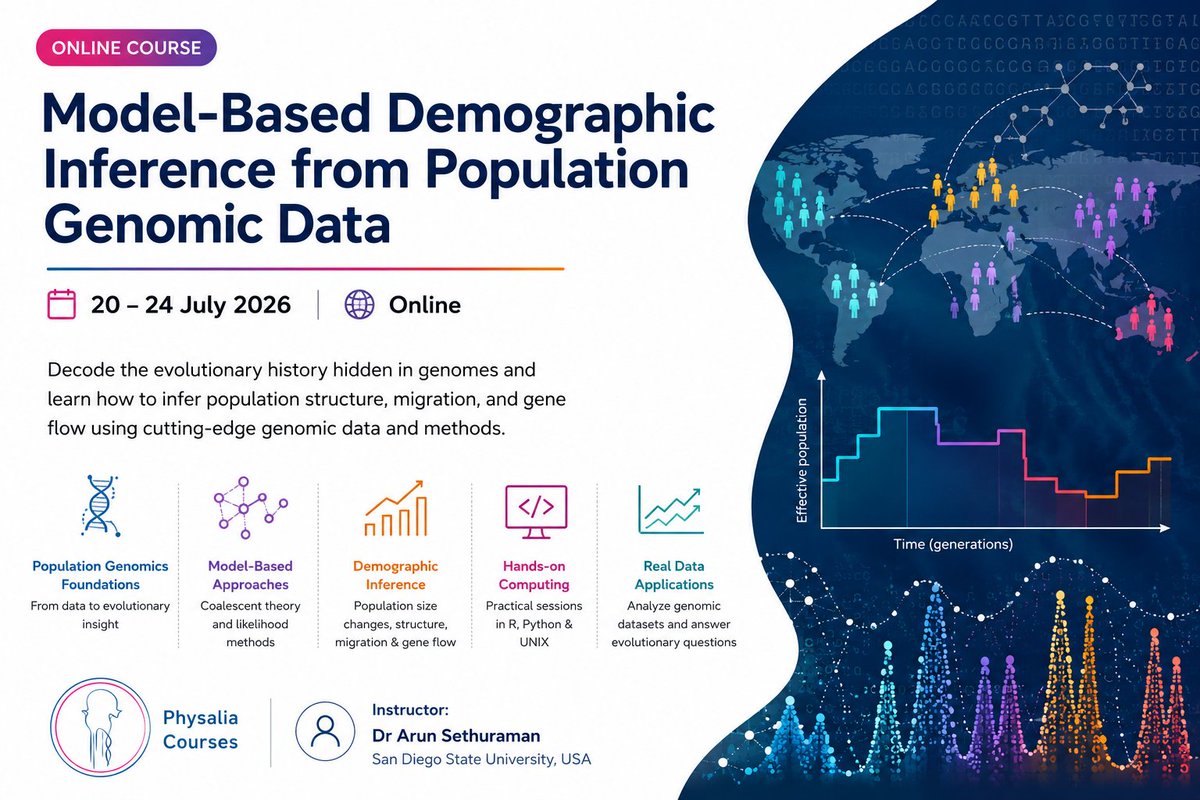
Model-based demographic inference is reshaping how we reconstruct population history from genomic data. 20–24 July (online) we cover SFS haplotype methods, theory hands-on inference on real data.
A must for population genomics researchers
shorturl.at/nvPUn
1
5
425
🚨 Course alert: Big Data Phylogeny and Comparative Methods: From Theory to Practice (online) 🧬 23–26 June.
Learn phylogenetic trees, trait evolution & comparative genomics in R/UNIX
physalia-courses.org/courses…
#Phylogeny #PhylogeneticComparativeMethods #Rstats
2
12
614
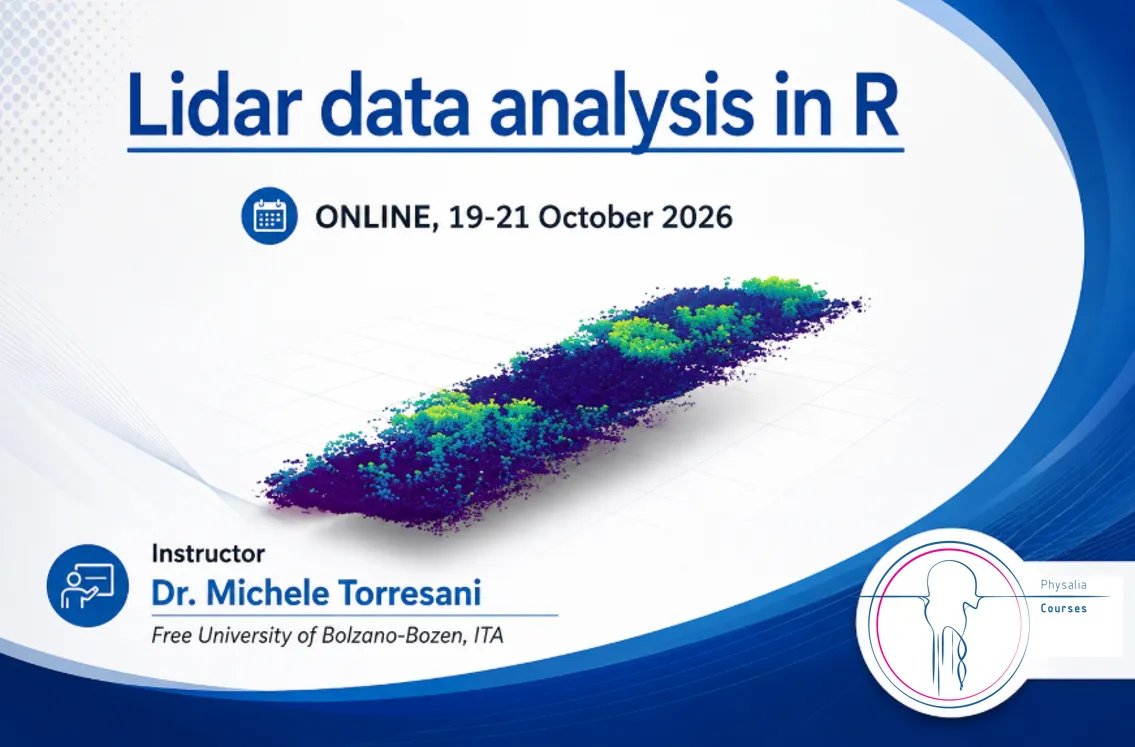
🚨Registration is open for the Lidar in R course with
@torre_mic
Learn key principles of LiDAR & gain practical skills in R using the lidR package to process point clouds, build terrain models & extract ecological metrics. Includes QGIS sessions for GEDI spaceborne LiDAR data
1
6
332
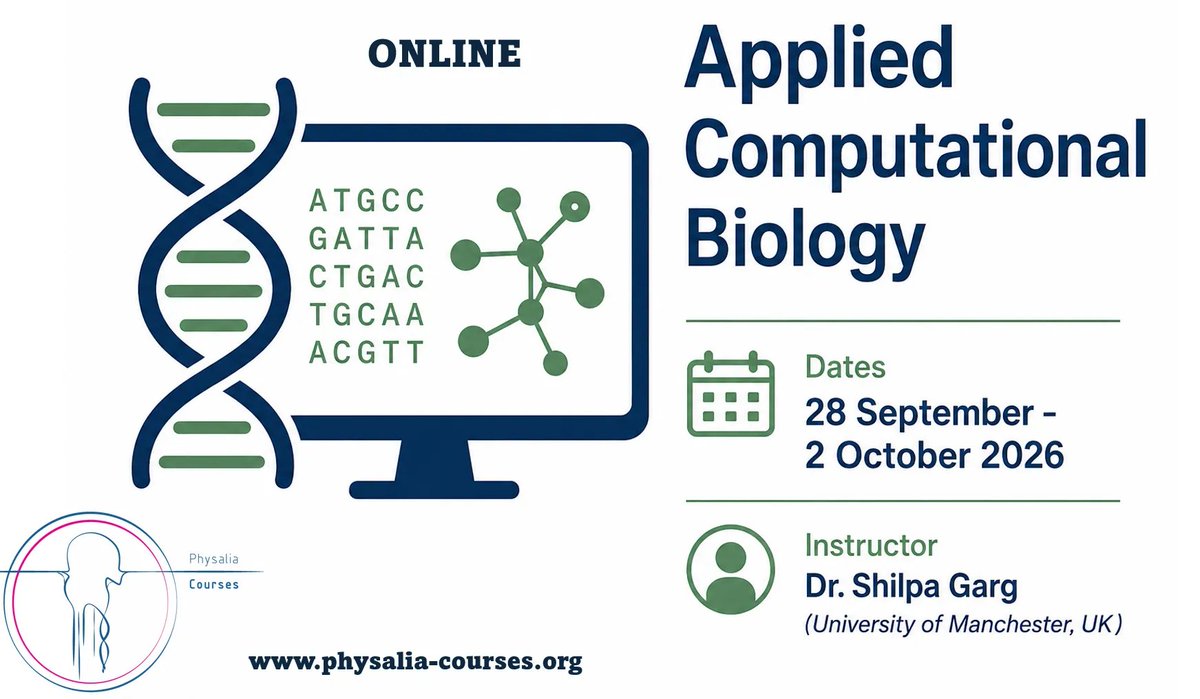
🚨 New course: Applied #ComputationalBiology is now open for registration!
Hands-on training using real datasets & mini-projects in genome assembly, metagenomics, pangenomics, scRNA-seq & metabolomics.
physalia-courses.org/courses…
12
499
⏳Last days to apply!
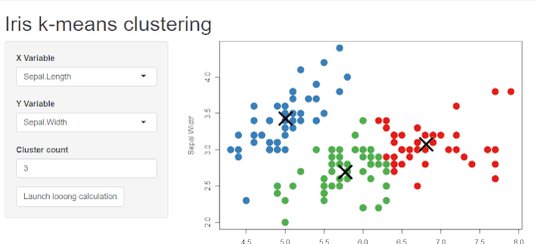
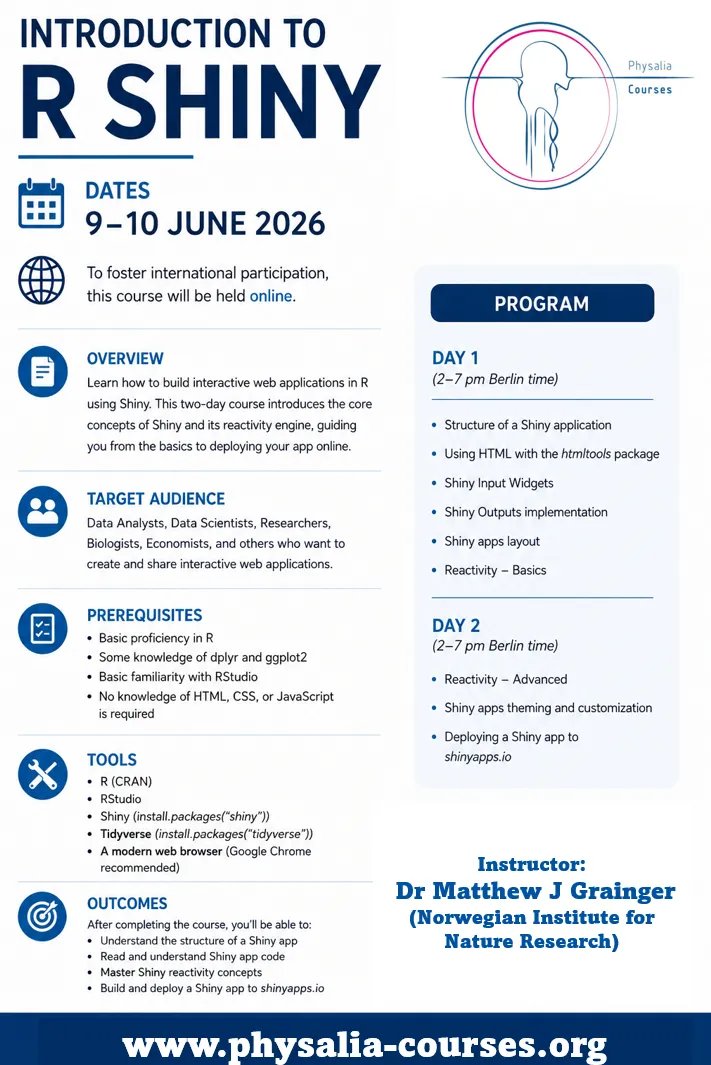
🚀 Introduction to R Shiny (9–10 June, online)
Learn to build interactive web apps in R—no web dev needed!
From basics to deployment on shinyapps.io.
Apply now and bring your data to life!
physalia-courses.org/courses…
173
As a thank you to our community, past participants can request a 40% discount on books in the Decoding Evolution series. The coupon (DecodingEvolution26) is valid from June 1, 2026 to June 1, 2027, with unlimited uses, and can be applied at checkout on
link.springer.com/book/10.10…
2
3
236
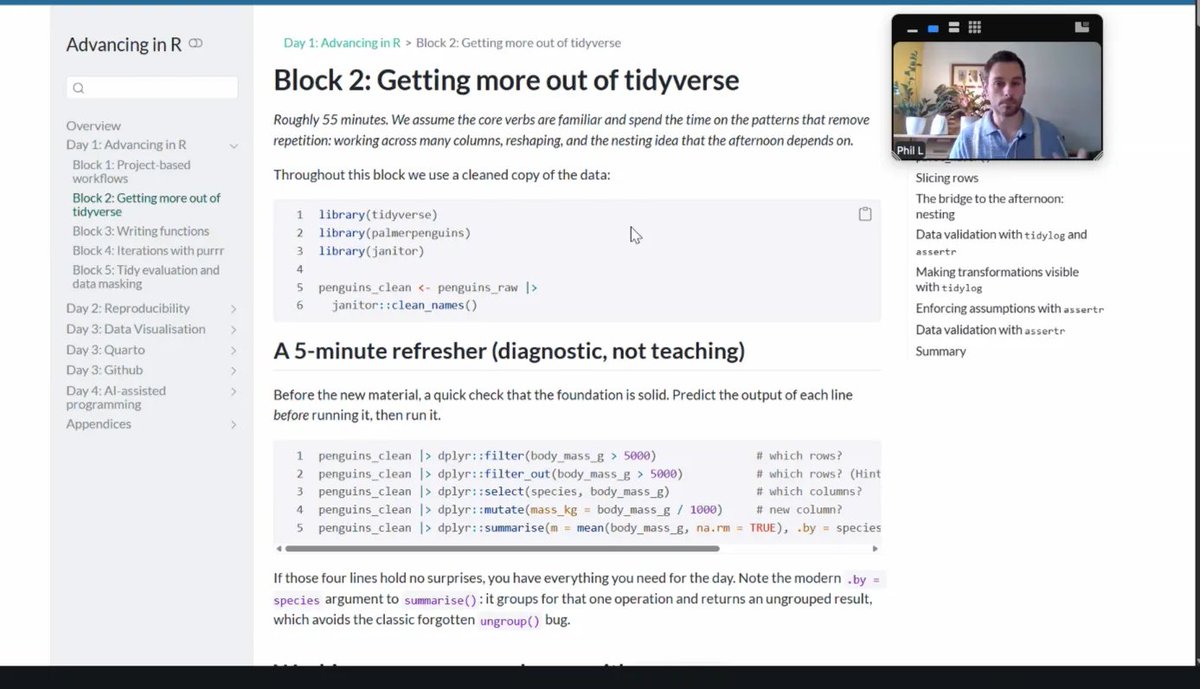
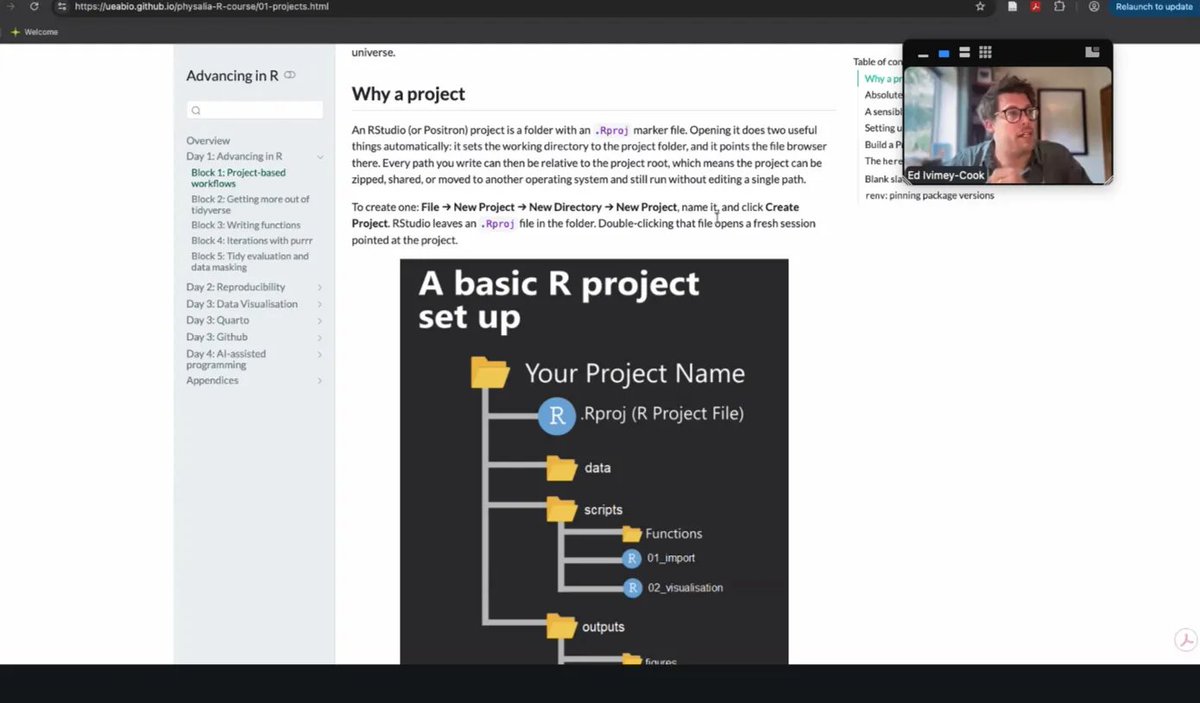
🚀 The new edition of Beyond Beginner R course is now underway. A few improvements this time:
- 2 instructors
-More R reproducibility examples
- Quarto workflows
- Handling large datasets
- Integration of AI tools
shorturl.at/R97jw
1
161
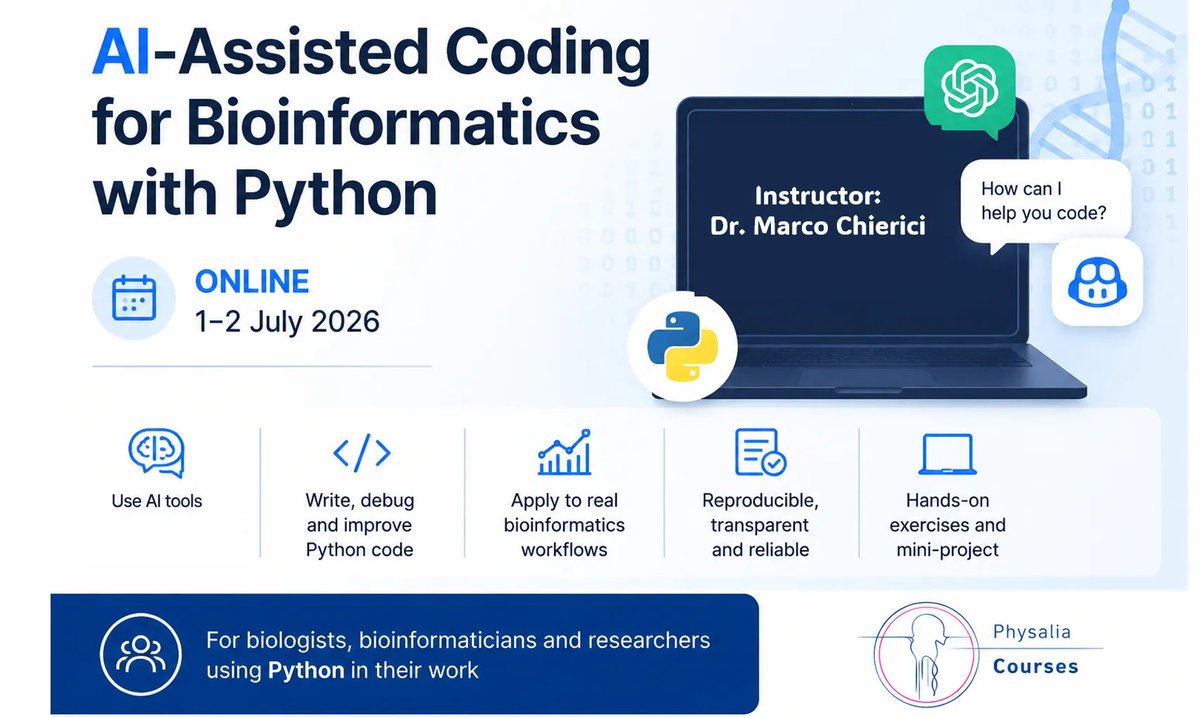
🧠✨Course announcement: AI-Assisted Coding for Bioinformatics with Python
📅 1–2 July - Online
In this hands-on course, we’ll explore how to integrate AI into Python-based research in a practical and reproducible way
physalia-courses.org/courses…
#Python #AI
121
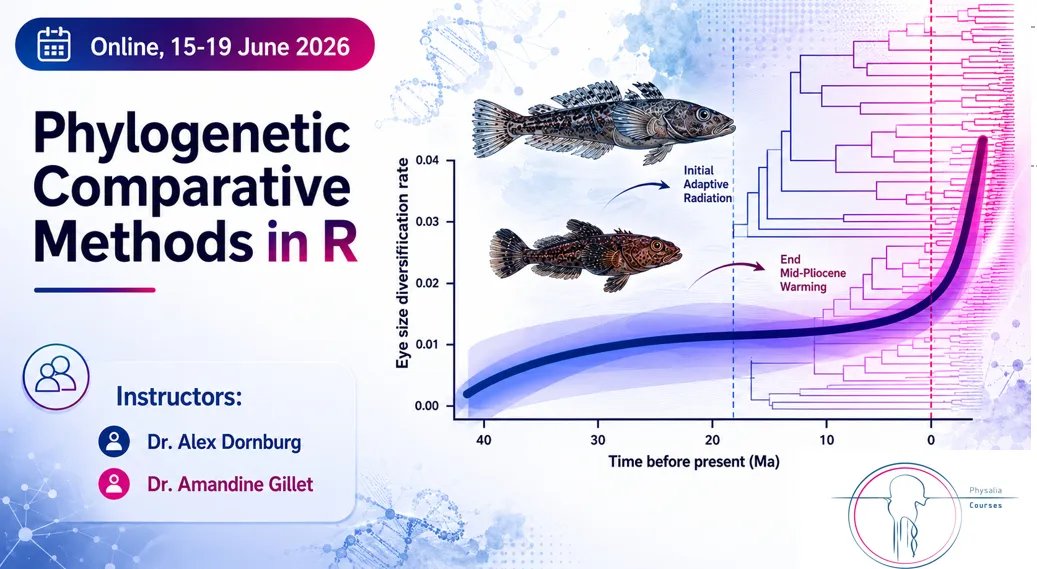
🚨Join us for the 6th edition of the Phylogenetic Comparative Methods in R course 🧬(15–19 June, online) Learn how to build ultrametric trees, study trait evolution & diversification using R. Hands-on tutorials real datasets theory
physalia-courses.org/courses…
1
7
283
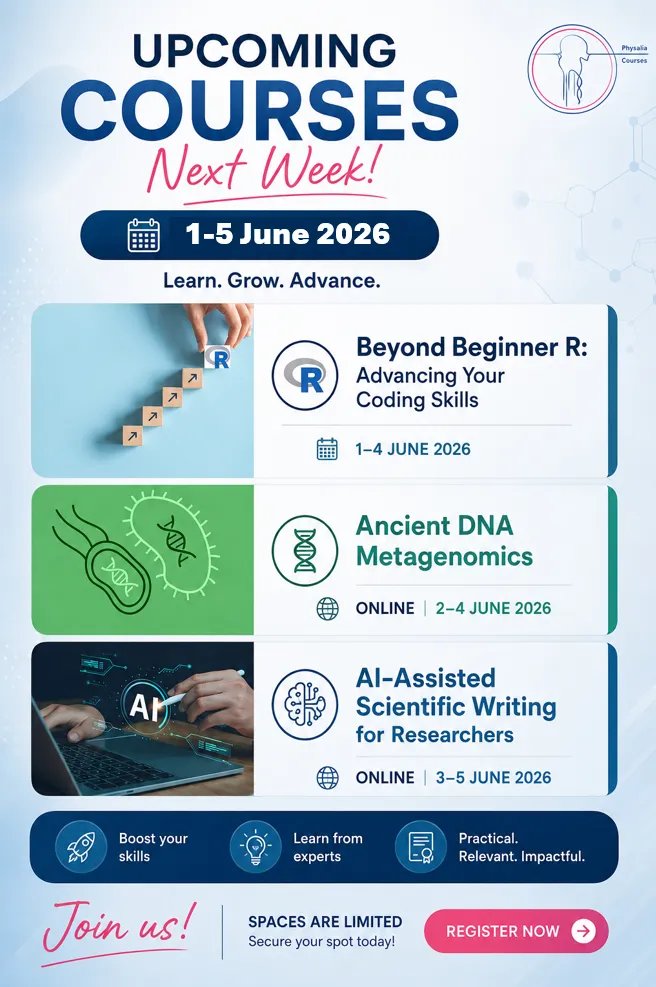
📢 Next week with us!
🔹 Beyond Beginner R (1–4 June)
🔹 Ancient DNA Metagenomics (2–4 June, Online)
🔹 AI-Assisted Scientific Writing for Researchers (3–5 June, Online)
shorturl.at/DitHA
#Bioinformatics #RStats #AI
167