
607 Photos and videos










Jun 11
Going full Armageddon on some weeds. These things are crucial for xeriscaped landscapes IMO
3
7
2,681
Jun 10
Going to get a bit nerdy here, but I had a token and cost optimization idea I wanted to test for design engineering and frontend teams.
Warning: this is a long post. But for teams running a lot of AI-assisted frontend work, the difference could add up quickly, potentially to hundreds of thousands of dollars depending on model, workflow, and volume.
TLDR:
Tailwind used substantially fewer AI coding tokens than CSS Modules because agents could usually edit styles directly in component class strings instead of reading and modifying separate stylesheet files.
The hypothesis
I started looking at whether we can improve token efficiency without losing accuracy when building UI. Specifically, when an AI coding model makes styling changes, does Tailwind use fewer tokens than CSS Modules (What we currently use)? I've used Tailwind for many years and find it to be faster and easier to maintain. Why wouldn't this apply to AI agents too? The hypothesis wasn't that Tailwind is universally better, but that keeping styles in component markup may reduce file reads, cross-file edits, and context requirements for style tasks. CSS Modules often require the model to work across both the component and a separate stylesheet, which could increase token usage. This was not intended as a universal cost benchmark. Results should be interpreted as differences in token workload, with actual costs depending on each provider’s pricing model.
The setup
I created a test app with two branches of the same React/Vite application. The only differences were the styling approach and corresponding AGENTS.md guidance. The app was intentionally minimal, with identical visuals across both branches, and organized into a set of design system components used on a single route to give the model realistic component-level files to work with.
The Tailwind branch used utility classes directly in React components plus a single CSS file containing only the Tailwind import. Its AGENTS.md: “This is a React Vite app using TailwindCSS for styles. Always utilize Tailwind’s utility classes without adding additional customizations.”
The CSS Modules branch used component-specific CSS module files colocated with each component, a common setup where styles are maintained separately from markup. Its AGENTS.md: “This is a React Vite app using CSS Modules for styles. Component styles are imported from a module file colocated in the component's directory.”
The harness
I used Pi as the coding harness. Pi is a popular coding harness with read and edit tools, session continuity, and model-reported token usage. Each styling branch was ran 3 times with the same rules:
- One fresh Pi session per branch.
- The same ten prompts per branch.
- The same prompt order per branch.
- The same model per comparison.
- The same system prompt per branch.
- The same allowed tools: read, edit, write.
- No builds, tests, formatters, linters, screenshots, or visual checks during the measured run.
- No retries and no corrective follow-up prompts.
Within a branch, the same session continued across all ten prompts. Between branches, the repository and context was reset so generated changes from one styling system could not leak into the other. The ten prompts were style-specific changes and were designed to be simple enough that both systems could make the change, but varied enough to require repeated styling edits. The finalized runs produced changes for all ten prompts in both branches.
Here's the 10 prompts that were used:
1. Make the buttons slightly more compact while keeping the primary button visually stronger than the others.
2. Increase the space between buttons and keep the row centered on the page.
3. Make the buttons feel softer by increasing the corner radius without changing their labels.
4. Make the primary button darker and make its hover state clearly visible.
5. Make the secondary buttons feel more subtle while preserving their readable text.
6. Make the keyboard focus state more noticeable and consistent on every button.
7. Improve the small-screen layout so the buttons stack cleanly on narrow viewports.
8. Make all buttons a little wider while keeping their text style unchanged.
9. Slightly warm the page background while keeping the buttons visually neutral.
10. Add a very subtle pressed state to the buttons without adding any visible text.
Token usage was collected from Pi's JSON event stream. For each assistant message, Pi recorded:
- input tokens
- output tokens
- cache read tokens
- cache write tokens
- total tokens
- assistant message count
- tool calls
- tool paths
- changed files
For analysis, total token usage is the primary metric. That's the value reported by the model provider through Pi for each assistant message, added up across all ten prompts. It's especially important for Anthropic models, where much of the reported usage appeared as cache read and cache write tokens. The Claude Opus 4.8 run reported very small direct input token counts but large cache categories. Those cache categories are included in total tokens, because they are part of the model-reported usage for the session.
The models
The experiment was ran with GPT 5.5 and Opus 4.8 with medium reasoning.
GPT 5.5 result averages:
Tailwind
Total tokens: 46,163
Input tokens: 18,623
Output tokens: 1,428
Cache read tokens: 26,112
Assistant turns: 22
Tool reads: 3
Tool edits: 10
Changed prompts: 10 of 10
Elapsed time: 129.7 seconds
CSS Modules
Total tokens: 102,310
Input tokens: 27,875
Output tokens: 1,731
Cache read tokens: 72,704
Assistant turns: 30
Tool reads: 15
Tool edits: 10
Changed prompts: 10 of 10
Elapsed time: 165.5 seconds
With 5.5, Tailwind used 56,147 (54.9%) fewer tokens and was 21.6% faster to completion. The edit count was the same, but CSS Modules caused substantially more reading and context gathering.
Opus 4.8 result averages:
Tailwind
Total tokens: 90,447
Input tokens: 46
Output tokens: 2,828
Cache read tokens: 81,914
Cache write tokens: 5,659
Assistant turns: 23
Tool reads: 3
Tool edits: 10
Changed prompts: 10 of 10
Elapsed time: 120.9 seconds
CSS Modules
Total tokens: 147,765
Input tokens: 50
Output tokens: 4,279
Cache read tokens: 134,908
Cache write tokens: 8,528
Assistant turns: 25
Tool reads: 6
Tool edits: 12
Changed prompts: 10 of 10
Elapsed time: 127.0 seconds
With 4.8, Tailwind used 57,318 (38.8%) fewer tokens and was just 4.8% faster to completion on this one. Tool calling was much less all over the place for this one, but CSS Modules still caused more file interactions than Tailwind.
So why was CSS Modules more expensive in this setup? A model editing CSS Modules has to manage at least two surfaces: The React component that applies the class, and the module stylesheet that defines the class. Even when the class names already exist, the model may inspect both sides to understand what is safe to change. When class names need to be added or adjusted, the model may need to edit both the component and the CSS module as well as the css properties needed for the desired styling changes. That increases file traversal, assistant turns, and cached context. Tailwind coordinates many of those style decisions with the model's Tailwind training data into the component file with style properties handled in the Tailwind compiler rather than the model writing them. For these prompts, that meant the model simply added or edited existing className strings rather than navigating between markup and stylesheet definitions.
This experiment does not prove that Tailwind is always cheaper for AI coding. It does not prove that Tailwind produces better code. It does not prove that Tailwind improves human maintainability. It does not prove that CSS Modules are inefficient in larger or better-structured applications. It does not measure long-term maintenance cost. It does not measure complex refactors, accessibility work, state changes, animation systems, responsive redesigns, or large design system integration. It does not isolate provider billing cost perfectly, because providers may price cache reads, cache writes, input tokens, and output tokens differently. It also does not remove all possible harness effects. Pi provides an amazing coding environment, which is a strength, but the result is still partly a measurement of model behavior inside Pi. If I had used codex for the 5.5 runs and claude code for the 4.8 runs I wouldn't have been able to control the harness consistency.
The conclusion
It's not that Tailwind is magically token-efficient, it's that for style changes, Tailwind often lets the model stay in the component file and edit existing utility classes while letting the Tailwind compiler write the styles for it outside of the token context. CSS Modules more often require separate stylesheet inspection and edits. In a coding harness, that extra file interaction becomes extra context, extra assistant turns, and extra tokens.
The fair takeaway is if a team expects AI agents to perform UI styling edits, Tailwind may reduce token usage a pretty meaningful amount compared to a CSS Modules setup. However, this should still be retested on larger, real application surfaces before being treated as a general rule. If you're a team looking for more token optimization in your workflows and aren't already using Tailwind, maybe this optimization would provide this test's level of impact.
8
5
74
11,547
Jun 10
Yes I'll move this to a blog post with visuals and a repo. Just wanted to brain dump the findings here.
9
750
Jun 5
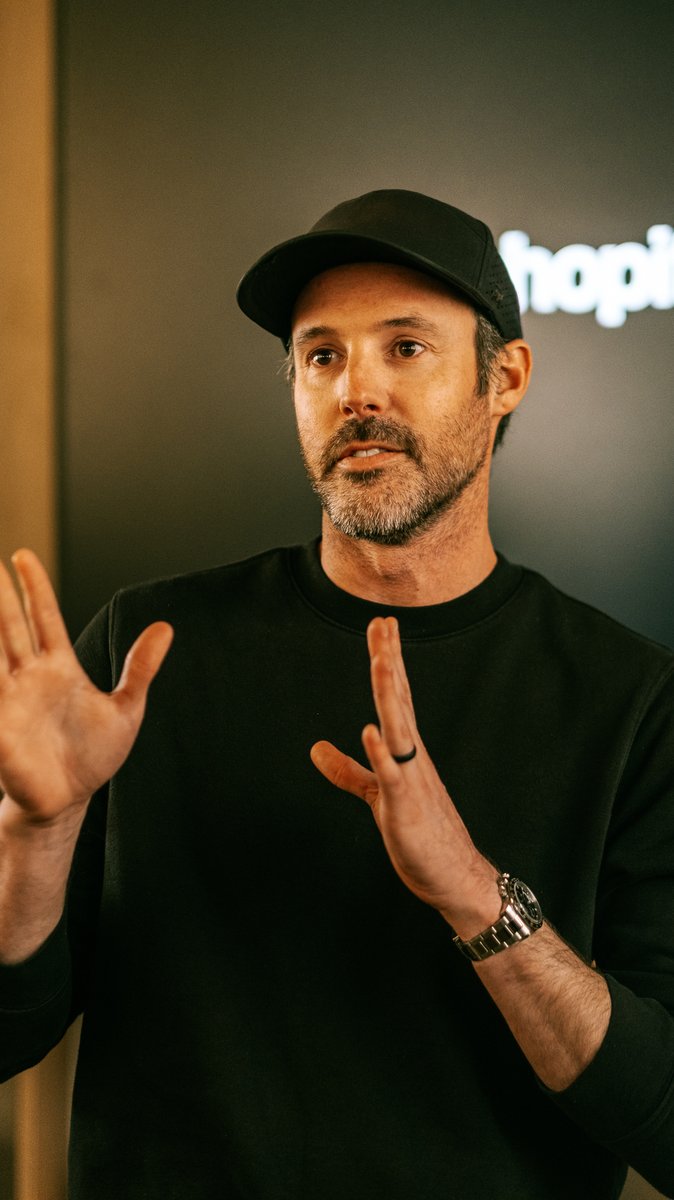
Very grateful for the crew to have me in town to share the exciting progress we're making on Shopify's product surfaces!
Jun 5

@PixelJanitor blowing minds last night with his Demo at @Shopify Dot Design's demo night. You know you're onto something when the whole crowd gives a "ohhh ahhhhh" at your motion and interaction work.

7
81
19,363
Jun 5
NYC drivers should automatically get charged a fee every time they honk their horn. They just use it as sound language as it is now.
2
1
26
2,482
Jun 5
What's everyone's favorite list/table virtualization libraries these days?
7
1
30
11,821
Jun 3
Working with people like @argyleink is always so refreshing.
When you surround yourself with people who aren’t afraid to approach the impossible, impossible stops being the outcome and starts being the opportunity.
2
14
2,404
May 27
If you don’t care enough about the things you can control, how can we expect you to improve the things you can’t?
May 27

The precise dialog I have with myself reviewing portfolio work. Take care, it matters 🤌
12
1,673
May 27
Pretty much all flexbox woes have gone away by adding this to the global css of every new project.
*, ::after, ::before, {
min-width: 0;
min-height: 0;
}
If you add this to an existing project, check for ui regressions (most likely will be some!).
9
5
233
23,231
May 19
Incredible opportunity here. This team is stacked!
May 19

The design team @owner is cooking, and we're looking for more design-builders to join the team. We're building tools to keep your local independent restaurants open and thriving, and there's a lot to do.
Come and work with us. DMs open.
2
1
27
9,625
May 18
Applications for the fall design apprenticeship cohort now open! Details here 👇🏻
May 18
We're growing our Design Apprenticeship Program @Shopify, opening applications for our Fall cohort today! We've expanded the program to include brand design in addition to product design 😎
Come join us
shopify.design/dap
2
38
6,403
May 17
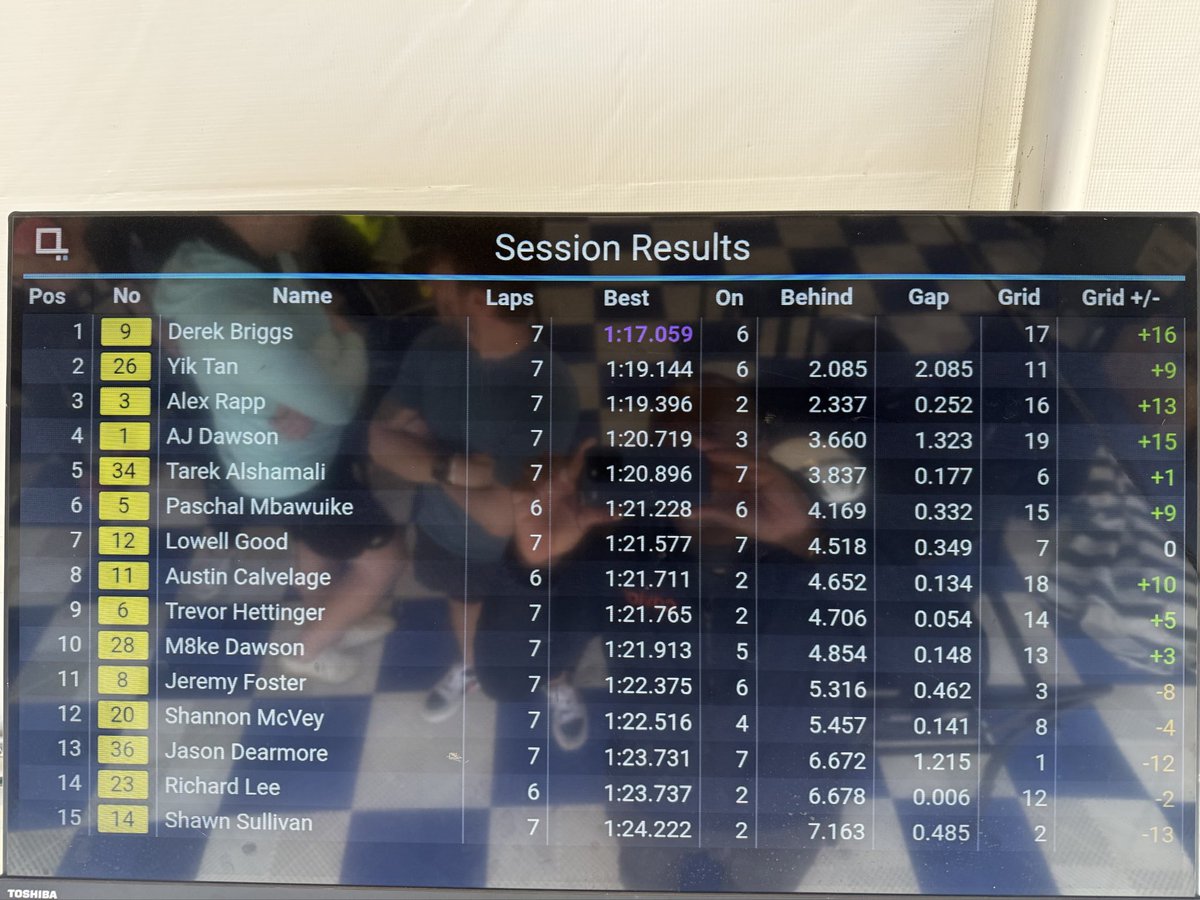
Back on the track today. I forgot how much I miss racing.
1
13
1,342
May 14
Shopify is hiring an Eng Manager for the Brand Design Studio. This team builds our most visible web experiences that push the boundaries of the web at award winning levels. Looking for strong frontend creative engineering leadership. Fun guaranteed.
DM @jane_maguire to chat!
1
1
26
2,650
May 12
Multiple agents running on multiple machines, River running in Slack, and me in the IDE hand polishing markup and interaction delights on each. These past couple weeks at Shopify have been on whole new level of where we're headed.
Especially for the Shopify Design Team.
3
1
42
2,130
Derek Briggs retweeted

May 12
Long overdue chat with @ridd_design about the story of @shop and how the way we're designing @Shopify is changing
May 12

this week's episode with @katarinabatina is all about how designers can shape strategy and make big bets with AI 💪
Shop is one of my favorite products so I've anticipated this behind-the-scenes for a longggg time
Enjoy :)
youtube.com/watch?v=0YjO7wSh…
2
8
83
13,170
May 9
If there is an opportunity for infinite canvas, Jaytel and Marvin will sniff it out.
Check this out:

For the past 3 years, @MSchwaibold and I have been researching and collecting "Tiny UI".
It's not about "good" or "bad" design— just unique, sometimes wild clusters of dense information.
We gave it a proper home: tinyui.org/
1
57
7,977
May 8
5.5 fast mode with low reasoning is meeting all the needs. Consistently happy with the results of this setup.
1
8
2,038
May 8
If you're looking for a new design opportunity and aren't getting responses, @jane_maguire and @JaredTredly shared some valuable insights into what they look for when looking at candidates for the Shopify Design team: linkedin.com/events/74550209…
1
1
94
6,233