
Electronic sound maker & producer in London. I don’t write pop music , I write unpopular music. PlanetRobot on Bandcamp,Spotify,Apple Music,etc 🏴
Joined March 2021
- Tweets 10,623
- Following 1,458
- Followers 966
- Likes 6,622
1,226 Photos and videos









PlanetRobot retweeted

I think possibly the best thing about Elon Musk becoming a trillionaire is how angry it makes a bunch of losers who've never built a thing in their lives.
1,375
5,359
53,786
572,274
PlanetRobot retweeted

Jun 12
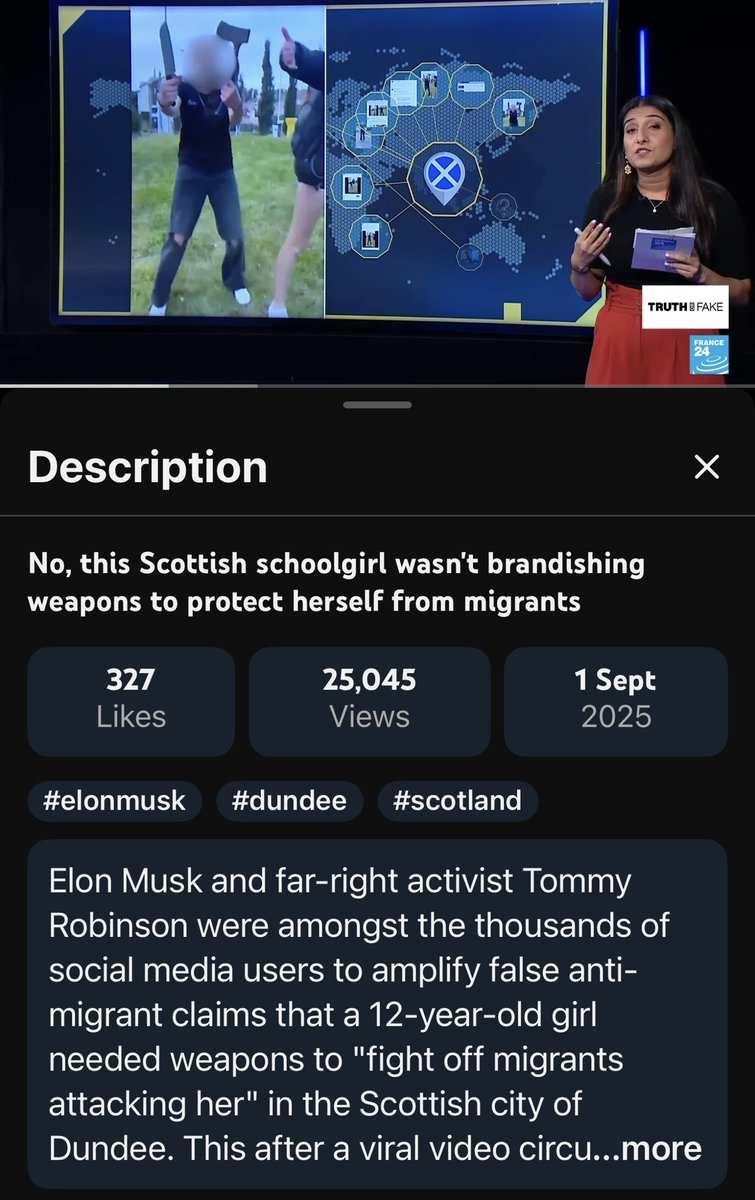
Remember the viral video last year of the young Scottish girl who brandished a knife and axe at a violent migrant to protect herself and her sister? The video was called “propaganda” and dismissed as far-right lies by liberal media and leftists.
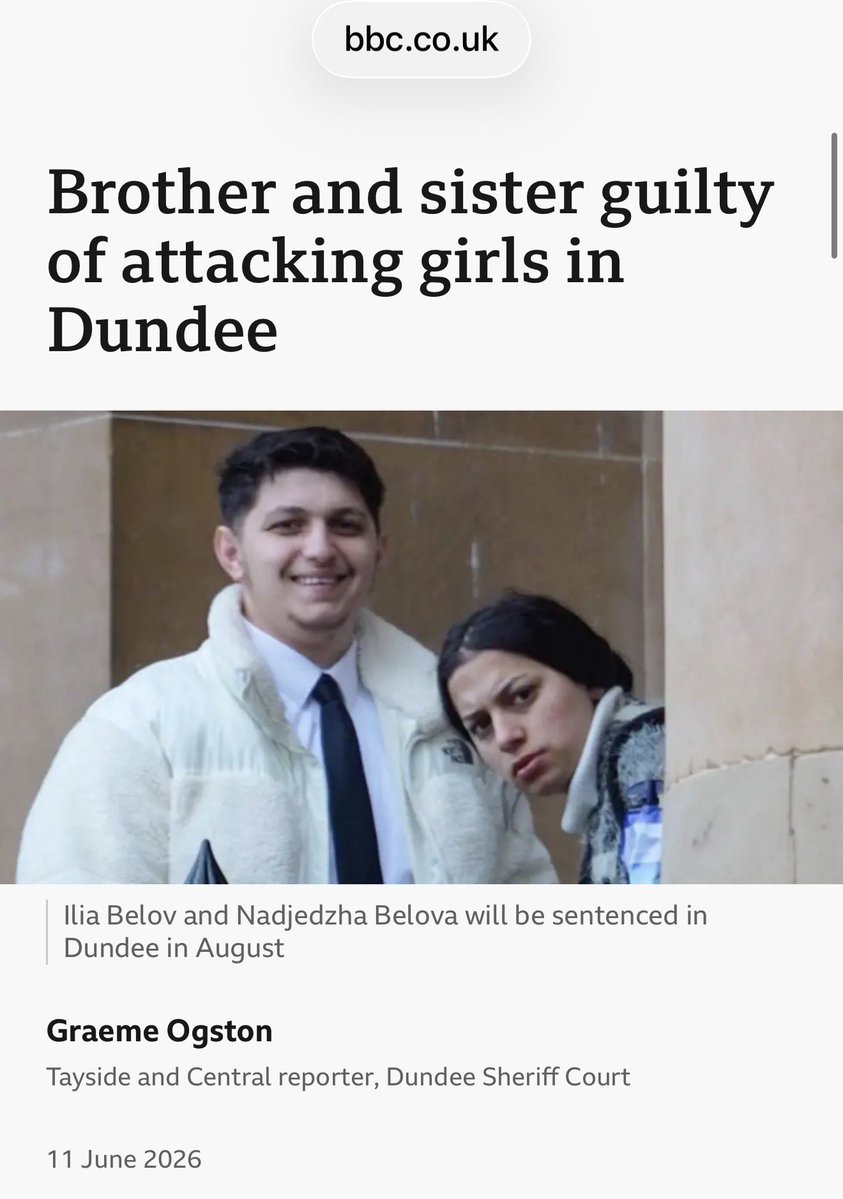
A trial showed the girls weren’t lying. A migrant pursued sexual activity with one of the children and came back to violently assault them with his migrant sister after he was rebuffed. Both the migrant siblings were convicted.
@France24_en @VedikaBahl, the French state-funded news broadcaster, called the girls liars and blamed @elonmusk and Tommy Robinson.
Read about the conviction: bbc.co.uk/news/articles/cx2d…

197
4,501
18,488
256,664
PlanetRobot retweeted

Entrepreneurs such as Musk typically keep only about 2% of the value they create for humanity. The other 98% goes to their co-workers, associated businesses, and customers - humanity itself.
Musk becoming a trillionaire means humanity has become vastly wealthier. He's created products at scale that would be unthinkable a decade ago. Satellite internet for remote communities in Namibia. Rockets to take science experiments into space. Electric cars for liberals to smell their own farts in.
The fact that Louis Goodall doesn't know this is pretty damning and shows that the News Agents are basically your mum doing a podcast.
Jun 12

Musk as a trillionaire- anyone as a trillionaire- is a grotesque economic, moral and political problem. We cannot have individuals with that level of power, whatever they might have achieved.
77
262
1,745
29,466
PlanetRobot retweeted
Jun 12
It’s actually a very moderate opinion. I think because your baseline is so extreme, you find moderate positions “unhinged.” It speaks to you, really, Owen. For example, you have no contrition over providing cash to a foreign fund that bailed out violent suspects including a man wanted for child r—pe and a felon who went on to m—rder.
15
100
2,237
32,871
PlanetRobot retweeted

My dear deluded Madam @leicesterliz,
One observes with a mixture of fatigue and faint amusement your latest proposal to whet the Online Safety Act yet further against those wicked souls who dare “incite violence and disorder” amid national crises.
How very convenient.
It permits the governing class to strike the pose of stern protectors of the peace whilst the root causes of that very unrest—failures squarely attributable to ministerial incompetence and ideological blindness—continue to fester unmolested.
Let us speak plainly, as Englishmen once did.
The State, through its servants in Parliament, bears a solemn and enforceable duty to safeguard the lives and property of the King’s subjects.
This is no airy abstraction drawn from dusty tomes, but a principle rooted in Article 2 of the ECHR (as domesticated by the Human Rights Act 1998) and long affirmed by the courts: the positive obligation to take reasonable steps to protect life where a real and immediate risk is known (see Osman v United Kingdom and the line of authorities following it).
A government that imports unvetted masses, refuses to deport foreign criminals with the vigour the public demands, and then responds to the inevitable disorder not with remedial action but with fresh gags on free speech, has manifestly abdicated that core duty.
The recent outrage in Belfast—another knife attack by a Sudanese national, predictably followed by public disorder—is not some spontaneous eruption of 'Twitter' malice. It is the predictable harvest of policies that prioritise the stranger over the citizen and legalistic hand-wringing over effective protection.
Public anger does not spring from thin air or mere online provocation; it arises when the primary function of government—securing the realm—is subordinated to every other fashionable fetish.
To then reach for yet more censorship is not statesmanship; it is the classic refuge of those who would rather punish the symptoms of their own misrule than confront the disease.
As one perceptive correspondent has rightly suggested, we require statutory duties upon ministers, with personal accountability for wilful neglect of public safety, and even mechanisms for dissolving a government that has comprehensively failed in its most elementary responsibility.
Such ideas are not radical. They are the bare minimum required if the social contract is to retain any meaning.
A polity unable to hold its rulers to account for endangering the people has already descended into something resembling anarcho-tyranny.
Tightening the Online Safety Act will achieve nothing save to confirm the public’s suspicion that the real threat, in the eyes of officialdom, is not the criminal element but the Englishman who notices.
History is littered with regimes that answered legitimate grievance with repression rather than reform; the results have seldom been edifying.
One can only hope that wiser counsel eventually prevails over this instinct to treat the British public as the problem rather than the victims of serial governmental dereliction.
Until that happy day, the nation will continue to observe, to remember, and—within whatever shrinking bounds remain—to speak.
Yours in profound contempt for those who invert the ancient duties of office,
A Gentleman from the Old School
#Beflast #Remigration
4
24
78
627
PlanetRobot retweeted

📣🚨 FSU Victory!!
The Free Speech Union has just heard from South Wales Police that it has withdrawn its guidance on “anti-Muslim hostility”.
The force had effectively adopted its own Islamic blasphemy law, instructing officers to record any conversation that went beyond “legitimate” discussion of Islam.
Under this guidance, criticism of Islam could have been recorded as an anti-social behaviour incident and potentially appeared on DBS checks, affecting someone’s ability to work as a teacher, carer, or in other regulated professions.
South Wales Police has backed down because the Free Speech Union threatened them with a judicial review if it chose to press ahead with the policy.
The force has described this move as a “pause” to the guidance — but we think it is highly unlikely to return.
We must also thank Shadow Equalities Minister @ClaireCoutinho for referring South Wales Police to the Equality and Human Rights Commission after we brought this issue to her attention.
Blasphemy laws were abolished by Parliament 18 years ago. We must not allow them to return through the back door.
Let this be a warning to any other public body — particularly police forces — considering the adoption of its own blasphemy laws.
Watch Lord Young below 👇
609
5,104
17,324
337,919
PlanetRobot retweeted

Jun 9
This is what the UK spyware proposal means.
There must be government spyware on every mobile device. It shall watch everything that happens, including always watching the screen, looking for things the government disapproves of.
When anything is flagged by the software as something the government doesn't like, the software must block it from being sent or displayed (in realtime).
The user of the device must not be able to shut this watching and blocking off. The only way to shut it off would be to ask the government or its proxies to do so for you, at their discretion.
Therefore the whole device must be locked down. Administrator rights and the decision of what software or operating system to run or not to run must be taken from the owner/user and handed to the government and its proxies.
Apple and Google are themselves working hard to lock down the devices they are involved in to shut out competition and establish a duopoly.
The UK government says it is "working closely" with Apple and Google and currently they synchronise and coordinate their communication on this subject.
The UK government is now proposing to mandate what would otherwise be illegal anti-competitive practices.
@GrapheneOS on the Apple and Google duopoly:
x.com/GrapheneOS/status/2053…
Statement from @signalapp
x.com/signalapp/status/20640…
@ReclaimTheNetHQ on the state spyware:
reclaimthenet.org/starmer-ca…
The government announcement:
gov.uk/government/news/new-p…
Jun 8

Our statement on the UK government’s demand that all content on all devices sold or used in the country be scanned, on the presumption of nudity, using a dystopian combination of age verification and content scanning. This proposal will not safeguard children. It endangers us all.
signal.org/blog/pdfs/2026-06…
241
3,407
14,186
1,516,385
PlanetRobot retweeted

Jun 8
Our statement on the UK government’s demand that all content on all devices sold or used in the country be scanned, on the presumption of nudity, using a dystopian combination of age verification and content scanning. This proposal will not safeguard children. It endangers us all.
signal.org/blog/pdfs/2026-06…
738
8,541
41,295
2,718,571
PlanetRobot retweeted

Jun 7
David Lammy is an absolute humiliation.
1,076
3,686
44,371
375,094
PlanetRobot retweeted
"Democracy" means listening to the demos; not imposing upon them the ideas of a cabal of communist retards.
7
59
1,348
7,394

The car that used to be in my garage is currently in an Earth-Mars elliptical orbit and will be there for at least 10 million years
Jun 6

Elon Musk sending a Tesla into space remains one of the most iconic and entertaining moments in SpaceX history. 🚀😂
14,942
22,242
245,998
28,462,543

Jun 6
8