Assistant Prof., Department of Biology, Wake Forest University | plasticity of perception | neurobiology of vision and face learning in paper wasps |
Joined January 2021
- Tweets 82
- Following 355
- Followers 376
- Likes 228
17 Photos and videos
Pinned Tweet

25 Aug 2025
I am recruiting PhD students to join my lab at Wake Forest University Fall 2026. Projects focus on the neuroethology and development of identity processing in paper wasps. Contact me if interested. Deadline to apply is Dec. 15th 2025. Please share! #PhDposition #PhD #wasplove
4
2
131
25 Aug 2025
I am recruiting PhD students to join my lab at Wake Forest University Fall 2026. Projects focus on the neuroethology and development of identity processing in paper wasps. Contact me if interested. Deadline to apply is Dec. 15th 2025. Please share! #PhDposition #PhD #wasplove
4
2
131
25 Aug 2025
For more information about the graduate programs at WFU pleas see this link: biology.wfu.edu/graduate/
28
25 Aug 2025
For more information about the graduate programs at WFU pleas see this link: biology.wfu.edu/graduate/
15
25 Aug 2025
I am recruiting PhD students to join my lab at Wake Forest University Fall 2026. Projects focus on the neuroethology and development of identity processing in paper wasps. Contact me if interested. Deadline to apply is Dec. 15th 2025. Please share! #PhDposition #PhD #wasplove
1
57
26 Sep 2024
Another amazing display by Emily Jernigan:

The beauty of butterflies (and moths) in our collection!
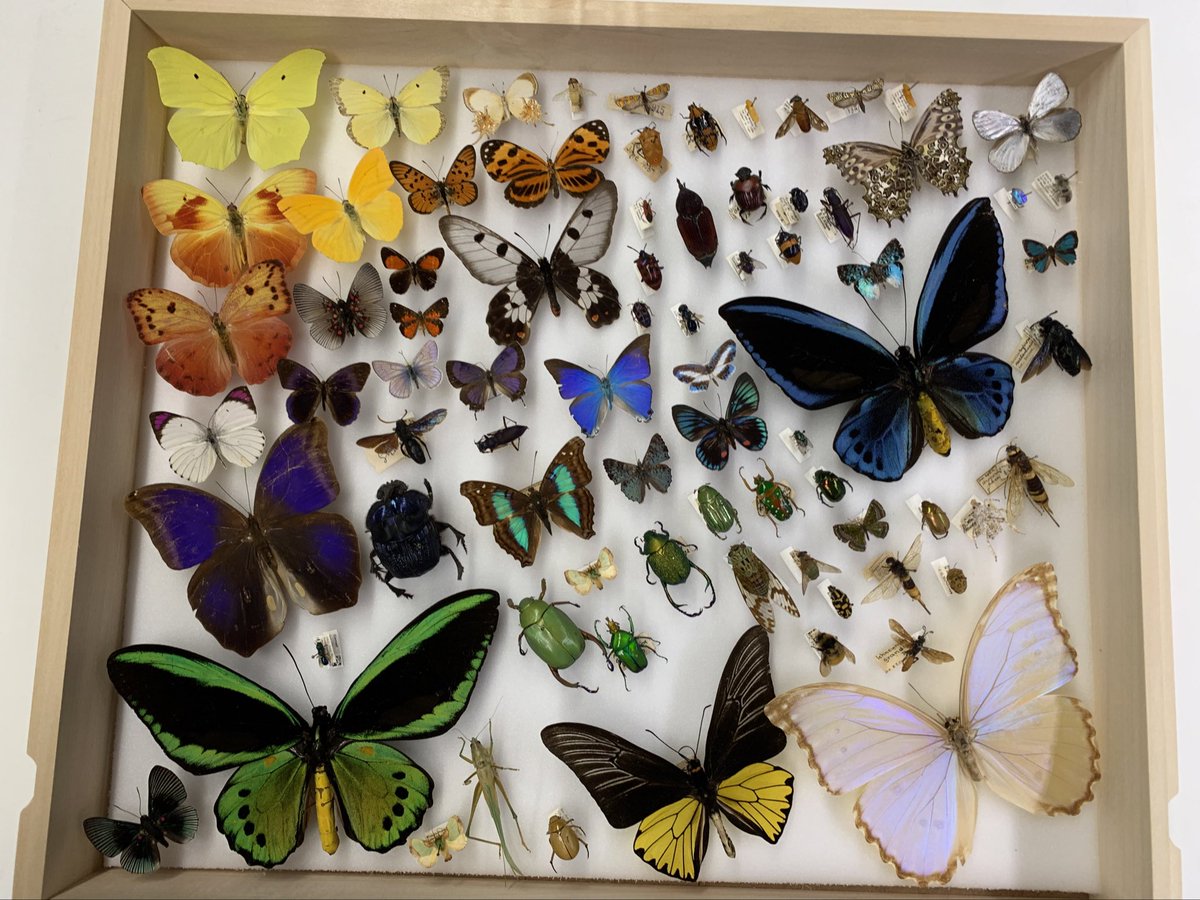
ALT An insect drawer full of colorful Lepidoptera from the Cornell University Insect Collection
2
14
683
29 Aug 2024
Check out this amazing work on the genome of a strange Polistes wasp parasite led by @MariaCastanoGal and @AvispaTica 👇👇
3
250
Chris Jernigan retweeted

13 Aug 2024
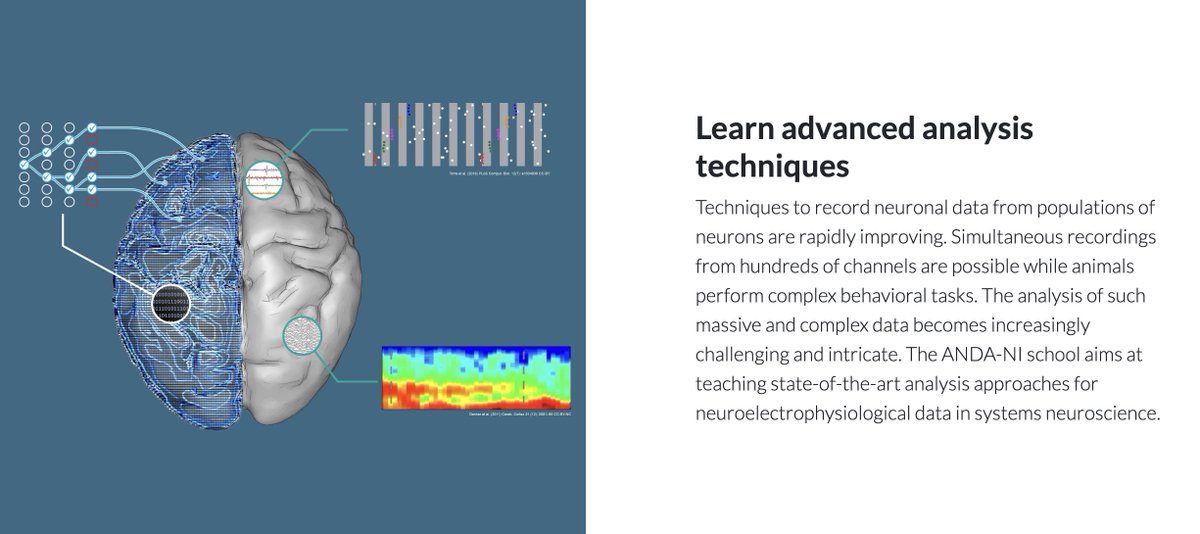
Strong course program - Advanced Neural Data Analysis & Neuroinformatics School 2024.
Check out andani.info/ for more info.
📅 Apply by August 21, 2024
@BernsteinNeuro @crc1451 @PrutYifat @PlasticPercep
12 Aug 2024

📢 iBehave's participates in ANDA-NI School
Sonja Grün, @MichaelADenker @fz_juelich @nawrot_group @UniCologne @delgrosso_nick @UniBonn & distinguished speakers: Thomas Wachtler @LMU_Muenchen @HansScherberger @DPZ_eu @BrovelliAndrea @uniamu @YuLikeNeuro @CarnegieMellon @Udoernst
1
3
542
28 Jul 2024
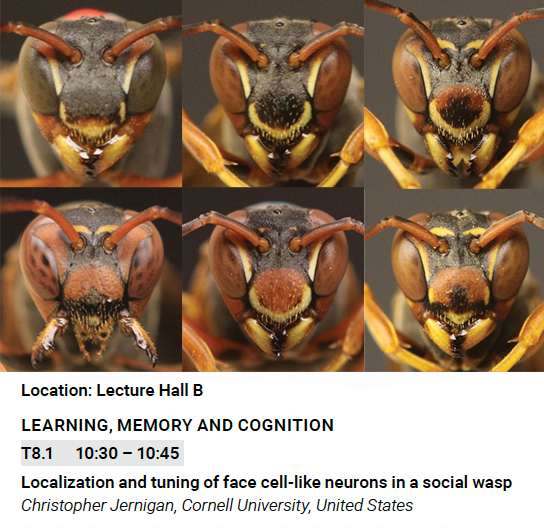
If you are attending #icn2024berlin this week come see my talk about a special group of neurons in the brain of Polistes fuscatus on Thursday at 10:30AM!
2
10
53
2,494
28 Jul 2024
if you are not attending you can still learn about them in this pre-print: biorxiv.org/content/10.1101/…
2
100
23 Jul 2024
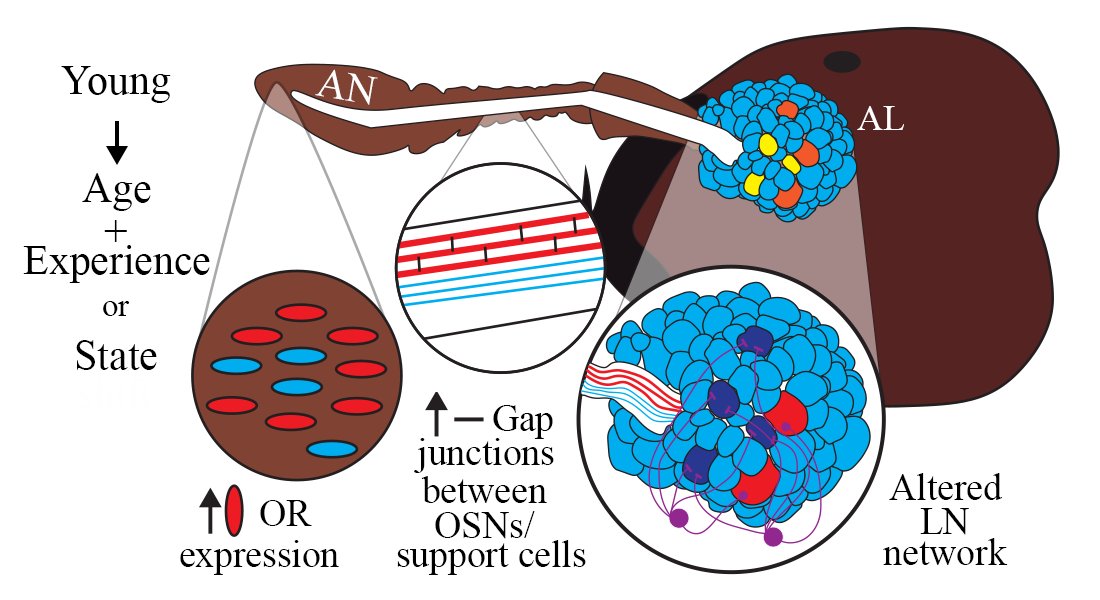
This was a fun piece to write with @IDsignals about the clonal raider ants and their potential as a system to uncover the intriguing mechanisms of olfactory plasticity!
Short dispatch highlighting the amazing work by @DanielKronauer, Taylor Hart, and colleagues!
links below!
23 Jul 2024

Check out this dispatch @PlasticPercep and I wrote about the development of olfactory processing in ants from work by @DanielKronauer and Taylor Hart
Developmental biology: Wait a bit and then you’ll smell it sciencedirect.com/science/ar…
1
5
13
1,655
23 Jul 2024
Original article by Hart et al. sciencedirect.com/science/ar…
Short dispatch: sciencedirect.com/science/ar…
1
115
Chris Jernigan retweeted

4 Jun 2024
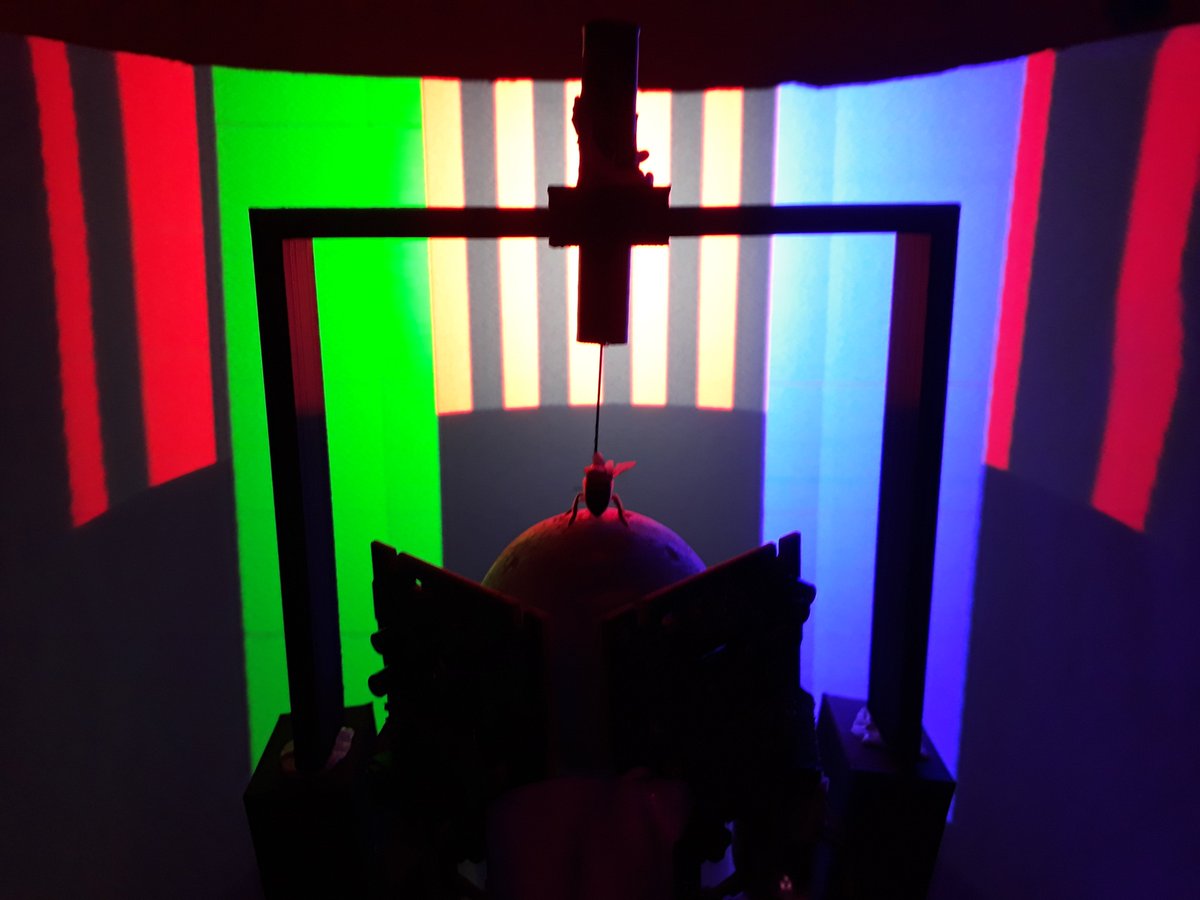
We are hiring two post docs to work on the neural bases of visual cognition in bees under virtual reality conditions! Join our team @Sorbonne_Univ_ and work in the stimulating environment of @IBPS_Paris! See the offer here:
emploi.cnrs.fr/Offres/CDD/UM…
Apply as soon as possible!
4
54
102
11,345
Chris Jernigan retweeted

28 May 2024
#Postdoc #Job Alert! The Cook Lab is hiring! We are excited to hire a postdoctoral researcher to study the mechanisms of social behavior in a changing environment #academia #academictwitter employment.marquette.edu/pos…
2
50
66
12,046
Chris Jernigan retweeted

22 Apr 2024
New preprint from the lab led by @MatthewZipple examining the role of competition and contingency (ie, luck) in shaping the lives of rewilded lab mice 🐁 🍀 🎲
Takeaway-competition causes genetically identical individuals to go on self-reinforcing life trajectories … 1/n
22 Apr 2024

We all have a sense that our lives are strongly shaped by contingent events outside of our control (‘luck’).
But how do we test that hypothesis? In a new pre-print, we do so by replaying the tape of life of genetically identical mice living in the field.
biorxiv.org/content/10.1101/…
1
2
17
2,112
15 Apr 2024
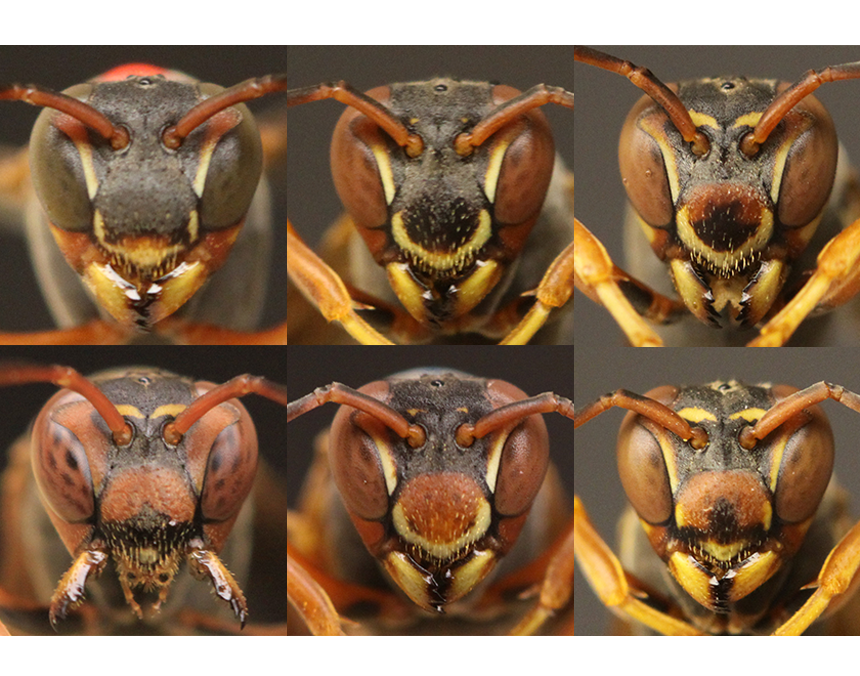
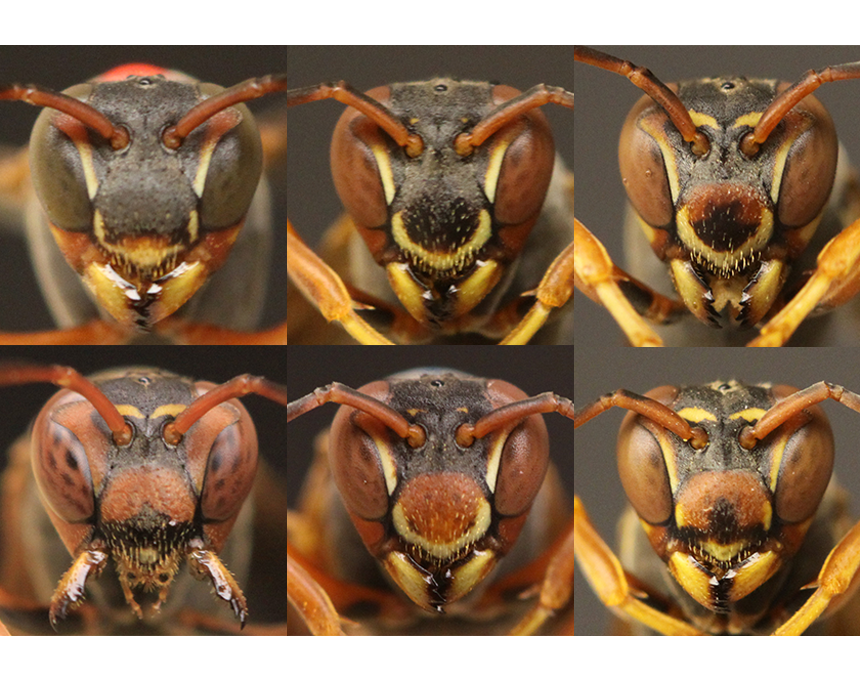
Thrilled to share a *NEW PRE-PRINT* I’ve been working on for the last few years! @IDsignals, W. Freiwald, and I describe the neural correlates of individual facial recognition in a social wasp, Polistes fuscatus.
biorxiv.org/content/10.1101/… 1/10
16
79
269
39,420
15 Apr 2024
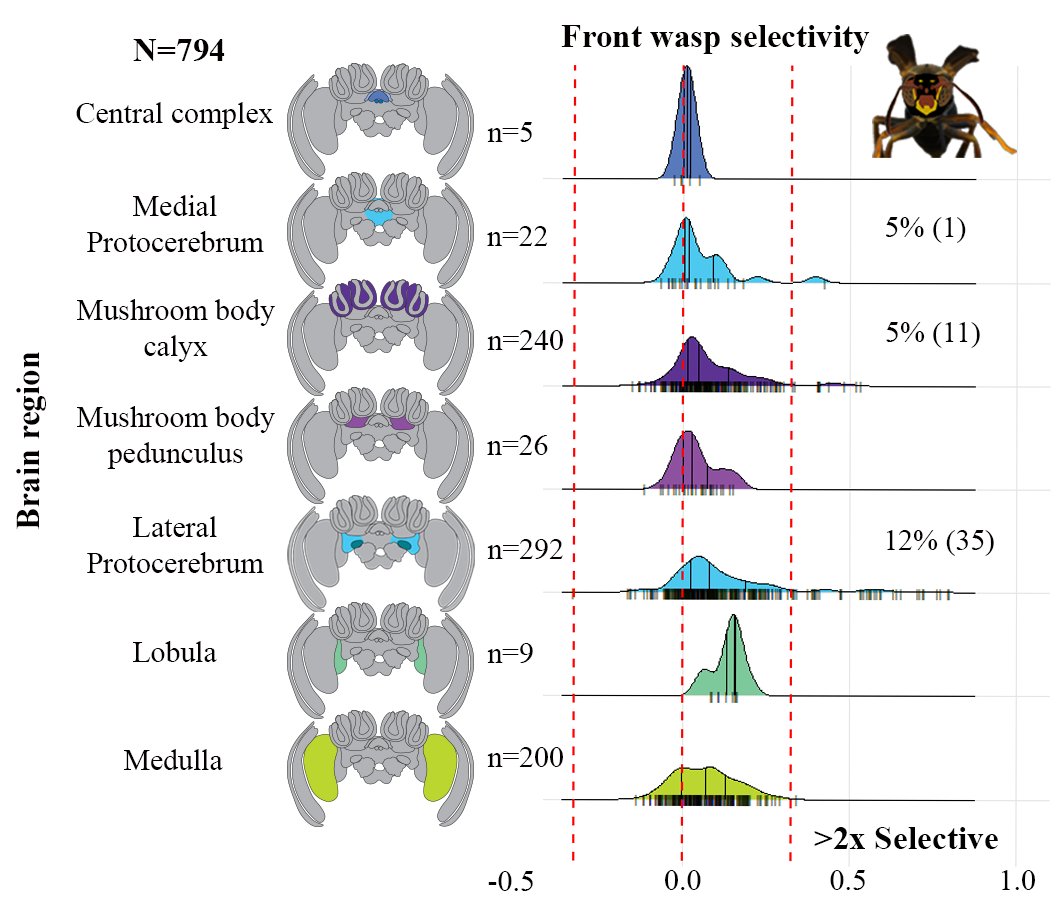
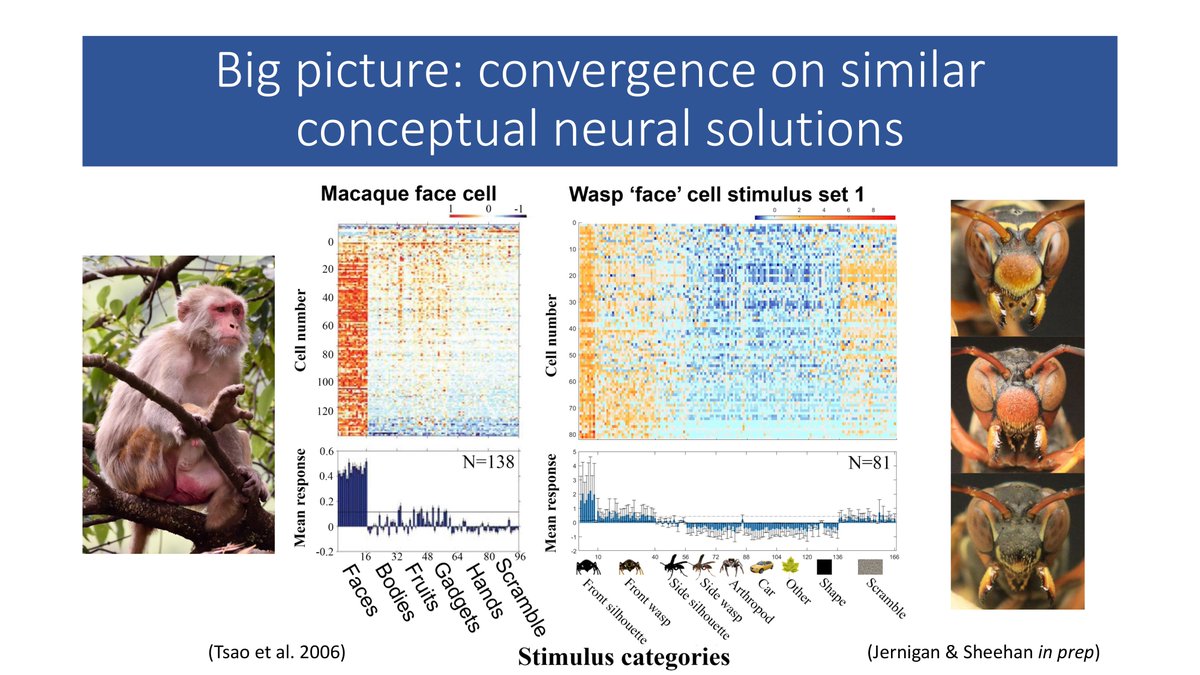
We can localize these selective front-facing wasp units, or neurons, to one part of the brain, the lateral protocerebrum. This is near where we had previously predicted these circuits to be located based on neuromorphological data and a social isolation treatment. 3/10
2
1
14
824
15 Apr 2024
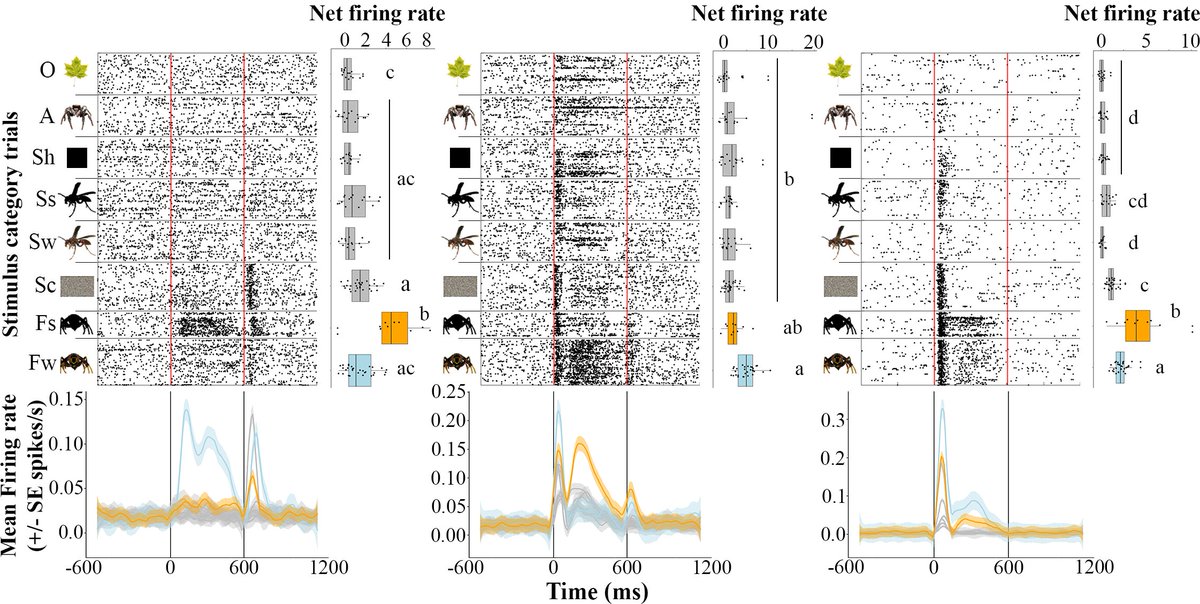
We argue these wasp cells are part of an independently evolved (eyes & brain!) facial recognition circuit. This finding suggests that highly selective neurons tuned to axes of variation associated with identity features are necessary for visual recognition in the brain. 8/10
1
15
528
15 Apr 2024
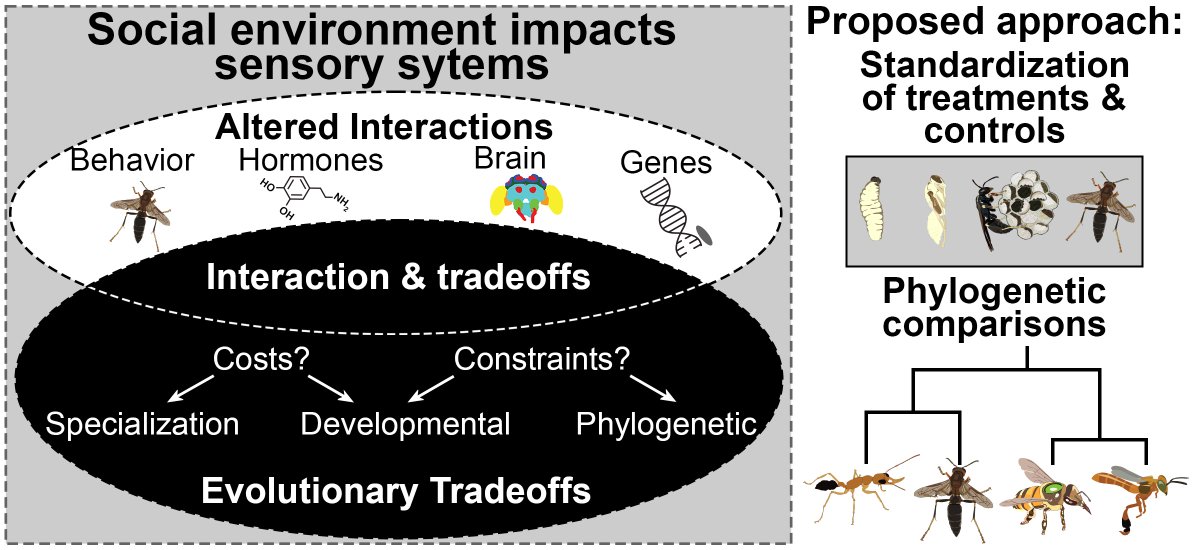
This work is just the tip of the iceberg as we hope to crack this system open to study the developmental tuning of this circuit, the social brain, object processing in insects, and the evolution of this circuit from closely related species that lack facial recognition. 9/10
1
12
500
15 Apr 2024
Lastly, I would like to again thank my co-authors and mentors @IDsignals & Winrich Freiwald as well as tons of feedback and support from too many colleagues to list over the years! 10/10
13
463
15 Apr 2024
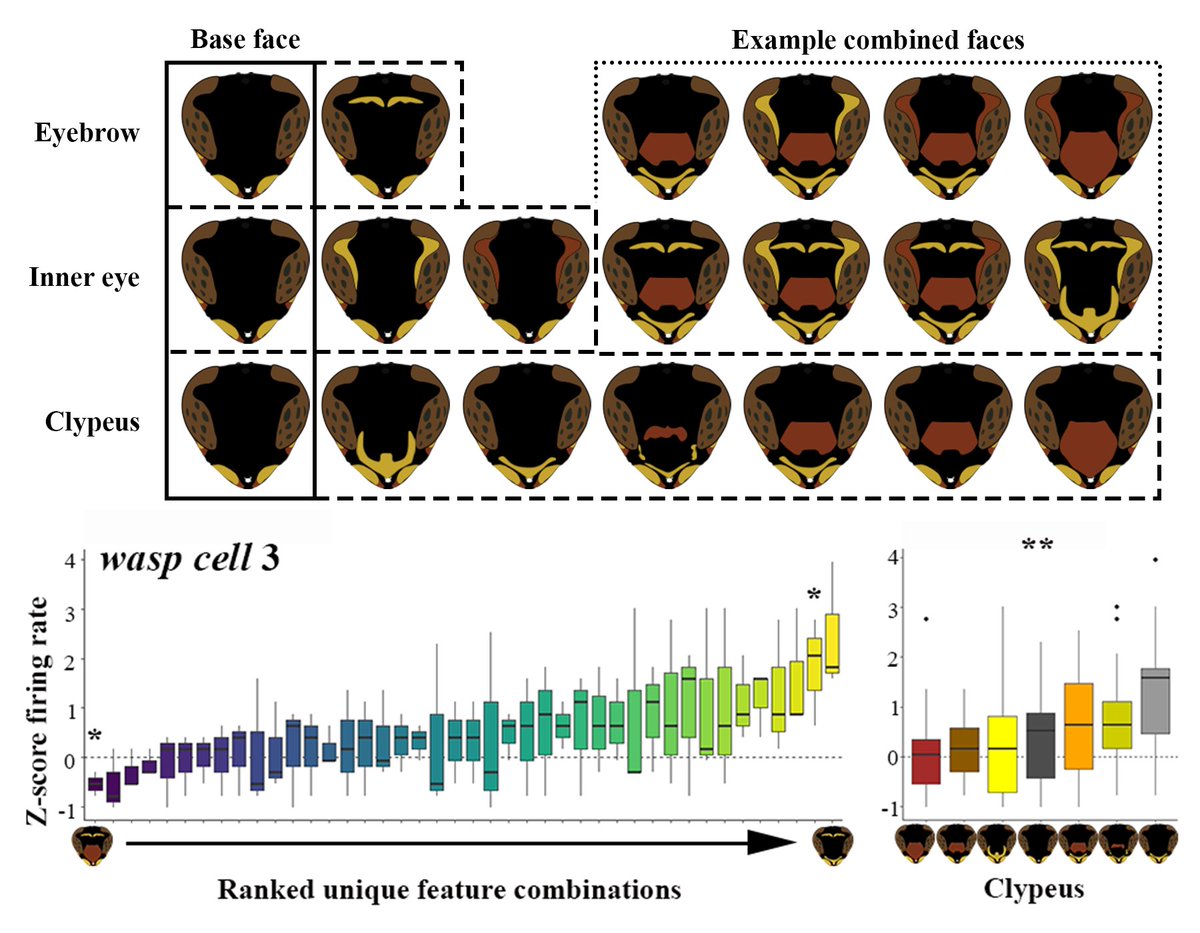
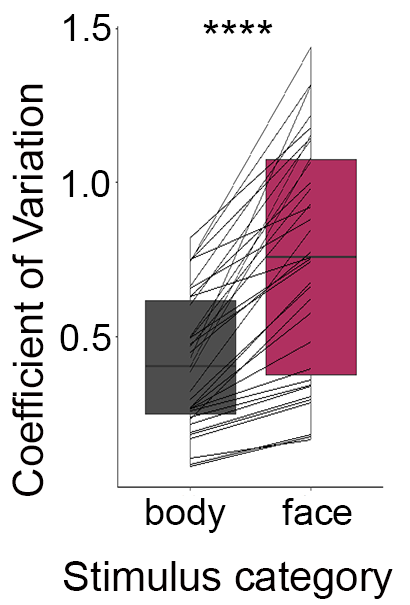
This last finding suggested that groups of these wasp cells may encode identity of the displayed wasp face. To explore this, we compare the distance of faces in neural PCA firing space to their distance in face space and find these two spaces are significantly correlated. 6/10
1
11
498
15 Apr 2024
This face space correlation is unique to front-facing wasp selective units found in the lateral protocerebrum. Suggesting that this is a feature unique to the cells we termed wasp cells. 7/10
1
9
474