
Chronically Online.
Joined August 2024
- Tweets 2,387
- Following 377
- Followers 269
- Likes 9,283
165 Photos and videos







Pinned Tweet

16 Aug 2024
You cant spell “millions” without a couple Ls. Remember that. 🥂
2
1
13
6,381

Pluto 🌎 retweeted

May 23
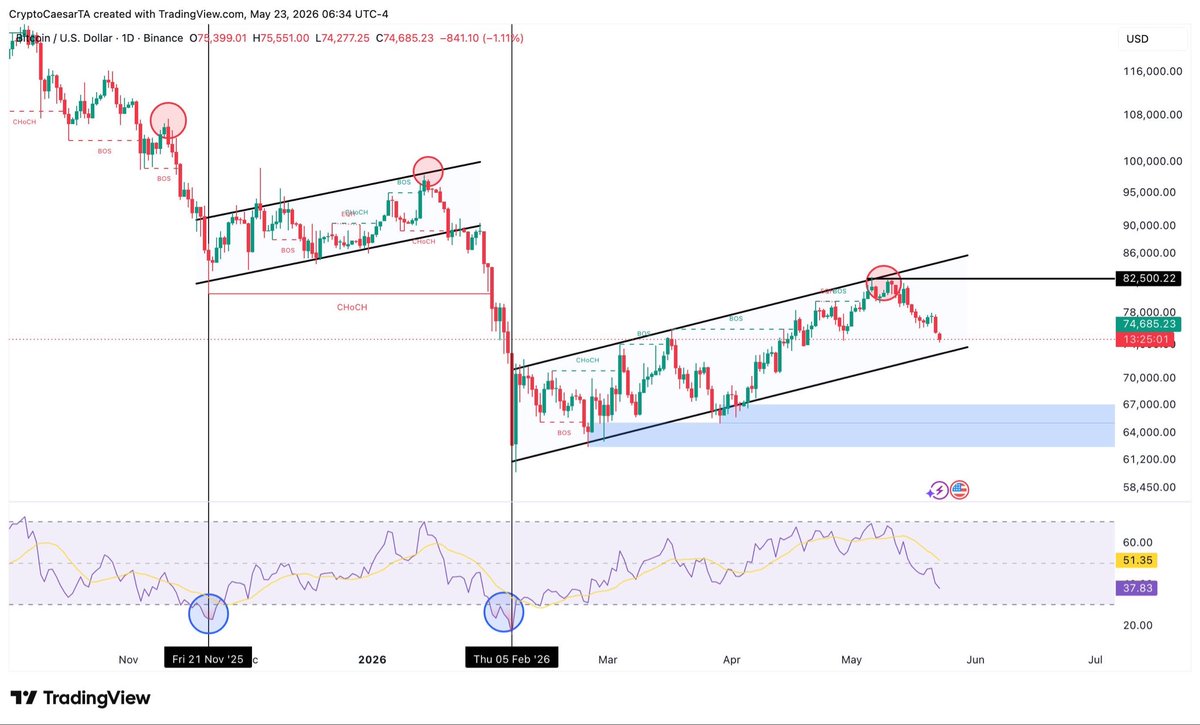
$BTC will test this support zone soon. Keep an eye on it for a possible bounce.
18
10
159
29,474
Pluto 🌎 retweeted

May 21
The moment you feel like quitting and feel like everything is going wrong.
Is just before everything goes right.
Keep showing up and pushing through no matter the odds stacked against you.
5
1
17
677
May 11
I feel like I’m about to go on a generational run. The last time I felt like this was when I caught my ex with the mailman. 🙏
1
5
67
Mar 29
This mfer came back for memescope Monday.
Retail is not ready 😂

Skipping school for memescope Monday 💯. I hope we extract all the liquidity that’s left on chain 🙏

1
6
227
Mar 27
A lot of frustration on the timeline over the last few months —people acting like it’s over for crypto.
Yes, the market is at its quietest in recent memory. But the opportunity is still there.
You just need to be on the right side of CT to find it.

I will never give up on crypto.
No matter how bad these bear markets get, there is never a reason to leave.
The wealth generation opportunity in crypto can't be found anywhere else.
BUT
There is a reason to stay flat. sit on your hands, or trade another market/strategy.
Onchain trading will evolve. Maybe it won't look like bull runs of old, but risk-on periods will still provide the best gains anywhere.
Not trading doesn't mean you have given up.
You are simply waiting for opportunities that align with your skill set.
5
147
Jan 11
Really impressed with $MEMEMIND These are some good stats from their Agent on it’s first day.
In future, it will market make itself using fees from the tokens it creates.
Keep in mind, portion of fees from every launch flows back into @MEMEMIND_SYS
First mover at hands here. ✍️
This tweet is unavailable
7
12
36
1,325
Jan 8
New arc in 2026, happy with the state of the trenches and overall market.
Filthy Lock in. 🤝
6
118
30 Dec 2025
One thing I really like about $PREDA is that team has been consistent from the very first day here regardless of getting very little attention in the early stages.
Dev hasn’t spoke about any PA, he just keeps his head down and builds the product. I will always support such real builders. 🤝
They have already delivered a beta version of their app and are starting to get a lot more attention.
I’m personally really looking forward to seeing their Market Explorer.
x.com/predaprotocol/…
Still sitting at 50k MC which is Insane.
With this team delivering in the upcoming weeks I’m expecting $PREDA to catch eyes of some real big players soon. 👀
app-beta.predaprotocol.com
7
5
27
949
14 Dec 2025
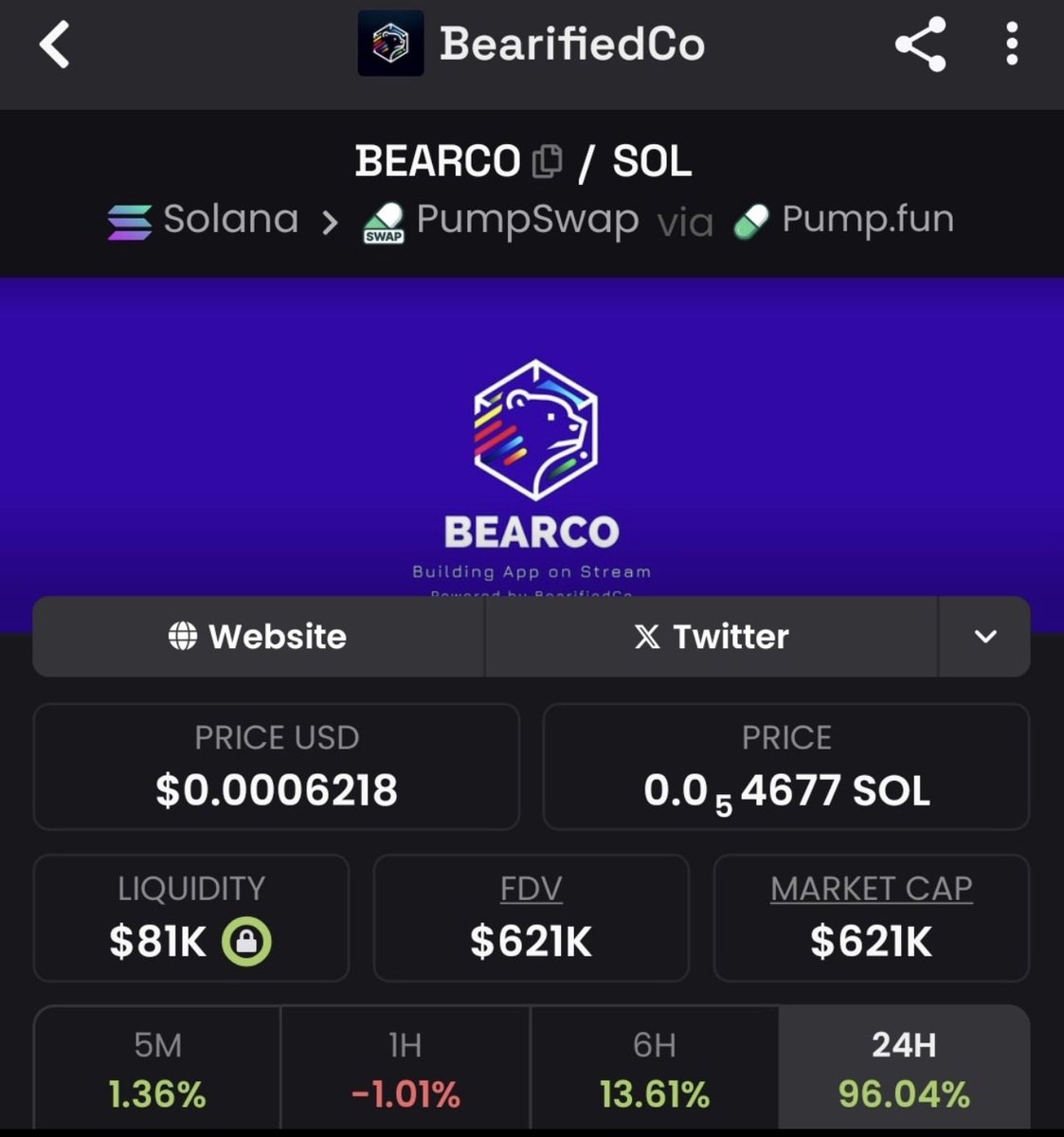
Happy Sunday Everyone, New ATH everyday for $BEARCO
Study the strength. 🤝🏻
12 Dec 2025

All I want to say is study $BEARCO.
There is a reason I have been avoiding gambles and accumulating heavily here in past weeks.
Team doesn’t compromise on delivering and that goes a long way.
→ They have a set up with stripe for @BearoCash Issuing stable-coin card payments.
→ Now Listed on CoinGecko
→ Cooking something with @coinbase as well.
@AlexDotEth live everyday turning $BEARCO into a full on monster right in front of us.
Study $BEARCO bros. 🫡
1
2
17
582
13 Dec 2025
Enjoy the new ATH on $BEARCO bros.
I was max shilling it at sub 100k levels and will continue to do so till it reaches the masses.
My thesis remains the same. Millions for @BearifiedCo soon.
Also, join the gulag if you haven’t already. 🤝🏻
t.me/plutosgulag
12 Dec 2025
All I want to say is study $BEARCO.
There is a reason I have been avoiding gambles and accumulating heavily here in past weeks.
Team doesn’t compromise on delivering and that goes a long way.
→ They have a set up with stripe for @BearoCash Issuing stable-coin card payments.
→ Now Listed on CoinGecko
→ Cooking something with @coinbase as well.
@AlexDotEth live everyday turning $BEARCO into a full on monster right in front of us.
Study $BEARCO bros. 🫡
2
1
18
536
12 Dec 2025
All I want to say is study $BEARCO.
There is a reason I have been avoiding gambles and accumulating heavily here in past weeks.
Team doesn’t compromise on delivering and that goes a long way.
→ They have a set up with stripe for @BearoCash Issuing stable-coin card payments.
→ Now Listed on CoinGecko
→ Cooking something with @coinbase as well.
@AlexDotEth live everyday turning $BEARCO into a full on monster right in front of us.
Study $BEARCO bros. 🫡

4
7
23
2,771
Pluto 🌎 retweeted

12 Dec 2025
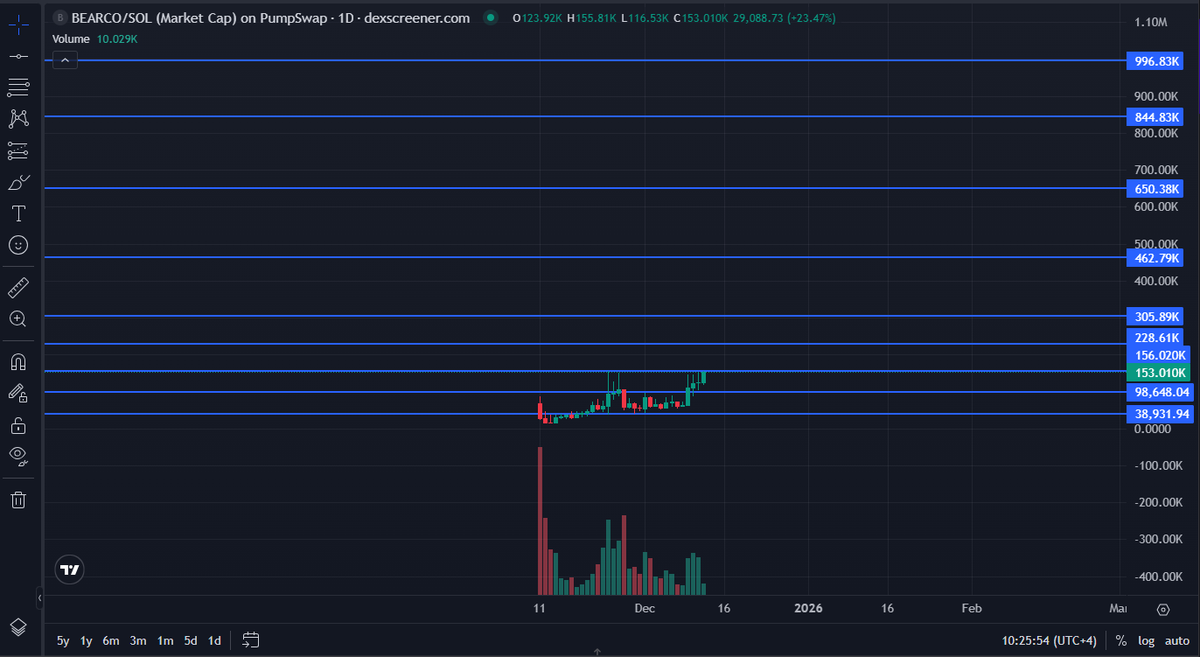
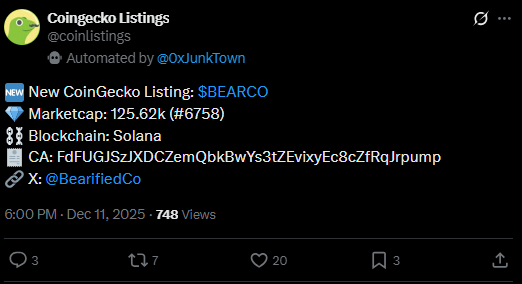
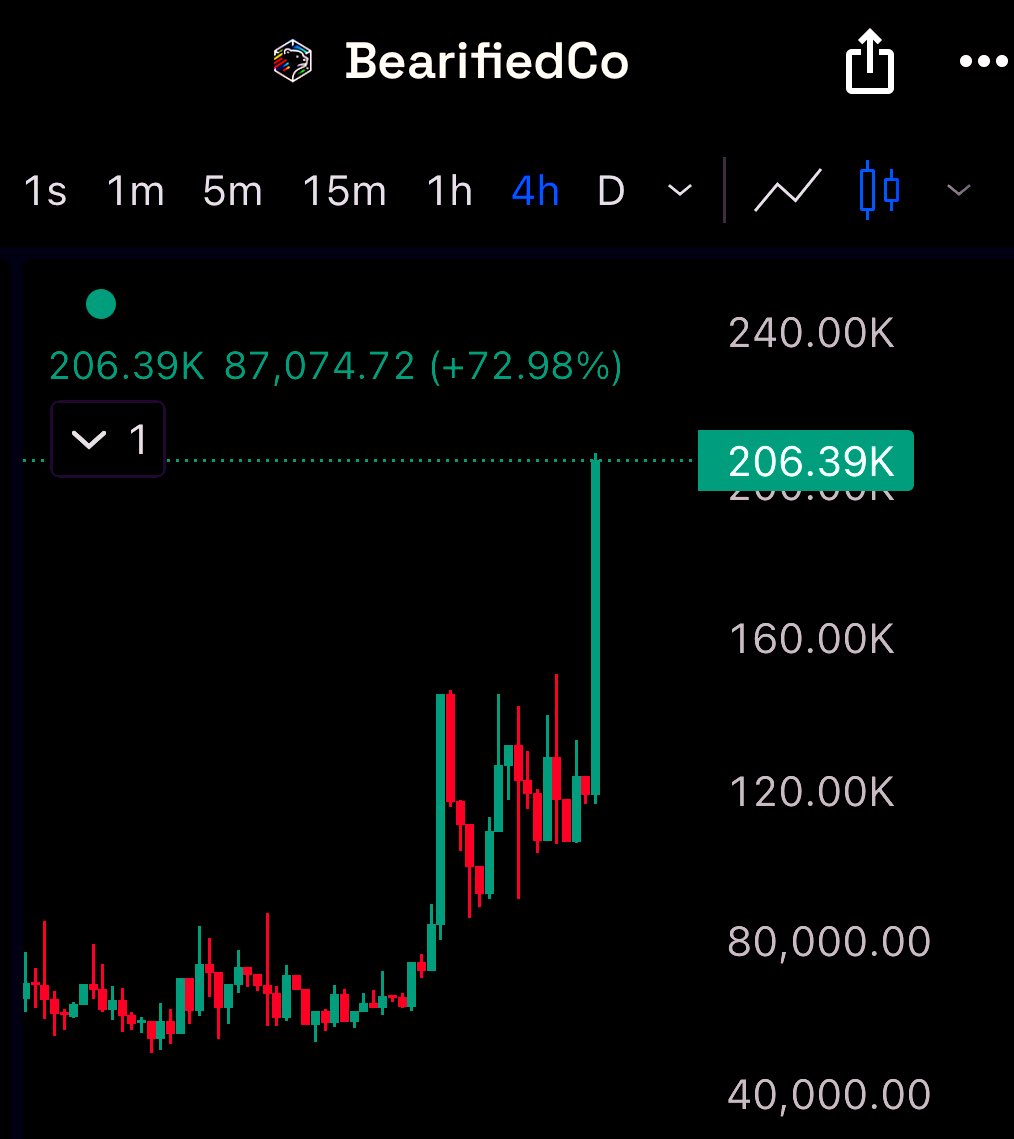
Quick recap of just THIS WEEK for $BEARCO … and tell me how you’re not bullish 🤯
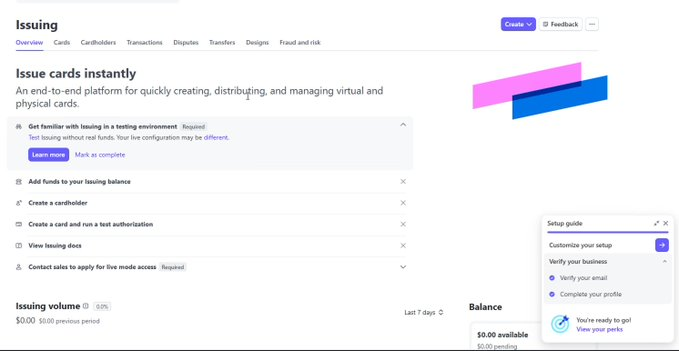
🔵 BearoCash setting up Stripe for stable-coin card payments , built from the garage.
🔵$BEARCO officially listed on CoinGecko 🦎
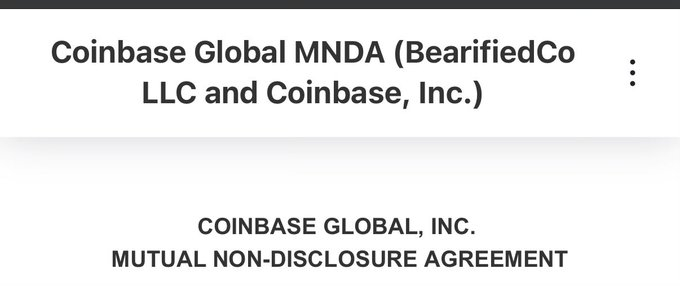
🔵 System updates prepping with @coinbase … something is clearly cooking.
🔵 Products shipping, payments going live, infra expanding in real time.
And the crazy part, it’s still under the radar. No CT frenzy, no mass attention yet. This is the phase people usually sleep through… then wake up later asking how it ran so hard.
I know some of you might not fully see how big this can turn out yet , and that’s fine. I’m not saying ape blindly… I’m saying don’t fade studying $BEARCO.
This is early positioning while things are quietly coming together.
You’re sleeping fam , just don’t say nobody told you. 🐻🔥
CA: FdFUGJSzJXDCZemQbkBwYs3tZEvixyEc8cZfRqJrpump
35
17
69
15,367

9 Dec 2025
$BEARCO dev @AlexDotEth has been live everyday and is building everything right in front of you.
Yet you still fading?
Unmatched R/R for this beast, without a second thought.
So early.

NEW Landing page coming Bearo.Cash @BearoCash Powered by $BEARCO BearoCash | BearoMoney x.com/i/broadcasts/1vOxwdVkz…
3
4
17
427
Pluto 🌎 retweeted

26 Nov 2025
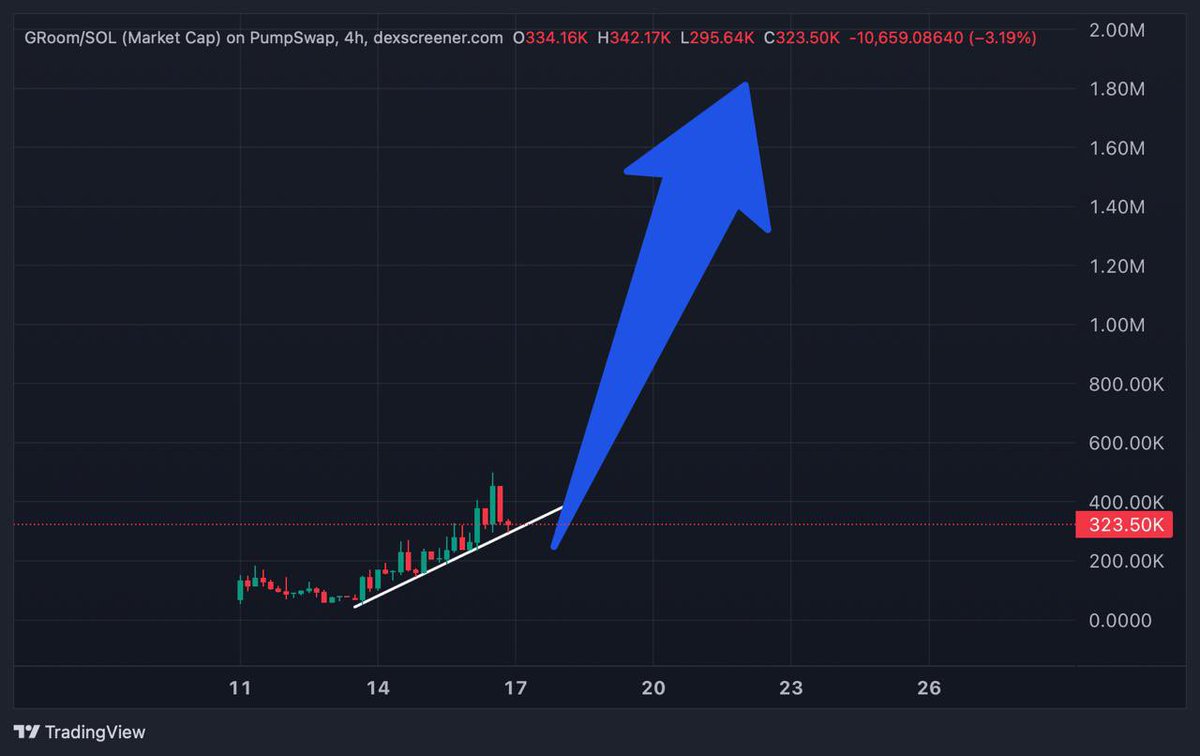
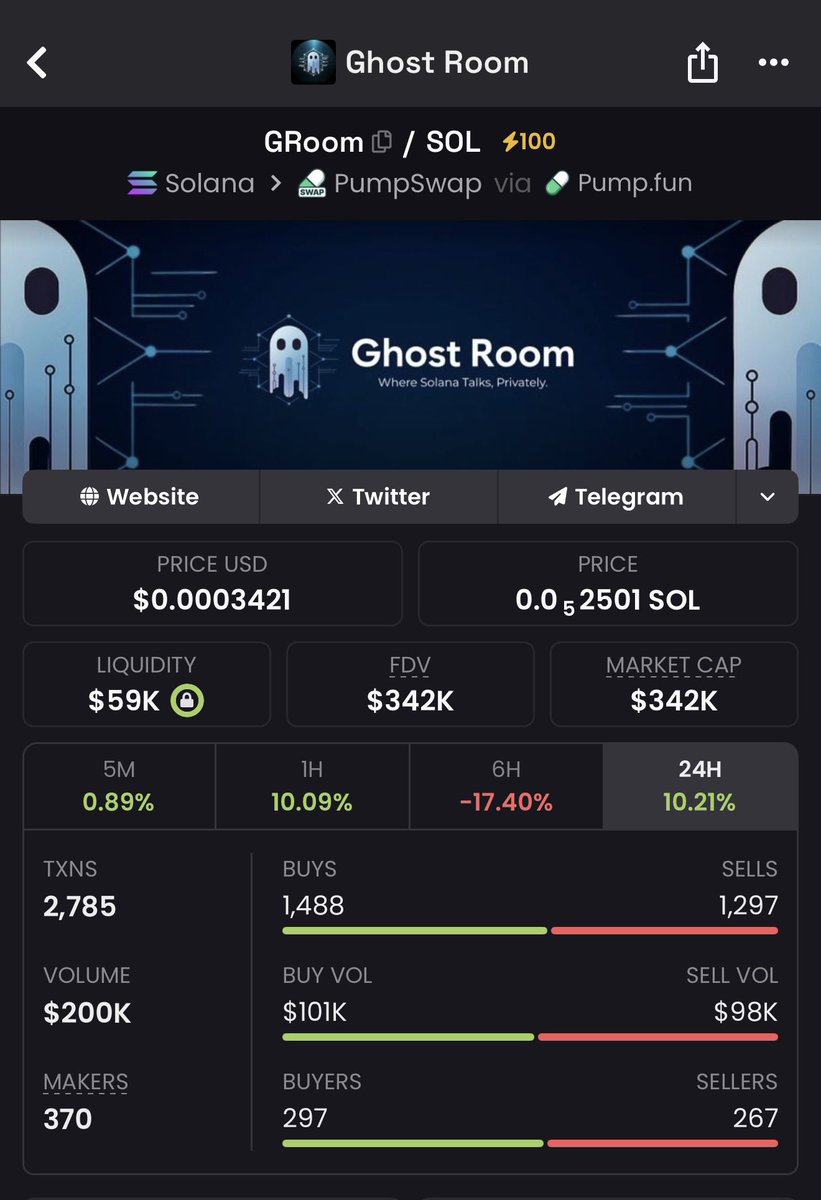
I think it's a cool project, lets see what happens once $thrt checks $groom properly.
Bullish conversation so far!
26 Nov 2025

Which noise handshake patterns, how are the keys rotated, how is the replay protection implemented?
Uses Noise XX pattern (Noise XX 25519, ChaChaPoly,SHA256) with 3-message handshake keys rotate after 1 hour or 10,000 messages via full rekey handshake replay protection uses a 1024-nonce sliding window that rejects duplicates and old packets outside the window.
Why are you wrapping AES over a primitive that is already encrypted? How are the nonces for AES derived?
AES-256-GCM will be only for password-protected group channels, not over Noise transport it enables shared channel encryption where multiple peers use the same password-derived key AES nonces (IVs) are randomly generated for each message.
The servers have to see the IP, timestamps, and routing info while in transit. Telling people "we don't upload metadata" is completely false in how networking works. Please clarify what you meant?
"No data trails" means no persistent storage of metadata servers don't log contact lists, message content, or wallet balances transit metadata (IP, timestamps, routing headers) exists during packet forwarding but isn't stored or correlated after delivery, similar to how Tor relays forward packets without keeping logs.
Why are you talking about UTXO when this is a Solana based project? Solana is account based not UTXO. Please clarify.
We used the BTC example simply to demonstrate the doability of offline payments, because Bitcoin’s UTXO model is the easiest way to show raw transaction signing and offline settlement. That was just an example, not a limitation. GRoom will be a cross chain system. We are starting with the BTC flow for the demo, but we are also integrating Solana and EVM chains, both of which use account based models instead of UTXO. Each chain will follow its own transaction structure, and our offline engine will support all of them. So mentioning UTXO was only for the BTC example, while Solana and other chains will use their native transaction formats within the same offline payment framework.
For the Bluetooth stuff, what's the TTL, DoS resistance, MiTM resistance, lossy resistance implementations?
TTL is 7 hops for messages, 0 for neighbor-only sync, MiTM resistance comes from Noise XX handshake with static key authentication, lossy resistance uses fragmentation (512-byte threshold) with 30s reassembly timeout, DoS resistance includes seen-message deduplication (10k capacity) and connection limits (8 max normal, 2 ultra-low power), but no explicit rate limiting on packet processing.
BTW we donated $100 worth of our tokens for doing awesome work for the space. It’s not much but as a small project and small dev team. It means a lot to us for getting such attention.
32
18
50
5,580
26 Nov 2025
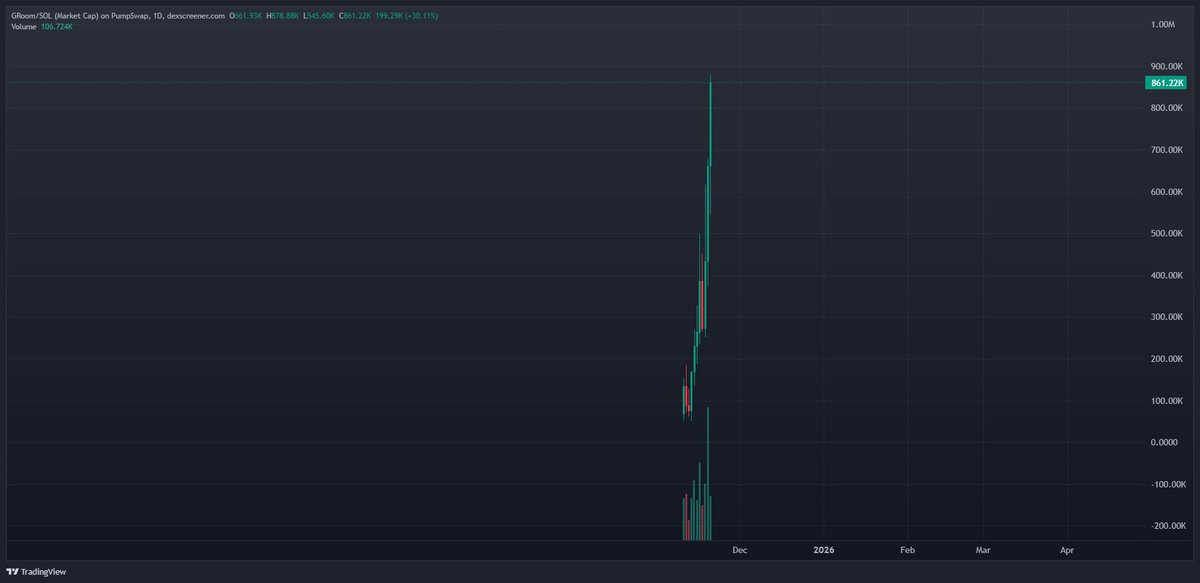
$GROOM ain’t stopping anytime soon.
Weekly roadmap looks stacked. I have been and still am very much bullish here. 🤝
26 Nov 2025
*GRoom Weekly Roadmap is Live*
Here’s what the community can expect from $GROOM this week:
*Wednesday, 26 Nov*
• Weekly Kickoff Update
• Full progress overview for the week
*Thursday, 27 Nov*
• Play Store Application Update
• Steps completed and what comes next for Android rollout
*Friday, 28 Nov*
• UI Design Release for the GRoom App (Figma design)
• First look at our upgraded interface
• Educational Post: The New Era of Offline Payments
• Plus, a showcase of our improved UX for offline payments
*Sunday, 30 Nov*
• Full Article Release
• Deep dive into the tech behind offline messaging and payments
*Monday, Dec 1st
• Community Thread Competition
• Best threads will be highlighted
4
119
Pluto 🌎 retweeted

25 Nov 2025
$GRoom “Game Changer Demo Preview”
The demo you’re seeing isn’t just a feature…
It’s proof that GRoom is years ahead of the entire market.
In this demo:
✔️ Offline Messaging (Bluetooth Mesh)
Devices communicate with zero internet, zero SIM, zero identity. Fully operational inside our Android app.
✔️ Offline Raw Transaction Generation
A Bitcoin transaction is created completely offline by the sender.
✔️ Hex Sent Through Offline Messaging
The raw hex is delivered to the receiver through Bluetooth only.
Online Execution by Receiver
Once anyone gets internet, the receiver broadcasts the hex and the BTC transaction goes live on-chain.
This means:
✔️ You can communicate in a blackout.
✔️ You can move value in a blackout.
✔️ You can transact without towers, WiFi, or visibility.
✔️ You can stay sovereign, private, and connected anywhere on Earth.
This is not a concept.
This is working, integrated, and live inside our Android app right now shown in demo.
$GRoom is officially building what others are only tweeting about.
This is the future of private communication and payments.
$Privacy $GRoom $Payments
80
59
158
78,462
24 Nov 2025
Hands down the most consistent team I have seen when it comes to delivering.
@GhostRoomSol first catalyst “Offline Payments” demo will be dropping soon.
$GROOM finally showing how it will change the future of privacy payments.
Very excited to see this. 👀
23 Nov 2025
The wait is over, our first catalyst “Offline Payments Sneak Peak” will be dropping this Tuesday!
It’s Finally time, after that our next second catalyst will be p2p Market Place!
Stay Tuned🤫

6
9
27
423