
109 Photos and videos









Today marks @ycombinator Combinator Spring 2026 Demo Day, and as a W14 alumni, it always takes us back.
There's something special about watching founders step on that stage and bet on themselves.
We never really left the startup world, and we still love nothing more than talking with early-stage founders and seeing bold ideas take shape.
Good luck to everyone presenting today! 🚀
1
1
76
The most expensive data is the data you already have but don't use.
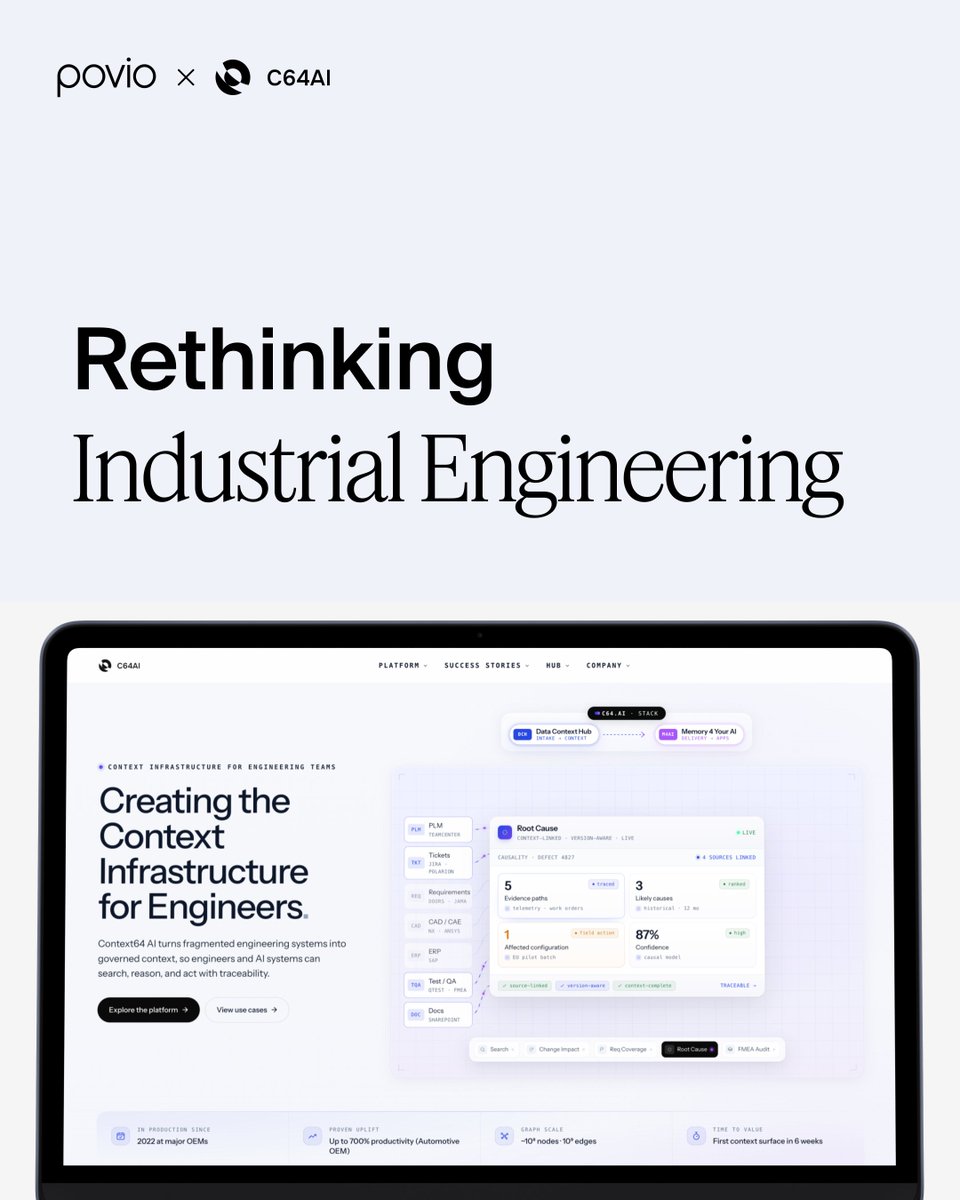
That's the problem CONTEXT64AI is solving. 📊
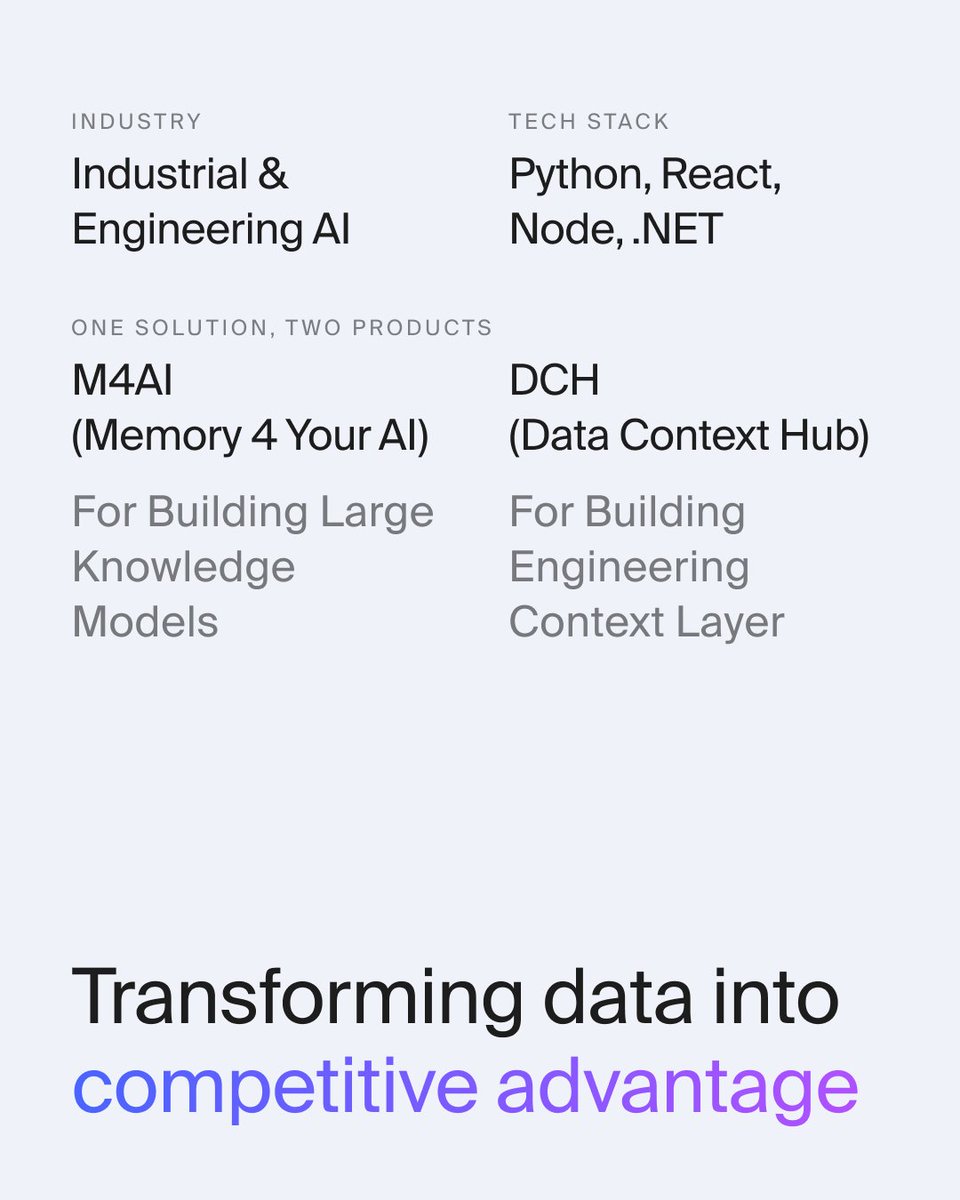
Two products, one solution → M4AI for building large knowledge models and DCH for building the engineering context layer on top. Together they turn fragmented engineering systems into governed context that engineers and AI can search, reason, and act on with full traceability.
Our collaboration started with a focused integration and expanded as the platform evolved, helping industrial organizations transform operational data into reports, insights, and AI-powered workflows.
The platform is now used by organizations including @BMW , @Siemens , @IBM , and @VIRTUAL_VEHICLE
Interested to see the product, UI highlights, and engineering behind it?
Take a look at the full case study 🔗povio.com/case-study/context…
1
1
37
AI tools like @claudeai Code and @cursor_ai are changing how fast teams ship.
But the token bills are starting to catch up.
Our engineers have built and optimised AI-powered products across a wide range of projects. This is what they keep seeing.
And it almost always comes from the same four places:
1. Bloated context riding along on every call
2. Retry loops silently re-spending tokens
3. Vague prompts making the agent explore and guess
4. Expensive models handling tasks that don't need them
Here's what our engineers do about it.
On context: compact and summarise long sessions instead of carrying the full transcript, context compaction cuts 50–70% of tokens. Clear context when switching features so you're not dragging feature A's history into feature B. Offload research and side tasks to subagents so they run in their own window and report back a summary. Pass concrete file paths directly instead of letting the agent search for them. And audit your MCP servers, tool schemas are billed as input tokens on every request, so only enable what you actually need.
On memory: use CLAUDE.md to store project conventions, build commands, and known gotchas. When the agent loops on a dependency issue, have it write the fix into memory. One line of memory beats a multi-turn rediscovery loop every time.
On prompting: be concrete upfront - exact files, expected output, constraints. Use plan mode for multi-edit work and agree the plan before executing. Vague prompts are expensive, specific ones aren't.
On routing and caching: around 60–80% of coding agent requests are routine, routing those to smaller models and reserving the flagship for genuine reasoning saves 40–70% on its own. Cache repeated context at 10% of standard input price. Use the Batch API for non-urgent work at a 50% discount. And check your traces regularly, because you can't cut a bill you can't see.
Applied together, these levers cut LLM spend by 70–85%.
Token cost is an engineering problem, not a pricing one. And it's one our engineers have worked through firsthand.
Still figuring out where the bill is coming from? Let's talk 🔗povio.com/lets-talk
2
1
4
191
Most AI products hit the same wall eventually. The early architecture that got you to launch starts working against you as the platform grows.
IQ Rush is helping brands adapt to AI-powered search environments and understand their visibility in the generative search era.
As the platform scaled, three challenges surfaced fast:
1. Request-time computation that couldn't keep up with growing datasets.
2. AI-citation metrics that were too noisy to be trusted as single-number outputs.
3. And a relationship network that was creating new visualisation problems with every update.
We worked through all three while the product kept shipping. Precomputed summaries to fix the pipeline. Confidence intervals built into the experience to make the metrics meaningful. A rebuilt graph system with clearer behaviour and colour-based relationship mapping.
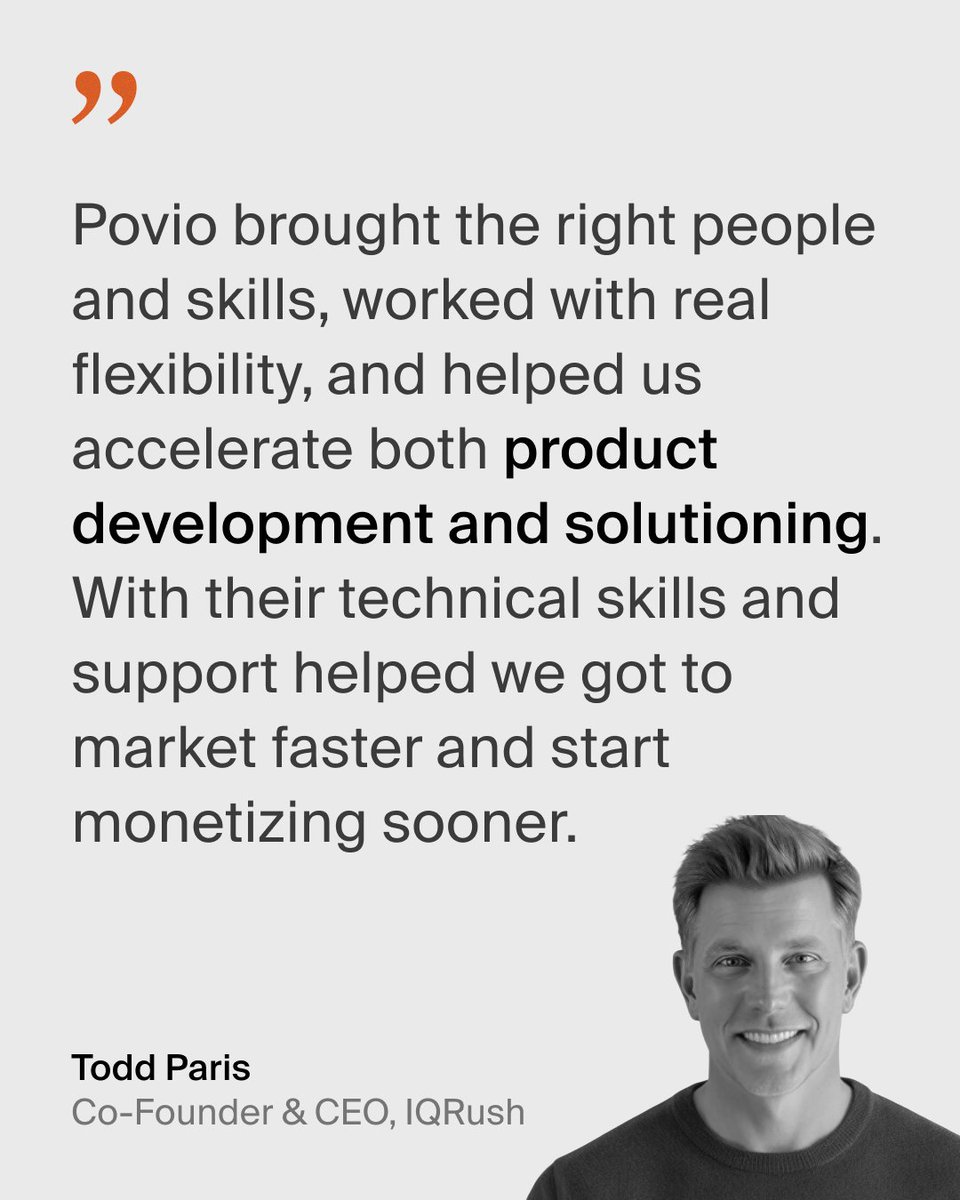
Co-Founder & CEO Todd Paris had a few words about what it was like to work through it together. 👇
Hitting scaling or architecture limits? Let's talk 🔗povio.com/lets-talk
1
1
58
When growth feels slow, hiring looks like the obvious next step. It feels like action, like momentum, like the responsible thing to do. But before product-market fit, it's often the thing that slows everything down the most.
The product is still shifting and priorities can change after a single customer conversation. Every new hire at this stage needs onboarding, direction, and alignment while that's happening, which means founders end up spending more time managing the team than actually moving the product forward. More salaries and more meetings, but not always better decisions or faster progress.
The startups that move fastest at this stage scale the output, not the organisation. Flexible team support lets you bring in the right expertise when you need it without locking yourself into a structure that's too heavy for where you are right now.
Wondering if there's a leaner way to move faster right now? Let's talk🔗povio.com/lets-talk
32
Building with AI often means learning where the bottlenecks really are. 🏆
At @cursor_ai Meetup #2, @jurerotar shared lessons from a browser game project where AI agents kept running into limitations that developers didn't. 🔶
The solution wasn't a new model or a better prompt.
It came from rethinking parts of the application's architecture and making the project easier for AI to reason about.
We're proud to support a community where engineers share practical lessons from the work they're doing every day, giving others a head start on solving similar challenges. 🌟
1
1
3
104
Most MVP problems don't come from bad execution. They come from wrong decisions made early.
What you build first shapes everything that comes next. Your speed, your budget, your traction, and how quickly you find out if the product even has potential.
The three decisions that matter most:
1. what needs to exist on day one,
2. what can wait until later, and
3. what you are actually trying to learn first.
Get those wrong and you end up building more than you need, spending more than you planned, and learning less than you should.
Not sure what your MVP really needs? Let's talk 🔗povio.com/lets-talk
1
1
55
Most alumni networks are just directories with a follow button. @AlumxAI is something else entirely. 🎓
An AI-native platform that makes introductions with intention, telling both sides exactly why they should meet before either one commits to anything.
82% of alumni feel underserved by their network. Not because the people aren't there. Because the right introduction never gets made.
This community was always there, they're just making it easier to find.
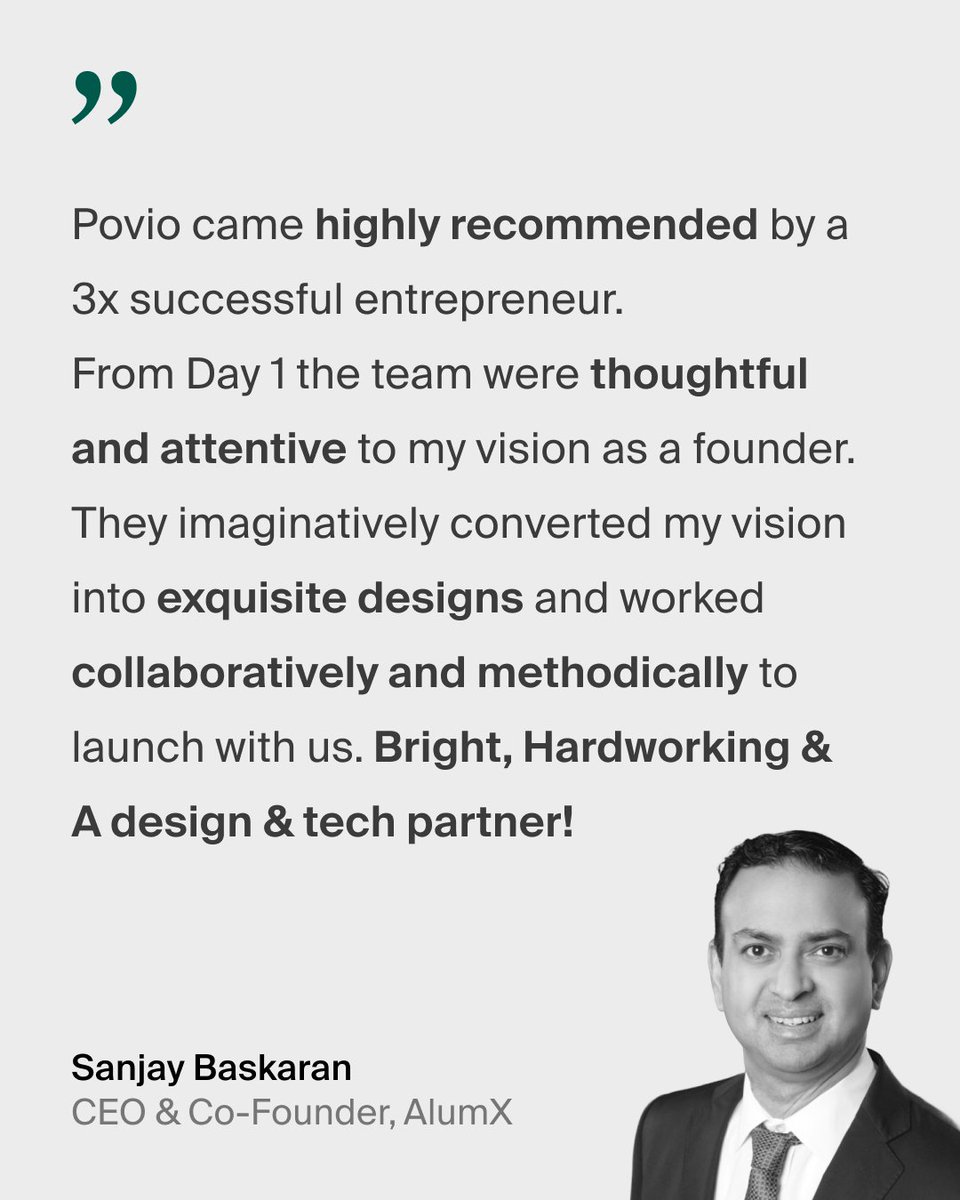
We helped AlumX take it from idea to product. A big thank you to @_SanjayBaskaran for trusting us with this one. 🚀
Ready to turn your vision into a product? Let's talk🔗povio.com/lets-talk
1
3
83
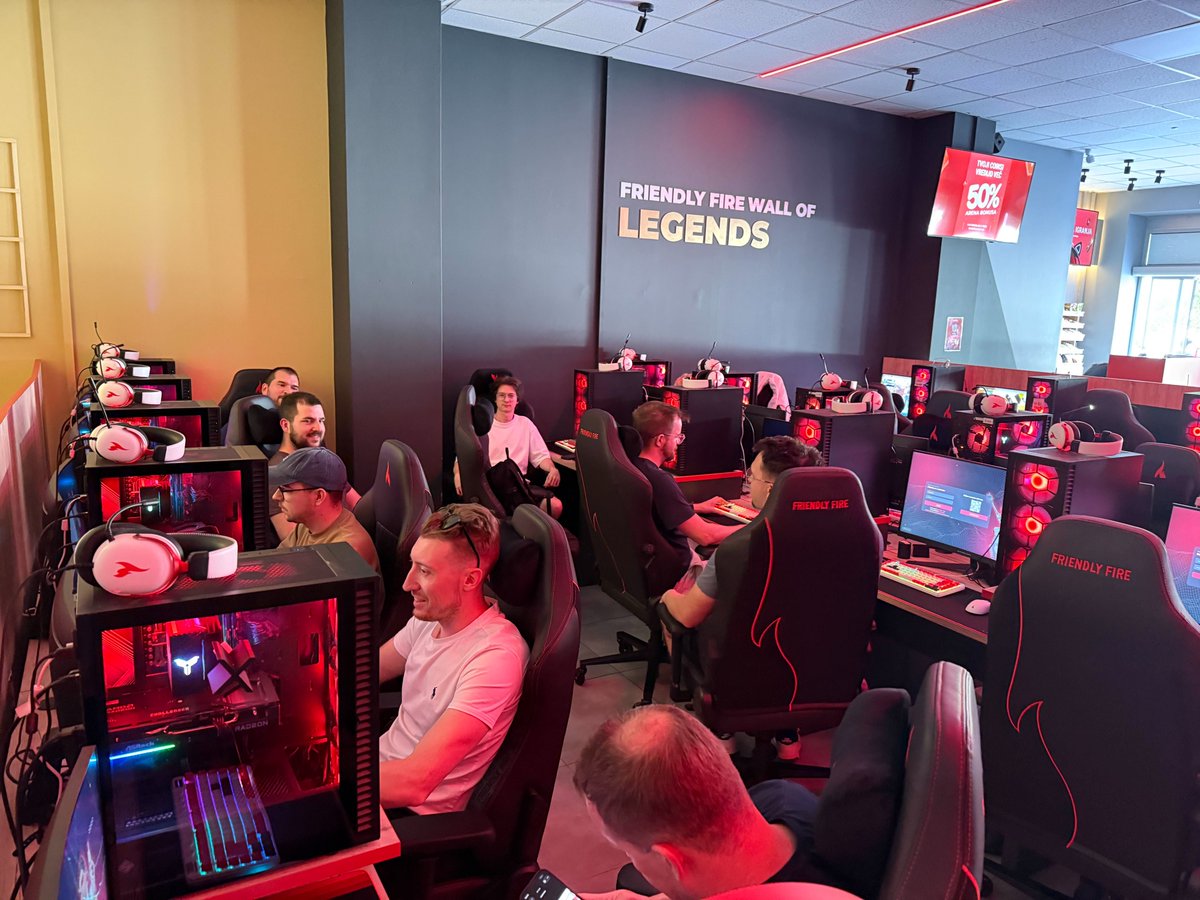
Our engineering teambuilding was a strong reminder that while our reflexes may have deprecated, the competitive spirit is still very much in production. 🏆
We spent the day revisiting childhood games, celebrating questionable tactics, and proving that muscle memory has a slightly longer recovery time than expected.
Great games, great company, and only a few bruised egos. 🤭

1
2
83
You're no longer designing only for people.
You're designing for machines that read, interpret, and summarise your content before users ever arrive.
Is your product being represented accurately when AI talks about it?
→ Let's talk: povio.com/lets-talk
25