
Founder & Director, Unplugged Coalition. Former Special Adviser to PM on Business, Regulation and Energy Policy. Works on things that matter. Gets stuff done.
Joined May 2011
- Tweets 6,997
- Following 447
- Followers 1,854
- Likes 15,515
123 Photos and videos




'It's not neccesarily a clean sweep for Nigel Farage?'
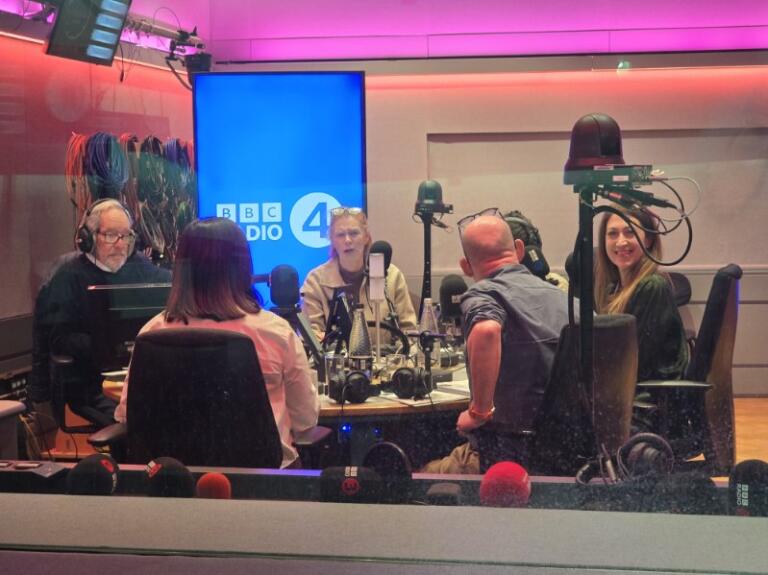
@DrStephenDixon asks political commentator @Power_Jen about criticism from Reform voters on the party's newly announced policy to evict foreign nationals from social housing.
13
4
15
4,546
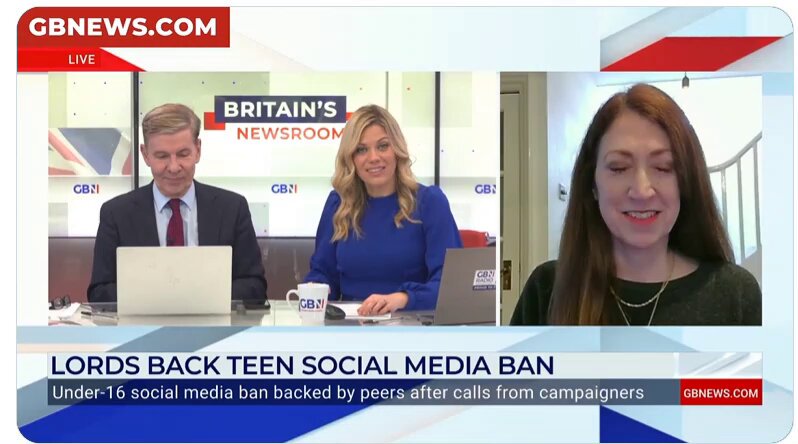
'This will be very polarising... He's trying to reset the rules around foreign nationals.'
Political commentator @Power_Jen reacts as Reform leader Nigel Farage announces he would evict foreign nationals from council housing in favour of veterans and abuse survivors.
14
2
27
5,894
Please put @DanNeidle in @hmtreasury. I can not bear all this needless waste and economic destruction.
Jun 12

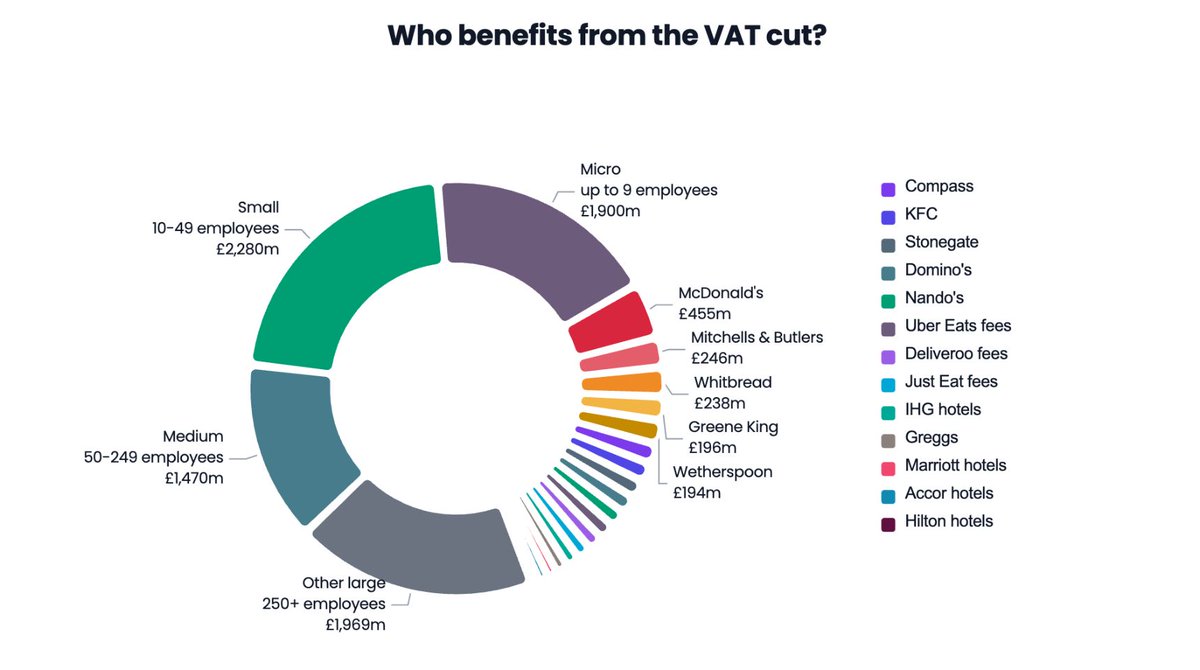
The hospitality industry wants their VAT cut to 10%. It will cost £12bn
Who benefits?
❌ The smallest most vulnerable businesses? Nope. 45% get nothing.
❌ Consumers? Nope - prices won't fall.
✅ Nearly half the cash goes straight to large chains. McDonald's gets £400m.
🧵:
2
216
Jennifer Powers retweeted

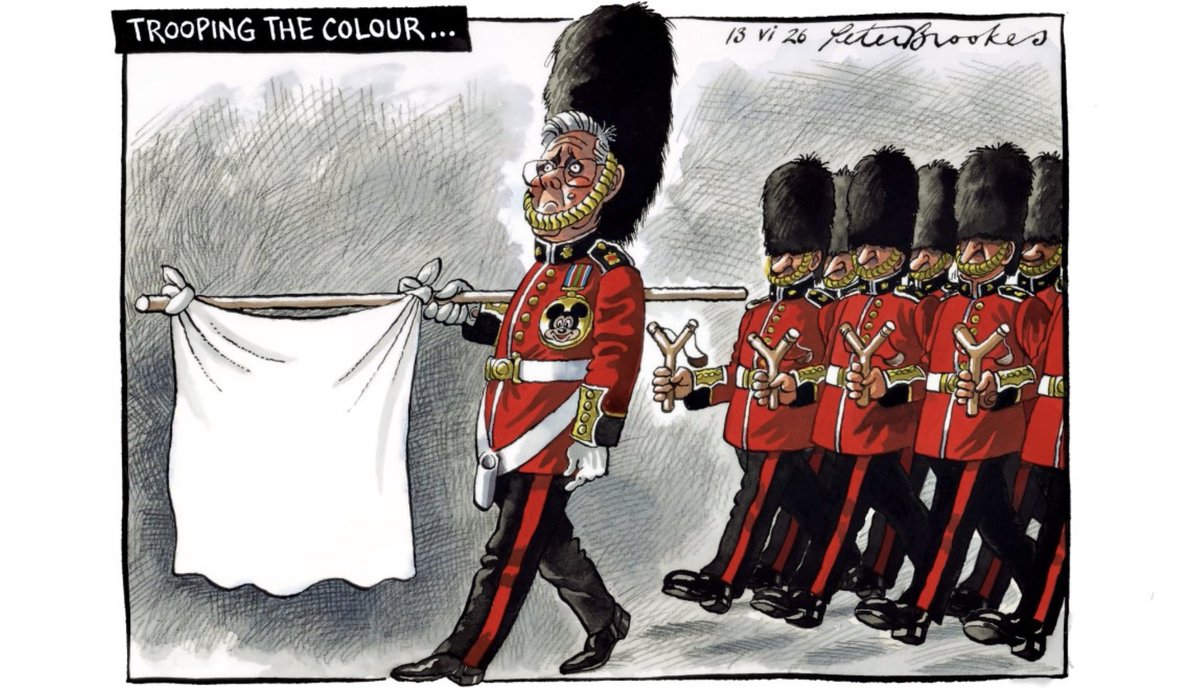
Peter Brookes’s Times cartoon today.
thetimes.com/article/f605492… @BrookesTimes
9
24
4,514
He's right.

This week the most advanced AI model on the planet got switched off by a foreign government. British researchers were studying it. British companies were testing it. British hospitals were piloting it. Not any more.
This isn't an AI story. It's the story of every industry we used to lead.
Britain has some of the best AI talent in the world. DeepMind was built here. Our AI Safety Institute writes the rules other countries follow. We have the researchers, the universities, the standards.
What we don't have is the power stations to run the data centres, the planning system to build them, or the industrial base to make the chips. So the work happens here and the value lands somewhere else. We invent. Others build. Others decide. Then we read about it on Saturday morning.
Same story as the kit our soldiers don't have. Same story as the factories we used to.
I spent nine months in government making this argument inside the room. I'll make it louder from outside.
1
263

Jun 12
Jun 12

CBS News to hire Sky News presenter Trevor Phillips as global correspondent
British journalist to become one of most prominent appointments made by embattled editor-in-chief Bari Weiss
theguardian.com/media/2026/j…
1
222
Jennifer Powers retweeted

Jun 11
This really worries me
A month ago in Wales I suffered a ruptured aneurysm in my abdomen. I lost over 2 units of blood
But the Welsh ambulance service refused to send an ambulance. I was still breathing so apparently didn't need one
I spent 7 hours lying on the ground in a car park. Every time I moved I threw up from the pain. The owners of the car park called 999 6x
One of the people there was a fireman. He couldn't believe that 999 treated each call as a separate incident and couldn't see the details or link to previous calls. He was frustrated because they could see I was seriously ill but you can't see internal bleeding and so there was no way to persuade 999 that it actually was an emergency
Eventually my husband arrived by taxi, journey of more than 3 hours from our home
He gave me my pain meds (the car park people were worried about liability and I was too ill to get them myself). This meant I was able to crawl into the car and he drove me to A&E
He got me into a wheelchair. We waited 75 minutes to see a doctor. I was shivering, heaped with blankets and threw up all over the floor
As soon as a doctor looked at me I was taken straight to resus. The next day I was transfered by blue light ambulance to another hospital, had a blood transfusion and spent 5 days on the high dependency unit
If my husband hadn't been able to come and look after me I have no idea how I would have survived. As it was I nearly didn't
I would not have been able to get myself to hospital nor would I have been able to log into some digital triage system
This scheme seems to assume if you're seriously ill you'll arrive by ambulance and if not you're well enough to navigate a digital portal
My experience suggests that's a dangerous assumption
A week later, back home in England I had another ruptured aneurysm. This time an ambulance came in 2 hours and again I was taken straight to resus
It wasn't the same because I had a recent diagnosis of a ruptured aneurysm so we could tell 999 I was almost certainly bleeding internally. But I was too ill to get myself down the stairs and out to the car. We still needed that ambulance and I still wouldn't have been able to fiddle around with an ipad
Proper triage REQUIRES an actual doctor to look at the patient. It takes a matter of minutes to differentiate between a life threatening emergency and not a life threatening emergency. That's not minutes to get a diagnosis but to know that the person is stable or not stable and if not that needs immediate attention
Seriously ill people can't do it themselves. It doesn't matter how smart or articulate they are normally. Or how tough. Expecting people to manage their own emergency care isn't what a modern health service should do
telegraph.co.uk/news/2026/06…
829
4,512
15,785
652,689
Jun 11
He's right.
Jun 11

Until you've seen the inside of the British state in No10/HMT/Cabinet Office with your own eyes I really don't think you can comprehend just how broken it is. Yes Minister Thick of it The Teletubbies all rolled into one tragicomic fiasco. We did try 2 warn the incoming govt!
1
1
979
Jun 11
There is truth in this.
Jun 11

Meeting young tories in and around Westminster, you realise most opposition to joining Reform is simply classist. They look at Reform's base, campaigners, etc and go - nope, I'm simply better than that.
This is part of the cognitive dissonance which allows tories to genuinely believe they are "serious people" - despite the tsunami of evidence proving they aren't.
It's reasonably similar to Lib Dems who should really be Labour voters - faux seriousness.
2
243
Jennifer Powers retweeted

What if both of the people in the two posts below are absolutely correct?
Because I believe they both are.
This small exchange represents the vortex at the very heart of the storm that new tech has brought upon us.
And it does not surprise me that it is a man who has correctly identified the risk to our liberty if we try to suppress it, whilst a woman has correctly identified the risk to our children if we do not.
In Britain, both problems are being caused by the dissolution of our self-governing constitutional monarchy in the face of a technological revolution beyond our regulatory reach that is so profound it is sweeping away all our prior social structures - be they personal, familial, national, legal or constitutional.
Purist free trade and free speech alone cannot be the answer in the age of commercial surrogacy, snuff porn and the sudden seismic restructuring of our entire workplace - but then neither is a tyrannical nanny state, which, finding itself unable to regulate US companies beyond its reach, decides to regulate us instead. Especially when our current Govt knows its own liberal policies have failed to the point they face insurrection anyway - what a convenient excuse child safeguarding will be.
So what to do? Well I believe we would do well to start by realising that a tremendous crime has been committed, to which our governments have been negligently blind, one that you cannot even begin to fathom the magnitude of - the most audacious cheat of any time in history since Babylonians decided to arrogantly build their way to heaven…
Specifically, the words, thoughts and pictures of billions of people have been (and are still being) harvested as we speak, with no respect for private intellectual property or personal boundaries, for the use of a very small number of people (most of whom are not in our jurisdiction) who own the devastatingly powerful monopoly of AI.
However should we respond to that in Britain in such a way that we keep both our liberty and our children safe? Indeed - can we even preserve our humanity at all?
The debate must start here - we do not yet have the solutions.
Jun 11

Anyone dismissive of the impact of addictive tech on humanity, is complicit in the destruction of current and future generations. We need to find a way to protect children while minimising threats to privacy.
1
1
3
392
Jennifer Powers retweeted

Jun 11
Given the subject matter and comparing it to the psychodrama that often governs cabinet resignations, Healey's decision to quit feels like the most consequential departure of the last 25 years
40
71
645
43,685
Jennifer Powers retweeted

Jun 11
Given the extraordinary charge from John Healey that Starmer is unable to defend Britain, there is an argument that this is the most devastating cabinet resignation in British political history - worse than Howe, Heseltine, Cook, Sunak
Jun 11

John Healey’s resignation letter is absolutely damning of both Keir Starmer and Rachel Reeves - he is directly accusing them and the Labour government of not doing what it takes to ensure Britain can defend itself - about the most serious charge it is possible to make
36
108
477
37,792
Jennifer Powers retweeted

Jun 11
A defence secretary has never resigned in this way. Fox, Heseltine, Profumo - all resigned over scandals. To resign because the PM would not pay enough to keep the country secure - unprecedented.
89
1,651
10,624
167,865
Jun 11
Anyone dismissive of the impact of addictive tech on humanity, is complicit in the destruction of current and future generations. We need to find a way to protect children while minimising threats to privacy.
Jun 11

The Government wants to instal spyware on your phone, impose age-verification on social media, and control what you can read online if it feels threatened by the public.
Anyone supporting age verification to protect children is complicit in the wider control of the population.
2
534
Jennifer Powers retweeted

Jun 10
There’s a seismic shift happening in the gilt market that seems to be mostly going unnoticed. Everyone argues about how much Britain borrows, but the question of who lends rarely gets asked.
For most of the post-war period the gilt market had a captive domestic buyer. In recent decades that was overwhelmingly British defined benefit pension funds. They typically bought 30-year gilts and held them to maturity, because the rules said they had to. Which means the gilt market had a captive lender, quietly underwriting the entire post-war state.
The seismic shift we’re seeing… the captive lender is leaving.
DB pension schemes are closed and maturing. They are running off their gilts to pay pensioners, not buying more. They still own around 45% of the index-linked market, and that holding winds down over the next decade. On top of that, the BoE is selling too. Quantitative tightening, year after year, to unwind its balance sheet.
The replacement to British pension funds has arrived quietly. And most people have no idea about this shift.
Hedge funds now account for 63% of electronic gilt trading, which is up by a third since 2021. Pension funds and insurers have fallen from 45% to 26%. Overseas investors hold around 35% of the market, up from under 25% a decade ago. This isn’t central banks, it’s global bond funds. These are mobile, yield-hungry, gone-in-an-afternoon type entities. Not the long term holders we had in the pension funds.
The fast money doesn't own the majority of the stock yet. But it’s now dominating the trading, and the trading sets the price. This is a relatively new dynamic that will only continue to grow as pension funds see their holdings mature.
This is why long yields hit 1998 highs while inflation fell. The borrowing hasn’t changed. But the lender has.
And this is why it’s stiff drink time. The state needs to sell £246 billion of gilts this year, and every year for years, into exactly this market.
Every deficit argument in British politics assumed the lenders would be there, just like the dependency ratio assumed the workers would be there.
The whole system runs on lenders who no longer have to show up. And they expect a higher premium. Potentially a much higher premium.
50
140
556
80,684
Jun 10
I agree with @LauraTrottMP.
Jun 10

Extreme violence is being normalised, with young boys being served up violent content on social media.
We can’t just sit back & allow the next generation to become desensitised to it.
The day after Charlie Kirk’s murder, I visited a school & every child had seen footage of his death without seeking it out. This is horrific.
The PM needs to get on with a ban to help protect childhood.
186
Jennifer Powers retweeted

Jun 10
The World Cup begins tomorrow, and many will watch the matches. Soccer reminds us of something we must not forget: life is not a race to show off on our own, but a path we learn to walk together. Anyone who does not know how to pass the ball, even if they have talent, has not yet understood the game. Anyone who does not know how to live with and for others has not yet understood life. #ApostolicJourney
1,521
15,243
101,913
5,448,349
Jun 9
This is as ludicrous as it is false. Sad to see @iealondon putting out stuff like this.

📱 "This amounts to surveillance technology on every device in the country."
@matthewlesh warns the government's proposed device controls are a civil liberties disaster in disguise. 👇

157
Jennifer Powers retweeted

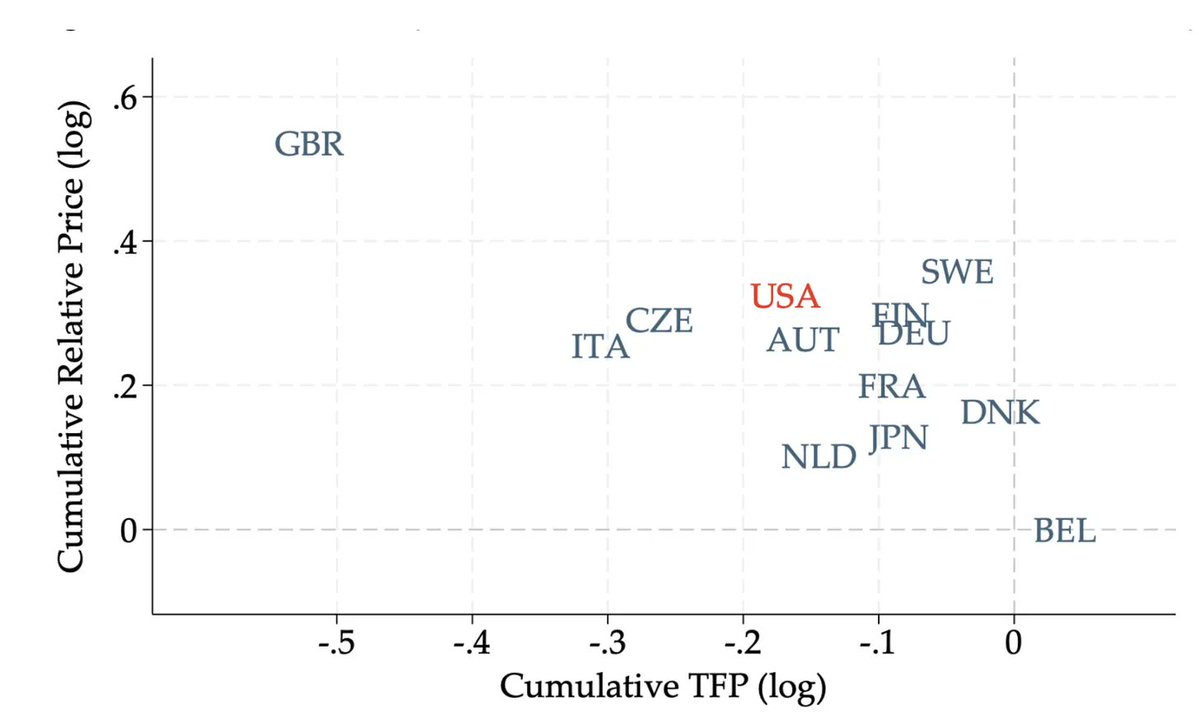
Since 1970, productivity across most of the American economy has roughly doubled. In construction, it has fallen by around 40%. A new VoxEU column by Dongkeun Choi and Munseob Lee unpacks why.
The fall in the price of equipment — computers, machines, instruments — has been one of the great engines of the post-war economy, adding around 1.3 percentage points a year to growth in output per person. But structures have moved the other way. The relative price of buildings in the US is now 80% higher than in 1970, and that rise claws back almost two-fifths of the gain from cheaper machines. The net contribution of falling capital-goods prices is therefore closer to 0.8 points than 1.3.
“About three-quarters of the drag runs through standard capital deepening. When structures are expensive, firms accumulate less of them, and production slows accordingly. The remainder operates through innovation. Laboratories, offices, and pilot plants are themselves structures. Stagnant productivity in construction raises the cost of doing science.”
This is not an American curiosity. Choi and Lee examine thirteen advanced economies, and all but Belgium sit in the same troubling quadrant: construction prices up, construction productivity down. Across the entire sample, the UK records both the largest fall in construction productivity and the steepest rise in the relative price of building.
Why has construction forgotten how to build? The leading suspect is regulation. Hilber and Vermeulen show that the restrictiveness of the UK’s planning system, more than any physical shortage of land, drives the long-run rise in house prices; D’Amico and co-authors tie America’s construction-productivity stagnation directly to land-use rules. A planning regime that makes every project bespoke, contested and slow has meant construction is one of the few industries that never industrialised — it never achieved the scale economies and standardisation that lifted output almost everywhere else.
This resembles Baumol’s cost disease. When productivity stalls in one sector but the rest of the economy still needs its output, the relative price rises and everyone else pays for it. What makes construction unusual is that there is no way to route around it: the economy cannot make do with fewer hospitals, fewer fabs or — increasingly — fewer data centres. The cost of standing still in construction shows up everywhere.
As is often argued, restrictive planning acts as a tax on housebuilding. But it has also held back innovation in the construction industry. Alongside planning reform, we need to look deeper at what’s made us less efficient at building.
1
9
27
23,787
‘We want to be a haven for innovation, but our children are not for sale.’
Founder of Unplugged Coalition, Jennifer Powers, believes US President Donald Trump’s remarks about British sovereignty to protect children from social media were ‘distasteful’.
28
8
22
10,167