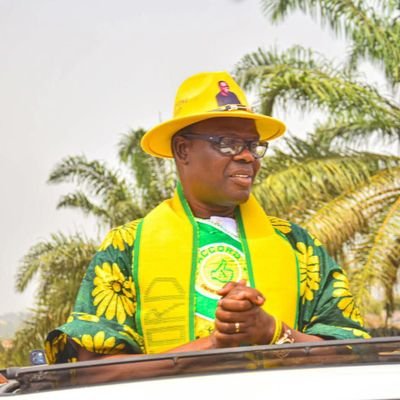
Journalist | Education Advocate | Politics | Thought Influencer | Student | #OriyomiHamzat ❤️ | Ọ̀YỌ́ Ń PÈ Ọ́ 2027.
Joined February 2024
- Tweets 10,372
- Following 748
- Followers 693
- Likes 30,189
571 Photos and videos







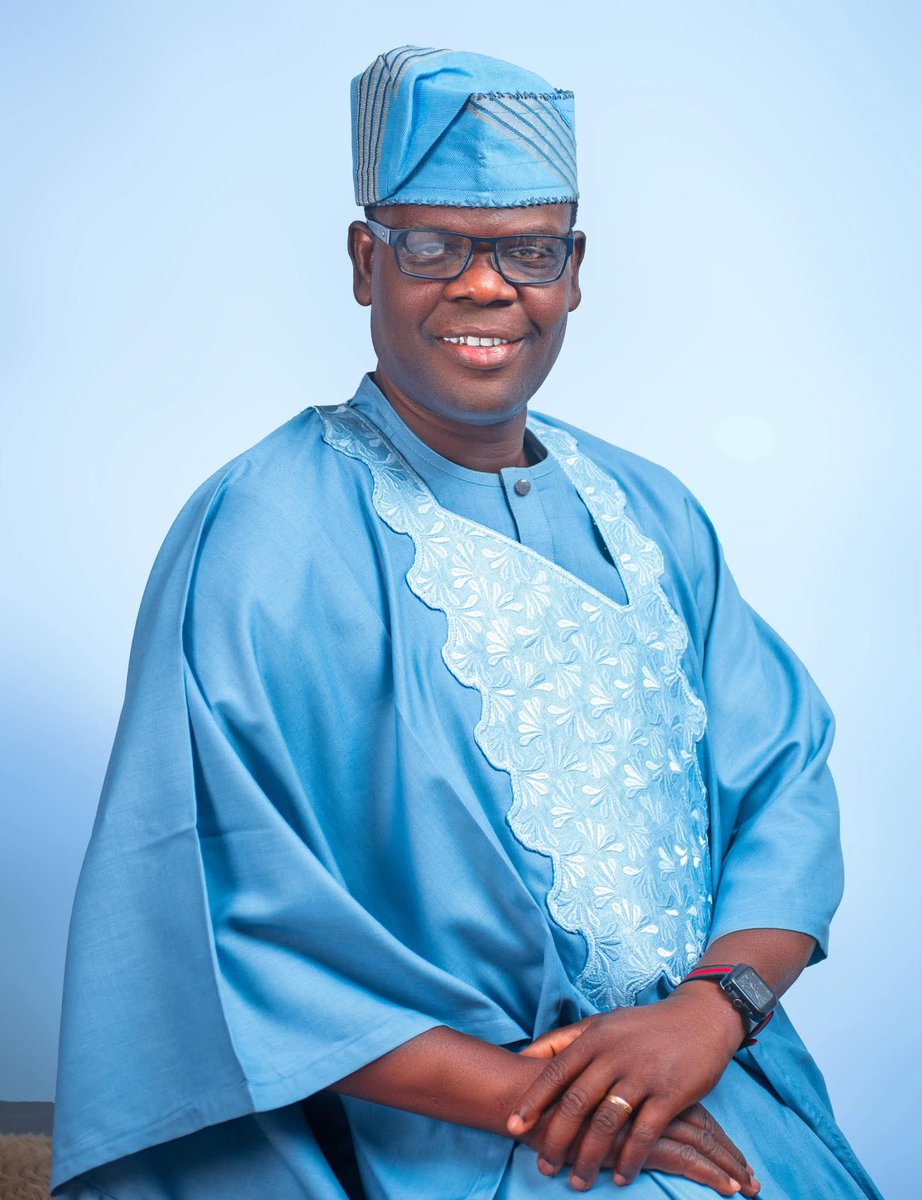



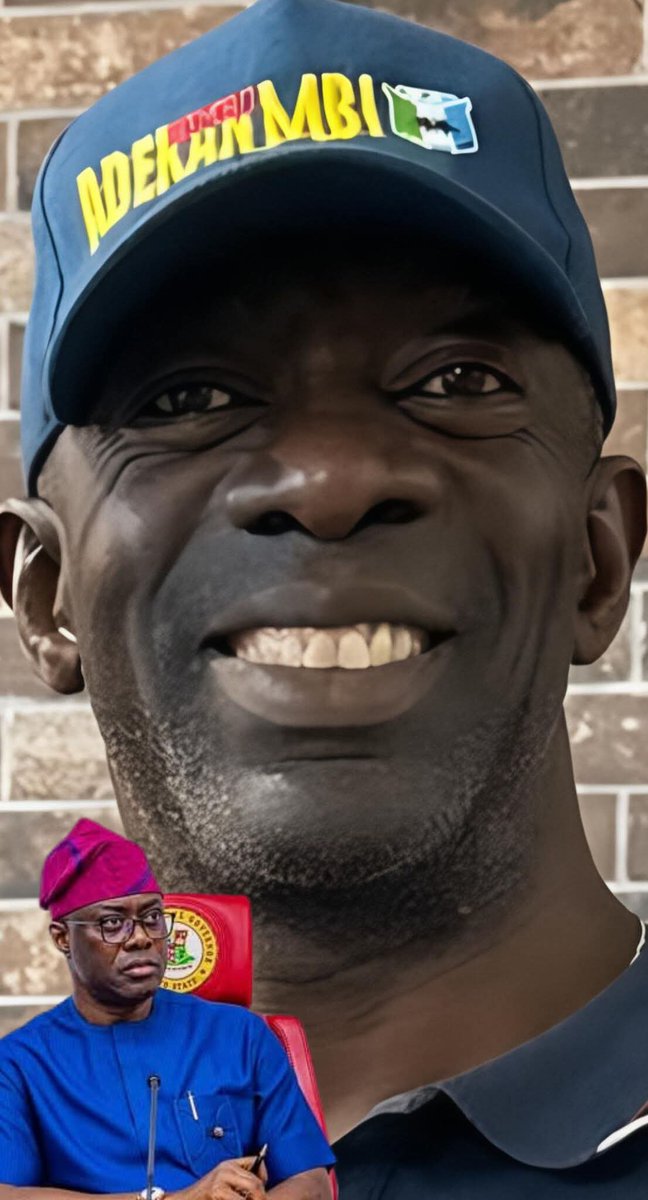


Interesting analysis on Sokan Wa this morning on Agidigbo FM regarding the demolished house allegedly linked to kidnapping activities.
The argument was simple: rather than rushing to demolish the property, authorities could have conducted a thorough forensic investigation to gather evidence, understand the operations that took place there, and possibly uncover more leads.
Afterward, the building could have been repurposed into something beneficial to the community, such as a police post, Amotekun base, or primary healthcare centre.
Security challenges require not only action but also strategy.
49
115
509
38,980
The so-called deregistration of the ACCORD, ADC along with other parties by Justice Peter Lifu may yet be the biggest manifestation of Tinubu’s hell-bent bid to undermine the opposition and entrench a defacto one-party state. The judgment is the height of judicial rascality.
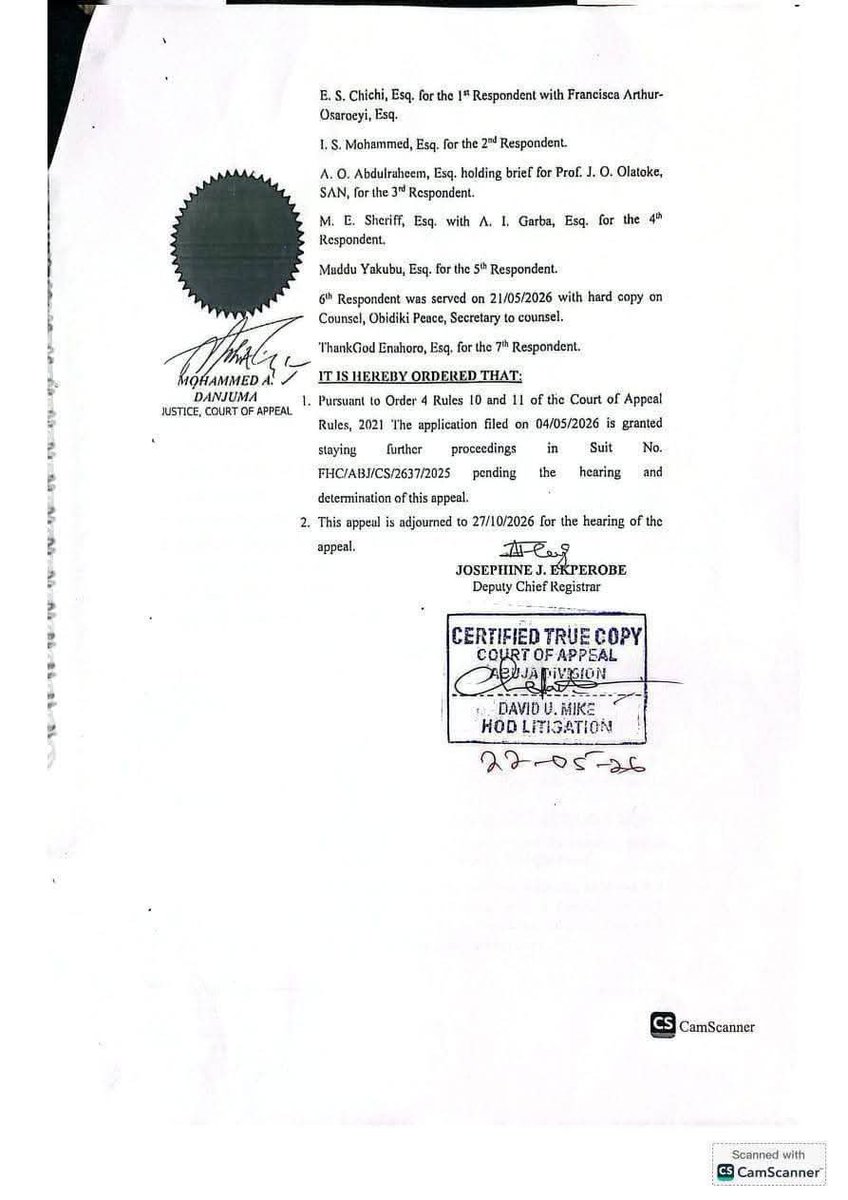
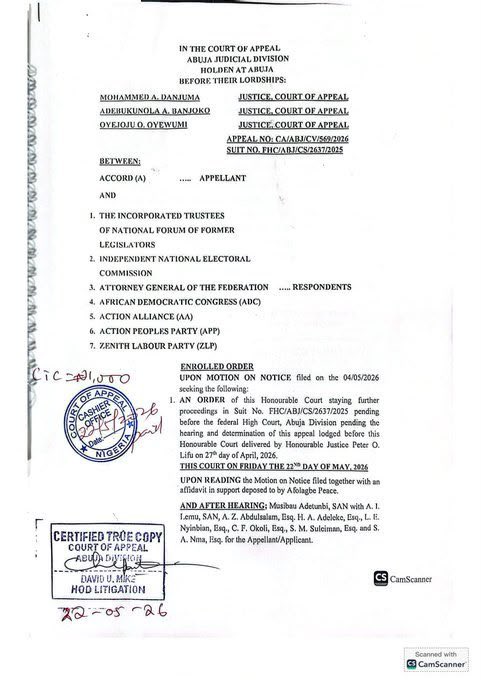
The Court of Appeal presided over by Justices Mohammed A. Danjuma, Adebunkunola A. Banjoko, Oyejoju O. Oyewumi had in Appeal CA/ABJ/CV/569/2026 and suit No. FHC/ABJ/CS/2637/2025 ordered Justice Peter Lifu to stay further action on the matter until the hearing and determination of the Appeal before it. The hearing for the appeal was scheduled for the 27th of October 2026. That order was dated 22nd of May 2026.
Nigerians and the international community can see the level of desperation of government of the ruling party to either have their way in the 2027 elections or destroy our democracy that was purchased at a huge cost.
2
2
17
PRIME🥇😎🇳🇬 retweeted

No court judgment can diminish the growing desire of Nigerians for a new political direction.

THE PEOPLE’S MANDATE CANNOT BE DEREGISTERED
The judgment delivered today by the Federal High Court ordering the deregistration of ACCORD and other political parties raises serious legal questions that will undoubtedly be resolved by the appellate courts.
As democrats, we respect the judiciary and the rule of law. However, it is equally important to point out that our legal system recognizes that once an appeal has been entered and matters affecting the substance of a case are before a higher court, lower courts are expected to exercise caution in taking steps that may render appellate proceedings nugatory.
Our legal team has informed us that issues relating to this matter are already before the Court of Appeal, and we remain confident that justice will prevail.
More importantly, our supporters and members should not lose sight of the bigger picture. Political parties are not mere corporate entities, they are vehicles through which citizens exercise their constitutional right to political participation. Any action that seeks to limit political choices available to the electorate must be subjected to the highest level of constitutional scrutiny.
I therefore call on all our supporters across Oyo State and Nigeria to remain calm, peaceful and focused. There is no cause for panic. ACCORD remains committed to providing people of Oyo state with a credible alternative built on integrity, accountability and people-centered leadership.
Let me also make it clear that no court judgment can diminish the growing desire of Nigerians for a new political direction. The movement for a better future is bigger than any single ruling and it cannot be stopped by temporary legal setbacks.
Our lawyers are already taking all necessary steps within the ambit of the law and we are confident that the appropriate judicial authorities will address the issues arising from today's decision.
Finally, to our teeming supporters, I say this, stay united, stay peaceful, and remain steadfast. Democracy is strengthened not by intimidation or exclusion, but by allowing the people to freely choose their leaders.
At the appropriate time, the people will have their say, and their voice will be heard.
Oriyomi Hamzat
Gubernatorial Candidate
ACCORD, Oyo State
2
2
13
PRIME🥇😎🇳🇬 retweeted

THE PEOPLE’S MANDATE CANNOT BE DEREGISTERED
The judgment delivered today by the Federal High Court ordering the deregistration of ACCORD and other political parties raises serious legal questions that will undoubtedly be resolved by the appellate courts.
As democrats, we respect the judiciary and the rule of law. However, it is equally important to point out that our legal system recognizes that once an appeal has been entered and matters affecting the substance of a case are before a higher court, lower courts are expected to exercise caution in taking steps that may render appellate proceedings nugatory.
Our legal team has informed us that issues relating to this matter are already before the Court of Appeal, and we remain confident that justice will prevail.
More importantly, our supporters and members should not lose sight of the bigger picture. Political parties are not mere corporate entities, they are vehicles through which citizens exercise their constitutional right to political participation. Any action that seeks to limit political choices available to the electorate must be subjected to the highest level of constitutional scrutiny.
I therefore call on all our supporters across Oyo State and Nigeria to remain calm, peaceful and focused. There is no cause for panic. ACCORD remains committed to providing people of Oyo state with a credible alternative built on integrity, accountability and people-centered leadership.
Let me also make it clear that no court judgment can diminish the growing desire of Nigerians for a new political direction. The movement for a better future is bigger than any single ruling and it cannot be stopped by temporary legal setbacks.
Our lawyers are already taking all necessary steps within the ambit of the law and we are confident that the appropriate judicial authorities will address the issues arising from today's decision.
Finally, to our teeming supporters, I say this, stay united, stay peaceful, and remain steadfast. Democracy is strengthened not by intimidation or exclusion, but by allowing the people to freely choose their leaders.
At the appropriate time, the people will have their say, and their voice will be heard.
Oriyomi Hamzat
Gubernatorial Candidate
ACCORD, Oyo State
1
4
10
558
A mandate built on the will of the people cannot be erased by temporary setbacks. We stand with you, and we remain committed to the journey ahead.💛

THE PEOPLE’S MANDATE CANNOT BE DEREGISTERED
The judgment delivered today by the Federal High Court ordering the deregistration of ACCORD and other political parties raises serious legal questions that will undoubtedly be resolved by the appellate courts.
As democrats, we respect the judiciary and the rule of law. However, it is equally important to point out that our legal system recognizes that once an appeal has been entered and matters affecting the substance of a case are before a higher court, lower courts are expected to exercise caution in taking steps that may render appellate proceedings nugatory.
Our legal team has informed us that issues relating to this matter are already before the Court of Appeal, and we remain confident that justice will prevail.
More importantly, our supporters and members should not lose sight of the bigger picture. Political parties are not mere corporate entities, they are vehicles through which citizens exercise their constitutional right to political participation. Any action that seeks to limit political choices available to the electorate must be subjected to the highest level of constitutional scrutiny.
I therefore call on all our supporters across Oyo State and Nigeria to remain calm, peaceful and focused. There is no cause for panic. ACCORD remains committed to providing people of Oyo state with a credible alternative built on integrity, accountability and people-centered leadership.
Let me also make it clear that no court judgment can diminish the growing desire of Nigerians for a new political direction. The movement for a better future is bigger than any single ruling and it cannot be stopped by temporary legal setbacks.
Our lawyers are already taking all necessary steps within the ambit of the law and we are confident that the appropriate judicial authorities will address the issues arising from today's decision.
Finally, to our teeming supporters, I say this, stay united, stay peaceful, and remain steadfast. Democracy is strengthened not by intimidation or exclusion, but by allowing the people to freely choose their leaders.
At the appropriate time, the people will have their say, and their voice will be heard.
Oriyomi Hamzat
Gubernatorial Candidate
ACCORD, Oyo State
1
11
PRIME🥇😎🇳🇬 retweeted

34m
“Don't fight any political party, whether APM, APC, or any other party.
If I meet Seyi Makinde today, I will greet him. We are friends, not enemies.
But one thing is certain: Omituntun 3.0 third-term agenda is going nowhere”
- Oriyomi Hamzat
3
3
15
PRIME🥇😎🇳🇬 retweeted
A dangerous precedent is being set in our judicial system.
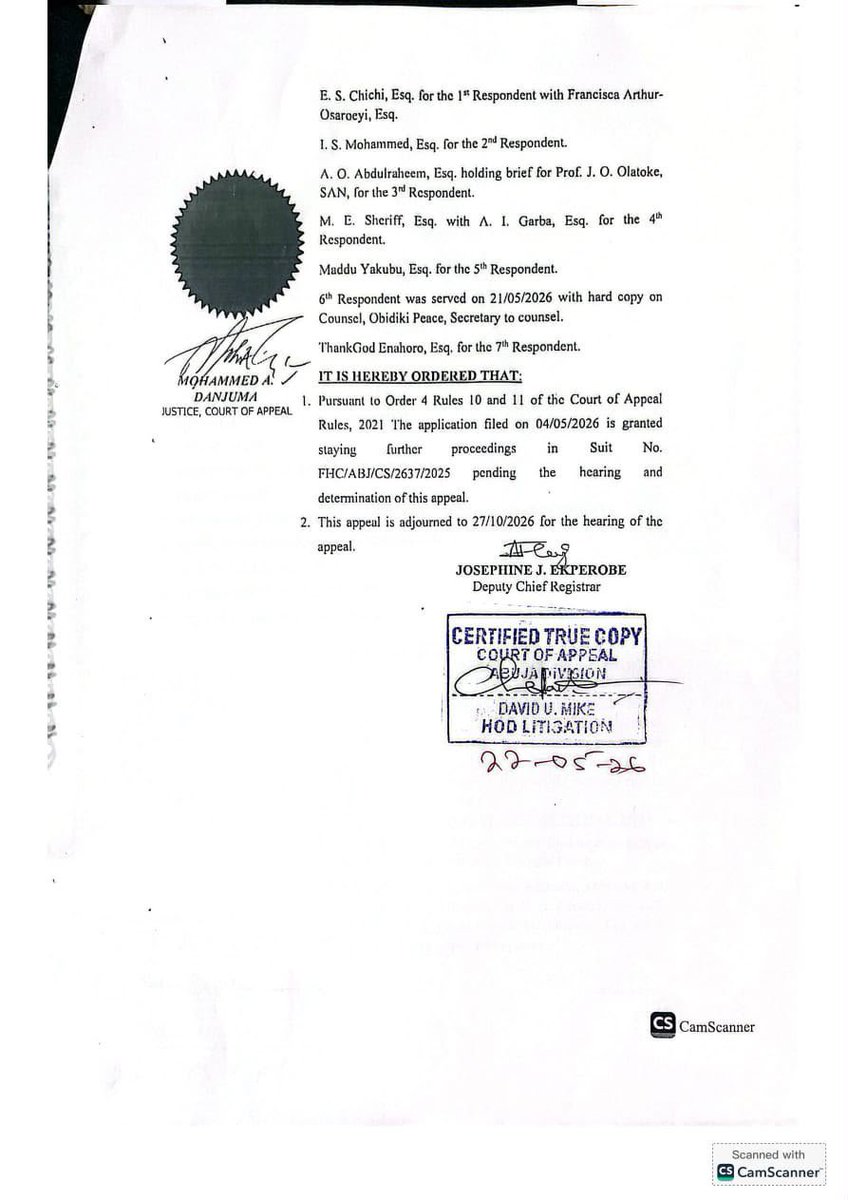
The Court of Appeal granted a stay of proceedings and expressly ordered that further proceedings in the matter involving Accord, ADC, AA, APP, ZLP and INEC be halted pending the determination of the appeal. Yet, despite that subsisting order, the Federal Highcourt went ahead to deliver judgment.
If courts of coordinate and lower jurisdiction can disregard the orders of superior courts, what message does that send about the rule of law?
The strength of democracy rests not just on court judgments, but on respect for judicial hierarchy. When orders of appellate courts are ignored, public confidence in the justice system is put at risk. Justice must not only be done; the authority of the courts must also be respected.
If courts cannot obey courts, how do we expect citizens to obey the law?
© Idris Abiola Adesina, MCIA
3
3
4
62
THE PEOPLE’S MANDATE CANNOT BE DEREGISTERED
The judgment delivered today by the Federal High Court ordering the deregistration of ACCORD and other political parties raises serious legal questions that will undoubtedly be resolved by the appellate courts.
As democrats, we respect the judiciary and the rule of law. However, it is equally important to point out that our legal system recognizes that once an appeal has been entered and matters affecting the substance of a case are before a higher court, lower courts are expected to exercise caution in taking steps that may render appellate proceedings nugatory.
Our legal team has informed us that issues relating to this matter are already before the Court of Appeal, and we remain confident that justice will prevail.
More importantly, our supporters and members should not lose sight of the bigger picture. Political parties are not mere corporate entities, they are vehicles through which citizens exercise their constitutional right to political participation. Any action that seeks to limit political choices available to the electorate must be subjected to the highest level of constitutional scrutiny.
I therefore call on all our supporters across Oyo State and Nigeria to remain calm, peaceful and focused. There is no cause for panic. ACCORD remains committed to providing people of Oyo state with a credible alternative built on integrity, accountability and people-centered leadership.
Let me also make it clear that no court judgment can diminish the growing desire of Nigerians for a new political direction. The movement for a better future is bigger than any single ruling and it cannot be stopped by temporary legal setbacks.
Our lawyers are already taking all necessary steps within the ambit of the law and we are confident that the appropriate judicial authorities will address the issues arising from today's decision.
Finally, to our teeming supporters, I say this, stay united, stay peaceful, and remain steadfast. Democracy is strengthened not by intimidation or exclusion, but by allowing the people to freely choose their leaders.
At the appropriate time, the people will have their say, and their voice will be heard.
Oriyomi Hamzat
Gubernatorial Candidate
ACCORD, Oyo State
3
3
48
Well said. Residents also have a responsibility to dispose of waste properly, but government agencies must ensure there is an effective waste management system and proper enforcement.

This is Iwo Road, one of the busiest gateways into Ibadan, and it is disheartening to see heaps of refuse littering such an important entrance to our city.
We must all do better. Residents and road users should desist from indiscriminate dumping of waste, while those responsible for sanitation and environmental enforcement should also play their part.
I would also like to ask Oga ademola aderinto,
Oyo State Commisioner for Environment, when a road belongs to the Federal Government, does the responsibility for keeping it clean also rest solely with the Federal Government, or is there a shared responsibility with state and local authorities?
Èyí ó buyi kún ibadan óò
O ti ní lójú!
ArugboBoisi ń lookọ mi
Ilé Adio Alagbo-ofẹ, Opo-Labiran n'Badan.
@oyostategovt @FeedbackOYSG @OYSG_MOENR


1
18
PRIME🥇😎🇳🇬 retweeted
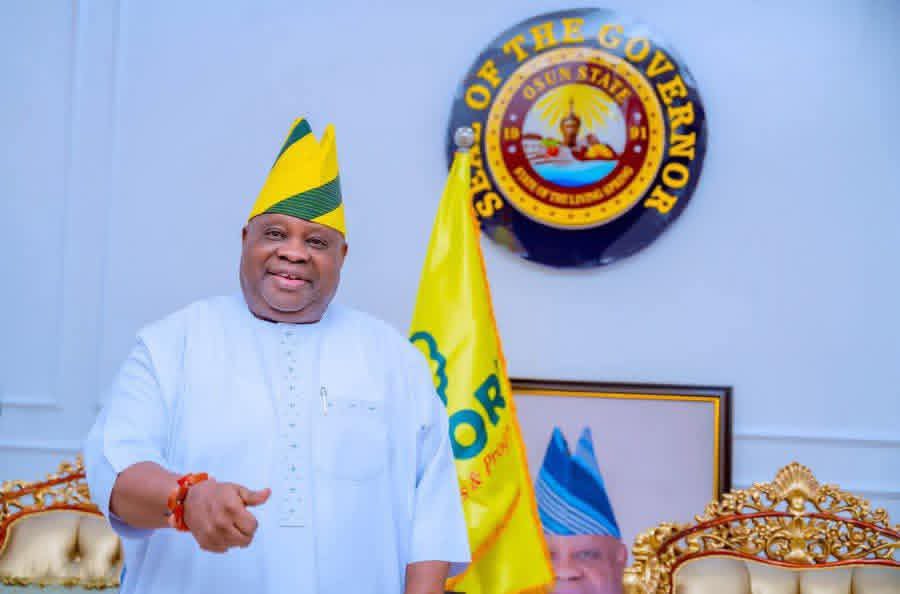
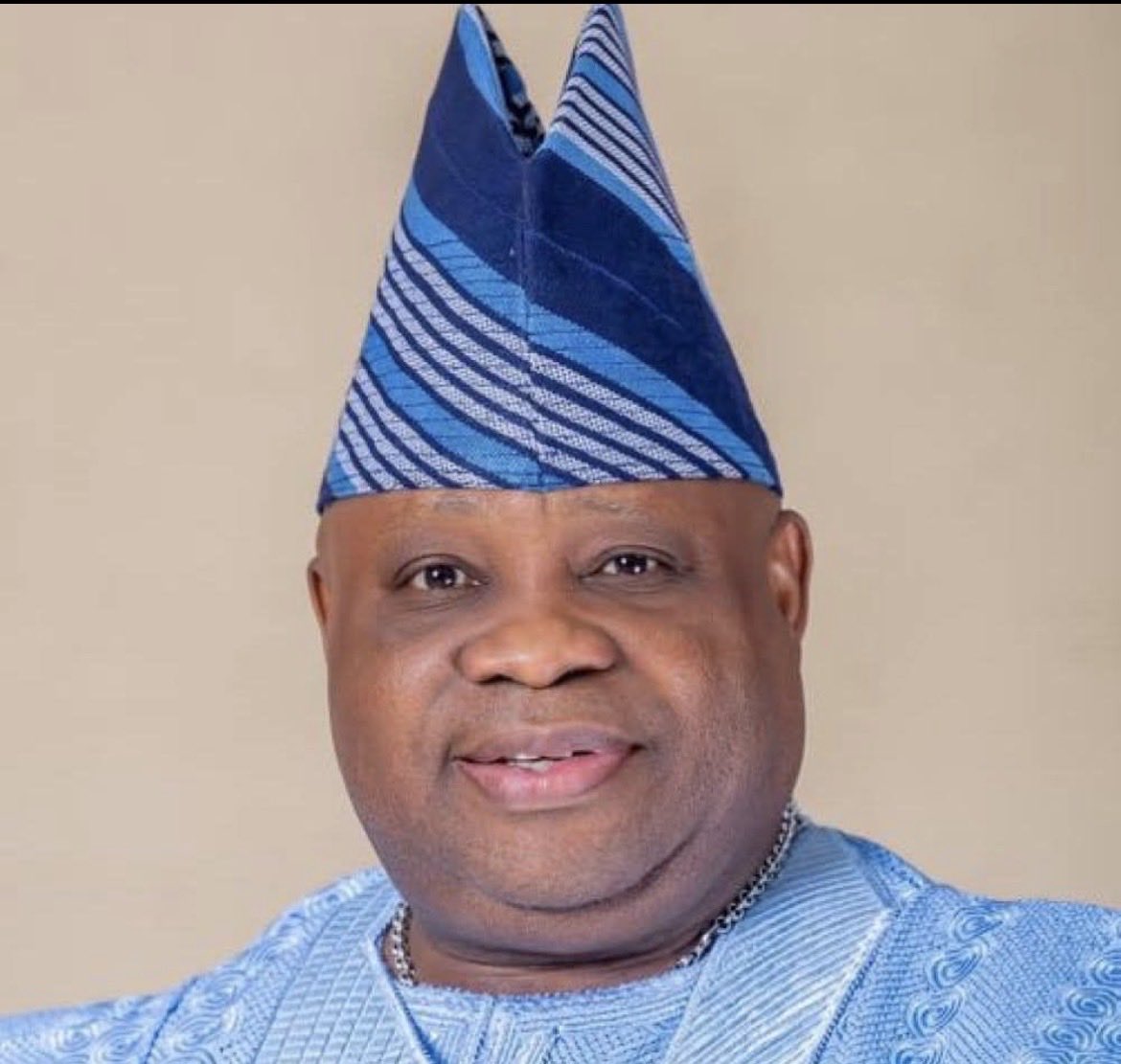
Governor Adeleke Says Deregistration Ruling Violates Court of Appeal Order.
Governor Ademola Adeleke has described that judgement of the Federal High Court deregistering five political parties as an abuse of court process and direct violation of a subsisting order of the Court of Appeal.
In a statement issued in response to the ruling the governor said the Appeal Court had made an order for the stay of proceedings by the Federal High Court, more particularly the said judgment that was delivered, expressing surprise that the lower court still proceeded to deliver a ruling on a matter already acted upon by the Court of Appeal.
It is on record before Honourable Justice Peter Lifu J that in the record of proceedings of the Court of Appeal of 22nd May, 2026 and which was put before his Lordship as Exhibit MAC 2 the Court of Appeal specifically pronounced that "The delivery of the judgement is still part of the proceedings of the Court. "
The governor urges the people to be calm as the Court of Appeal is taking up the matter tomorrow Tuesday, assuring the public that this “efforts to stop Osun people from exercising their voting rights will fail by the specialgraceofAlmightyGod. The Rule of Law and Humanity shall prevail at the end of the day.
“ I call on Osun people to remain calm and be assured that our rights will be affirmed and our party, the Accord will be on the ballot on August 15th.
“We will not only be on the ballot, we will win overwhelmingly the forthcoming governorship election. We should remain calm and forge ahead with mobilisation of our people.
“I also want to assure our people that the flag off of our campaign is holding as scheduled tommorow. They want to distract us. We are going ahead and we are winning this election”, the state governor posited.
"Our lawyers are taking all the necessary steps to right the wrong", the governor posited.
Signed:
Mallam Olawale Rasheed,
Spokesperson to the State Governor.
3
5
6
123
Oyo Central Senatorial District is one of the Senatorial Districts in Oyo State that is so blessed with many brilliant scholars.
Ambassador Shakirullah Jimoh Orankan is a seasoned international diplomat and philanthropist , while the current serving Senator, Senator Yunus Akintunde , is a seasoned businessman and philanthropist.
Yunus is good, but the people have called a better candidate to serve them.
Ambassador Shakirullah Jimoh Ora'nkan is the people's candidate for Oyo Central Senatorial District in 2027.
#accord #politics #orankan LOKAN
3
2
8
257
Governor Adeleke Says Deregistration Ruling Violates Court of Appeal Order
● Calls for Calm
● Says Flag off of Campaign Holds Tomorrow
OSOGBO - 14/06/2026 - Osunstate.gov.ng
Governor Ademola Adeleke has described that judgement of the Federal High Court deregistering five political parties as an abuse of court process and direct violation of a subsisting order of the Court of Appeal.
In a statement issued in response to the ruling the governor said the Appeal Court had made an order for the stay of proceedings by the Federal High Court, more particularly the said judgment that was delivered, expressing surprise that the lower court still proceeded to deliver a ruling on a matter already acted upon by the Court of Appeal.
It is on record before Honourable Justice Peter Lifu J that in the record of proceedings of the Court of Appeal of 22nd May, 2026 and which was put before his Lordship as Exhibit MAC 2 the Court of Appeal specifically pronounced that "The delivery of the judgement is still part of the proceedings of the Court. "
The governor urges the people to be calm as the Court of Appeal is taking up the matter tomorrow Tuesday, assuring the public that this “efforts to stop Osun people from exercising their voting rights will fail by the specialgraceofAlmightyGod. The Rule of Law and Humanity shall prevail at the end of the day.
“ I call on Osun people to remain calm and be assured that our rights will be affirmed and our party, the Accord will be on the ballot on August 15th.
“We will not only be on the ballot, we will win overwhelmingly the forthcoming governorship election. We should remain calm and forge ahead with mobilisation of our people.
“I also want to assure our people that the flag off of our campaign is holding as scheduled tommorow. They want to distract us. We are going ahead and we are winning this election”, the state governor posited.
"Our lawyers are taking all the necessary steps to right the wrong", the governor posited.
Signed:
Mallam Olawale Rasheed,
Spokesperson to the State Governor.
1
2
4
313
PRIME🥇😎🇳🇬 retweeted
The so-called deregistration of the African Democratic Congress (ADC) along with other parties by Justice Peter Lifu may yet be the biggest manifestation of Tinubu’s hell-bent bid to undermine the opposition and entrench a defacto one-party state. The judgment is the height of judicial rascality.
The Court of Appeal presided over by Justices Mohammed A. Danjuma, Adebunkunola A. Banjoko, Oyejoju O. Oyewumi had in Appeal CA/ABJ/CV/569/2026 and suit No. FHC/ABJ/CS/2637/2025 ordered Justice Peter Lifu to stay further action on the matter until the hearing and determination of the Appeal before it. The hearing for the appeal was scheduled for the 27th of October 2026. That order was dated 22nd of May 2026.
Nigerians and the international community can see the level of desperation of government of the ruling party to either have their way in the 2027 elections or destroy our democracy that was purchased at a huge cost.
4
5
359
A transparent and Accountable state PRO.

I didn't collect a dime from any aspirant.
– Hon Badru Idris Oriyomi (PRO Accord Oyo State).
2
3
85
This is Iwo Road, one of the busiest gateways into Ibadan.
The question is simple: should a major commercial hub in Oyo State look like this?
Residents pay taxes. Traders pay levies. Businesses contribute to the economy. In return, they deserve a cleaner and healthier environment.
This is not about politics; it is about accountability. What is the Ministry of Environment doing about waste management and sanitation in key areas of the state?
Development is not only about roads and flyovers. A clean environment is also a measure of good governance.
Oyo people deserve answers.

4
4
6
410
WHEN ALLIES BECOME RIVALS: THE UNWRITTEN RULE OF POLITICAL POWER
This article is all about what I observed from close range and as someone who’s deeply rooted in Oyo State politics. In politics, there’s a pattern that repeats itself quietly but consistently: some politicians don’t really “build people,” they borrow them. They elevate voices when it serves their ambition, amplify them when it wins elections, and stand close when influence is useful. But the moment that same individual starts to grow independently or considers stepping into the same political space, the energy changes fast from partnership to pressure, from support to suspicion, and sometimes outright opposition.
It’s not always personal. It’s structural. Power tends to tolerate allies, not equals. So the same qualities that made someone useful yesterday popularity, influence, grassroots connection, suddenly become “threats” today when that person no longer fits neatly into the original plan.
A clear example is evident in Oyo State politics. In the buildup to the 2019 and 2023 political cycle, Oriyomi Hamzat was widely seen as a strong grassroots media voice with influence over public sentiment. He was part of the wider ecosystem of actors whose visibility and reach intersected with the GSM movement at the time.
However, as years passed and Oriyomi Hamzat began to be more openly associated with political ambition and possible electoral participation under a different platform, the tone in the political space shifted. Allegations and counter-allegations started to surface around influence, funding, and loyalty, the kind of narratives that usually emerge when a former ally transitions into a potential competitor. That shift captures the broader political reality: once an individual moves from “supporting role” to “independent contender,” they are often reclassified from asset to risk. Not because their value changed, but because their direction did.
This is not unique to one state or one person, it’s a recurring political behavior pattern. The same system that encourages visibility and influence during election cycles can become defensive when that visibility becomes politically self directed.
The lesson is simple but uncomfortable: in politics, loyalty is often conditional, and alliances are frequently situational. Until ambition changes lanes.
And once it does, the game changes with it.
May Oriyomi Hamzat succeed beyond expectations
©️ BIO
1
3
84
Having watched Oriyomi Hamzat’s live stream earlier today, one thing became crystal clear to everyone that Oriyomi Hamzat was born for politics.
I can see the confidence, composure, and conviction with which he engaged his followers were both reassuring and inspiring. Many would have expected the events of the past week to distract or destabilize him, but if anything, they seem to have strengthened his resolve.
He addressed questions from his supporters in simple, plain language, helping people understand that politics is a different ball game and that he understands the game better than most.
He made it clear that he knows where the attacks are coming from. More importantly, he exposed the naivety of those who believe revealing their strategy this early gives them an advantage. In reality, they have only shown their hand.
Nobody needs a soothsayer to see that the recent happenings within Accord and around the Oriyomi Hamzat movement have strong political undertones.
The coordinated attacks, misinformation, propaganda, and desperate attempts to create confusion all point in one direction: ACCORD is a major force in the race, and Oriyomi Hamzat is the candidate many political actors are worried about.
Ask yourself:
Why Oriyomi Hamzat?
Why dedicate so much attention to someone they claim is politically irrelevant?
Why attack someone they insist lacks the resources to contest?
Why invest so much energy in a movement they claim has no structure or voter base?
The answer is simple.
Behind the public rhetoric lies a private reality they cannot ignore. They understand the influence Oriyomi Hamzat commands. They understand his connection with ordinary people. They understand the goodwill he has built over the years and the grassroots support that continues to grow daily.
If he truly posed no threat, they would not be spending so much time discussing him.
To our supporters and members of ACCORD, this is the time to remain calm, focused, disciplined, and committed to our mission. We must continue to conduct ourselves with respect and dignity, regardless of provocation.
We have weathered attacks before and emerged stronger and we will overcome this phase as well. But make no mistake—more attacks will come.
That is often the price paid by a movement whose message is resonating and whose momentum is becoming impossible to ignore.
The journey continues.
Oyo state is watching. The people are deciding and the future belongs to those who remain steadfast.
©️ BIO
2
4
9
436
Welcome to the people's movement. Together, we'll make history for Oyo State. 💛

This is a difficult decision, but clarity is essential. For months, I have been a strong supporter of Ambassador Ajadi Oguntoyinbo. I believed in the vision and worked diligently to promote it. I am grateful for the valuable lessons learned during this period. However, I am......
4
310
PRIME🥇😎🇳🇬 retweeted

This is a difficult decision, but clarity is essential. For months, I have been a strong supporter of Ambassador Ajadi Oguntoyinbo. I believed in the vision and worked diligently to promote it. I am grateful for the valuable lessons learned during this period. However, I am......
13
4
12
838