
A BVI-based investment fund pioneering blockchain projects and digital assets across Southeast Asia
Joined December 2022
- Tweets 257
- Following 30
- Followers 6,016
- Likes 151
194 Photos and videos













Morpho's recent 50M USD funding round, backed by heavyweights like Ribbit Capital, a16z crypto, and Coinbase Ventures, signals a definitive structural shift in the onchain credit markets. Unlike the monolithic banking models of Aave or Compound, Morpho is repositioning itself as a base-layer primitive for decentralized lending. This evolution from a single-product protocol to a modular infrastructure layer is designed to solve the capital inefficiency and rigid risk management constraints that have historically capped the growth of DeFi lending.
The legacy Peer-to-Pool model, while revolutionary, forced a lowest-common-denominator approach to risk. By grouping diverse assets into a single liquidity pool, governance parameters like Loan-to-Value (LTV) ratios had to be calibrated to the weakest asset in the basket, resulting in high interest rate spreads and suboptimal capital utility. Morpho Blue addresses this by introducing isolated risk markets. This modularity allows any third party to initialize lending markets with custom asset pairs, LTVs, and oracles. It effectively unbundles the protocol, separating the technical execution layer from the risk management layer.
Efficiency gains in this new architecture are driven by a hyper-minimalist core—roughly 600 lines of code—which reduces gas costs and eliminates the overhead of protocol-wide insurance fees or DAO-managed safety modules. On top of this base layer, MetaMorpho vaults act as yield aggregators managed by professional Risk Curators. This separation of concerns is critical for institutional adoption. Traditional financial entities require the ability to create permissioned markets with specific KYC/AML standards and tailored risk parameters, a feat that is cumbersome under the centralized DAO governance of legacy protocols.
However, the shift toward modularity introduces new systemic risks, primarily the fragmentation of accountability. In the Morpho ecosystem, the security of user deposits rests almost entirely on the competence of third-party Risk Curators rather than a collective protocol backstop. Furthermore, fragmented liquidity across hundreds of niche markets could heighten slippage during liquidations in black swan events. While external liquidity routers mitigate this, the model's resilience in a high-volatility environment remains partially untested compared to the massive, unified pools of its predecessors.
The broader implication for the industry is the institutionalization of onchain credit. By providing a flexible, low-cost primitive, Morpho allows for the safe integration of Real-World Assets (RWA) such as tokenized T-bills without exposing the entire protocol to cross-collateral contagion. As DeFi moves toward becoming the back-end infrastructure for global finance, the ability to customize risk at scale will be the primary differentiator between experimental protocols and sustainable capital markets.
Read the full research: primusspark.com/cong-nghe/mo…
10
611

Jun 11
Mastercard is signaling a fundamental shift in the architecture of global finance by integrating AI Agents with stablecoin settlement layers. This strategic pivot addresses a critical bottleneck: the incompatibility of legacy banking rails with the autonomous, high-frequency nature of machine commerce. As Generative AI and Large Language Models evolve into active agents capable of making independent purchasing decisions, the industry is moving toward a machine-to-machine (M2M) economy that requires programmable, 24/7 settlement capabilities that traditional ACH or SWIFT systems cannot provide.
The core of Mastercard's initiative lies in the intersection of digital identity, smart contracts, and blockchain-based finality. By leveraging stablecoins like USDC and potentially future CBDCs, Mastercard is effectively creating a financial passport for AI Agents. This identity layer allows the network to assign credit limits, risk profiles, and spending permissions to non-human entities. Unlike traditional card payments that rely on human-centric KYC, this new framework utilizes digital certificates to ensure that autonomous transactions remain within regulatory compliance while benefiting from the near-instant settlement of networks like Polygon or Ethereum.
From a market structure perspective, this transition shifts the focus from high-value human transactions to massive volumes of micro-payments. Traditional payment systems are ill-equipped for the marginal cost requirements of processing millions of sub-dollar transactions per second. By utilizing stablecoins as a standardized payment layer, Mastercard eliminates the latency of clearing houses and the friction of currency conversion. This creates a human-less economy where cloud service providers, data APIs, and energy grids can be compensated in real-time by the AI agents consuming their resources.
However, this autonomous financial ecosystem introduces significant systemic risks. The speed of AI-driven commerce increases the potential for flash crashes within digital service markets, where algorithmic errors could trigger cascading liquidity drains across stablecoin wallets. Furthermore, the legal landscape regarding liability for autonomous financial actions remains a gray area. If an AI Agent executes an illicit transaction or breaches a contract, the industry has yet to determine whether accountability lies with the agent's owner, the algorithm developer, or the payment facilitator.
The integration of AI Agents and stablecoins by a legacy giant like Mastercard represents the formalization of decentralized finance within the traditional economy. It bridges the gap between CeFi and DeFi, creating a hybrid model where institutional trust meets programmatic execution. For the broader crypto market, this is the ultimate validation of stablecoins as a utility rather than just a speculative vehicle. The era of autonomous commerce is no longer a theoretical exercise; it is an infrastructure project currently being built by the world's largest payment networks.
Read the full research: primusspark.com/cong-nghe/ma…
1
12
675
Jun 8
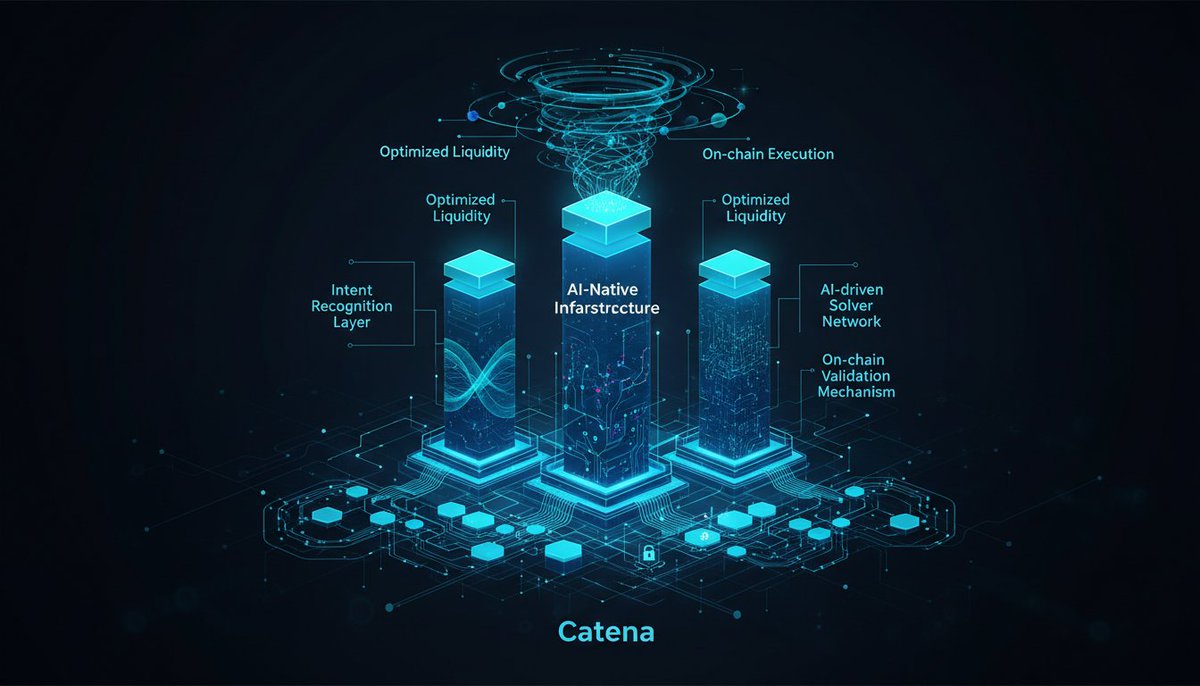
The evolution of decentralized finance is hitting a critical bottleneck: the complexity paradox. As liquidity fragments across a growing sea of L1s, L2s, and Appchains, the technical overhead for users has reached a breaking point. Catena represents a fundamental shift toward AI-Native financial infrastructure, moving the industry from manual transaction execution to an intent-centric model where autonomous agents manage the entire lifecycle of on-chain activity.
At its core, Catena functions as an intelligent middleware layer that abstracts the complexities of bridging, gas optimization, and slippage management. Unlike traditional aggregators that simply find the cheapest path between two tokens, Catena utilizes an Intent Recognition Layer to translate natural language or high-level financial goals into atomic cross-chain transactions. By leveraging Large Language Models specialized in on-chain telemetry, the system can parse a request like 'optimize ETH staking yield with minimal de-peg risk' and autonomously route capital across Liquid Staking Derivatives (LSDs) and yield optimizers in real-time.
The competitive engine of this ecosystem is its AI-driven Solver Network. In this architecture, specialized agents compete to fulfill user intents. These solvers utilize machine learning to predict short-term volatility and order book depth more accurately than standard arbitrage bots, effectively neutralizing market inefficiencies. This shift turns liquidity from a static resource into a dynamic, highly portable asset that flows toward the most efficient protocols, creating a 'natural selection' environment for DEXs and lending markets.
However, the transition to AI-managed execution introduces non-trivial systemic risks. The 'black box' nature of neural networks means that in extreme black-swan events, these models could trigger cascading liquidity failures if logic errors occur simultaneously across solvers. Furthermore, we must monitor the risk of 'algorithmic monopolies,' where a small group of entities with superior hardware and proprietary models dominate the execution flow, potentially creating new centralized points of failure in an ostensibly decentralized system.
Catena is not just an application; it is a precursor to a frictionless global financial stack. For DeFi to capture institutional-grade capital, the transition from interface-based to intent-based interaction is an objective necessity. The success of this paradigm will depend on the robust integration of Zero-Knowledge Proofs to verify intent without exposing sensitive trade data to MEV bots.
Read the full research: primusspark.com/cong-nghe/ca…
10
684
Jun 6
🧵 The 2018 Zcash counterfeiting vulnerability stands as the most significant "Black Swan" event in the history of privacy-preserving cryptography, exposing a fundamental paradox: the stronger the privacy, the harder the audit. While the Electric Coin Company (ECC) successfully patched the flaw during the Sapling upgrade, the incident revealed that absolute anonymity via zk-SNARKs comes at the cost of supply auditability. If an attacker can generate unlimited tokens out of thin air without leaving a trace on the public ledger, the economic scarcity—the very bedrock of a crypto-asset's value—becomes a matter of faith rather than mathematical certainty. This case study isn't just about a past bug; it defines the structural risks inherent in all Zero-Knowledge systems where the "shielded" supply remains a black box to the public.
The technical root of the vulnerability lay not in the infamous "toxic waste" of the Trusted Setup, but in the mathematical construction of the BCTV14 algorithm. A flaw in the library allowed a malicious actor to bypass consistency checks for polynomials, essentially permitting the creation of valid proofs for non-existent transactions. Unlike Bitcoin, where a 184 billion BTC inflation bug in 2010 was immediately spotted because every UTXO is public, Zcash’s shielded pools hide the balances. This created a "mathematical blindness" where an inflation event could occur indefinitely without triggering any economic alarms....
2
148
Jun 6
Modern privacy protocols face an inescapable trade-off between sovereign anonymity and systemic transparency. The Zcash incident forced a shift in the privacy landscape, highlighting why competitors like Monero opted for Ring Signatures and Bulletproofs, which, while offering less "perfect" anonymity than zk-SNARKs, allow for a more straightforward verification of the total coin supply. The market reaction reflected this systemic skepticism; while ZEC's price didn't collapse instantly, its long-term liquidity and valuation relative to the broader market suffered as institutional custodians and market makers began pricing in "Protocol Risk." The realization that a small group of developers held the secret to a potential total economic collapse for nearly a year—choosing stability over immediate transparency—underscores a centralized point of failure in information asymmetry that contradicts the core ethos of decentralized finance.
Looking forward, the transition to the Halo 2 protocol and the removal of the Trusted Setup are critical steps toward reclaiming trust, but they introduce new layers of implementation complexity. Every new cryptographic breakthrough is a double-edged sword; as we move toward quantum-vulnerable futures, the risk of "silent inflation" through undetected Zero-day vulnerabilities remains the primary threat to the privacy coin thesis. For sophisticated investors and researchers, the metric to watch isn't just shielded transaction volume...
1
116
Jun 6
The broader implication of the Zcash counterfeiting flaw is that privacy in the digital age is as much a governance challenge as it is a mathematical one. We must ask: is the inability to audit a feature or a bug? To a privacy maximalist, any backdoor for auditing is a vulnerability that can be exploited by state actors. To a financial regulator or a macro economist, an unauditable supply is a non-starter for a global reserve asset. The path to sustainable privacy coins likely lies in "Zero-Knowledge Auditability"—a middle ground where cryptographic proofs can guarantee that the sum of all balances equals the expected issuance without revealing individual holdings. Until this is perfected, the ghost of silent inflation will continue to haunt the sector, reminding us that in the world of high-stakes cryptography, what you don't know can indeed hurt you.
Read the full research: primusspark.com/cong-nghe/lo…
39
Jun 5
The recent flipping of Solana (SOL) by Hyperliquid (HYPE) in spot trading volume represents a structural pivot in crypto market architecture. This is no longer just about a Perpetual DEX gaining traction; it is the emergence of a high-performance App-chain (Layer 1) that challenges the supremacy of monolithic blockchains. The migration of liquidity from general-purpose networks to specialized execution environments suggests that capital is now prioritizing vertical integration and capital efficiency over broad ecosystem decentralization.
Hyperliquid operates on HyperBFT, a custom consensus mechanism designed to handle thousands of transactions per second with sub-second latency. Unlike Ethereum Layer 2s that inherit security from a base layer, Hyperliquid functions as an independent entity with a fully on-chain orderbook. This vertical stack allows the protocol to eliminate the friction inherent in Automated Market Makers (AMMs), such as impermanent loss and slippage, by replicating a Centralized Exchange (CEX) experience on-chain. The HYPE token launch and its subsequent $1B 24-hour volume are not merely speculative spikes but evidence of the 'Point-to-Token' model’s ability to bootstrap a self-sustaining liquidity moat.
The strategic shift toward the HyperEVM and the introduction of HIP-1 and HIP-2 token standards demonstrate a transition from a single-product app to a comprehensive financial layer. By allowing third-party projects to build directly on its liquidity infrastructure, Hyperliquid is creating a localized network effect. In this new paradigm, value is not diluted across unrelated applications but concentrated on optimizing a specific primitive: trading. This 'Application-Specific' approach reduces resource contention, ensuring that gas fees and execution speeds remain optimized for high-frequency participants.
However, institutional observers must distinguish between incentive-driven volume and organic retention. A significant portion of current liquidity is managed by market makers and yield-sensitive participants. The long-term viability of the HYPE ecosystem depends on its ability to convert these temporary actors into loyal users as airdrop incentives normalize. Furthermore, as an independent L1, Hyperliquid faces unique systemic risks, including validator centralization concerns and the potential for regulatory scrutiny as it scales to compete directly with mid-tier centralized exchanges.
We are witnessing the convergence of CeFi efficiency and DeFi transparency. If Hyperliquid successfully maintains its liquidity depth without perpetual subsidies, it will set the blueprint for the next generation of financial infrastructure where the boundary between 'on-chain' and 'exchange' effectively disappears. The era of the monolithic L1 is being challenged by the era of hyper-specialized execution.
Read the full research: primusspark.com/cong-nghe/su…
1
205
Jun 3
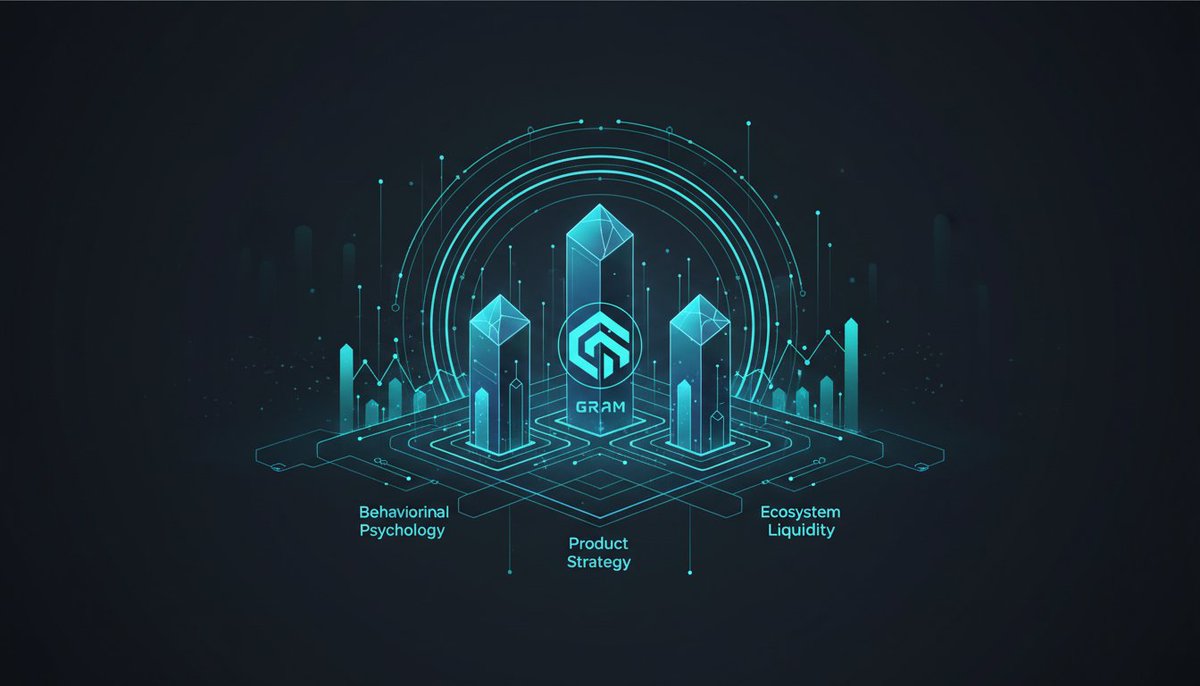
The strategic rebranding of Toncoin (TON) back to its original identifier, Gram, represents more than a cosmetic update; it is a definitive move to synchronize Telegram’s 900 million users with a unified blockchain identity. By reclaiming the Gram moniker—the name used in the original 2018 whitepaper—Telegram is signaling a pivot from a fragmented ecosystem toward a cohesive Super App model. The market responded to this alignment with a sharp 13% price appreciation, pushing the asset above the $5.50 resistance level on significant volume. This shift marks the end of brand ambiguity and positions Gram as the native currency of a digital empire rather than a detached Layer 1 utility token.
Technically, this consolidation reduces cognitive friction for the average user. Within the Telegram ecosystem, the transition from decentralized advertising revenue and Stars to Gram creates a more intuitive conversion funnel. For institutional observers, the move reflects a renewed confidence in the project's legal standing following years of SEC-induced separation. The integration of the Wallet in Telegram and the explosion of Mini Apps like Notcoin and Hamster Kombat have already stress-tested the network. By formalizing the brand, Telegram is effectively turning its messaging interface into a global payment rail, mirroring the economic depth of platforms like WeChat but with a decentralized settlement layer.
From a liquidity perspective, the rebranding acts as a catalyst for market makers and venture funds to re-evaluate the asset's weight in global portfolios. As Gram transcends the label of a mere L1, its valuation is increasingly tied to the platform's commercialization metrics rather than just on-chain TVL. However, this transition is not without systemic risks. Re-adoption of the Gram name could invite renewed scrutiny from financial regulators who previously viewed the asset as an unregistered security. Furthermore, the network must demonstrate it can handle the technical demands of mass-scale retail transactions without the gas spikes or latency issues that have occasionally plagued TON during major airdrop events.
The long-term viability of Gram depends on its ability to convert passive chat users into active economic participants. If the rebranding is not met with deep infrastructure improvements and sustained regulatory clarity, the recent 13% gain may serve as a psychological ceiling rather than a floor. The market is now watching for shifts in on-chain activity and the stability of the funding rate as speculators and long-term holders adjust to this new era. For the ecosystem projects built on this stack, the future is now inextricably linked to the success of the Gram brand as the primary medium of exchange for the Web3 social layer.
Read the full research: primusspark.com/cong-nghe/ta…
110
Jun 1
Prompt Injection: The Structural Vulnerability Threatening the Generative AI Ecosystem
The fundamental architecture of Large Language Models (LLMs) contains a critical flaw that traditional cybersecurity frameworks are struggling to contain: Prompt Injection. Unlike classic software bugs, this is a structural vulnerability where control instructions and user-provided data are processed in the same semantic plane. As enterprises integrate AI agents into core workflows, the inability to distinguish between a developer's system prompt and a malicious user's command poses a systemic risk to data privacy and market stability.
Over the past 48 hours, security reports have highlighted that even flagship models like GPT-4, Claude 3.5, and Gemini Pro remain susceptible to linguistic manipulation. In traditional computing, the data segment and code segment are separated at the hardware and OS levels. In the Transformer architecture, however, everything is reduced to text tokens. When an AI agent is granted access to external APIs—such as email, financial databases, or proprietary codebases—a successful 'jailbreak' via natural language can lead to unauthorized asset transfers or large-scale data exfiltration without a single line of malware.
The mechanics of these attacks are bifurcated into direct and indirect methods. Direct injection involves deliberate commands to 'ignore previous instructions,' while indirect injection is more insidious, hiding malicious payloads within websites or documents that an AI is tasked to summarize. Because LLMs are trained on the 'Attention' mechanism, they often prioritize the most recent or semantically weighted instructions. This creates a functional paradox: the more helpful and context-aware a model becomes, the more vulnerable it is to being hijacked by sophisticated role-playing or logical paradoxes.
From a market perspective, this vulnerability introduces a 'security tax' on AI integration. Institutional investors must account for higher risk premiums as companies face potential litigation from data leaks and increased R&D costs for defensive layers. Current solutions, such as using a secondary 'monitor' model to sanitize inputs, increase latency and operational overhead without offering a definitive fix. We are witnessing the emergence of a new sector in cybersecurity: AI Firewalls and linguistic auditing services, as the industry moves from pure performance benchmarks toward robustness and safety metrics.
The most significant variable to monitor is the deployment of autonomous AI Agents. The risk is not the chatbot itself, but the level of privilege granted to it. If the industry does not adopt a 'Least Privilege' framework for AI execution, the next wave of cyberattacks will not be coded in C or Python, but in English. While some argue that architectural shifts away from Transformers could solve this, the immediate reality is an escalating arms race between 'jailbreakers' and developers that may never reach a permanent equilibrium.
Prompt Injection reminds us that natural language is an inherently 'leaky' medium for logic. As AI moves from a novelty to a foundational layer of the global economy, the ability to resist linguistic subversion will become the primary differentiator for enterprise-grade intelligence.
Read the full research: primusspark.com/cong-nghe/ta…
5
589
May 31
The regulatory approval of crypto perpetual futures by the Commodity Futures Trading Commission (CFTC) represents a paradigm shift for the U.S. digital asset market. By legitimizing a product that has long been the exclusive domain of offshore exchanges, the CFTC is effectively repatriating liquidity and establishing a sophisticated risk management framework for institutional participants. This move signals the end of the experimental era for crypto derivatives in the U.S. and the beginning of a structured, institutional-grade market cycle.
For over a decade, perpetual futures—the most liquid instrument in the crypto ecosystem—operated outside the reach of U.S. domestic oversight. The recent licensing of entities like Bitnomial and the expansion of designated contract markets (DCMs) create a regulated alternative to the high-leverage offshore model. Unlike the algorithmic auto-deleveraging (ADL) systems used by unregulated platforms, CFTC-governed exchanges must adhere to the Commodity Exchange Act (CEA). This necessitates higher initial margins, robust default funds, and the strict segregation of customer assets through Derivatives Clearing Organizations (DCOs). By decoupling the exchange, brokerage, and clearing functions, the CFTC is mitigating the counterparty risk that led to the systemic collapses of 2022.
The technical implications for price discovery are significant. Regulated perpetuals require audited index prices and transparent funding rate mechanisms that are resistant to manipulation. As traditional Wall Street market makers enter this space, we expect to see a compression of spreads and increased market depth, which has historically been a bottleneck for U.S.-based crypto trading. Furthermore, this shift puts immense pressure on global financial hubs like Dubai and Singapore. The competition is no longer just about leverage or fees; it is about legal certainty and seamless integration with the legacy banking system.
However, this transition is not without friction. A primary risk involves the potential for liquidity fragmentation. If CFTC-mandated margin requirements are prohibitively high compared to offshore competitors, retail and high-frequency traders may remain on unregulated platforms, limiting the domestic product's growth. Additionally, the jurisdictional overlap between the CFTC and the SEC remains a persistent gray area, particularly for assets beyond Bitcoin and Ethereum. There is also the risk of creating single points of failure; a technical or collateral failure at a major regulated clearinghouse would have a more direct contagion effect on the traditional financial system than a failure at an offshore venue.
The institutionalization of perpetual futures is an admission that digital assets are now a permanent fixture of the financial architecture. The shift from pure speculation to professional risk management will likely result in more efficient price discovery and a reduction in volatility driven by retail liquidations. This regulatory milestone provides the necessary infrastructure for large-scale capital allocators to hedge and trade with confidence, potentially reshaping the global hierarchy of digital asset liquidity.
Read the full research: primusspark.com/cong-nghe/bu…
1
550
May 29
Bitcoin Below $75,000: Institutional Outflows and the Risk of Structural Cooling
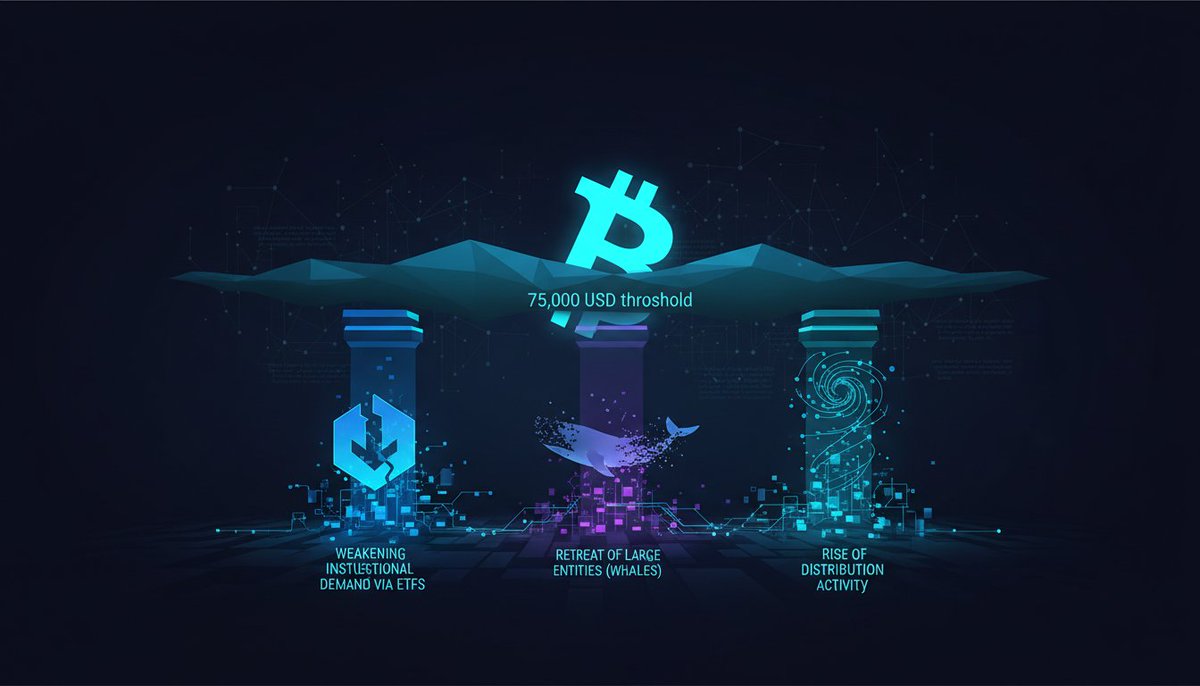
The Bitcoin market is currently navigating a critical pivot point as on-chain metrics and technical indicators signal a shift from momentum-driven growth to a potential structural correction. The failure to sustain levels above the psychological $75,000 threshold, coupled with persistent ETF outflows and diminishing whale activity, suggests the market is entering a cooling phase characterized by tightening liquidity and shifting institutional risk appetite.
Since hitting all-time highs, the macro environment has become increasingly complex. Geopolitical escalations in the Middle East have pressured high-beta assets, while the Federal Reserve’s higher-for-longer interest rate stance has increased the opportunity cost of holding non-yielding assets. This shift is most visible in the Spot Bitcoin ETF flows. The transition from aggressive net inflows to consistent net outflows indicates that institutional demand is not a unidirectional force but a cyclical one, highly sensitive to macro volatility. When the $75,000 level failed to hold, momentum-based fund managers and algorithmic traders shifted toward profit-taking, creating a self-reinforcing sell-side pressure.
On-chain data corroborates this cooling narrative. Activity among whales—addresses holding 1,000 to 10,000 BTC—has dropped to levels reminiscent of early 2022. This lack of large-scale participation creates a liquidity vacuum, making price action vulnerable to even minor sell orders. Furthermore, we are seeing a state of active distribution. Long-term holders are increasingly offloading supply to short-term speculators or exchanges, signaling that sophisticated players view the $75,000 range as a local ceiling rather than a launchpad.
The derivatives market adds another layer of caution. Call option premiums are shrinking relative to puts, suggesting professional traders are actively hedging for downside risk. This cooling of BTC has profound implications for the broader ecosystem. As the primary source of liquidity, a stagnant Bitcoin drains the risk appetite for Altcoins and Memecoins, leading to significant slippage and capital erosion. For Web3 startups, this structural cooling often leads to delayed Token Generation Events (TGEs) and more stringent valuation rounds from VCs, who are now prioritizing runway over hyper-growth.
However, a contrarian view suggests this phase is a necessary leverage flush-out. If Bitcoin can establish a firm base between $60,000 and $65,000 on low volume, it may signal a re-accumulation phase. The current ETF outflows might simply represent a rotation from short-term speculators to long-term institutional holders waiting for a discount.
Ultimately, the market is moving into a period where efficiency and capital preservation supersede pure speculation. Monitoring institutional flow and Fed policy remains the primary key to determining if this is a brief pause or the start of a deep market restructuring.
Read the full research: primusspark.com/cong-nghe/bi…
1
38
May 27
The convergence of Artificial Intelligence and Web3 has reached a critical bottleneck: the vacuum of verifiable performance metrics. While AI Agents dominate the current narrative, most trading models operate within the 'black box' of backtesting, a method notoriously prone to overfitting and theoretical bias. Nof1 is positioning itself as the definitive institutional-grade solution to this problem, establishing an autonomous AI trading lab designed to replace speculative hype with live, quantitative benchmarks.
At its core, Nof1 functions as a high-fidelity execution environment that subjects AI models to zero-latency real-world market conditions. Unlike traditional backtesting, this framework forces agents to navigate slippage, liquidity constraints, and flash volatility in real-time. By utilizing blockchain as a transparency layer, Nof1 records performance data on-chain. This 'Proof of Performance' allows developers to validate their algorithms' Sharpe Ratios and Maximum Drawdowns without compromising proprietary intellectual property—solving the transparency-security trade-off that has historically hindered institutional adoption of decentralized AI.
The strategic value of Nof1 lies in its potential to restructure capital flows within the AI-Crypto sector. Currently, investment in this space is driven by narrative momentum rather than yield sustainability. By standardizing quantitative metrics, Nof1 provides a filter for Venture Capital and Market Makers to distinguish between 'empty shell' projects and robust trading engines. If Nof1 succeeds in becoming an industry-standard benchmark, we may see the emergence of performance-based indices, allowing for more systematic exposure to automated strategies.
However, a contrarian view suggests that the standardization of AI benchmarks could introduce new systemic risks. If a significant portion of AI Agents optimize for the same Nof1-defined metrics, it may lead to 'crowded trades' and synchronized behavior. In periods of high volatility, this algorithmic resonance could exacerbate flash crashes as agents trigger identical risk-mitigation protocols simultaneously. Furthermore, while on-chain data prevents tampering, it does not inherently protect against adversarial attacks on the data feeds themselves, potentially creating a false sense of security for retail investors.
Ultimately, the maturation of the AI-Web3 intersection depends on the shift from conceptual speculation to results-oriented quantification. Nof1 is a signal that the industry is moving toward professionalization. For stakeholders, the key variable to monitor is the adoption rate of these benchmarks by major liquidity providers and their ability to simulate 'black swan' events effectively. This is the infrastructure necessary for AI to move from a peripheral narrative to a core component of the global financial stack.
Read the full research: primusspark.com/cong-nghe/no…
1
50
May 25
The recent surge in U.S. Treasury prices and the subsequent compression of yields represent more than a mere flight to safety; they signal a fundamental structural shift in global capital allocation. As the market recalibrates for a lower-rate environment amidst a cooling labor market and persistent $34 trillion national debt, Bitcoin is being repositioned as a strategic reserve asset. This convergence of macroeconomic easing and institutional adoption suggests that the traditional four-year halving cycle is being superseded by a Bitcoin Supercycle, driven by a permanent shift in the global debt-to-equity landscape.
The mechanics of this shift are rooted in the decline of real yields. When bond prices rise and yields fall, the opportunity cost of holding non-yielding assets like Bitcoin and Gold diminishes. However, unlike previous cycles, the current environment is characterized by the presence of spot ETFs, which act as a direct liquidity conduit from the $100 trillion traditional wealth management industry. We are witnessing the erosion of the classic 60/40 portfolio as institutional allocators treat Bitcoin as high-velocity digital gold. This is no longer a retail-led speculative frenzy but a structural integration where Bitcoin serves as a hedge against the debasement of fiat currency.
Critically, the Supercycle thesis is supported by a decoupling of supply and demand dynamics. The halving has reduced natural sell pressure from miners, while ETFs and corporate treasuries are absorbing supply at an unprecedented rate. This creates a supply shock sensitivity where even marginal increases in demand result in exponential price action. Furthermore, as central banks consider diversifying foreign exchange reserves to include digital assets, Bitcoin is transitioning from a peripheral risk-on asset to a core pillar of a decentralized financial architecture.
However, investors must weigh this bullish structural shift against systemic risks. A second wave of inflation could force a hawkish reversal from the Fed, spiking yields and draining liquidity from risk assets. Furthermore, the increased correlation between Bitcoin and traditional finance via ETFs means that a systemic credit event in the legacy banking sector could trigger forced liquidations of digital asset positions. Regulatory overreach remains the ultimate variable; any perceived threat to the USD's hegemony could invite draconian capital controls.
The boundary between centralized and decentralized finance is blurring. Bitcoin is no longer an isolated experiment but a barometer for the health of the global monetary system. Those who understand the interplay between the bond market's structural decline and the rise of digital scarcity will be best positioned for this new economic era.
Read the full research: primusspark.com/cong-nghe/su…
741
May 24
The SEC’s approval for Nasdaq to list and trade Bitcoin Index Options (XBTX) represents a structural pivot in the evolution of digital assets. We are moving beyond the first stage of institutional adoption marked by Spot ETFs into a sophisticated 'Layer 2' of financial infrastructure. This shift transitions Bitcoin’s primary price discovery mechanism from the spot market to the volatility markets, effectively integrating Bitcoin into the global capital management ecosystem.
Unlike IBIT options which are tied to specific ETF shares, XBTX index options are cash-settled and based on the CME CF Bitcoin Real-Time Index. This technical distinction is critical for institutional mandates. Cash settlement eliminates the operational friction of custody and private key management, allowing pension funds and insurance companies—entities often restricted from holding physical underlying assets—to gain direct exposure to Bitcoin’s volatility profile within a regulated clearing environment.
The most profound impact of this development is the introduction of capital efficiency through cross-margining. Institutional desks can now offset margin requirements against other traditional assets in their portfolios. Furthermore, as market makers hedge their delta and gamma exposure, their rebalancing activities on spot and futures markets will likely become the dominant driver of Bitcoin’s price action. This 'tail wagging the dog' effect, common in the S&P 500, suggests that Bitcoin’s volatility may eventually be compressed as yield-enhancement strategies like covered calls and cash-secured puts become standardized.
However, this integration introduces new systemic risks. The concentration of liquidity within a few centralized clearing houses like the OCC creates single points of failure. Additionally, the potential for 'gamma squeezes' during low liquidity periods could trigger cascading liquidations that decouple Bitcoin from its fundamental scarcity value. There is also the risk that Bitcoin’s correlation with traditional equities will sharpen, eroding its utility as a non-correlated hedge.
Ultimately, the listing of index options is a formal validation of Bitcoin as a mature asset class. It enables the creation of secondary structured products, such as principal-protected notes, which will attract the next wave of risk-averse institutional capital. The focus for analysts must now shift from simple flow tracking to the complexities of the volatility surface and institutional hedging cycles.
Read the full research: primusspark.com/cong-nghe/he…
521
May 22
The evolution of decentralized derivatives is shifting from generic perpetual swaps toward the institutionalization of the Over-the-Counter (OTC) market. Variational is positioning itself as the foundational settlement layer for this transition on Arbitrum, utilizing a Peer-to-Peer (P2P) framework to automate the margin management and settlement of custom options and futures. By moving away from the constraints of AMM liquidity pools and centralized orderbooks, Variational aims to unlock the long-tail of crypto assets that have historically suffered from thin liquidity and high slippage in decentralized environments.
At the core of Variational’s innovation is its departure from the 'one-size-fits-all' approach of virtual AMMs. Traditional DeFi derivatives protocols often struggle with long-tail assets because the liquidity providers (LPs) act as a collective counterparty, exposing them to toxic flow and manipulation risks. Variational’s P2P model mitigates this by allowing two parties to negotiate specific contract terms—price, size, and duration—directly. This structure is particularly potent for the OTC market, where institutional players require bespoke hedging instruments rather than standardized retail products. The protocol acts as an automated clearinghouse, using real-time valuation algorithms to adjust collateral requirements dynamically, ensuring capital efficiency without the opacity of a centralized broker.
The ecosystem's first application, Omni, serves as a proof of concept for this infrastructure. Omni allows for the permissionless creation of derivative markets for any asset with a reliable oracle feed. With $10.3 million in backing from tier-one firms like Bain Capital Crypto and Peak XV Partners, the project is well-capitalized to bridge the gap between TradFi settlement logic and on-chain transparency. By deploying on Arbitrum, Variational leverages the network’s high throughput and low latency, which are critical for the sub-second margin calculations required to prevent bad debt in volatile markets.
However, the P2P model introduces a different set of challenges, most notably the 'matchmaking' problem. Unlike an AMM where trades are instant, P2P requires a willing counterparty. This could lead to execution delays during periods of extreme market stress or for highly niche assets. Furthermore, the protocol’s reliance on oracles for margin adjustments introduces a vectors for price manipulation on underlying spot markets. The success of Variational hinges on its ability to attract professional Market Makers who can provide consistent liquidity within a P2P framework, a dynamic that differs significantly from the passive LP model seen in protocols like GMX.
If Variational successfully scales, it could redefine Arbitrum’s role in the DeFi stack, moving it from a retail-centric trading hub to a professional-grade clearing layer. This represents a strategic shift toward 'real yield' generated from sophisticated financial engineering rather than inflationary emissions. Investors and protocols should monitor the adoption rate of Omni as a leading indicator of Variational’s underlying settlement volume.
Read the full research: primusspark.com/cong-nghe/va…
579
May 20
🧵If the SEC moves meaningfully toward approving tokenized equities, the real significance is not a new crypto product category; it is the possible redesign of how securities are issued, settled, custodied, and distributed. That is a much bigger development than “putting stocks on-chain,” and it matters because the US remains the global reference point for securities regulation. A workable framework for tokenized shares would strengthen the case that public blockchains can serve as financial market infrastructure, not just speculative venues.
This is arriving at a different moment than prior tokenization cycles. Real-world assets are already a scaled segment of digital markets: public dashboards have consistently shown tokenized RWAs ex-stablecoins in the tens of billions of dollars, led by US Treasuries, money market funds, and private credit. At the same time, institutional demand for 24/7 access, fractional ownership, near-instant settlement, and programmable collateral has become more concrete. If the SEC opens the door, even in a limited form, the policy signal may matter more than initial trading volume because it would validate the convergence of capital markets and on-chain rails.
1
546
May 20
What matters now is not whether “tokenized stocks” exist in theory, but which legal structure the SEC would actually tolerate. There are at least three distinct models. The first is a direct representation of equity ownership, where the token and the shareholder register are legally synchronized. Economically this is the cleanest model, but it is also the hardest from a securities law, transfer agency, custody, and corporate actions perspective. The second is a wrapped structure, where a custodian or special purpose vehicle holds the underlying shares and issues tokens representing beneficial claims. This is more realistic near term, but introduces counterparty risk, custody risk, and questions around true 1:1 redeemability. The third is synthetic exposure via derivatives or price-tracking instruments, which is technologically easier but does not solve the core problem of bringing actual ownership on-chain.
That distinction drives the market impact. If approval is narrow, such as a sandbox, an ATS-linked framework, or distribution only to eligible investors via registered broker-dealers, the implications are very different from broad retail access. The second-order beneficiaries are also relatively clear: stablecoins as the settlement layer, likely favoring tightly supervised products such as USDC or PYUSD; compliant execution and custody infrastructure; and RWA platforms already operating at institutional scale, including segments associated with Ondo, Maple, Centrifuge...
1
36
May 20
The contrarian point is that tokenized equities may not decentralize stock markets in the way crypto participants expect. The most plausible early design is “on-chain front-end, off-chain control”: blockchain for transfer, visibility, and programmability, but licensed intermediaries still controlling investor onboarding, custody, legal reconciliation, and corporate actions. In other words, blockchain may be domesticated to serve traditional finance rather than traditional finance being rebuilt in DeFi’s image.
This nuance matters because many of the advertised benefits are conditional. 24/7 trading only matters if arbitrage keeps on-chain prices close to the primary market. Fractional ownership only matters if dividends, voting rights, splits, buybacks, and other corporate actions pass through cleanly. Faster settlement does not automatically reduce systemic risk if failure handling, reversibility, and investor protection frameworks remain incomplete. The largest risks are still legal scope, proof of reserve and underlying ownership, secondary liquidity quality, and coordination across agencies such as SEC, FINRA, CFTC, and state regulators. The key variable over the next few quarters is institutionalization: if major custodians, issuers, and payment rails formally participate, this becomes a structural shift for RWA. If activity remains mostly offshore or semi-formal, the impact may stay closer to narrative than market plumbing.
Read the full research: primusspark.com/cong-nghe/se…
38
May 19
🧵 Hyperliquid may be the first serious attempt to turn an onchain perp venue into an exchange stack that the market prices more like infrastructure than like a typical alt. The key signal is not just that HYPE has shown relative strength during broader alt weakness; it is that capital increasingly seems to treat the token as a proxy for market share, execution quality, and the durability of Hyperliquid’s trading venue rather than as generic crypto beta.
That distinction matters. In prior cycles, exchange and perp narratives were usually driven by raw volume and liquidity mining. Hyperliquid is being repriced on a different axis: a centralized-exchange-like trading experience executed onchain, with a high-speed order book, low-latency matching, and a user experience that many active traders view as one of the few clear product-market-fit cases in decentralized perpetuals.
The more important development is HIP-3, which introduces pre-IPO perpetual markets tied to names like SpaceX, Anthropic, and OpenAI. These products do not confer legal ownership in the underlying companies. What they offer is something arguably more powerful for crypto market structure: a liquid venue for trading expectations around private-company valuations and eventual IPO narratives. If this model scales, Hyperliquid is no longer competing only with other perp DEXs. It is testing whether onchain liquidity can absorb part of the speculative function traditionally fragmented across brokerages...
1
93
May 19
The non-obvious point is that Hyperliquid’s current strength should not be confused with a fully institutionalized market. “Institutional-grade” here is better understood as a description of market quality, not proof of full institutional adoption. Deeper liquidity, more stable execution, and differentiated products are enough to attract professional attention; they do not mean the platform has already achieved the same regulatory, operational, or balance-sheet integration that major institutions expect from CME-style venues.
That nuance matters because the most important risks are structural, not cyclical. Pre-IPO perps sit in a sensitive regulatory grey zone: synthetic exposure to private-company valuations could invite scrutiny if regulators view the products as unregistered securities derivatives. Price formation is also much weaker than in listed assets, since names like OpenAI or SpaceX do not have continuous, transparent public-market reference prices. That creates fragility around oracle design, index methodology, and liquidation behavior. On top of that, Hyperliquid’s strength today is partly a concentration risk: when liquidity and trust cluster around one venue, the same positive feedback loop can reverse quickly if there is a technical incident, a market-structure failure, or a sudden loss of confidence.
A further contrarian angle: the market may be overestimating how durable pre-IPO perp demand will be once the novelty fades....
1
23