Joined December 2025
- Tweets 37
- Following 2
- Followers 58
- Likes 250
4 Photos and videos


May 23
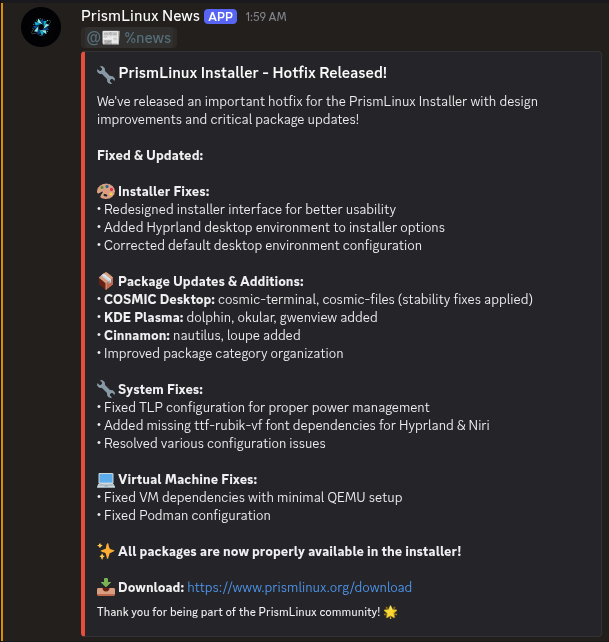
From now on, you can download PrismLinux from our server, not just from SourceForge
prismlinux.org/news/2026/05-…
6
96
May 22
Should Brave be set as the default browser for PrismLinux?
May 22

Linux distros we can confirm ship @Brave as the default browser: Zorin OS, Nobara Linux, and RefreshOS.
That list should be longer.
For most desktop users, it is the main security boundary for the modern web.
Untrusted JavaScript, media parsing, GPU and WebGL paths, WebRTC, extensions, login sessions, fingerprinting, phishing, and cross-site tracking all converge there.
So the default browser matters.
A serious browser has to assume hostile web content will eventually hit a renderer bug. The real question is what the attacker can still reach after that.
This is where Chromium’s architecture earns its keep:
- Site isolation puts different sites into separate sandboxed renderer processes.
- The sandbox limits what a compromised renderer can touch locally.
- Linux seccomp-bpf reduces exposed kernel syscall surface.
- Privilege-separated browser, GPU, network, and utility processes reduce blast radius compared with a monolithic browser.
- Chromium’s broader hardening around allocation, control-flow integrity, and use-after-free mitigation makes exploitation harder.
There is a second axis a lot of architectural debates skip.
A default browser also has to land Chromium security fixes fast. Time-to-patch is part of the threat model. A distro that picks an architecturally strong browser but ships updates slowly has not actually given users a safer default.
At Brave, we inherit that Chromium foundation and remove the parts that make no sense as a privacy default: no Google account dependency, no Chrome Sync dependency, no Google-style cross-site surveillance ad model, and no need to install an ad blocker just to get baseline tracker protection.
On top of that, we ship real protection on day one:
- Shields on by default
- third-party ad and tracker blocking
- cross-site cookie protections
- CNAME uncloaking (canonical-domain resolution)
- fingerprinting protections
- ephemeral third-party storage
- bounce-tracking protections
- URL tracking-parameter filtering
- De-AMP
- a native Rust adblock engine
One note for maintainers: packaging is part of the browser security model.
Linux distributions should stop treating the browser as a legacy preference.
5
1
6
213
May 10
The repository has been updated and migrated
May 9

Over the next two days, we plan to migrate the repository, so please accept our apologies if you experience any issues with its operation.
Kind regards, the #PrismLinux Team
7
210
May 9
Over the next two days, we plan to migrate the repository, so please accept our apologies if you experience any issues with its operation.
Kind regards, the #PrismLinux Team
8
475
PrismLinux retweeted

May 7
#XLibre became the default Xserver in #PrismLinux 2026.05.05. Please read the announcement at prismlinux.org/news/2026/05-… and learn more about this #ArchLinux derivative at prismlinux.org. A big thank you to the maintainers of @PrismLinux!

ALT A screenshot of XLibre running on the PrismLinux 2026.05.05 distribution with KDE Plasma 6.6.4.
2
27
159
4,523

Prism Linux has Become My Favorite Linux Distro! (for now..) youtu.be/rJs2u08rbr8?si=N3mI… via @YouTube
1
3
506
PrismLinux retweeted

Mar 19
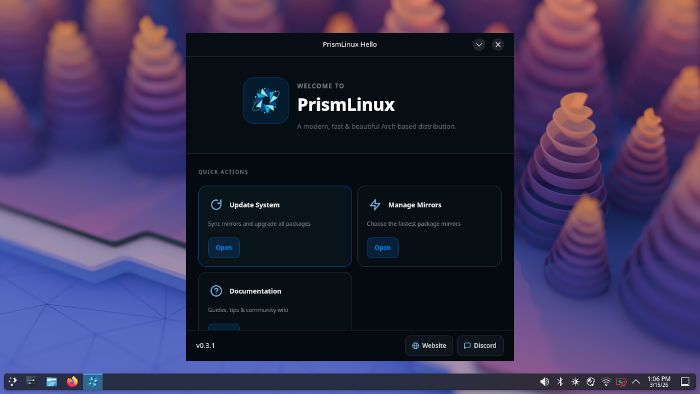
Just published on FOSS Force: PrismLinux: A No‑Drama, Sane Approach to Arch-Based Linux fossforce.com/2026/03/prisml…
3
11
381
Mar 21
We're just as good as other distributions.
We also won't be implementing age verification or anything like that.
Long live Artix and PrismLinux!

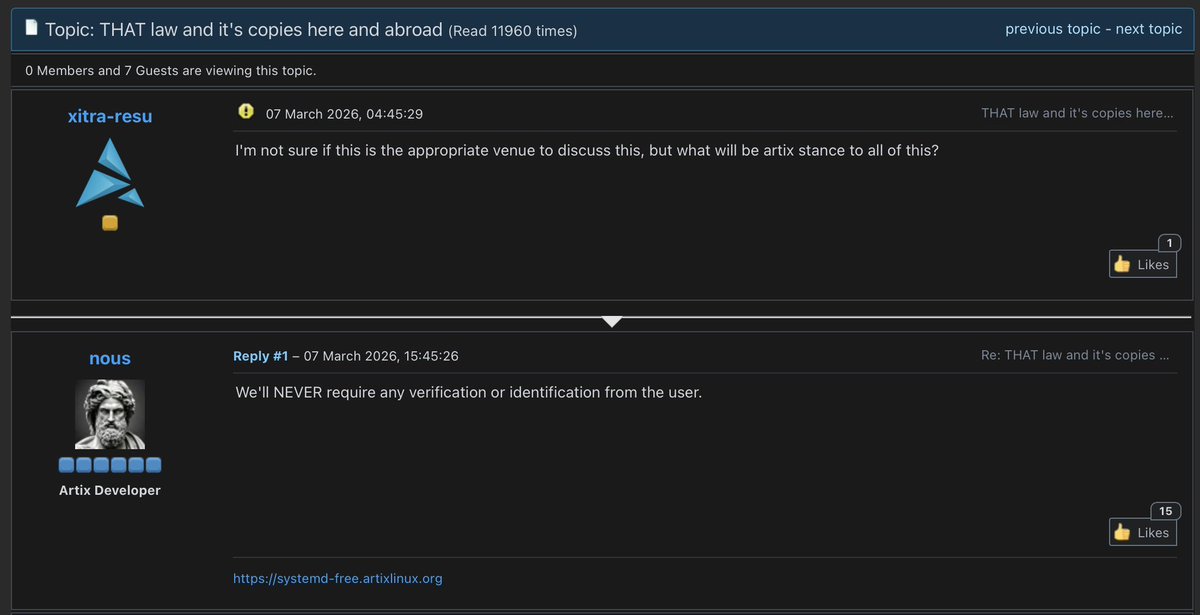
Artix Linux joins the ranks of Linux distributions refusing to comply with Age Verification laws.
A developer for the systemd-free distro, based on Arch, stated simply:
“We'll NEVER require any verification or identification from the user.”
forum.artixlinux.org/index.p…
1
1
13
250
PrismLinux retweeted

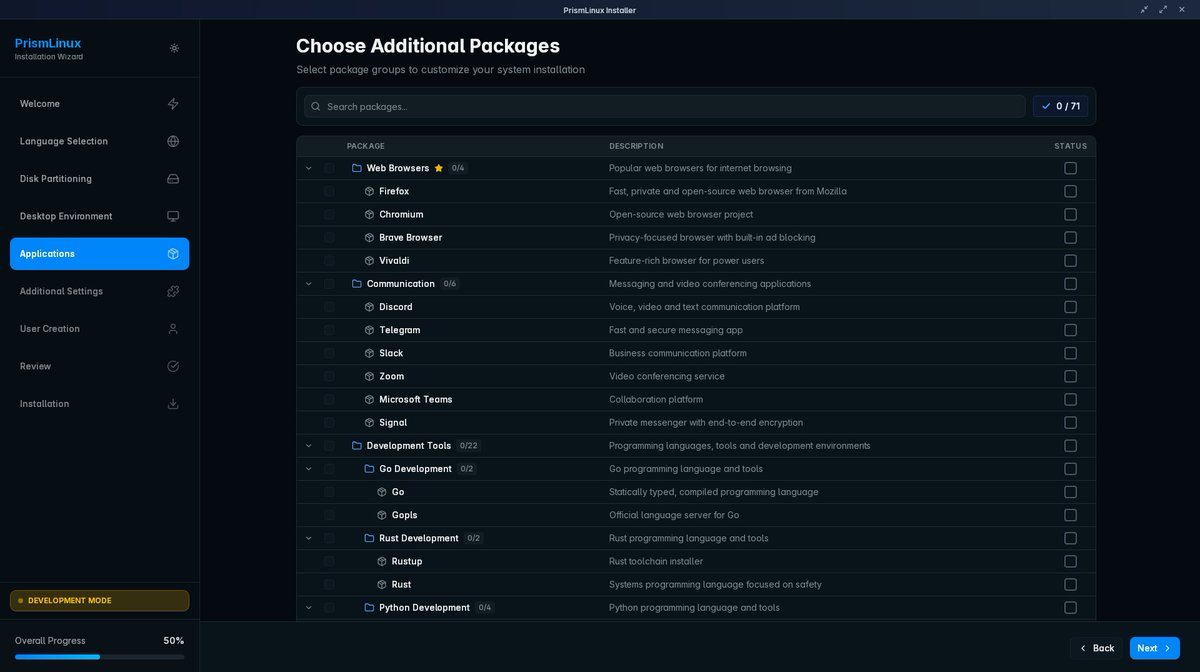
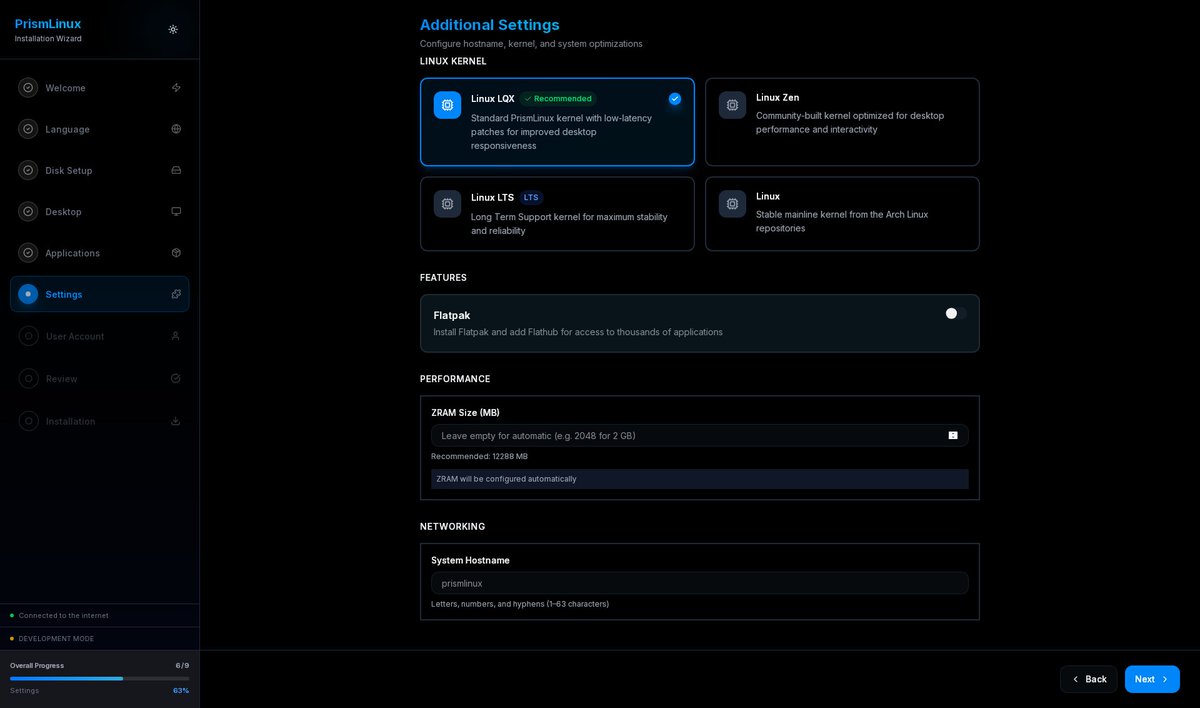
Probably one of the best decisions was to migrate from Wails GO to Electrobun
The installer for @PrismLinux feels twice as fast, if not more.
1
3
13
1,098
Feb 1
The smoothest PrismLinux yet! ⚡
Update 2026.02.01:
✅ Linux LQX is now default
✅ Gaming & Battery optimizations
✅ Fixed AMD iGPU stutters/FPS drops
✅ UFW for speed/security
✅ Full visual redesign New Logo
Try it now:
🌐 prismlinux.org/download
#Linux
3
153
Jan 16
Random fact: our installer is written from scratch, which means new features in future releases
4
272
9 Dec 2025
🚀 PrismLinux is OUT NOW! 🎉
Polished GUI installer • faster backend • all bugs squashed • new website!
The beautiful, easy Linux you’ve been waiting for is finally here. Download: prismlinux.org/download
#PrismLinux #Linux #OpenSource #Release
4
155