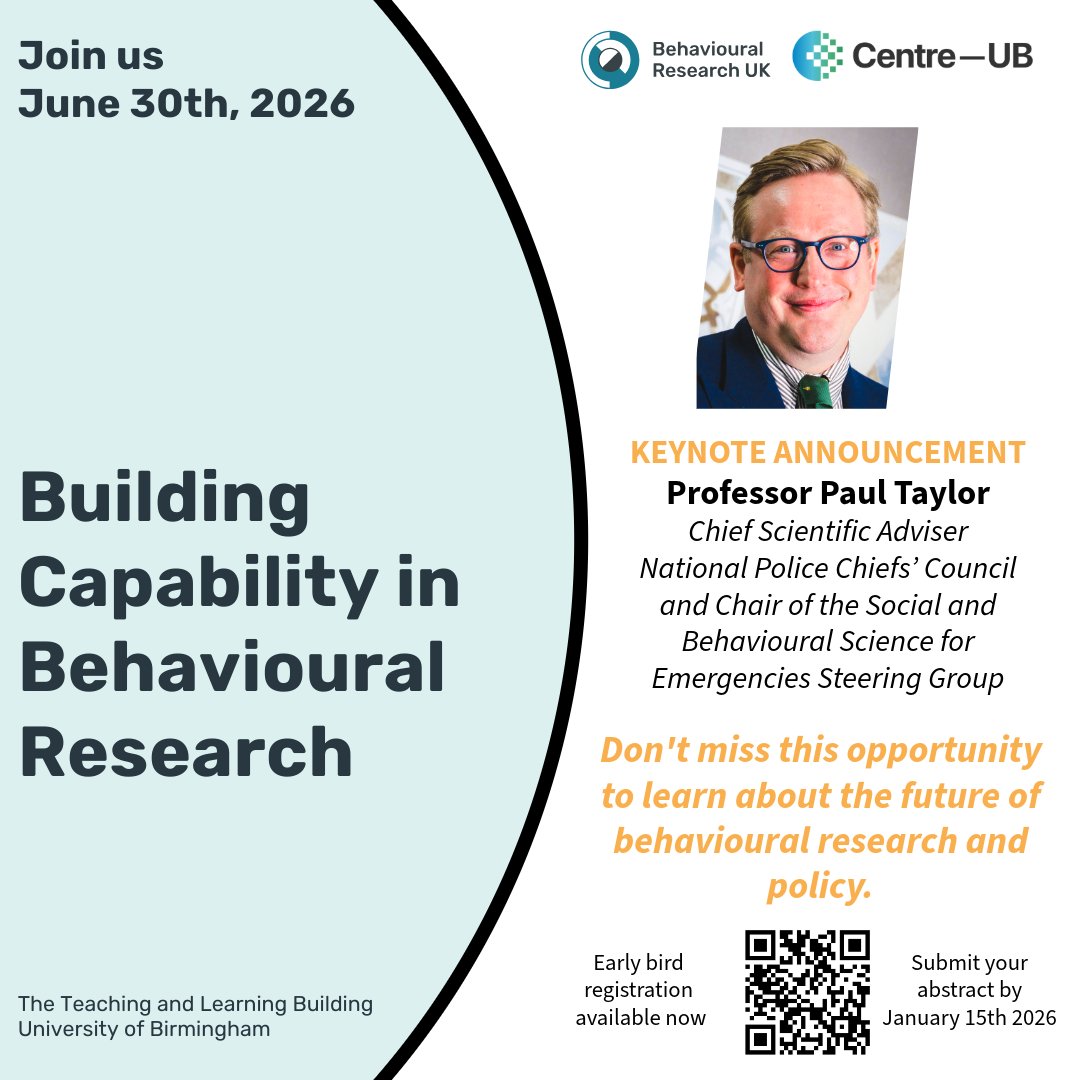
We can announce our next keynote speaker joining us on 30/06/26 at the Building Capability in Behavioural Research Conference is @ProfPaulTaylor. Paul, Chief Scientific Adviser, National Police Chiefsโ Council, will share insights on the future of behavioural research & policy
With the P-ACE launch around the corner, we've launched our expertise finder to help stakeholders and researchers connect - buff.ly/keGoAsD Looking forward to seeing this develop.
A fairness scale for real-time recidivism forecasts using a national database of convicted offenders - Neural Computing and Applications buff.ly/8d2lx51
For science and innovation leaders who want the opportunity to have a significant positive impact on public safety, here's a role: met.police.uk/police-forces/โฆ
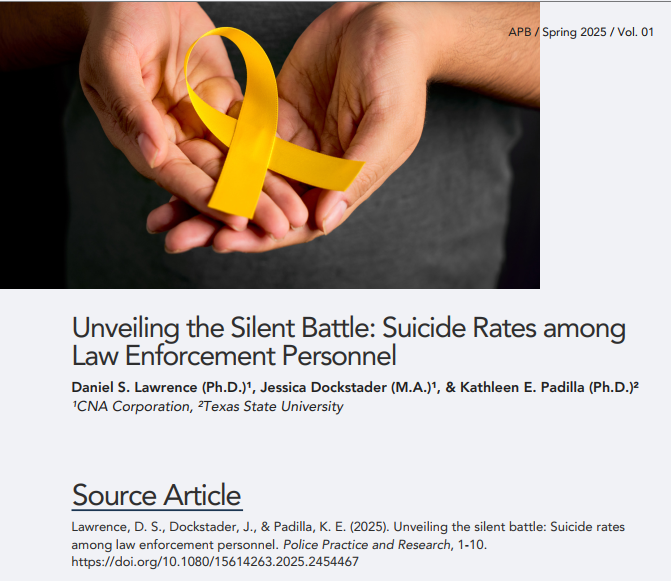
Law enforcement suicide is a national crisis.
Research by @Dan_S_Lawrence, Jessica Dockstader, & @kepadil breaks down 977 officer deaths by suicide in the U.S. (2016โ2022) and shows where, and among whom, the risk is highest. ๐งต(1/4)
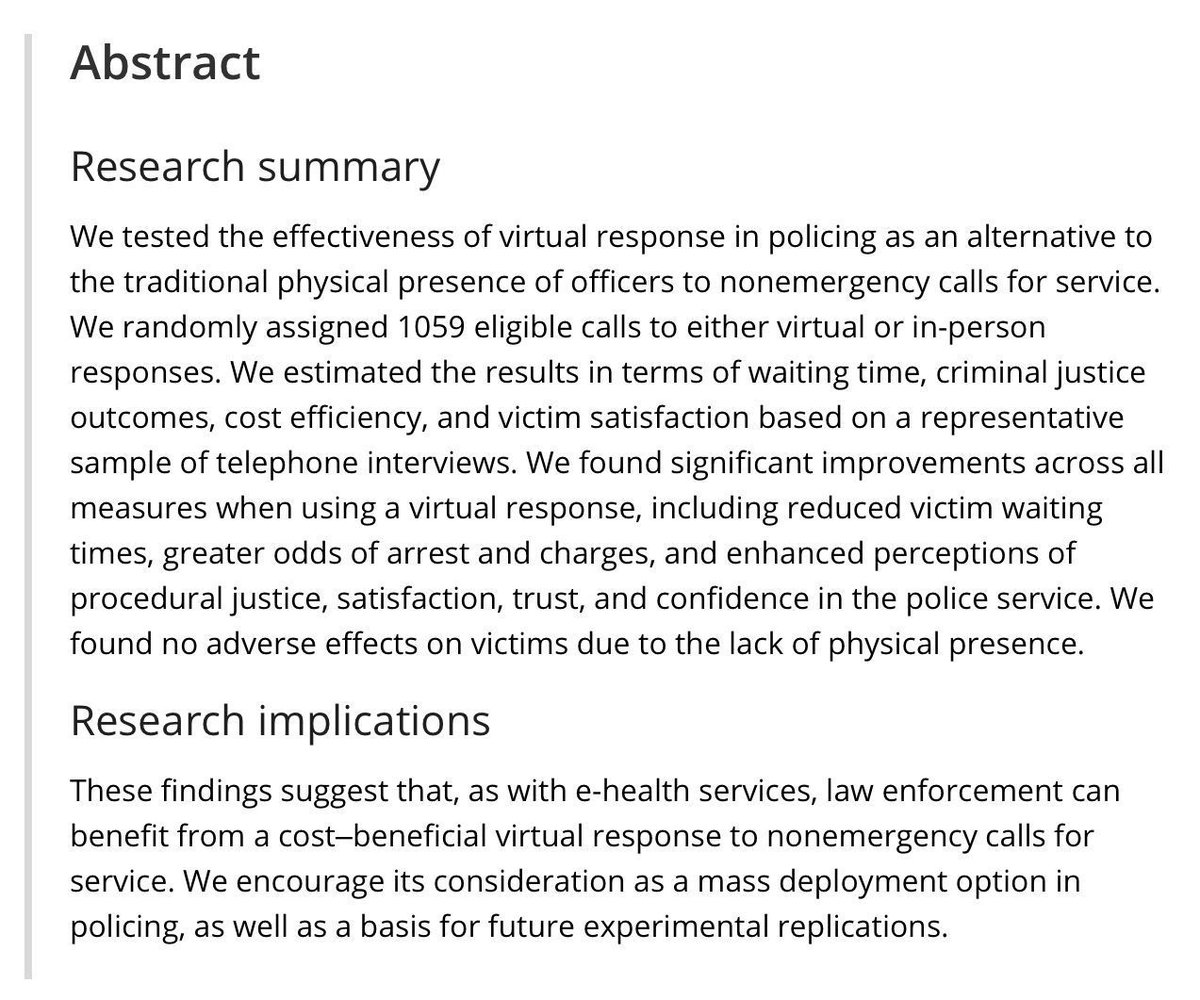
๐ Police (๐ด๓ ง๓ ข๓ ฅ๓ ฎ๓ ง๓ ฟ) following up crime reports via video call rather than dispatching officers to see the victim in person led to better evidence collection and substantially higher victim satisfaction, while being 2/3rds cheaper.
doi.org/10.1111/1745-9133.12โฆ
ALT We tested the effectiveness of virtual response in policing as an alternative to the traditional physical presence of officers to nonemergency calls for service. We randomly assigned 1059 eligible calls to either virtual or in-person responses. We estimated the results in terms of waiting time, criminal justice outcomes, cost efficiency, and victim satisfaction based on a representative sample of telephone interviews. We found significant improvements across all measures when using a virtual response, including reduced victim waiting times, greater odds of arrest and charges, and enhanced perceptions of procedural justice, satisfaction, trust, and confidence in the police service. We found no adverse effects on victims due to the lack of physical presence.
These findings suggest that, as with e-health services, law enforcement can benefit from a costโbeneficial virtual response to nonemergency calls for service. We encourage its consideration as a mass deployment option in policing โฆ
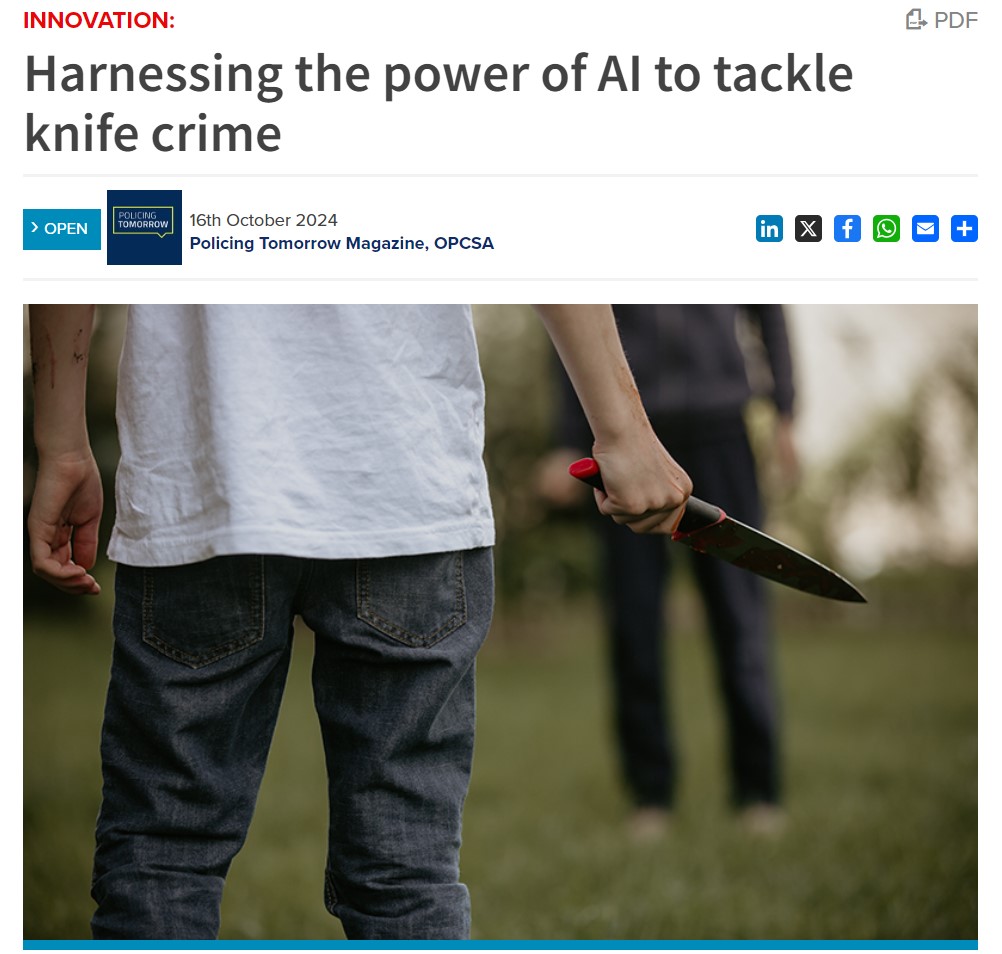
An #ArtificialIntelligence-powered knife database, created through a collaboration between the Metropolitan Police and Surrey University, is enabling officers to match dangerous weapons using images taken in often dark and difficult conditions; a dashboard explaining how the knife recognition system works could soon be rolled out nationwide, as the Office of the Police Chief Scientific Adviser reports.
@ProfPaulTaylor@metpoliceuk@UniOfSurreypolicinginsight.com/feature/โฆ
ALT Harnessing the power of AI to tackle knife crime
Congratulations to Kate and colleagues of @WestYorksPolice for their fabulous work in forensics, which has won the GSE's Diversity and inclusion in science and engineering award buff.ly/3YbEyg0
If you are interested in the sorts of research challenges that Police Forces are interested in, @ProfPaulTaylor has put together this very clear Areas of Research Interest document.
science.police.uk/site/assetโฆ
As a wise person once said, there's no social justice without justice.
We're providing funding for 9 Policing Academic Centres of Excellence to harness research, social science and technology to fight crime, working in partnership with @PoliceChiefsukri.org/opportunity/apply-tโฆ