
12 Photos and videos
New piece out in @ForeignAffairs! I argue that an overlooked dimension of the war in Iran, and of international security broadly, is wartime access: decisions by states to let the U.S. military fight wars from inside their borders.
foreignaffairs.com/iran/iran…
1
5
42
5,206
States have the agency to grant, restrict, or deny access to the US, and hosting the US mil can be costly. The US may be wise to reduce its global ambitions, but if states begin to close their doors, Washington's decision could be made for it.
1
2
139

20 Nov 2025
Excited to see "Allies and Access" out in @IntOrgJournal! @carsonaust , @ProfPaulPoast , and I argue that access is an overlooked benefit of America's network of alliances/partnerships. Loss of access would mean loss of the ability to project mil and intel power around the world.
20 Nov 2025

Our special issue on The Future of Global Governance and World Order is out & #OpenAccess
The online special issue features 15 short essays and an editors' introduction. #IOFoGG
Thanks to @DonganTan @TTUPoliSci @EUI_Schuman @JuliaCMorse
@UCSBPoliSci
@uncpolisci
@fgenovese
7
9
22
8,306
20 Nov 2025
Access (with apologies for the pun) the article here: cambridge.org/core/journals/…
1
3
6
700
Rachel Metz retweeted

21 Aug 2025
My article with Daryl Press, "Access Denied? The Sino-American Contest for Military Primacy in Asia," was published yesterday in @IntSecHarvard: direct.mit.edu/isec/article/… [1/4].
12
28
84
17,407
Rachel Metz retweeted

1 Mar 2025
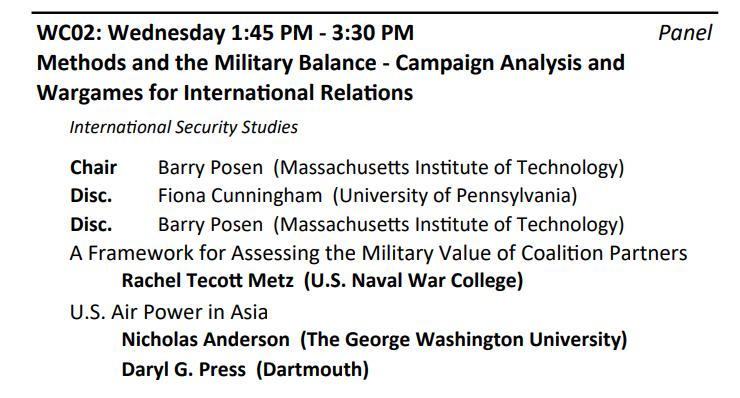
Heading to Chicago today for #ISA2025? Come join @rtecottmetz, @sam_gerstle, @LeiterSam, @BrianDBlank, and me for a deep dive into alliance behaviors!
1 Mar 2025

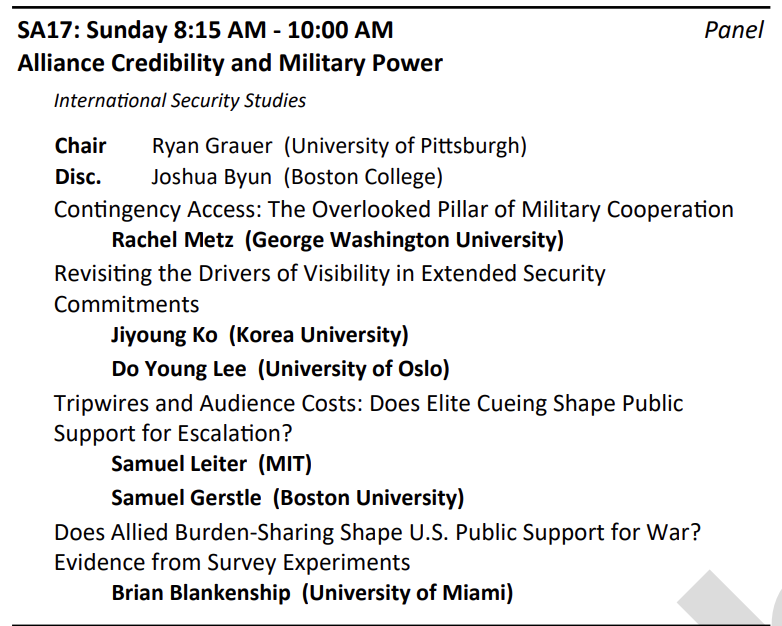
For those in Chicago bright and early Sunday, come join us! I will be presenting research on contingency access, an overlooked but crucial form of military cooperation. A lot of other interesting new work on the military elements of alliances @sam_gerstle @LeiterSam @RyanGrauer
2
10
1,098
1 Mar 2025
For those in Chicago bright and early Sunday, come join us! I will be presenting research on contingency access, an overlooked but crucial form of military cooperation. A lot of other interesting new work on the military elements of alliances @sam_gerstle @LeiterSam @RyanGrauer
7
18
2,475
12 Feb 2025
New article alert, coauthored with the phenomenal @RenanahJoyce and just out in @ISQ_Jrnl. We explore how civilian leaders of recipient states can interfere with U.S. efforts to export liberal civil-military relations via security assistance.
academic.oup.com/isq/article…
1
12
47
2,431
Rachel Metz retweeted
22 Jan 2025
SWAMOS was the single best experience I had in grad school, and it fundamentally altered the trajectory of my research. I also met great colleagues and friends. If you are a grad student, post-doc, or junior faculty member, I can't recommend it enough: siwps.org/programs/summer-wo…
7
21
4,087
Rachel Metz retweeted
16 Jan 2025
My book, Inadvertent Expansion: How Peripheral Agents Shape World Politics, was officially released by @CornellPress yesterday.
cornellpress.cornell.edu/boo…
14
50
157
11,325
Rachel Metz retweeted

12 Sep 2024
We worry a lot about the credibility of threats. We should worry more about the credibility of coercive assurance. Targets of coercion defy credible threats when they think they are ‘damned if they do and damned if they don’t’.
doi.org/10.1162/isec_a_00488
2
41
116
11,950
Rachel Metz retweeted

22 Aug 2024
IR Book of the Week!
"Technology and the Rise of Great Powers" by @jjding99. From Gilpin to Kennedy, technological change has long been a key to becoming a major power, even the global power. Book traces the process through 3 industrial revolutions
amazon.com/Technology-Rise-G…
3
68
279
45,005
19 Aug 2024
A fantastic contribution by my colleague and friend @nickdanderson. 👏👏👏
13 Aug 2024

My book has a webpage!
Coming in early 2025 with @CornellPress:
cornellpress.cornell.edu/boo…
1
2
11
1,744
2 Aug 2024
It was a pleasure to engage @IainDHenry’s excellent new book Reliability and Alliance Interdependence, with @BrianDBlank, @DrMichaelJGreen, and Jeff Taliaferro in @HDiplo: issforum.org/roundtables/h-d…
1
8
16
1,253
22 Jul 2024
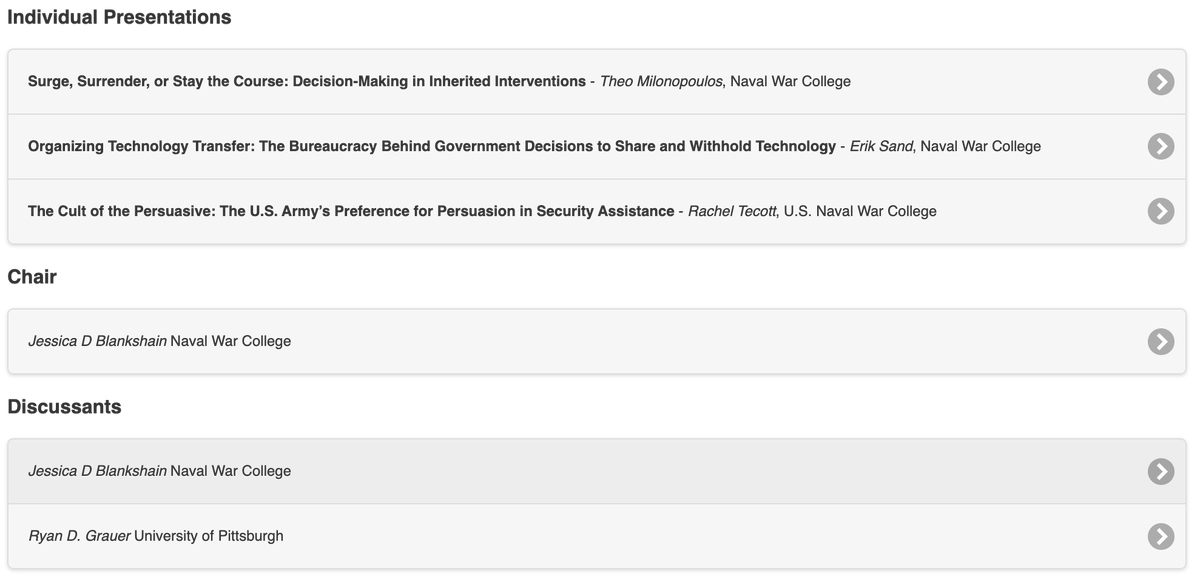
Thanks to @ProfRittinger for the insightful and generous review of my @IntSecHarvard article “The Cult of the Persuasive” in H-Diplo issforum.org/articlereviews/…
3
408
22 Jul 2024
New article with @mzmargulies out today in @jststs. We apply the IR cooperation concept of issue linkage to identify a success path in US efforts to convince security assistance recipients to reform their security sectors, with a close look at BiH tandfonline.com/doi/full/10.…
5
11
49
2,885