
projectaccess.app is a subscription fatigue killing PPV VOD platform built for creators to easily sell their premium content directly to customers
Joined March 2026
- Tweets 175
- Following 91
- Followers 55
- Likes 844
57 Photos and videos













Pinned Tweet

May 28
Are you ready?
Cause we're only getting started 🎶
#creator #creatoreconomy
3
8
95
Jun 13
Curator Feeds gives all PA users the ability to add content from any blog, social media post (image, texts, videos), or your own creations to a list you can sell access to offer for free to anyone. Three use cases:
1. Social media is not a place for kids, but there's a lot of great content you want to give them access to without exposing them to toxic comments or having to react to everything. Eg If your kids are into sports, music, dancing, or whatever -- create a Curator Feed just for them and add the content you approve of without exposing them to all the toxic social media nonsense. Cost to you: $0.
2. You're an expert or maybe even a teacher, and have created or curated lots of content around a particular topic for your following or students. Create a Curator Feed that aggregates all of the content you have generated plus anything else you think worth their while, and allow your fans to subscribe for whatever Price you think it's worth or nothing for your students. Cost to you: $0.
3. You're a fan page or maybe just like sharing interesting, funny, and valuable content from places around the internet with friends and family. Add the content you want to share without cluttering up your own sm pages, and share the feed for free to friends and family while selling access to the rest of the world.
You're the Curator. Add the content you love, set the access price, and share with the world.
#creatoreconomy #curatoreconomy
1
1
6
56
Jun 12
Updates 6/12 for projectaccess.app
✅Sweeping UX and UI refinements
✅Curator Feeds, profile upgrades, and topups operational with $BSV & Stripe payments & BSV auto pay subscriptions
✅Workspace Projects workflows built and operational (minus Higgsfield & Resend integrations. Major SM platforms & Spotify apis in progress)
✅CRM deal tracking
✅Objectives & Goals tracking
---NEXT UP---
⏳HQ AI tied into anthropic
⏳Resend
⏳Tik Tok integration
⏳Campaign workflow refinement
⏳BYOK Higgsfield API and workflow
⏳App download to auto add to curator feeds
⏳Probably some kind of social listening tool to notify you when trends meet your criteria
4
9
276
Project Access retweeted

May 25
How would 1 sat get to the 1 penny mark?
I don’t think it’s possible. Even if it WERE possible, I’m not worried about Bitcoin in the year 4026.
I already wrote why. Do you dispute any of what I wrote?
One of the great beauties of Bitcoin is that it is that when it hits scale it will be FAR more efficient than any previous money system— even fiat which couldn’t be any easier right now (tap pay face ID is amazing and fantastic tech). Bitcoin is INCENTIVIZED to be efficient.
There’s reasons why IPv6 has been resisted, and the main reasons likely aren’t technical— they’re economic.
Nerds will say “just add more decimal places” because, sure, it solves a previewed technical limitation. So does making computer chips the size of pizza pies, eh? No more worries about quantum tunneling if we just increase circuit sizes! It’s just not that simple.***
Some nerd will propose that trains would be more efficient if they just increase track width by 20 inches! Good luck with rebuilding every tunnel, bridge, street and railway car in the world.
*** chip industry isn’t making bigger circuits, they are in fact increasing their size in the 3rd dimension— stacking— the size increase is minimal/negligible practically.
There is more than one way to skin a cat and again, one day when money is truly understood, no one will want to increase the quantum number of potential UTXOs in existence bc they will know that it leads to ruin.
I wont live long enough for 1 sat = 1 penny— my great great great great grandchildren won’t live long enough to see it.
Perhaps this has been fruitful? Because maybe humans don’t need to understand how money works once we luck upon a system that just works for 1,000 years? If there’s a problem, perhaps every couple thousand years humans are just due for a monetary “oil change” and they’ll crash their system, as we are doing with fiat (again. do we EVER learn?), and nerds would do with Bitcoin by adding 16 places, and they’ll invent/define yet another money which corrects the mistake that brought down Bitcoin.
Worrying about Bitcoin sat = 1¢ is almost the equivalent of worrying about “quantum computers” cracking SHA-256. Until someone can show me that a QC can add 1 1 successfully, I’ll wake up and pay attention.
Explain how sat=1¢ happens?
3
2
9
852
Project Access retweeted

May 29
See you Friday at 2PM EDT for the First Shots of the Bitcoin Civil War!
Bitcoin History Series: 2013 - 2015.
Gox, Silk Road, Ethereum Hearn, Dashjr, Voorhees and Wright all have a big part that we will cover in detail!
youtube.com/live/uh1dXMcNKW0…
3
13
37
1,689
Project Access retweeted
May 29
History of Bitcoin, Part 5: The First Shots of the Bitcoin Civil War 2013-2015 x.com/i/broadcasts/1jxXggjMv…
1
12
33
818
Project Access retweeted
May 26
We are moving the show to Friday this week!
My calendar is pretty full tomorrow and Thursday, so I'll get it prepped and ready rock and roll for Friday afternoon.
Covering Silk Road collapse, MtGox collapse, the OP_Return battles that stifled Satoshi Dice and CounterParty...
May 26

What should I do about the episode today?
Internet issue in the whole town, so I’m more than a bit disrupted.
3
9
34
1,675
Project Access retweeted

May 22
1/ Civilization cannot run on feeds forever.
A feed is good at making the present loud.
It is bad at helping a society remember what mattered, who contributed, what was proven, what was paid for, and which ideas became stronger after contact with other minds.

1
7
11
174
May 23
🚨🚨Creators might've received a premature email talking about their account being upgraded with a Creator OS workspace. Our bad!😬-- that IS coming, but not just yet. Please standby 😃
2
3
67
May 20
May 19

Got @x402agency working from my own BRC-100 wallet, no Metanet Client.
plainly: my software paid theirs ~$0.006 in bitcoin for some data. No card, no subscription or approval step. Stripe would charge $0.30 (50x what I paid). cc @johncalhooon
2
86
May 20
Pretty cool. We look forward to getting busy on Treechat sooner than later! And maybe even an integration idea for the 🛣️🗺️

2
19
May 20
"and a congregation."
🎯🔥💯

BTC is not TCP/IP. The comparison has the elegance of a silk waistcoat placed upon a scarecrow.
TCP/IP endured because it became the working grammar of networks. It scaled because it was designed as an internetworking architecture. Its layers are actual protocol layers: IP, TCP, UDP, routing, transport, application interfaces, all functioning inside a coherent communications stack. TCP did not survive because speculators admired it. It survived because machines used it.
BTC has not achieved anything analogous. It is not widely used as a cash system. It does not scale on-chain. It survives through market lock-in, not technical supremacy. That makes it less like TCP/IP and rather more like DECnet: once impressive, once installed, once defended by incumbents, and then increasingly a monument to yesterday’s architecture.
Nor does TCP/IP suffer from BTC’s governance theatre. TCP is stable in the meaningful sense: the core protocol does not require committees of priestly maintainers to reinterpret its purpose every few years while pretending the altar has never moved. Its stability is functional. BTC’s alleged stability is political. One is engineering; the other is etiquette among custodians of constraint.
And “layers” in BTC are not layers in the network sense. They are external systems built around an incapacity. IP layers are part of the communications architecture. BTC “layers” are workarounds, side arrangements, liquidity contraptions, trusted intermediations, and accounting systems that exist because the base system cannot do the work it was meant to do.
A better system does not “replace the internet” because the internet is not a speculative asset. It is a protocol substrate. BTC is not such a substrate. It is a restricted settlement token with a branding department and a congregation.
The internet won because it connected the world. BTC has spent years explaining why it need not.
3
24
May 18
🧹🧹SO MUCH CLEANUP DONE🧹🧹
Big thank you to all the beta testers! Please continue to report bugs as you encounter them 🫶❣️♥️🥰🥰
1
18
Project Access retweeted
May 18
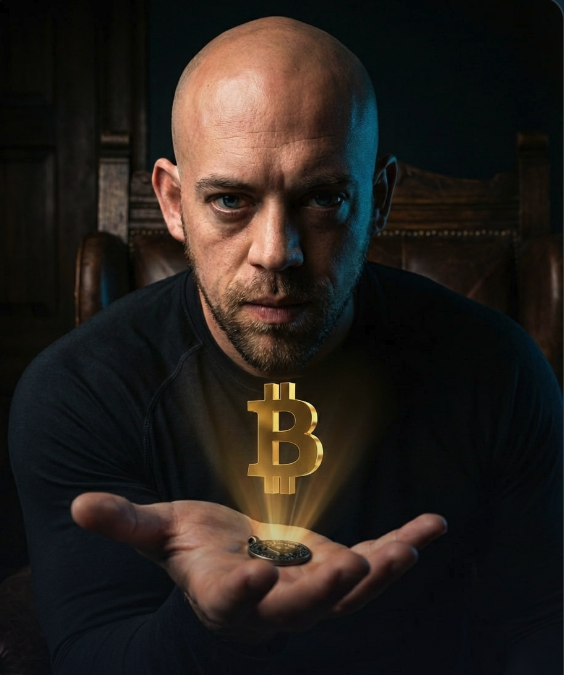
The research part of my History of Bitcoin series is so fun, and so enlightening, but it's also a lot of work.
It's hard to keep track of the rabbit holes and tangents where there might be golden nuggets.
I'm also at a decision point on whether to publish the 2013-2015 article or publish a tangent article specifically on the influence of Brock Pierce and his relationship with old money, new money, big money and emerging money.
I need about 5 hours to polish up whichever article I decide to publish, but I'm torn on the details.
7
4
58
1,381
Project Access retweeted

May 17
There is a particular kind of exhaustion that follows the collapse of a story.
Not the collapse of a product. Products fail every day. Not even the collapse of a market. Markets have always been mechanisms for distributing humiliation. The deeper exhaustion comes when a community discovers that the story it has been telling about itself no longer persuades the people outside the room, and maybe no longer persuades many of the people inside it either.
That is where BSV now stands.
For years, the ecosystem lived under the shadow of a grand argument: that Bitcoin had been misunderstood, derailed, captured, constrained, and reduced. BSV was supposed to be the restoration project. It would bring back scale, commerce, data, identity, micropayments, accountability, and the boring industrial usefulness that speculative crypto had abandoned. There was truth in parts of that critique. BTC did become less like peer-to-peer electronic cash and more like a monetary monument. Much of crypto did become a casino wearing a distributed-systems costume. The internet did continue to deteriorate into a stack of toll booths controlled by advertising platforms, payment processors, app stores, and identity silos.
But truth inside a critique does not rescue a movement from the consequences of bad politics.
The BSV world has spent too long confusing loyalty with seriousness. It has spent too long mistaking patronage for strategy, courtroom drama for validation, and endurance for progress. It has spoken as though history would vindicate it, while often neglecting the mundane work by which history actually changes: better tools, clearer standards, less drama, more users, real interoperability, and fewer institutions organized around personality.
So when a prominent benefactor tells everyone that the coming period will be difficult, that people should focus on what they can control, prepare for the worst, hope for the best, and get some sleep, the sentiment is not wrong. It is also not enough.
Sleep is what got us here.
Not literal sleep. The sleep of social systems. The sleep of people who know something is broken but continue speaking in the old register because the old register is safer. The sleep of organizations that issue calm statements while trust erodes underneath them. The sleep of builders who keep shipping around the edges while the center of gravity remains captured by narratives that no serious outside observer still believes. The sleep of communities that use optimism as a sedative.
The point is not that everyone should panic. Panic is useless. But so is reassurance when the house is filling with smoke.
The honest diagnosis is brutal: BSV has a technology thesis that remains interesting and a political brand that remains radioactive. Anyone who does not understand both halves of that sentence is not equipped to help.
The interesting thesis is straightforward. The internet lacks a native economic layer that works at human scale. It lacks portable identity controlled by users rather than platforms. It lacks standard ways for applications to request permissions, exchange value, prove claims, and interoperate without forcing every developer to rebuild the same custody, account, authentication, and payment infrastructure. The web became powerful, but its business model made surveillance normal. Crypto promised an exit, but too often replaced platform monopolies with token casinos, Discord cults, and wallets that feel like unsafe power tools.
There is still a missing layer. That is the opportunity.
[1/n] 🧵

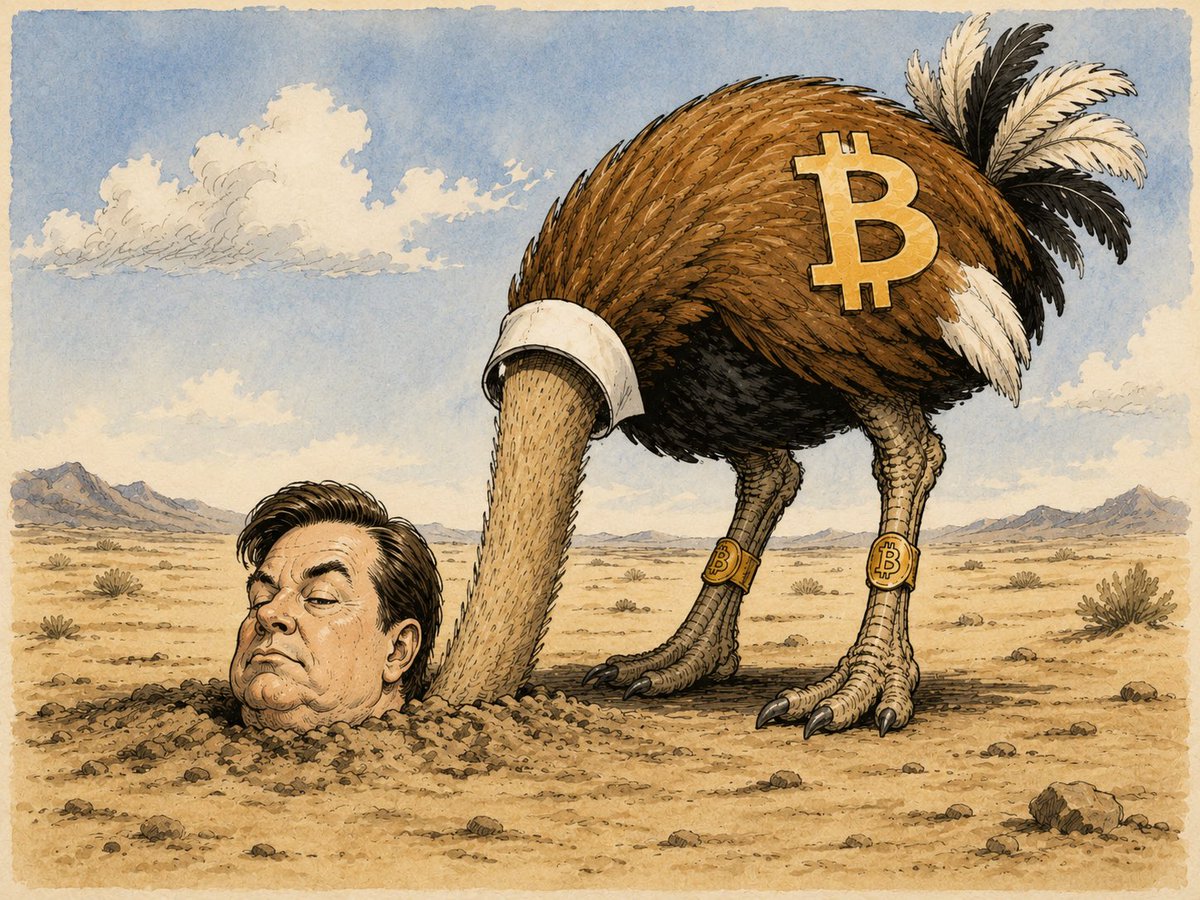
4
6
37
4,965
Project Access retweeted
May 15
In 2013, two pipelines of money were funding early Bitcoin. One was Roger Ver, the missionary. The other ran through Jeffrey Epstein's social orbit, Reid Hoffman's checkbook, and a private St. Thomas conference designed to rehab a convicted sex offender. By 2014 they were all Blockstream co-founders. This is the part of the Bitcoin origin story they don't want indexed.
⏳ CHAPTERS
0:00 🔥 The Two Pipelines That Funded Early Bitcoin
0:05 💰 Roger Ver: Bitcoin Jesus & The Native Money (2011–2013)
1:29 🚪 From Most Important Investor to Pariah (Parts 7–8 Tease)
1:38 🌐 Pipeline B: A Very Different Kind of Money
2:14 🏝️ Brock Pierce, Al Seckel & Epstein's St. Thomas Conference
2:28 📁 The DOJ Files: Pierce, Hoffman, Ito & Chiara 3
2:55 💸 The $50K → $500K Blockstream Seed Bump
2:59 🎯 They Didn't Love Bitcoin. They Wanted To Control It
3:30 📜 Read the Full Investigation
🥩 THE MEAT
Bitcoin's early years (2011–2013) were a battle of capital sources that mainstream crypto media has spent a decade refusing to investigate. 🏛️ Roger Ver was Pipeline A was Bitcoin-native money funding BitInstant, Blockchain.info, Kraken, BitPay, Ripple, Purse.io, Bitcoin.com, and the Bitcoin Foundation because he believed in peer-to-peer electronic cash and monetary sovereignty. 💰 Pipeline B was structurally different: capital moving inside Jeffrey Epstein's social architecture, brokered by Reid Hoffman, routed through MIT Media Lab's Joy Ito (who co-owned an investment vehicle called Chiara 3 with Epstein), and seeded into the founding round of Blockstream: the company that would go on to capture the BTC protocol's development pipeline. 📁 None of this is speculation. Department of Justice file releases document Brock Pierce in continuous contact with Epstein from 2011 through 2019. Reid Hoffman appears in those same files 2,658 times.
Why does this matter in 2026? Because the institutional capture of Bitcoin wasn't a market accident. It was a deliberate operation by people who 🎯 didn't love Bitcoin because it was Bitcoin. They loved it because they could rewrite the narrative until the protocol they captured became fiat-profitable. ⚡ When Reid Hoffman instructed Austin Hill to bump Epstein and Ito's Blockstream seed allocation from $50,000 to $500,000, he wasn't buying equity. He was buying narrative real estate inside what was supposed to be a decentralized monetary system. Sound money requires sound origins. The blockchain may be public, but the boardroom isn't and the boardroom is where the Invisible Plantation moved in.
🎯 THE DIVERGENT FACTOR
CNBC frames Bitcoin's founding as a libertarian fairy tale. Bloomberg writes the protocol wars as a polite technical disagreement. Mainstream crypto YouTube canonizes Adam Back, Austin Hill, and the Blockstream founders as cypherpunk royalty. None of them will tell you that the same DOJ file releases naming Epstein's clients also document his money flowing into the founding capital stack of small-block Bitcoin. Kurt names the names, cites the file releases, and walks the paper trail because the story of who funded Blockstream IS the story of why Bitcoin stopped working as peer-to-peer electronic cash.
5
33
88
3,927
May 14
Hey @cinecircle_uk! Monetize premium content instantly—no subscriptions needed. Link an unlisted YouTube video to create an Access Pass in two easy steps.
See the one we built for you: projectaccess.app/c/cine-cir…
Check DMs to claim your profile!
25