
A random Muslim brother, not associated with anyone. Follows and/or Retweets do not necessitate an endorsement. All opinions/statements stated are my own.
Joined June 2022
- Tweets 2,738
- Following 0
- Followers 7,527
- Likes 1,898
294 Photos and videos







Pinned Tweet

16 Mar 2025
❗️NEW VIDEO❗️
#NEW | THE MADKHALIS IV | The Betrayers of The Believers & Allies of the Disbelievers
📺YouTube Link: youtu.be/DN5w_IlUVys
I ask Allah to accept this minuscule effort, and make it a means of Sadaqa Jāriyah for every Muwahhid, as well as a means of guidance for any sincere Madkhali. Please share in the Ajr (Insha’Allah), by sharing with your friends and family, even with your neighborhood Madkhali too! If you have any questions, please don’t hesitate to reach out.
If you'd like to translate into your own language, SRT file is found on our Telegram channel: t.me/project_guiding_light/8…
If you haven’t watched the previous parts of the series:
PART 01: THE MADKHALIS | Fawzān, Ibn Bāz, Sālih Āl Ash-Shaykh, Ghunaymān vs Faris al-Hammadi & co.:
youtube.com/watch?v=-djCcMY5…
PART 02: THE MADKHALIS II | THE DECEIVERS OF THE UMMAH:
youtube.com/watch?v=oHMM8H3U…
PART 03: #NEW | THE MADKHALIS III | The Zandaqa of Shamsi and co. & The Kufr of Saudi Arabia:
youtube.com/watch?v=v19AJrIM…
Original (Shadow Banned) YouTube account, that contains all of our past videos, minus the ones above: youtube.com/@ProjectGuidingL…
والحمدلله رب العالمين

ALT https://youtu.be/DN5w_IlUVys
70
206
104,928
Land of “tawheed” committing Zandaqa from various Twitter accounts. Asking Allah to enter a clear cut Kafir Mushrik into the “Wide Gardens of Jannah.” Perhaps multiple Twitter accounts of the government of Saudi were hacked by “the Khawarij?!”

تتقدم سفارة المملكة العربية السعودية لدى جمهورية العراق بخالص التعازي والمواساة إلى الشعب العراقي الشقيق في وفاة المرجع الديني آية الله العظمى الشيخ محمد إسحاق الفياض.ونسأل الله أن يتغمده بواسع رحمته، ويسكنه فسيح جناته، ويلهم أهله ومحبيه الصبر والسلوان.
إنا لله وإنا إليه راجعون.
11
71
4,889
Anytime a Madkhali opens his mouth, they should be responded to with these types of reports. For example, here is the Saudi Government’s official senior scholar sending condolences to the literal captain of Shirk in the lands.
Watch in amazement as the Madkhali instantly manifests their inner Hellen Keller. It’s a waste of time to engage with them academically, because they’re fundamentally dishonest and ignorant of the basic tools needed to understand basic texts.
21 Apr 2025

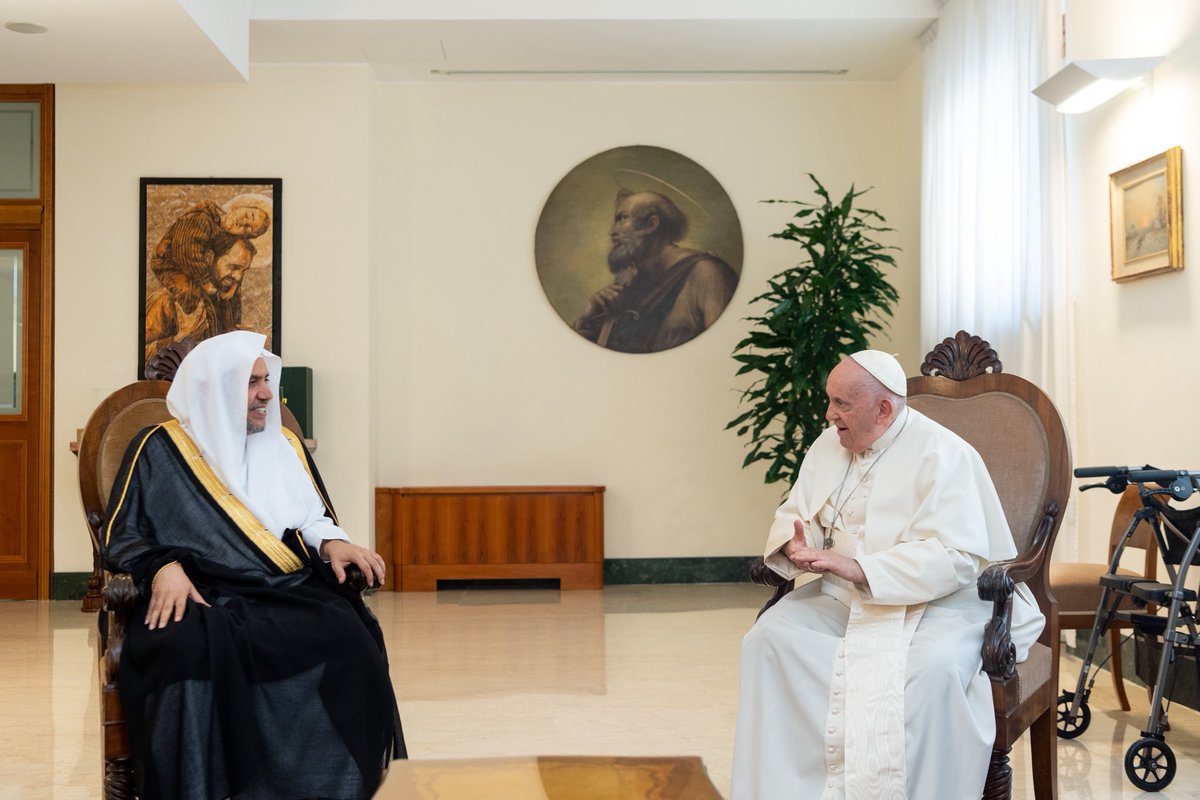
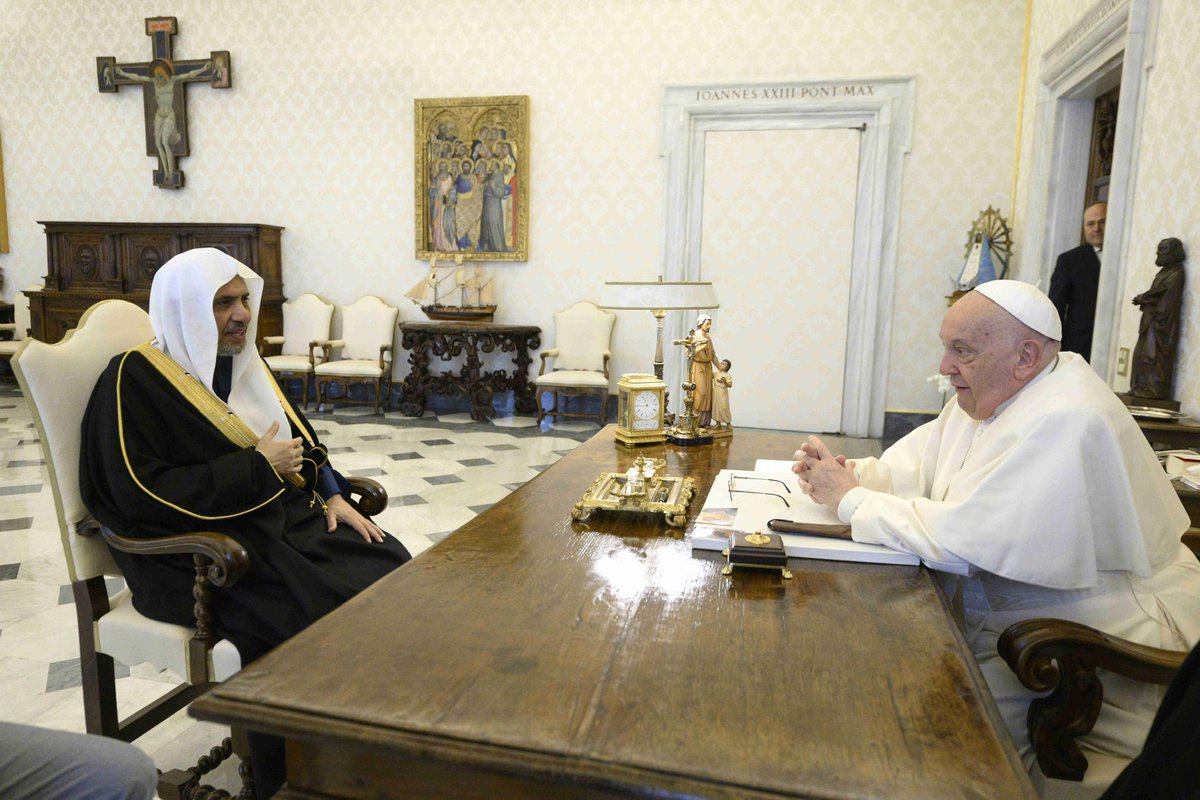
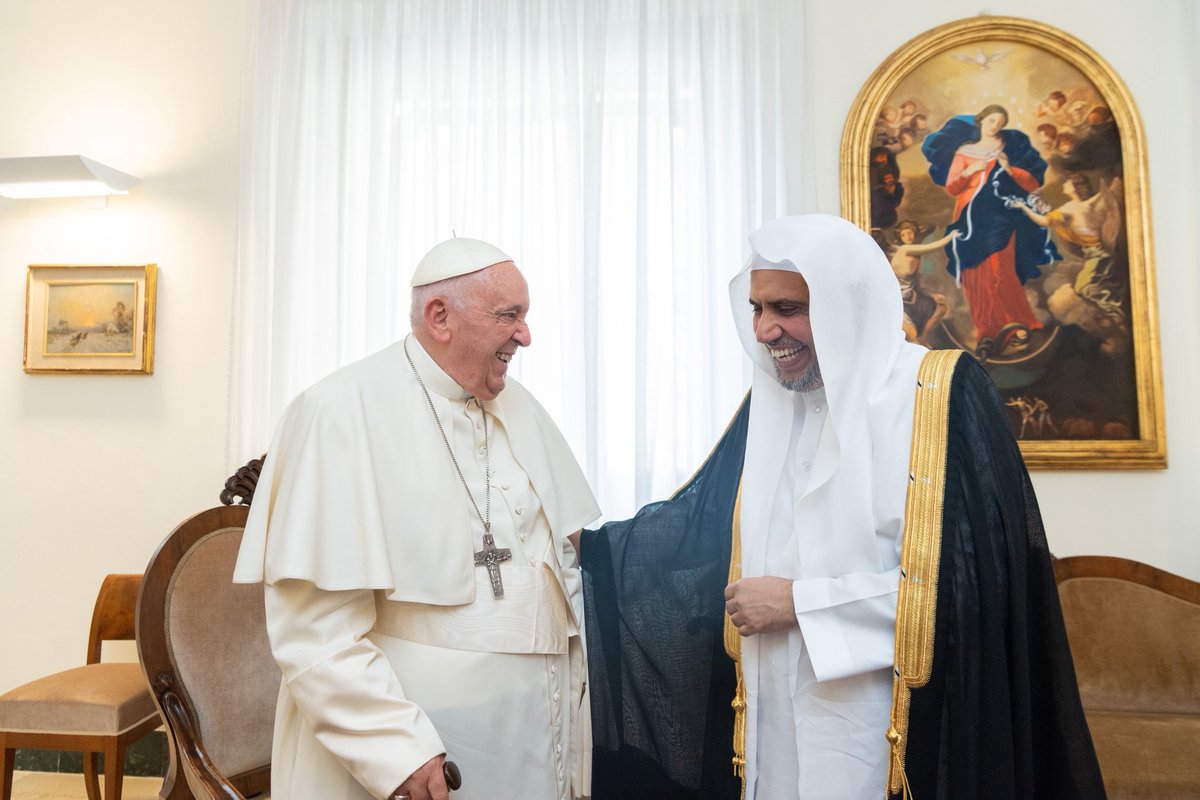
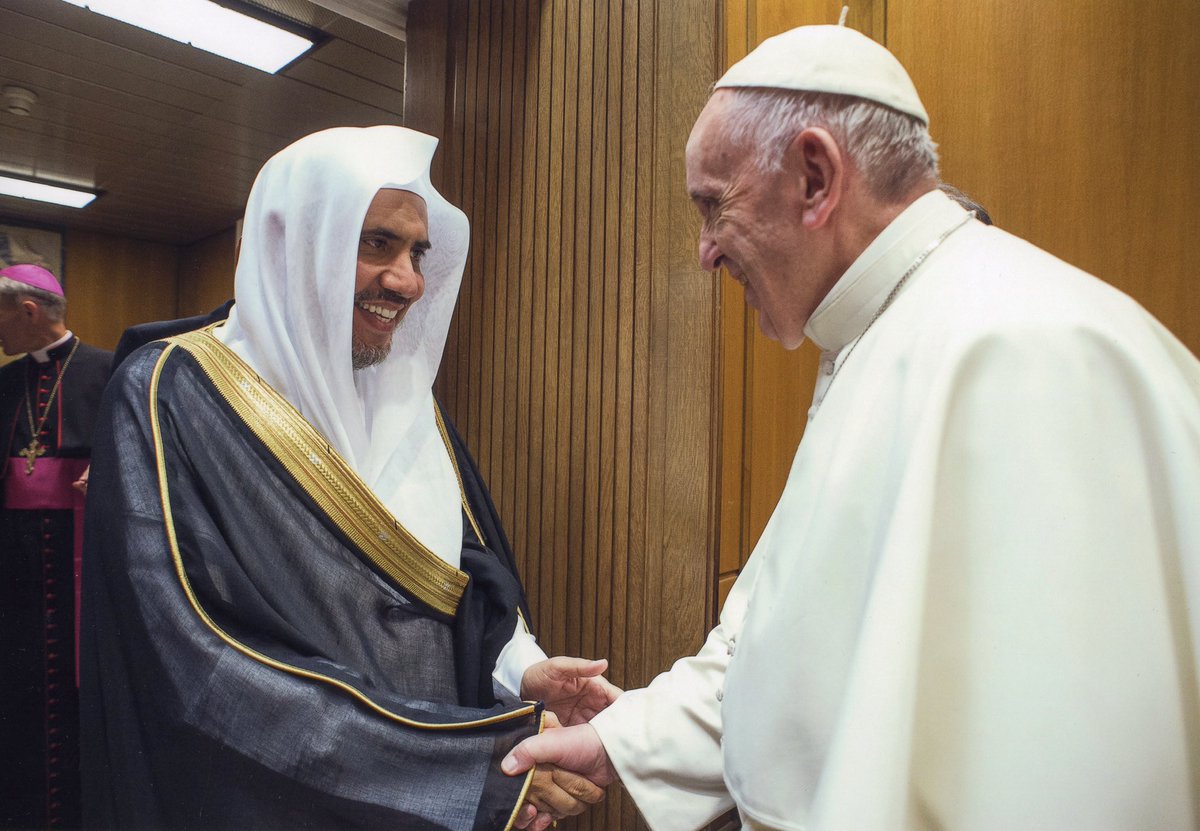
بعثَ معالي الأمين العام لرابطة العالم الإسلامي، رئيس هيئة علماء المسلمين، فضيلة الشيخ د.#محمد_العيسى @MhmdAlissa رسالةَ تعزيةٍ ومواساةٍ لنيافة الكاردينال بيترو بارولين، رئيس الوزراء وأمين السرّ بدولة الفاتيكان، في وفاة البابا فرانسيس، مثمِّناً فيها صداقتَه، وأثرها الملموس على التعاون بين الرابطة والفاتيكان لخدمة الأهداف المشتركة، معرباً فضيلته عن تعازيه لعُموم الأُمَّةِ الكاثوليكية في رحيل فقيدِها الكبير.
15
79
10,388
SAUDI IRAQI EMBASSY
1) Giving condolences to a Kafir Mushrik for the sake of “international politics and customs.”
2) Calling an open and clear cut Taghut, by a religious title, “A great sign of Allah.” Rather, this is explicitly ascribing something to Allah, which is known by the “land of tawheed” to be false. This is Kufr even by Madkhali standards.
I know some 17-year old Madkhali bum will respond by trying to justify this and mention how the Prophet صلى الله عليه وسلم addressed Hercules as عظيم الروم. This is not a religious title. That’s like calling Steve Jobs, “the great ceo of Apple.”
If your response is, “It’s just international politics,” then you’ve manifested a core principle of secularism. The separation of Religion from ANY function of the state, is secularism.
If you say, yes they’re ascribing something to Allah but they don’t mean it, it’s just politics — then this is still Kufr, and you’ve removed Kufri actions from having any effects on Emaan, thus actualizing the essence of Irja.
The Madkhalis are going to need a new aqeedah software update every couple months at this rate, with how fast the trajectory of open secularism MBS and his Mushrik cronies are displaying.

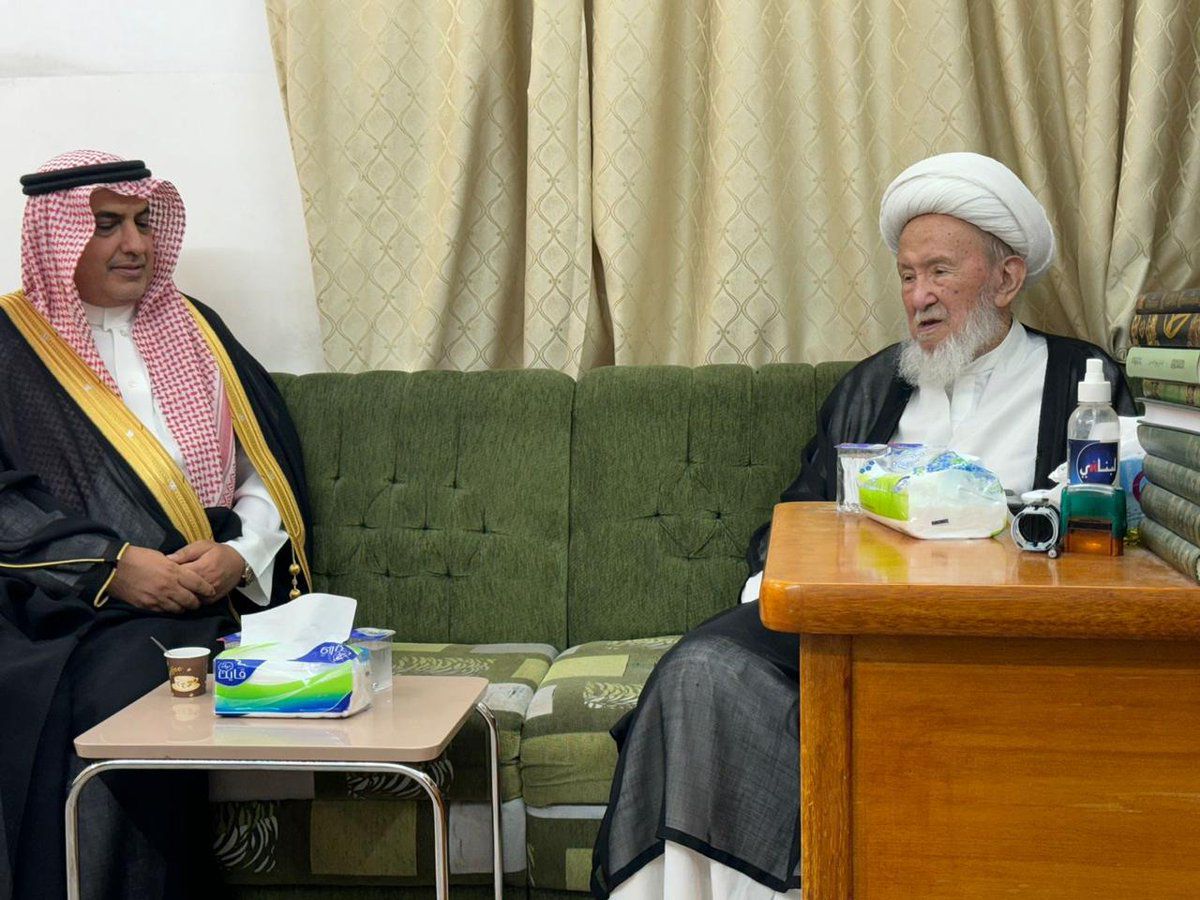
سفارة السعودية لدى بغداد: نعزي الشعب العراقي في وفاة المرجع الديني آية الله العظمى الشيخ محمد إسحاق الفياض
* الصورة لزيارة سابقة قام بها السفير السعودي في العراق عبدالعزيز الشمري لمحمد إسحاق الفياض
13
86
6,546
From the Book: مكارم الأخلاق ومعاليها ومحمود طرائقها
Chapter: Compassion toward daughters, treating them well, and the virtue therein.
634 — Naṣr ibn Dāwūd al-Ṣāghānī narrated to us: ʿUbayd Allāh ibn ʿAmr, from the people of Mecca, narrated to us: Ṭalḥa ibn Zayd narrated to us, from al-Aʿmash, from Abī Wāʾil, who said:
A daughter of ʿAbd Allāh bin Masʿūd came forward — she was a young girl — so he drew her to his chest, then kissed her, then said: “Welcome! O veil of ʿAbd Allāh from the Fire!”
He then said: I heard the Messenger of Allāh ﷺ say: “Whoever has a daughter, and he teaches her good manners and does so well, and he nourishes her and does so well, and he lavishes upon her from the blessing that Allāh has lavished upon him — she will be for him a protection on his right and on his left from the Fire, leading him to Paradise.”
20
82
4,468
25
88
2,996
From the Mashayikh who are alive, I haven’t benefited from anyone more so, and quite frankly it’s not even close, than Shaykh Musa Jibril حفظه الله تعالى. He’s a man who lives what he preaches from A to Z, and apart from his heart soothing reminders, you learn from how he treats people. His actions and his mannerisms with the Muslims are his biggest Da’wah, may Allah preserve him, and smite every tongue who slanders him.
The Madkhali crowd, whilst loud and obnoxious, largely comprise of intellectual deprived and unemployed bums who have nothing going on in life, apart from being full time Zanadiqa. This leads them to think spam calling someone whose age qualifies them to be their great grandfather, is a good use of their time, whilst they giggle like little girls. That’s without even mentioning the Rafidhi esq Taqiyyah that was employed.
Not to mention the “gotcha” athar that was used (already refuted) — not a single one of the Madkhali scholars has used this as proof for saying Legislating Laws is “Kufran Duna Kufr.” That itself should tell you everything you need to know. Being academically deprived, leads one to believe that silence or indifference, or a belittling “I don’t know” in the face of their intellectual handicap and attempted deception, is somehow a victory for them. It’s cringe and pathetic, which is just another day in the office for the Madākhilah, may Allah cleanse the Ummah from their filth.
43
129
5,766
I noticed some coping by some adolescent Madkhalis, that was conveniently deleted (I wonder why), none the less, I repeat and emphasize, this is how “Kitāb” has always been understood, by the Salaf and Khalaf, and it was never understood as a Legislation back then. This Kitāb is simply a letter from a judge that has within it his judgement. It’s mentioned in every book of Fiqh, within the various Madhāhib. Nobody disagrees if a judgement of Qadi is attributed to Allah falsely, then this is Kufr Akbar, as well as the other known conditions that take an individual judgement from Kufran Duna Kufr to Major Kufr. These insincere and deceptive heretics, will try to change the meaning of words to justify their filthy creed, and will straw man in order to “attempt” to refute Ahlul Sunnah.
In the Shafi’i Madhhab, in Al-Hāwee al-Kabeer [16/216], Al-Māwirdi states:
فَإِذَا نُفِّذَ كِتَابُ الْقَاضِي بِذَلِكَ عَلَى مَا فَصَّلْنَاهُ فَالْحَقُّ الْمَحْكُومُ بِهِ عَلَى أَرْبَعَةِ أَضْرُبٍ
When the judicial letter (Kitāb) is implemented in accordance with what we have detailed, the right [or claim] adjudicated falls into four categories.
In the Maliki Madhhab, it’s narrated in Al-Mudawanah [4/521], that Imam Malik bin Anas (Salaf) said:
وَإِنْ عُزِلَ الْقَاضِي الَّذِي كُتِبَ إلَيْهِ الْكِتَابُ أَوْ مَاتَ فَوَلِيَ غَيْرُهُ فِي مَوْضِعِهِ. قَالَ: إنَّ هَذَا الَّذِي وَلِيَ بَعْدَهُ يَنْبَغِي لَهُ أَنْ يُنَفِّذَ مَا فِيهِ وَإِنْ كَانَ الَّذِي كَتَبَهُ قَدْ عُزِلَ أَوْ مَاتَ فَإِنَّهُ يَنْبَغِي لِلْقَاضِي الَّذِي جَاءَهُ الْكِتَابُ أَنْ يُنَفِّذَ ذَلِكَ، وَلَا يَنْظُرُ فِي عَزْلِ الَّذِي كَتَبَ بِهِ إلَيْهِ وَلَا فِي مَوْتِهِ.
If the judge to whom the letter (Kitāb, i.e., judgement) was written to, is dismissed or dies, and another takes his place — he said: the one who assumes [the position] after him ought to execute (the Kitāb, i.e., judgement) what is in it. And if the one who wrote it has been dismissed or has died, it is still incumbent upon the judge to whom the letter came to execute it, and he is not to consider the dismissal of the one who wrote to him, nor his death.”
And in the Hanafi Madhhab, it’s mentioned in Al-Muheet [8/124]:
والقاضي لا يقضي بكتاب واحد من الرعايا وكذلك لا يجوز كتاب القاضي إلى حكم حكمه رجلان بشهادة شهود شهدوا عنده
The judge does not judge on the basis of a single letter from one of the subjects [i.e., a private individual], and likewise the letter (Kitāb) of a judge is not valid [when addressed] to an arbitrator (judge) whom two parties have appointed, based on the testimony of witnesses who testified before him.
As you see clearly, when “Kitāb” [that was written by one’s hands] is used by the Salaf and Khalaf from the Fuqahā classically — it usually means a letter containing a judgement, and NEVER a legislation. Imagine basing your entire defense of your innovated creed, on an illiteracy in Arabic and basic Fiqh.
I’ve yet to find a semi-competent Madkhali who is not a liar and deceiver. Hence why dealing with these insincere toddlers is not worth it. Unfortunately for them, their deception is usually refuted with a mere 5-10 minutes of research.

(من حكم بكتابه الذي كتبه بيده)
The same new-age Madākhilah who thought Al-Qāsim bin Sallām discussed “man-made laws,” in his book (hint: he doesn’t), have come with a new entry into their continuously growing wall of laughable displays of ignorance, only this time they’re charging money for it.
These new-age Madkhalis have to be some of the most low IQ, intellectually deprived individuals in the history of the movement, which is saying something. In their pathetic and desperate attempts to try and prove that the Salaf dealt with man-made laws and that they were aware of it and still called it “Kufran Duna Kufr,” they are now championing this narration to finally “solidify their case”:
عن عبدِ الرحمنِ بنِ زيدِ بنِ أسلمَ في قوله تعالى:
(وَمَن لَمْ يَحْكُم بِمَآ أَنزَلَ ٱللَّهُ فأولئك هُمُ الْكَافِرُونَ)
قال: من حكم بكتابه الذي كتبه بيده، وترك كتاب الله، وزعم أن كتابه هذا من عند اللّٰه فقد كفر.
From 'Abd al-Rahman ibn Zayd ibn Aslam, regarding Allah's saying:
(And whoever does not judge by what Allah has revealed, then they are the disbelievers among you.)
He said: Whoever judges by the letter he wrote with his own hand, and abandons Allah's book, and claims that his letter (i.e., his judgement) is from Allah, then he has disbelieved.
This narration only reaffirms the position of the Muslims, in that individual judgements made by a Qadi are not Kufr Akbar as a default, and instead require additional conditions to reach the level of Kufr Akbar. The feeble Madkhali mind, just as they were wound up when they saw the word شرائعهم in the book of Al-Qāssim bin Sallām, they too got wound up when they saw the words من حكم بكتابه الذي كتبه بيده, thinking this refers to man made laws. This Kitāb which is being referenced is not referring to man-made laws, it’s the judgement of the Qadi that he writes down and passes it along to be enforced. In Ar-Rawḍ al-Murbiʿ bi-Sharḥ Zād al-Mustaqniʿ, under the Chapter titled The Judge’s Letter to a Judge:
(وَيُقْبَلُ) كتابُ القاضي (فِيمَا حَكَمَ بِهِ) الكاتبُ (لِيُنَفِّذَهُ) المكتوبُ إليه، (وَإِنْ كَانَ) كلٌّ منهما (فِي بَلَدٍ وَاحِدٍ)؛ لأنَّ حُكْمَ الحاكمِ يجبُ إمضاؤه على كلِّ حالٍ.
(And it is accepted) the letter of the judge (in what he has judged) — the writer [i.e., the sending judge] — (so that he may execute it) — the recipient — (even if) each of them (in the same city); because the ruling of a judge must be carried out in every circumstance.
Their entire premise of the Salaf being aware of man-made laws is built on this phantom hallucination of an interpretation, that even the most ignorant of Madkhali scholars wouldn’t dare make (due to the impending mockery of their ignorance which would undoubtedly ensue). Yet in their devilish attempts to solidify the thrones of the Tawagheet, they would rather make up their own definitions (keep in mind these kids can’t even read Arabic properly), than accept that Tashree’ is Right of Allah Alone, and anyone who shirks him in this Right, is a Mushrik.
نسأل الله السلامة والعافية
1
8
52
5,786
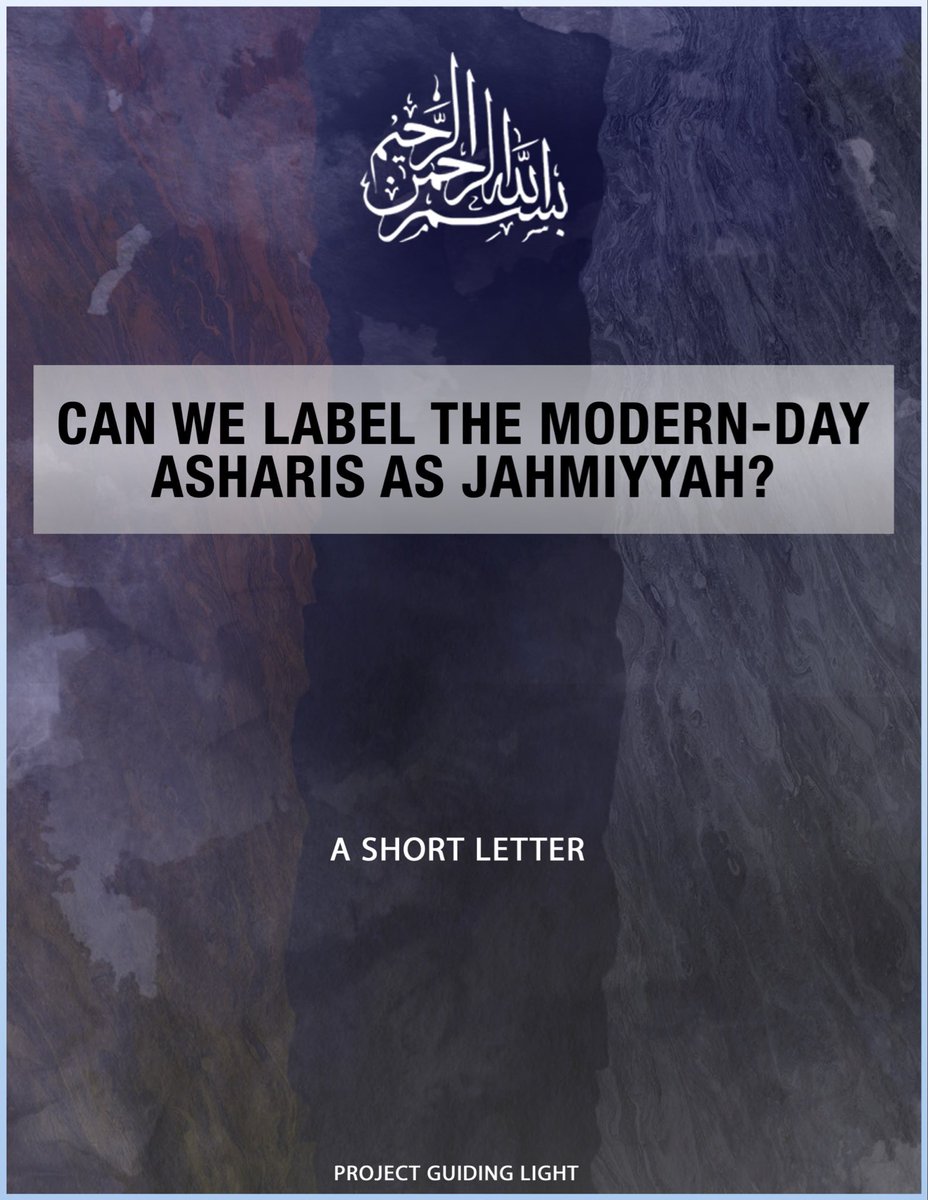
#NEW | CAN WE LABEL THE MODERN-DAY ASHARIS AS JAHMIYYAH? | PDF
PDF Download Link: t.me/project_guiding_light/1…
A short letter to my brothers on Manhaj.
I ask Allah to accept and make it of benefit.
والحمدلله رب العالمين
6
46
7,287
(من حكم بكتابه الذي كتبه بيده)
The same new-age Madākhilah who thought Al-Qāsim bin Sallām discussed “man-made laws,” in his book (hint: he doesn’t), have come with a new entry into their continuously growing wall of laughable displays of ignorance, only this time they’re charging money for it.
These new-age Madkhalis have to be some of the most low IQ, intellectually deprived individuals in the history of the movement, which is saying something. In their pathetic and desperate attempts to try and prove that the Salaf dealt with man-made laws and that they were aware of it and still called it “Kufran Duna Kufr,” they are now championing this narration to finally “solidify their case”:
عن عبدِ الرحمنِ بنِ زيدِ بنِ أسلمَ في قوله تعالى:
(وَمَن لَمْ يَحْكُم بِمَآ أَنزَلَ ٱللَّهُ فأولئك هُمُ الْكَافِرُونَ)
قال: من حكم بكتابه الذي كتبه بيده، وترك كتاب الله، وزعم أن كتابه هذا من عند اللّٰه فقد كفر.
From 'Abd al-Rahman ibn Zayd ibn Aslam, regarding Allah's saying:
(And whoever does not judge by what Allah has revealed, then they are the disbelievers among you.)
He said: Whoever judges by the letter he wrote with his own hand, and abandons Allah's book, and claims that his letter (i.e., his judgement) is from Allah, then he has disbelieved.
This narration only reaffirms the position of the Muslims, in that individual judgements made by a Qadi are not Kufr Akbar as a default, and instead require additional conditions to reach the level of Kufr Akbar. The feeble Madkhali mind, just as they were wound up when they saw the word شرائعهم in the book of Al-Qāssim bin Sallām, they too got wound up when they saw the words من حكم بكتابه الذي كتبه بيده, thinking this refers to man made laws. This Kitāb which is being referenced is not referring to man-made laws, it’s the judgement of the Qadi that he writes down and passes it along to be enforced. In Ar-Rawḍ al-Murbiʿ bi-Sharḥ Zād al-Mustaqniʿ, under the Chapter titled The Judge’s Letter to a Judge:
(وَيُقْبَلُ) كتابُ القاضي (فِيمَا حَكَمَ بِهِ) الكاتبُ (لِيُنَفِّذَهُ) المكتوبُ إليه، (وَإِنْ كَانَ) كلٌّ منهما (فِي بَلَدٍ وَاحِدٍ)؛ لأنَّ حُكْمَ الحاكمِ يجبُ إمضاؤه على كلِّ حالٍ.
(And it is accepted) the letter of the judge (in what he has judged) — the writer [i.e., the sending judge] — (so that he may execute it) — the recipient — (even if) each of them (in the same city); because the ruling of a judge must be carried out in every circumstance.
Their entire premise of the Salaf being aware of man-made laws is built on this phantom hallucination of an interpretation, that even the most ignorant of Madkhali scholars wouldn’t dare make (due to the impending mockery of their ignorance which would undoubtedly ensue). Yet in their devilish attempts to solidify the thrones of the Tawagheet, they would rather make up their own definitions (keep in mind these kids can’t even read Arabic properly), than accept that Tashree’ is Right of Allah Alone, and anyone who shirks him in this Right, is a Mushrik.
نسأل الله السلامة والعافية
22 May 2025
#NEW | Misunderstanding the statement of Al-Qāsim bin Sallām | PDF
In this short treatise, is a response to the newfound deception of using some of the statements of Al-Qāsim bin Sallām رَحِمَهُ اللهُ تَعَالَىٰ رَحْمَةً وَاسِعَةً, who is from the Imams of the Salaf, to try and justify the filthy Aqeedah of the Murji'a.
I ask Allah to accept and make it of benefit.
والحمدلله رب العالمين
Download Link: t.me/project_guiding_light/9…
9
52
12,519
Madkhalis believe such a person is not a Kafir, until he explicitly verbalizes he’s joined the IDF because he hates Islam, anything short of that, he’s still a “muwahhid” according to them. So don’t be surprised at the circus gymnastics performed when they try and defend the likes of their Tawagheet.
#NEW | THE MADKHALIS IV | The Betrayers of The Believers & Allies of the Disbelievers
youtu.be/DN5w_IlUVys
Apr 28

"My name is Yahya Mahamid. I'm an Israeli, I'm an Arab, I'm a Muslim, and I am a proud soldier of the Israeli Defense Forces. I grew up taught to hate, but I fell in love in Israel. I'm proud to be a Muslim Israeli soldier."
Yahya, you are a light in the darkness. ❤️
32
133
21,662
Madkhali who shirks Allah in His Hukm x Jahmi who shirks Allah in His Worship. They both unite in giving the laymen clear signs that they should be avoided like the plague.
Imagine this guy, lecturing people on Zuhd and Tasawwuf. This photo was not altered in any way.
It’s reported that Umar Al-Fāruq رضي الله عنه said:
Beware of gorging on food, for it induces laziness in prayer, corrupts the body, and bequeaths illness. And indeed Allāh — blessed and exalted be He — detests the fat scholar. Rather, adhere to moderation in your sustenance, for it is closer to rectification, further from extravagance, and stronger for the worship of Allāh. And verily, a servant will not be destroyed until he gives precedence to his desires over his religion.
[al-Jūʿ by Ibn Abī al-Dunyā, no. 81]
This is about the Muslim, what about the fat Munafiq scholar of the Taghut?
8
60
10,029
It’s reported that Umar Al-Fāruq رضي الله عنه said:
Beware of gorging on food, for it induces laziness in prayer, corrupts the body, and bequeaths illness. And indeed Allāh — blessed and exalted be He — detests the fat scholar. Rather, adhere to moderation in your sustenance, for it is closer to rectification, further from extravagance, and stronger for the worship of Allāh. And verily, a servant will not be destroyed until he gives precedence to his desires over his religion.
[al-Jūʿ by Ibn Abī al-Dunyā, no. 81]
This is about the Muslim, what about the fat Munafiq scholar of the Taghut?

22
172
31,299
⚠️Be warned, language is filthy⚠️
This is the legacy of Rabi Al Madkhali and his heretical offspring in the west, from @DusDawah, @AbuKhadeejahSP, and @hikmahpubs. When they’re not committing cannibalism amongst each other and throwing each other off the “Manhaj” for differing on stupid and petty matters, their teachings and students yield this type of filthy behavior. It won’t be long before these guys are extinct, Insha’Allah.
This isn’t something new, they’ve consistently displayed this type of filthy behavior. See below ⬇️
1
3
30
3,699
18 Feb 2025
⚠️WARNING: VIEWER DISCRETION IS ADVISED — filthy language and actions⚠️
Now imagine if I were to come out and say look at how the students of Sālih al-Fawzān are, look at how the students of Rabī bin Hādi al-Madkhali are, or Muhammad bin Hādi al-Madkhali, or Raslan, etc. “Look what they teach,” or “look at what their Manhaj teaches or yields,” etc.
This would be the epitome of dishonesty. Despite my disagreements with them, and my belief in their creedal violations — I know their manhaj does not include or promote openly being filthy degenerates in such a way.
It may include minimizing and distorting the Kufr of Tawali of the Kuffār, it may include concealing the truth, it may include distorting the principles of Emān and Kufr. One thing however, to the best of my knowledge, they do not preach and teach, or support the filthy behavior, as seen in the attached video. In fact, I’d say if such actions were brought before them, they’d rebuke it in the harshest of manners.
Allah Says:
وَإِذَا قُلۡتُمۡ فَٱعۡدِلُواْ وَلَوۡ كَانَ ذَا قُرۡبَىٰۖ
And whenever you give your word (i.e. judge between men or give evidence), say the truth even if a near relative is concerned
Being just even against your ideological enemies is important, for if you were the bearer of truth, then the truth is enough of a refutation. If you resort to intentional deceit and slander, then you are following the sunnah of the Kuffar of Quraysh.
May Allah guide the sincere ones involved in this slander and deception against our beloved Shaykh Ahmad Musa Jibril حفظه الله تعالى, and if not, make it a means of a painful punishment for them in this Dunya and Ākhirah.
1
9
2,633
#NEW | DOES THE ONE WHO INTENDS TO COMMIT MAJOR SHIRK, COMMIT KUFR IN THAT INSTANCE? | PDF
PDF Download Link: t.me/project_guiding_light/1…
I ask Allah to accept and make it of benefit.
والحمدلله رب العالمين
12
42
5,901
Every Muslim who is being slandered by the hypocrites/disbelievers should be defended without a doubt, or offered a word of support at a minimum (even if they don’t need it). This is the bare minimum rights that any of the Mashayikh, Mujahideen, or the laymen Muslims have upon their Muslim brothers.
That being said, do not be of those who voluntarily bring heartache or sadness to Muslims, by sharing with them slander against them, that they might otherwise be ignorant of occurring. Even the Prophet صلى الله عليه وسلم was hurt by the slander/Kufr of Quraysh, Allah سبحانه وتعالى Says:
وَلَقَدْ نَعْلَمُ أَنَّكَ يَضِيقُ صَدْرُكَ بِمَا يَقُولُونَ
Imam Ibn Jarir At-Tabari رحمه الله comments on this Ayah and said:
The Exalted says — in His mention — to His Prophet Muhammad ﷺ: “And indeed We know, O Muhammad, that your chest is constricted by what these polytheists of your people say — by their denial of you, their mockery of you, and their mockery of what you have brought to them.
It’s also mentioned by Ibn Abee ad-Dunya in his Al-‘Ishraf:
Ḥātim ibn Yaḥyā narrated to us, saying: I heard Muḥammad ibn Yaḥyā al-Marwazī say: A man said to Wahb ibn Munabbih, “So-and-so has insulted you.” He replied: “Could the devil find no messenger other than you?”
And these are widely cited although I couldn’t find a Sanad for them, although due to its meaning, it is worthy of mentioning as a reminder for us all, Insha’Allah:
It’s said that a man came to a wise man and said: “So-and-so has insulted you.” He replied: “He shot an arrow at me and it did not reach me — so why did you carry the arrow and lodge it in my heart?”
And it’s said that a man came to al-Shāfiʿī — may Allah have mercy on him — and said: “So-and-so speaks ill of you.” He replied: “If you are telling the truth, then you are a tale-carrier (Nammām); and if you are lying, then you are a transgressor.” So the man was ashamed and left.
Defend your brothers in Islam, without hesitation, but be weary not fall into the trap of Nameemah unintentionally, lest you hurt your brother(s) unintentionally. If anything, if someone gets slandered often, be the bearer of good and positive news instead. Work to spread their Da’wah, and make it widespread. Share with them the messages of support that flood social media during the slander, instead of the slander itself.
There’s a wonderful website ahmadjibril.org that’s been assembled, Allahumma Bārek. Every time someone slanders the Shaykh, share this website. Let the hypocrites die in their rage.

How our beloved Shaykh sees clowns who unleash their misguided tongues on him, with slander.
13
58
4,315
Shaykh Al Islam, the Imam of the Imams, Ibn Khuzaymah Al-Shāfi’i Al-Wahhābiyy (d. 311 AH) said about the quoted Mushrik fellow and his Jahmi cult:
“Whoever does not affirm that Allah the Mighty and Majestic has Rose above His Throne above His seven heavens — he is a disbeliever in his Lord, his blood is lawful. He is to be called to repent; if he repents, well and good, otherwise his neck is to be struck, and he is to be thrown onto some of the rubbish heaps so that neither the Muslims nor the dhimmīs are harmed by the putrid stench of his corpse. And his wealth becomes fay’ — no Muslim inherits from him, for a Muslim does not inherit from a disbeliever, as the Prophet ﷺ said: ‘A Muslim does not inherit from a disbeliever, nor a disbeliever from a Muslim.’”

The Shāfiʿī school has stood firm for nearly 1,300 years transmitted with precision, preserved through chains of knowledge, and carried by scholars across generations.
10
52
3,673