
Just Post What I Want To Post || Builder R3 || Web3 Girl
Joined August 2011
- Tweets 37,655
- Following 1,374
- Followers 3,279
- Likes 39,795
955 Photos and videos









Maria retweeted

Jun 4
New Listing!
solana:So11111111111111111111111111111111111111112 is now live on StandX with up to 30x leverage.
Manlets assemble.

16
16
82
3,177

May 29
StandX moving fast again.
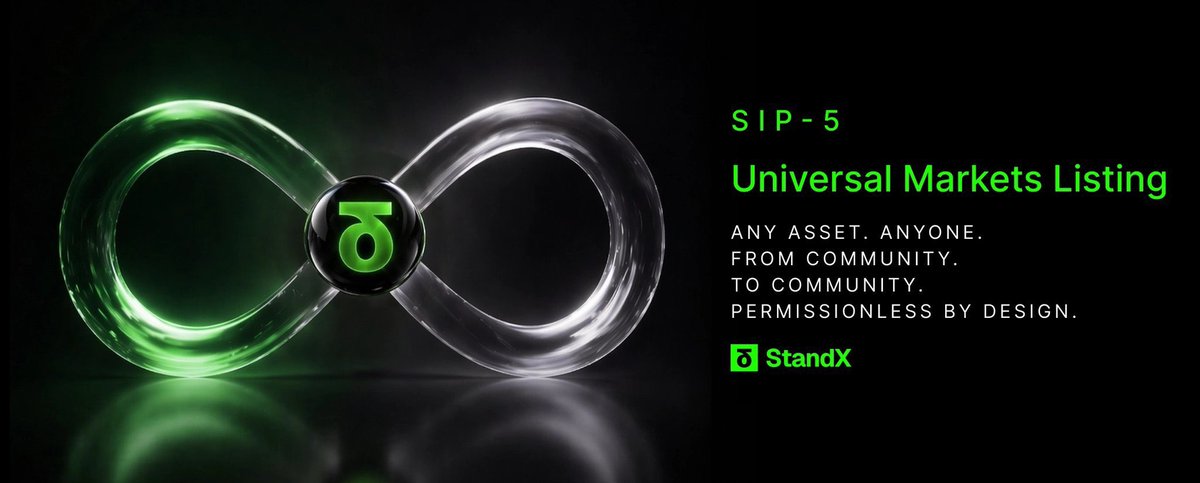
Just after rolling out SIP-3, they’ve now introduced SIP-5 and honestly, this might be one of the more important structural upgrades so far.
The idea is simple:
Anyone can create a market.
Not just perpetuals, but potentially:
• prediction markets
• pre-markets
• RWA derivatives
• structured products
• basically any market that can be priced and settled
And the interesting part is how they’re approaching liquidity coordination around it.
SIP-5 combines three core layers:
• Seed liquidity provided by the deployer
• Multi-source oracle architecture
• Optional protection mechanisms for tail-risk scenarios
Instead of liquidity being controlled entirely by the platform itself, market creation becomes community-driven.
Deployers can bootstrap markets.
Liquidity providers earn incentives.
Traders get access to new assets faster.
Feels somewhat similar to what Uniswap did for token listings . except applied to the derivatives layer.
And when you Look this , the SIP framework is starting to form a bigger picture:
SIP-2 → yield-bearing positions
SIP-3 → DUSD evolving into a productive stable asset
SIP-5 → permissionless market infrastructure
Everything seems designed around one idea:
Turning trading activity itself into an economic engine shared by users, liquidity providers, and market creators.
A lot of protocols talk about decentralization in theory.
What StandX is doing feels more practical:
reducing platform dependency step by step until the community itself becomes the market layer.
Still early of course.
But the architecture is becoming increasingly difficult to ignore.
@StandX_Official
30
2
257
2,257
Maria retweeted
May 26
New Listing!
$TSLA is now live on StandX with up to 20x leverage.
Stand.

48
16
121
8,761
Maria retweeted
May 22
New Listing!
$HYPE is now live on StandX with up to 20x leverage.
Stand.
38
21
150
14,992
May 22
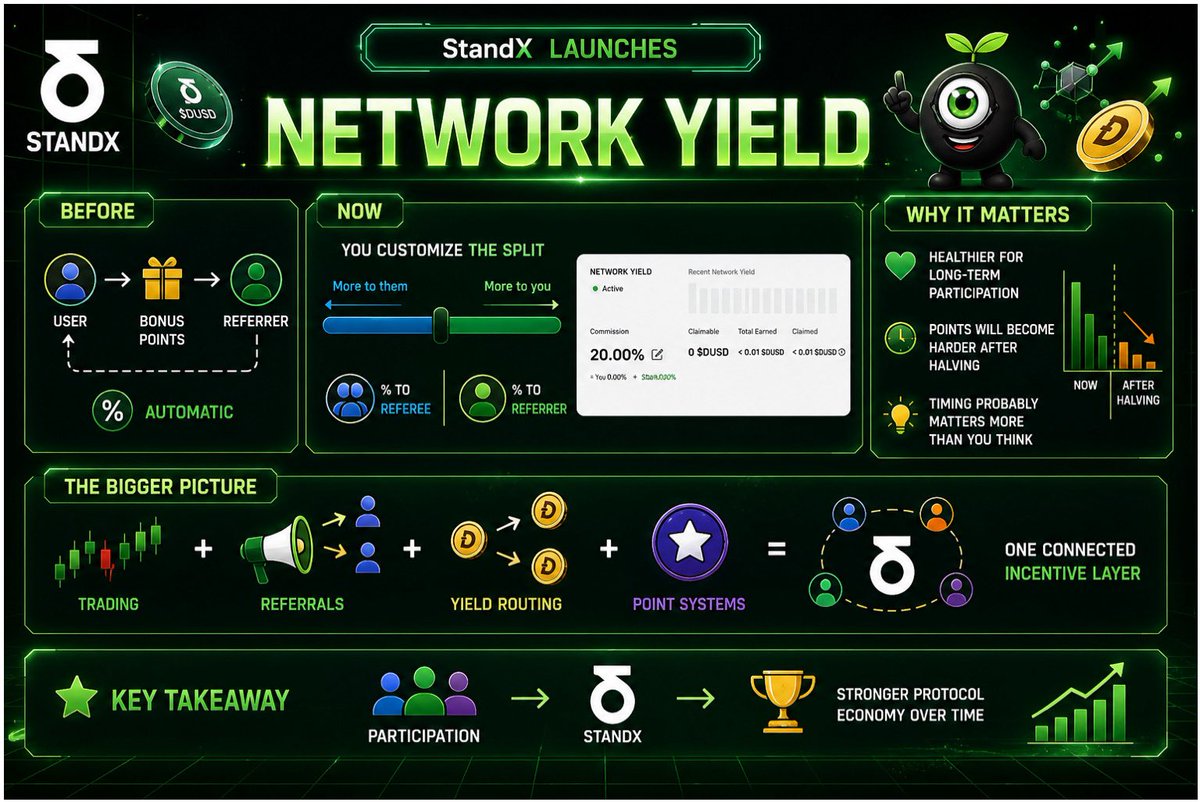
Interesting update from StandX with the launch of Network Yield.
At first I thought it was just another referral layer.
But it’s actually a bit more flexible than that.
Previously, referrals were fixed .
people signing up through your link would receive bonus points, while a percentage flowed back to the referrer automatically.
Now the system lets you customize the split yourself.
So instead of maximizing what I receive, I adjusted mine to prioritize the people using the referral instead.
I could take the full percentage.
But I’d rather let others keep most of the upside and only retain a small portion for myself.
Feels healthier for long term participation that way.
Especially because the point system is about to become significantly harder after the upcoming “halving” adjustment.
Which means timing probably matters more than people think right now.
The broader idea here is what caught my attention though:
@StandX_Official is slowly turning participation itself into part of the protocol economy.
• Trading.
• Referrals.
• Yield routing.
• Point systems.
Everything is starting to connect into the same incentive layer.
Still early, obviously.
But the structure underneath it is becoming much more interesting over time.
47
3
245
3,434

How does a private transaction work with Miden Guardian in the loop?
Here is a quick walkthrough of the full flow by @zkGaylord's agent
49
38
153
14,931
May 21
At one point, someone spent 10,000 BTC on two pizzas.
Back then it sounded ridiculous.
Today it feels like one of the most important moments in crypto history.
Because that was the moment Bitcoin stopped being just an idea on the internet
and started becoming something people actually used in the real world.
That’s why Pizza Day became more than just a meme over time.
It’s basically a yearly tradition for the entire space now.
Saw StandX doing something pretty fun for it too.
If you’ve interacted with StandX before using your wallet, you can register for their Pizza Day giveaway.
10 winners.
30 DUSD each.
Enough to cover your pizza.
The process is simple:
• Follow @StandX_Official
• Like repost the campaign tweet
• Submit a wallet that previously interacted with the protocol
• Form : docs.google.com/forms/d/e/1F…
That last part matters btw.
If the wallet has no onchain interaction history with StandX, the entry won’t count.
Deadline is May 22, 8AM UTC
May 19

🍕10,000 BTC once bought 2 pizzas
We’re treating 10 Standers to pizza in a 300 $DUSD lucky draw on #BitcoinPizzaDay
Get your slice here: forms.gle/wK33pz2QkR3jk9jd6

82
2
171
3,567
Maria retweeted
May 19
🍕10,000 BTC once bought 2 pizzas
We’re treating 10 Standers to pizza in a 300 $DUSD lucky draw on #BitcoinPizzaDay
Get your slice here: forms.gle/wK33pz2QkR3jk9jd6
210
264
465
47,989
May 14
Good Morning 💕
I’d stay like this forever but someone’s already demanding breakfast. Being held hostage by this fluff ball is a fulltime job.
Who else is currently being held hostage by their cat?
55
3
264
2,627
May 12
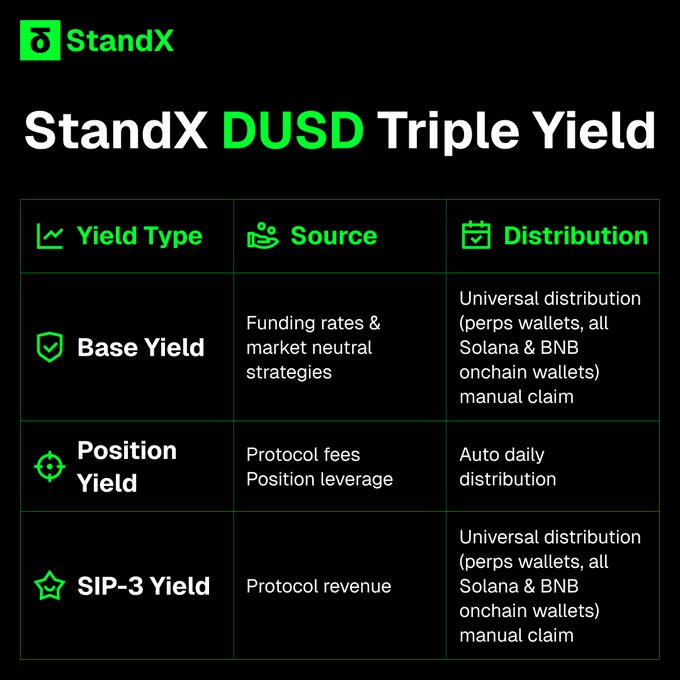
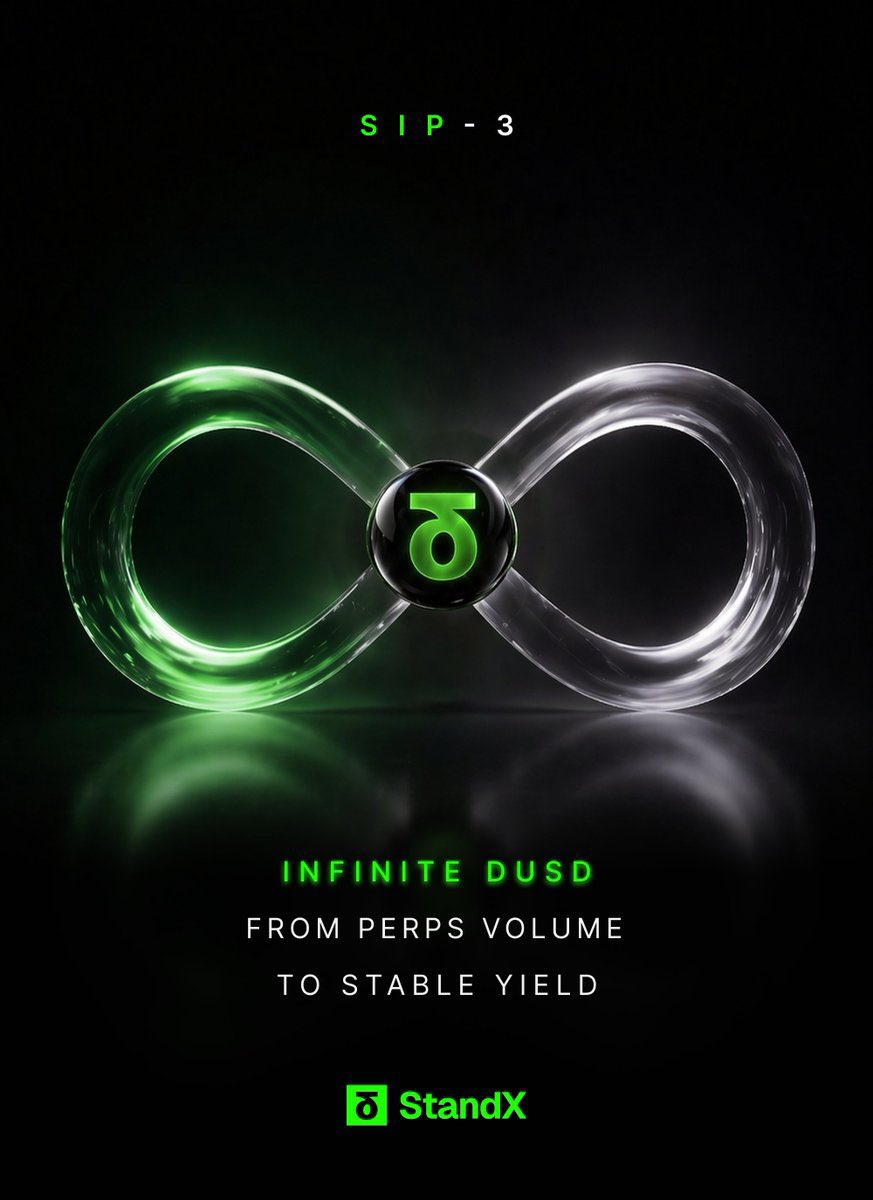
SIP-3 quietly changed what $DUSD actually is.
Before, it mostly functioned as a settlement asset inside the StandX ecosystem.
Now it’s starting to behave more like a yield layer tied directly to protocol activity.
After rebates, a portion of net fees gets routed back into the DUSD yield pool automatically.
Whether DUSD sits in a wallet, LP position, BNB Chain, or Solana, the system is designed so value can still flow back across the network.
So instead of idle capital sitting around, protocol activity continuously feeds back into holders.
In practice, it creates a flywheel:
more trading activity
→ more fees generated
→ higher DUSD yield
→ deeper liquidity & margin capacity
→ more trading activity again
Simple structure.
But potentially powerful if volume continues scaling.
Of course, systems like this still depend heavily on sustainable trading activity and healthy liquidity conditions over time.
But structurally, SIP-3 feels like the point where @StandX_Official stopped focusing only on trading and start rebuilding the economic layer underneath the asset itself.
102
3
255
7,895
May 11
Good Morning And Happy New Week 💕
Whats Ur plans today ?
Dont forget to touch grass
62
3
254
2,649


You KOLs are hilarious.
When I do not post about CEX manipulation tokens you accuse me of being paid off to stay quiet.
When I do post about CEX manipulation tokens you then immediately accuse me of shorting.
Seems regardless grifters will pretend to be outraged and defend RAVE, LABS, M, SKYAI, RIVER, etc while deferring all responsibility once funds are lost trading them.
94
36
846
41,310
May 5
Structured incentives = key to DeFi retention.
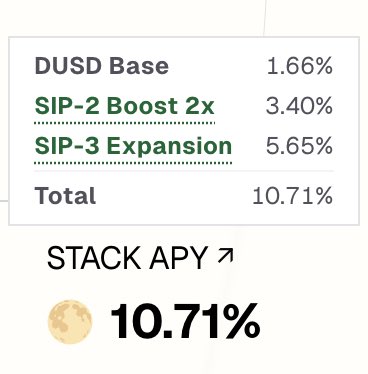
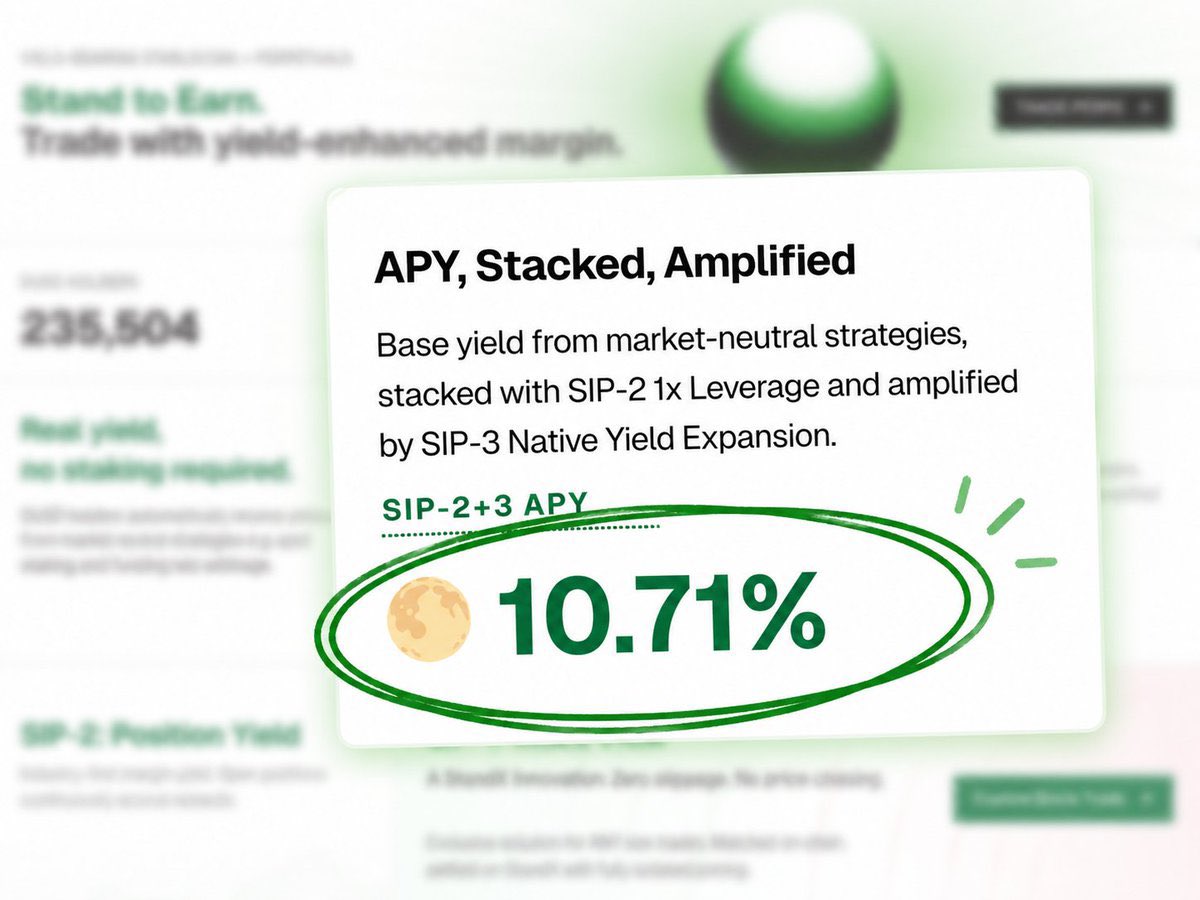
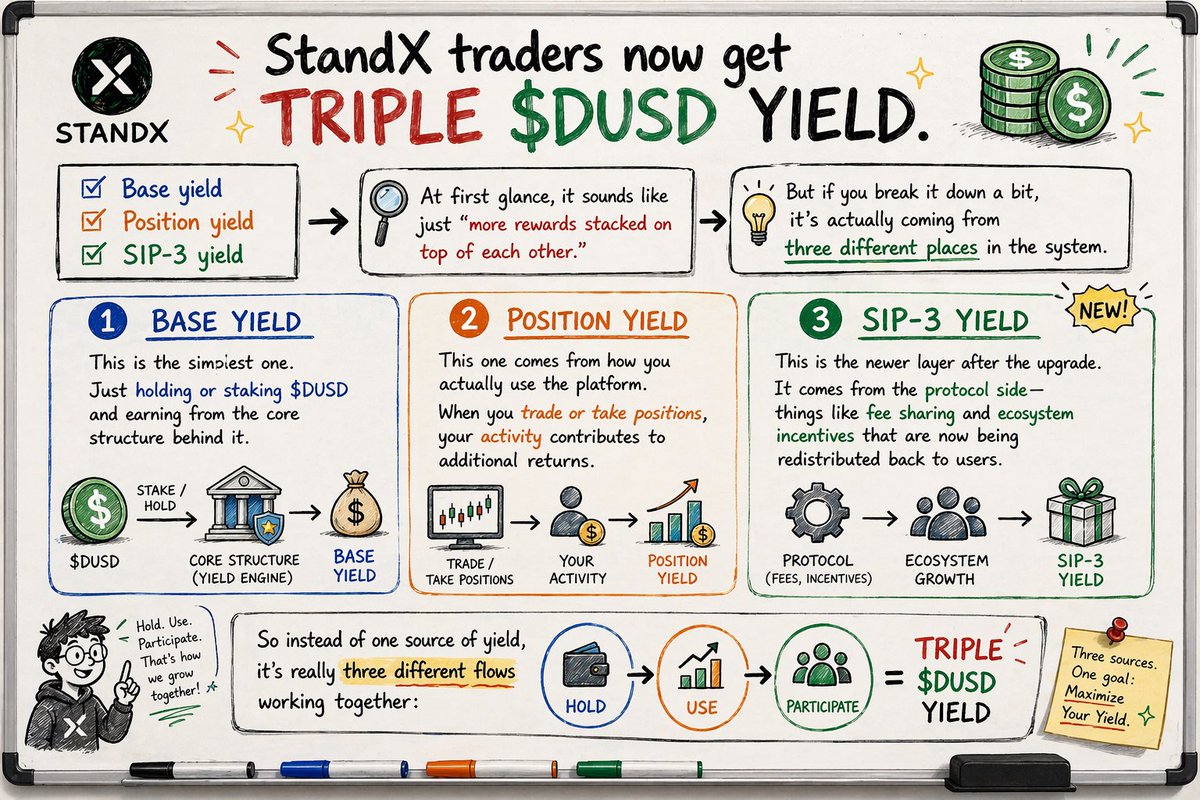
StandX showing how it’s done with a “Triple Yield Stack” → 10.71% APY on $DUSD
Not just about high APY.
It’s the design:
• Base yield
• SIP 2-3 incentives
• Fully integrated into the Perps interface
Seamless , Composable , Sticky
This is the kind of yield innovation that drives real, sustainable adoption.
33
2
170
3,932
May 4
GM ☀️
Sleepy Monday vibes
Good food, calm moments, and no rush to start the week.
Taking it slow today and that’s perfectly fine
35
1
141
1,712
Apr 30
StandX Points Halving Alert
Your Time Is Running Out. Points Halving IN ~24 DAYS
• Right now : 1U fee = 100 PTS . GRIND HARD while it lasts
• May 24 hits : 1U = 50 PTS
No confirmation on a TGE or airdrop yet .
But Maybe It Will Coming This Q2.
@StandX_Official
Apr 29
Halfway there.
From May 24th 12:00am GMT, all StandX Trader, Maker & Holder point emissions will drop to 50% of current levels.
The summit is in sight.

46
2
136
3,235
Apr 28
Update From SIP-3
Stacking yields just got a major upgrade on StandX.
StandX offers 10.71% APY with :
• No staking required
• Market neutral strategies
• SIP-2 3 amplification
The future of yield-enhanced trading is here With @StandX_Official
41
1
111
3,697