
Decoding real estate beyond noise.
Joined August 2023
- Tweets 8,999
- Following 633
- Followers 10,234
- Likes 18,812
826 Photos and videos


Pinned Tweet

7 Aug 2025
So today, I introduce myself as Property Decoder @ Ground Lens —
A dedicated consumer centric knowledge platform built to decode how real estate really works.
For a long time, I myself have faced a massive gap between what’s projected and what’s real in Indian ‘Real’ Estate.
What began as simple curiosity gradually became a deeper purpose – to decode what lies beneath the surface-level real estate chatter – full of overhyped narratives, speculative sales pitches, cherry-picking bias, inflated claims, tailored data – often supplied as “knowledge” or “insights.”
Here's why I had to start this 👇( 1/n)
3 Aug 2025

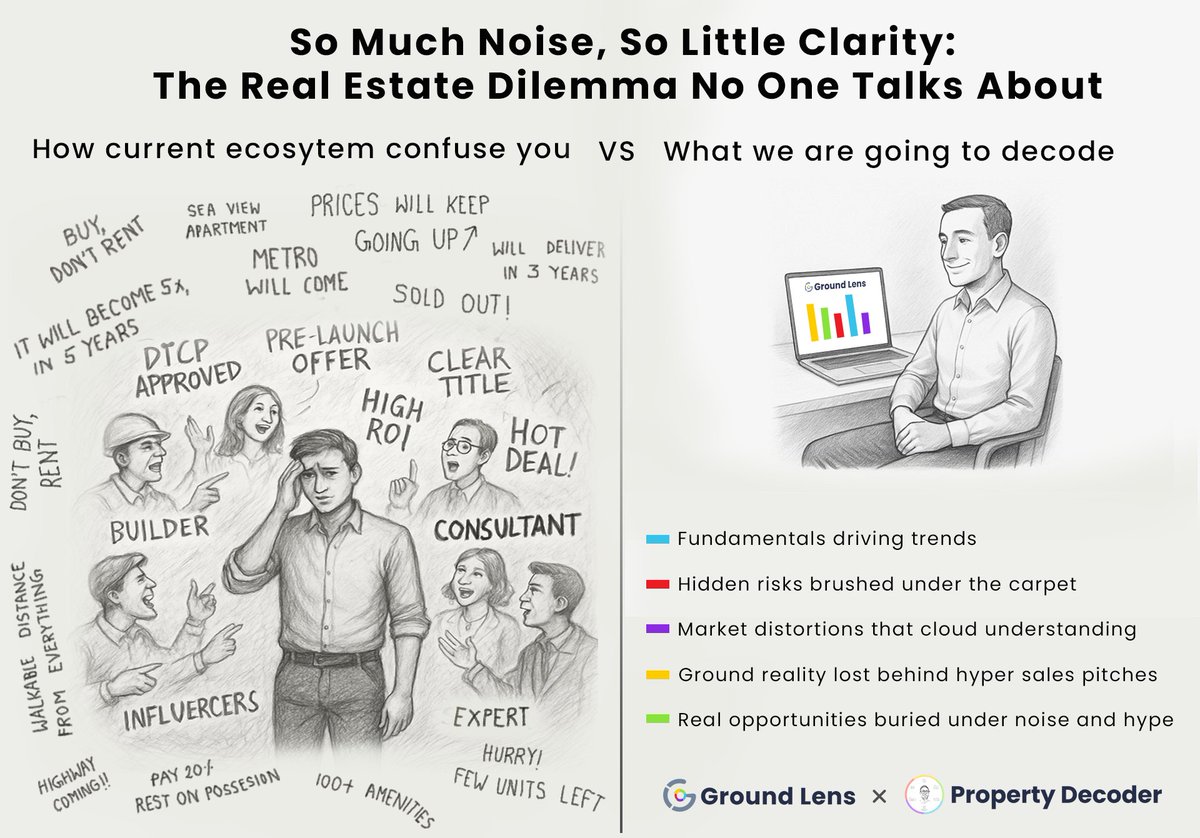
🌻Announcement🌻
A Small Change, A Bigger Purpose
After much thought (and a fair share of nervous excitement), I’m making a small but meaningful shift.
I started this account on X with a simple intention: to share my learnings, question dominant narratives, and connect with people trying to make sense out of complexities around real estate in India, beyond just glossy brochures and narrative hype.
Over time, I realised how one-sided and supply-driven most real estate discourse is, often fueled by FOMO, half-truths, greed, and promotional hype – majorly focusing on pushing sales rather than addressing buyers’ voice/needs or empowering them to take informed decisions.
There were moments I genuinely considered stepping away. Because real estate has long been the most uncomfortable zone for me, not due to any problem wrt this need based asset, but because of the ecosystem around it which often feels opaque, fake and disturbingly anti-consumer.
Yet, for many in the industry, that’s just business as usual. Though the presence of bad actors has made trust hard to come by, but those who bought wisely have fulfilled their needs and also seen real value creation over time.
What kept me going, despite all the doubts and dilemmas, was the thoughtful support and encouragement I received from family, friends, and many of you who have been engaging with me since the beginning.
Some even pushed me to take it a step further, to get my hands dirty and build something more meaningful. For that, I’m genuinely grateful.
So today, I’m doing just that.
Soon this account will no longer carry the name “Indian Real Estate Index.”
It marks the beginning of a new phase - still rooted in the same core values:
👉 Clarity over noise
👉 Ground truths over narratives opium
👉 Putting the buyer’s voice first because that’s where I’ve mostly been
If you’ve found value in what I’ve shared so far, I hope you’ll continue to be part of what’s next.
The journey ahead is going to be more focused, more structured, and hopefully, far more impactful.
🙏 Thank you for reading, engaging, and helping shape this.
See you on the other side :)
8
3
34
26,610
Jun 10
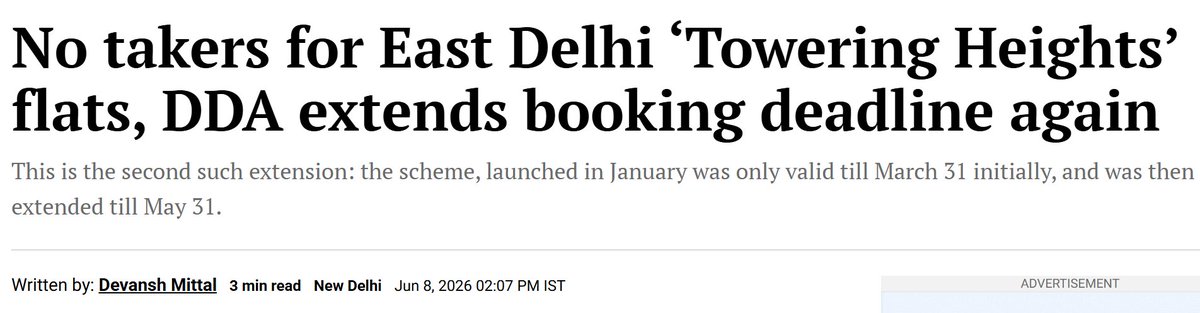
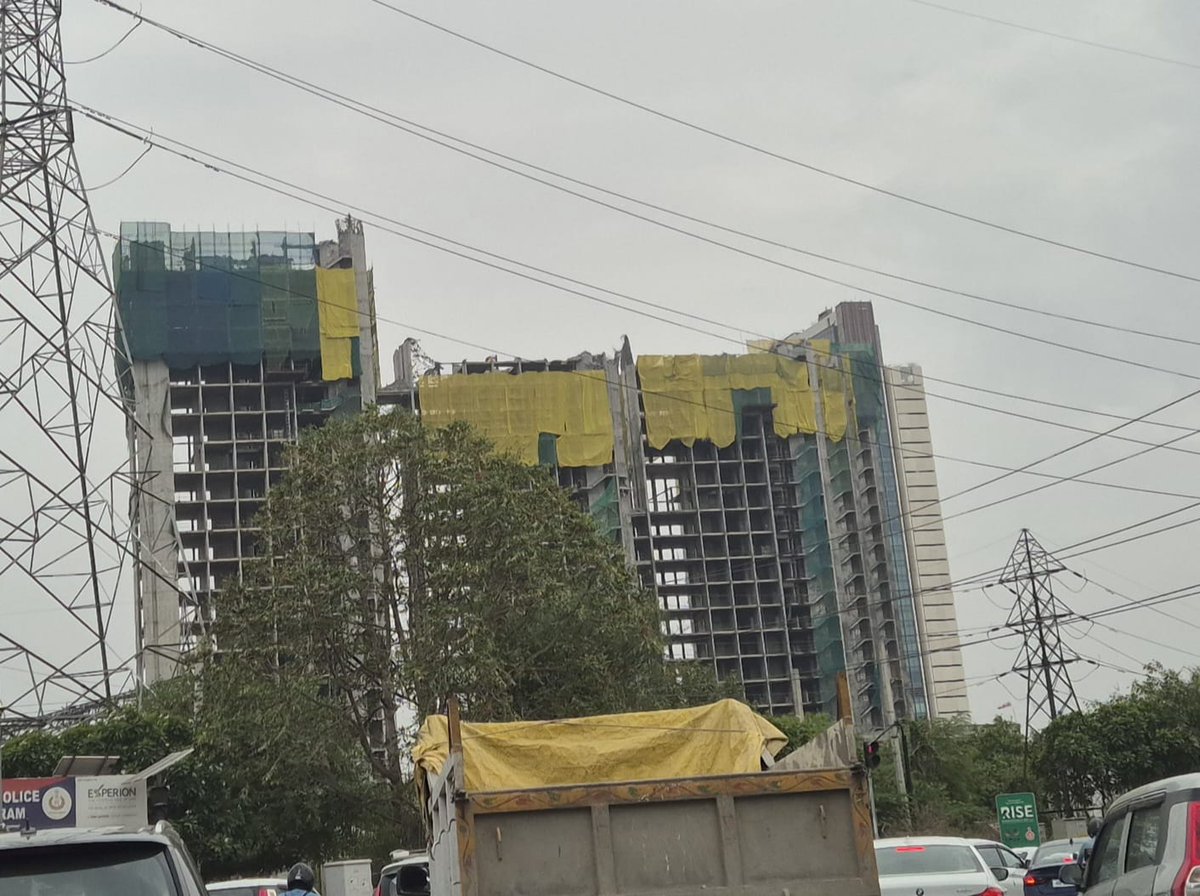
Why has Delhi's tallest residential project, nearing completion, reportedly sold only ~17% of its units?
What's interesting is that this project seems to tick many of the boxes we keep hearing are guaranteed drivers of housing demand.
We're told that projects near metro connectivity get sold out quickly and appreciate the most. This one isn't just near a proposed metro line, it's next to not 1 but 2 already operational main metro routes, allowing residents to reach almost any part of Delhi NCR without needing to use their own vehicle.
We're told buyers want an X-factor. This is being marketed as iconic Delhi's tallest residential tower.
We're told buyers are looking for larger homes. It offers spacious 1,500 sq ft 2 BHK configurations.
We're told buyers want more open spaces and amenities. It may not have a grand clubhouse building, but it does offer a big 5-acre park, arguably more green space than many new launches today, along with a decent set of usable amenities.
Yes, concerns have been raised about past construction quality. But this time, Mivan construction technology has reportedly been used.
Pricing and ticket size seems to be fine, if comparing to the recent year launchings in Delhi's surrounding cities and actual end-user housing demand.
But also despite multiple relaxations, removal of parking charges, lock-in restrictions, and previous ownership conditions, still couldn't move much.
And if it's about image, then at the same time, we see the projects in very weak locations, by private developers with questionable or even NO track records, get sold out within days of launch.
So in comparison, this seems to be the decent overall housing package with a good livable location, so why those drivers of housing demand are not working here?
So before I share my own view:
Why do you think a seemingly decent housing product is struggling to sell, while many other projects claim record sales?
18
2
24
4,428
Jun 10
Our major cities are already choked in the same world class infra we see getting celebrated in dronify reels every now and then.
There is an urgent need to focus on improving public transport and building last mile connectivity, otherwise things are going far worse from here on, making our major cities completely unlivable... reducing lives of people to their balconies of ultra-luxury societies, only to record this horror everyday.

3
1
22
2,692
One of the biggest constraints in India's rental housing market is that many property owners perceive renting as a high-risk activity due to concerns around non-payment of rent, lengthy eviction processes, property damage, and long legal disputes.
If these risks are reduced through clearer and more enforceable tenancy laws, a significant number of currently vacant homes could potentially enter the rental market, helping improve rental supply and housing availability.
But objective shouldn't be only to make tenancy laws "pro-landlord" or "pro-tenant" because market functions best when both sides have predictable rights, enforceable contracts, and quick dispute resolution.
Jun 7

🚨 HELP! Landlady Shweta Singh thrown out of her own home in Greater Noida's Gaur Yamuna City by powerful tenant! Over 12 dogs kept, terrorizing neighbourhood.
8
2
51
11,258
First, we need to define what a housing crash actually looks like.
Some economists have described a housing market crash as a decline of 20% or more from recent peak prices within a relatively short period, typically weeks to months.
But such sharp corrections are rare in real estate because property markets are generally illiquid and tend to adjust slowly. When they do occur, they are often linked to major macroeconomic shocks or periods of widespread panic, such as the dot-com bust, the 2008 Global Financial Crisis, or the early stages of the COVID-19 pandemic.
Like during the pandemic, several markets witnessed transactions taking place at 15-20% below pre-COVID peak levels for a brief period.
Otherwise, what real estate typically experiences is a correction spread over several years rather than a sudden crash. That's exactly what happened between 2012 and 2020, when as Delhi NCR/Mumbai saw transaction-level corrections upto 40-50% in several micro-markets, though largely in a gradual and less visible manner rather than through a dramatic collapse.
And if it's about seeing actual crash in housing markets, then Dubai remains one of the more prominent examples of reporting a genuine crash, with prices in some prime locations reportedly falling 50-60% after 2008. Even today, certain segments appear to be under pressure amid ongoing Middle East geopolitical uncertainties. If conditions deteriorate further, additional downside cannot be ruled out.
As far as India is concerned, based on the indicators and transactions I track, as of now there is currently no evidence of a broad-based housing "crash" involving a 20% decline across the wider market. However, there are visible signs of good correction in certain pockets. Like in the ready-to-move segment, deals are increasingly being reported at discounts of around 10% from peak asking prices in several micro-markets.
But situation appears more stressed in the under-construction segment, particularly in heavily investor/trader-driven markets such as NCR. Due to payment milestone obligations and weaker resale liquidity, a growing number of transactions are reportedly taking place at discounts of 15-20% from peak levels.
So yes, if market conditions fail to improve, these segments could face a prolonged bear market with further price corrections, even if the broader housing market avoids a classic crash scenario.
Jun 6

Is the biggest real estate crash of all time coming soon?
Why so much negativity at the moment in the real estate market?
4
2
23
4,133
True, in 2025, India’s office leasing market reached an all-time high, shattering previous records, maybe due to strong GCC expansion, but housing sales have been going down at the same time...
But we were told through reels / cold calls / tweets numerous times that when office leasing goes up 🔼, housing sales also go up 📈
So how did this relationship get decoupled?
If IT hiring slowdown and layoffs are the reason, then weren't they supposedly compensated for by GCC ~2x hiring (of IT) with even better pay scale?
So instead of losing momentum, housing demand should have at least maintained its euphoria, if not gained further strength, given that GCC momentum at record level at the same time.
What changed?
Jun 6

GCCs hired 200,000 employees in FY26, almost 2x that of IT's 110,000
Pay is 20-30% higher with 23L people employed across 2,100 GCCs, generating $100B of revenue
AI is not Indian IT's big threat, it is better paying, faster-moving and explosively growing GCCs
3
16
4,051
There may be no bigger business model in India than the commission-led businesses.
Whether it's securing infra contracts, selling real estate, distributing insurance policies, or recommending investment products/funds, commissions quietly drive a huge part of the economy.
In fact, these commission-led businesses may have created more unknown HNIs/UHNIs than many "real" businesses that get all the attention.
Jun 6

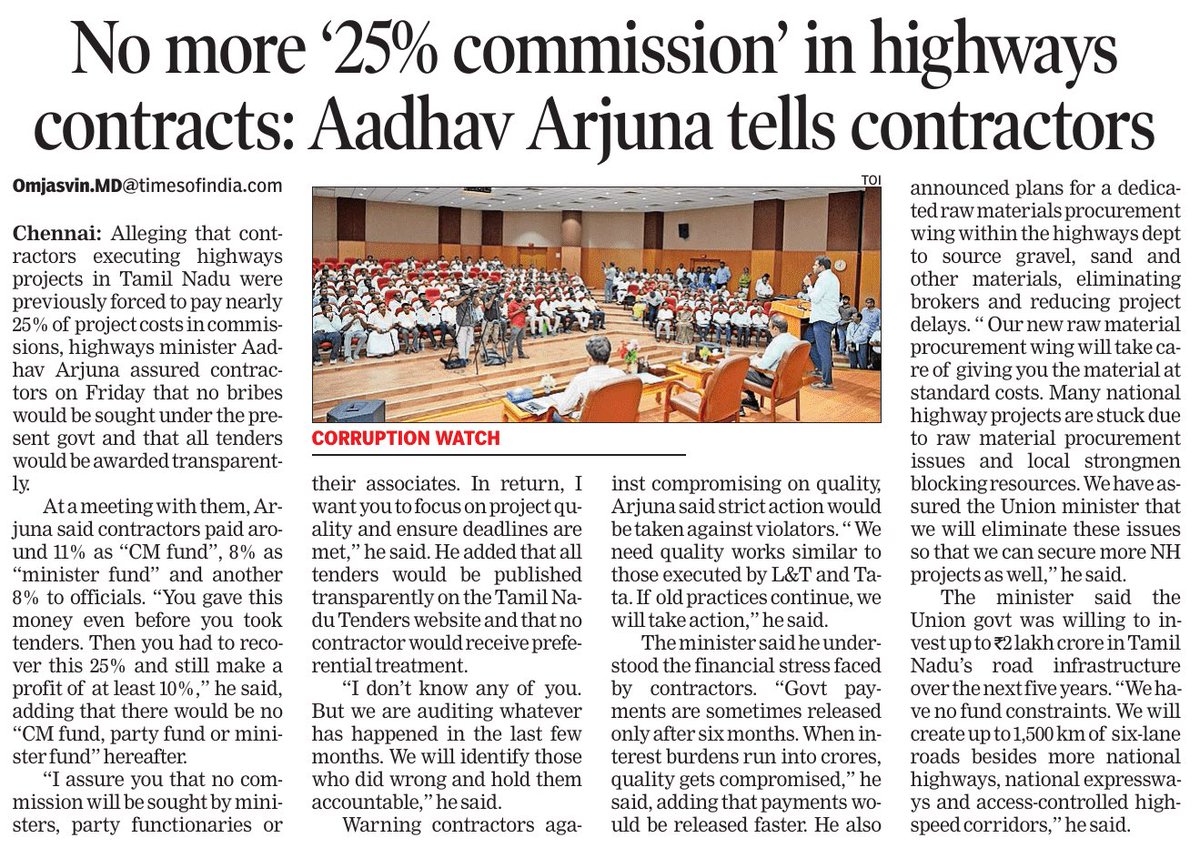
Big accusations placed by highways minister Aadhav Arjuna:
There was a “CM fund commission” of 11% in highways contracts.
8% commission of “ministers fund”.
And 8% commission for “officials”.
These were paid by contractors even before tenders were awarded, and assured contractors that no such money will be sought from this govt from hereon.
1
4
24
1,961
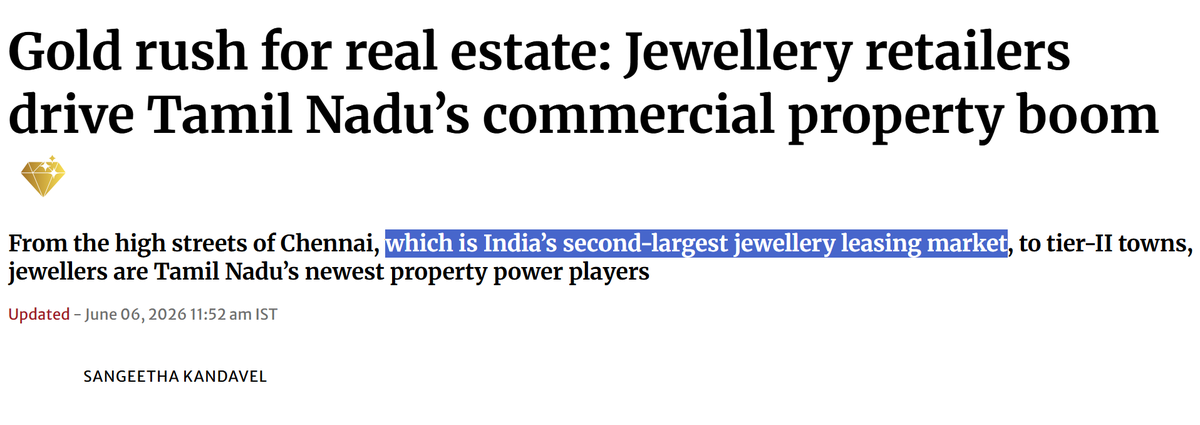
If you visit Chennai, you'll quickly notice that its high-street retail landscape feels quite different from other major Indian cities.
There is an unusually high concentration of jewellery and saree retailers compared to high streets in Mumbai, Delhi, Bengaluru, or even Hyderabad (currently India's largest jewellery leasing market) having good tenant mix.
While most cities confine such category dominance to 1 or 2 retail markets, but Chennai appears to have a much broader presence of these categories across its commercial landscape, commanding a substantial share of both retail frontage and built-up retail space.
Moreover, many of these aren't typical shops but large multi-storey standalone retail buildings in a row, often dedicated almost entirely to a single category.
Which is why it's quite fascinating to see how just two retail categories can end up dominating an entire high-street ecosystem.
Perhaps their ability to generate exceptionally high sales volumes/revenue per sqft allows them to justify some of the highest rentals and occupy larger spaces in prime locations.
And as jewellery and saree retailers absorb more prime real estate, other retail categories find it increasingly difficult to compete for the same locations, often settling for smaller units, narrower frontages, or secondary market areas.
Somehow also highlighting how deeply local culture and consumption patterns can shape a city's retail landscape.
2
13
1,722
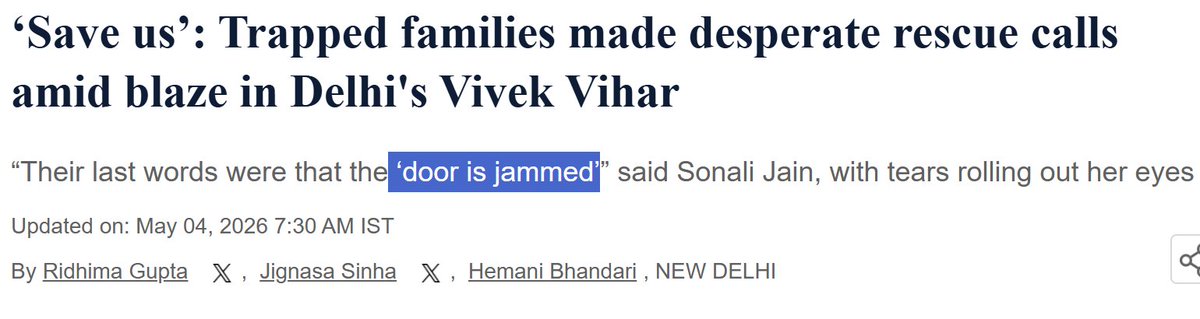
In the last few days, we have seen how buildings can catch fire, whether outside the gate or even within the gated localities, destroying homes worth Rs. 3-4 crore to Rs. 10-20 crores, while also claiming the lives of innocent people, all because due to inefficient systems.
Yet we see... people are constantly sold dreams of growing their net worth from Rs. 5-10 crore to Rs. 50 crore to spend comfortable life one day, and many spend their lives chasing that race.
What rarely gets discussed is how fragile life remains regardless of the size of your home and wealth in this country.
The reality for most people is that they don't have options. In many ways, neither money nor life seems to receive the value they deserve. The promise of luxury living, status and wealthy portfolio often turns out to be an illusion.
Like some are already using this as an opportunity to hype and sell projects of a particular builders, promoting claims such as having the tallest fire ladder (assuming it's tall enough) or even a dedicated fire station.
But God forbid something actually goes wrong, there's a good chance those systems could fail too. After all, by sheer luck and God's grace, their real-world capacity has never truly been tested under a major emergency.
But then, yes one can even buy a Rs. 100-200 crore ultra-luxury home, but their children may still end up breathing air with an AQI of 1000!
Wealth can buy comfort, but it cannot eliminate even basic risk or guarantee a better quality of life in broader sense, especially in this country.
That's why it may not be worth stretching yourself endlessly in pursuit of a bigger number due to such rosy narratives being sold to you.
Spend quality time with the people you care about. In the end, that matters far more than the size of your house or your net worth.

3
1
15
4,596
People often ask how Delhi NCR housing can go 2-3x despite having enough land to build housing in almost every direction, unlike Mumbai.
A simple explanation is... Pumping Dumping Jumping of money.
Delhi NCR is North India's only major economic hub, so businesses, professionals, and wealthy families from across the region keep pumping money into real estate due to the lack of comparable alternatives.
Being India's political capital, it also attracts money of all colours dumping into the market.
And then there's the strong culture for property investing and trading. During upcycles, people start jumping their money, often under the influence of highly speculative doses, pushing pricing benchmarks higher, even if only for a short period.
So, when money is pumping, dumping, and jumping simultaneously, especially during a strong upcycle and its aftermath, land availability becomes just one part of the equation.
Jun 4

The gangetic plains.
Endless flat lands. Easy to develop.
You could have never ending housing supply.
How did the NCR real estate industry make it so that we see prices doubling/tripling and homes going out of reach for the avg person?

3
2
50
15,765
Might be one of the routes to building "generational wealth" in Mumbai.
🚨 This is what people are getting in return for vacating old chawls in Mumbai. 👌🏼
1
1
16
2,785
Financial world keep expressing shocks to see some finfluencers getting exposed from time to time, for their fakery.
But in real estate, REinfluencers, realtors, and self-proclaimed experts have been peddling loose narratives, questionable analysis, bold claims, and commitments for years.
It's so common that people barely expect any accountability anymore :)
The same brokers who were selling virtually anything a few years ago, even still through their call centers, are now posting construction updates and confidently declaring that this developer or that project will default. And some are applauding them for it 😄
But if you scratch the surface, you will often find that these are the very same people who previously pushed all kinds of garbage projects to buyers.
Funny how quickly "experts" reinvent themselves when the direction of wind changes.
Maybe REinfluencers are smarter than finfluencers, OR they have simply been lucky enough to operate outside the scanner of regulatory bodies like SEBI.

@Akshat_World
There is a reason why a section of finfluencers are increasingly bringing disrepute to the financial ecosystem (I typically avoid name calling but this one deserves to open the eyes of Retail Investors who follow such folks)..
The issue is not wrong stock calls. Every investor in the world gets stocks wrong.
The issue is making high conviction videos with dramatic thumbnails, “hidden gem” narratives and pseudo forensic confidence… and then quietly moving on when the thesis blows up spectacularly.
The Rajesh Exports episode is a classic example - youtu.be/QPwdVUBjEDA?si=xmQn… (11th min onwards)..
Despite visible red flags for years:
* downgrade to default
* accounting opacity
* questionable disclosures
* bizarre subsidiary structures
* receivable concerns
* governance issues
…all these were brushed aside as “small issues” by Akshat in the video..
Apparently a company with collapsing credibility was simply a “low PE opportunity” misunderstood by the market..
This is exactly the danger with modern finfluencing.
Everything gets reduced to:
“Undervalued”
“Market overreacting”
“Will never go to zero”
“Big opportunity”
As if balance sheet risks and governance concerns are just temporary inconveniences in a YouTube thumbnail strategy.
A basic analyst understands that once:
* rating agencies downgrade to default,
* disclosures stop making sense,
* subsidiaries become impossible to track,
* and accounting complexity keeps increasing,
…the discussion is no longer about upside potential.
It becomes about whether the numbers themselves are reliable.
And when someone with lakhs of followers publicly discusses such stocks (3 lac views on this video) this is not “just educational content” anymore. A large section of retail investors inevitably interpret it as validation and conviction.
That responsibility matters.
Unfortunately some finfluencers now operate like momentum entertainers during bull markets and retrospective philosophers during crashes.
No accountability.
No scorecard.
No follow up.
No ownership.
Just move on to the next “hidden compounder”.
India’s retail participation story is extremely important for long term capital formation. But unless there is greater responsibility and accountability around public stock recommendations, a few loud voices will continue damaging trust for the entire ecosystem..
1
6
908
Now the ecosystem is busy pushing the narrative that property prices 'never' come down.
Never?
I don't know how many real estate cycles these people making such claims have actually seen in their lives. But let me tell you what I have seen.
After last upcycle period ( 2010-2012), have seen corrections in even some of Gurgaon's poshest localities, that too across plotted developments and multi-storey projects, whether those projects were launched/built projects top builders like DLF to lesser-known developers, from under-construction to ready-to-move, all sold with same set of narratives.
Even today after 2022-24 upcycle, whatever transactions are happening have started going ~10-15% below peak prices recorded a year or two ago.
But yes, you won't find them in headlines, sponsored articles... unlike record-breaking deals get pushed into your five senses 24x7 through influencers/realtors jumping around on reels, but yes they are already happening.
So when someone says housing prices never come down, whether in Gurgaon or anywhere else, it usually means one of two things...
Either they have never seen real estate beyond an upcycle.
Or they are simply busy peddling a convenient delusion to reassure their existing investors/traders, who were sold the story that prices only go up but getting exposed now.

Middle Class Is Dead Here: Why Property Prices In Gurugram Never Come Down ndtv.com/business-news/middl…
6
4
27
8,131
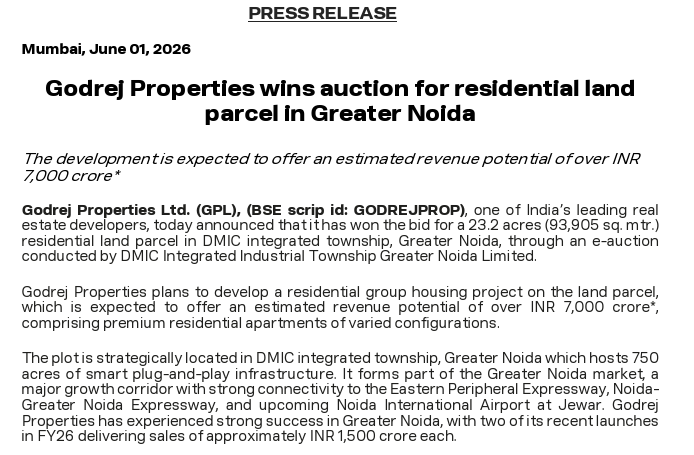
When the pace of acquiring land parcels far exceeds the pace of delivering projects, does it signal anything?

Godrej Properties wins bid for 23 acres plot at DMIC, Greater Noida.
Interestingly the price it won the bid for has not been mentioned in the filing. The revenue potential of the plot however is ₹7000 crore
3
1
18
2,362
India's middle class is getting squeezed like never before.
With few alternatives to choose from, no one want to miss an opportunity to extract out last rupee out of them and exploit them to the fullest.
So everyone takes their turn.
Schools, hospitals, utilities, govt agencies...of course, our beloved developers, often taking the art of extraction to another level.
Buy over-priced homes and pay more for maintenance charges, BUT get average construction quality with below-average maintenance.
What many may not know is that after delayed deliveries and stalled projects, the most common dispute residents are fighting against builders in courts are related to misappropriation of maintenance funds, lack of transparency and forceful control over maintenance operations.
If this isn't a banana republic, then what is?
But don't worry... we are told that life inside a gated society under a credible builder doesn't feel like India anymore.
Doesn't it?
May 31

Noida: Residents of Tata Eureka Park, Sector 150 staged a protest against the 48% hike in maintenance charges. 🚨
4
5
27
2,908
It's not just Noida.
Maybe many may don't know that how most gated societies that came up across Bangalore, Hyderabad and in several other major cities over the last decade are still heavily dependent on tanker water supply.
Gated communities were projected as the alternative to localities managed by India's 'great' municipalities.
But without corresponding upgrades in backend infra to be done by govt. agencies only, this "gated society living model" itself seems to be hitting its limits.
Now the fight appears to have started among the large number of gated societies that mushroomed over the last decade, all competing for whatever limited resources, especially water, are available through regulated or unregulated channels.
Some societies may continue to get supplies through influence or by outbidding others, but many more could find themselves under increasing stress.
At that point, they may not look much different from the localities they were meant to replace.
But yes, for revenue, skylines, and growth optics, new housing licenses must keep getting distributed... because the parallel economy needs to keep running to save the country from an actual collapse.
And then you may see some people justifying this by saying... 2-3 crore ke flat mein aur kya hi milega na?
So, now people may need to upgrade to at least 5-6cr luxury apartment project to even deserve a drop of water. Ok.
May 30

नोएडा में जैसे तैसे 2 से 3 करोड़ का FLAT लेते है , फिर भी हर महीने कभी पानी के लिए लड़ते हैं कभी लिफ्ट के लिए लड़ते और कभी बिजली के लिए लड़ते हैं !
नोएडा के सेक्टर 168 स्थित LOTUS ZING सोसाइटी में पिछले 5 दिनों से पानी नहीं आ रहा सब जगह बोलकर थक गए फिर आज पूरा रोड ही जाम कर दिया पानी को लेकर ,
सोचिए नोएडा और ग्रेटर नोएडा के लोगों को मूलभूत सुविधाएं के लिए कितना संघर्ष करना पड़ता है ,
यह इलाका नोएडा प्राधिकरण के अंडर आता है जो प्राधिकरण युवराज को नहीं बचा पाई वो क्या इनकी समस्या सुनेगी !
समझ नहीं आता नोएडा प्राधिकरण के भ्रष्ट अफसरों का कोई बाल बांका क्यों नहीं कर पाता ,
#noida #noidaauthority #greaternoida #noidadm
1
3
22
3,258
May 30
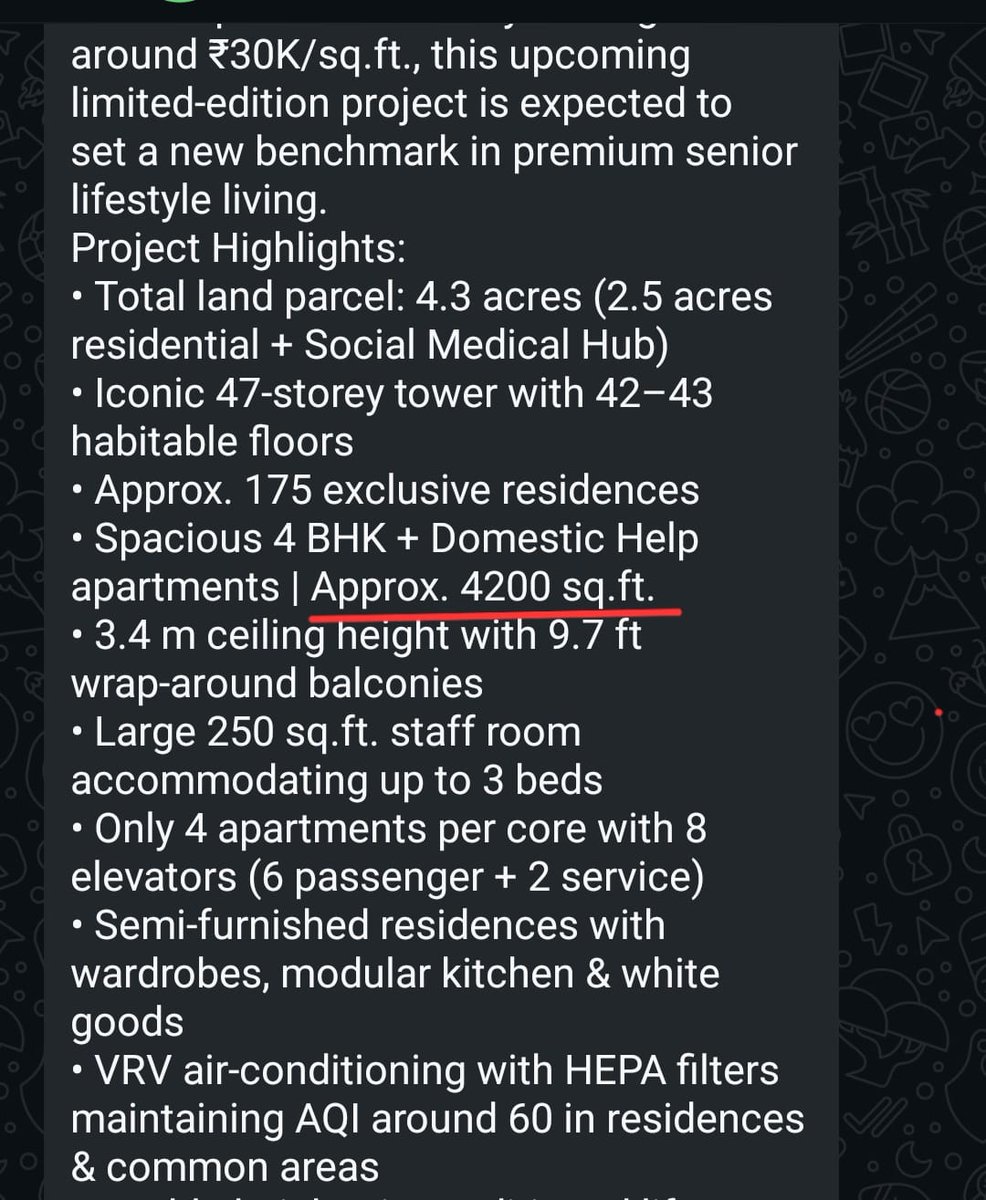
As per channel partner's msgs, a top developer is all set to launch a Senior Living project with 4,000 sq ft 4BHK apartments in Gurgaon.
What's even more interesting is that these units are reportedly larger than many configurations in the regular luxury residential project associated with it.
Ya fine, affluent seniors may certainly be able to afford such homes.
But the real question is... do they actually need them?
Yes, post-Covid there was a shift towards larger homes driven by work-from-home requirements, lifestyle upgrades, and the desire for more private space by families.
But what is the trigger here for seniours?
Also over time, many families have started right-sizing again as their needs evolved and the cost of maintaining excess space became harder to justify.
Which makes me wonder... who is the target customer for a 4,000 sqft senior living apartment?
Wouldn't 2000-2,500 sq ft or at max 3000sqft (3-3.5 BHKs), closer to Max Antara, be sufficiently big or luxury enough for most senior couples, even with occasional visits from children and grandchildren?
In many ways, this reminds me of an older housing cycle.
There was a time when multi-generational families lived in big houses/bungalows in Delhi.
Over time, families became smaller, children moved out, managing big houses became difficult, and moreover unnecessary maintenance expenses increased.
Then natural trend for families and even seniours was to move to manageable 2-3 BHK homes that matched actual household needs.
Now, after a brief post-Covid shift towards bigger homes we saw with young and relatively big families due to the need, are we seeing the similar kind of demand in seniours to move to oversized configurations?
Or is this less about how seniors actually live and more about creating a differentiated luxury product with a larger ticket size?
Because senior living is projected more about convenience, accessibility, community, healthcare integration, ease of maintenance and ya obviously a decent size home.
Not necessarily maximum square footage.
The more I think about it, the more it looks like a product designed around developer economics rather than senior living requirements.
Bigger apartments mean bigger ticket sizes, higher maintenance collections and higher revenue/sq ft.
But what do you think... are these 4,000 sq ft senior living apartments solving a genuine need/demand?
6
1
17
2,845
May 29
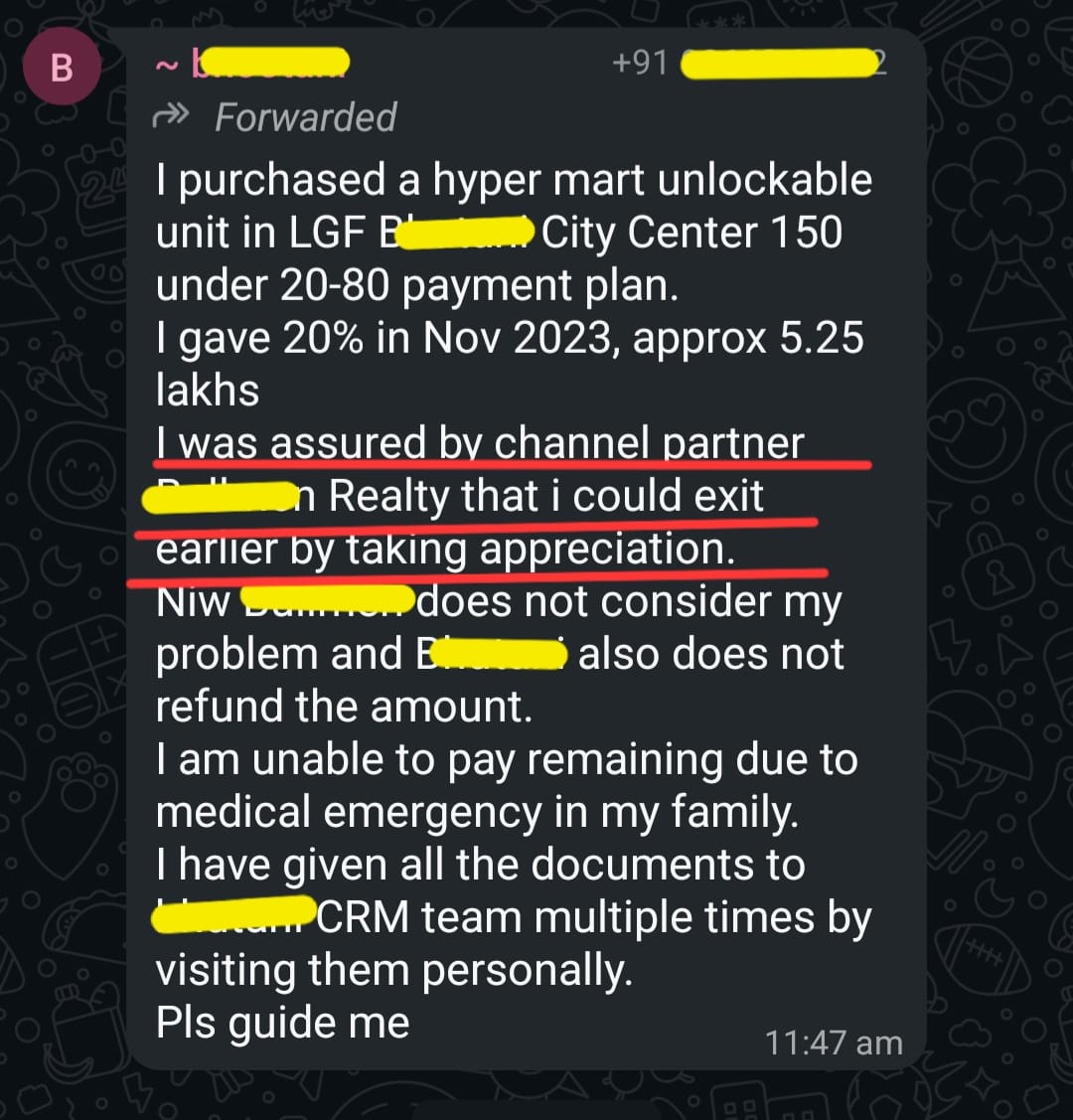
This is the major playbook through which most NCR real estate projects has been sold over the last few 'euphoric' years.
"Invest now with just 10-20-30%, take a quick alpha exit within a few months, and exit before the next instalment becomes due"
And don't think it's limited to some commercial projects as shown in this forwarded screenshot. Even most residential launches were sold on similar promises of easy appreciation and effortless exits.
Many investors are now discovering that they were trapped by realtors of builders through their baseless narratives.
And this is also how the "sold out" data hype gets created but ultimately getting exposed now.
And this is probably just the beginning. As more payment milestones approach and liquidity gets tested, many more such 'distressful' stories are likely to come out in the open.
May 27
Now all narratives are "sold out".
6
1
24
6,118
May 28
First, the homebuyer waits 4-5 years for the project to get built.
Then waits for OC.
And now it's 3 years, project hasn't been able to reach Possession stage from OC... wow!
Imagine how many things can change in 8-9 years… but those people who booked homes with their hard-earned wealth have just been stuck this long in frustration and uncertainty... does time have no value in this world’s 'fastest' growing economy?
At this point, every such homebuyer, who bought from such builders, can probably write a PhD thesis on.... “Why You Should Never Buy an Under-Construction Home in India”
But then the FOMO-filled reels, tweets, WhatsApp forwards, "sold-out" headlines and endless cold-calling selling ‘alpha opportunities’ will start bombarding new set of buyers from all sides and promising them... this time it's different.
Then repeat.
May 27

Hundreds of homebuyers who invested their hard-earned savings in apartments at Godrej Park Green remain trapped in uncertainty as possession of their homes continues to be delayed despite repeated assurances from the developer.
Although the Pimpri-Chinchwad Municipal Corporation granted an Occupation Certificate (OC) to Godrej Skyline Developers Pvt Ltd on 20 March 2023, many buyers are still waiting to receive the keys to their long-promised homes.
At a meeting with builder representatives held on Sunday, 24 May, Relationship Manager Deepali Patil once again assured homebuyers that possession would be handed over by 31 July 2026.
For many purchasers, however, the latest promise has brought little relief.
Homebuyers say years of delays have eroded their trust, leaving them burdened by mounting financial pressure and emotional stress. Several residents told Pune Times Mirror that they are caught in a painful double bind — paying hefty monthly home loan EMIs for apartments they still cannot occupy, while simultaneously bearing the cost of rent for their current homes.
What was once sold as a dream home project has, for many families, become a prolonged wait marked by uncertainty, frustration, and broken timelines.
#godrejparkgreen #delayedpossessions #buyersleftstranded #punenews
1
6
14
2,837
May 27
Isn't it surprising how a same builder with polished corporate branding, already sitting on several delayed or stalled projects across country, continue going on land-buying spree and still keep getting fresh RERA approvals to launch new projects in different cities?
What kind of system is this where past delivery record barely seems to matter?
Anyone can collect thousands of crores from buyers, delay projects for years or even abandon them, trap families financially, and yet face almost no real restriction on launching the next project.
Why has the entire burden of due diligence been pushed onto common homebuyers alone?
Then what exactly is the system for?
If authorities won't seriously track delivery history, construction progress, financial health, or past buyer complaints before approving new launches, what protection does an average buyer really have?
At times, it genuinely feels like property buyers are left on their own... to protect their own wealth, fight their own battles, and bear the consequences of systemic failure themselves.
And that's why under-construction segment in Indian real estate often feels like a "pure" gamble.
7 Oct 2025

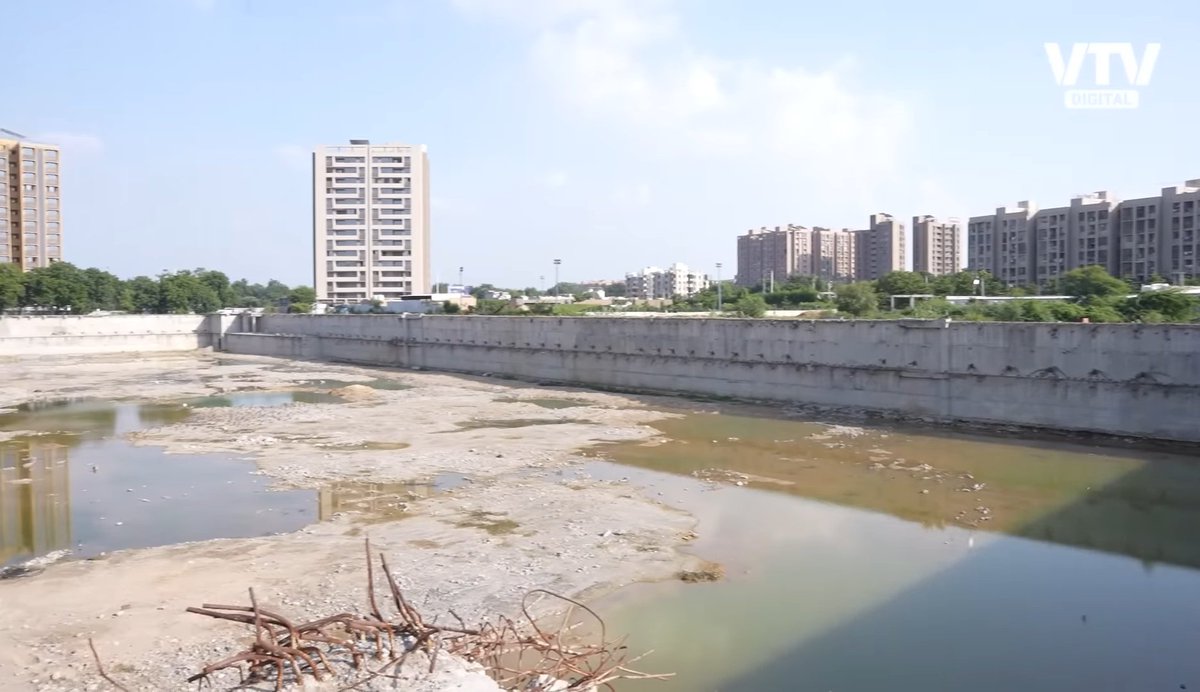
🚨 Ahmedabad Real Estate Shock by none other than one of India's largest real estate developer 🚨
Godrej Celeste (by Godrej Properties & Shree Siddhi Group) launched in 2022, Possession promised by 2026.
Today → almost 3 years later, the site looks abandoned. 👇
📷VTV news
3
10
59
20,043
May 27
Now all narratives are "sold out".
May 27

New
Premium
Luxury
These are some of the adjectives people use to sell stuff, Gurgaon real estate has introduced another term- “Sold out”
Buy your dream 2/3/4 BHK home in our new Sold Out Project. Flexible payment plan available.
1
1
17
8,355