
⚡️ Electrical & Passive Fire Safety Specialists 🔥
Joined May 2013
- Tweets 9,544
- Following 4,766
- Followers 7,916
- Likes 16,853
4,681 Photos and videos

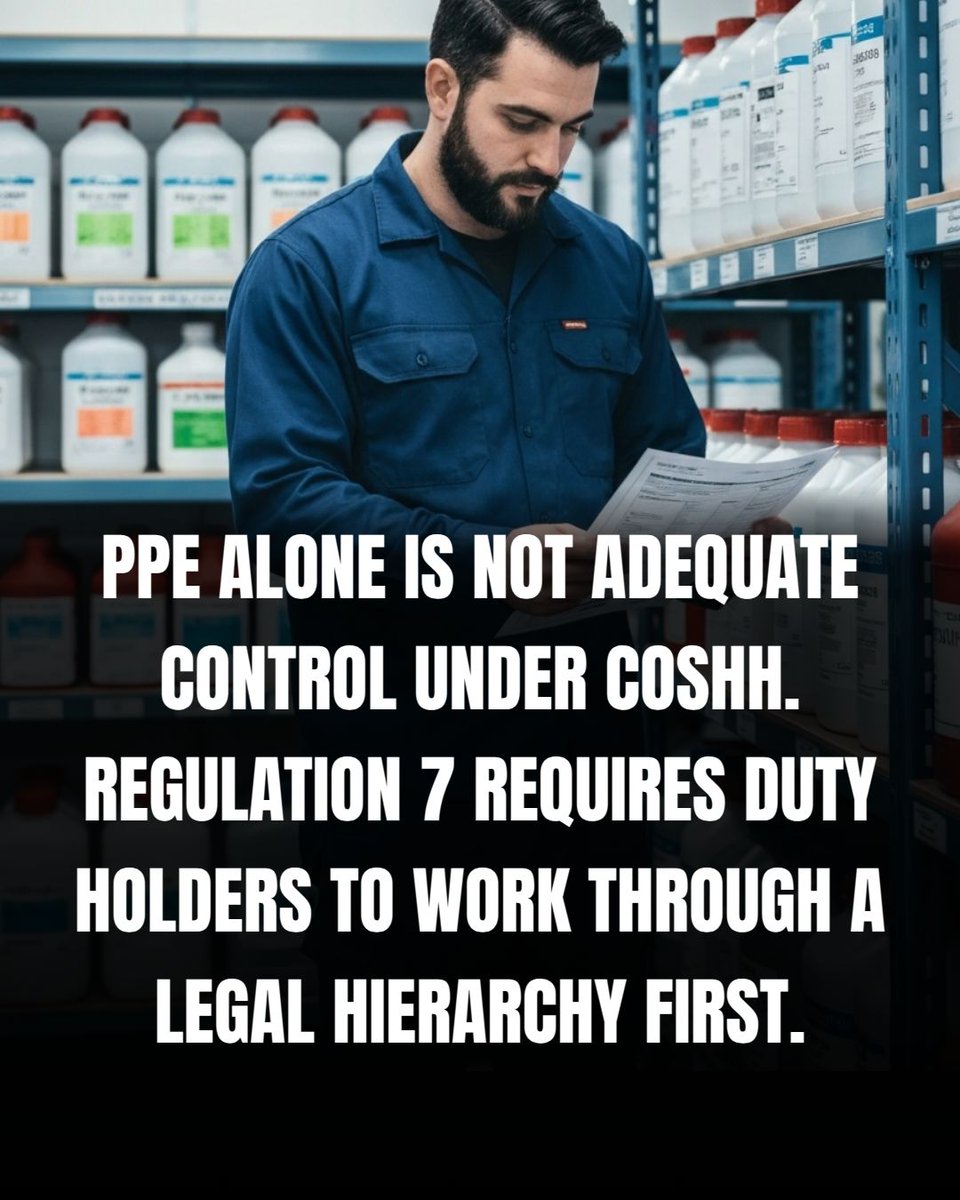
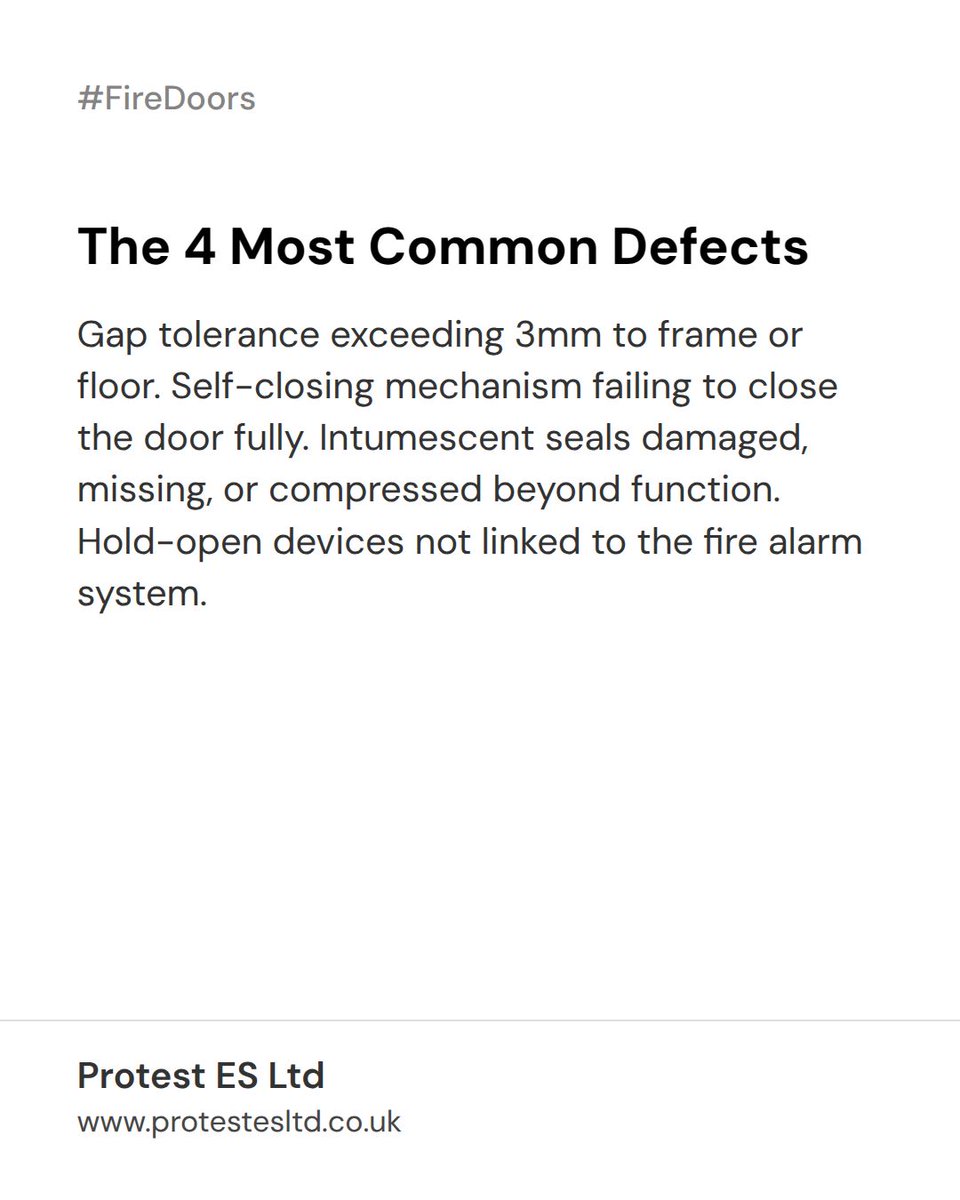
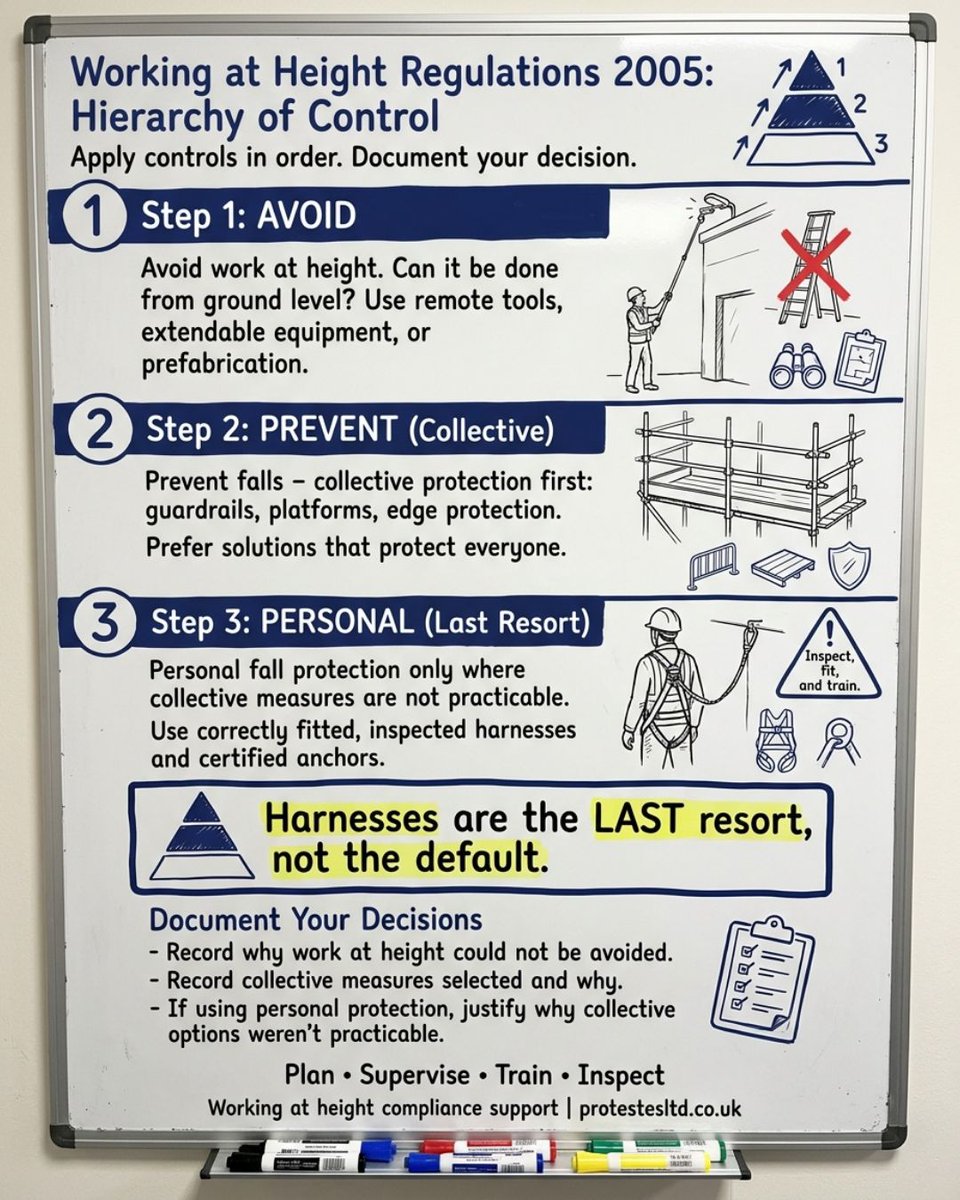
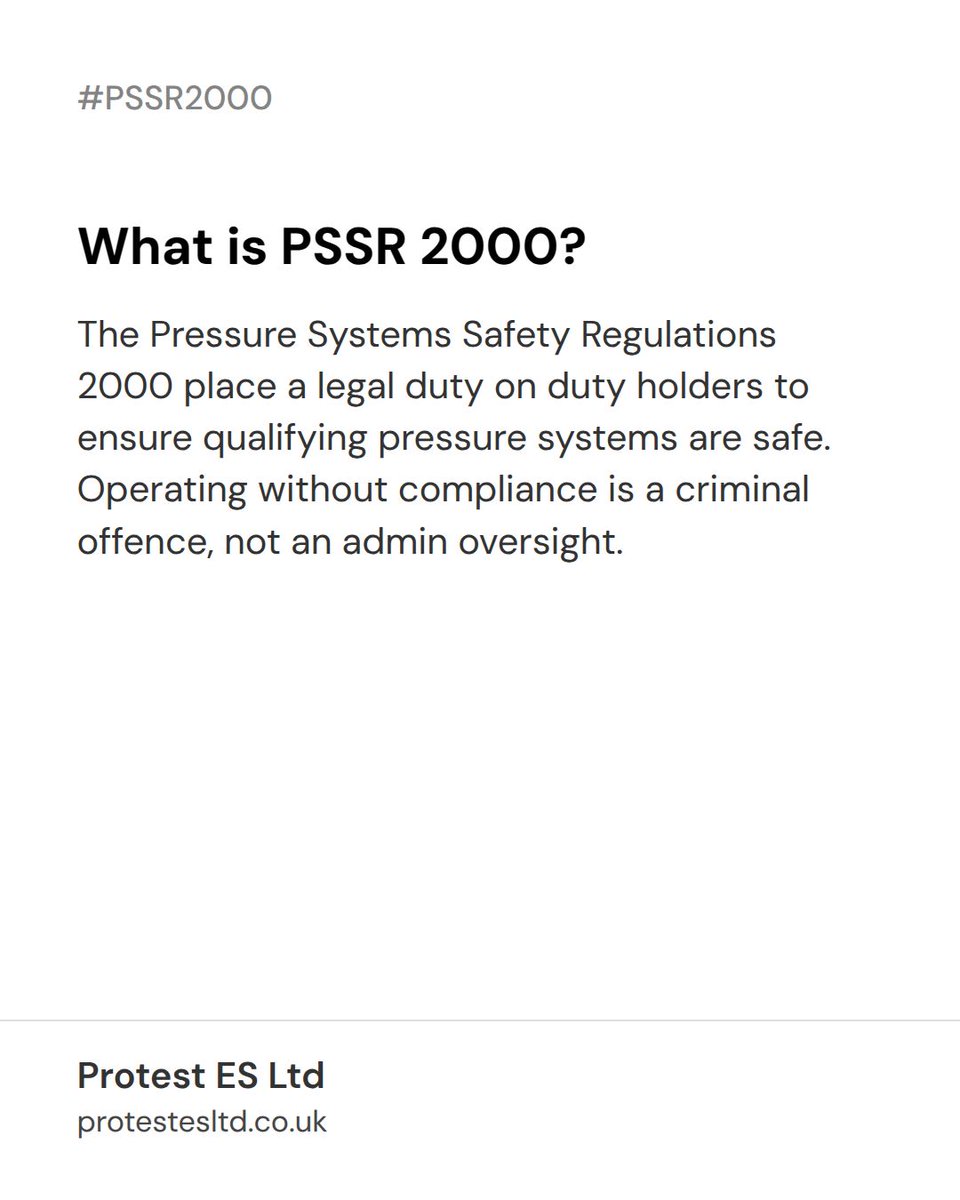

Jun 12
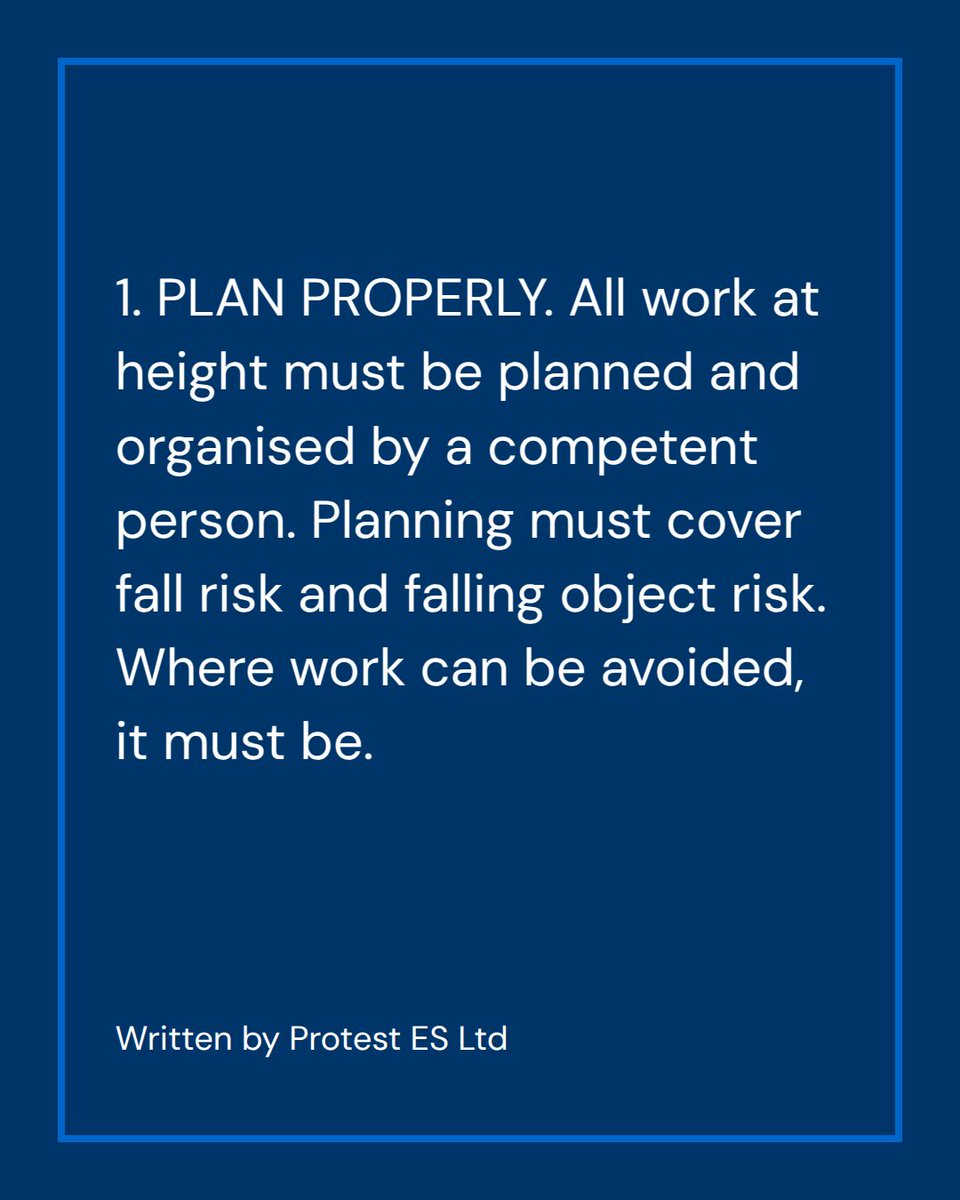
Working at height is the leading cause of workplace fatalities in the UK. Under WAHR 2005, all work at height must be planned, supervised, and carried out using the right equipment. A ladder is not always the right equipment. protestesltd.co.uk
7
Jun 12
BS 9999 vs Prescriptive Rules: What FMs Actually Need to Know. 📋
Keep your estate legal and your occupants safe without the administrative headache.
#FacilitiesOperations #BuildingRegulations #FireInspections #PropertyMaintenance #FF
protestesltd.co.uk/post/bs-9…
1
9
Jun 11
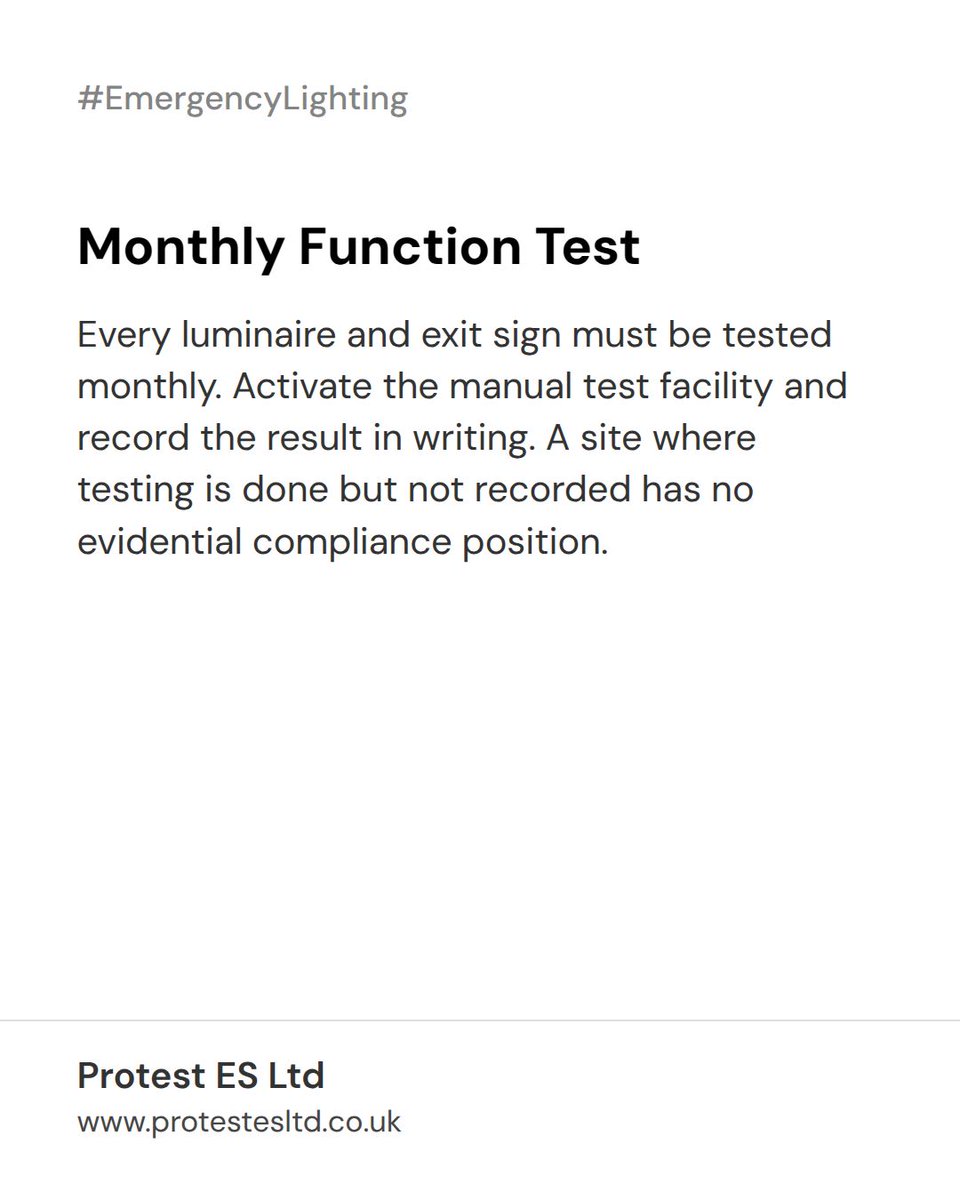
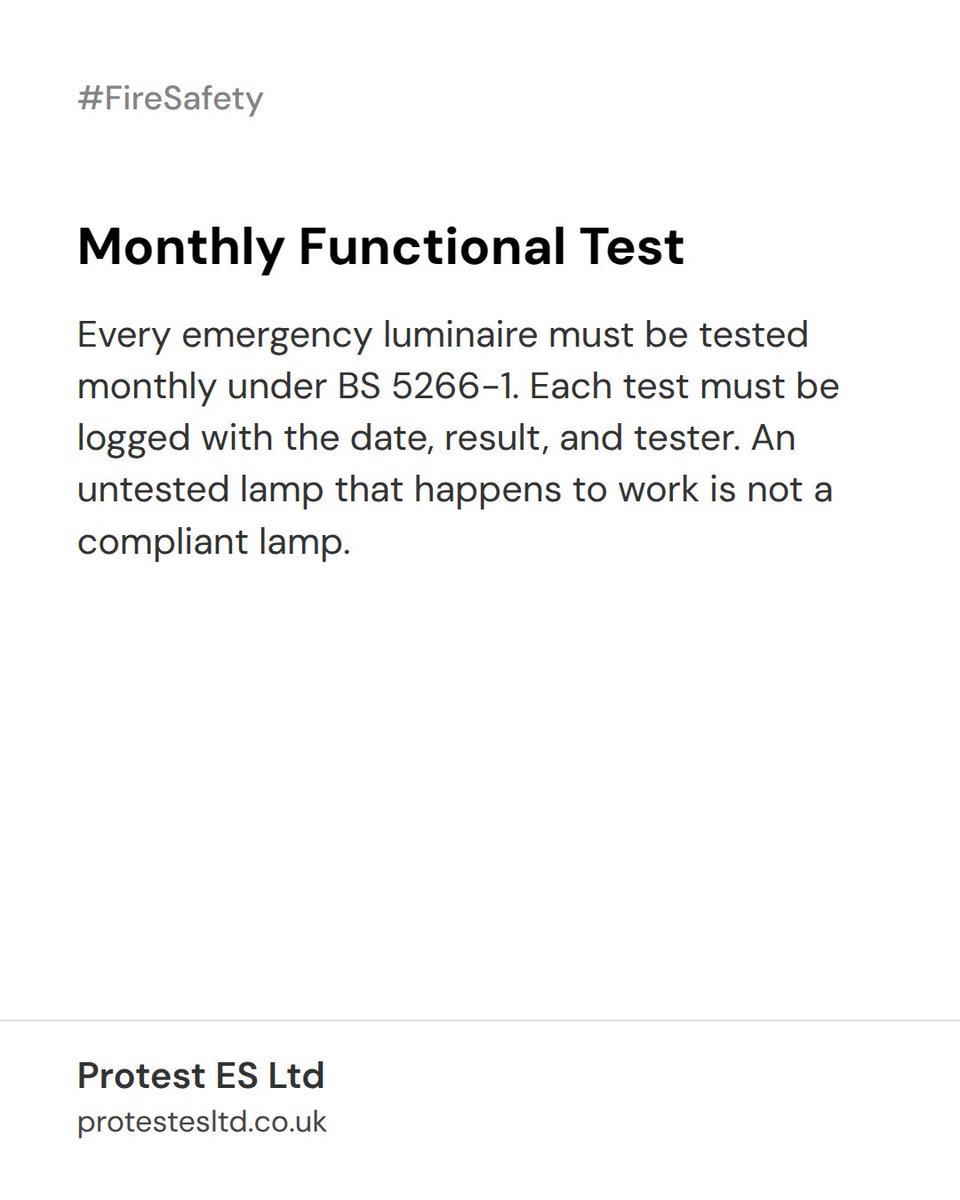
Emergency lighting is a legal requirement. Most premises have the system. Far fewer have monthly test records, an annual 3-hour discharge test, and a competent engineer service log. All three are statutory obligations under BS 5266.
4
Jun 11
Is Your Portfolio Exposed? 🚨📋
❌ Unrecorded maintenance work by unaccredited contractors.
❌ Paper-based or missing asset logs for building compartmentation.
❌ Delayed remedial actions on known C2 or fire safety defects.
protestesltd.co.uk/post/buil…
1
2
31
Jun 11
Most RCDs in UK commercial buildings have never been formally tested. A faulty RCD looks identical to a working one. You only find out it has failed when someone gets hurt.
1
34
Jun 11
Under the Electricity at Work Regulations 1989 and the Health & Safety at Work Act 1974, duty holders must maintain electrical systems in a safe condition. Untested RCDs are a clear compliance gap.
1
3
Jun 11
Protest ES Ltd provides RCD testing across commercial premises nationwide. If you cannot confirm when yours were last tested, that is your answer. Find out more at protestesltd.co.uk #RCDTesting #ElectricalCompliance #ElectricalSafety
3
Jun 10
The Expensive Consequence of Choosing the Cheapest Fire Contractor. 💰❌
📖 Read our complete UK vetting guide for passive fire partners.
#Procurement #SupplyChain #FacilitiesManagement #PassiveFireProtection #CostControl
protestesltd.co.uk/post/uk-v…
4
Jun 10
There are an estimated 100 million fire dampers installed in UK buildings. Most will never be tested until something goes wrong.
1
24
Jun 10
When a fire damper fails, the ventilation duct becomes an uncontrolled route for smoke and flame. Fire compartmentation is bypassed. The building's entire passive fire strategy is undermined at that point.
1
6
Jun 10
Protest ES Ltd provides fire damper testing, inspection and maintenance for commercial buildings across the UK. BRE and BM TRADA certified technicians. Visit protestesltd.co.uk #FireDampers #PassiveFireProtection #FireSafety
7
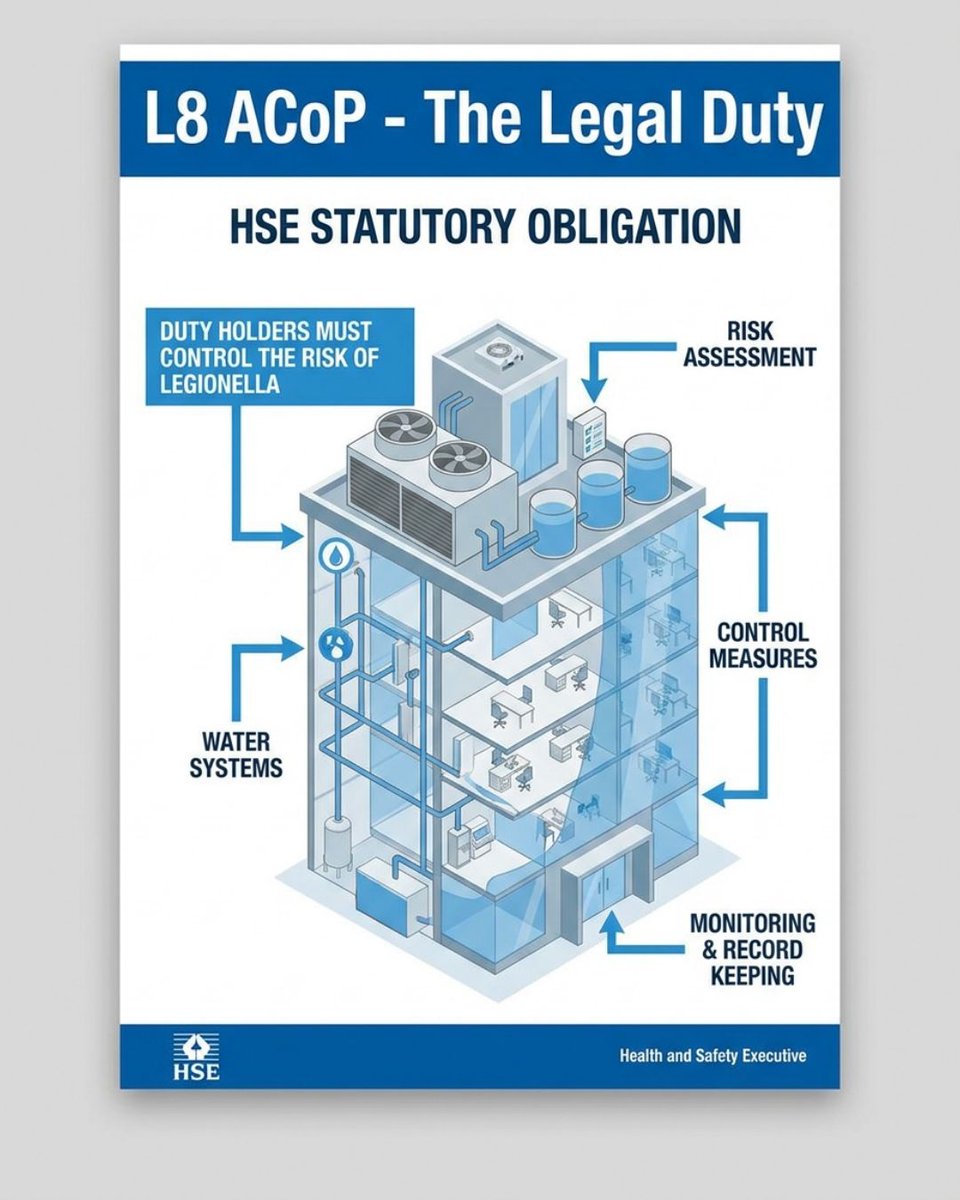
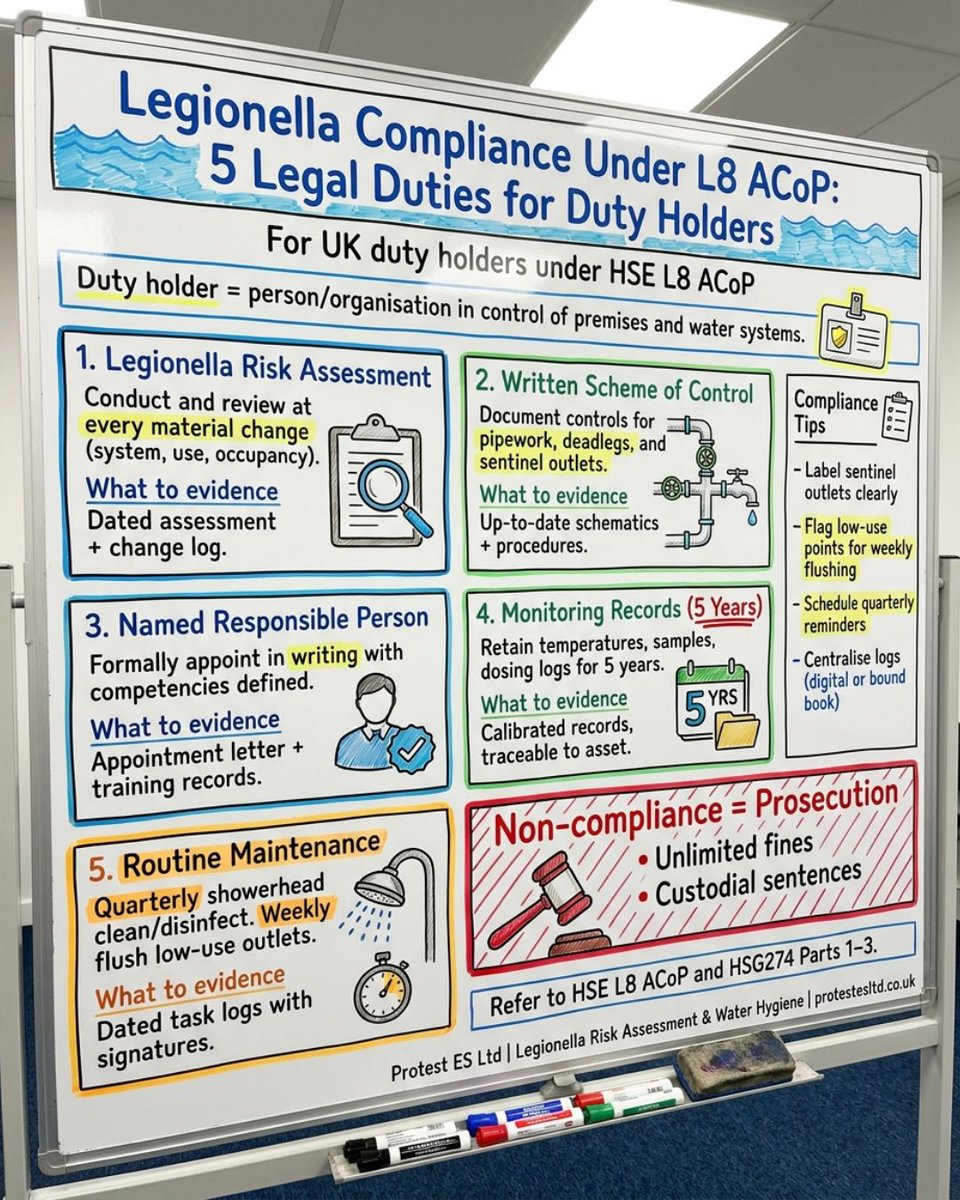
Under HSE L8, every duty holder with water systems must have a current Legionella risk assessment, a written control scheme, and monitoring records retained for 5 years. An outdated assessment is a criminal liability. #Legionella #WaterHygiene
1
6
42
A C1 code on your EICR means there is immediate danger present in your electrical installation. It cannot be left. Yet some commercial properties go years between inspections. That is not compliance. That is a liability.
1
4
8
73
Electrical compliance covers more than the EICR. PAT testing protects portable appliances. Thermal imaging identifies overheating connections before they cause fires. Emergency lighting must also be tested regularly. Each service has a legal purpose.
1
1
6
Protest ES Ltd provides full electrical compliance services across multi-site commercial estates. EICR, PAT testing, thermal imaging, remedial repairs and more. Find out more at protestesltd.co.uk #ElectricalCompliance #EICR #CommercialSafety
1
8