
Building @sektor13nft. Designer, programmer, collector.
Joined March 2021
- Tweets 962
- Following 731
- Followers 631
- Likes 2,330
262 Photos and videos










PseudoCode retweeted

May 2
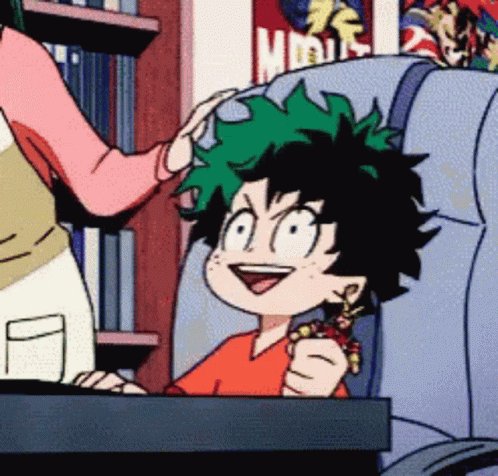
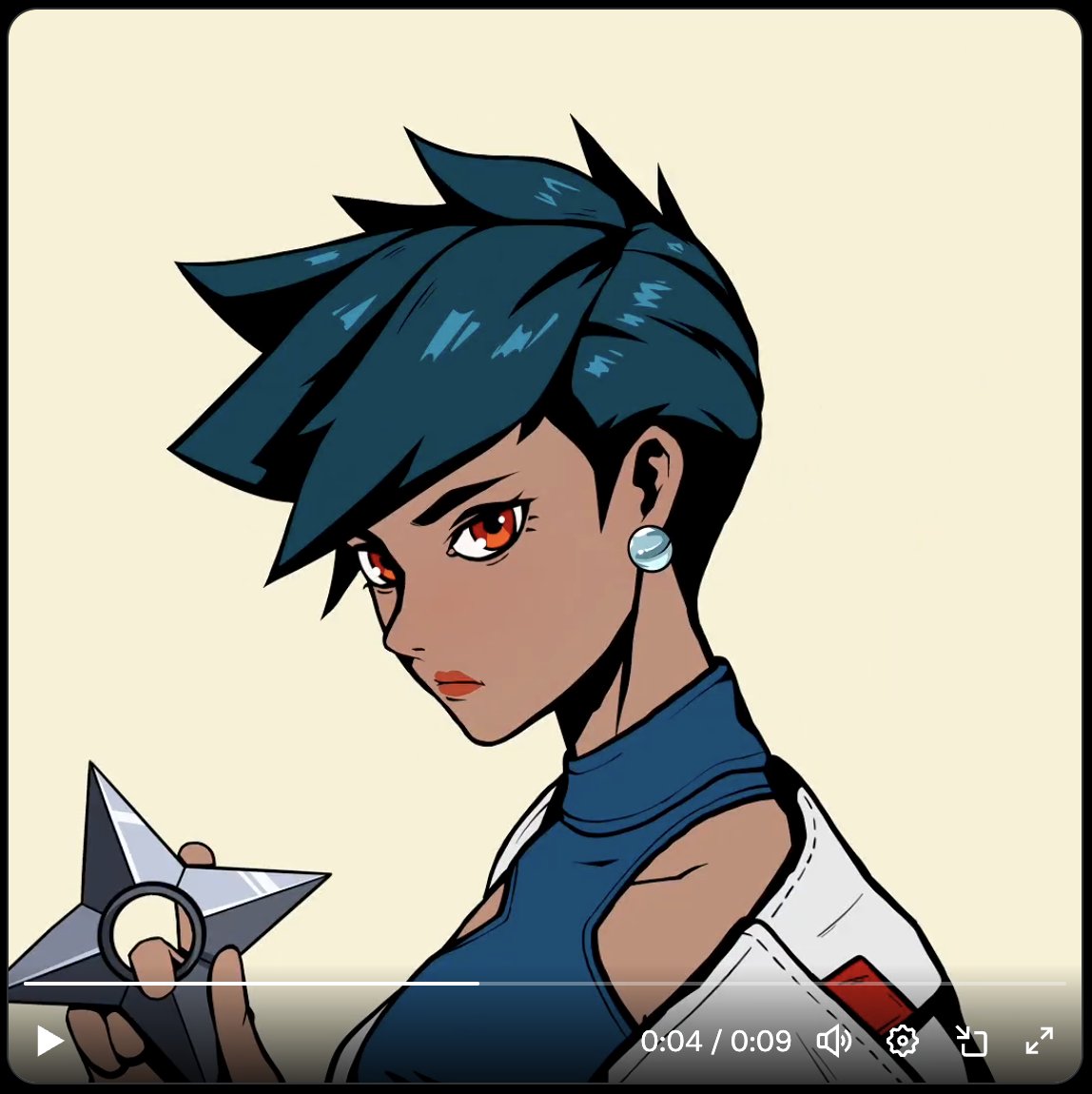
Inking one of our favorite panels for Chapter 0: Prelude.
Rough sketch to clean lines… that expression hits different. So what’s he reacting to?
Drop your wildest theory below 👇
Full chapter drops coming soon!
3
7
14
399
PseudoCode retweeted
Apr 21
Chapter 0: Prelude manga BTS - stay tuned for more!
5
8
20
518
PseudoCode retweeted
Feb 28
If you’re at @ComicConIndia Kochi today, stop by and get an exclusive sneak peek of our debut manga, Prelude!
1
2
17
391

Feb 20
What if your NFT had a personality?
Not just a JPEG you flex, but a character you can interact with.
That's where PFP collectibles are headed.
PFPs are already collectibles. They qualify through art, scarcity, community, and cultural moments.
But what truly strengthens their collectible status is the story and lore layer. Even when projects fade or get rugged, people remember fragments of the world, the motto, or the vibe.
Here's the problem.
PFP collectibles fail when they lack a persistence mechanism beyond teams and communities. Countless collections with killer art and solid lore became orphaned the moment the team went inactive or the community dissolved.
They had everything needed to be great collectibles. No permanence. No mechanism to outlive their creators.
This is where the personality layer changes everything.
Every PFP is a character in a universe. Each one has traits, a backstory, and a role in a larger world.
Imagine minting an NFT and the community creates a name, bio, and skill set for that character. You're no longer just collecting a JPEG. You're collecting a personality.
With AI, that personality can become an agent. Plug your PFP into a terminal, an app, and watch it come alive.
Picture this: your PFP is a cartographer from a forgotten kingdom. Name: Nigel. Bio: last keeper of lost trade routes. When you interact, Nigel speaks in character. It references routes from its world. It reacts based on what it remembers. That's not a chatbot. That's a personality tied to lore.
PFPs become like cartridges. Portable personalities rooted in a specific world.
This shifts the entire collectible model.
You're not just holding an avatar. You're collecting personalities with agency. Even if the original project dies, the character persists.
Art can fade. Communities can disappear. Personalities endure.
That's the future of PFP collectibles: living characters with memory, intent, and agency.
1
4
119
Feb 14
A collection is a preserved history. A record of taste and emotion, even long after the person is gone. That's how I see it.
2
68
Feb 12
Collector behavior isn't unique to digital collectibles.
The same patterns exist in sneakers, vinyl, comics, and trading cards.
Hoarder: Accumulates as much as possible with little filtering. Driven by emotional attachment and FOMO. Eg: Minting multiple drops regardless of quality, simply because they can't stop.
Investor: Collects with a long-term lens. Evaluates projects based on team execution, community strength, and growth potential over time. Eg: Holding drops from a story-based IP project, betting on the narrative expanding into new formats over the next few years.
Flipper: Buys and sells quickly to capture short-term price movements. Treats collecting like trading. Eg: Buying into a new drop and selling within hours of trading opening up.
Passionist: Collects because they genuinely love the subject, art, or story. Financial return is not the primary motivation. Eg: Drawn to IP worlds and story-driven projects, collecting purely for the meaning it holds, not the market.
Two more types worth noting, both still emerging in digital collectibles.
Completionist: Hunts every item in a defined set. Rare today, but will grow as projects release structured series and card drops.
Curator: Every piece is a deliberate choice. Mostly seen in digital art for now, but a natural evolution as collecting culture deepens.
In reality, most collectors don't fit neatly into one category. Most people shift between them over time. These aren't boxes to lock yourself into. They're traits you can recognize in yourself.
This isn't about division. It's about recognition.
The medium is different. The collector is the same.
1
2
80
Feb 11
"Collecting for ROI Isn't Wrong"
The digital collectible space has a gatekeeping problem.
We've created a false binary where you're either a "pure collector" who loves art for art's sake, or a "dirty flipper" who ruins culture. But the reality is far more nuanced. Collecting for ROI isn't wrong. It's one of many valid collecting philosophies.
Hoarders accumulate everything. Curators build small, high-quality collections. Completionists chase full sets. Investors evaluate long-term value. Flippers capture short-term opportunities. And many are hybrids, combining two or more approaches depending on what they're collecting.
Collectors have a responsibility in this too.
Understanding financial value is important, but it shouldn't be the only lens. Collectors who balance financial awareness with artistic, cultural, and personal meaning build collections that remain meaningful even when markets shift.
Collecting driven purely by profit leads to burnout and shallow engagement. When you anchor your collecting in something deeper, you create a healthier, more sustainable mindset that survives volatility.
On the builder side, projects need to design with collector categories in mind.
If you're launching an artist collection, investor collectors are watching the artist's growth and recognition. If it's a PFP project, they're evaluating community strength and retention. If it's IP driven, they're looking at narrative expansion and long term potential.
Different collectors evaluate value through different lenses. Understanding this helps projects measure growth and design for multiple motivations.
The digital collectible space is still new, and the concept of collecting is just starting to take hold.
Projects have an opportunity, and a responsibility, to teach, encourage, and convert people into collectors. Not by gatekeeping what "real collecting" looks like, but by respecting the full spectrum of motivations and designing systems that let people collect in ways that feel meaningful to them. That's how we build a culture that lasts.
3
82
Feb 9
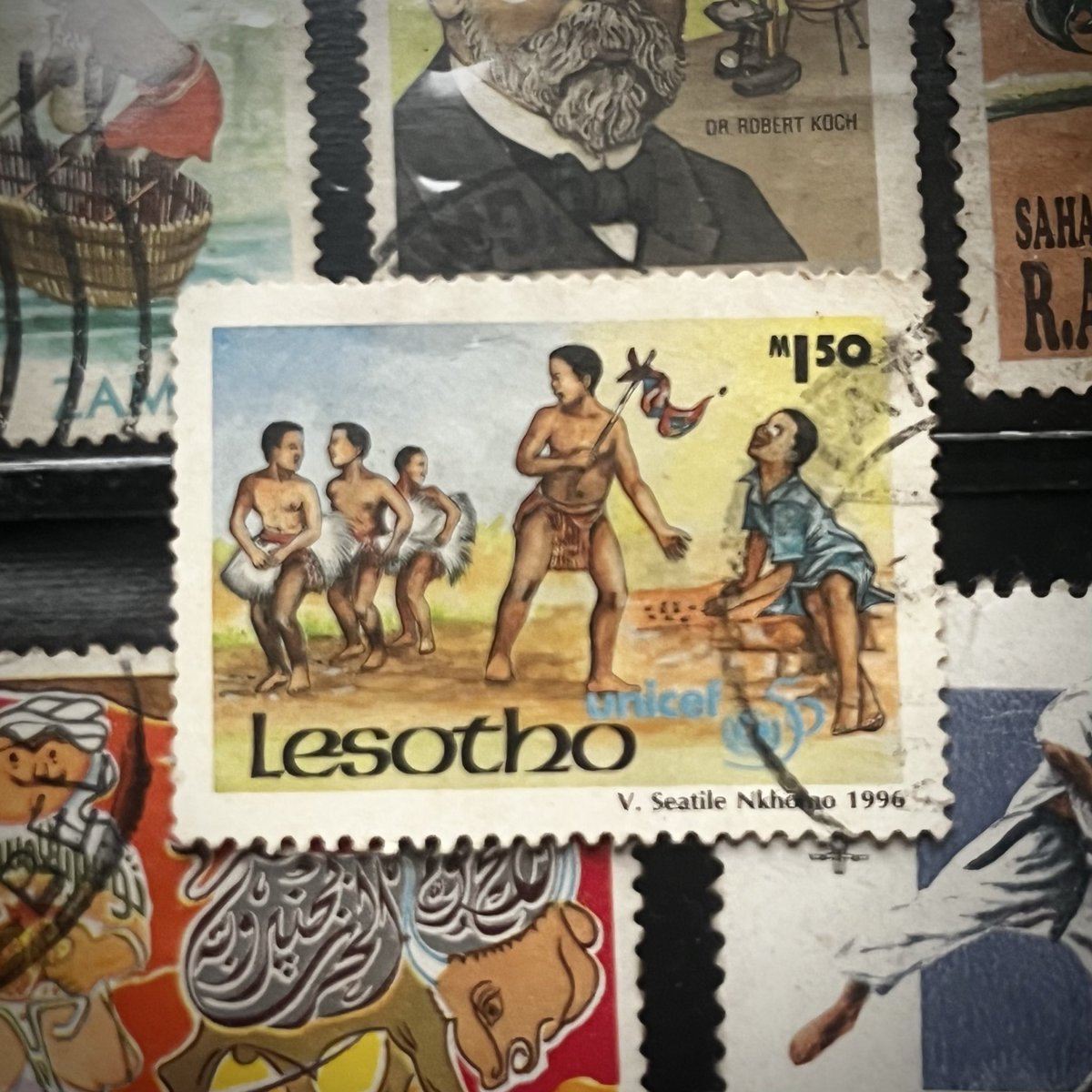
The Lesotho Stamp
I've been collecting things since I was a kid. Random objects that felt beautiful. No order, no meaning, just a human attaching to materials.
But my real collector journey started with postage stamps.
My elder cousin had a stamp album. I loved how it looked. The arrangement, the colors, the care. One day I asked if I could have it.
He didn't say no. He gave me a challenge instead: "Collect stamps from 50 countries. Show me the album. Then it's yours."
He told me to start with an atlas. Learn the countries. Learn where they are. Understand what I'm collecting before I collect it. At the time, it felt like a side task. Looking back, it was the foundation.
To collect something, you have to understand its relevance. Its connection to the world. Only then does it mean more than just an object.
The first 30 countries came easy. Friends, family, local exchanges. But the closer I got to 50, the harder it became.
I reached 49. Then waited. Months passed. I searched everywhere. Negotiated with other collectors. No luck.
Then one day, I visited a family friend. Sitting on their sofa, I noticed three books on the shelf labeled "Stamp Album." She showed me her collection. Beautiful stamps. Countries I didn't have.
I told her about the challenge. About being stuck at 49. She smiled.
As I was leaving, she said I could take one stamp from her duplicate collection, if I found a country I didn't have. I flipped through the pages. Almost everything was already in my album.
Then I saw it. Lesotho.
I asked if I could take it. She said yes.
That "yes" felt like a volcanic eruption. I went numb. Months of searching, finally over.
The next day, I showed my cousin. He laughed. "I don't even have Lesotho. You already have an edge over my collection."
Then he handed me his album. "This is yours now."
Before I left, he said something I still think about: "Stamp collection, or any collection, isn't just about holding things. It's about building awareness and relationship with them. The things you collect teach you about the world. Through 50 stamps, you learned geography, art, culture, people you've never seen. You learned order, care, and archiving. The book in your hand is a piece of history. Nothing is small."
Since then, I've collected music. CDs, cassettes, vinyl, to learn subculture and emotion. I've collected coffee table books to study aesthetics. And now I collect NFTs, learning about digital collectibles and what they mean for the future.
That same feeling from the Lesotho stamp? It still shows up. When I complete a set. When I get my hands on a record I thought I'd never find. When I mint art from a creator I respect.
Collecting isn't about ownership. It's about awareness. Relationship. Learning the world through objects that matter to you.
And that's why I'm still doing it.
1
3
131
Feb 6
Last week, I bought some collectibles, and @KPRVERSE is one of them. I've wanted it in my collection for a long time, and I finally pulled the trigger.
I love the quality. The art style, the world they're building, and the storytelling. Their website - one of my favorites in the Web3 space.
I think they're one of the most underrated. It's rare in crypto to find projects that have quality and are still actively building. KPR has both.
I've been following them for a while. Saw it pop up, recalled the New Eden project, and went for it before I got distracted. Will be adding more.
12
4
30
752
Feb 6
What if the mint wasn't the finish line? What if it was the entry point?
NFTs work best as infrastructure for long-term collectorship, not endpoints. You're creating the first artifact in an expanding IP ecosystem.
Imagine that: A collector mints a character. That's touchpoint one. They collect manga and art that expands the world. The story deepens. They participate in on-chain quests that unlock exclusive lore. The universe opens up. They collect digital cards and earn stamps as they progress. The collection grows.
The NFT isn't isolated. It's woven into a world that keeps expanding.
This is how you shift culture from flipping to collecting. Build systems where engagement compounds, and the mint is just where the collector's journey begins.
1
6
97
Feb 4
I agree with the hypothesis about the shift from UI-based interactions to API-first for closed networks.
But here's my hypothesis: the bigger shift is coming at the operating system's application layer.
Right now, we juggle between apps. Want to order food? You open DoorDash, Uber Eats, or whatever else you have installed. Each app is a separate interface with its own login, UI, and friction.
The OS application layer becomes agentic. Starts with a standard template for apps, then the system personalizes it for you. Or even generates tailored applications on demand. You say "order food" - the OS builds the interface, abstracts the providers, and asks questions that make sense: "Fastest delivery? Most cost-effective? Most convenient?"
App consolidation. Service abstraction. The user stays in one place.
This isn't just voice commands. Some decisions need visual context. You'll interact through both audio and visual layers depending on what the task requires.
Feb 4

vibe coders should understand something:
i love how easy AI is making it for people to build their own apps, push them into production, and start businesses
but let's be clear: the future is not in humans building consumer-facing apps
the future is everything becomes an API which your personal AI agent can interact with in ways which suit your specific needs and lifestyle (down to the very specific needs of you as an individual)
the fact that you can use the machines to build your apps is just an intermediate step to the machines creating the apps for you, LIVE, as you need them
so the value of you learning how to build apps now really lies in you learning how to create a business model behind that app- not in creating the piece of software that is the app itself
sure, there will be templates for how you can interact with those apps/APIs, but your personal AI will pick one and tailor it even further for you. and a lot of the time, you won't even need to interact with a UI beyond speaking with your AI assistant
let me give you an example: would you rather use an app like Uber or Uber Eats, or would you rather just ask your AI assistant to get you a ride somewhere or to show you menus for the type of food you might be interested in and you pick one? the value in apps like that is not in the app installed on your phone. it's in the backend business model which connects the customer with providers. and personal AI assistants actually open the door to you being able to seamlessly use multiple business APIs without worrying in the slightest about which app or intermediate provider they come from
there is a decent chance apps as you know them will be mostly dead in ~5-10 years
and yes, there are some apps which will still require deep optimization and that is where the hardcore coders may still be needed. but machines will get better at that, and if you take one look at the AAA gaming landscape, you should understand that hyper-optimized code isn't as valuable as it used to be
but what will be valuable is owning the APIs with the most use and liquidity. and yes, a lot of those will use public blockchains
things are going to accelerate and get very weird very quickly from here
4
110
Feb 4
Failed story-driven NFT projects will become rarities - like vinyl records and cassettes.
I don't care if a project succeeds or fails. Over time, those failed projects become obscure. Sometimes they get rediscovered years later. Sometimes they just stay buried.
Either way, they become rare.
I still collect postage stamps. I own stamps from countries that don't even exist anymore. You can still find them, but hunting down specific ones takes real time - days, months, even years.
I have an unfinished bird-themed stamp set from Montserrat that I've been chasing for a while now.
That's the kind of collecting I'm drawn to. They once represented value, created by someone spending hours to craft them. Success or failure, the effort still exists. And my respect for creators and builders runs deep.
I see the same pattern forming in NFTs.
1
1
7
103
Feb 3
Story-driven NFT projects are the most interesting to me as a collector.
They're built around lore, characters, and worlds, which means they can release collectibles in different formats over time: digital, physical, phygital. The story can expand in multiple directions. Characters can grow and evolve.
Even artist-driven projects often work this way. The artist's story and mindset become the lore, and each piece reflects that world.
As a collector, that's what I want. Something with enough depth to build a collection around, not just a single drop.
5
1
10
140
Feb 2
As a founder in Web3, I'm loving what's happening in the NFT space right now.
The hype storm left. The extractors moved on. What remains are builders curating thoughtful emotional experiences that leave a mark in users' memory.
While one group says "NFTs are dead," another group sees it differently: NFTs aren't dead. They're just shifting from financial speculation to what they were always meant to unlock - digital collectibility, emotional connection, story, and ownership beyond the trade.
For collectors, that means less noise. Time to follow projects that matter - connect with community, collect drops, engage with the experiences being built, and ultimately enjoy it.
For builders, this is the moment. The users looking at NFTs right now are golden users. They're here for the right reasons. Together, builders and this user group can establish the foundation for what NFTs actually become - not what hype made them look like.
Build quality with time and skill. Experiment.
5
72
Feb 1
Vibe coding is for coders.
But it can be for non-coders too.
I've seen people with zero coding experience build websites, real tools, simple utilities, and actually use them every day.
And that's the point.
4
72
Jan 30
Builders, stop calling them NFTs.
Call them digital collectibles. Or better yet, just collectibles.
The term "NFT" is a barrier.
It signals technology before it signals value. It asks people to understand the implementation layer before they even care about what they're collecting.
Abstraction drives adoption.
Google login didn't win because it explained OAuth. It won because it removed friction. You don't think about authentication protocols. You just click a button.
Same applies here. People don't care about the tech.
They need to understand what it is and why they might want it.
And people already understand collectibles.
They've collected trading cards, stamps, pins, posters at some point in their life. That mental model exists.
"NFT" does not.
So why do we keep using it?
Some will say we need the term to signal what makes these different. Verifiable ownership, scarcity, permanence.
But do normies care about that upfront? No. They care about the thing itself.
Let them fall in love with collecting first.
They'll discover the perks along the way. Ownership and provenance become the reward, not the entry requirement.
The shift happens over time.
If builders stop branding their work as "NFT projects" and the community stops defaulting to "NFT" in conversation, the narrative changes.
Slowly. Naturally.
It's not rebranding for the sake of optics.
It's removing unnecessary cognitive load so people can focus on what actually matters: the art, the story, the experience.
Meet people where they already are.
Stop asking them to learn a new term first.
3
3
110
PseudoCode retweeted

Jan 21
The moment where the apotheosis was officiated.
Our main IP based on the world and lore will be titled "Sektor13: Apotheosis".
@sektor13nft is steadily spreading its wings.
2
3
9
158