October 16-18, 2026 | Sedona, AZ - The researchers. The explorers. Your people. The Future Is Ancient.
Joined March 2021
- Tweets 634
- Following 197
- Followers 746
- Likes 352
309 Photos and videos
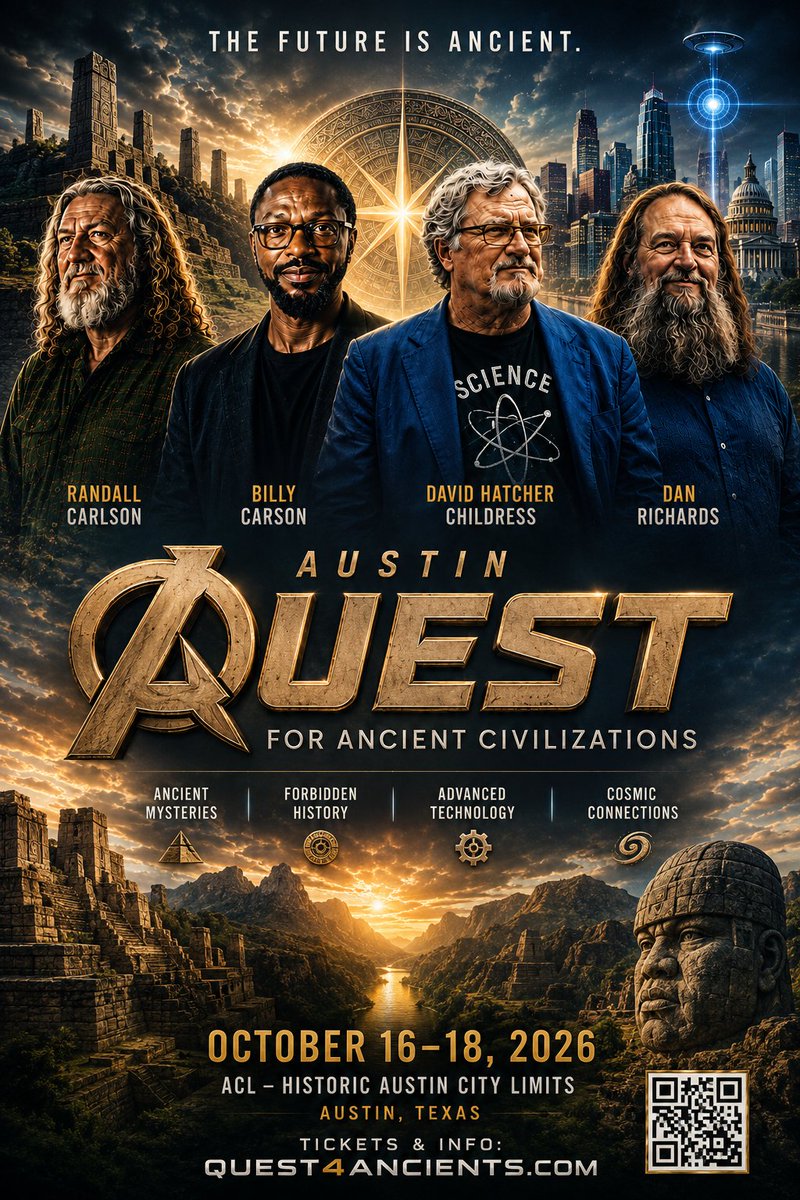

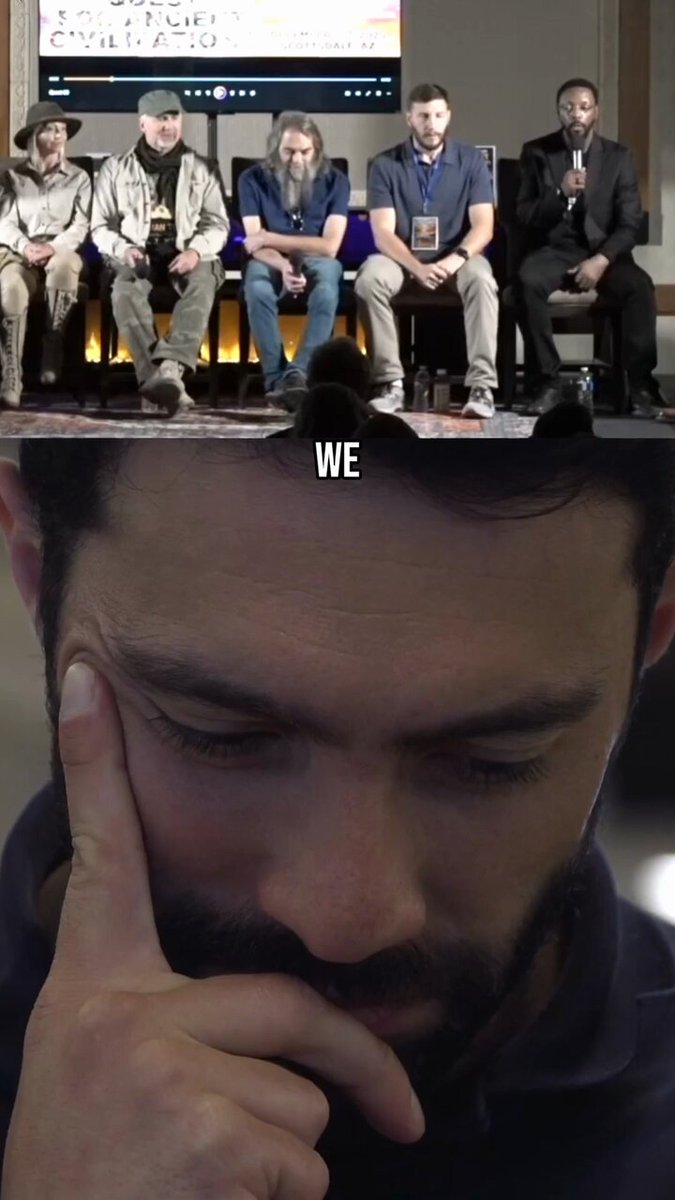

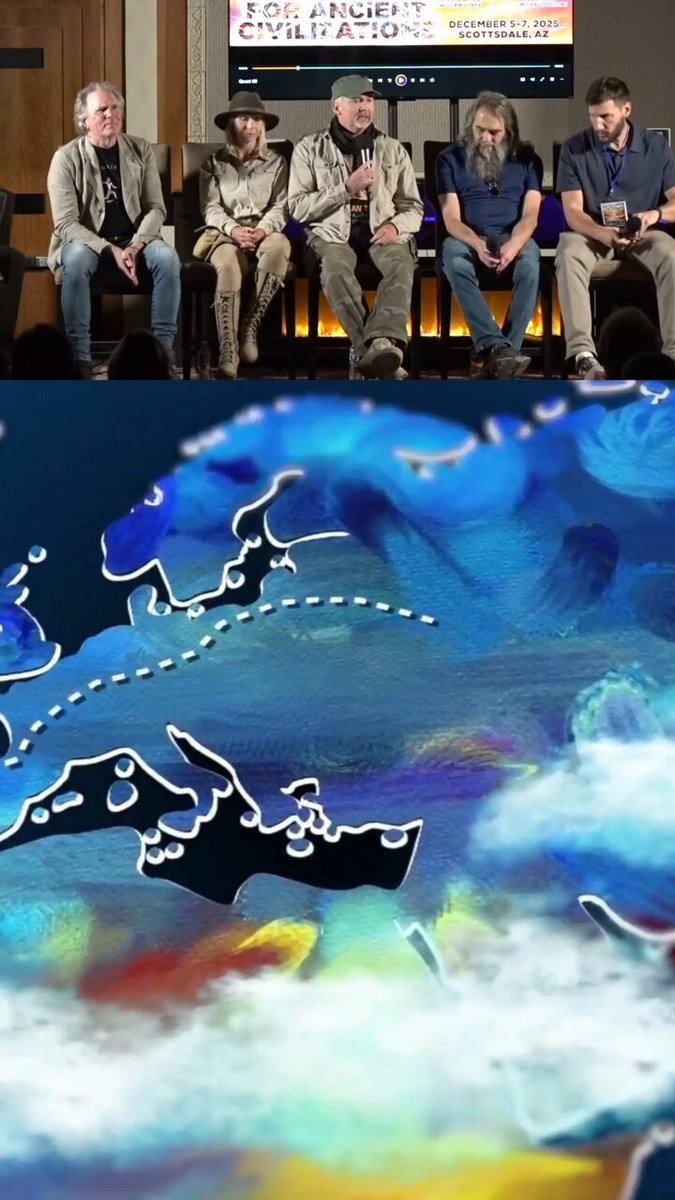

The Future Is Ancient.
Austin Quest for Ancient Civilizations Oct 16–18, 2026 · Historic Austin City Limits
David Hatcher Childress Randall Carlson Billy Carson Dan Richards and more TTBA
3 days. One stage. The conversation the field has been waiting for.
quest4ancients.com
4
57
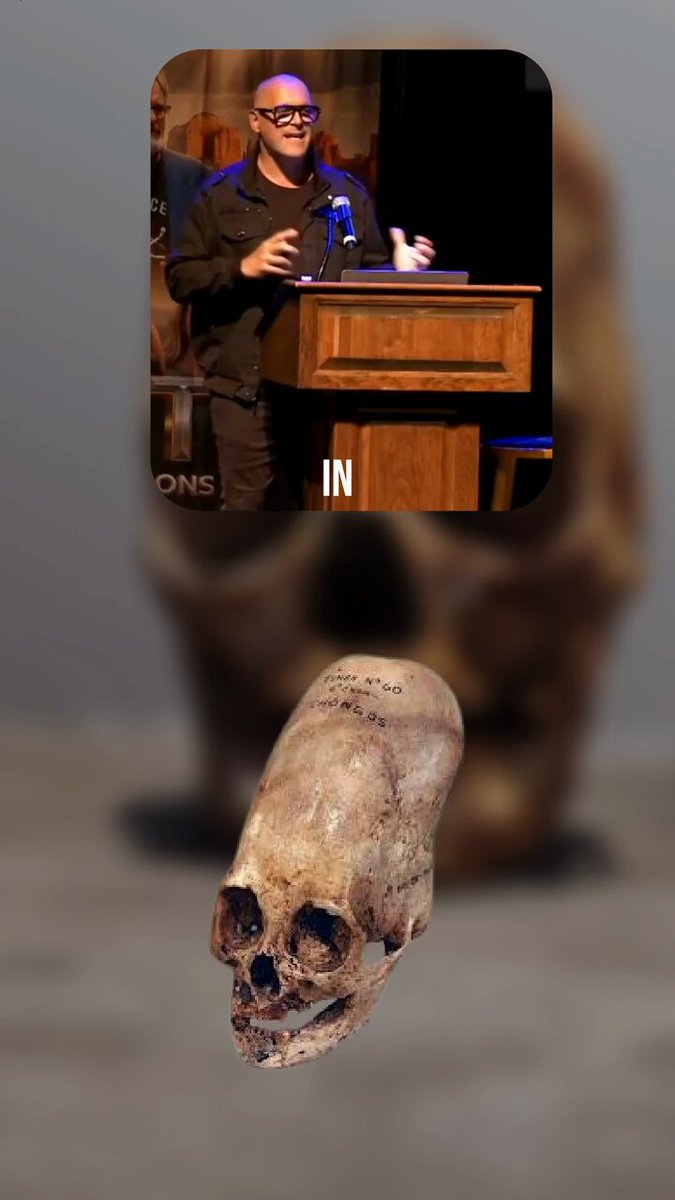
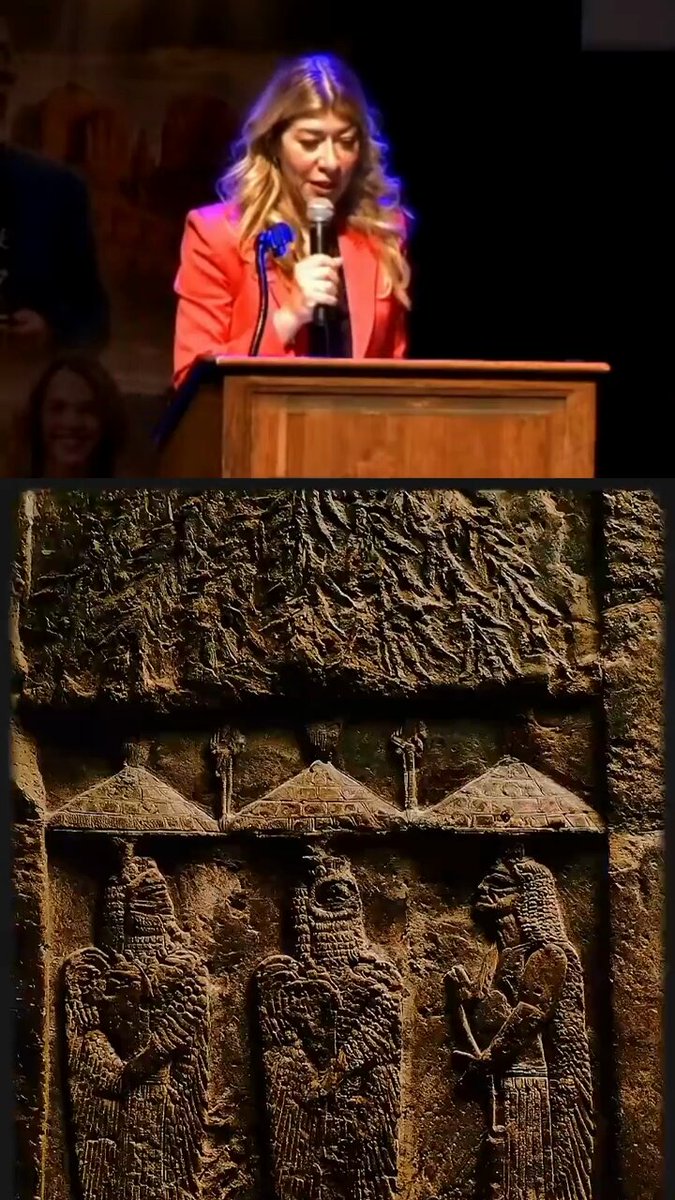
In the 1920s archaeologists began uncovering vast caches of skeletons along the west coast of Peru near Paracas - and among them were some of the most dramatically elongated skulls ever found on Earth. Since those initial discoveries, countless more have been recovered across Peru and Bolivia, ranging in age from approximately 1000 to 3000 years old. The mainstream explanation is swift and consistent - cradle head boarding, the practice of binding an infant's skull to artificially elongate it over time. Nothing to see here.
Derek Olson accepts that cradle head boarding existed and was widespread - that is not in dispute. What he argues is that in Peru specifically, two distinct phenomena are present simultaneously and are being conflated. There are artificially modified skulls produced by head boarding - and Derek’s interpretation of why that practice was so prevalent is itself significant. He believes the artificial modification was an attempt by ordinary ancient humans to emulate a hybrid ruling elite whose skulls were naturally elongated - not artificially produced but biologically distinct. The head boarding tradition, in this framework, was not the origin of the elongated skull phenomenon. It was a cultural response to it - ordinary people reshaping their children's skulls to resemble the appearance of the beings at the top of their social hierarchy.
1
4
161
Catch up on all the action you missed at Quest for Ancient Civilizations in Sedona this past weekend: youtube.com/@Quest4Ancients/…
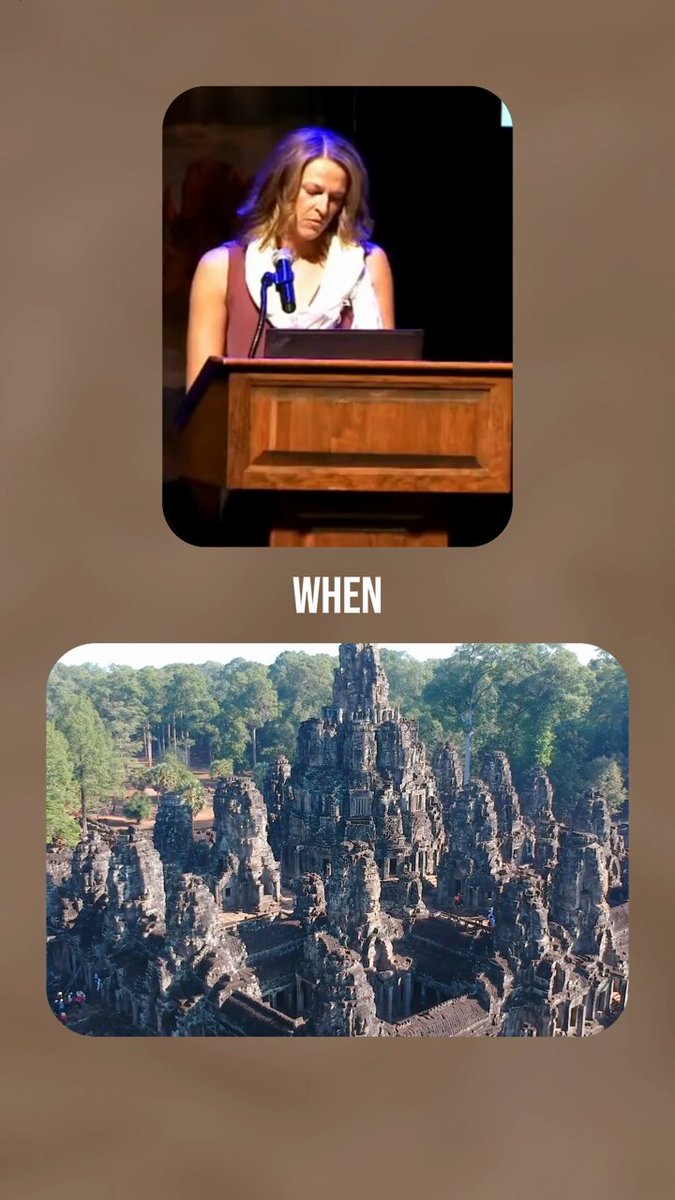
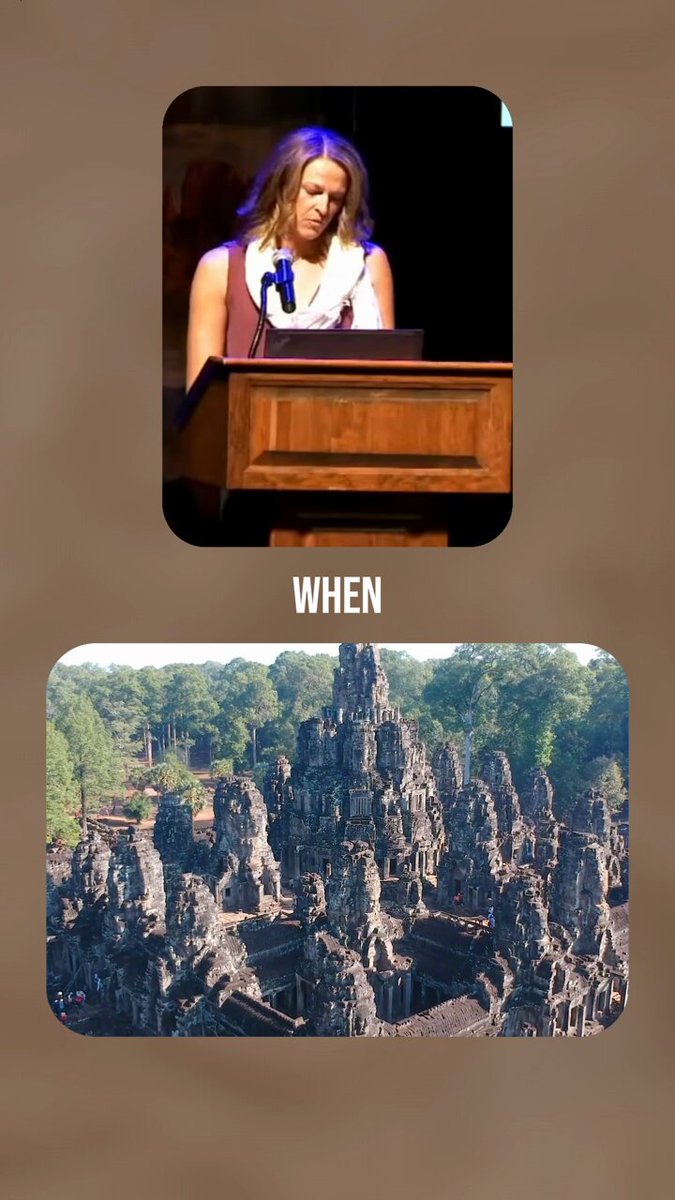
When most people think of ancient Cambodia they think of Angkor Wat - and perhaps the stone faces of the Bayon temple or the dinosaur carvings of Ta Prohm. Cassie Coppersmith argues that those landmarks, extraordinary as they are, represent only the most visible fraction of what ancient Cambodia actually contains. More than 4000 temples are distributed across the country - some built with straightforward engineering, others displaying a level of complexity and sophistication that is anything but simple.
Among the least discussed features of ancient Cambodian construction are its eight major pyramids. Three, five, or seven tiered structures built from sandstone and laterite, with stairs running up their sides and towers constructed on top - a pyramid tradition that has been almost entirely absent from the popular understanding of Cambodian archaeology. Cassie acknowledges exactly why that gap exists. When these structures are largely ignored and undifferentiated in academic research, the public has no framework to know they are there. The sheer scale of ancient construction across Cambodia - and the engineering sophistication visible at its most complex sites - represents a body of evidence that Cassie argues deserves a level of attention it has never received.
1
2
115
Catch up on all the action you missed at Quest for Ancient Civilizations in Sedona this past weekend: youtube.com/@Quest4Ancients/…
When most people think of ancient Cambodia they think of Angkor Wat - and perhaps the stone faces of the Bayon temple or the dinosaur carvings of Ta Prohm. Cassie Coppersmith argues that those landmarks, extraordinary as they are, represent only the most visible fraction of what ancient Cambodia actually contains. More than 4000 temples are distributed across the country - some built with straightforward engineering, others displaying a level of complexity and sophistication that is anything but simple.
Among the least discussed features of ancient Cambodian construction are its eight major pyramids. Three, five, or seven tiered structures built from sandstone and laterite, with stairs running up their sides and towers constructed on top - a pyramid tradition that has been almost entirely absent from the popular understanding of Cambodian archaeology. Cassie acknowledges exactly why that gap exists. When these structures are largely ignored and undifferentiated in academic research, the public has no framework to know they are there. The sheer scale of ancient construction across Cambodia - and the engineering sophistication visible at its most complex sites - represents a body of evidence that Cassie argues deserves a level of attention it has never received.
1
3
137
Quest for Ancient Civilizations in Sedona was one for the books. Catch up on the full weekend right here: youtube.com/@Quest4Ancients/…
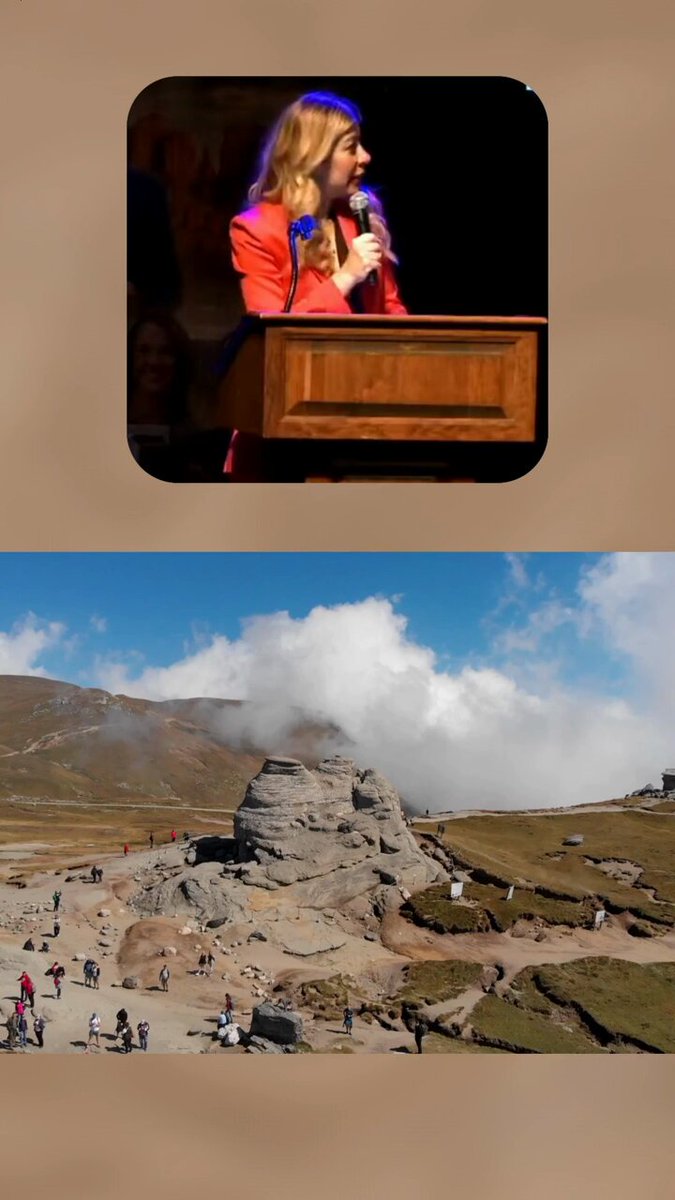
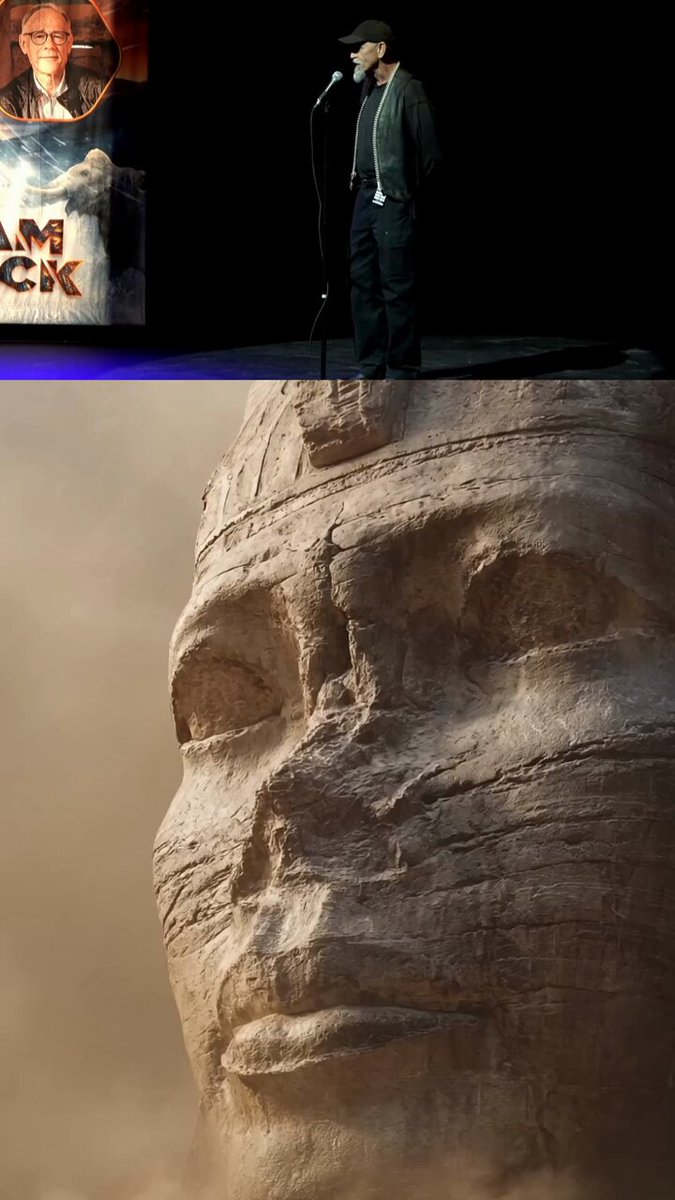
The formation now known as the Romanian Sphinx received that name only in 1931 - given because of its resemblance to the Egyptian Sphinx. Before that name arrived it was called Babele - part of a megalithic stone complex whose individual formations all carried the same designation. The Babele of Romanian and Eastern European folklore are not simple mythological figures. They are wild, world wise women - powerful, fearsome, and operating at the intersection of human and something beyond human. Mythological creatures and witches in the folkloric sense, but carrying a weight and significance that suggests the name was attached to these stones for reasons that went deeper than casual resemblance.
Oana Ghiocel’s encounter with a forensic specialist who reconstructed early human appearances from physical evidence produced a conclusion that reframes the entire site. The specialist examined photographs of the Romanian Sphinx and arrived at a specific assessment - what the formation resembles is not a stylized modern human face but an early human simulacra. Possibly a Neanderthal simulacra. The forensic eye trained to reconstruct ancient human morphology from skeletal evidence looked at the stone and saw something that predates modern human facial architecture entirely. Whether the resemblance is natural or deliberate - whether the Babele complex represents a geological accident or an intentional ancient creation - the forensic conclusion opens a question about the Carpathian region that Oana argues deserves considerably more serious investigation than it has yet received.
1
6
142
Couldn't make it to Sedona for Quest for Ancient Civilizations? All the action from this past weekend is waiting for you here: youtube.com/@Quest4Ancients/…
The ancient stone alignments scattered across the globe - from Peru to Egypt to Easter Island to Europe - have been studied individually for generations. Oana Ghiocel asks the question that shifts the entire framework. What if they are not separate local traditions? What if they are expressions of a single forgotten global skywatching system - a coordinated or commonly inherited understanding of the sky that connected cultures across continents long before any of the civilizations we recognize as ancient had yet emerged?
The implications of that possibility are precise and extraordinary. If the alignments share a common underlying system, that system had to predate the cultures that built the structures expressing it. And if it predates all known civilizations - if its origin sits in a period before the earliest records of organized human society - then everything the conventional timeline says about when sophisticated astronomical knowledge first appeared has to be reconsidered entirely. The ancient sky was not simply a canvas for mythology. It was being watched, measured, recorded, and encoded in stone by people whose identity, culture, and knowledge we have not yet fully understood. Oana’s conclusion is unambiguous. If that system is as old as the evidence suggests - it changes everything we know.
1
4
6
126
Couldn't make it to Sedona for Quest for Ancient Civilizations? All the action from this past weekend is waiting for you here: youtube.com/@Quest4Ancients/…
Two threads converge in this passage that Luke Caverns finds genuinely exciting. The first is an iconographic anomaly he encountered while researching Mississippian culture - artifacts depicting spotted panthers or mountain lions that, on closer examination, look considerably more like jaguars. The jaguar is not native to the Mississippi Valley. Its presence in the artistic tradition of a North American culture raises questions about the extent of ancient contact networks between Mesoamerica and the Mississippi world that archaeology has not adequately resolved.
The second thread is technological. Lidar - the aerial laser scanning technology that has already transformed our understanding of sites hidden beneath jungle canopy in Central America and Southeast Asia - is becoming rapidly more affordable. Luke and his colleagues are currently working to secure permission for what would be the largest Amazonian lidar scan ever conducted. The potential for that kind of survey to reveal previously unknown settlement patterns, infrastructure, and civilisational complexity in the Amazon basin is significant. And the speed at which independent researchers can move - unburdened by institutional bureaucracy, grant cycles, and academic consensus management - means that the frontier of archaeological discovery is increasingly being pushed by people working outside the traditional structures.
70
Quest for Ancient Civilizations in Sedona was one for the books. Catch up on the full weekend right here: youtube.com/@Quest4Ancients/…
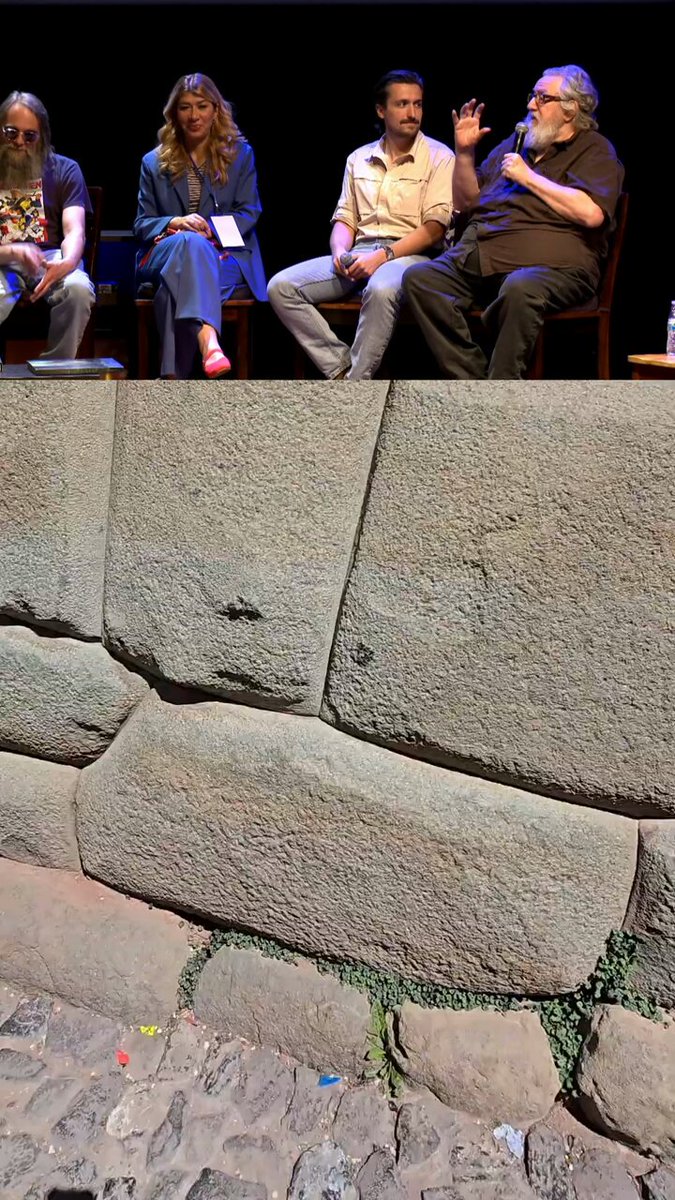
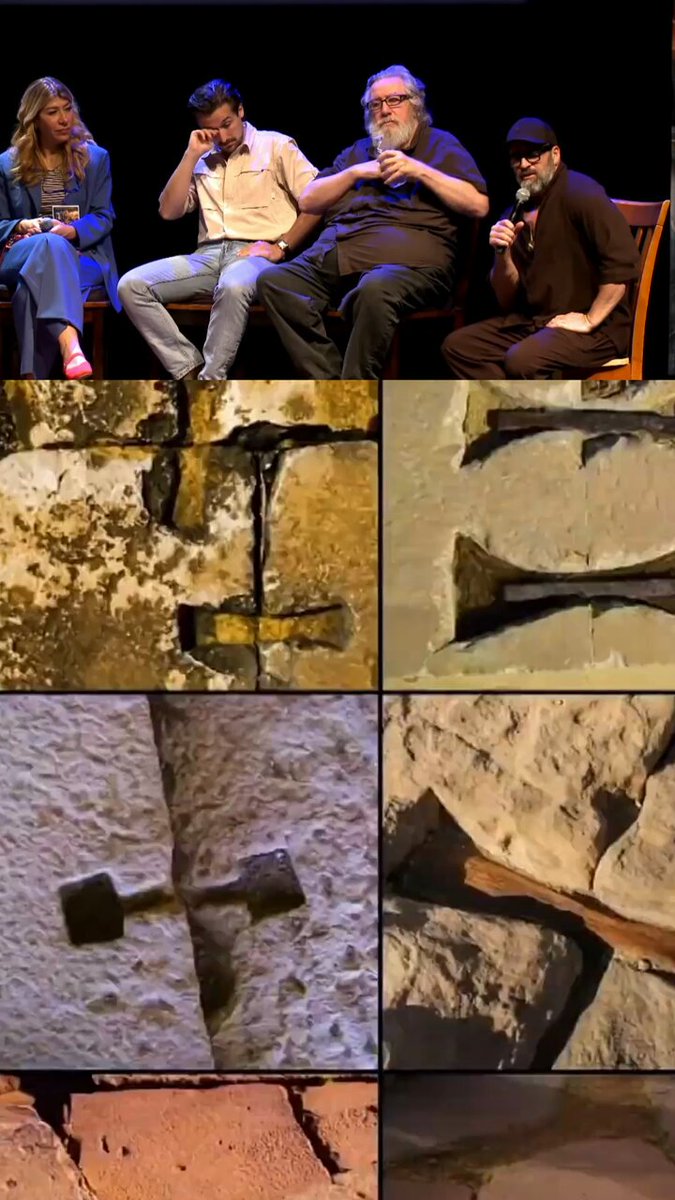
The interlocking stonework visible at Sacsayhuamán and Cusco in Peru has a counterpart at sites distributed across the entire surface of the planet - and Randall Carlson argues the similarity is too specific and too consistent to be explained by independent parallel development.
What his own decades of research and study have convinced him of is the existence of a global builder culture operating across at least 4,000 to 5,000 years within the historical framework - groups of highly skilled builders working not from locally developed traditions but from a shared template. The same jointing techniques, the same proportional systems, the same approach to fitting massive stones without mortar appear at sites separated by entire oceans. As data continues to accumulate from ancient sites worldwide, Randall finds the case for a common underlying tradition becoming progressively harder to dismiss. The builders were not isolated. They were connected - and whatever connected them has been hidden in plain sight on the walls of monuments that have been standing for millennia.
1
3
102
Quest for Ancient Civilizations in Sedona was one for the books. Catch up on the full weekend right here! 👇
youtube.com/@Quest4Ancients/…
Cassie Coppersmith frames the current moment in alternative history research with genuine optimism. Technology is advancing at a pace that is compressing the timelines on discoveries that would previously have taken generations to unlock. The decipherment of the rongorongo script of Easter Island - one of the last undecoded writing systems in the world - is something she considers a realistic possibility within the next decade, driven by AI pattern recognition capabilities that simply did not exist until recently.
The broader point she makes is about the value of the conversation itself. Not every discovery will be provable. Some will remain frustratingly out of reach regardless of how sophisticated the tools become. But the fact that people are debating online whether a second Sphinx exists - genuinely engaging with the question, arguing about the evidence, forming opinions based on satellite radar data - is, in her view, exactly the kind of intellectual culture worth cultivating. It is a far better use of collective human attention than the alternative.
1
48
Missed Quest for Ancient Civilizations in Sedona this past weekend? Catch up on everything right here! 👇
youtube.com/@Quest4Ancients/…
Across ancient sacred sites worldwide, Jason Young Stiles identifies a consistent pattern that he argues is too precise and too repetitive to be coincidental. Location is the first element. These sites are placed on ley lines - the magnetic grid lines that criss-cross the Earth's surface - and specifically at the points where those grid lines intersect. At those intersections, a natural amplification effect occurs, producing what Jason describes as a vortex of scalar longitudinal electromagnetic energy. Building a temple on that point does not simply situate a structure at an energetically active location. It amplifies what is already there.
The second element is the consistency of construction across cultures and continents - the materials chosen, the geometry employed, the proportional systems applied. These choices are not aesthetic. They are functional, selected specifically to interact with and focus the energy present at the site. The pattern connecting these sites to each other, and the further connection Jason draws between Earth's ancient civilisations and civilisations from beyond - expressed through the principle of as above, so below - suggests to him a shared knowledge base operating across the ancient world that went far beyond what isolated cultures could have independently developed.
1
3
72
Quest for Ancient Civilizations in Sedona was one for the books. Catch up on the full weekend right here! 👇
youtube.com/@Quest4Ancients/…
The question of what the second Sphinx's head might look like is one Billy Carson finds genuinely compelling - and genuinely unanswerable at this stage. A lion, a man, a ram, or something else entirely are all possibilities, and without physical access to the structure, any answer is speculation.
What makes the question more interesting is what we already know about the existing Sphinx. The evidence strongly suggests it was recarved at some point - a larger, earlier face reduced to the smaller human face visible today. If the same principle applied to a second Sphinx, the head it currently presents may not be the head it was originally given. Billy notes with characteristic dry humour that Zahi Hawass will probably be the one to officially discover it first regardless - but the underlying question of what face looks back from that second structure, assuming it exists, is one worth sitting with.
1
2
87
Catch up on all the action you missed at Quest for Ancient Civilizations in Sedona this past weekend: youtube.com/@Quest4Ancients/…
Dan Richards applies a sceptic's framework to a question that sceptics tend to dismiss without running the actual logic. If you accept the premise that life exists somewhere in the universe - a position most scientifically literate people hold - then you have already accepted that civilizations have arisen elsewhere. The question becomes where the nearest one is most likely to have been. Dan's argument is that Mars, sitting directly adjacent to the planet that produced life and harbouring organisms like tardigrades that could survive interstellar transit, is statistically a far stronger candidate for a prior civilisation than any randomly selected planet in a distant solar system. The dismissal of the Mars hypothesis is not driven by probability. It is driven by discomfort.
He applies the same logic to phenomena like ley lines and crystals. The standard sceptical response is to label these as woo and move on. But the cross-cultural universality of crystal use across every human civilisation that has ever existed is itself a data point that demands an explanation. When every independent culture on Earth gravitates toward the same materials independently, the rational question is not whether that pattern is real - it clearly is - but what it means.
1
1
43
Catch up on all the action you missed at Quest for Ancient Civilizations in Sedona this past weekend: youtube.com/@Quest4Ancients/…
Billy Carson ran a social experiment - spending an hour tracing the accounts of people who liked and commented positively on his content. What he found was striking. The majority had no posts of their own, private accounts with a handful of uploads, or no profile picture at all. These are not disengaged people. They are deeply engaged people who have not yet found the courage or the context to speak publicly about what they are privately interested in.
The implication is significant. The audience for this material is far larger than the visible metrics suggest. For every person actively creating and sharing content about ancient history, suppressed knowledge, and alternative perspectives, there is a much larger number absorbing it silently - inspired enough to engage, but not yet ready to step into their own truth publicly. Billy's argument is that the solution is not to reach those people with better content. It is to have more people model what it looks like to speak openly - because every additional voice that does so lowers the threshold for the next one, and the cumulative effect of many small contributions becomes something much larger than any individual piece of the puzzle.
1
48
Catch up on all the action you missed at Quest for Ancient Civilizations in Sedona this past weekend: youtube.com/@Quest4Ancients/…
Dan Richards identifies a strategic problem that the alternative history community has not yet solved. Content that resonates with existing believers generates views, revenue, and engagement - but it does not move the needle with the people who most need to be reached. Viral clips and short-form video are effective at reinforcing what the converted already believe. They are not effective at persuading the sceptical majority that has never been presented with this material in a form they can take seriously.
The internal fragmentation compounds the problem. The alternative community holds a wide range of views - on Atlantis, on non-human intelligence, on ancient technology - and the disagreements between those positions are real. But Dan's point is that those disagreements, aired publicly, make the community look like a herd of cats to any outside observer trying to assess its credibility. The more productive frame, he argues, is to recognise the common ground - and the common adversary. Whatever internal differences exist, every researcher in this space is approximately the same distance from being dismissed or smeared by the institutional gatekeepers. That shared vulnerability is the argument for strategic unity over factional point-scoring.
41
Quest at Sedona is LIVE - from 10am MST - 2nd & 3rd May. Catch the action on the FREE Livestream: youtube.com/live/J3x0-0De-ZM
The relationship between ancient peoples and what Hugh Newman calls the elemental realm - the beings known across different traditions as fairies, gnomes, sprites, and related entities - was not, in his reading, mythological decoration. It was a practical and daily form of communication with nature, embedded in ordinary life in ways that institutional Christianity systematically dismantled. The suppression of that tradition went hand in hand with the suppression of psychic development in children - two aspects of the same project of severing the human relationship with the non-ordinary dimensions of the natural world.
Hugh acknowledges that this sounds unusual to a modern audience. Then he offers his context. He lives next door to Stonehenge. There is a burial mound fifty yards from his front door. Poltergeist activity is a recurring feature of daily life in that environment. When you inhabit a landscape saturated with that kind of presence, the elemental realm stops being an abstract concept and starts being something you encounter. What the ancient world built its relationship with nature around, Hugh argues, was real - and the absence of that relationship in contemporary culture is not progress. It is a loss.
1
2
75
Quest at Sedona is LIVE - from 10am MST - 2nd & 3rd May. Catch the action on the FREE Livestream: youtube.com/live/J3x0-0De-ZM
The hostility between sceptical thinkers and those working outside the mainstream consensus is, in Dan Richards's view, one of the most counterproductive dynamics in the entire alternative history conversation. He includes himself in the diagnosis - catching himself getting angry at people he probably should be trying to understand instead.
His argument is evolutionary rather than diplomatic. Both modes of thinking - the rigorous, evidence-demanding sceptical approach and the pattern-seeking, boundary-challenging imaginative approach - developed in human cognition because both were beneficial. They are not opposing defects. They are complementary capacities that have worked together to carry the species to its current position of dominance on this planet. The critical and the creative have always needed each other. Framing one as the enemy of the other does not advance the search for truth. It just generates heat without producing light - and the people most invested in keeping the mainstream consensus intact are the primary beneficiaries of that distraction.
55
Quest at Sedona is LIVE - from 10am MST - 2nd & 3rd May. Catch the action on the FREE Livestream: youtube.com/live/J3x0-0De-ZM
Billy Carson draws on ancient texts that describe a deliberate technique used by advanced beings to fragment human civilisation - a divide and conquer strategy whose most vivid expression in the historical record is the Tower of Babel. Before that event, humanity was working in collective coherence toward shared goals. After it, languages were confused, populations were scattered across different regions of the world, and distinct racial identities were imposed. What had been unified became fractured - and has remained fractured ever since.
The modern expression of that fragmentation, Billy argues, is the identity system every human being is born into. A name, a race, a religion - assigned before you are old enough to question any of them, and then defended for the rest of your life as if they were who you actually are. Most people never step outside that framework long enough to ask the more fundamental question. The control mechanism works not through force but through the conviction that the identity you inherited is the identity you are. Discovering who you actually are, beneath all of it, is where that control ends.
1
1
86
Quest at Sedona is LIVE - from 10am MST - 2nd & 3rd May. Catch the action on the FREE Livestream: youtube.com/live/J3x0-0De-ZM
The lesson Will Brown draws from the archaeological record of civilisational collapse is straightforward and consistent. Sound money is not a preference or a policy option - it is a structural requirement for any society that wants to last. The Roman Empire's slow debasement of its currency through coin clipping is one of the clearest examples: inflation followed, the economic foundations of the empire corroded, and collapse became inevitable. A similar dynamic, Will argues, underlies the Bronze Age collapse more broadly.
The modern parallel is direct. The abandonment of the gold standard removed the hard constraint that had historically forced fiscal discipline on governments and institutions. What followed has been, in his words, a wild ride - and the mathematics of it are not complicated. Inflate the currency, erode the purchasing power of savings, distort the price signals that coordinate economic activity, and the conditions for instability compound over time. Fixing the money is not a radical proposition. It is, Will argues, basic arithmetic applied to the question of how civilisations survive.
3
1
708