The Garden of 'Artificial General Intelligence'.
Joined June 2024
- Tweets 6,876
- Following 398
- Followers 3,006
- Likes 27,558
1,461 Photos and videos









Pinned Tweet

16h
Its qubic-network:native you should be watching, you just don't know it yet.
2
3
65
715

The highlight one of them picked:
Building the tool that checks community smart contracts, then watching it run on the first real community submission.
That is what building Qubic looks like up close.
Methodical, careful, and run by people who treat a live network with the seriousness it deserves.
→ github.com/qubic
2
17
102
14,490
Every change gets caught by another human first.
Community code cannot just merge in.
At least one core dev must review it.
Two for the more complex code.
And that happens before it ever touches the main code.
They call it the four-eyes rule, and they apply it to their own work too.
1
10
83
13,510
Does AI help?
Yes, but less than you would think.
It is a useful second pair of eyes, good at catching small slips.
But it does not know Qubic’s hidden rules.
It will confidently flag things that are fine and miss things that are not, because this codebase does not look like the internet it learned from.
1
10
71
796
The environment is hard on purpose.
They write in C but without the standard library most programmers lean on.
Basic things you would normally take for granted, they build and test themselves.
Smart contracts run in a locked sandbox with rules the code has to respect.
1
13
86
1,145
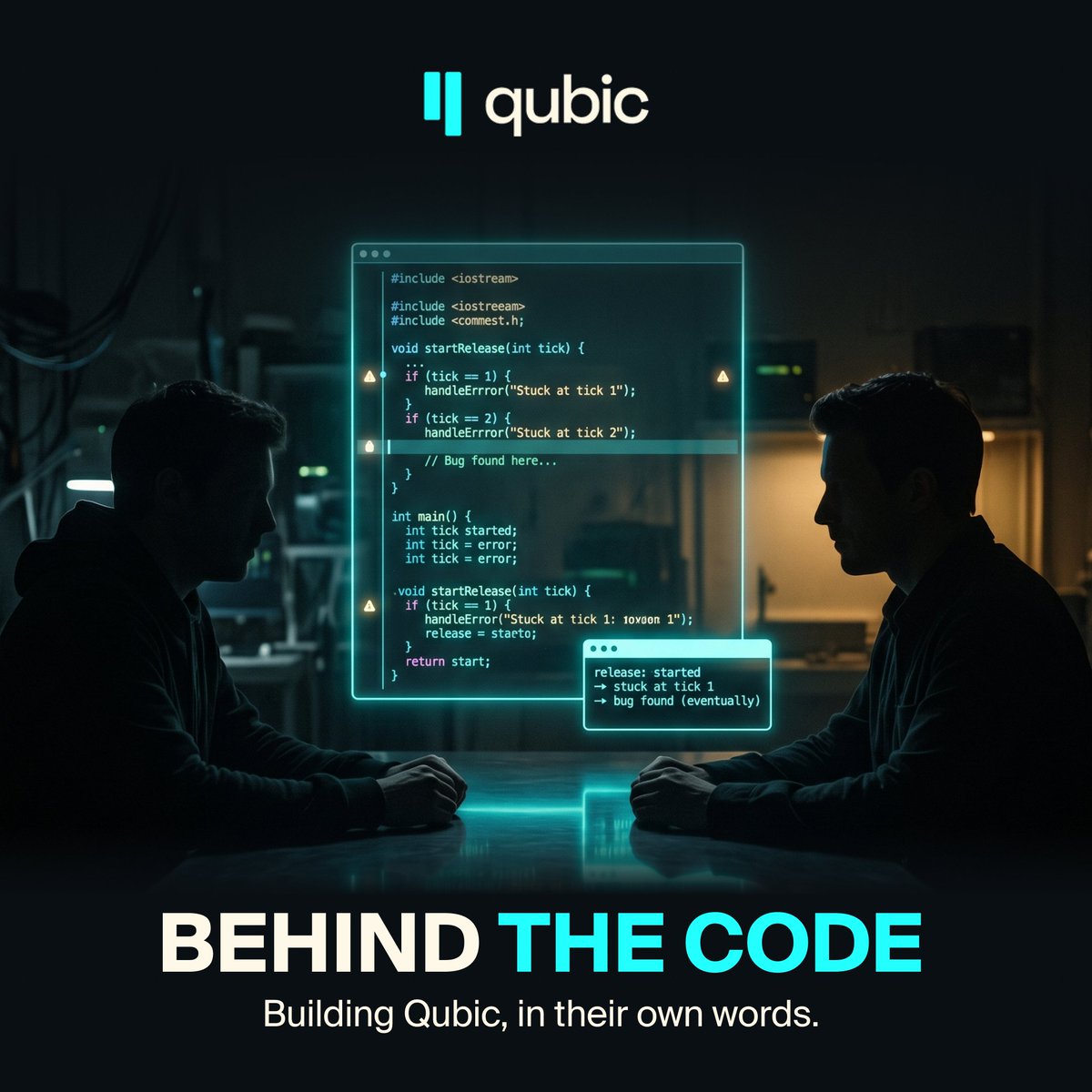
One core dev told the story of their first release.
The network started, ran one tick, then got stuck.
A tiny bug took ages to find.
Their words, roughly:
“I sat there wondering if I was even in the right place.”
That is the job of a Qubic dev.
High stakes, small mistakes, very public.
1
12
103
1,869
A weekend look at the people actually building this thing, because the last "Tech on Deck" AMA got honest about it.
Building Qubic is not normal software work. When your code is live on the network and it breaks, it does not just throw an error. It costs real money. 🧵
22
59
378
12,463
Aigarth retweeted

1/8
Qubic founder Sergey Ivancheglo made an interesting prediction:
"AI ASICs will eventually become ternary."
Not binary (0 and 1). Ternary.
This could fundamentally change how AI chips are designed.
Here's why 👇

ASICs for #AI will be trinary.
2
31
126
5,834
Aigarth retweeted

Jun 12
Crafting basics are a necessary step for survival in My Last Match.
If you're looking to start playing, this is where you start.
The crafting guide is live on the wiki: mylastmatch.fandom.com/wiki/…
Read the guide, watch the basics tutorial below, and you're ready. The game is moving fast, so the guides update with it.
If you are new, MLM assets are needed to join. 177 Survival Kits left at 70M QU each on our website. Voucher code gets you in 👉 mylastmatch.net/beta
20,500 Matches are already in the game, added gradually. 🔥
Loot them now, swap for Qubic at 1 Match = 1,000 QU later.
$QUBIC #SurvivalMMORPG
23
53
1,741
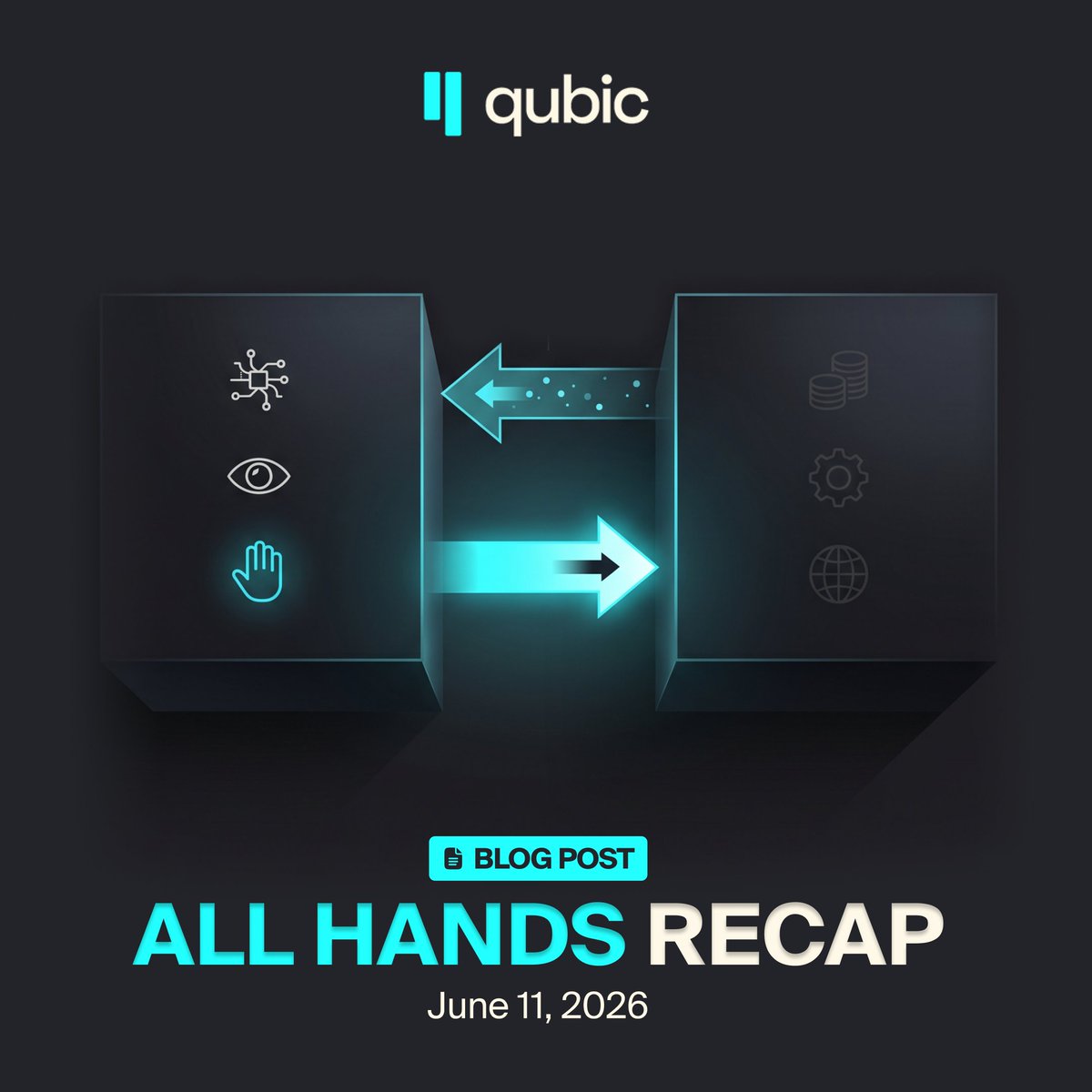
Full recap breaks them all down 👇
qubic.org/blog-detail/qubic-…
3
22
206
11,078
June 11 All-Hands was a big one.
The short version: the listing board approved a fiat on-ramp and a crypto payment card covering 173 countries. CCF Proposal Underway.
The scientific team got Neuraxon V2.0 paper accepted at AGI-26 in San Francisco.
Core tech locked in four protocol milestones between now and August, including outsourced computing on mainnet and the next emission halving.
25
81
433
14,191

Aigarth retweeted

Jun 13
If you still have any doubts about why Aigarth will be the most powerful asset on Earth, now you can put those doubts to rest!
The US government administration has prohibited Anthropic from making the Fable/Mythos LLM AI (centralized) available to anyone in the world.
The AI will be for exclusive military use!
Now do you understand why Aigarth will be so powerful? This asset will be bigger than Bitcoin, SpaceX, and every form of centralized tool in the world!
Don’t know the project yet? It’s the only decentralized AGI project in the world!
And you still haven’t realized it? Part of the ternary logic of this AGI model is already up and running in tests!
Nothing will be able to stop Aigarth from becoming the most powerful asset on the planet in the coming years!
After this new ban, I have zero doubts left about the absolute value of QUBIC!!!
Let the weak leave this market, let the blasphemers against the project and the team leave, let the skeptics of disruptive technology leave!!
A new era of technology without owners is about to arrive!!!!
Mark my words: QUBIC is the LIBERATION OF THE FUTURE OF AI into the hands of humanity!!
#qubic #aigarth
9
58
244
3,914
Aigarth retweeted

Jun 13
$QUBIC does not need slogans right now. The news speaks for itself. Last night, a single government decision was enough to cut off worldwide access to two of the most powerful artificial intelligences ever built.
Let us go back to the facts, calmly.
On June 12, the US Department of Commerce ordered Anthropic to suspend access to its two most advanced models, Claude Fable 5 and Claude Mythos 5, in the name of export control and national security. The directive aimed to prevent any foreign national from accessing them. Since partial enforcement was impossible, Anthropic had to disable these models for absolutely everyone, everywhere in the world.
Let us be precise, because precision is a matter of respect. This is not a ban for being dangerous. It is not permanent. Anthropic is contesting the decision and hopes to restore access. And it is a serious company, sincere in its commitment to AI safety. There is no reason here to rejoice, neither over the fate of a team, nor over that of its users deprived of a tool.
But there is a lesson, and it is immense.
In one evening, through a single administrative letter, access to a technology used by millions of people was cut off. Not because of a technical flaw. Not because of an outage. Because of a political decision, taken within one jurisdiction, applicable to a centralized actor. When an intelligence lives on the private servers of a company subject to a state, it can vanish overnight, for reasons that have nothing to do with its quality or usefulness.
This is exactly what the cypherpunks anticipated thirty years ago. Concentrated power always ends up depending on the will of a few. Yesterday it was money and privacy. Today it is intelligence.
This is why decentralized AI is not an ideological whim. It is a structural necessity. An intelligence spread across hundreds of thousands of machines, with no single point of shutdown, cannot be turned off by a letter. Not because it defies the law, but because it offers no single lever to press.
An essential point of honesty. Qubic and Aigarth are not there yet. Decentralizing intelligence is a work in progress, not an achievement. No one should claim a fully functional alternative already exists today. But the direction has never been as clearly justified as it was last night.
The question is no longer whether decentralized AI makes sense. The question is how many shutdowns it will take before we understand why it matters.
Tick after tick. Computor after Computor. You do not build an alternative for the day when all goes well. You build it for the day it becomes indispensable.
9
42
220
5,990
Free to attend. RSVP here: luma.com/sggoxyjj
3
14
153
11,574
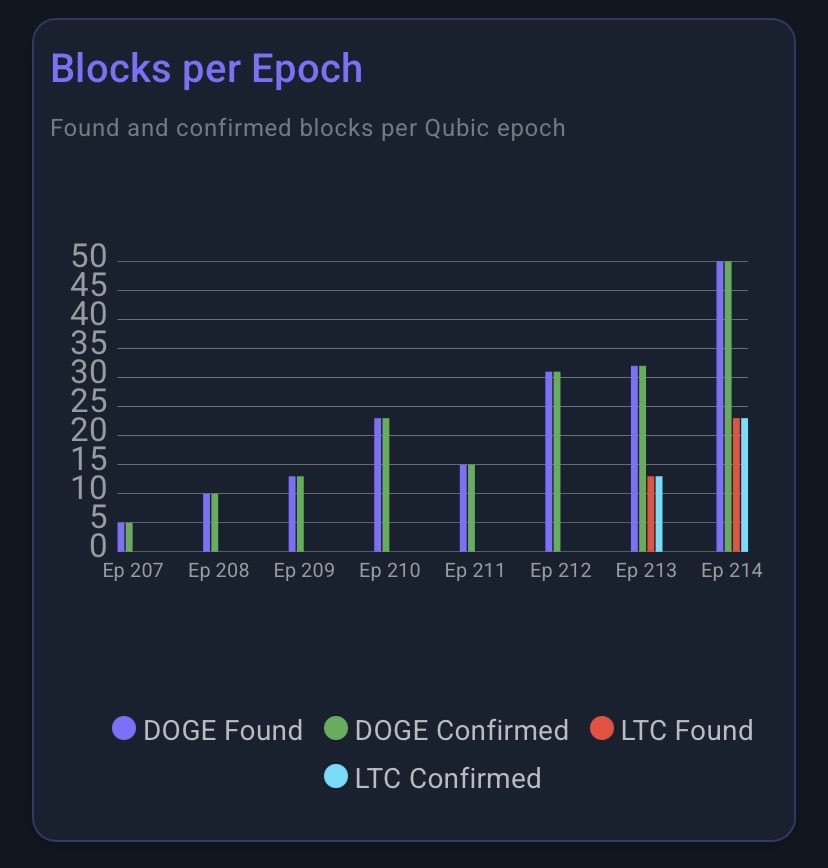
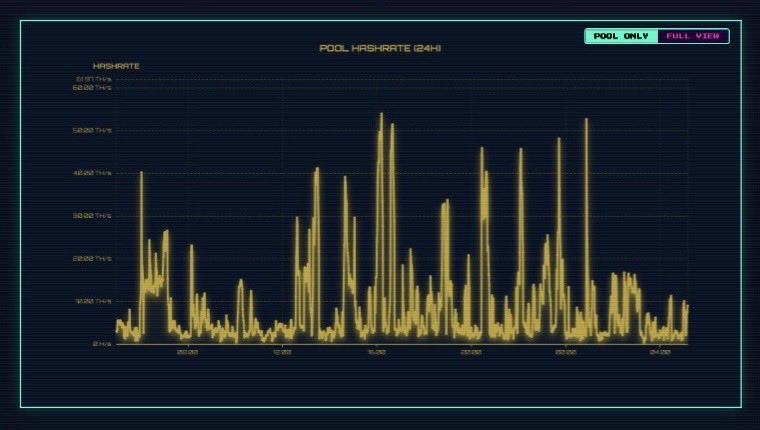
Point your ASIC to a Qubic pool 👇
qubic.org/mine-doge-earn-mor…
18
185
15,476
Full read 👇
qubic.org/blog-detail/arc-ag…
4
21
202
13,655
Learn how the burn works → qubic.org/blog-detail/qubic-…
23
189
10,428
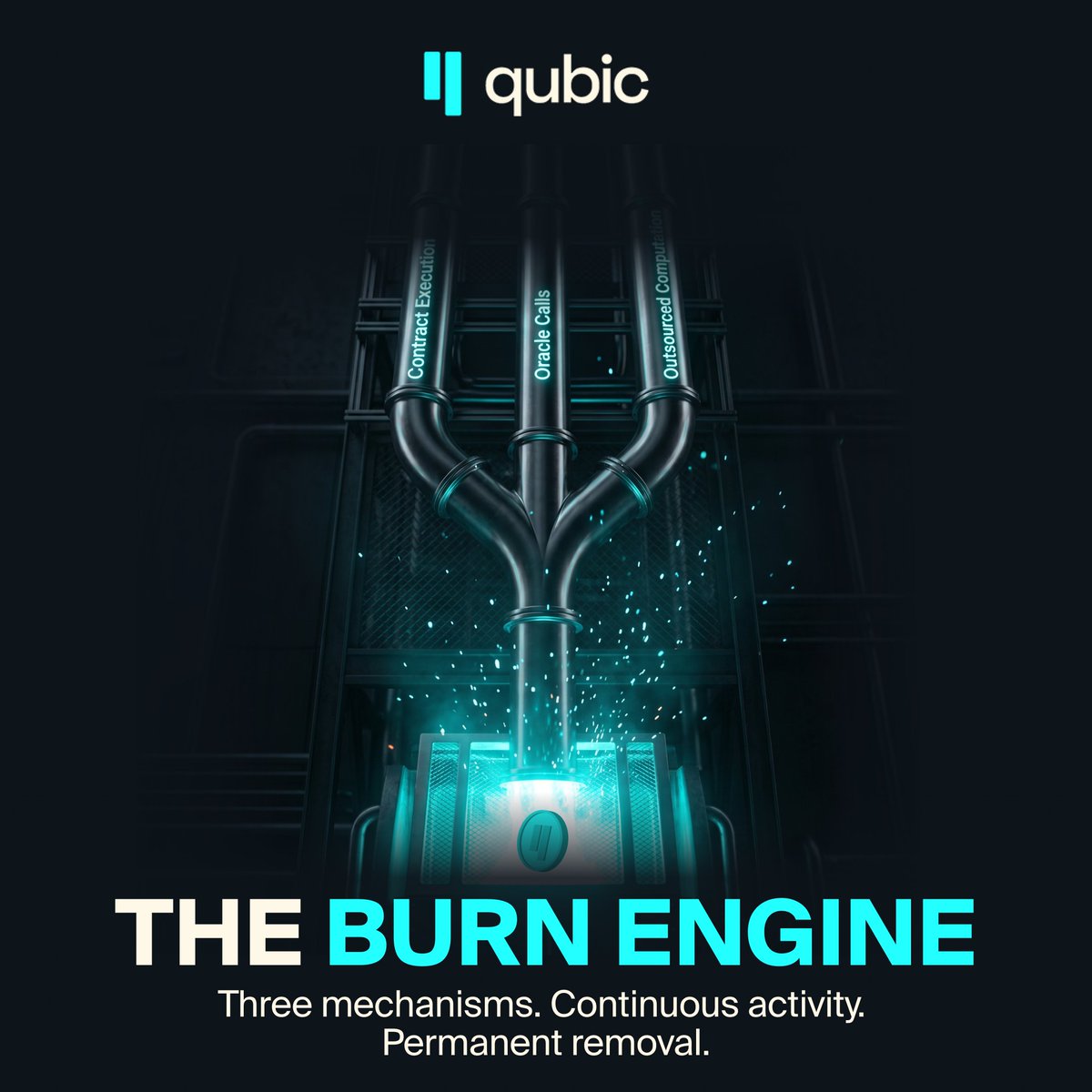
On most chains, your transaction fee goes to someone.
On Qubic, it goes to no one.
It is destroyed.
And the network is about to add another furnace.
Every smart contract execution: fee burned.
Every Oracle Machine call pulling outside data: burned.
And now Outsourced Computation, contracts acting beyond the chain, works the same way.
Each call costs a fee.
Each fee is removed from the Qubic supply forever.
Three burn mechanisms.
Zero of them optional.
All of them tied to real work.
This is the part people miss about Qubic:
Activity is not just traffic.
Activity is subtraction.
The ultimate goal: usage outburns emission, and the supply curve bends down.
That date is not set by anyone.
It's earned, one transaction at a time.
34
97
528
17,787
Aigarth retweeted

Jun 12
Hi @MetinCosku2057 ,
I don't do listings, all I might mention is just that somebody was trying to get #Qubic to Tier-1. Frankly speaking I don't even care about getting to big exchanges, it's not a technical issue, try to ask somebody else.
16
20
248
14,698