Connecting High School Football Recruiting Coordinators to Collab and Grow in the Role to Help Promote their Athletes to College Programs Ran by: @MRittCGS
Joined February 2025
- Tweets 1,090
- Following 94
- Followers 230
- Likes 1,076
3 Photos and videos
Recruiting Coordinator Connect retweeted
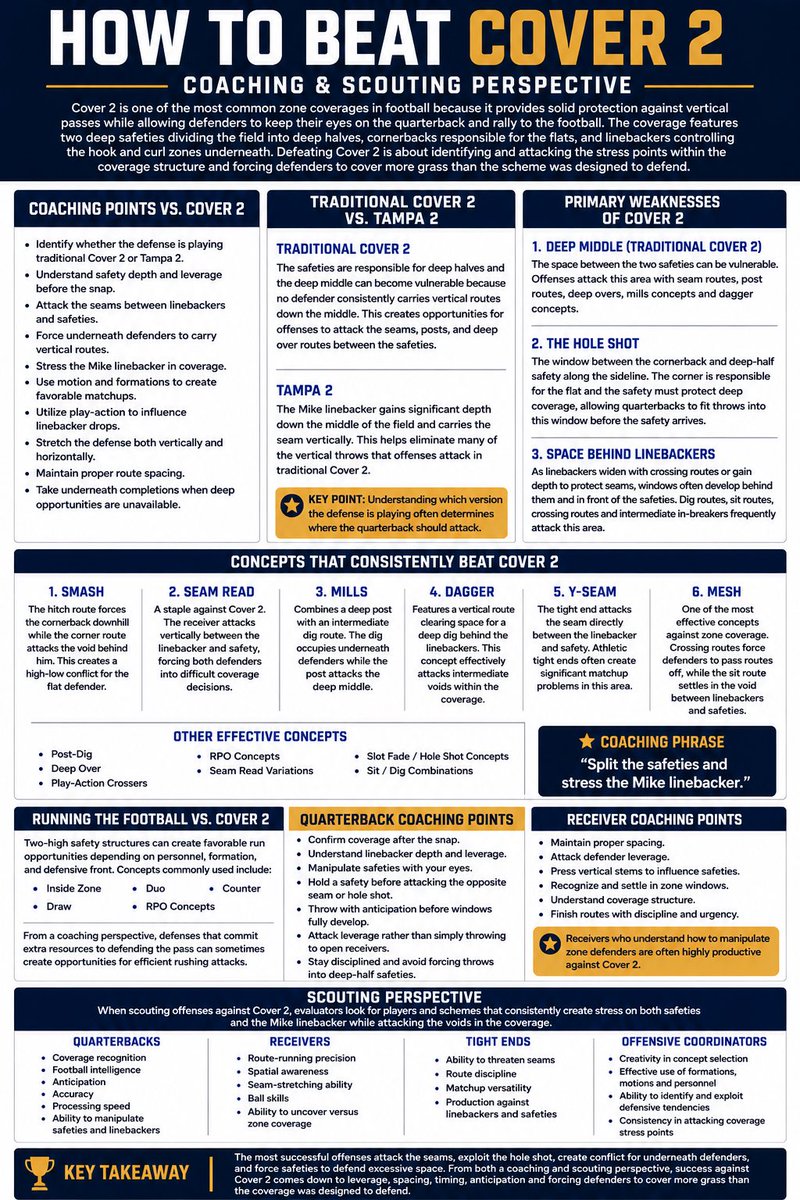
Cover 2 has been a staple of defensive football for decades because it helps defenses limit explosive plays while keeping multiple defenders with eyes on the quarterback
From a coaching and scouting perspective, beating Cover 2 is less about finding a single play and more about understanding how to consistently attack the stress points built into the coverage
The offenses that have the most success against Cover 2 are the ones that force safeties to defend width, force linebackers to carry routes deeper than they want, and create conflict between coverage levels
Key Areas to Attack:
• Seams between the safeties and underneath defenders
• Deep middle in traditional Cover 2
• Hole shot along the sideline between the corner and safety
• Windows behind the linebackers and in front of the safeties
• Soft spots created through route spacing and defender leverage
Concepts That Consistently Stress Cover 2:
• Smash
• Seam Read
• Mills
• Dagger
• Y-Seam
• Mesh
• Post-Dig
• Play-Action Crossers
The quarterback’s ability to identify leverage, manipulate safeties, and throw with anticipation is often what separates successful offenses from average ones against Cover 2. Waiting for receivers to become visibly open usually allows the coverage to recover. The best quarterbacks trust their reads, understand timing, and attack windows before they fully develop
For receivers and tight ends, success comes from understanding spacing, recognizing zone coverage, attacking leverage, and creating stress on defenders without disrupting the timing of the concept. Route discipline is critical because Cover 2 is designed to capitalize on mistakes and poor spacing
2
12
78
3,544
Recruiting Coordinator Connect retweeted
I’ve said it before and I’ll continue to say it: every high school football program should have a designated Recruiting Coordinator on staff
Too often I hear excuses such as:
• “It’s extra work”
• “We don’t have college prospects”
• “We’re too small of a school”
• “Our head coach handles that”
• “College coaches never come here”
• “Parents can figure it out themselves”
• “We only have one or two recruits every few years”
The reality is none of those are valid reasons
A Recruiting Coordinator’s job is not simply to help Power Four athletes earn scholarships. Their responsibility is to educate families, promote student-athletes, communicate with college coaches, organize recruiting information, assist with highlight film distribution, coordinate camp opportunities, and make sure every player has an opportunity to be evaluated
Not every athlete is going to play at the FBS level, but many can play at the FCS, Division II, Division III, NAIA, JUCO, or other collegiate levels if they receive the proper guidance and exposure
From my perspective, recruiting should be treated as an extension of player development. Programs spend countless hours developing players on the field. They should be just as committed to helping those players create opportunities beyond high school
The programs that consistently send athletes to the next level are often the programs that have a plan, a point person, and a structured recruiting process. A Recruiting Coordinator is no longer a luxury it’s a necessity for schools that truly want to maximize opportunities for their student-athletes
2
9
53
8,671

⬇️⬇️⬇️⬇️

There is a post making the rounds showing a high school football recruit announcing that he is “flipping camps” from one college camp to another
I’m not going to tag the young man or quote-tweet the post because, at the end of the day, these are student-athletes who are still learning the recruiting process
What should happen is a conversation
His parents, coaches, mentors, and those in the recruit’s inner circle should take the opportunity to explain why publicly announcing that you are “flipping camps” is generally not viewed positively within recruiting circles
College camps are evaluation opportunities, not recruiting commitments. Attending one camp over another is simply a decision based on fit, exposure, scheduling, or opportunity. Treating camps like college commitments can create an unnecessary perception that does not benefit the student-athlete
One of the most important lessons in recruiting is understanding that every action, post, and interaction contributes to your personal brand. Recruits should focus on building relationships, earning opportunities, competing, and showcasing their abilities rather than creating headlines
Use social media to highlight your work ethic, development, camp performances, and achievements. Let your play and your character do the talking
1
1
650
Recruiting Coordinator Connect retweeted
There is a post making the rounds showing a high school football recruit announcing that he is “flipping camps” from one college camp to another
I’m not going to tag the young man or quote-tweet the post because, at the end of the day, these are student-athletes who are still learning the recruiting process
What should happen is a conversation
His parents, coaches, mentors, and those in the recruit’s inner circle should take the opportunity to explain why publicly announcing that you are “flipping camps” is generally not viewed positively within recruiting circles
College camps are evaluation opportunities, not recruiting commitments. Attending one camp over another is simply a decision based on fit, exposure, scheduling, or opportunity. Treating camps like college commitments can create an unnecessary perception that does not benefit the student-athlete
One of the most important lessons in recruiting is understanding that every action, post, and interaction contributes to your personal brand. Recruits should focus on building relationships, earning opportunities, competing, and showcasing their abilities rather than creating headlines
Use social media to highlight your work ethic, development, camp performances, and achievements. Let your play and your character do the talking
1
5
16
3,495
Recruiting Coordinator Connect retweeted
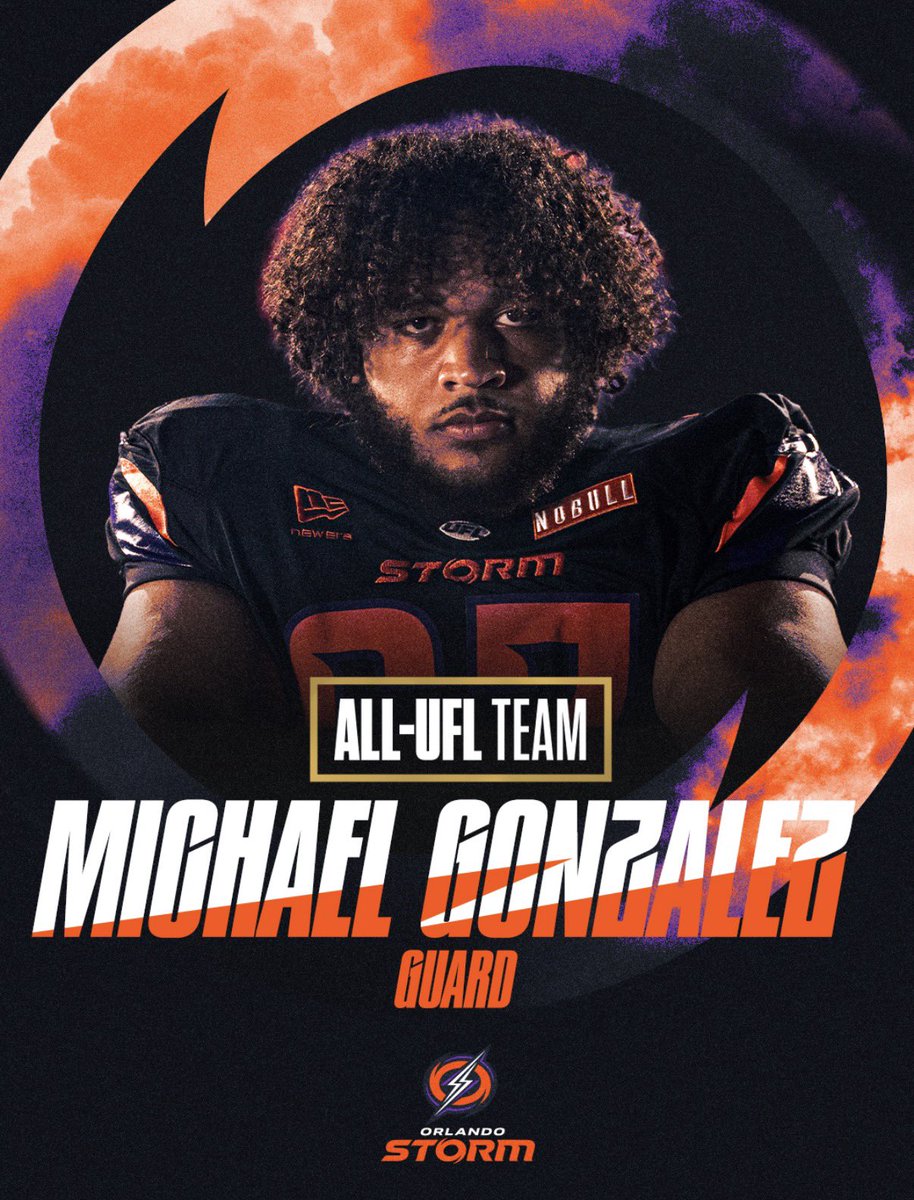
Congratulations to @CGSAllStar alum Michael Gonzalez on earning 2026 All-@TheUFL honors with the @UFLStorm
Gonzalez started all 10 regular-season games and was a key contributor on an offensive line that helped power the UFL’s No. 1 passing offense (2,083 yards) and the league’s No. 2 total offense (2,978 yards; 297.8 yards per game). He helped anchor a unit that allowed just 19 sacks all season and only six sacks over the final five games
According to the Storm, Gonzalez graded near 90% in every game and did not allow a sack during the regular season, showcasing the consistency, technique, and reliability that earned him recognition as one of the UFL’s top offensive linemen and a well-deserved spot on the 2026 All-UFL Team
Proud to see another CGS alum making an impact in professional football!
2
8
757
Recruiting Coordinator Connect retweeted
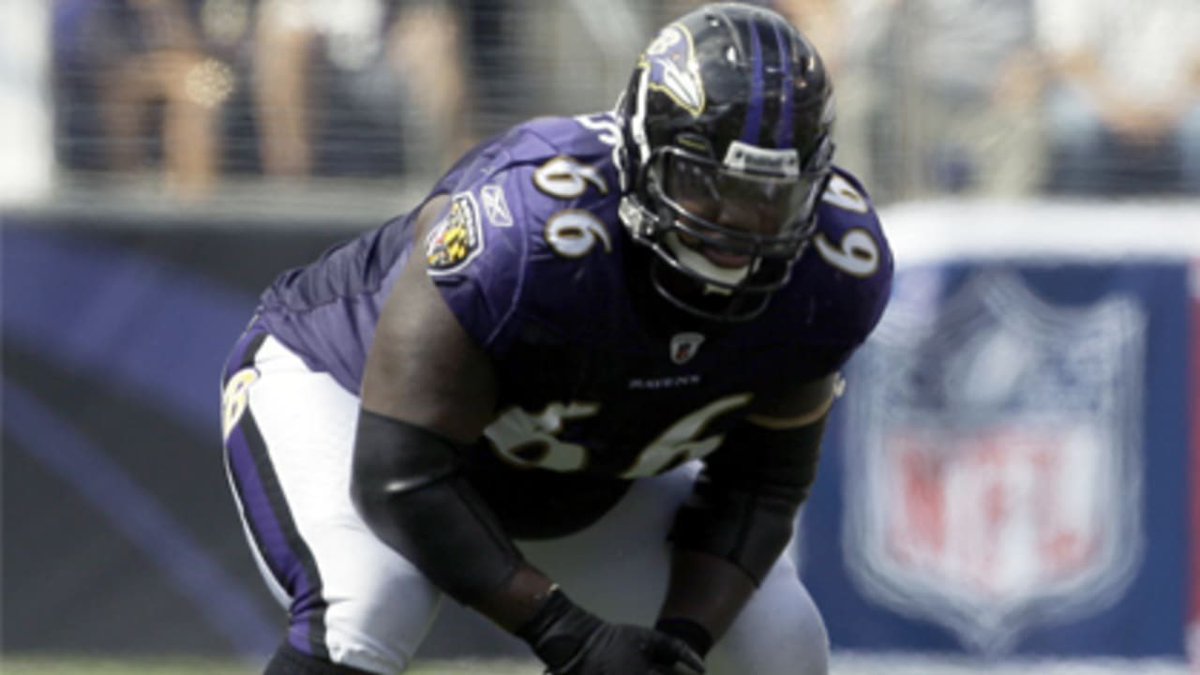
From a scouting perspective, Ben Grubbs possessed the combination of athleticism, versatility, toughness, and technical refinement that NFL teams look for in a high-level interior offensive lineman. He possessed the combination of size, movement skills, toughness, football intelligence, and consistency that NFL teams covet in a high-level interior offensive lineman
At @AuburnFootball, Grubbs took a unique path to becoming an elite offensive line prospect. After arriving at Auburn as a defensive player, he spent time at defensive tackle before moving to tight end and eventually settling at offensive guard. That background helped develop the athleticism, footwork, body control, and football intelligence that later became defining traits of his game. As he continued to develop, Grubbs emerged as one of the top offensive linemen in the country, earning First-Team All-SEC honors and Second-Team All-American recognition before becoming a first-round selection in the 2007 NFL Draft
His pre-draft testing showcased the athletic traits that consistently appeared on film:
• Height: 6’2¾”
• Weight: 311 lbs
• Arm Length: 33½”
• Hand Size: 10¼”
• 40-Yard Dash: 5.10 seconds
• 10-Yard Split: 1.65 seconds
• Bench Press: 35 reps
• Vertical Jump: 26.5”
• Broad Jump: 8’7”
• Short Shuttle: 4.72 seconds
• 3 Cone: 7.70 seconds
Traits That Consistently Showed Up On Film:
• Outstanding athleticism for an interior offensive lineman
• Excellent foot quickness, balance, and body control
• Strong hand placement and leverage
• Effective second-level blocker
• Ability to execute pulls, traps, and reach blocks
• Reliable pass protector with a strong anchor
• High football IQ and awareness
• Scheme versatility
• Toughness and physicality at the point of attack
His NFL career validated what evaluators saw during the scouting process. Grubbs was selected 29th overall in the 2007 NFL Draft, earned PFWA All-Rookie Team honors, was selected to two Pro Bowls, and started 125 games during a nine-year career. He established himself as one of the league’s most reliable guards and consistently demonstrated the traits teams seek in a long-term starter
1
5
20
3,193
Recruiting Coordinator Connect retweeted
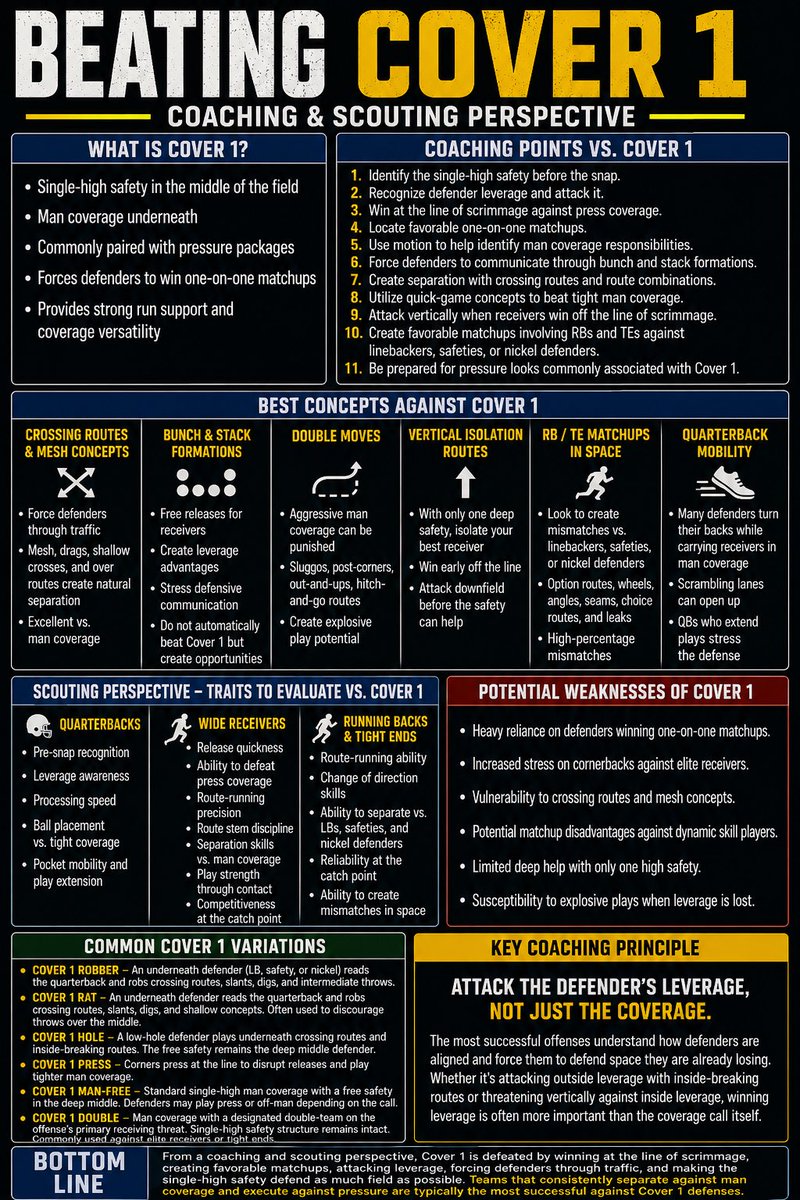
Cover 1 remains one of the most common defensive coverages because it allows defenses to maintain strong run support while playing aggressive man coverage with a single-high safety
Keys to Attacking Cover 1:
• Identify the single-high safety pre-snap
• Recognize and attack defender leverage
• Win one-on-one matchups
• Use motion to identify man coverage.
• Create separation with crossing routes and mesh concepts
• Utilize bunch and stack formations to stress communication
• Take vertical shots when receivers win early
• Create favorable RB and TE matchups in space
One of the most important coaching principles against Cover 1 is to attack the defender’s leverage, not just the coverage. Understanding alignment, technique, and where help defenders fit within the structure often determines whether a play results in a routine completion or an explosive gain
Scouting Traits That Translate vs. Cover 1:
• Quarterbacks with quick processing and strong decision-making
• Receivers who can defeat press coverage and separate consistently
• Running backs and tight ends who create mismatches in space
• Playmakers who can win in isolated situations
15
89
3,105
Recruiting Coordinator Connect retweeted
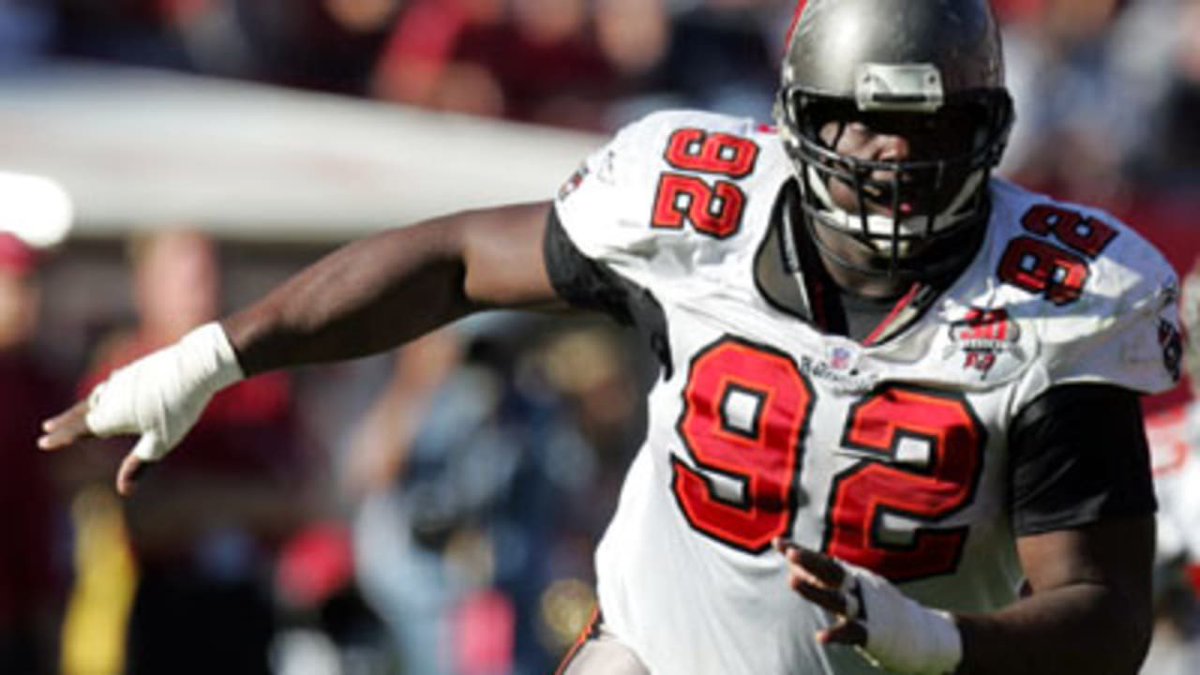
From a scouting perspective, @ESPNBooger was the type of interior defensive lineman who helped defenses win long before the stat sheet reflected his impact
He possessed an outstanding combination of explosiveness, leverage, power, toughness, and competitiveness that allowed him to consistently disrupt offenses at the line of scrimmage. While he was never viewed as a pure pass-rushing defensive tackle, his ability to penetrate gaps, occupy blockers, and create disruption made him a valuable piece of multiple championship-caliber defenses
At @LSUfootball, McFarland developed into one of the nation’s top defensive linemen. He earned First-Team All-SEC and Consensus First-Team All-American honors in 1998, establishing himself as one of the premier defensive tackle prospects in the 1999 NFL Draft.
His pre-draft testing confirmed many of the athletic traits that consistently showed up on film:
• Height: 6’0½”
• Weight: 300 lbs
• 40-Yard Dash: 4.85
• Bench Press: 25 Reps
• Vertical Jump: 28.5”
What consistently stood out on tape was his first-step quickness, natural leverage, and ability to generate movement at the point of attack. Despite not having prototypical height for the position, McFarland routinely won with pad level, lower-body power, and outstanding balance. He was difficult to move off the football, disruptive against the run, and capable of collapsing the pocket from the interior
Traits that consistently showed up on film:
• Explosive get-off and first-step quickness
• Outstanding leverage and pad level
• Powerful point-of-attack strength
• Ability to penetrate gaps and create disruption
• Ability to absorb and anchor against double teams
• Ability to maintain gap integrity and control his run fit
• Interior pocket-collapsing power
• Ability to create interior disruption
• Strong lower-body power and balance
• Effective block recognition
• Ability to reset the line of scrimmage
• Physical finisher at the point of attack
• Relentless motor and effort
• Toughness, competitiveness, and consistency
Selected 15th overall by the Tampa Bay Buccaneers in the 1999 NFL Draft, McFarland became an important contributor on one of the NFL’s most dominant defensive units. He played a key role along Tampa Bay’s defensive front during its Super Bowl XXXVII championship season before being traded to the Indianapolis Colts in 2006, where he helped strengthen the Colts’ defensive line during their Super Bowl XLI championship run
Over his nine-year NFL career, McFarland appeared in 109 games and recorded 188 tackles, 22.5 sacks, four forced fumbles, six fumble recoveries, and one interception. While those numbers were respectable, his true value came from his ability to occupy blockers, control gaps, and consistently create opportunities for the players around him
When evaluating McFarland, the biggest takeaway is that his value extended far beyond statistics
6
21
1,965
Recruiting Coordinator Connect retweeted
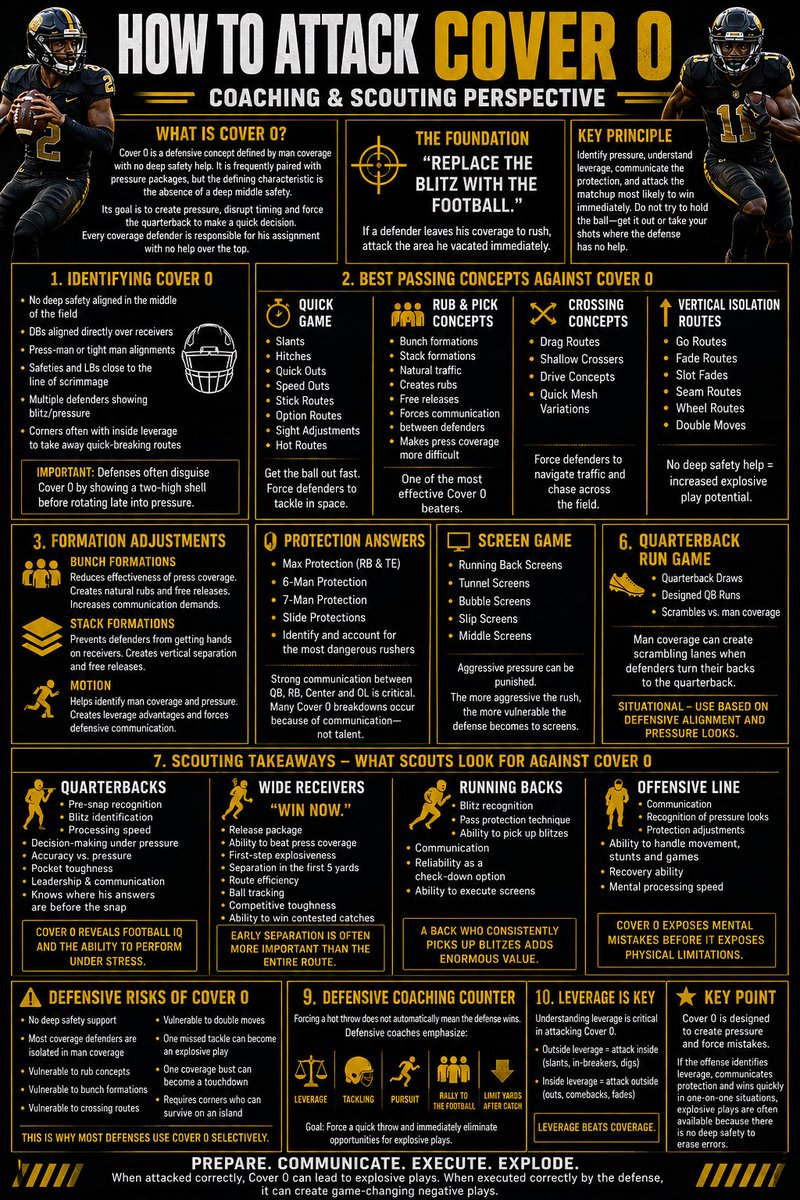
Cover 0 is one of the most aggressive defensive concepts in football because it eliminates deep safety help and forces defenders to win in isolated man-to-man situations
From a coaching perspective, the key to attacking Cover 0 is recognizing pressure before the snap, understanding leverage, communicating protection responsibilities, and identifying the matchup most likely to win immediately
Coaching Points vs. Cover 0
• Identify pressure and leverage before the snap.
• Communicate protection responsibilities across the offense
• Replace the blitz with the football
• Get the ball out quickly and decisively
• Utilize bunch and stack formations to create free releases
• Attack favorable one-on-one matchups
• Use screens and quick game concepts to punish aggressive pressure
• Take calculated vertical shots when receivers win early.l
One of the most important coaching principles against Cover 0 is to “replace the blitz with the football.” When defenders commit extra rushers, offenses must attack the space that pressure creates through quick-game concepts, hot routes, bunch formations, stack alignments, crossing routes, screens, and vertical isolation routes. The absence of a deep safety means one missed jam, poor leverage angle, or coverage breakdown can quickly turn into an explosive play
Quarterback Evaluation Points
• Pre-snap recognition
• Blitz identification
• Processing speed
• Decision-making under pressure
• Accuracy versus pressure
• Leadership and communication
• Ability to attack leverage and isolated defenders
From a scouting perspective, Cover 0 is one of the best situations for evaluating football intelligence, processing speed, toughness, communication, and competitive traits. The best quarterbacks understand where their answers are before the ball is snapped and remain composed when pressure arrives
Wide Receiver Evaluation Points
• Release package versus press coverage
• First-step explosiveness
• Separation within the first five yards
• Route efficiency
• Ball-tracking ability
• Competitive toughness
• Ability to win contested catches.
The coaching point for receivers is simple: “Win now.” Against Cover 0, early separation is often more important than the entire route because the ball must come out quickly.
Running Backs:
• Blitz recognition.
• Pass protection technique.
• Communication.
• Check-down reliability.
• Screen-game effectiveness.
Many Cover 0 breakdowns occur because of communication errors rather than physical limitations.
Defensive Risks of Cover 0:
• No deep safety support
• Most coverage defenders are isolated
• Vulnerable to rub concepts
• Vulnerable to bunch and stack formations
• Vulnerable to crossing routes
• Vulnerable to double moves
• One missed tackle can become an explosive play
• One coverage bust can become a touchdown
16
118
5,688
Recruiting Coordinator Connect retweeted

Jun 12
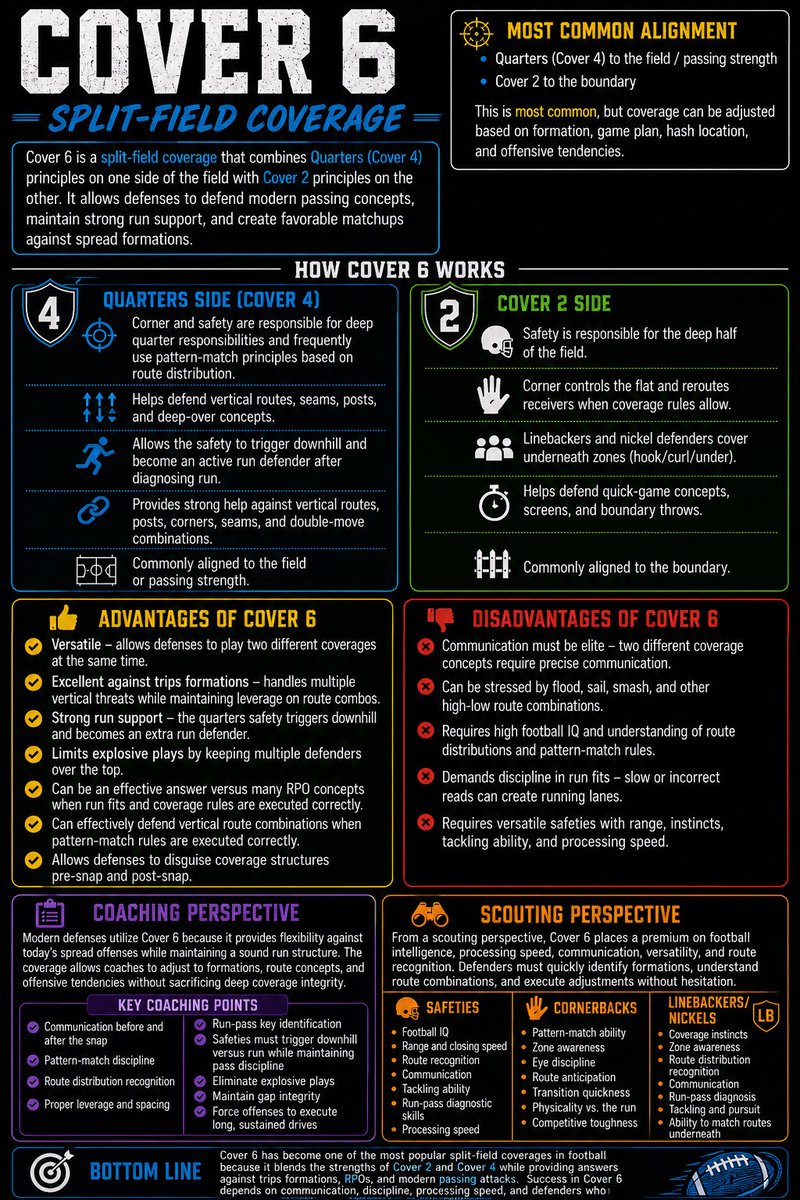
Cover 6 is one of the most versatile split-field coverages in football because it combines Quarters (Cover 4) principles on one side of the field with Cover 2 principles on the other
From a coaching perspective, it gives defenses the flexibility to handle modern passing concepts, trips formations, and RPO-heavy offenses while still maintaining strong run support and limiting explosive plays
What makes Cover 6 effective is its ability to present different coverage structures to the quarterback after the snap
The Quarters side provides additional support against vertical route combinations and allows the safety to become an active run defender, while the Cover 2 side helps defend quick-game concepts, screens, and boundary throws
From a scouting perspective, Cover 6 places a premium on football IQ, communication, processing speed, route recognition, and versatility
Defensive backs must understand route distributions, pattern-match principles, and leverage while linebackers and nickel defenders must quickly diagnose run-pass keys and react without hesitation
3
26
230
9,858
Recruiting Coordinator Connect retweeted
Jun 12
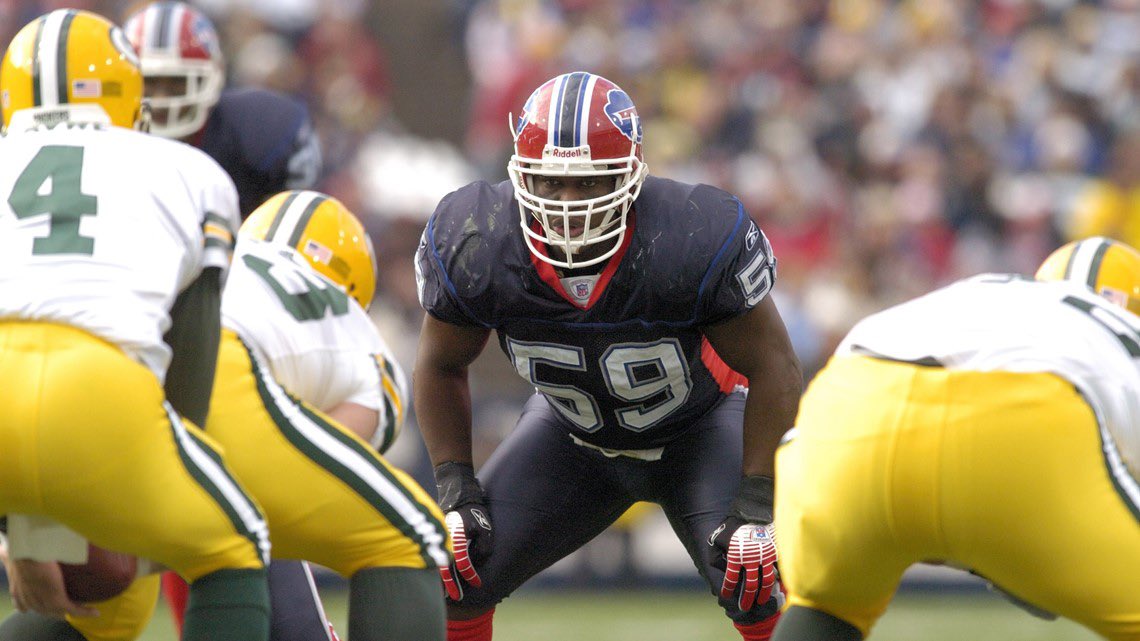
From a scouting perspective, London Fletcher is one of the best examples of why evaluations should go beyond size and measurables. Despite being considered undersized coming out of John Carroll University, Fletcher built a career through instincts, toughness, leadership, football intelligence, and consistent production
At @JCUFootball, Fletcher developed into one of the top defensive players in Division III football. He recorded a school-record 202 tackles during his senior season, earned multiple All-American honors, was named OAC Linebacker of the Year, won the 1997 Melberger Award as Division III’s Outstanding Player, and was later inducted into the @cfbhall
Although he went undrafted in 1998, Fletcher possessed many of the traits NFL teams look for in a linebacker:
• Elite instincts and play recognition
• Outstanding football IQ and processing speed
• Strong run-fit discipline
• Excellent tackling ability
• Sideline-to-sideline range
• Leadership and communication skills
• Block recognition and shedding ability
• Strong zone awareness in coverage
• Blitz timing and pass-rush ability
• Outstanding durability and consistency
• Relentless effort and competitiveness
What consistently stood out on film was how quickly he diagnosed plays and trusted his eyes. Fletcher rarely wasted movement, played under control, and routinely beat blockers to the point of attack because of his instincts and preparation
After signing with the St. Louis Rams, Fletcher quickly proved he belonged and became a key contributor on a Super Bowl championship team. He later starred for the Buffalo Bills and Washington Redskins as well
NFL Accomplishments:
• Super Bowl XXXIV Champion
• 4× Pro Bowl Selection
• 2× Second-Team All-Pro
• NFL Tackles Leader (2011)
• Washington Ring of Fame Member
• NFL-record 215 consecutive starts by a linebacker
• 256 consecutive games played
• Over 2,000 career tackles
• 39 sacks
• 23 interceptions
• 19 forced fumbles
From a coaching perspective, Fletcher was the quarterback of the defense. He handled communication, adjustments, and ensured everyone around him was aligned correctly. His preparation, toughness, and leadership helped him play at a high level for 16 seasons
2
17
51
5,262
Recruiting Coordinator Connect retweeted
Jun 12
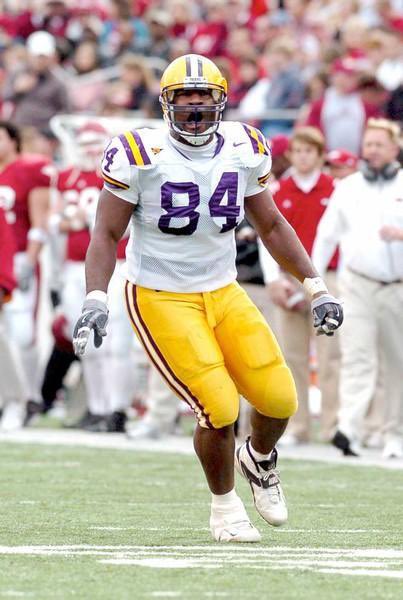
From a scouting perspective, Marcus Spears was one of the most unique defensive line prospects in the 2005 NFL Draft because of his rare combination of size, athleticism, versatility, and football IQ
What made Spears stand out was his journey from highly recruited tight end to elite defensive end at LSU. That transition alone highlighted the athletic traits NFL teams covet. At over 300 pounds, he moved with the balance, body control, and agility of a much smaller athlete, and those former offensive skills consistently showed up on film
LSU Career & Accolades:
• Member of LSU’s 2003 National Championship team
• Consensus First-Team All-American (2004)
• First-Team All-SEC (2004)
• Finished career with 19 sacks
• Recorded 34.5 tackles for loss
• Developed into one of the top defensive linemen in college football
Pre-Draft Testing (LSU Pro Day):
• Height: 6’4”
• Weight: 307 lbs
• 40-Yard Dash: Low 5.0s
• 10-Yard Split: 1.73
• Vertical Jump: 31”
• Bench Press: 23 reps
• Short Shuttle: 4.44
• Three-Cone Drill: 7.21
What Scouts Loved:
• Rare athletic profile for a 300 pound defender
• Former tight end with outstanding movement skills
• Versatility to play in both 3-4 and 4-3 fronts
• Strong edge setter against the run
• Good lateral agility and change of direction
• High football IQ and positional flexibility
• Consistent effort, toughness, and physicality
Those traits helped make Spears the 20th overall pick in the 2005 NFL Draft. While he was never viewed as a pure pass-rush specialist, he became exactly the type of dependable, versatile defensive lineman many evaluators projected
NFL Career:
• 20th Overall Pick (2005 NFL Draft)
• PFWA All-Rookie Team (2005)
• 124 Career Games Played
• 307 Career Tackles
• 10 Career Sacks
• Nine NFL Seasons with Dallas and Baltimore
From a coaching and scouting perspective, Spears is a great example of why evaluators place such a premium on athletic versatility
9
28
3,492
Recruiting Coordinator Connect retweeted
Jun 12
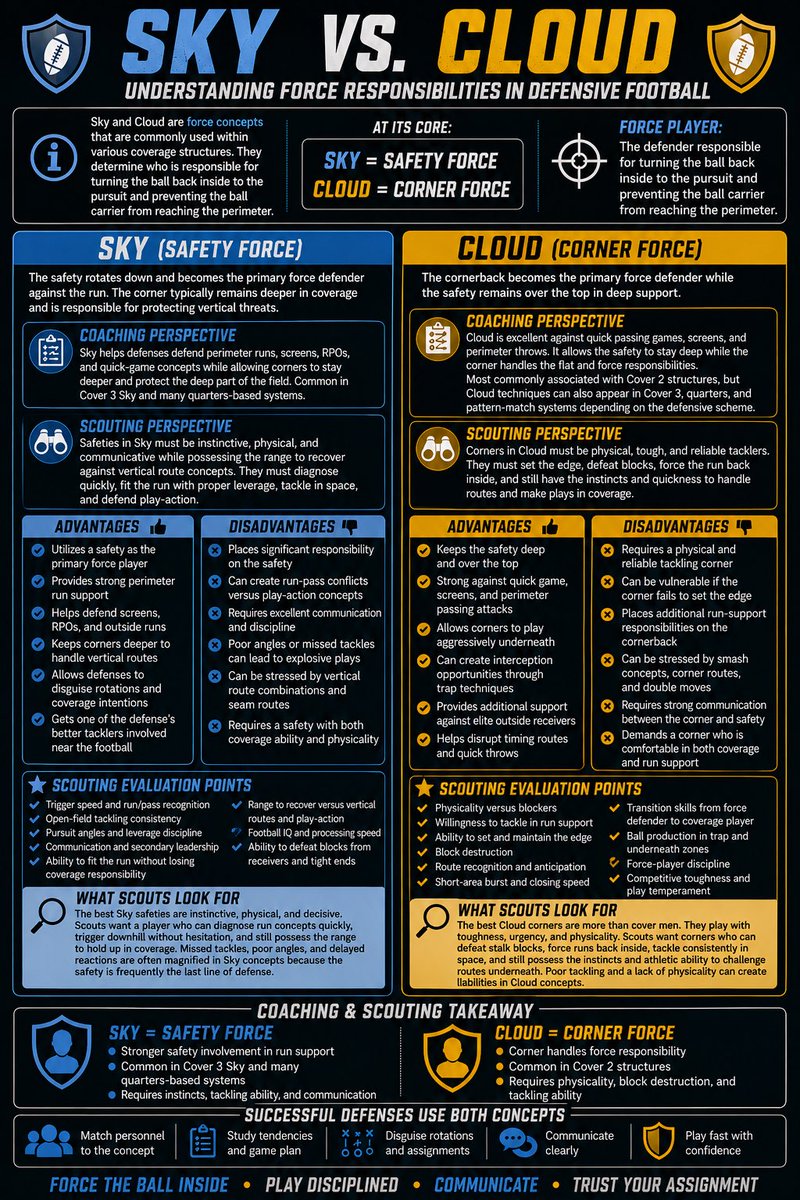
One of the most important but often overlooked aspects of defensive football is understanding force responsibilities
No matter what coverage a defense is running, someone has to be responsible for keeping the football from getting outside and forcing it back toward the pursuit
That is where Sky and Cloud concepts come into play
In a Sky concept, the safety becomes the primary force defender, allowing the corner to stay deeper and protect vertical routes
In a Cloud concept, the corner takes on the force responsibility while the safety remains over the top in deep support
From a coaching standpoint, both concepts are valuable because they give defenses different answers for defending perimeter runs, screens, RPOs, and quick passing concepts while helping disguise rotations and responsibilities
From a scouting perspective, these concepts show why evaluating defensive backs goes far beyond coverage ability. Safeties playing Sky must possess instincts, range, tackling ability, communication skills, and the ability to quickly diagnose run versus pass. Corners playing Cloud must be physical, willing tacklers who can defeat blocks, set the edge, recognize route concepts, and consistently force the football back inside
Neither concept is better than the other. The best defenses use both depending on personnel, offensive tendencies, field position, and game-plan objectives
1
40
245
12,934
Recruiting Coordinator Connect retweeted
Jun 12
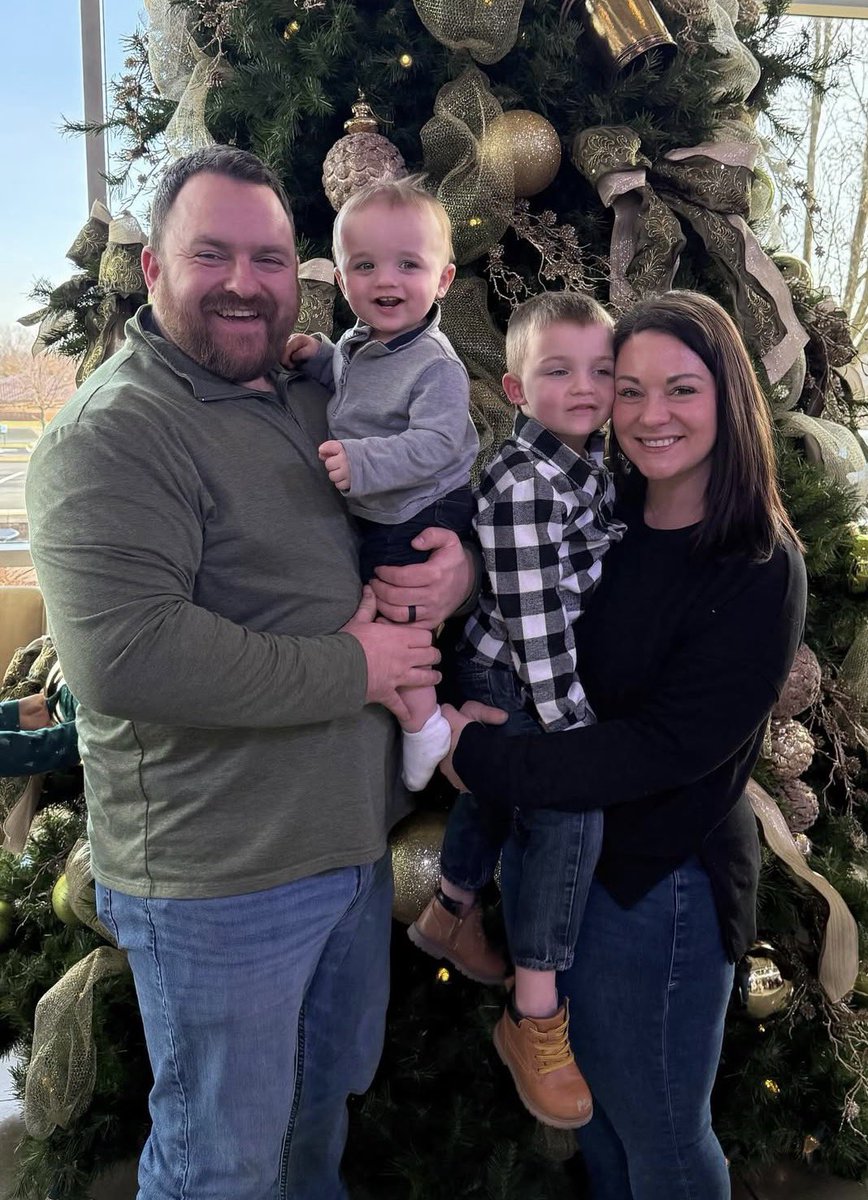
Thankful this morning for my greatest support system, my home team!
1
2
28
1,776
Recruiting Coordinator Connect retweeted
Jun 11
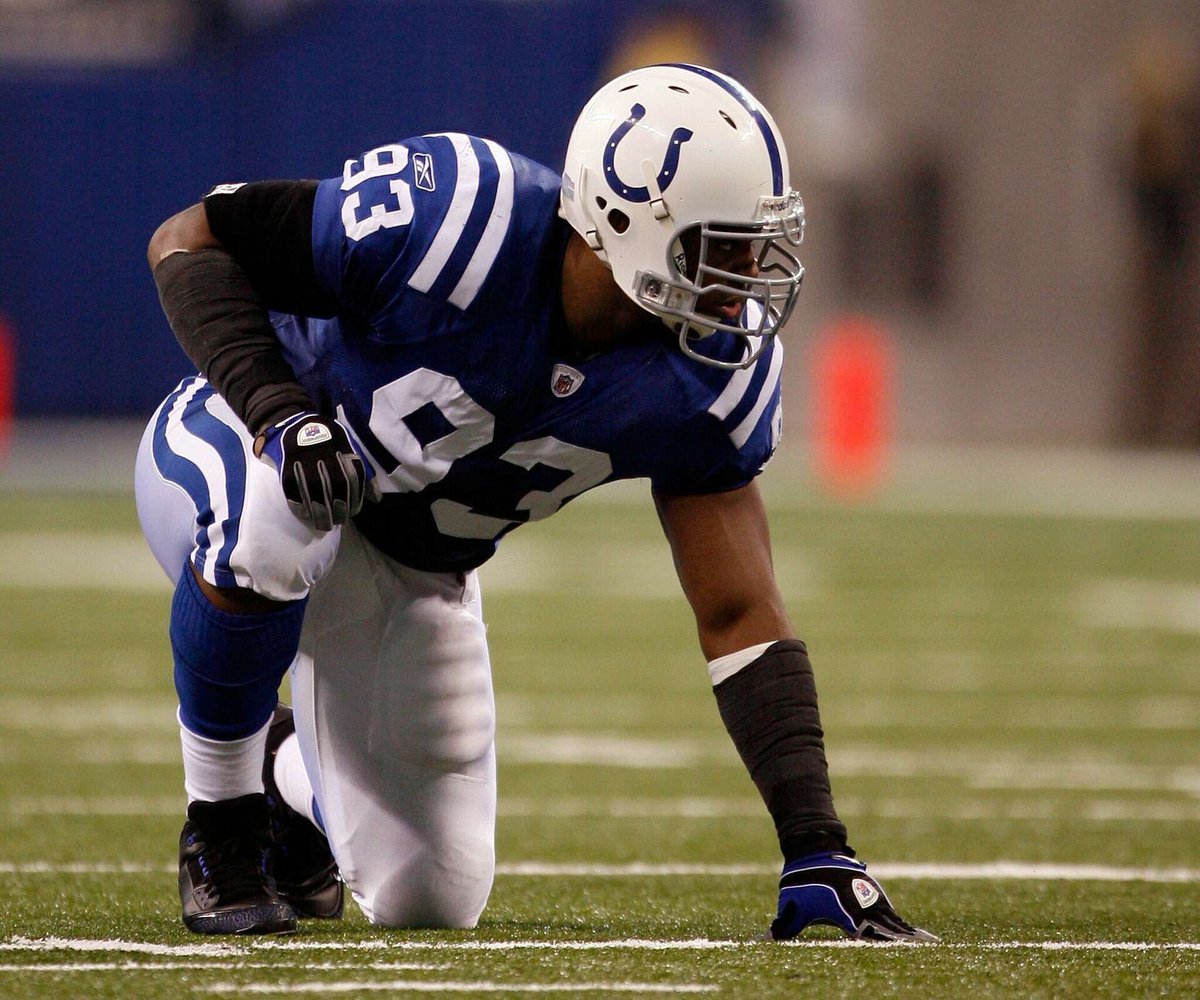
From a scouting perspective, Dwight Freeney was one of the most disruptive pass rushers the NFL has ever seen. He showed that elite production off the edge is not always about having ideal size or length
What made Freeney special was his combination of explosiveness, flexibility, leverage, hand usage, and one of the most effective spin moves in football history. His ability to threaten offensive tackles with speed and then counter instantly made him a constant problem for opposing offenses
The first thing that jumped off the film was his get off. Freeney consistently put offensive tackles on their heels because of how quickly he could attack the edge
Once blockers committed to stopping his speed rush, he would counter with his trademark spin move, creating pressure and disrupting the pocket. His ability to string moves together, attack leverage, and finish at the quarterback made him one of the most dangerous pass rushers of his generation
From a coaching perspective, Freeney was a great example of why pass rushing is about more than physical measurements. He wasn’t the tallest edge defender and didn’t possess elite length, but he consistently won because of his technique, balance, pad level, timing, and understanding of how to attack offensive tackles. He mastered rushing half a man, creating angles, and maximizing his athletic traits
At @CuseFootball, Freeney developed into one of the most dominant defensive players in college football. He finished his career with 34 sacks, including a school-record 17.5 sacks during his senior season. He earned Unanimous All-American honors, was a two-time First Team All-Big East selection, and finished ninth in the Heisman Trophy voting. One of the most memorable performances of his career came when he recorded 4.5 sacks against future NFL quarterback Michael Vick
Pre-Draft Measurements and Testing
Height: 6’0½”
Weight: 266 lbs
Arm Length: 32⅛”
Hand Size: 10”
40-Yard Dash: 4.48 🤯
Bench Press: 28 Reps
Vertical Jump: 40” 😦😦
His athletic testing backed up everything scouts saw on film. The explosiveness, burst, and lower-body power that showed up in his testing numbers translated directly to his ability to win as a pass rusher and create game-changing plays
The NFL career that followed exceeded the already high expectations scouts had coming out of Syracuse. Selected 11th overall in the 2002 NFL Draft, Freeney became one of the premier pass rushers of his era and a player offenses had to account for on every snap
NFL Accomplishments
125.5 Career Sacks
47 Forced Fumbles
7 Pro Bowls
3 First Team All-Pro Selections
Super Bowl XLI Champion
NFL 2000s All-Decade Team
7
26
2,377
Recruiting Coordinator Connect retweeted
Jun 11
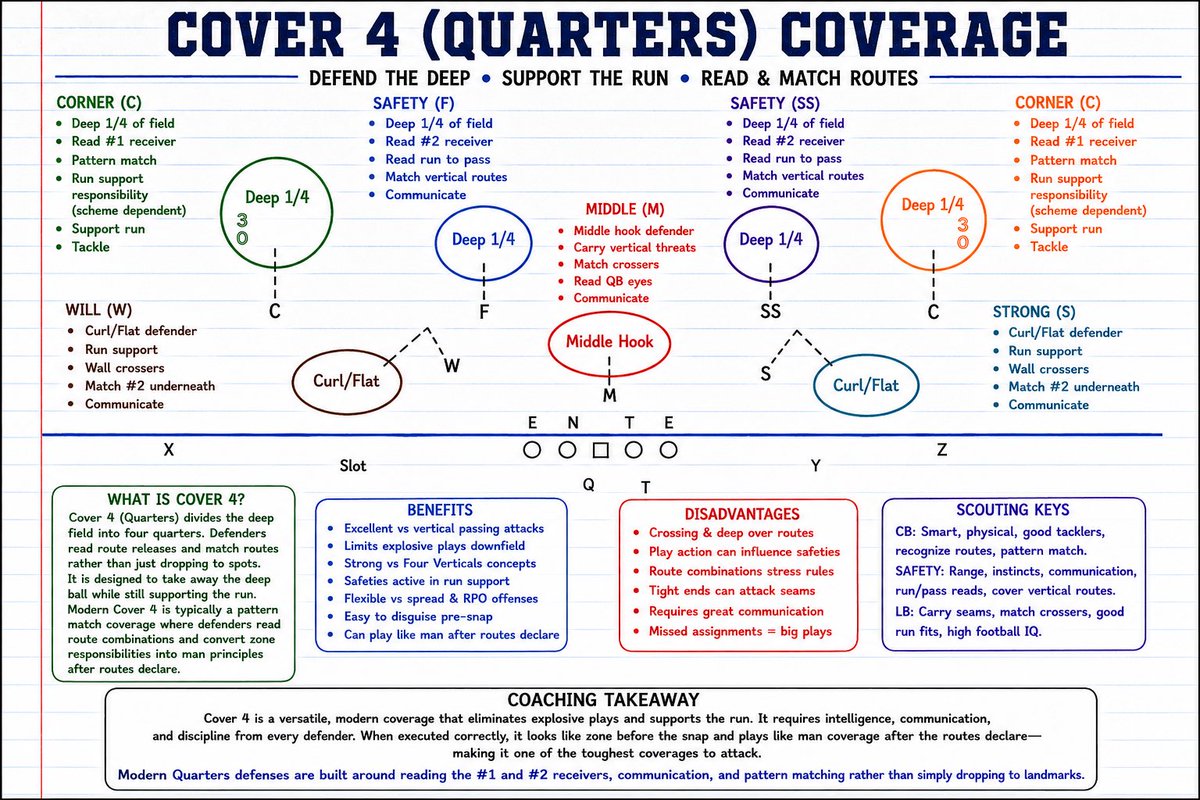
Cover 4, commonly known as Quarters Coverage, is one of the most versatile and widely used defensive coverages in football today
At its foundation, the deep part of the field is divided into four quarters, with the two cornerbacks and two safeties each responsible for a deep quarter. However, modern Cover 4 is much more than a traditional zone coverage. Most defenses utilize pattern match principles, allowing defenders to read route combinations and convert zone responsibilities into man principles after routes declare
From a coaching perspective, Cover 4 is designed to eliminate explosive plays while still maintaining a strong presence against the run
The coverage allows defenses to keep two safeties deep while giving them the flexibility to become active run defenders when they diagnose run action. It also provides answers against many of today’s most common offensive concepts, including Four Verticals, play action, RPOs, and spread formation
From a scouting perspective, Cover 4 places a premium on football intelligence, communication, discipline, and processing speed. Cornerbacks must recognize route concepts, safeties must read and react to the No. 2 receiver while supporting the run, and linebackers must understand route distributions while matching crossers and fitting the run
Key Benefits:
• Limits explosive plays down the field
• Strong against vertical passing concepts
• Allows safeties to support the run
• Effective versus spread and RPO offenses
• Creates disguise opportunities before the snap
• Converts zone coverage into man principles after routes develop
Key Challenges
• Requires outstanding communication and discipline
• Crossing routes and deep over routes can stress defenders
• Route combinations can challenge pattern match rules
• Play action can create conflicts for safeties
• Missed assignments often result in explosive plays
2
25
248
14,651
Recruiting Coordinator Connect retweeted
Jun 11
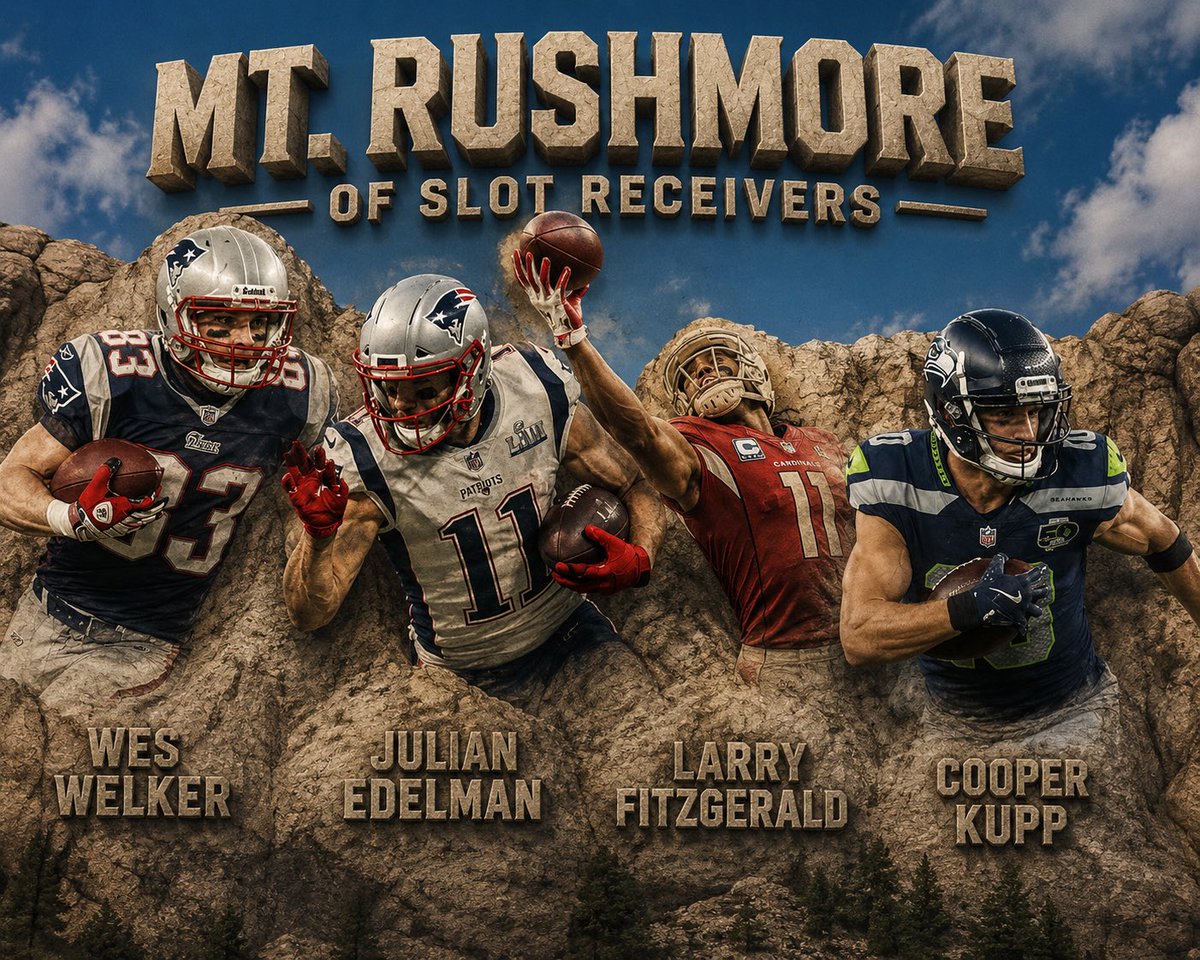
When discussing players who excelled in the slot, these four stand out because of their production, consistency, football intelligence, and ability to create matchup problems for opposing defenses. While each reached success in a different way, all four helped showcase the value of elite slot play at the highest level of football
• @WesWelker:
✅ Helped redefine the modern slot receiver position
✅ Five-time First Team All-Pro selection.
✅ Elite route runner with exceptional short-area quickness and change of direction
✅ Mastered option routes and consistently found openings against both man and zone coverage.
✅ Proved a slot receiver could be the focal point of an NFL passing attack.
• @Edelman11:
✅ Super Bowl LIII MVP
✅ One of the most accomplished postseason receivers of his generation.
✅ Built his reputation on toughness, reliability, and competitiveness
✅ Exceptional at finding soft spots in zone coverage and extending drives in critical situations
✅ Established himself as one of the greatest postseason slot receivers in NFL history
• @LarryFitzgerald:
✅ Built a Hall of Fame career primarily as an outside receiver before transitioning into one of the NFL’s most productive and effective big-slot weapons later in his career
✅ Finished his career with 17,492 receiving yards and 121 touchdowns.
✅ Possessed elite hands, route awareness, body control, and football IQ
✅ Created difficult matchups for linebackers, safeties, and nickel defenders
✅ One of the most dependable receivers to ever work the middle of the field
• @CooperKupp:
✅One of the most complete slot receivers the game has ever seen
✅ 2021 Receiving Triple Crown winner and Super Bowl LVI MVP
✅ Recorded 145 receptions, 1,947 receiving yards, and 16 touchdowns during his historic 2021 season
✅ Elite understanding of leverage, spacing, timing, and defensive structure
✅ Consistently creates separation through technique and route precision while remaining dangerous after the catch
2
3
13
1,477
Recruiting Coordinator Connect retweeted
Jun 11
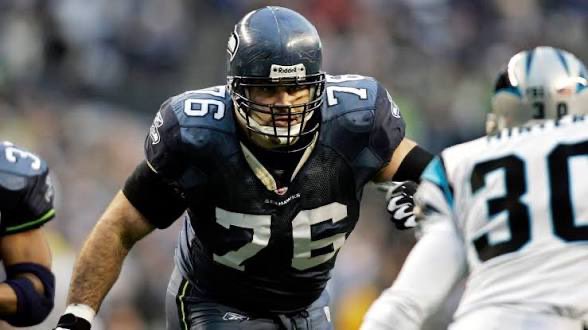
From a scouting perspective, Steve Hutchinson was the prototype for what NFL teams look for in an elite offensive guard and one of the cleanest offensive line evaluations of his generation. He possessed the rare combination of size, strength, athleticism, football intelligence, toughness, and technical refinement that allowed him to dominate at every level of football
What immediately stood out on film was his ability to consistently control defenders at the point of attack. Hutchinson played with outstanding leverage, hand placement, balance, and body control. He generated movement in the run game, finished blocks with a physical edge, and routinely created running lanes against some of the best defensive fronts in football. Whether executing down blocks, combination blocks, pulling assignments, or climbing to the second level, he displayed the movement skills and awareness coaches covet in an interior offensive lineman
As a pass protector, Hutchinson was equally impressive. He possessed exceptional lower body strength and anchor ability, allowing him to absorb power rushers without giving ground. His footwork, balance, and ability to recognize stunts, twists, and blitzes made him one of the most dependable interior linemen in NFL history. He consistently kept the pocket firm and provided quarterbacks with a clean interior platform to operate from
His combine testing confirmed the athletic traits that showed up on film:
• Height: 6’5”
• Weight: 315 lbs
• 40 Yard Dash: 5.14
• 10 Yard Split: 1.74
• Bench Press: 31 reps
• Vertical Jump: 33.5”
• Broad Jump: 8’10”
• Short Shuttle: 4.74
For a 315 pound interior offensive lineman, those numbers were outstanding and showcased the explosiveness, movement skills, and functional strength that helped make him one of the premier guard prospects in the country
At @UMichFootball, Hutchinson established himself as one of the most decorated offensive linemen in college football. He earned Consensus First Team All American honors, was a two time First Team All Big Ten selection, and won the Jim Parker Trophy as the nation’s top offensive lineman
His NFL career more than validated the scouting report:
• Pro Football Hall of Fame Inductee
• 7× Pro Bowl Selection
• 5× First Team All Pro
• 2× Second Team All Pro
• NFL 2000s All Decade Team
• 17th Overall Pick in the 2001 NFL Draft
For scouts, Hutchinson checked every major evaluation box:
• Elite functional strength and play power
• Outstanding balance and body control
• High level football intelligence and awareness
• Excellent movement skills for his size
• Strong anchor versus power rushers
• Consistent hand usage and technique
• Ability to thrive in both zone and gap schemes
• Exceptional toughness, competitiveness, and consistency
What separated Hutchinson from most guards was the fact that his athletic testing matched what showed up on film. He had the power to move defenders off the ball, the agility to reach second level targets, and the football intelligence to consistently diagnose and react to defensive movement. He was the type of player offensive coordinators could build both their run game and pass protection schemes around
1
8
41
12,281
Recruiting Coordinator Connect retweeted
Jun 11
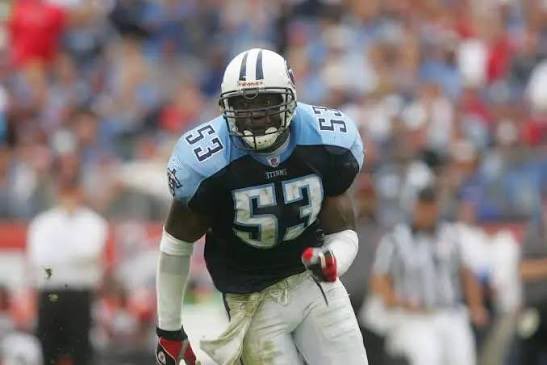
Keith Bulluck was one of the most impactful linebackers of the early 2000s because he combined athleticism, instincts, toughness, and playmaking ability at a high level. He had the range to make plays all over the field, the awareness to diagnose quickly, and the versatility to impact both the run and pass game. His ability to create negative plays, generate turnovers, and make stops in critical moments made him a player offenses always had to account for
From a scouting perspective, Bulluck stood out because of his speed, pursuit ability, football IQ, and ability to play in space. He processed information quickly, took efficient angles to the football, and possessed the athleticism to cover running backs and tight ends while still holding up against the run.
At @CuseFootball, Bulluck finished his career with 375 tackles, led the Big East in tackles as a senior, earned First Team All Big East honors, and received Syracuse’s Bill Horr MVP Award.
His pre draft testing reinforced the athletic traits scouts saw on film:
• Height: 6’3”
• Weight: 244 lbs
• 40 Yard Dash: 4.47
• Vertical Jump: 38”
• Broad Jump: 9’11”
• Short Shuttle: 4.13
• 3 Cone: 7.33
Bulluck carried that production into the NFL with the @Titans , where he established himself as one of the league’s top linebackers.
NFL Accolades
• Pro Bowl (2003)
• 2× First Team All Pro (2003, 2007)
• Second Team All Pro (2002)
• Led the NFL in tackles (2004)
• Tennessee Titans Ring of Honor
NFL Career Statistics
• 1,088 tackles
• 18 sacks
• 21 interceptions
• 15 forced fumbles
• 13 fumble recoveries
• 1 defensive touchdown
Bulluck’s career is a great example of the value of a linebacker who possesses elite range, instincts, athleticism, and the ability to impact every level of a defense. From a coaching and scouting perspective, he was the type of player capable of staying on the field in any situation and consistently making game changing plays
5
10
114
114,880
Recruiting Coordinator Connect retweeted
Jun 11
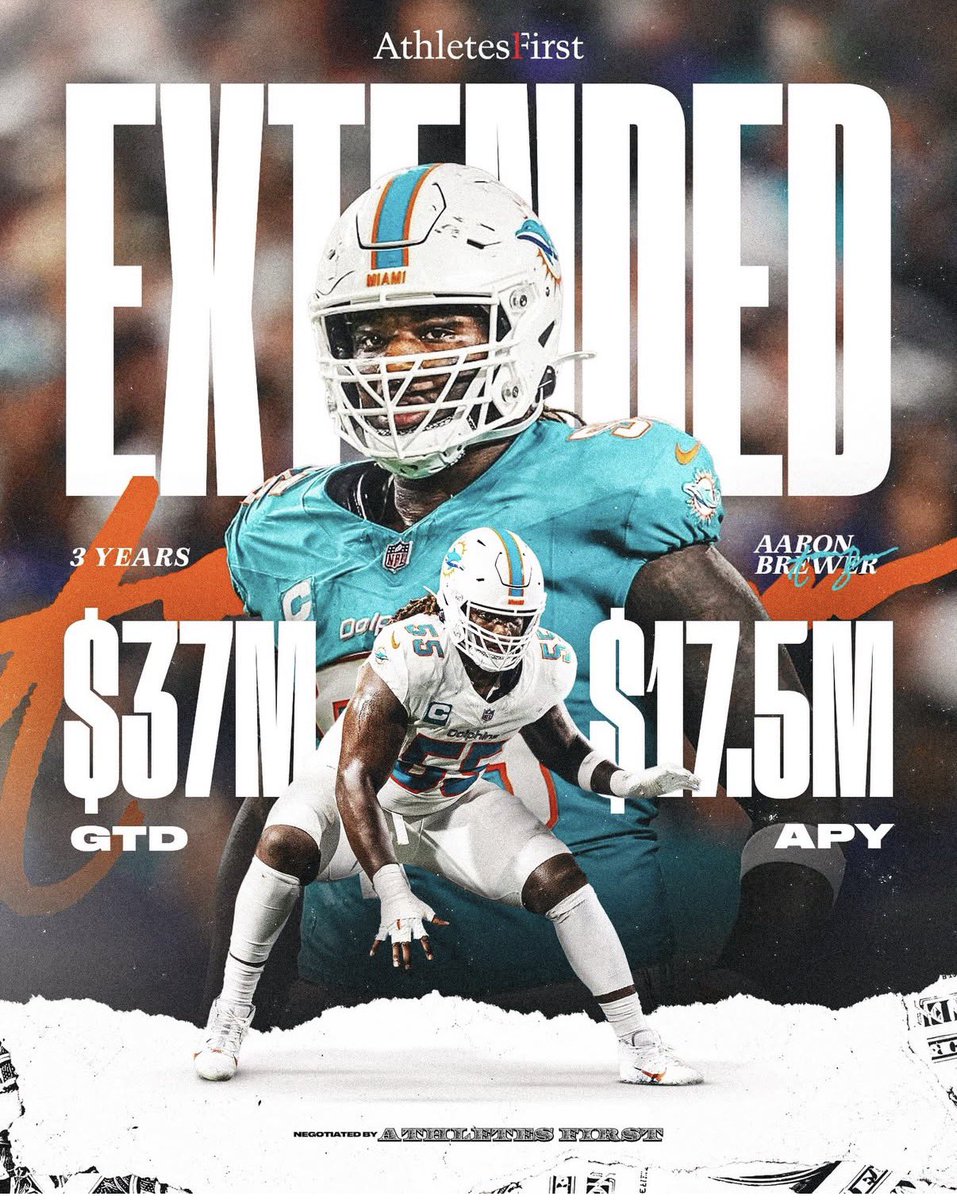
Shoutout to my guy and @CGSAllStar alum @Bigtime_AB on earning a well deserved extension with the @MiamiDolphins
Brewer put together an outstanding 2025 season, earning Second Team All Pro honors and becoming a finalist for the NFL’s inaugural Protector of the Year Award. He started all 16 games, allowed just one sack, and anchored a Dolphins rushing attack that ranked 4th in the NFL in rushing yards per game while helping pave the way for De’Von Achane’s 1,350 rushing yards and NFL leading 5.7 yards per carry
Well deserved and proud to see another CGS alum continuing to make an impact at the highest level!
1
5
25
5,306