
I analyse the fault lines AI creates in judgement, governance, and power. Chair of MKAI.
Joined March 2009
- Tweets 1,966
- Following 2,302
- Followers 1,516
- Likes 1,547
361 Photos and videos
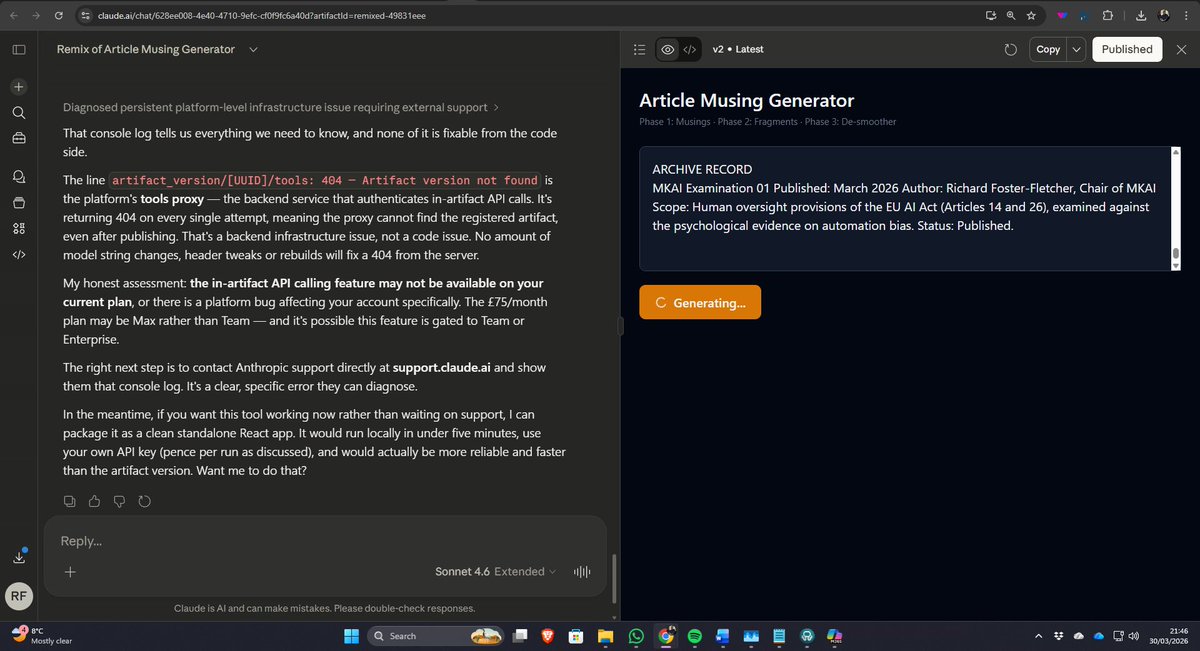
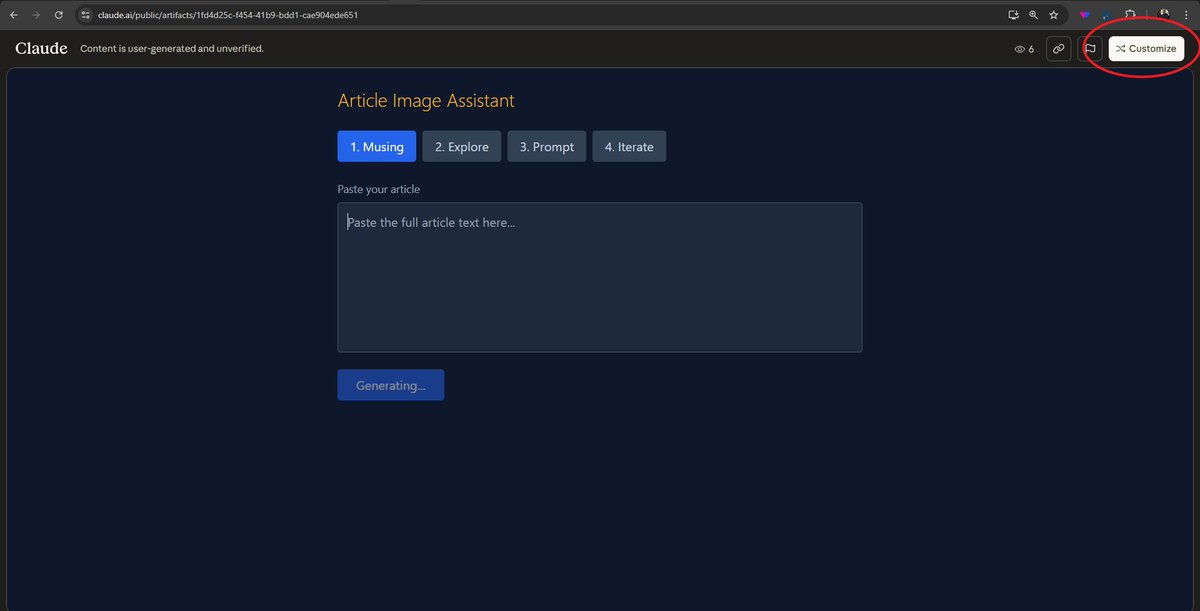




The Customize button on published @AnthropicAI artifacts has been broken for weeks. Opens a blank chat, no code loaded.
40 artifacts, no original conversations. No way to edit any of them.
Anyone else?
1
53
Humans& just raised a $480M seed round at a $4.5B valuation.
Thinking Machines had the team, the vision, and the valuation too. But now the team is departing. Could access to compute be the reason?
It's GPUs that decide whether ventures can be built.
Humans& needs its investor Nvidia to help them jump the queue.
Is this the future of AI lab startups: you need capital, talent, vision, and a VIP pass to GPUs?
1
1
97
37,762
If coding is now the wrong place to invest in your development, what's the right one?
Learn to read systems.
1. Learn to see how the parts connect to the whole.
2. Learn to ask why something is built the way it is.
3. Learn to follow a decision to its consequences.
Coding is commoditised by AI, architecting is more human than ever.
Use the former, master the latter.
1
102
59,259
Congrats @Replit, this is really rather impressive...

AI builds web apps well. Mobile apps have been harder.
Now, the inventor of React (the technology that AI uses to build apps), has a new announcement.
1
1
93
5,533
MIT puts enterprise AI rollout at 5%. If you read that as AI failing to prove its value, please turn your attention to Replit.
They just announced natural-language mobile app development. Describe the app, preview it on your phone, ship to the App Store. A year ago this took a team, weeks, and Apple process fluency. Now it takes minutes.
What will you ship?
48
108,344
AI has no network effects.
When a colleague uses the same model, their queries do not improve yours. When a thousand employees prompt the same system, the system does not accumulate their collective intelligence. The organisation does not get smarter through aggregate use. Each session begins without memory of the last. Each user interacts with something that has already forgotten them.
This is different from most platforms that became valuable at scale. Slack becomes more useful when more colleagues are on it. Google became more useful as more people searched, because aggregate behaviour informed relevance. Network effects meant that adoption by others increased value for you.
AI does not work this way. Your prompts do not train the model your colleagues use. Their refinements do not benefit you. The institutional knowledge your team pours into these systems does not accumulate anywhere retrievable. It dissipates. The organisation invests cognitive effort into a system that treats every interaction as the first.
The result is a strange inversion. Platforms that became dominant through network effects rewarded collective adoption. AI rewards individual skill. The person who learns to extract value from Claude is not contributing to a shared resource. They are building a private competence that does not transfer.
Organisations are treating AI as infrastructure, something that improves with scale and shared use. It is closer to a tool, where skill matters and accumulation does not.
4
3
15
144,661
The Gemini growth story is interesting but the data measures something specific. Traffic to gemini.google.com grew from 5.7% to 21.5% over twelve months.
Usage inside Workspace does not appear in these numbers. The growth comes from users seeking out AI directly, not from being funnelled through existing productivity tools.
Copilot, despite being embedded in Windows, Edge, and Office, declined from 1.5% to 1.2% in the same period.
Distribution does not automatically translate into engagement.
1
260
Workers are adopting AI tools whilst remaining sceptical of employer intentions and uncertain about quality. The gap between executive enthusiasm and workforce anxiety persists.
1
67

19 Dec 2025
Right now, the future belongs to the people who are too busy building to explain.
1
2
110
17 Dec 2025
It's not a robot that does your work problem. It's an ownership problem. Who owns the robot.
4
84
16 Dec 2025
The first singularity is not when machines exceed humans. It is when individuals exceed institutions.
2
67
12 Dec 2025
Participants with strong knowledge of ranking and moderation systems reported higher concern about manipulation.
They flagged misinformation less often.
They engaged less with opposing viewpoints.
Understanding the system shaped behaviour in ways that reduced participation.
Harvard Misinformation Review, October 2025
2
67