
Geological Engineer · Mud Logger Senior | GIS Specialist | AI Applied to Geosciences | Graphic Designer & Web3 Branding | Ambassador @QwertiAI
Joined July 2010
- Tweets 24,501
- Following 6,402
- Followers 770
- Likes 14,390
2,843 Photos and videos

Pinned Tweet

Mar 19
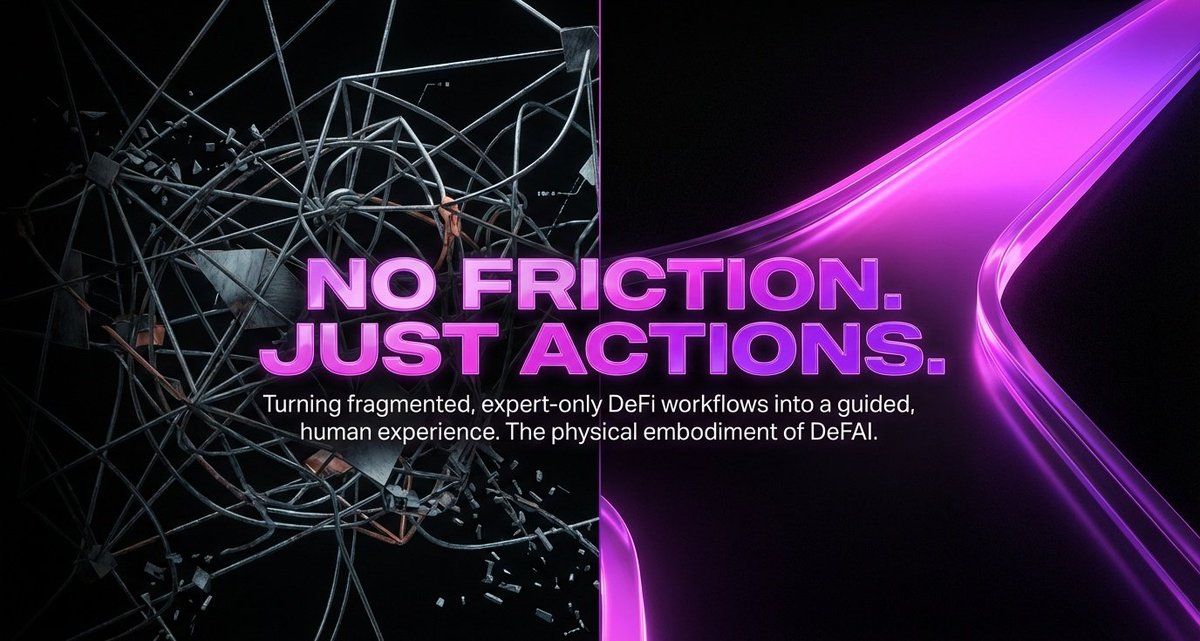
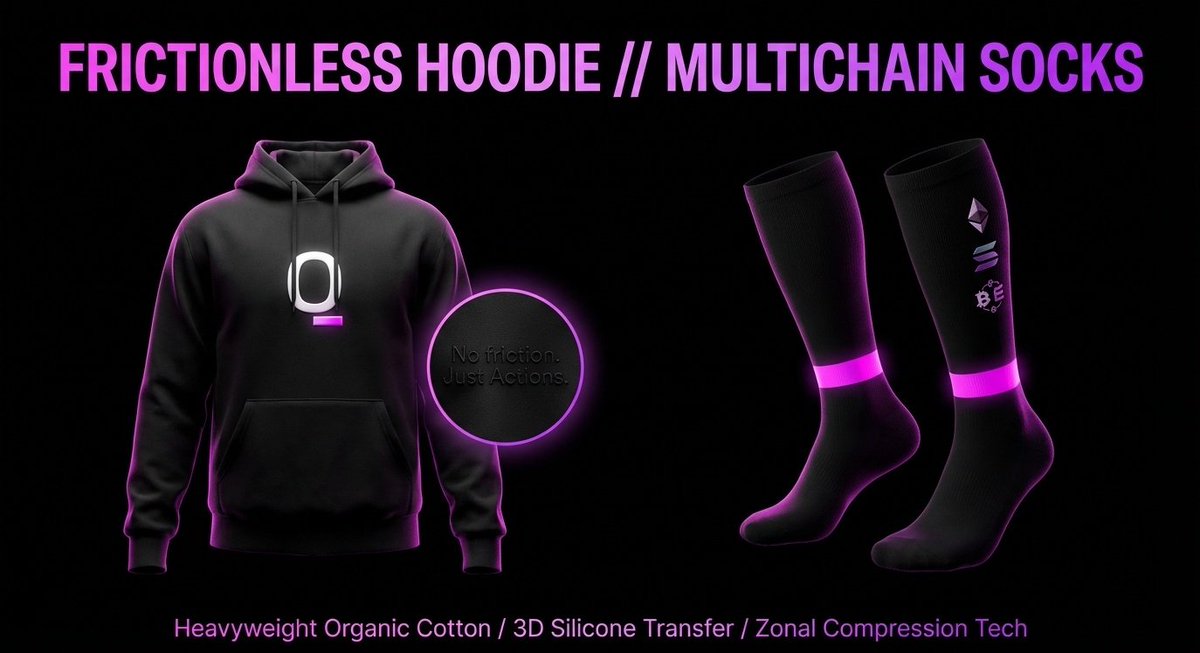
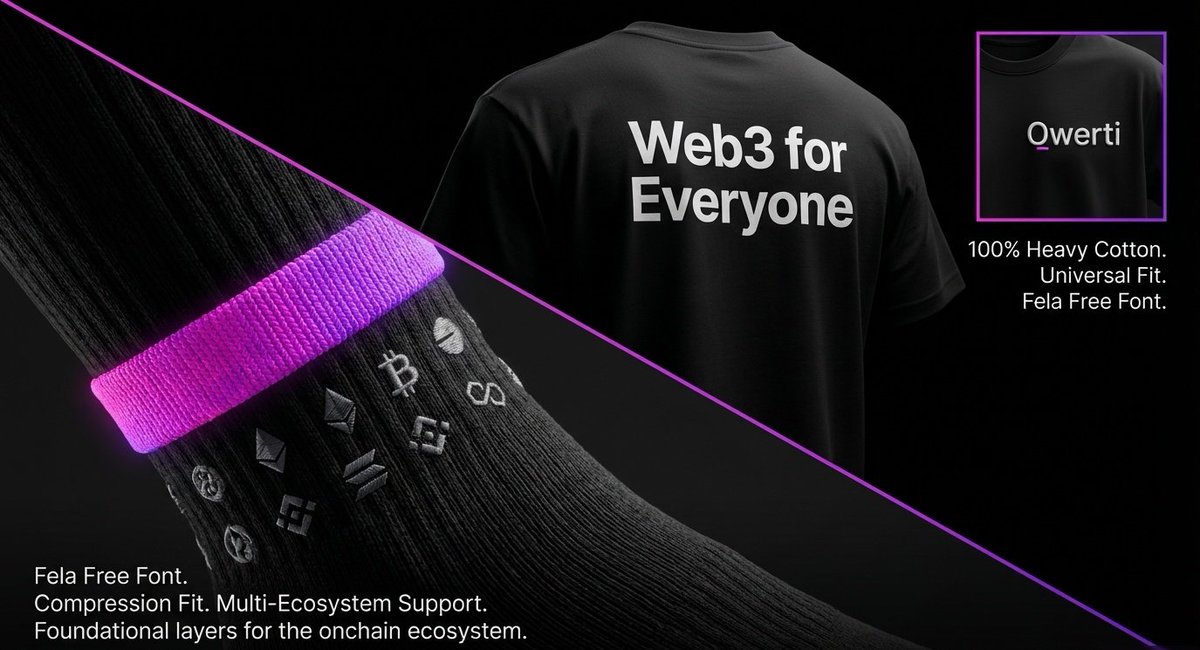
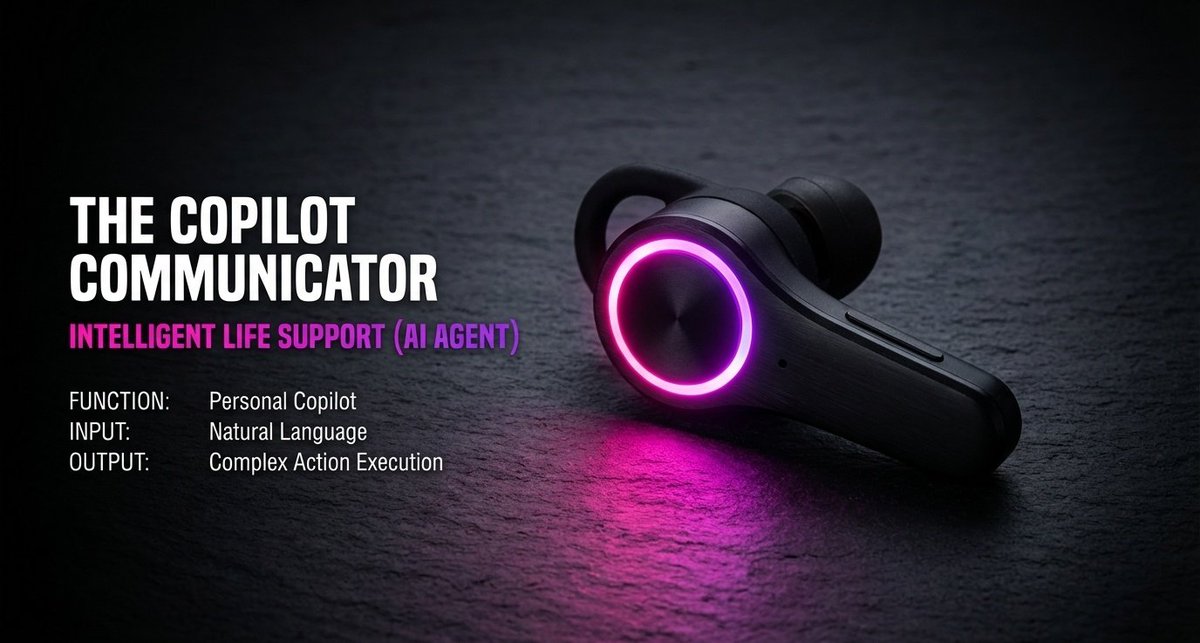
1/ I'm excited to be active with the @QwertiAI ecosystem & everything they're building, and I'm pleased to submit my proposal to the "Qwerti Merch Design Challenge", integrating the visual identity and key ecosystem concepts to ensure the design stands out as an attractive piece.
7
4
10
729

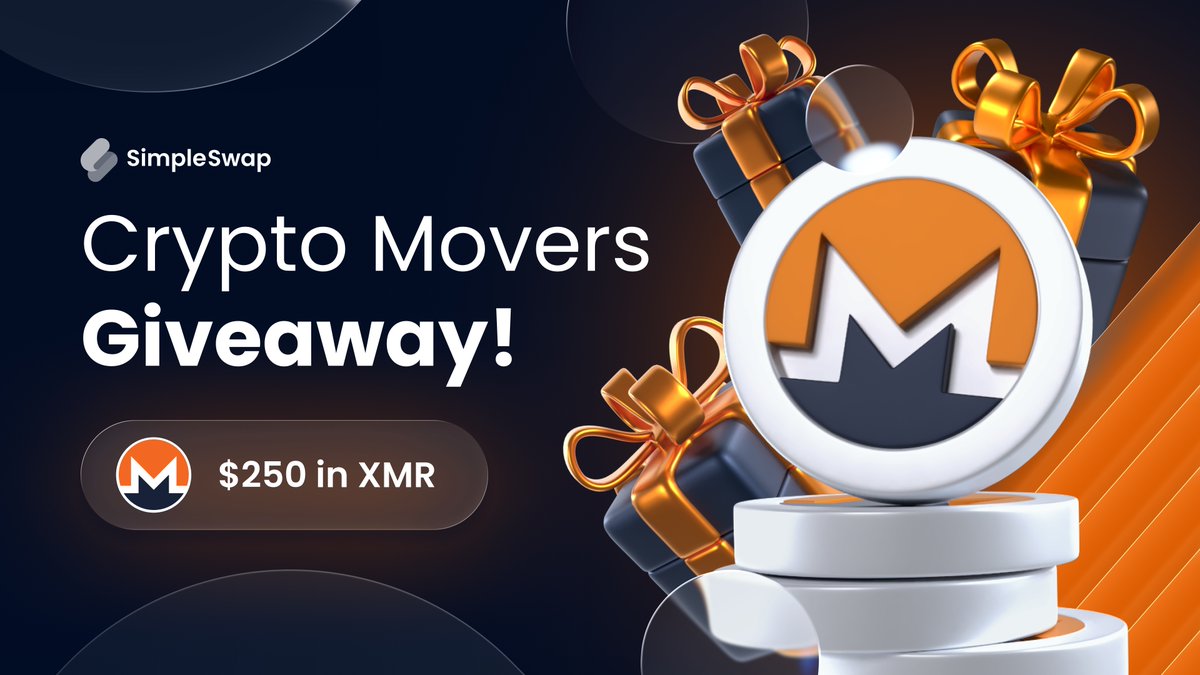
$250 giveaway for crypto movers 🎁
Self-custody is settled – your keys, your coins. The harder half is moving between your assets: hundreds of venues, a dozen networks, the route still on you. That’s our new piece: The New Meaning of Self-Custody.
Find your mover type, win $50 in monero:native (5 winners):
1. Like, RT & follow @SimpleSwap_io
2. Take the quiz → ivlv.me/r2mAY
3. Share your result card on X with mentions @SimpleSwap_io and #SimpleSwapCryptoMover
Campaign ends: June 24
Prize: 5 winners will be randomly selected on June 25 to receive $50 each.
4
J. Marin (⛽,🛢️) $OIL retweeted

$250 giveaway for crypto movers 🎁
Self-custody is settled – your keys, your coins. The harder half is moving between your assets: hundreds of venues, a dozen networks, the route still on you. That’s our new piece: The New Meaning of Self-Custody.
Find your mover type, win $50 in monero:native (5 winners):
1. Like, RT & follow @SimpleSwap_io
2. Take the quiz → ivlv.me/r2mAY
3. Share your result card on X with mentions @SimpleSwap_io and #SimpleSwapCryptoMover
Campaign ends: June 24
Prize: 5 winners will be randomly selected on June 25 to receive $50 each.
70
81
118
3,636
J. Marin (⛽,🛢️) $OIL retweeted

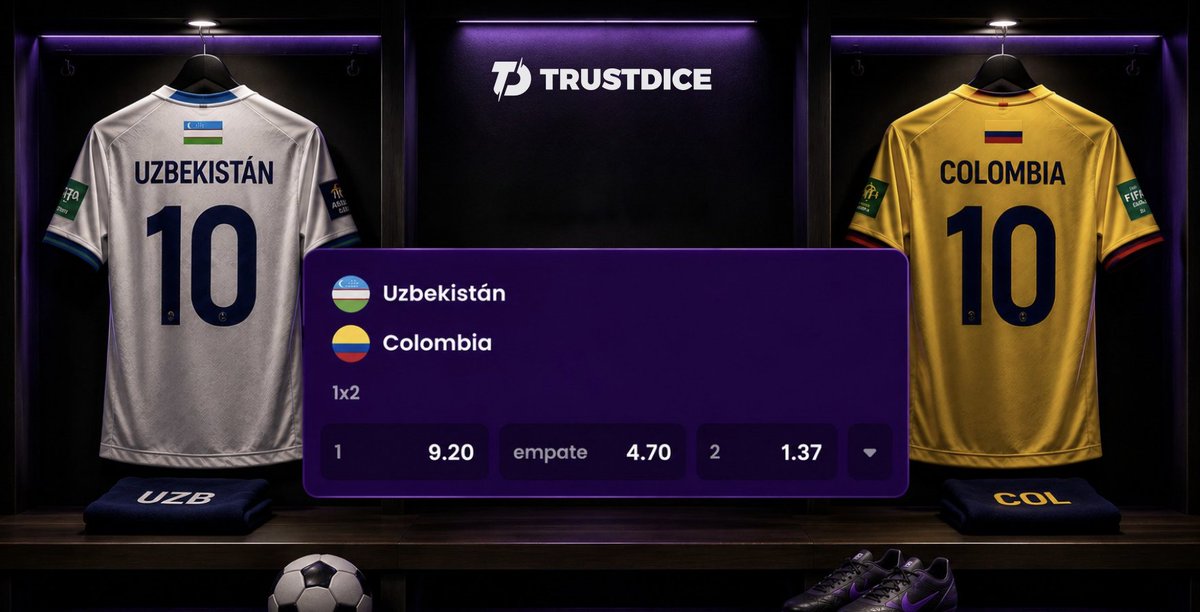
Colombia llega como favorita
Pero este #Mundial ya nos ha enseñado que nada está garantizado
$15 para 2 personas al azar que acierten el resultado exacto de #Colombia 🇨🇴 vs #Uzbekistán 🇺🇿
⚽ cutt.ly/Nt8wpFMB
❤️ Like 🔄 RT
💜 Sigue a @TrustDiceEs
💬 Deja tu marcador exacto y tu usuario de TrustDice.
Cierra al inicio del partido
20
17
19
667
J. Marin (⛽,🛢️) $OIL retweeted

17h
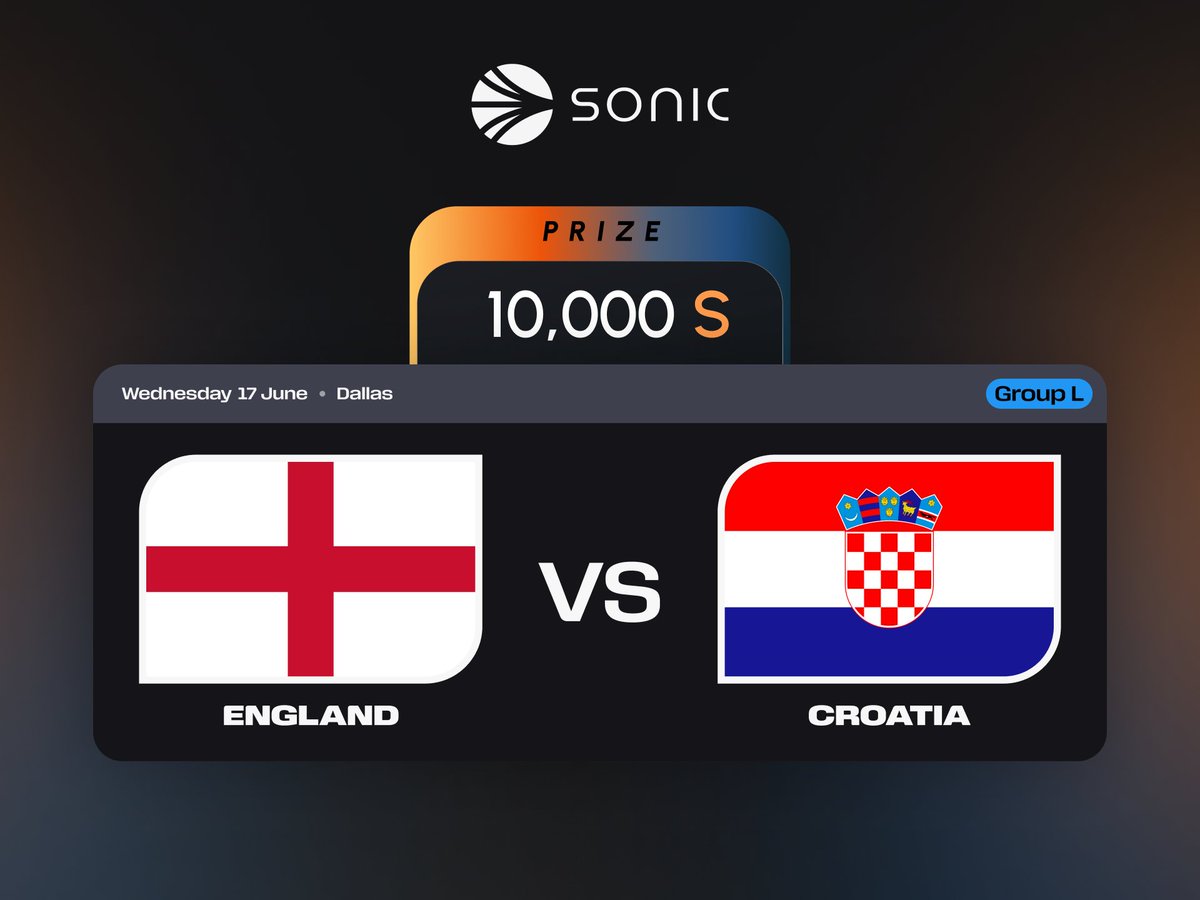
The Sonic World Cup Challenge continues! 🏆
This week's highlighted game: England vs. Croatia.
To enter, comment below with the outcome you predict, including the final score.
The winner will earn 10,000 $S.
Good luck! 🤝
2,455
802
1,819
90,610
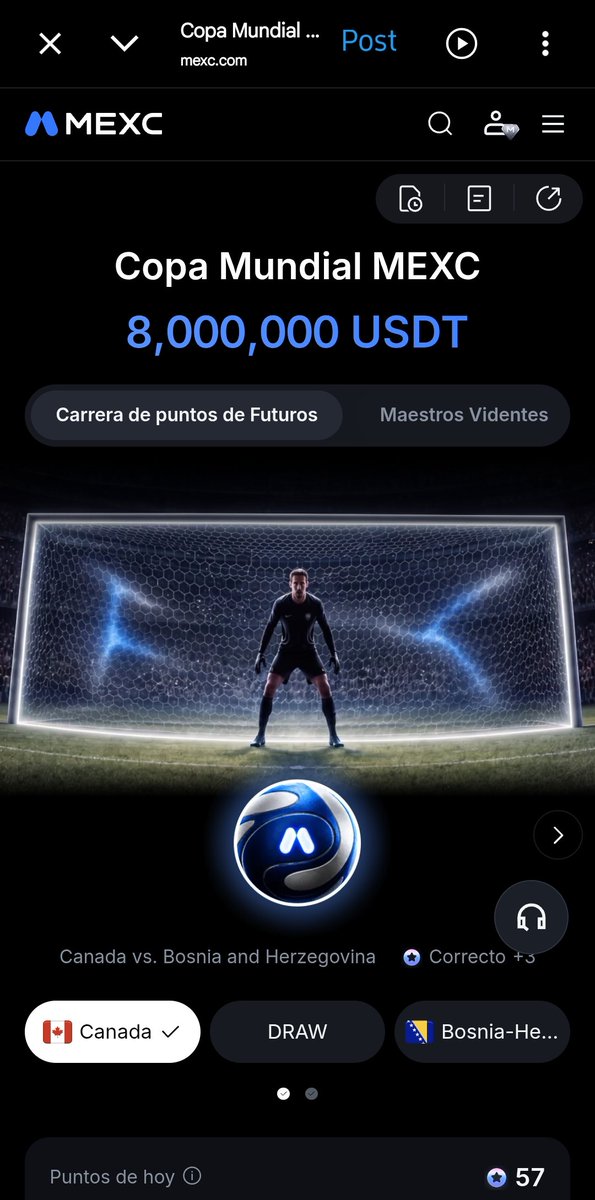
Trade Real Stocks with #MEXC0Fee s.mexc.com/share/YFSR6csXYG
3

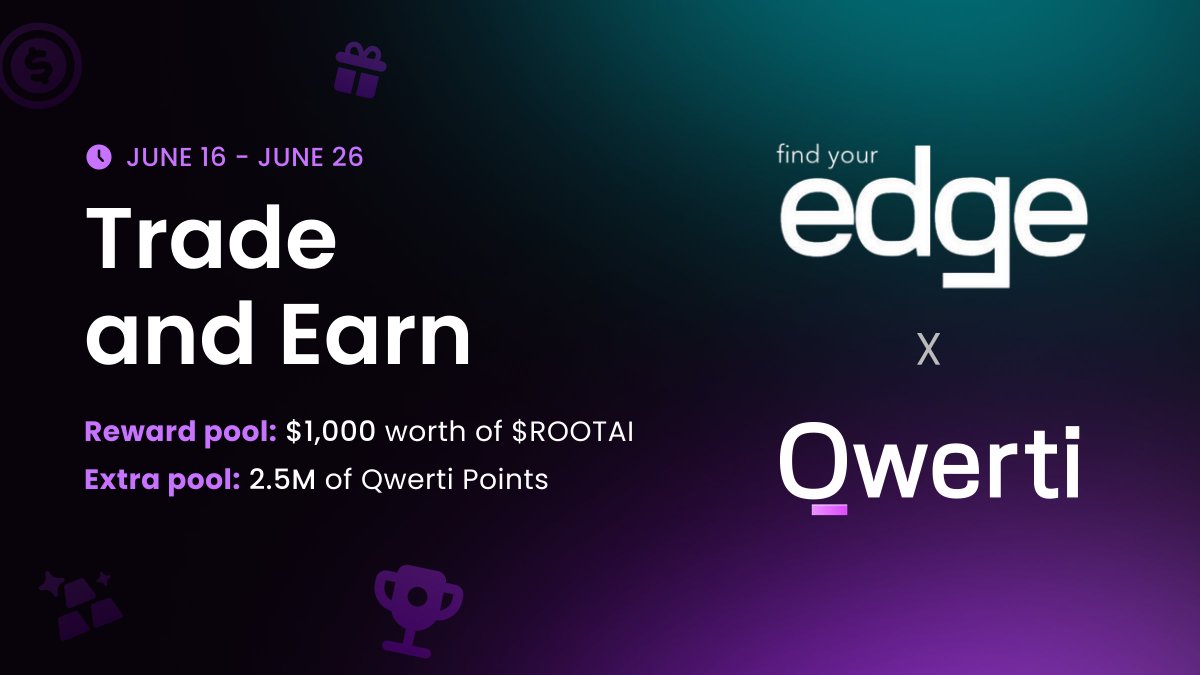
The wait is over. 😏
We are officially launching a massive joint trading event with @Root_Edge — the team building decentralized infrastructure for high-performance Edge AI.
Starting right now, trade $ROOTAI directly through the Qwerti app or the Root website widget to claim your share of the double incentive pool:
🎁 The Rewards:
→ $1,000 worth of $ROOTAI tokens
→ 2.5M Qwerti Points
Timeline: June 16th – June 26th, 2026.
Fire up the app, secure your volume, and let's win. Onward! 🔥
64
46
201
25,998
J. Marin (⛽,🛢️) $OIL retweeted

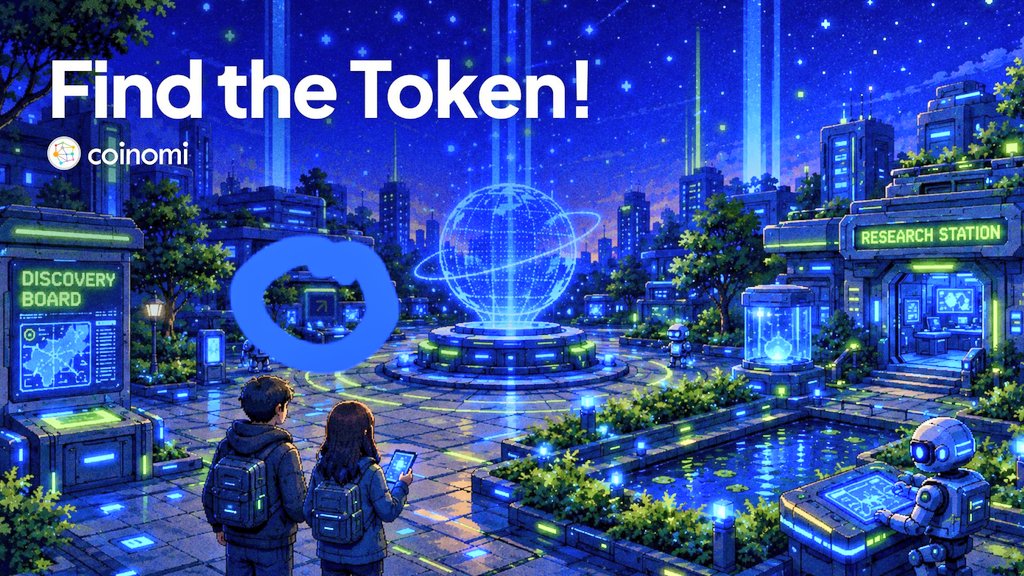
🚨 $500 in $PARK Giveaway with @_Earnpark
1️⃣ Spot the hidden logo of our partner EarnPark & drop a screenshot below
2️⃣ Follow @CoinomiWallet & @_Earnpark
3️⃣ RT & 💚 plus tag 3 friends
💰10 winners will share the prize, distributed after TGE on June 29th
Ends: June 21st

377
422
504
11,491
J. Marin (⛽,🛢️) $OIL retweeted

Jun 15
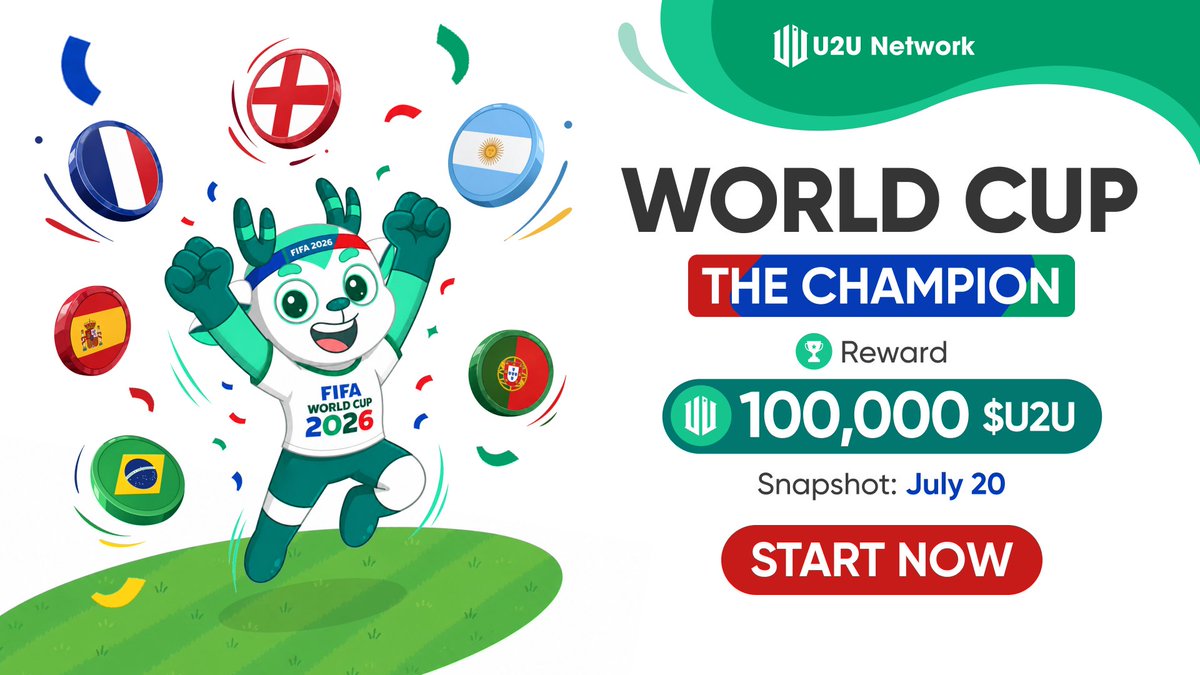
🏆 100,000 $U2U WORLD CUP THE CHAMPION
Who will lift the World Cup trophy?
Predict the champion and share in a 100,000 $U2U prize pool!
🎁 Reward: 100,000 $U2U
⏰ Snapshot: July 20
🏅 10 earliest correct predictions will split the pool.
To join:
→ Follow @u2u_xyz
→ Like Repost this post
→ Comment: Your WC Champion Prediction MetaMask wallet address
eg. Germany Metamask Wallet Address
The earlier you predict correctly, the better your chances.
Who's your pick? 👇
463
473
576
23,149
Jun 13
In today's Web3 landscape, a clear contradiction exists: cutting-edge Artificial Intelligence technologies capable of autonomous operation are being developed, yet the humans trying to support these ecosystems remain trapped in outdated exchange processes, jumping between multiple tabs, external wallets, and error-prone bridges. Those building tomorrow's infrastructure cannot allow their community to suffer the fragmentation of yesterday.
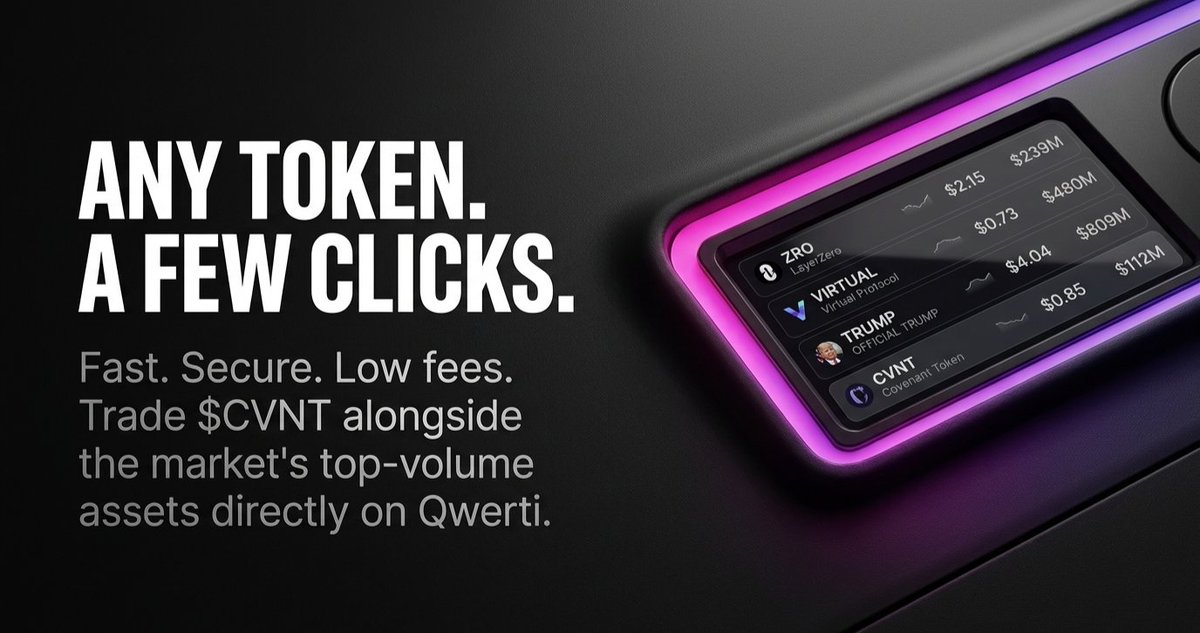
Under this premise, @OpenCovenant infrastructure platform specifically designed for deploying autonomous agents—has forged a strategic alliance with @QwertiAI, natively integrating its white-label widget into its official interface. The technical objective behind this move is straightforward: to completely transform the experience of acquiring the native $CVNT token.
With this deployment, users are no longer forced to leave the original Covenant ecosystem to go to an external exchange.
The flow is reduced to a linear and frictionless action within the token's own page: connect an existing wallet (or create one in seconds), define the payment method, and complete the transaction. Behind the scenes, completely invisible to the user, Qwerti's aggregation engine handles the most efficient routes across more than 70 different blockchains.
Beyond its purely cryptographic multi-chain flexibility, the integration breaks down the technical barrier thanks to robust fiat channel support (fiat on-ramp).
This allows for direct transactions using everyday tools like credit cards, Apple Pay, and Google Pay—an essential step in unifying traditional capital onboarding with the native agility of DeFi.
To solidify the rollout and foster initial liquidity in this new unified channel, both entities have announced an incentive program for their active community:
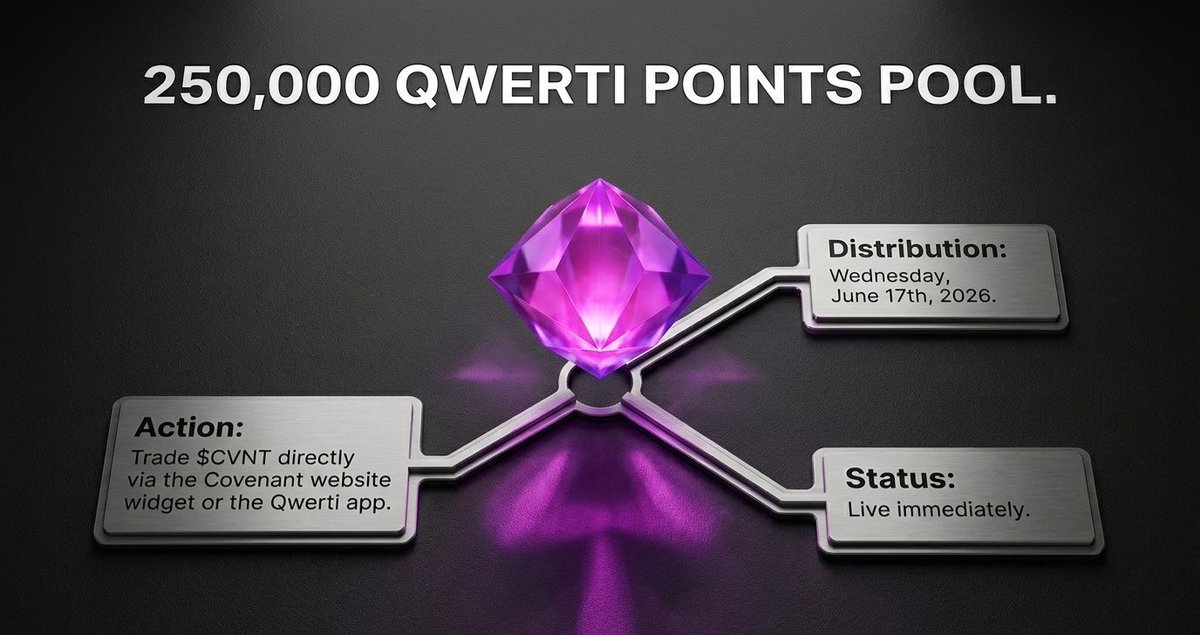
💸 Launch Reward Fund: An exclusive pool of 250,000 Qwerti Points has been launched. This incentive is intended for any user who trades $CVNT directly, whether by leveraging the new widget embedded in the Covenant web portal or by interacting through the main Qwerti application. The official distribution of these rewards will take place on Wednesday, June 17, 2026.
This integration redefines the distribution standard for Agent Economy-focused assets. When technical complexity is concealed behind intelligent design, adoption ceases to be a challenge and becomes a natural consequence.
49
Jun 13
While the mass attention of the markets is often scattered, chasing ephemeral narratives and short-term noise, there are projects advancing under the radar, focused exclusively on solving the real headaches of the Web3 ecosystem: fragmentation and friction in the user experience.
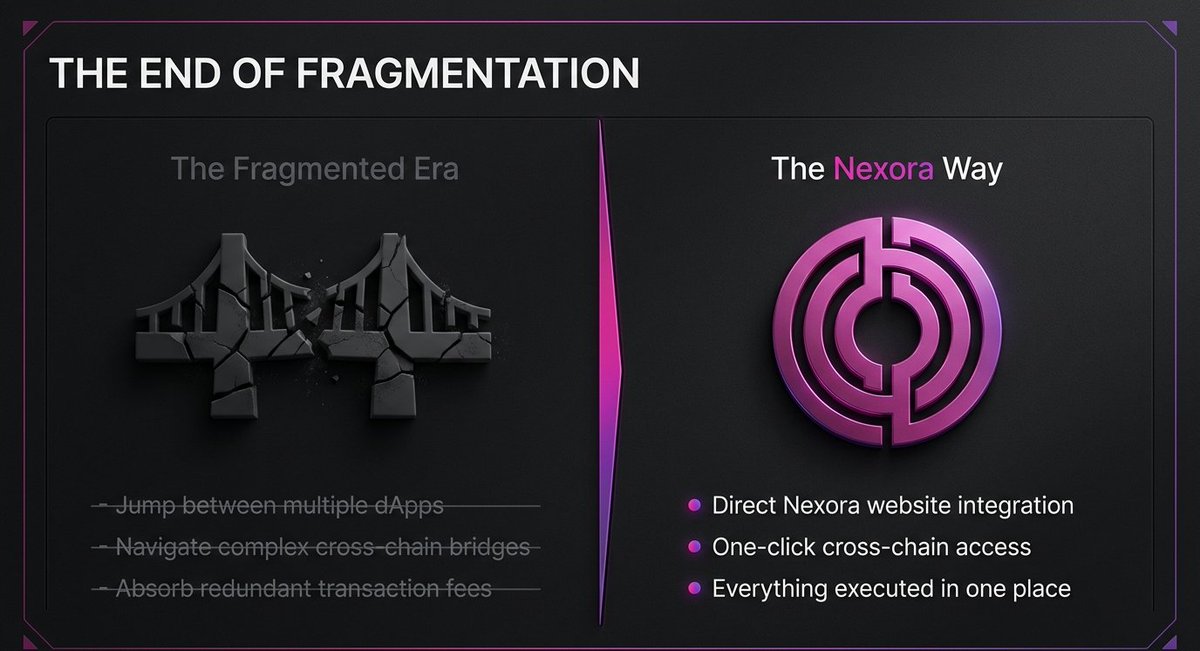
The official integration of $NEX into @QwertiAI is a prime example of this quiet but powerful evolution. @NexoraCoin26112, recognized for its rigorous focus on transparency and the development of a native Ethereum infrastructure that prioritizes security, has taken a key strategic step by joining the Qwerti ecosystem. Instead of forcing its users to navigate an endless maze of decentralized applications (dApps), complex bridges, or external platforms just to acquire its token, the project has implemented the "Nexora White-Label Widget."
This interactive tool, powered by Qwerti's aggregation technology, is fully integrated into the official Nexora website. The technical result is a game-changer: full cross-chain compatibility, simplified swap flows, and, perhaps most disruptive for mass adoption, direct support for purchases using traditional credit or debit cards. Now, acquiring $NEX requires just a few clicks and can be done without leaving the home interface.
To commemorate this technical milestone and boost initial liquidity, both platforms have designed an aggressive double incentive program with a distribution date set for Monday, June 15, 2026:
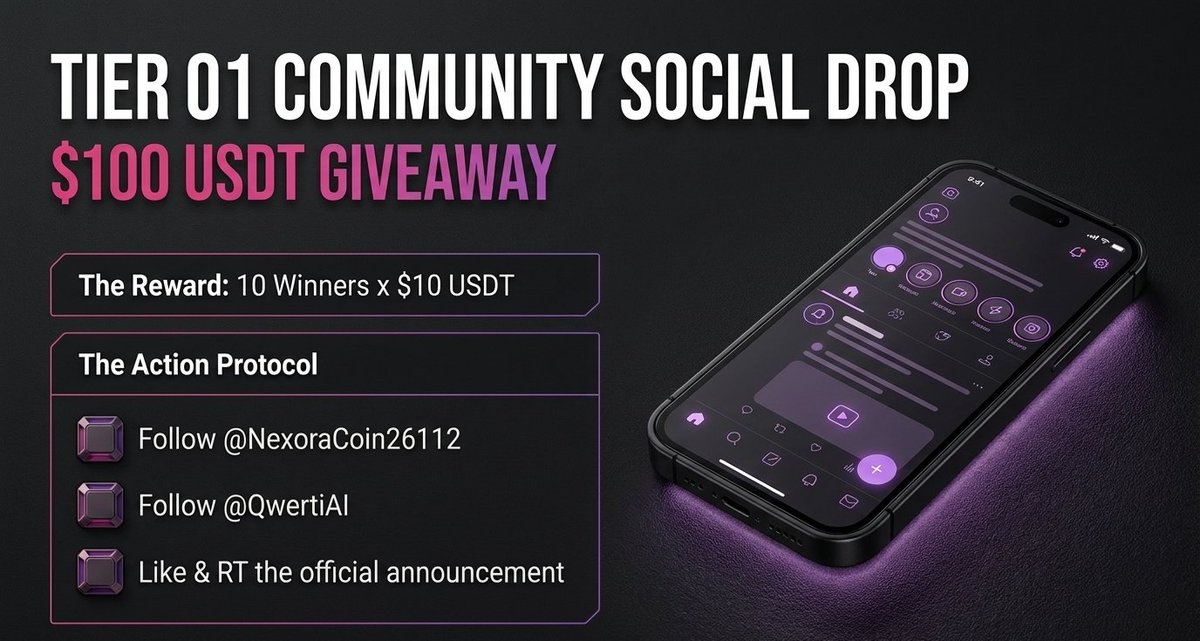
1️⃣ Community Dynamics: A direct giveaway of $100 USDT for ten winners ($10 USDT each), whose only eligibility requirement is active social media engagement (following the official accounts @NexoraCoin26112 and @QwertiAI, along with liking and retweeting the official announcement).
2️⃣ Activity Reward Fund: A massive pool combining $400 USDT in cash and one million Qwerti Points, specifically designed to reward organic volume and any user who executes real transactions with $NEX, either through the integrated widget on the Nexora website or directly within the main Qwerti application.
The era of jumping between networks and struggling with hostile interfaces is coming to an end. The integration is now fully operational.
5
J. Marin (⛽,🛢️) $OIL retweeted

Jun 12
🚨 ¡EL CAPIBARA YA SE UNIÓ A LA FIEBRE MUNDIALISTA! ⚽️
¡Disfruta el ritmo y vive la emoción del fútbol en MEXC!
Opera, predice los partidos y gana parte del gran premio.
🔥 GIVEAWAY MUNDIALISTA (3 pasos):
▫️ Síguenos RT Like
▫️ Menciona a 2 amigos con #MEXCKickoffFest
▫️ Inscríbete en el evento (link en comentarios) y comparte tu captura UID abajo 👇
🎁 100 USDT en premios (10 ganadores × 10 USDT)
📅 Disponible hasta el 20 de junio
102
133
169
3,530
J. Marin (⛽,🛢️) $OIL retweeted

Jun 10
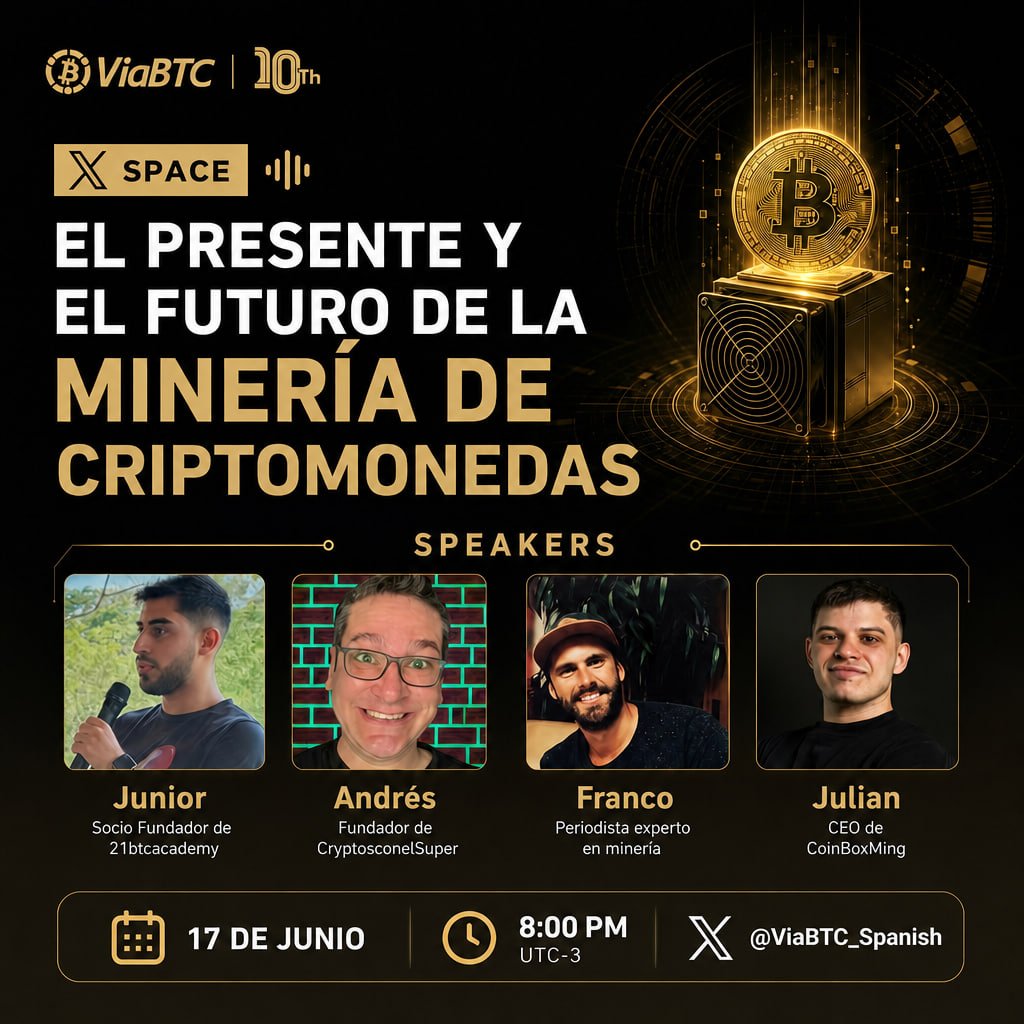
Space en X por el 10.º aniversario de ViaBTC 🥳
El 17 de junio a las 8 PM (hora de Argentina🇦🇷) tendremos un Space especial por nuestro #ViaBTC10th, donde tendremos varias actividades para premiar a nuestros seguidores (lean hasta el final) 👇.
Tendremos 4 invitados al Space para hablar del "Presente y futuro de la minería de criptomonedas"; el host será @joc_ra, SNS Manager de ViaBTC.
Tenemos de invitados a:
Julian Caccia 🇦🇷 - CEO de @coinboxmining
Andrés Videla 🇲🇽 - @cryptossuper - Minero y Youtuber
Franco Scandizzo 🇦🇷 - @francoscandizzo - Reportero experto en minería
Junior 🇨🇷 - @jrbtc97 - Minero y fundador de 21BTCAcademy
En esta ocasión haremos preguntas y respuestas sobre el tema a cada invitado, para conocer su experiencia y visión.
SORTEO📢
Estaremos repartiendo entre 13 ganadores unas 5 gift box y 500 USDT en premios, para quienes cumplan los siguientes requisitos:
1. Seguir a @ViaBTC_Spanish
2. Dar like y RT a este post.
3. Dejar un comentario con felicitaciones a ViaBTC por su 10mo aniversario, usando la etiqueta #ViaBTC10th y mencionando la cuenta de @ViaBTC_Spanish
Durante el Space también tendremos otra actividad donde elegiremos 3 ganadores que compartan sus aprendizajes y experiencias de la actividad. Podrán ganarse 100 USDT 1 gift box cada uno.
Al final del Space, anunciaremos a los ganadores, así que deben quedarse hasta el final 😉.
Ya saben, agenden el Space para este 17 de junio a las 8 PM hora de Argentina. ¡No se lo pierdan! 👇
x.com/i/spaces/1rGmqqbyybDGy…
58
61
70
1,098
J. Marin (⛽,🛢️) $OIL retweeted

🎉 UNCB Community Giveaway
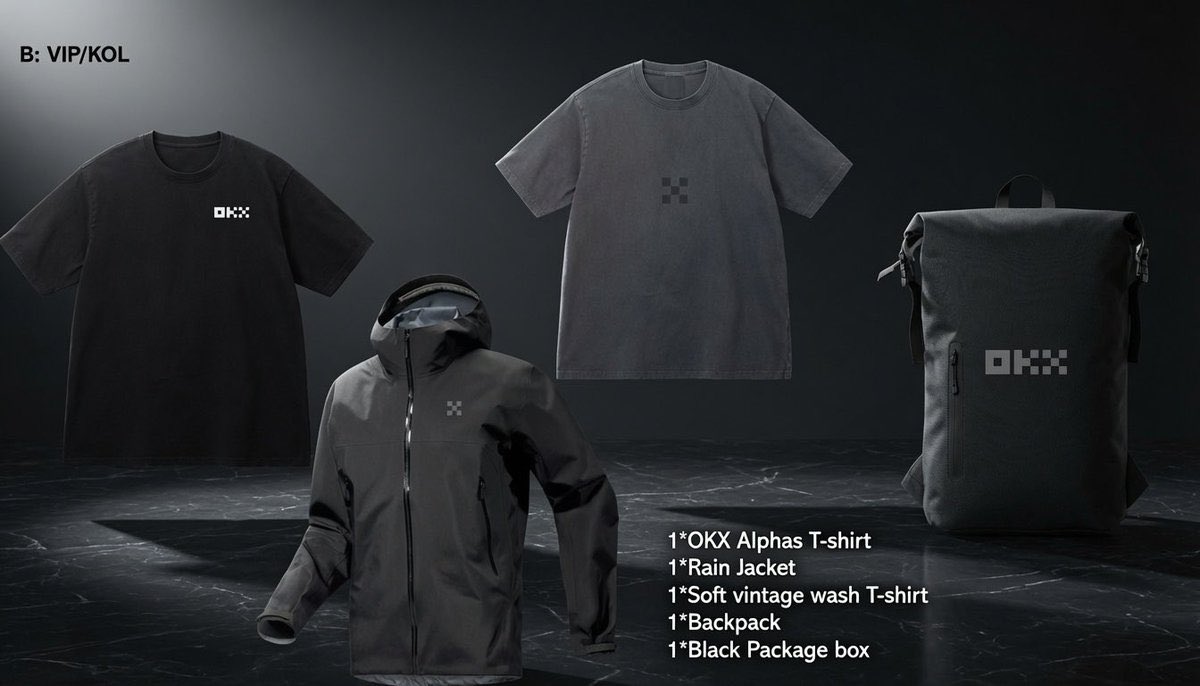
A huge thank you to @Misa_OKX 💚 for supporting our community with this exclusive OKX merch pack!
To celebrate, we’re giving away ONE full set of official OKX merchandise!
🎁 Prize Includes:
•OKX T-Shirt
•Rain Jacket
•Vintage Wash T-Shirt
•Backpack
•Official Gift Box
How to Enter:
✅ Follow @UNCBUSYD @misaENFP @0xBeliever
✅ Like & Repost this post
⏰ Winner announced on:6.11
Good luck everyone, and thank you again @Misa_OKX 💚 for supporting the Web3 student community! 🍀
68
90
101
5,510
Jun 8
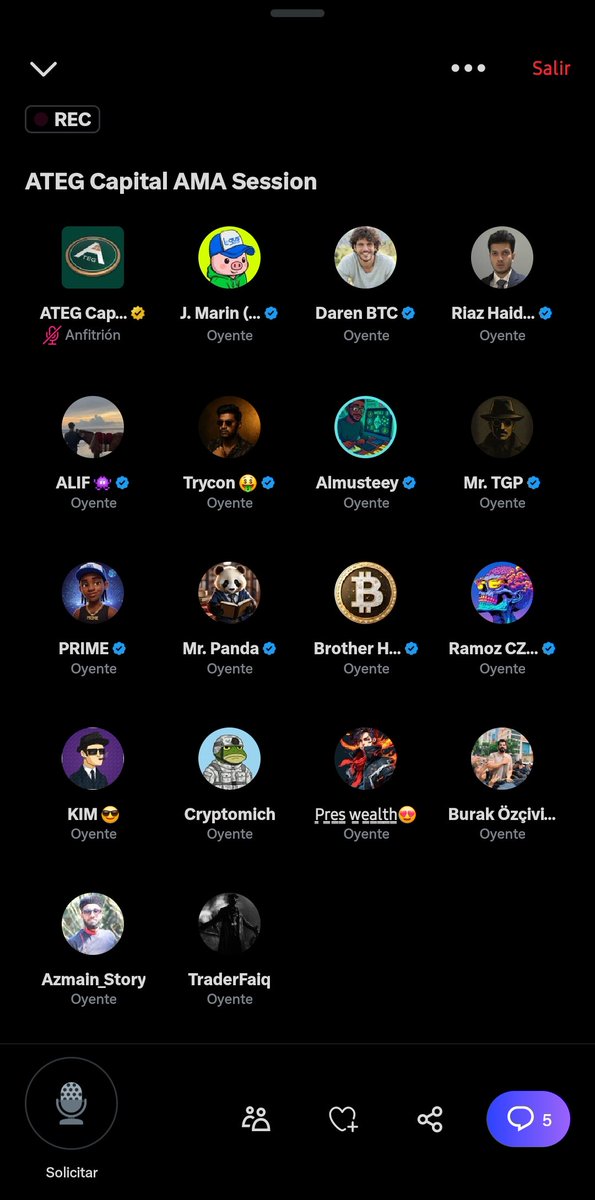
Excellent conversation, very interesting...
Building in Web3 requires high adaptability. Looking at the future direction of @Ateg_Capital, what is the biggest macroeconomic or market challenge the team is preparing to overcome to ensure long-term sustainability?
x.com/i/spaces/1RJZzzDEWWwJB
3
Jun 8
It's great to be here listening to the management team! 🤝💪 One quick question, if there's time during the Q&A session:
What's the main milestone the team is most excited to achieve in the second half of 2026?
x.com/i/spaces/1RJZzzDEWWwJB
9
J. Marin (⛽,🛢️) $OIL retweeted

Jun 8
221
67
104
3,628
J. Marin (⛽,🛢️) $OIL retweeted
Jun 7
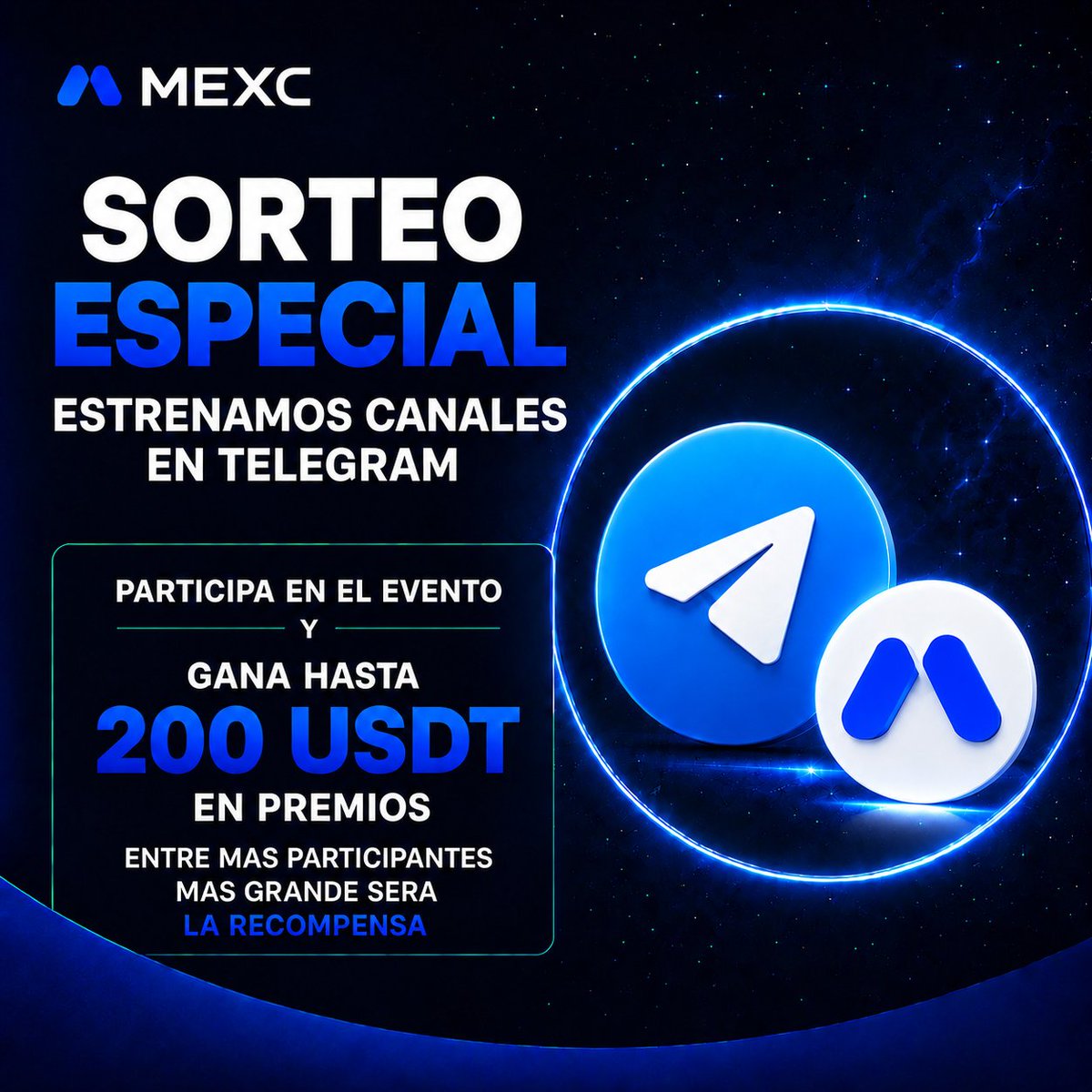
¡¡¡ ANUNCIO SORTEO !!!
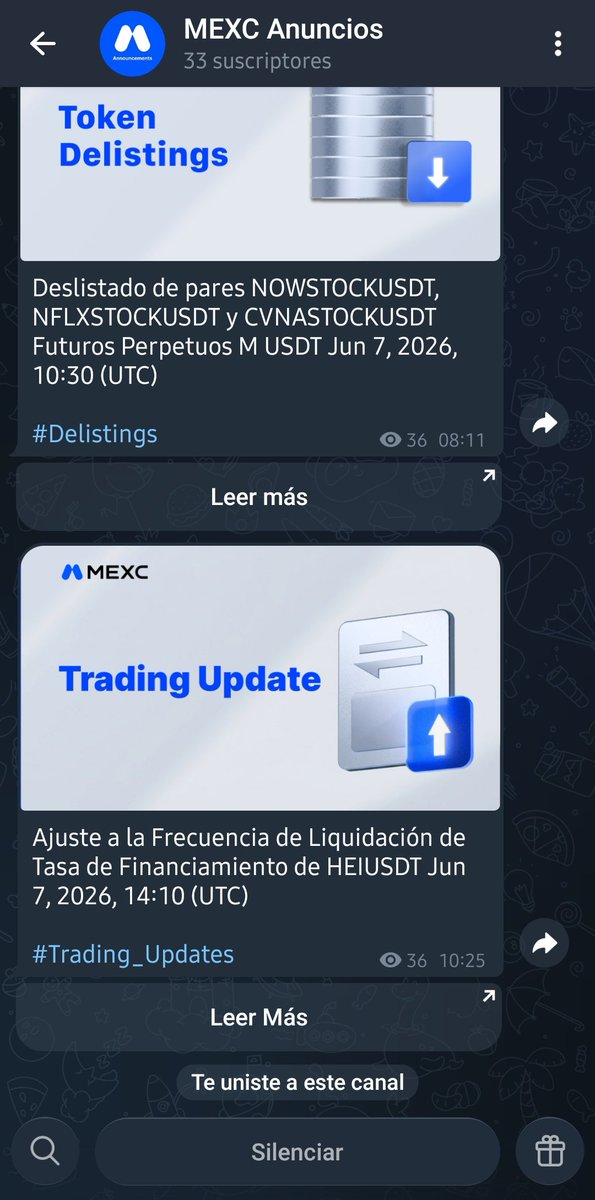
Nos complace presentar los nuevos canales de MEXC en Telegram, en ellos obtendrán información de las novedades del exchange lo más rápido posible!!! 🔥
Anuncios Oficiales en español:
t.me/MEXC_OfficialAnnounceme…
Novedades listados, en español:
t.me/MEXC_ESchannel
Canal comunitario en español:
t.me/MEXC_ESchannel
Y para celebrarlo les traemos un sorteo, vamos a crear un pozo de premios y por cada persona que se una a cada canal añadiremos 0.10 $USDT
🍀 Los ganadores se anunciarán en los próximos días, buena suerte a todos!
31
43
88
3,119
Jun 7
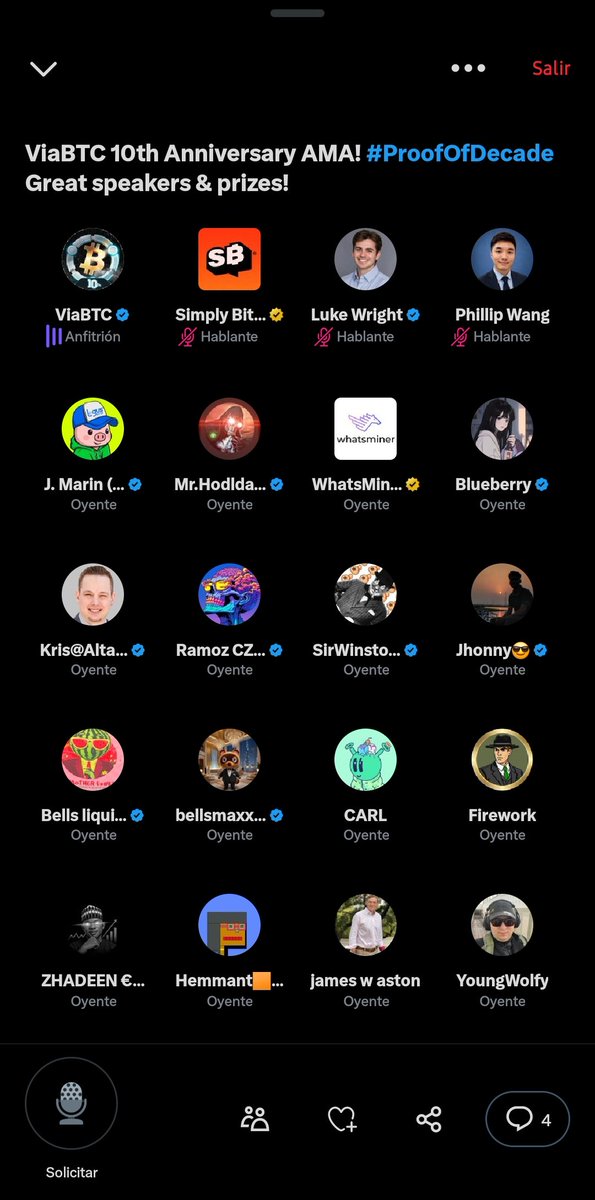
This team has done a really hard job. Happy 10th anniversary @ViaBTC
Next 10 years? Of course, c'mon... 🔥🎉🤝
#ProofOfDecade
x.com/i/spaces/1nxeLLeRWgbJX
8

119
49
78
10,398