
We are a unit founded by participants of the Revolution of Dignity and volunteers of 2014 and 2022.
Joined November 2025
- Tweets 258
- Following 19
- Followers 4,519
- Likes 189
117 Photos and videos
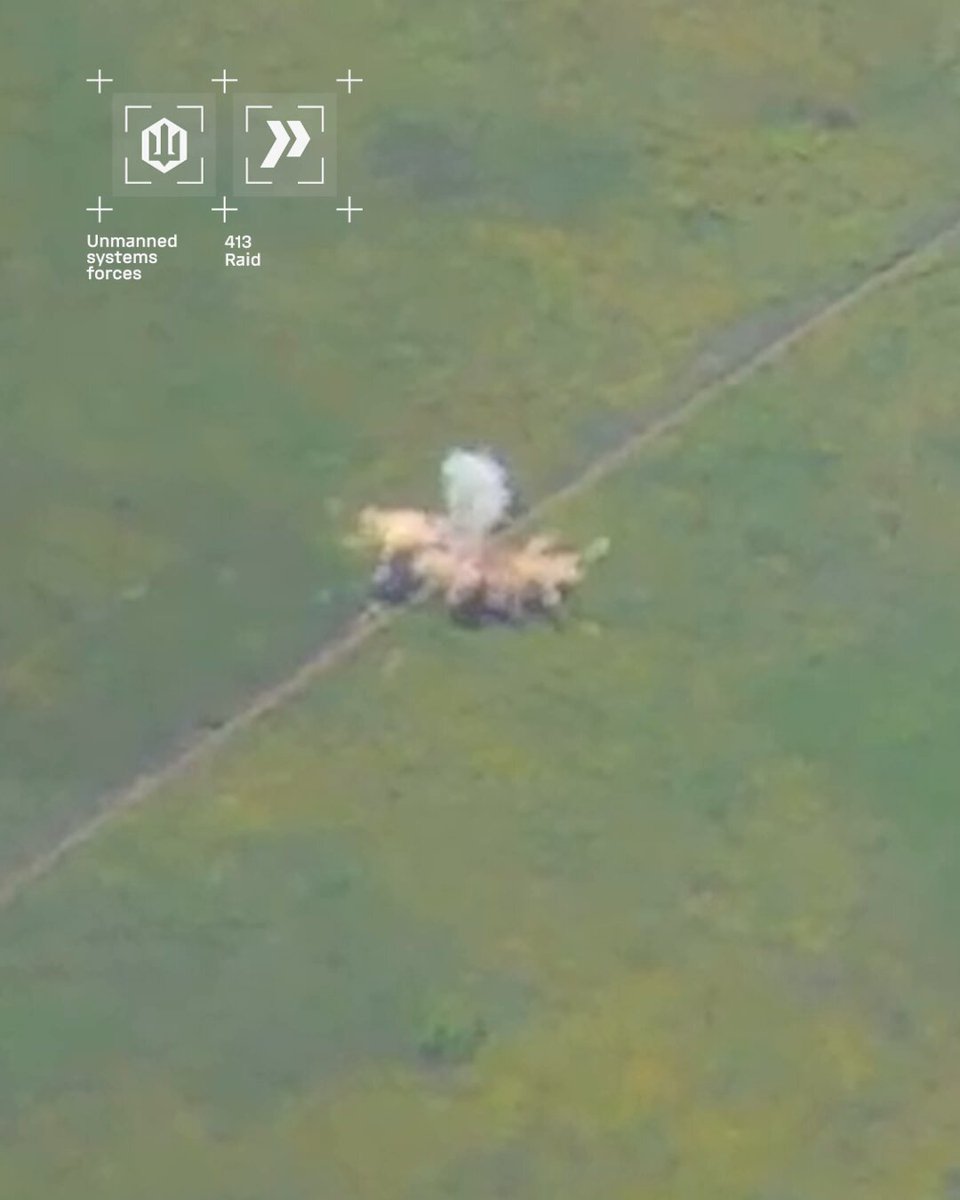



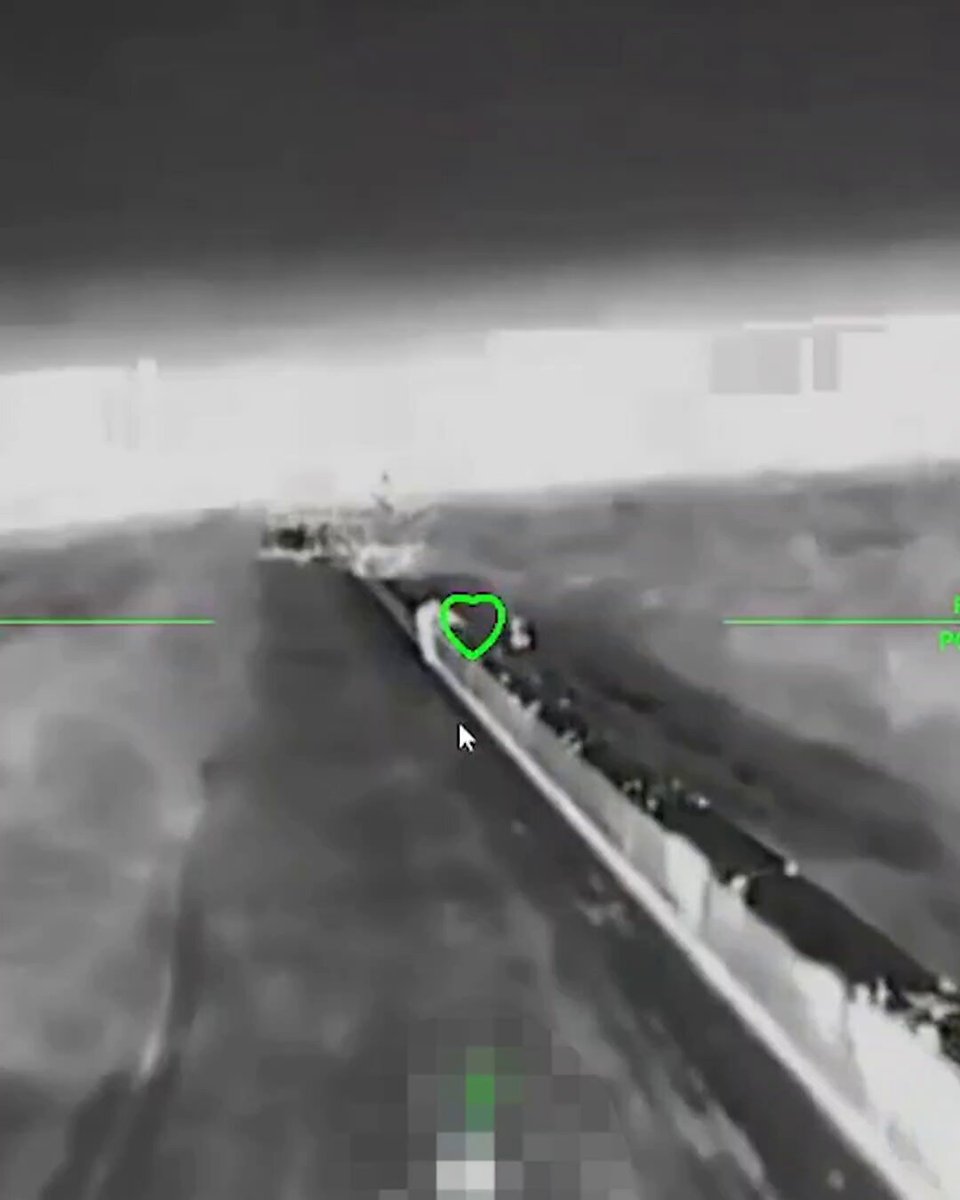
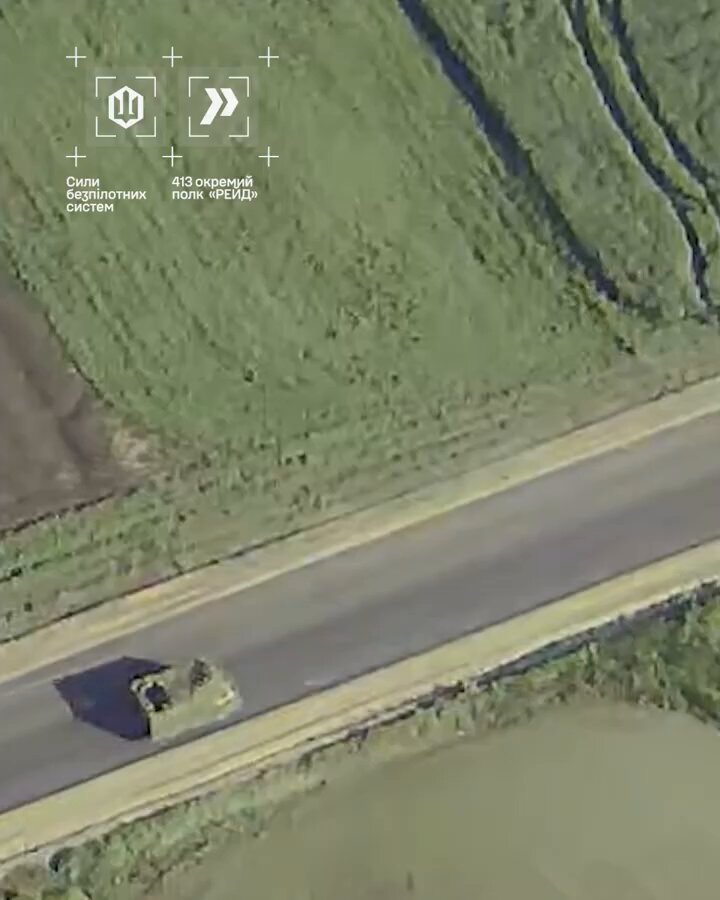
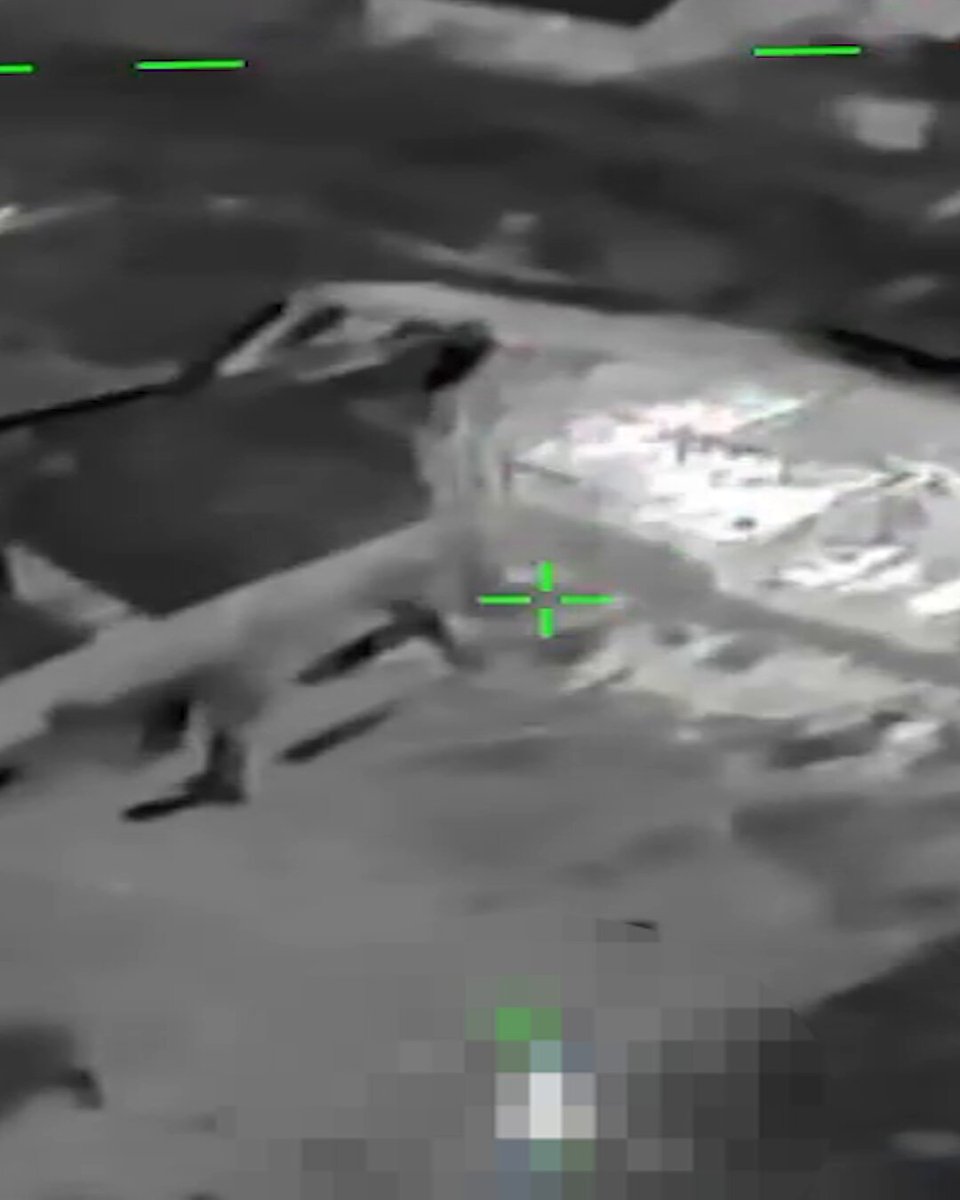
What does a «Raid» operator feel when guiding a drone toward a Russian infantryman?
Sometimes excitement: «First one down, where are the next ones?»
Sometimes relief, when they manage to hit the target on the last percentage of battery life.
Or for a split second, a thought arises: «What kind of Zasransk did he come from?»
But there is never any pity. Because these are executioners, looters, and murderers. And there is no place for them on our land.
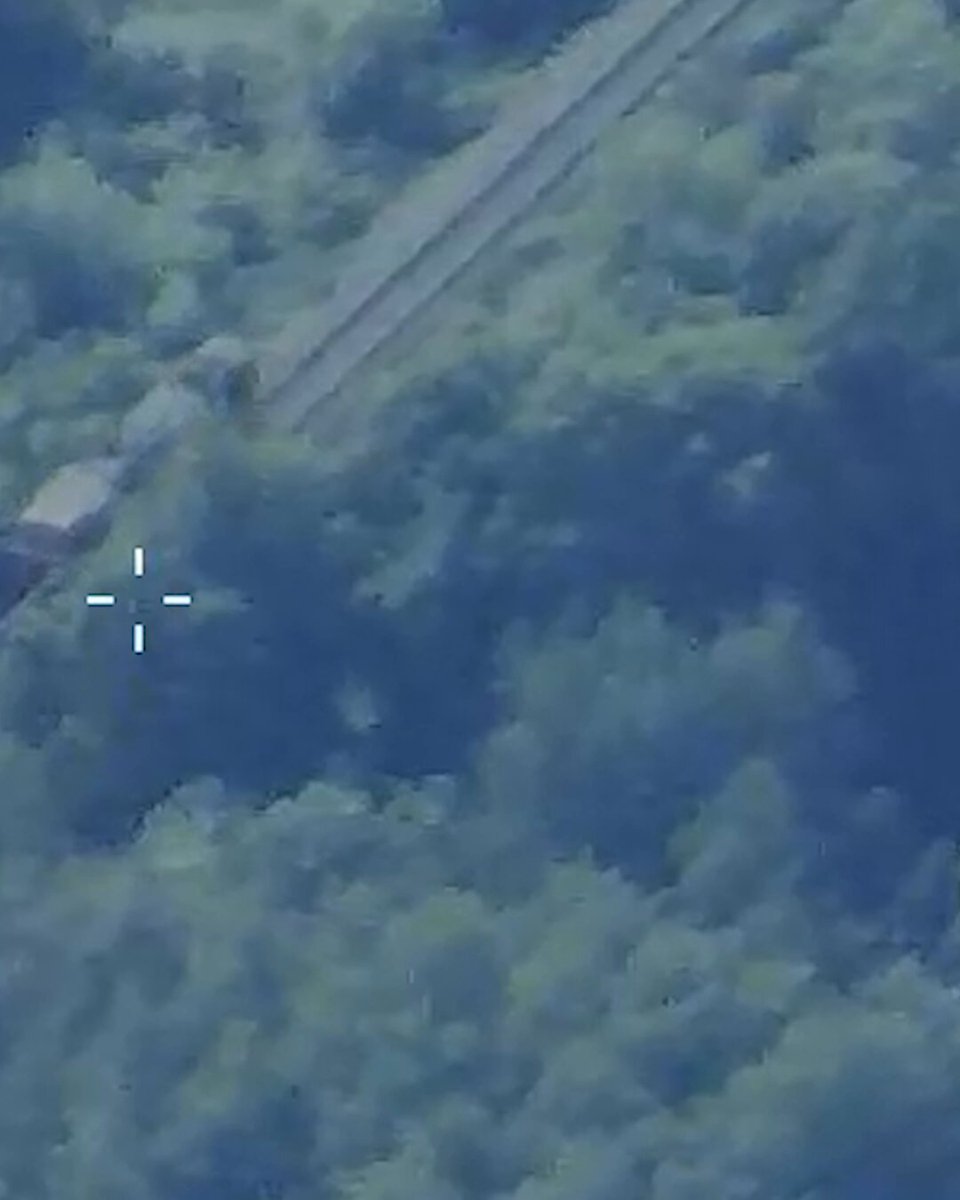
The video shows combat footage of the 413th USF «Raid» Regiment operators.
4
33
130
1,401

Jun 12
We will get them anywhere!
This time, the military infrastructure and concentration of personnel at the «Vostochny» training ground of the Russian occupation forces came under the strike of the 413th Unmanned Systems Forces (USF) «Raid» Regiment operators. The strike was carried out in cooperation with colleagues from other USF units.
This facility is located near the village of Novopetrivка, Berdiansk district, in the occupied part of the Zaporizhzhia region. It is one of the training grounds where the occupiers are conducting accelerated training of «march reinforcements» for assaults.
We separately note the masterful hit on a MANPADS crew that unsuccessfully attempted to repel the attack of our drones. This highlights the strike precision provided by mid-range strike assets from the domestic manufacturer Fire Point.
1
13
67
814
Jun 11
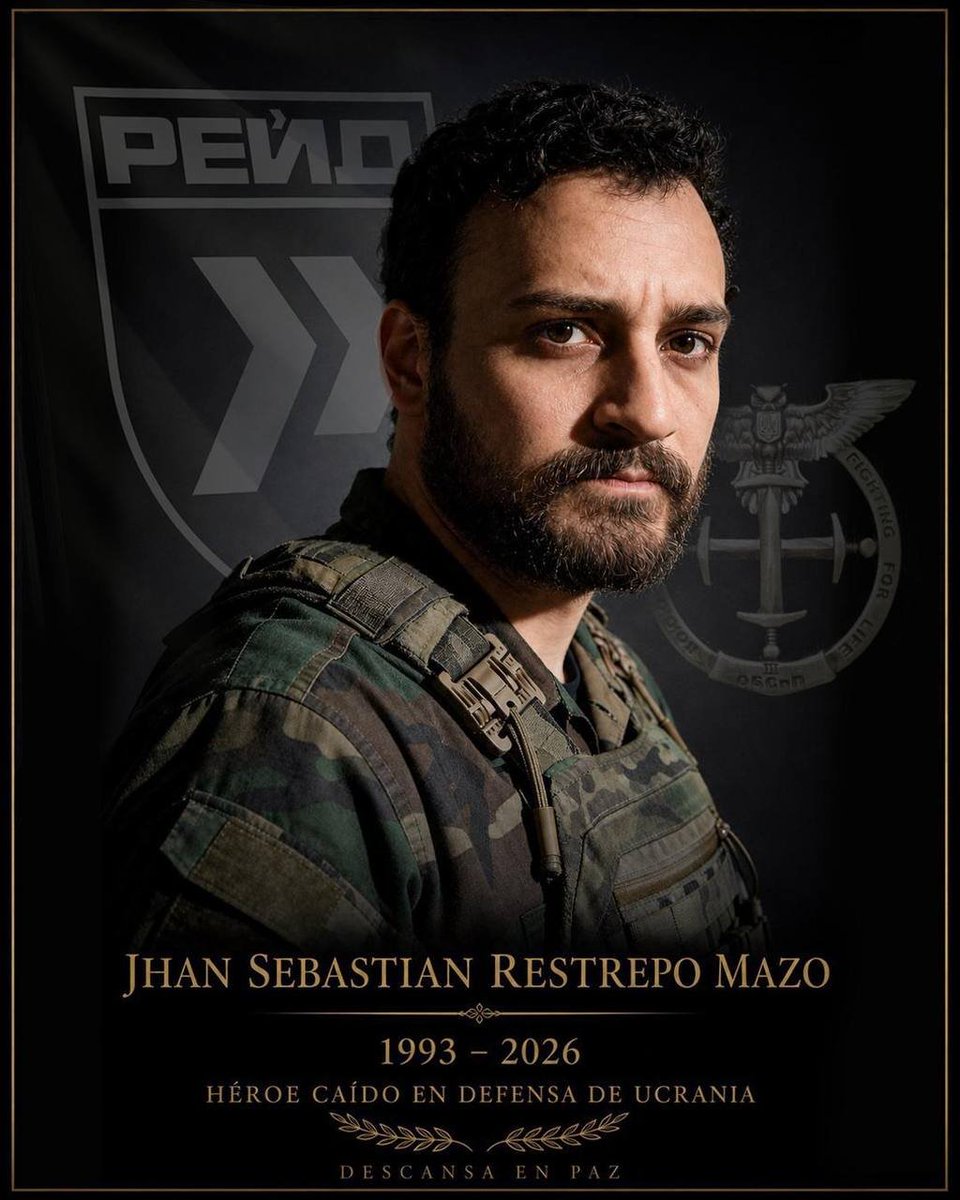
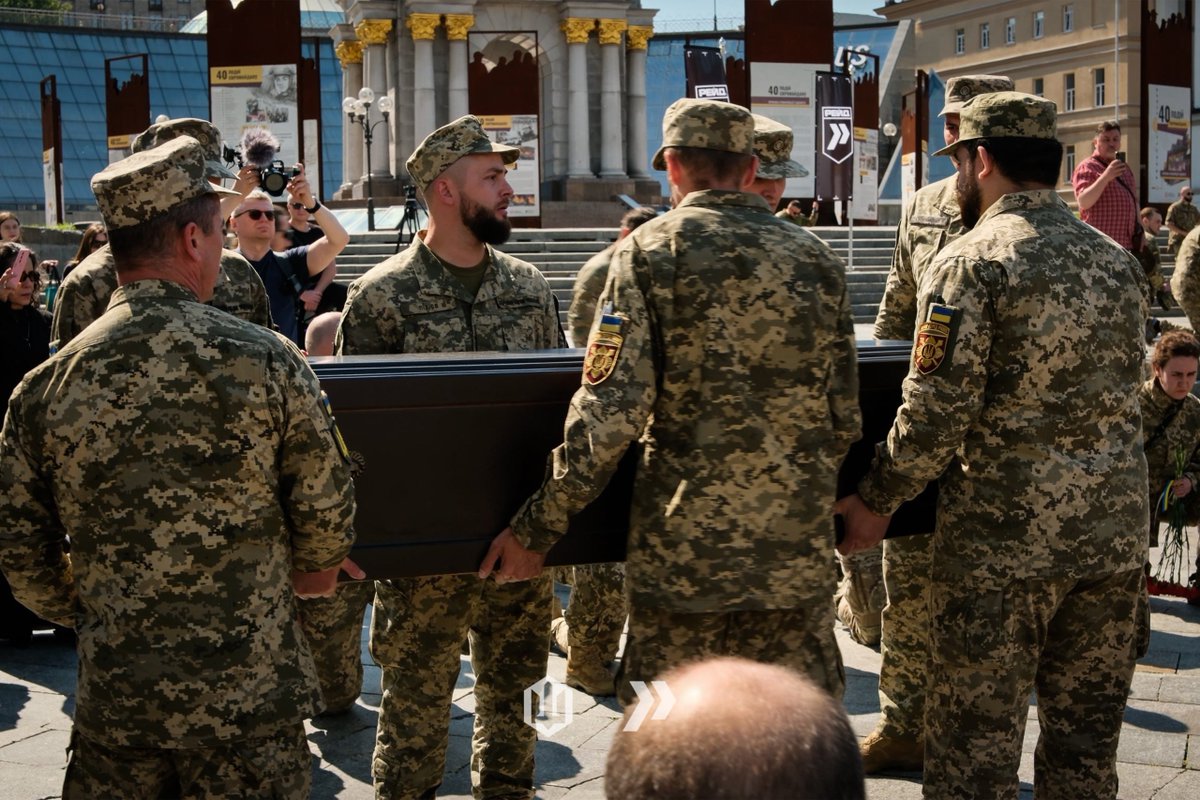
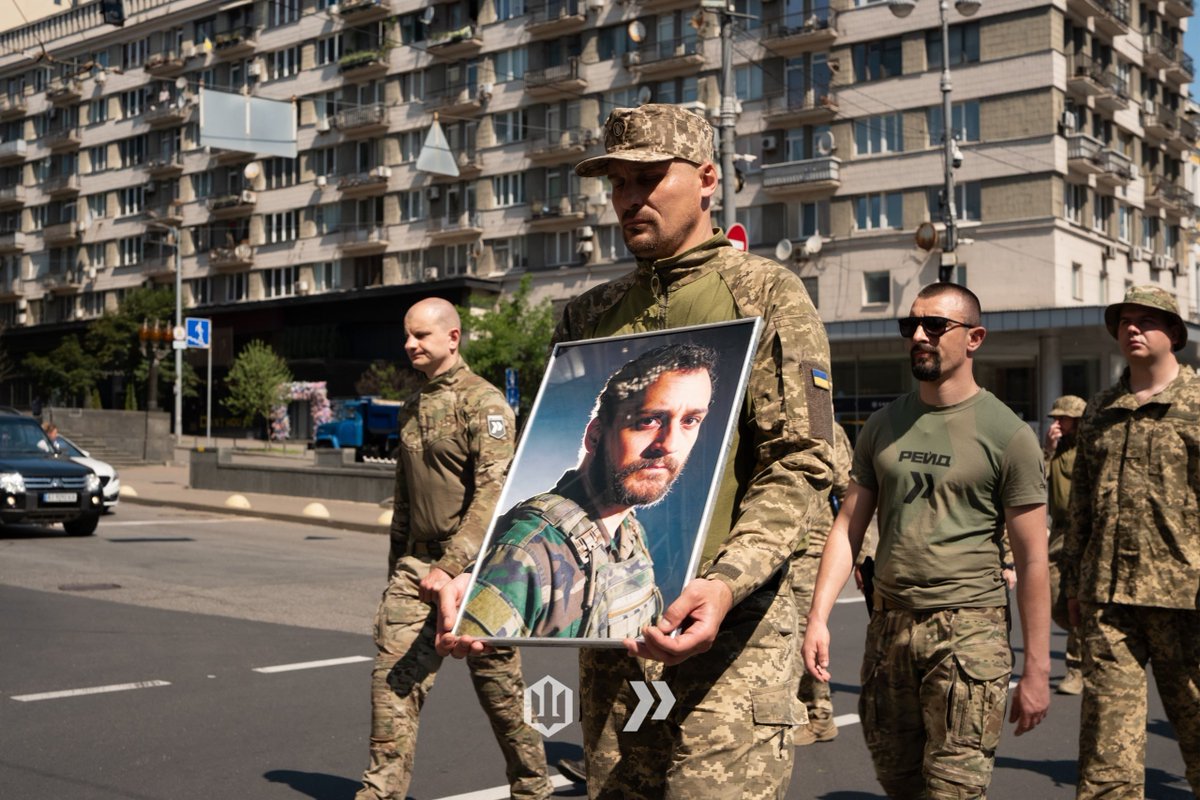
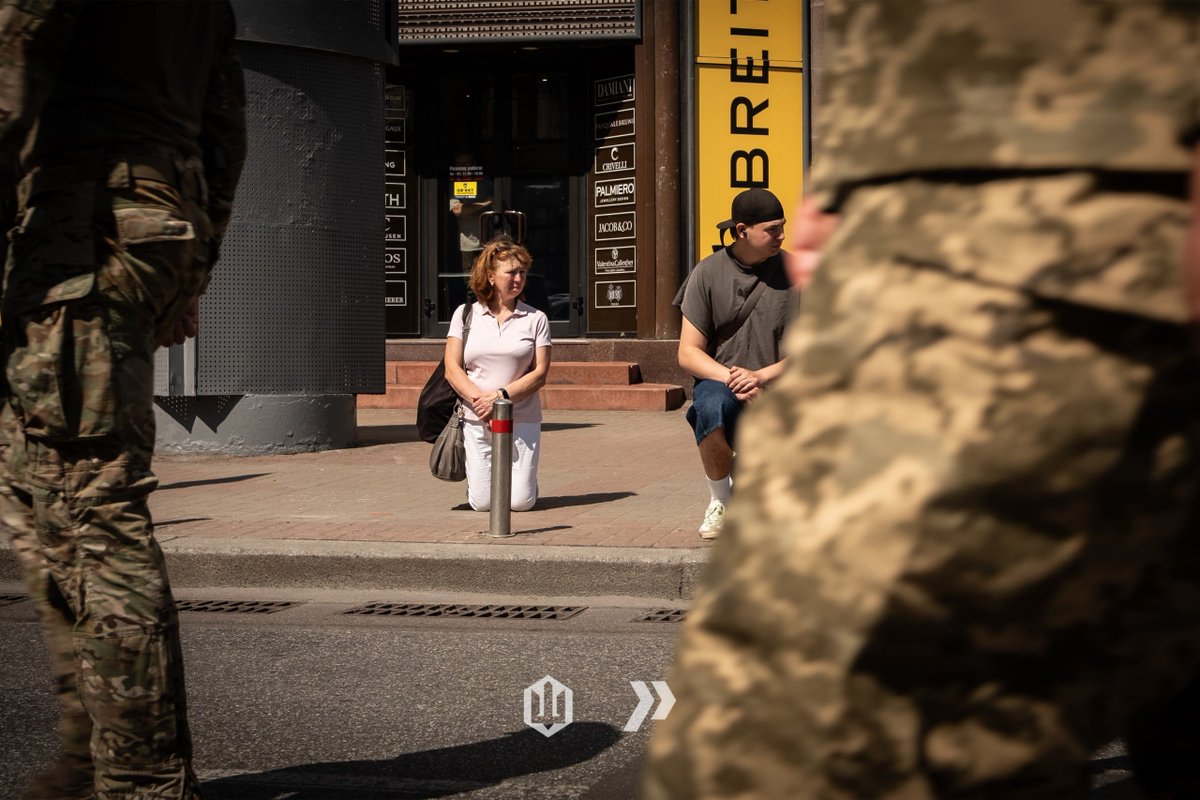
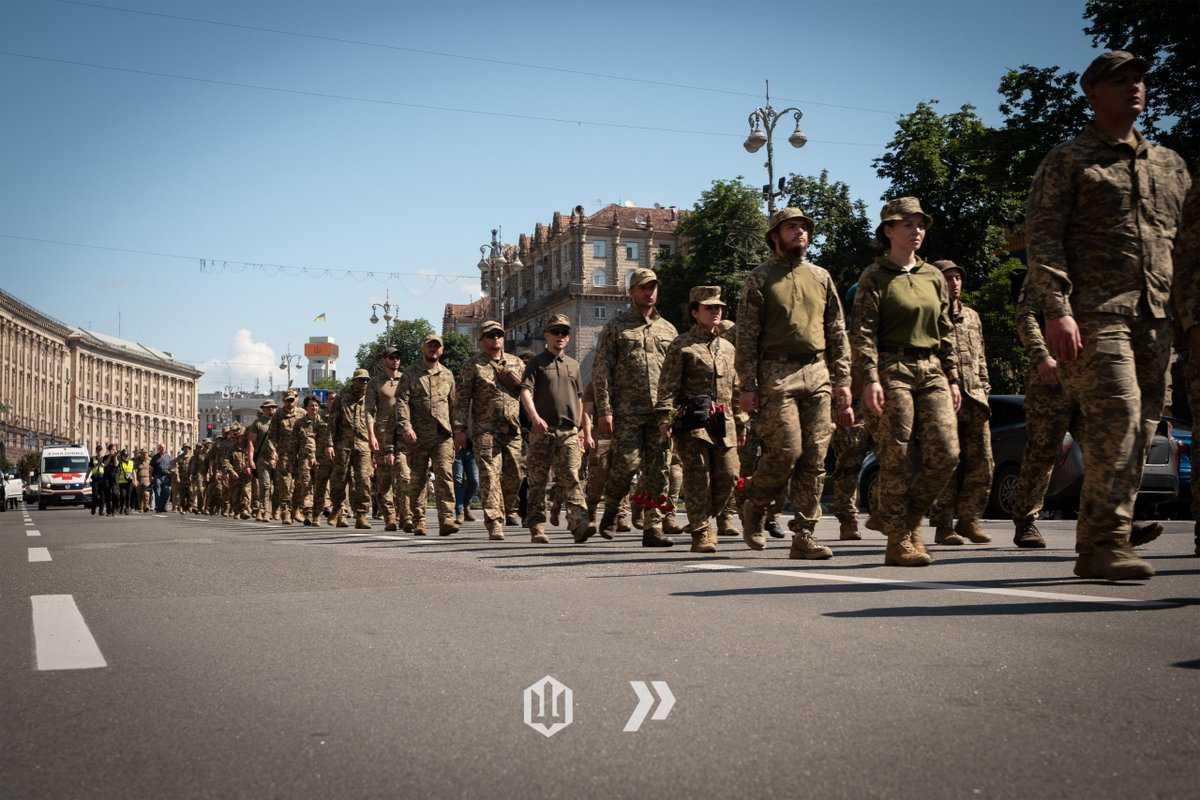
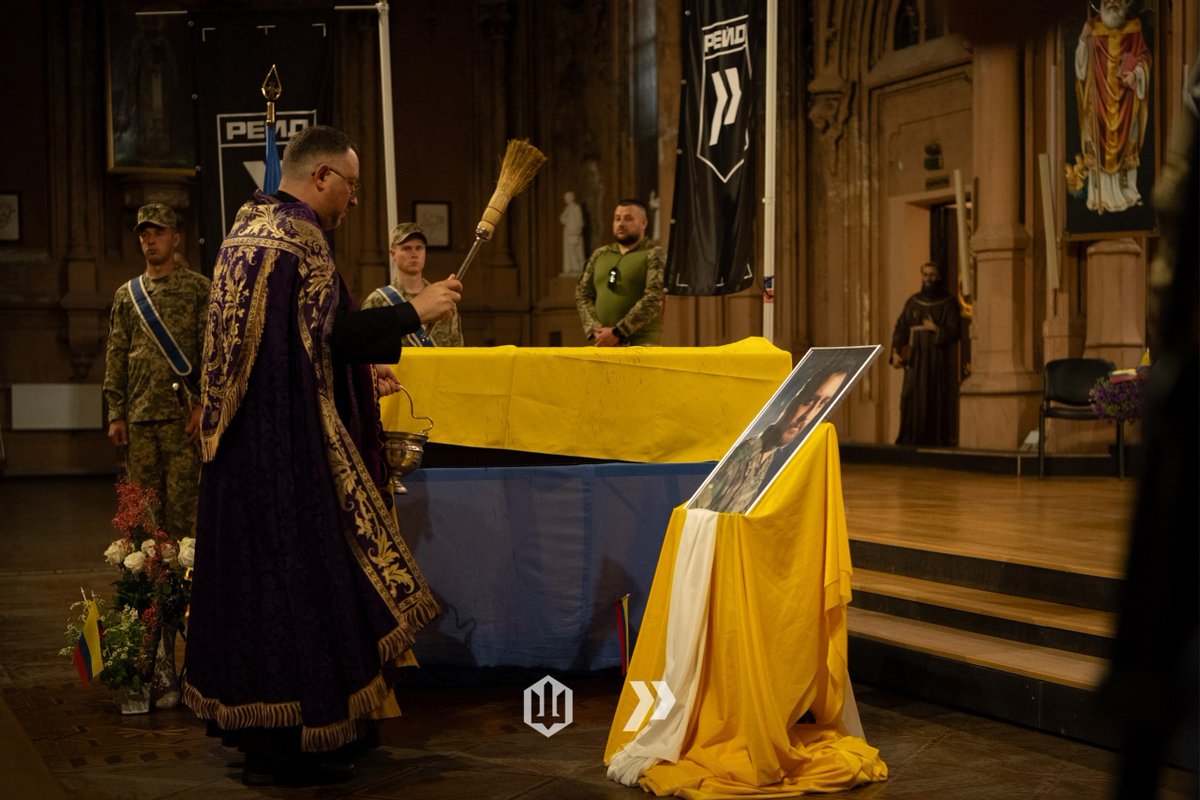
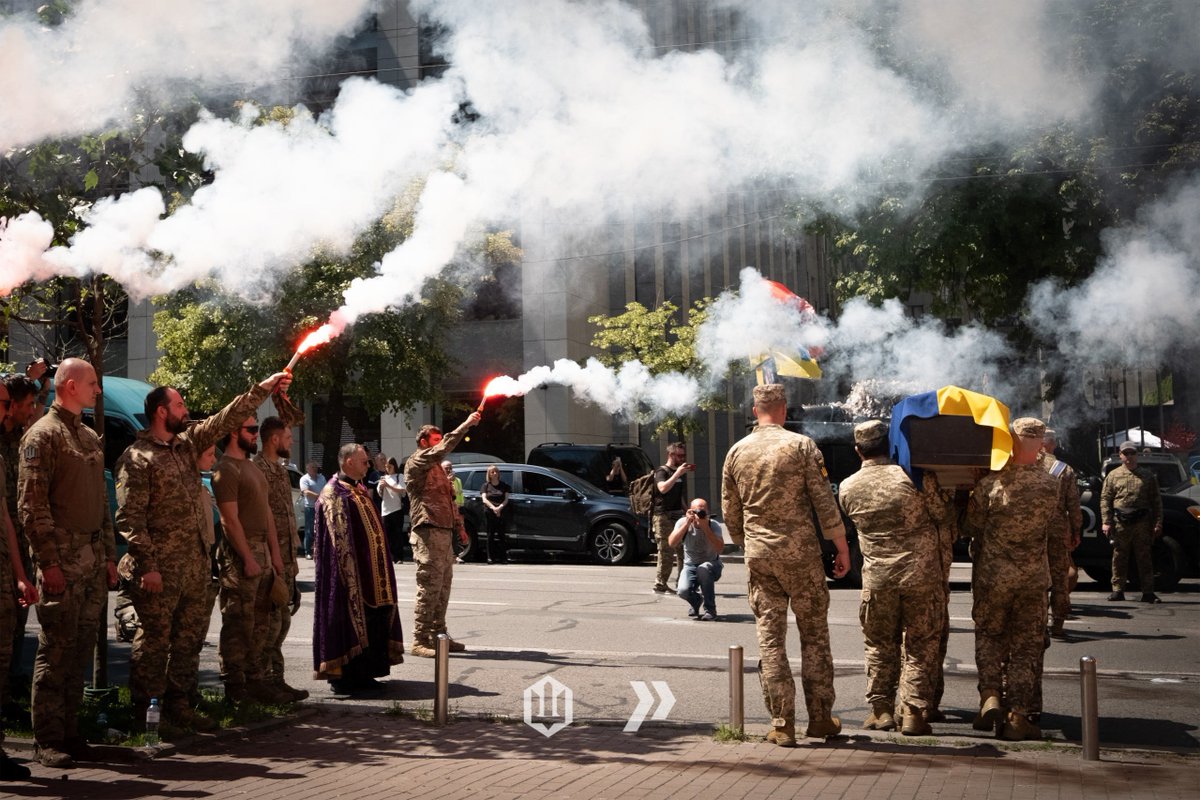
Today we bid farewell to our brother-in-arms — Colombian volunteer and warrior of the «Raid» Regiment, Jhan Sebastian Restrepo Mazo.
A hero of the Ukrainian and Colombian nations with the noble call sign "Onyx", he returned from a combat mission on his shield.
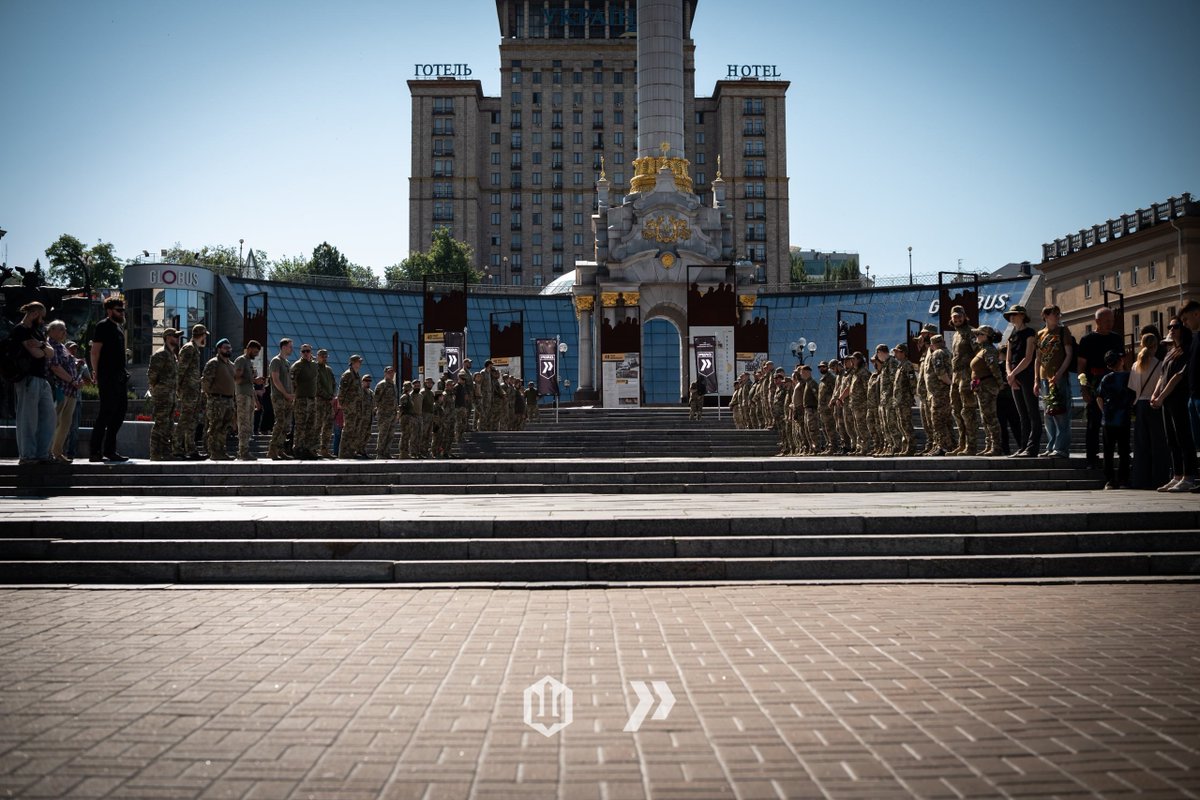
We honored his service and memory on Maidan Nezalezhnosti — in the heart of the country he came to love and for whose freedom he sacrificed his life.
2
14
88
1,019
Jun 11
And we want you to know the mark he left on our hearts.
Yevhen Karas, Commander of the 413th USF «Raid» Regiment:
«Our friend "Onyx" was a professional soldier and a true warrior. Therefore, alongside a cold, courageous will, he possessed a kind and warm heart. If not for the war, if not for the horde coming at us from the east, perhaps in another life we would have known him as an outstanding culinary master, a public servant, or simply a cheerful and creative person.
But Jhan Sebastian Restrepo Mazo, our friend "Onyx", chose the path of a warrior. And we will always remember his service, his heroic feat for our Ukrainian people against the red communist plague. Glory to the Hero!»
Friend "Domovyk", "Onyx"’s Commander, officer of the 413th «Raid» Regiment:
«"Onyx" served under my command for about two years. He was an exemplary warrior, a model brother-in-arms. Our task now is not to betray his trust and his sacrifice. And we will make every effort to ensure that is exactly what happens. Glory to the Hero!»
Friend "Makhach", fighter of the 413th «Raid» Regiment, close brother-in-arms of Jhan Sebastian "Onyx":
«Over our time serving together, "Onyx" and I became very close friends - one could say like family. I remember "Onyx" from the very beginning, and I want everyone to know: he was happy in Ukraine. He found many friends here and was always so full of joy. Thank you all. Glory to the Hero!»
1
3
37
409
Jun 11
🇺🇦🇨🇴 Respect, honor, and eternal glory!
The burial ceremony for our fallen brother "Onyx" will take place on Friday, June 12, in Lviv.
Beginning at 11:00.
Garrison Church of Saints Peter and Paul, 11 Teatralna St.

2
16
202
Jun 10
«Raid» spectacularly demolished an enemy regiment’s headquarters
Operators of the 413th «Raid» Regiment of the Unmanned Systems Forces destroyed the headquarters of the 91st Rifle Regiment of the Russian Federation’s 29th Army with several strikes by middle strike class drones.
The enemy had positioned this facility in the ruins of civilian buildings in the village of Mykilske in the Donetsk region, more than 50 km from the line of contact.
Previously, «Raid» had repeatedly struck facilities belonging to other units within the 29th Army of the Armed Forces of the Russian Federation, including logistics and supply depots and temporary deployment points.
5
33
188
3,088
Jhan Sebastian «Onyx» Restrepo Mazo.
The Colombian Marine Corps.
An honored warrior in the military circles of his country.
And now of Ukraine as well. Wounded in infantry combat. Awarded the Badge for Wounding by the Ministry of Defense. Recipient of the Golden Cross, and subsequently the Oak Leaf to the Golden Cross from the Commander-in-Chief of the Armed Forces of Ukraine.
A deeply kind soul. At times, he would return with food for a random street puppy that seemed too hungry to Jhan.
«Onyx» dearly loved cooking and enjoying delicious food.
A warrior of Christ, a professional soldier, a fierce hater of the communist plague. Army, business, forensics, culinary arts.
Jhan Sebastian was highly multifaceted. Kind to friends. And relentless toward enemies.
The Foreign Legion, and later the 413th «Raid» Regiment. Jhan Sebastian served in UAV bomber crew and fell in battle for Hulihaipole.
«Onyx» was enchanted by the Carpathians. He fell in love with Ukraine. His last wish was to be buried in Lviv.
Sebastian's family flew from Colombia to bid farewell to the hero.
We invite you to attend the farewell ceremony. Ukraine became a new sacred homeland for the Colombian warrior of Christ.
Paying our last respects to an absolute volunteer who spent several years battling the invaders for our freedom is a matter of honor for Ukrainians.
…
FAREWELL CEREMONY:
Kyiv.
Thursday, June 11.
09:30 - Maidan Nezalezhnosti (Independence Square).
11:00 - St. Nicholas Roman Catholic Cathedral, 75 Velyka Vasylkivska St.
BURIAL:
Lviv.
Friday, June 12.
11:00.
Garrison Church of Saints Peter and Paul.
Please share.
Thank you.
21
92
307
8,640
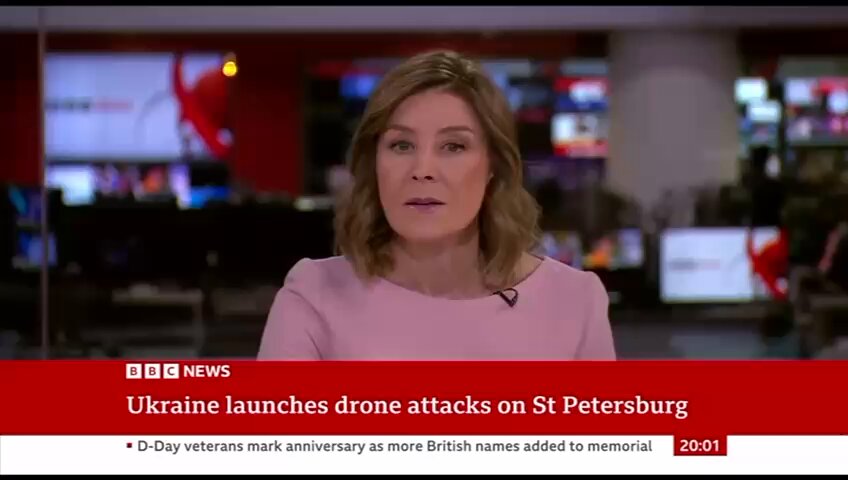
Russian air defense experiences difficulties with intercepting Ukrainian UAVs. Therefore, they easily reach their targets.
This is how the commander of the 413th USF «Raid» Regiment, Major Yevhen Karas, commented to the BBC on Ukrainian «long-range sanctions» against military and energy facilities in St. Petersburg and its surroundings.
💬«We fly in Russia as if on our own territory. Almost without resistance, reaching the target is not difficult», BBC journalists quote Yevhen Karas.
He added that resistance from Russian air defense is not felt during operations in occupied Crimea either.
💬«And this looks like a very encouraging forecast for the future regarding what we can do in the occupied territories or on the territory of Russia to force Putin to stop the war», said the commander of «Raid».
The BBC noted that during the June 6 attack, which Russian authorities called «unprecedented», Ukrainian UAVs traveled about 1,000 km and struck military facilities, including arsenals and the Russian fleet base in Kronstadt.
Meanwhile, drones operated by the 413th «Raid» Regiment struck the «Neste» oil terminal in the city of Lomonosov.
To read about the details of the strike on St. Petersburg, the consequences for the military infrastructure, and the role of Ukrainian unmanned systems units – follow the link: bbc.com/news/articles/cg7498…
2
28
98
2,598
🚂💥 Did you like how «Raid» struck two locomotives in Crimea? We did too. So, we continue!
On the territory of the Bryansk region of the Russian Federation, near the settlement of Pantusov, operators of the 413th USF «Raid» Regiment struck a locomotive that the enemy used to transport military cargo.
The strike was delivered approximately 40 km from the state border of Ukraine. This is already the third enemy locomotive struck by «Raid» operators in the last four days.
Earlier, they struck two locomotives supporting military logistics in the eastern part of temporarily occupied Crimea on the Dzhankoi – Kerch railway branch. The consequence of this and other locomotive strikes was the «temporary suspension» of passenger train traffic across all of Crimea starting June 8.
18
128
620
145,956
📢 Operational summary❗️
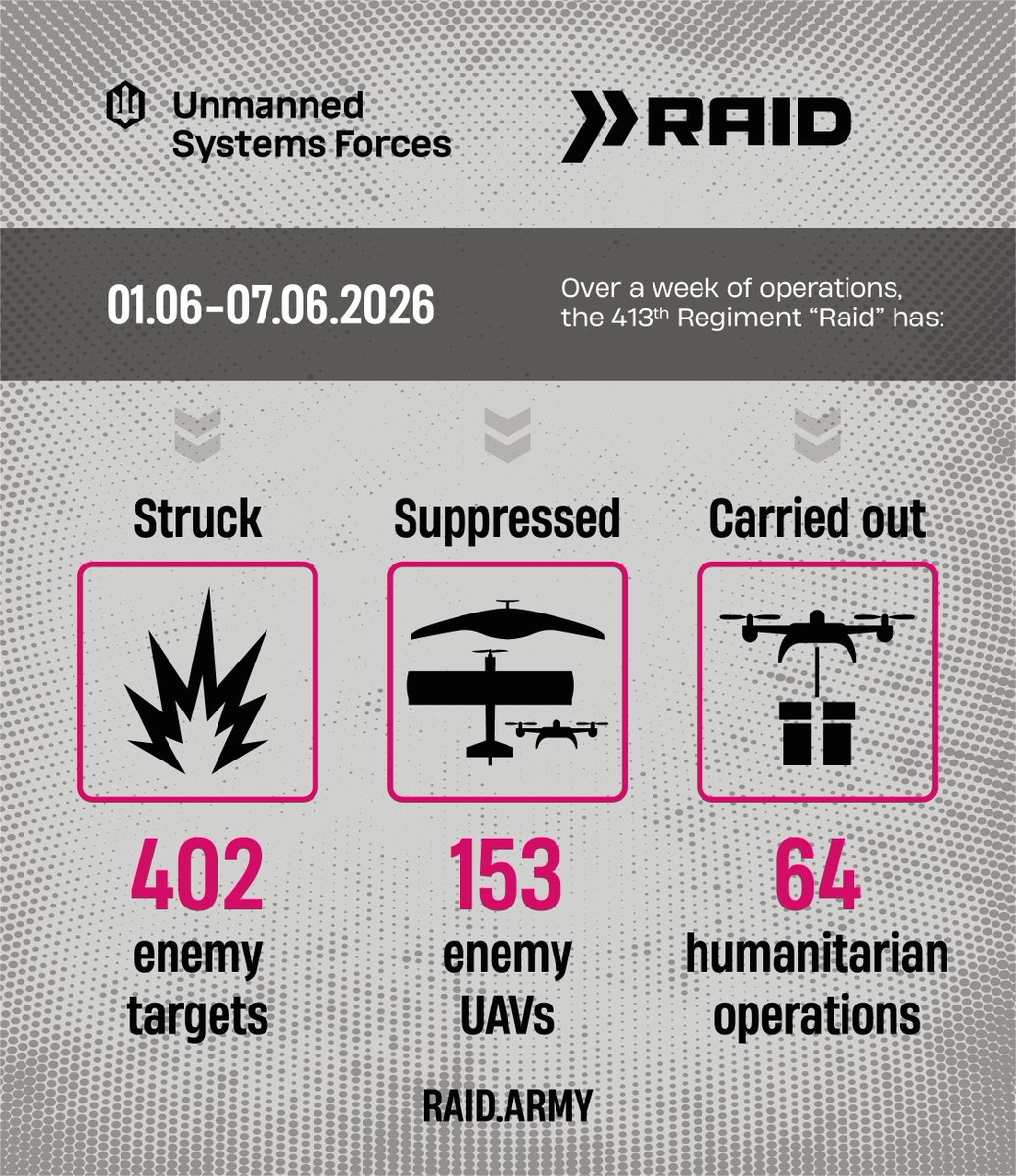
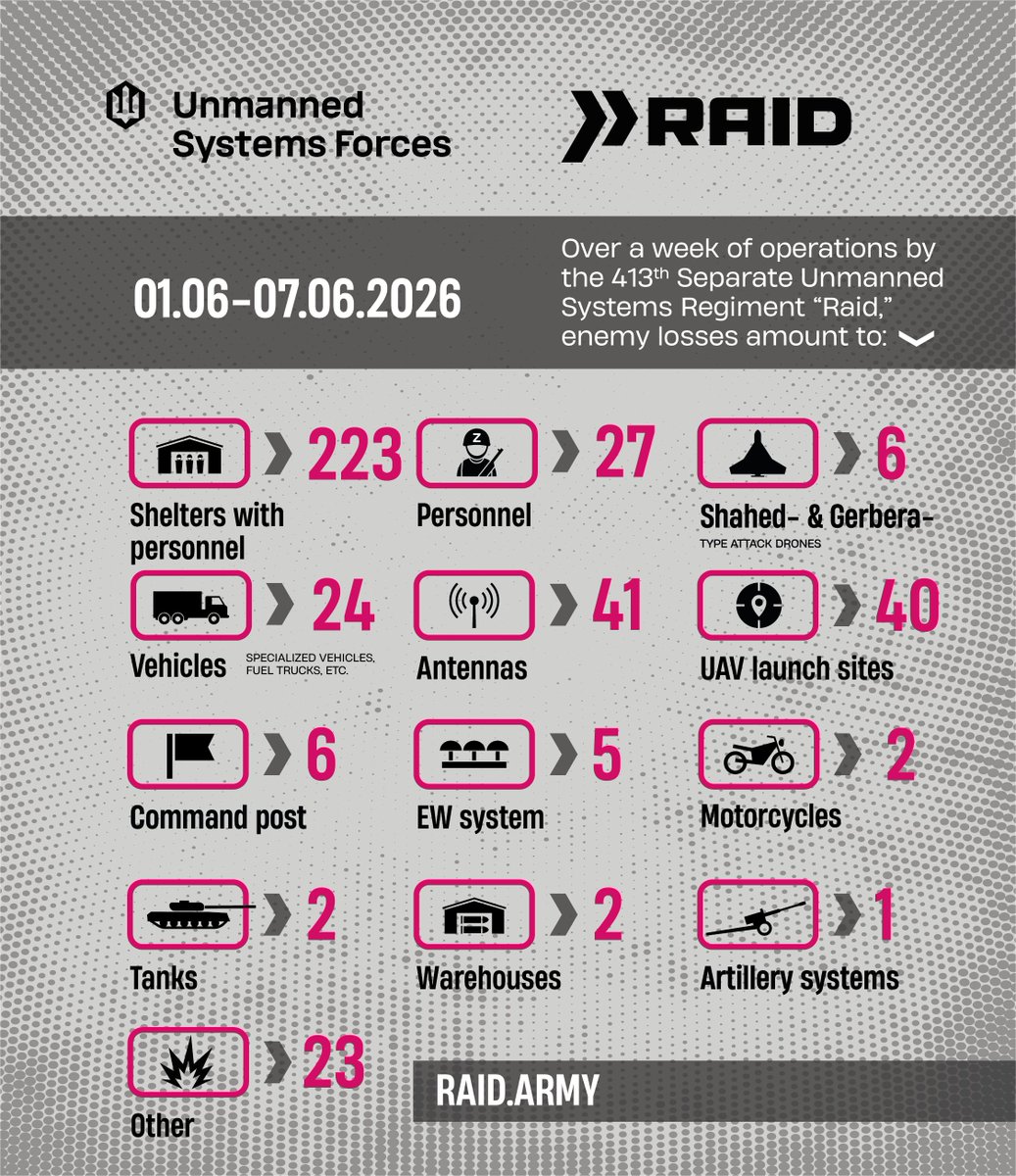
Results of the 413th USF «Raid» Regiment's operations for the period 01.06–07.06.2026.
Our operators have credited 402 strikes on enemy targets. Among them: 2 tanks, 6 command posts, and 6 «Shaheds».
Strikes on 27 units of enemy personnel have also been confirmed.
More details in the infographic 👇
2
5
30
1,755
RAID | 413 Regiment USF retweeted

🔥 USF Struck a Terek Brigade Deployment Site, Air Defense Systems, Logistics, and Infrastructure Targets
Operation highlights:
• In Luhansk Oblast, operators of the 1st Separate Center and the @k_2army struck a temporary deployment site of the 5th Terek Cossack Reconnaissance-Assault Brigade near Shchastia. Reported damage includes the brigade’s headquarters, medical facility, storage areas, and other military infrastructure.
• In temporarily occupied Crimea, operators of the @1usc_army struck an S-400 Triumf air defense system.
• In Zaporizhzhia Oblast, operators of the 9th Kairos Battalion of the @414magyarbirds struck a 9K33 Osa air defense system.
• In Luhansk, operators of the Phoenix UAV Group struck a mock-up Pantsir-S1 air defense system used to deceive reconnaissance and strike assets.
• Operators of the 9th Kairos Battalion of the 414th Magyar's Birds Brigade and the @Raid_413 struck enemy railway logistics, including locomotives and fuel tank cars in Donetsk and Luhansk oblasts, as well as on russian territory.
• Operators of the 1st Separate Center, the 20th K-2 Brigade, and the @RAROG427 struck multiple energy facilities in temporarily occupied areas of Donetsk and Luhansk oblasts used to support enemy military infrastructure.
• Operators of the 1st Separate Center and the 20th K-2 Brigade struck communication towers used by enemy electronic warfare systems in temporarily occupied areas of Donetsk and Luhansk oblasts.
• Operators of Detachment 13 of the 414th Magyar's Birds Brigade, the 20th K-2 Brigade, and the Phoenix UAV Group struck enemy logistics facilities in Donetsk Oblast.
The operations were conducted in coordination with the USF Deep Strike Center.
Detailed statistics are available on the USF strike dashboard:
sbs-group.army
The systematic targeting of command posts, air defense assets, logistics, communications, and infrastructure reduces the enemy’s ability to sustain its forces and maintain combat operations.
USF: One step ahead!
9
53
271
5,131
RAID | 413 Regiment USF retweeted
🔥 USF Operators Struck Multiple Strategic Targets in russia’s Leningrad Oblast
💥 Operators of the @1usc_army and the @414magyarbirds, in coordination with the SSU, struck the Kronstadt naval base.
Kronstadt serves as the main base of the Leningrad Naval Base of russia’s Baltic Fleet. The facility hosts warships, supports fleet maintenance and repairs, and plays a key role in controlling maritime access to St. Petersburg.
💥 Operators of the 1st Separate Center, in coordination with the SSU, struck an arsenal of the 1060th Logistics Support Center in Bolshaya Izhora.
The facility is a strategic Baltic Fleet site used for the storage, maintenance, repair, and disposal of naval ammunition, torpedoes, and missile armaments.
💥 Operators of the 1st Separate Center and the 412th Nemesis Brigade, in coordination with the SSU, struck the Petergofskaya oil depot in Lomonosov.
The facility is an important component of Leningrad Oblast’s fuel infrastructure, supporting the storage and distribution of petroleum products for both civilian and military sectors.
💥 Operators of the 1st Separate Center and the @Raid_413, in coordination with the SSU, struck the Neste oil terminal in Lomonosov.
The terminal is a key fuel distribution hub in northwestern russia. Its storage capacity reaches up to 40,000 cubic meters of refined petroleum products.
Systematic #DeepStrike operations against the military and logistics infrastructure of the aggressor state will continue until russia ends its armed aggression against Ukraine.
USF: One step ahead!
19
210
733
11,911
RAID | 413 Regiment USF retweeted
USF Struck an Enemy Deployment Site, Logistics Facilities, Gas Storage, and Transport Assets
Operation highlights:
• In Donetsk Oblast, operators of the 9th Kairos Battalion of the @414magyarbirds , the @1usc_army , the 412th Nemesis Brigade, and the @Raid_413 struck a temporary deployment site of the 90th Separate Engineer-Sapper Regiment of russia’s 51st Army near Pionerske. The unit was involved in laying mines and constructing the so-called “Surovikin Line” in the Kherson and Zaporizhzhia sectors, conducted engineering operations in the Bakhmut and Avdiivka areas, and trained military engineering specialists.
• In Donetsk Oblast, operators of the @k_2army struck a parking area used by enemy cargo trucks.
• In Donetsk Oblast, operators of Detachment 13 of the 414th Magyar's Birds Brigade struck enemy logistics facilities.
• In Donetsk Oblast, operators of the 20th K-2 Brigade struck a gas storage facility used to support enemy operations.
The operations were conducted in coordination with the USF Deep Strike Center.
Strikes against deployment sites, logistics facilities, transport assets, and supporting infrastructure reduce the enemy’s ability to maneuver, sustain its forces, and maintain the intensity of combat operations. Responsibility for war crimes and participation in the aggression against Ukraine is inevitable.
“We will find every one of them.”
— Robert “Magyar” Brovdi, Commander of the Unmanned Systems Forces
USF: One step ahead!
13
102
516
114,139
The Washington Post – one of the most influential publications in the US – has published a major piece on how Ukrainian drones stopped the Russian offensive and, for the first time in two years, helped reclaim more territory than the enemy captured.
Among the featured figures in the publication is the commander of the 413th USF «Raid» Regiment, Major Yevhen Karas. He was the one standing at the origins of the first UAV strikes deep into the enemy rear back in 2022. Today, the «Raid» Regiment delivers drone strikes at a distance of up to 1,000 km – and the tally of hit targets reaches hundreds every month.
Karas does not hide his confidence: the number of strikes will only continue to grow, and Russia has no idea what awaits it in the coming months.
To read about how «Raid» and other UAV units are helping Ukraine fight on its own terms – follow the link: washingtonpost.com/world/202…
1
5
33
397
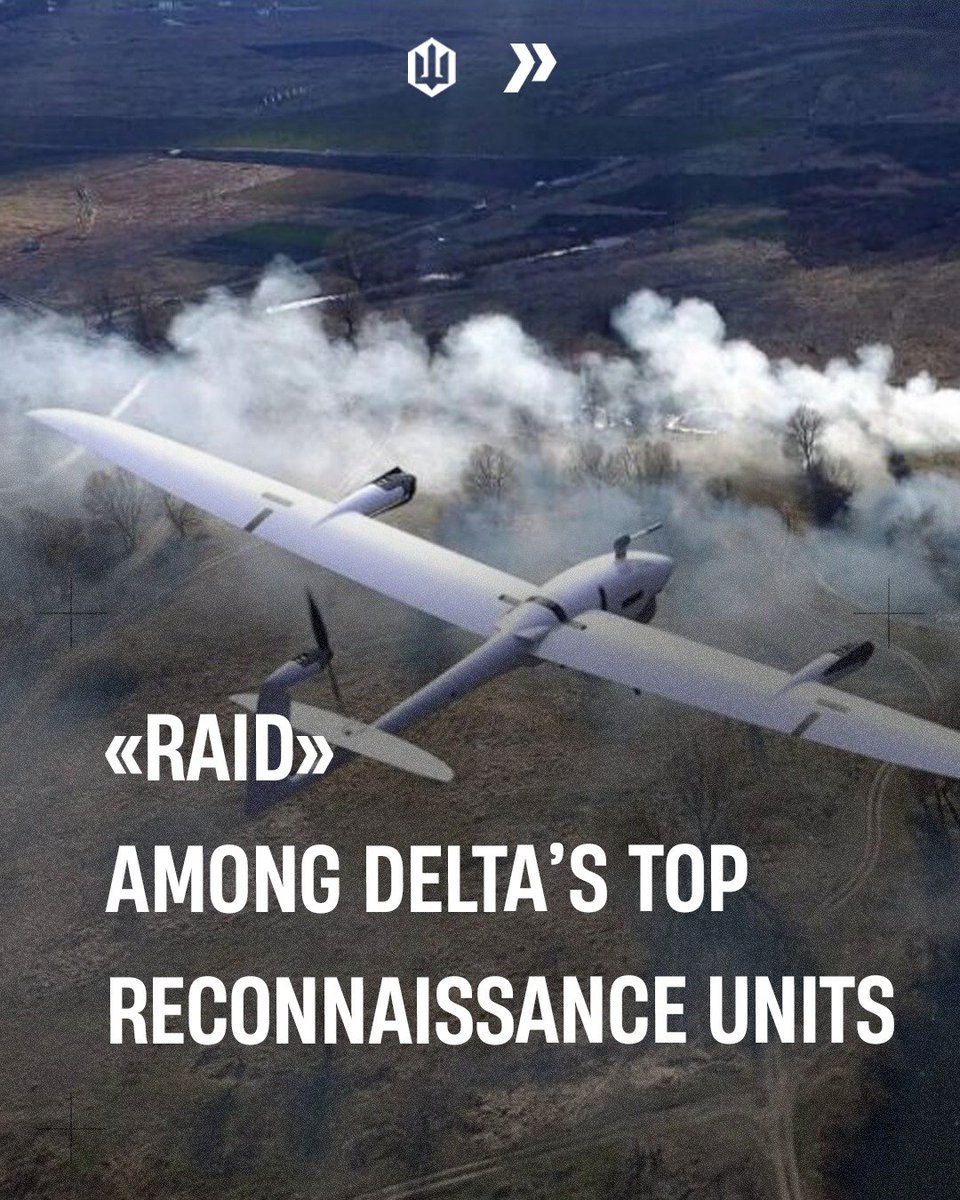
«Raid» is at the top of the Delta rating for detected targets
In May 2026, the 413th USF «Raid» Regiment ranked 2nd among all units of the Ukrainian Defense Forces in the number of electronic points scored in the aerial reconnaissance category within the Delta situational awareness system.
This marks the third consecutive month that «Raid» has been among the country's most effective units: in March and April 2026, the regiment held 1st place in the aerial reconnaissance category.
For reference: electronic points are awarded for detecting high-value enemy targets at a distance of over 15 km from the line of contact. This primarily includes air defense systems and radars, self-propelled guns, armored vehicles, and MLRS. All detected objects are verified in Delta and serve as the basis for further strikes.
3
7
27
314
💥 A "Raid" operator flew BETWEEN the wires of a high-voltage power line to strike a locomotive
We were simply checking the documents of the Russian railway workers who were providing military logistics in occupied Crimea. We found no papers granting the train drivers the right to operate such transport on the territory of Ukraine. Therefore, we forced their trains to a halt.
In total, two locomotives were hit.
This took place in the eastern part of the peninsula, near the settlements of Razdolne and Vladyslavivka — on the railway branch leading from Dzhankoi to Kerch, and further to the Crimean Bridge.
5
46
171
7,655
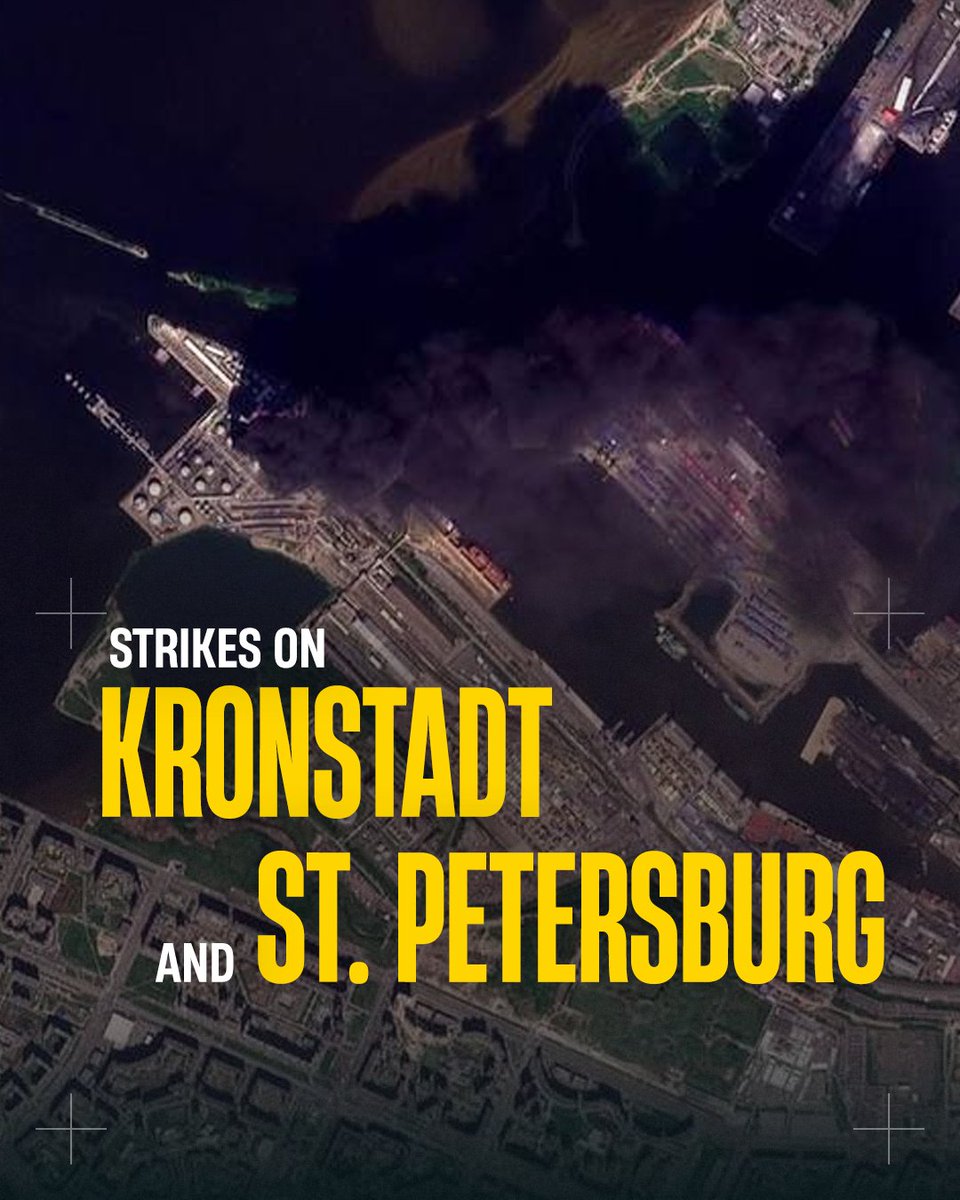
Ukrainian Defense Forces Strike on St. Petersburg and Kronstadt: Key takeaways
On the morning of June 3, the Ukrainian Defense Forces launched a drone attack on an oil terminal in St. Petersburg and the «Kronstadt» naval base — located over 1,100 km from the Ukrainian border.
This occurred against the backdrop of the opening of the St. Petersburg International Economic Forum (SPIEF) — Russia's premier economic platform, where Vladimir Putin is scheduled to speak on June 5. Arriving foreign delegations witnessed skies blanketed in thick black smoke extending for dozens of kilometers around.
Beyond direct economic damage to Russia, the operation carries significant military and political ramifications.
Details of the Strike
The attack utilized drones from the Ukrainian manufacturer Fire Point, which have already proven their effectiveness during previous strikes against Russian refineries, oil depots, and military-industrial complex facilities.
The «St. Petersburg» oil terminal, with a throughput capacity of 10 million tons per year, was hit. It is crucial for petroleum product exports and directly supplies the Russian army's needs.
Additionally, drones operated by the Unmanned Systems Forces of the AFU struck the corvette «Boykiy» (Project 22380 «Steregushchiy»), which was sitting in a dry dock in Kronstadt.
The «Boykiy» carries Kh-35U anti-ship missiles, as well as anti-aircraft and artillery systems, and was commissioned into the fleet in 2013. Given its dimensions, the ship can be classified as a light frigate — making it a major surface combatant. Russia routinely deployed the «Boykiy» for operations near NATO borders and to escort shadow fleet tankers under international sanctions.
Military Significance of the Operation
St. Petersburg is a critical political and economic center for the Russian Federation, while the «Kronstadt» naval base serves as the heart of the Russian Navy's Baltic Fleet. Situated on Kotlin Island, it guards the maritime approaches to St. Petersburg.
The Baltic Fleet acts as a Russian military outpost on the western border with NATO, and a portion of its surface ships and submarines are capable of carrying tactical nuclear weapons.
Both locations should have been protected by air defenses that are, if not on par with Moscow, then close to it. For this purpose, assets from both the fleet and the entire Leningrad Military District, including aviation, are available.
The Ukrainian drones traveled toward their targets through the entire night, giving the Russian military ample time to detect and intercept them. Yet, the Russian army proved incapable of defending such a critical axis.
Political Dimension
The political aspect is tightly intertwined with the St. Petersburg International Economic Forum, which kicked off on the exact day of the drone raid.
SPIEF is a venue where the Russian leadership attempts to project a «humane» face to foreign elites and solidify relations with sympathetic international circles. The Kremlin positions it as the «Russian Davos» — though it features only one true «rock star»: Vladimir Putin.
Following Russia's full-scale invasion of Ukraine in 2022, foreign nations began a mass boycott of the forum, leading to attendance by representatives of the Taliban instead.
In 2026, Russia has attempted to restore the forum's former prestige. For the first time since 2022, a delegation from the United States was expected to attend, alongside highly promoted announcements by Putin.
However, the strike by Ukrainian drones — the aftermath of which was clearly visible to foreign delegations — proves that Putin lacks control over the situation, even in the city where his political career began.
The Repeatedly Battered Baltic Fleet
This marks the first attack by the Ukrainian Defense Forces against «Kronstadt», the main base of the Baltic Fleet. However, it is far from the fleet's first losses in the Russo-Ukrainian War.
Russia has consistently deployed Baltic Fleet marines to the invasion of Ukraine to serve as standard infantry.
Specifically, the Baltic Fleet's 336th Marine Brigade was heavily committed and sustained severe casualties.
Back in April, operators of the 413th USF «Raid» Regiment struck the command and observation post of one of the battalions belonging to the 336th Brigade, 120th Marine Division of the Russian Baltic Fleet.
6
26
587
Sometimes among the strikes on Russian equipment, there are truly special ones 💥
When it «burns and blazes» with a particular spark. When you can feel the pure joy with which the drone flew straight into the cabin. And you can see how the crew of the enemy vehicle shared this very joy.
We bring to your attention one of such moments from the operators of the 413th USF «Raid» Regiment.
5
57
316
6,231
💥 «Raid» destroys the military infrastructure of the occupiers!
Operators of the 413th USF «Raid» Regiment conducted a comprehensive strike against facilities in the operational rear of the Russian occupation forces in the Donetsk region.
The targets hit include:
▪️ a material and technical support (MTS) depot of the 36th Motorized Rifle Brigade and other units of the 29th Russian Army in the vicinity of Buhas and Novoselivka;
▪️ an MTS depot of the 51st Russian Army (the former «1st Army Corps» of the occupiers in Donetsk), in the vicinity of Dokuchaievsk;
▪️ MTS depots and a temporary deployment point (TPD) of the 2nd Battalion, 155th Marine Brigade, 55th Marine Division of the Russian Pacific Fleet, in the vicinity of Syhnalne.
The points of these strikes intersect significant railway and road routes. This means that vital logistical hubs, where the enemy accumulated manpower and resources for further offensive actions, came under fire.
It is worth noting that part of these strikes was carried out on the territory of Donbas, which has been occupied by the Russians since 2014.
5
28
128
1,609
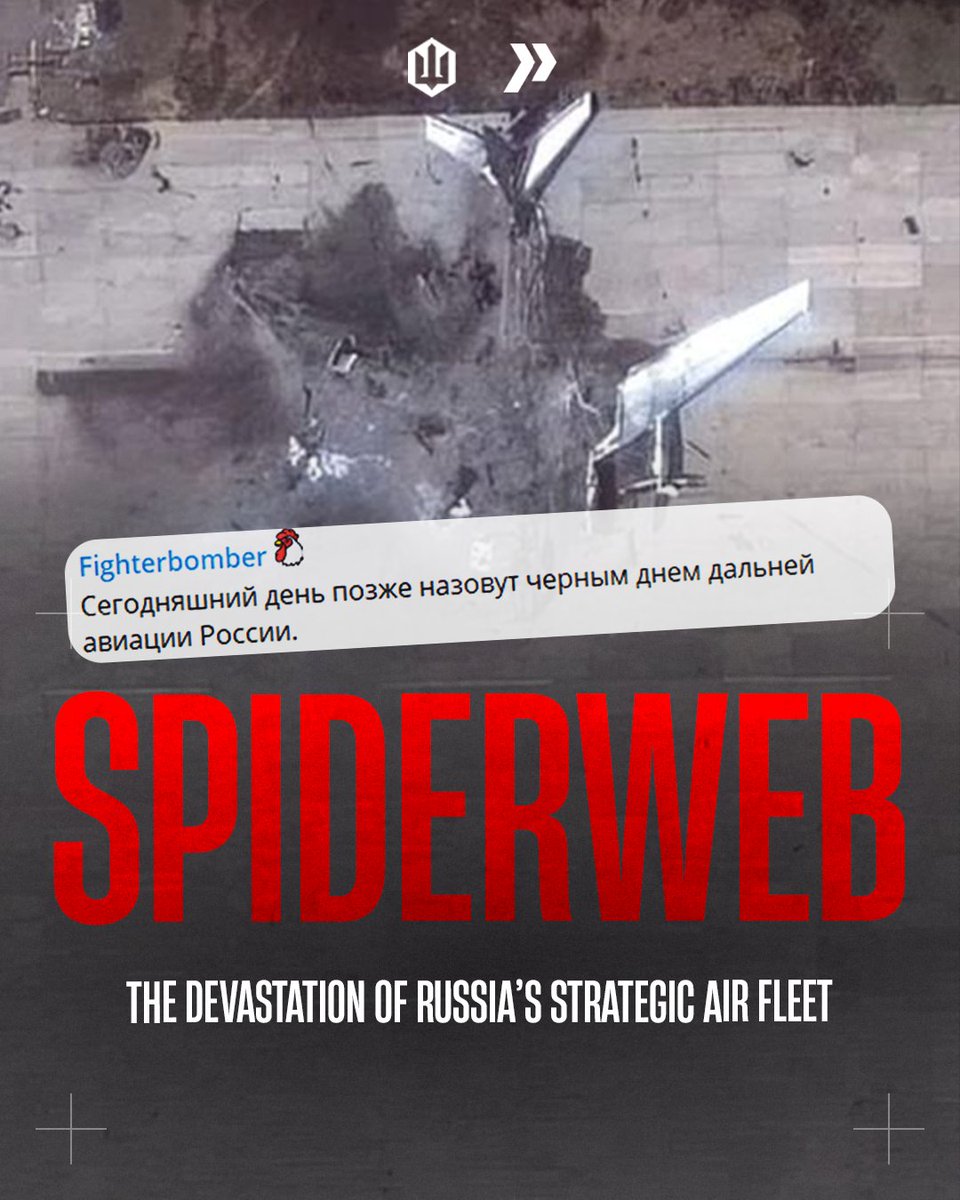
Operation «Spiderweb»: Aftermath and conclusions one year later
One year ago, on June 1, 2025, the Security Service of Ukraine conducted a unique operation code-named «Spiderweb», which disabled 34% of the Russian Federation's entire long-range aviation fleet — including Tu-95MS and Tu-22M3 cruise missile carriers, A-50 airborne early warning and control (AEW&C) aircraft, and Il-78 aerial refueling tankers.
Its uniqueness lies both in the scale of the enemy's losses and the format of its execution: semi-trucks carrying disguised strike FPV drones pulled up directly to the main airbases of the Russian Federation's strategic aviation, including «Engels», «Olenya», and «Belaya», striking the aircraft from literal «pistol» distance.
Data subsequently emerged in the public domain indicating that «Osa» FPV drones from First Contact were utilized for the strike, distinguished by an exceptionally rugged frame and an AI-based guidance system.
What can be said for certain now:
• The Russians tried in every possible way to conceal the scale of their losses — because this represents a critical blow to their strategic aviation, which formally accounts for a third of the Russian Federation's nuclear arsenal.
However, data leaked into the public domain showing that the Russian Federation lost up to 15 Tu-95MS strategic bombers, or a quarter of the entire available fleet of these aircraft. This reduced the employment of Tu-95MS bombers for strikes against Ukraine by at least 20–30%.
The deployment of Tu-22M3 bombers after «Spiderweb» became a true rarity — occurring at a pace of «once every six months». This is clearly a direct consequence of the losses sustained during operation «Spiderweb».
• The SSU roughly estimated the enemy's damages at $7 billion. But it is not even about the money: the Russian Federation is incapable of manufacturing new Tu-95MS and Tu-22M3 bombers. Therefore, any losses of such aircraft are completely irreplaceable for the aggressor.
• «Spiderweb» also served as a distinct warning to the United States. The execution of such an operation demonstrates that American strategic aviation could similarly be disabled by simple FPV drones equipped with artificial intelligence. Consequently, this factor made the experience of the Ukrainian Defense Forces exceptionally valuable.
• And finally, «Spiderweb» became a unique prologue to the integration of artificial intelligence into the ongoing war of drones.
10
65
1,983