
Master's student in zoology / paleontology enthusiast. Loves saurischian dinosaurs and random other megafauna. Scientific advisor for @JFD_001.
Joined October 2019
- Tweets 235
- Following 25
- Followers 1,797
- Likes 340
57 Photos and videos


May 30
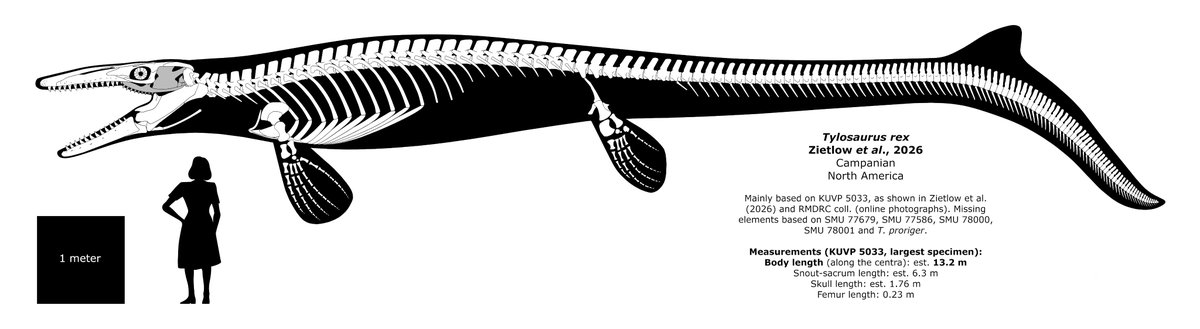
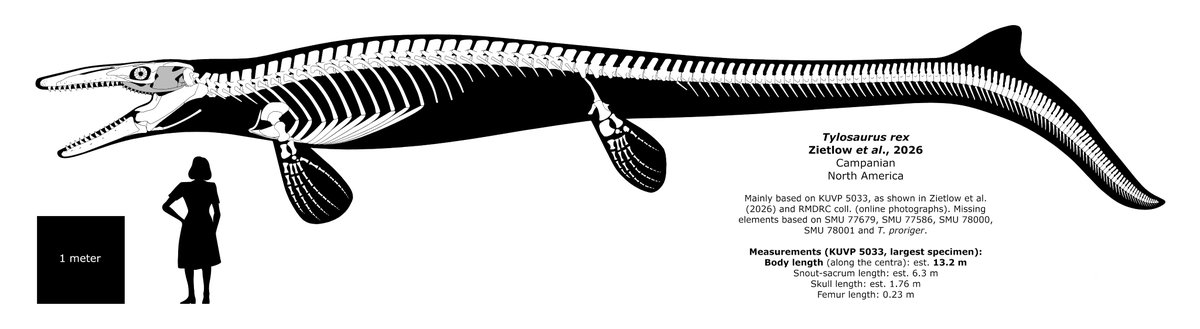
Tylosaurus specimens have been found with stomach contents including the remains of turtles, sharks, sea birds, plesiosaurs, and even other mosasaurs. For the Lizard King, everything in the Cretaceous seas was a potential meal.
5
132
718
17,805
May 31
Alternate version with a bit more soft tissue on the neck. It's not clear if they had a seamless transition from head to body, like ichthyosaurs and cetaceans, or necks more like regular lizards.
3
44
1,143
Apr 26
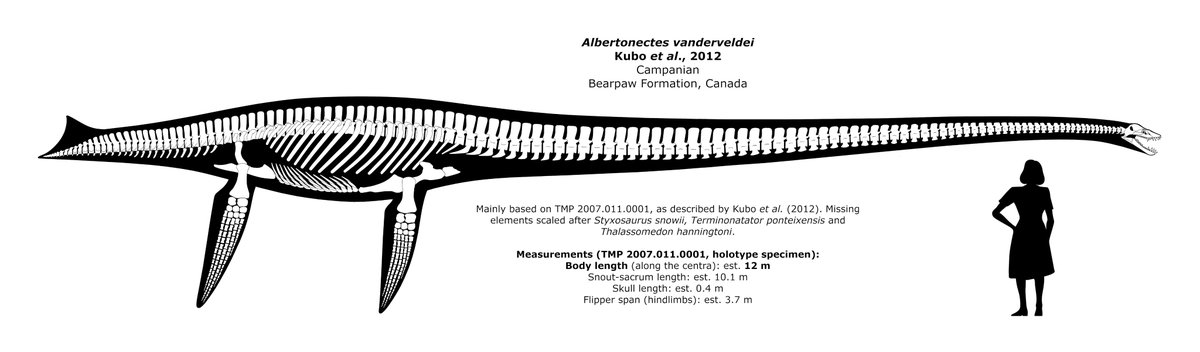
Over 60% of the length of the plesiosaur Albertonectes is made up of its neck, which is the longest relative to body size of any animal ever discovered. At 76, it has more vertebrae in the neck alone than most species have in their entire bodies.
10
152
981
15,852
Apr 1
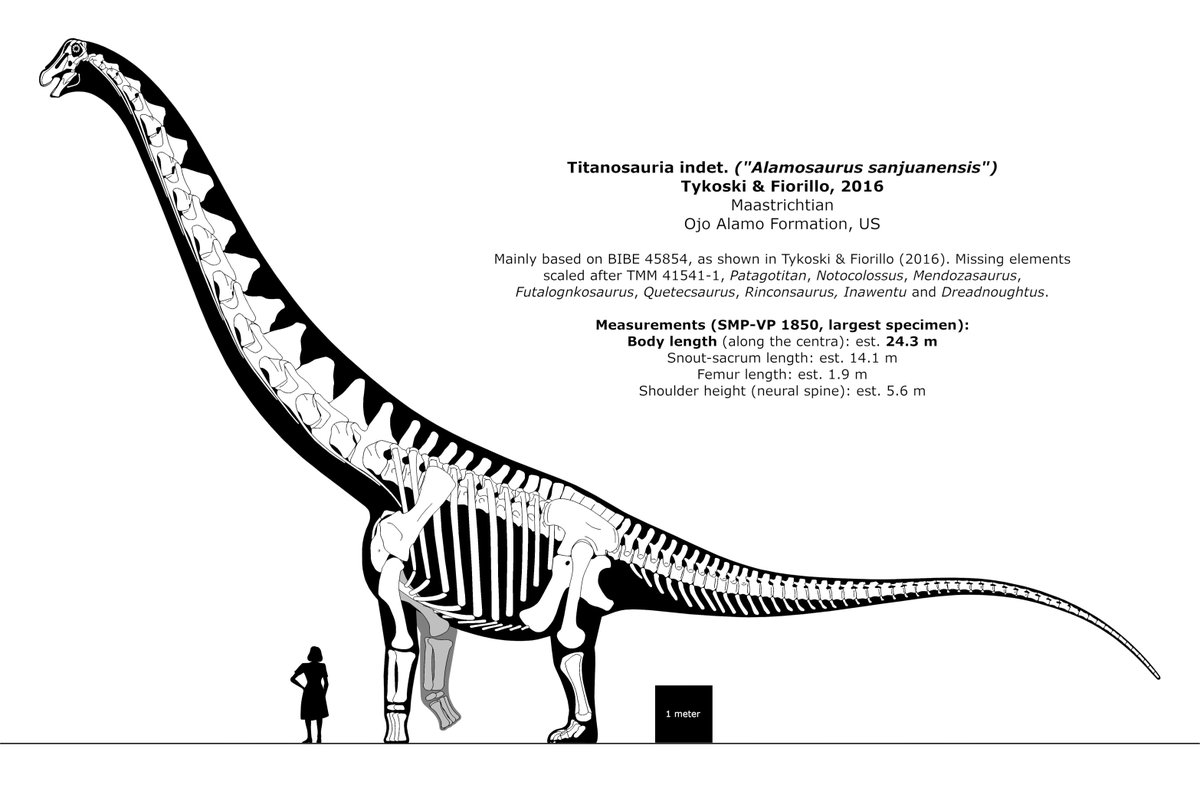
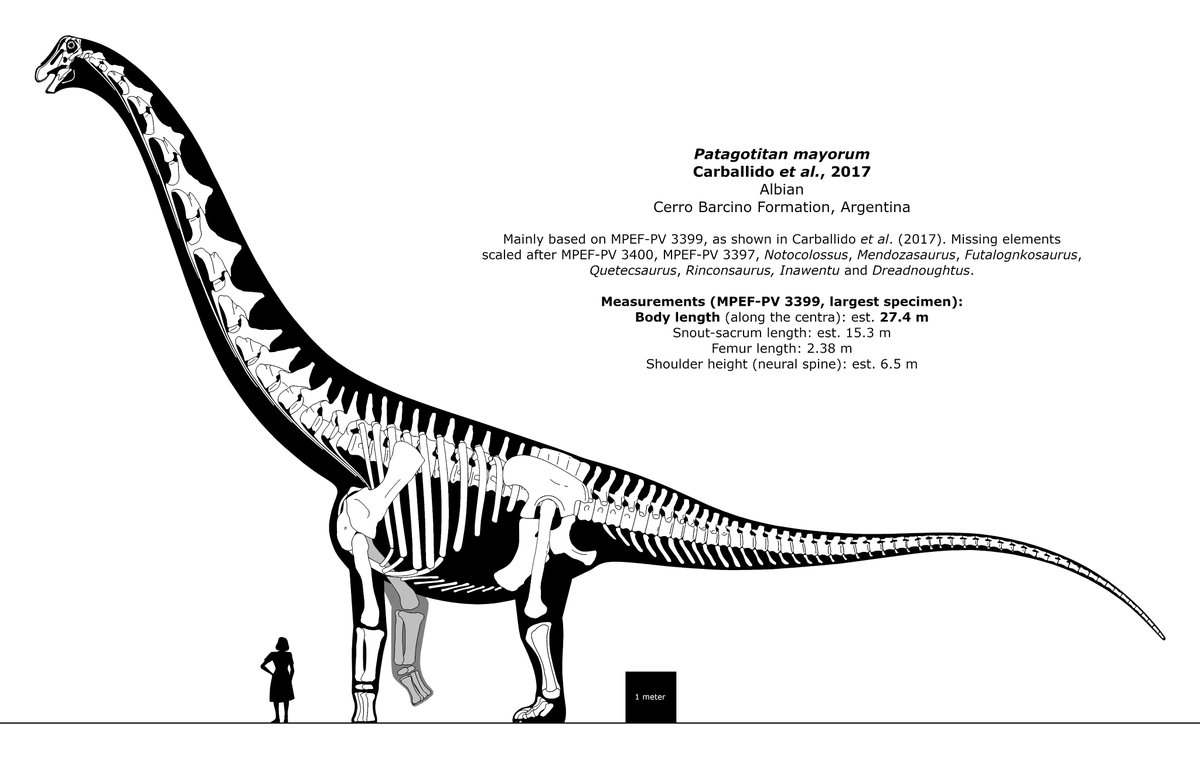
The traditional concept of "Alamosaurus" is now believed to represent multiple different species of large North American titanosaur. Some of these have been suggested to be relatives of South American lognkosaurs like Patagotitan and Puertasaurus, though this is far from certain.
6
87
520
19,627
Feb 2
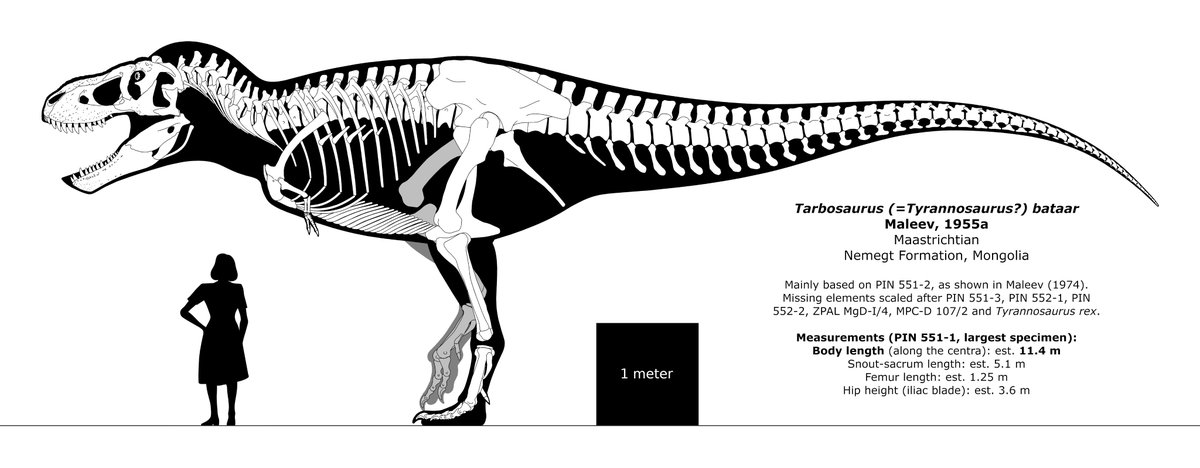
While its anatomy is not as thoroughly studied as that of T.rex, well-preserved skeletons in multiple stages of growth allow us to reconstruct the life history of Tarbosaurus much more clearly than its North American cousin's... especially after Zanno & Napoli (2025).
9
110
695
14,394
Jan 8
Starting off 2026 with a remake of one of my oldest works, Patagotitan! Even though it's not the largest, the completeness of its remains makes it one of the most impressive dinosaur discoveries. Seeing a cast of the skeleton in person was absolutely breathtaking.
7
93
619
12,625
24 Dec 2025
Merry Christmas!
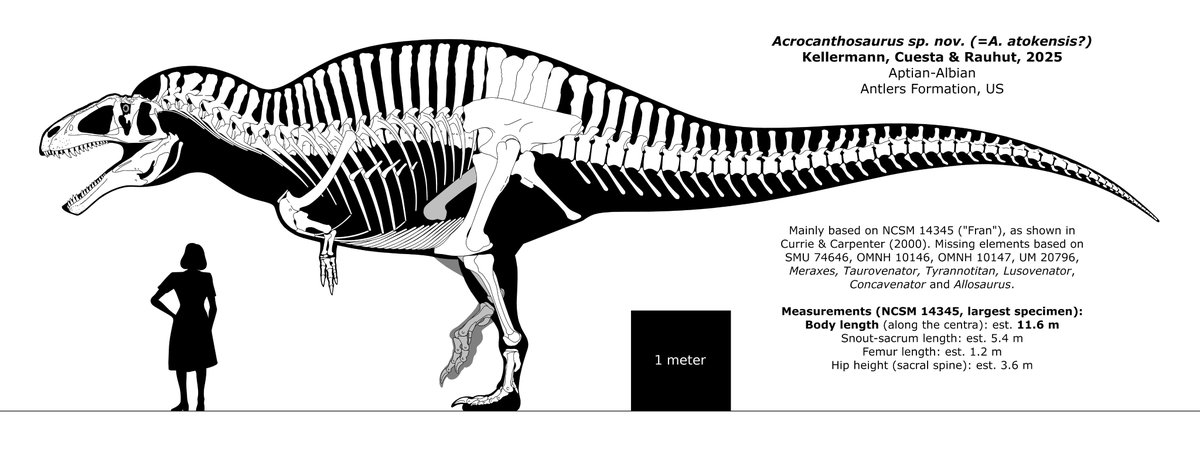
While the genus Acrocanthosaurus is currently only known from a single species, differences in the skull of the largest known specimen suggest that the giant sail-backed carcharodontosaurs may have been more diverse in North America than we thought.
17
113
815
15,575
24 Dec 2025
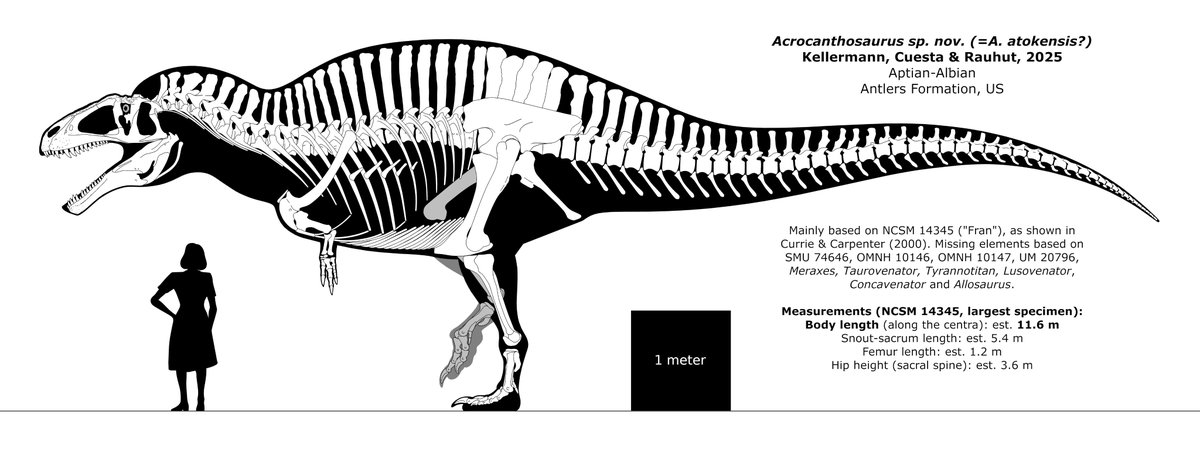
Update: I forgot to fill part of the lacrimal with white, it's not so freakishly thin at the bottom.
27
188
4,519
20 Dec 2025
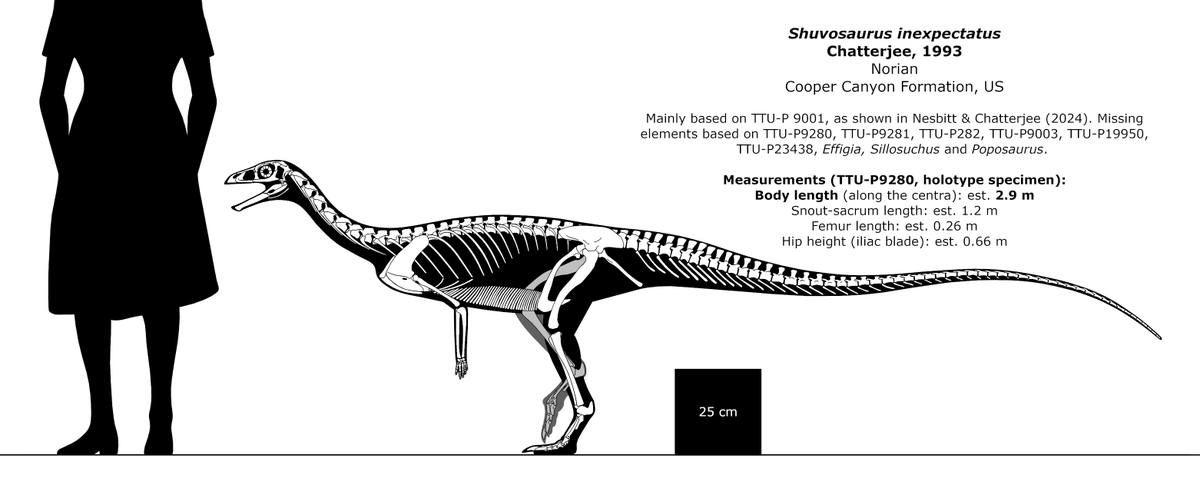
Shuvosaurus is one of the most incredible cases of convergent evolution in fossil reptiles - it was mistaken for an ornithomimid dinosaur for more than a decade, but as a pseudosuchian, it's more closely related to crocodylians than to any dinosaur.
5
60
396
8,429
13 Dec 2025
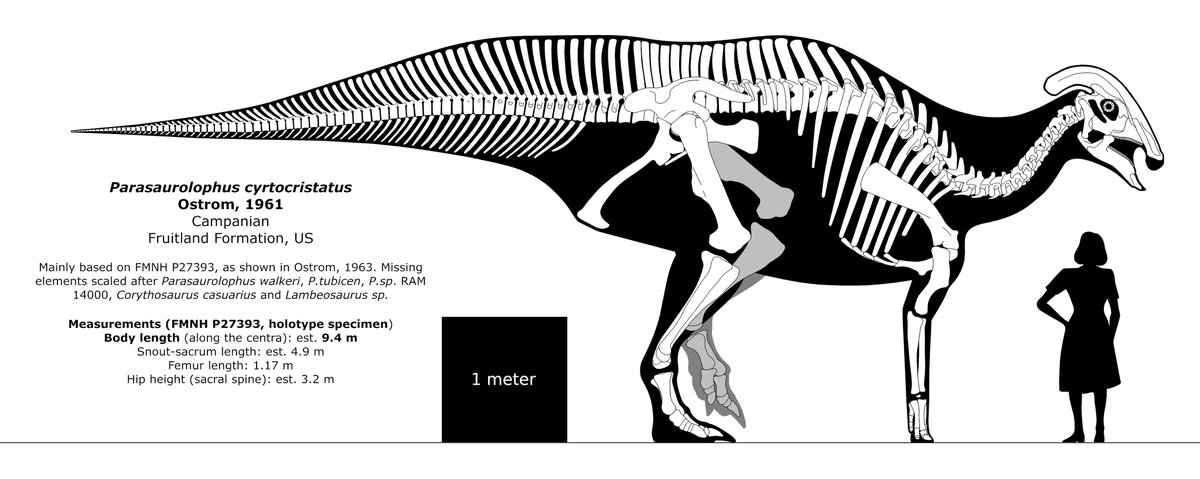
Aside from its eponymous short crest, Parasaurolophus cyrtocristatus differs from the other species in the genus by having proportionally longer limbs. It was once suggested to be the female counterpart of P.walkeri, but the two lived at different times.
2
53
371
7,203
2 Dec 2025
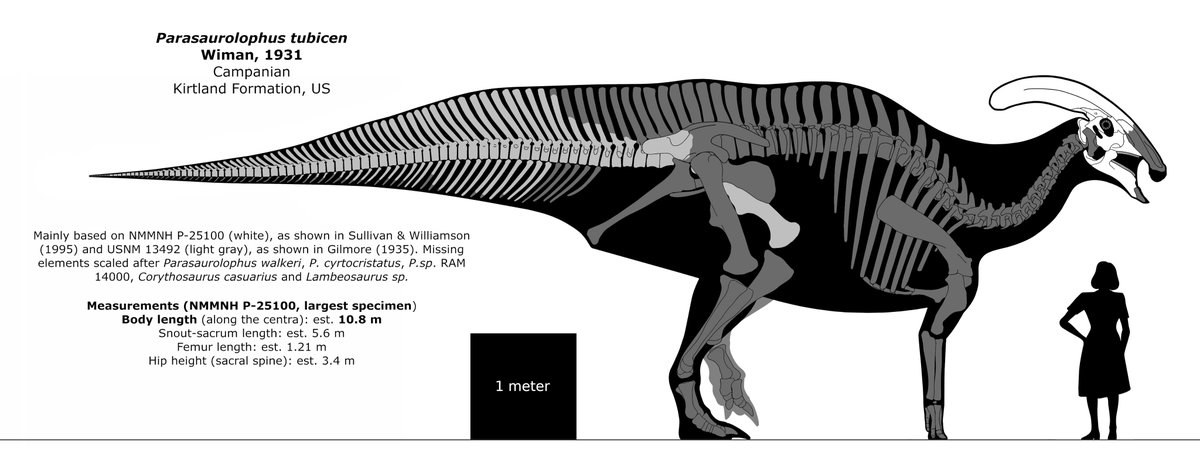
As well as being the largest and geologically youngest species of Parasaurolophus, P.tubicen also had a crest with a rougher surface texture than its closest relatives (perhaps suggesting it was covered in keratin, unlike the fleshy or scaly crests of most other hadrosaurs).
4
89
527
11,516
25 Nov 2025
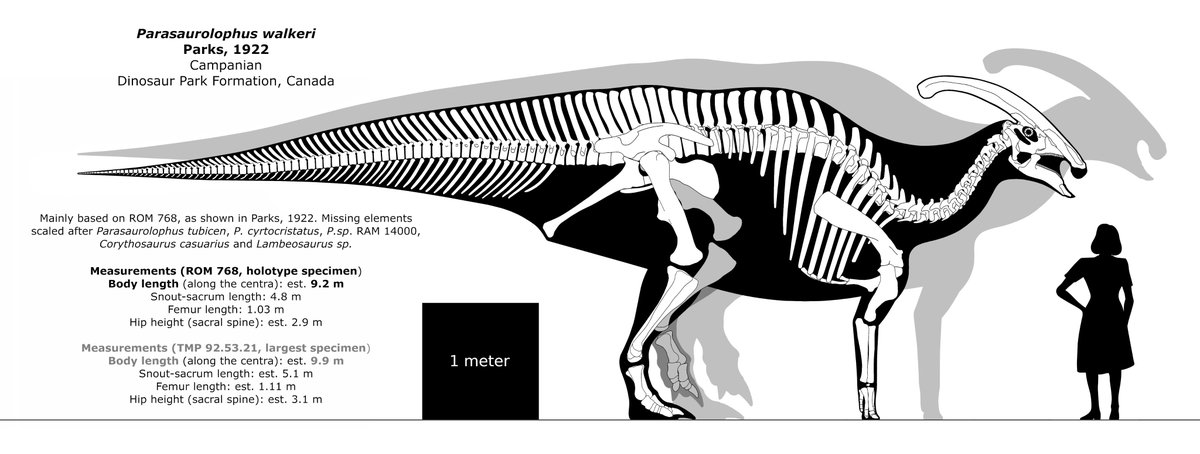
The iconic head crest of Parasaurolophus had a series of internal channels that could have created trombone- or tuba-like sounds as the animal blew air into them, making it one of the very few dinosaurs for which we can actually try to reconstruct the original sounds.
7
95
571
13,100
16 Oct 2025
I literally made this one months ago and forgot to post it here.💀
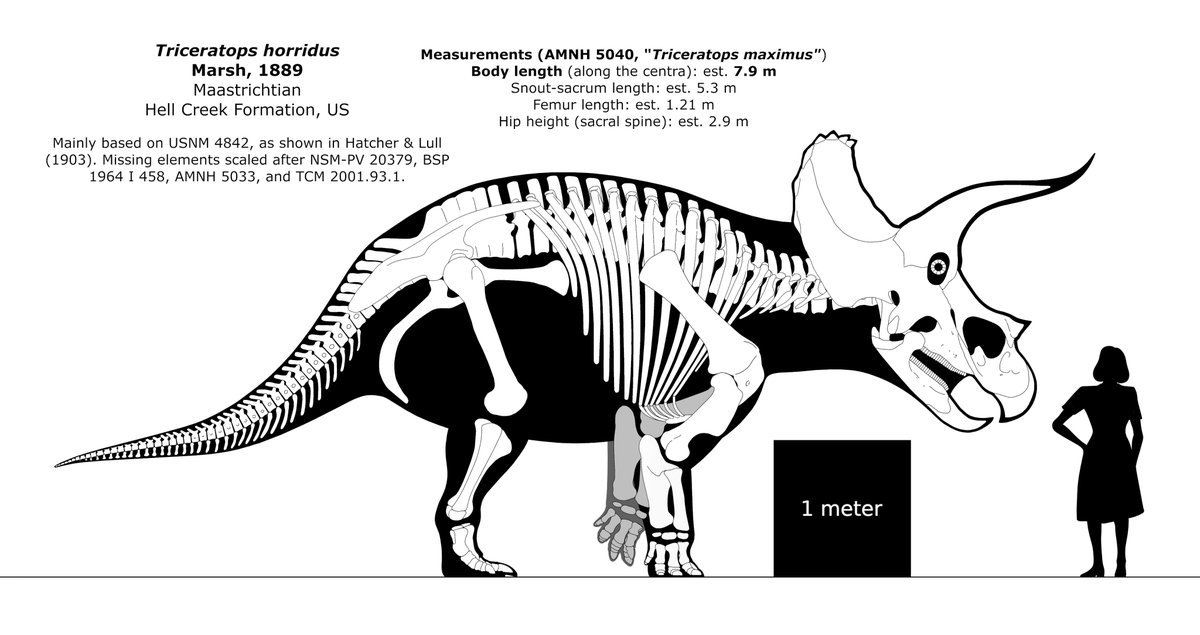
Like many living animals, the horns and frill of Triceratops are highly variable between individuals, so much so that nearly twenty species have been attributed to the genus (only two are still valid today).
5
61
593
11,004
16 Oct 2025
Triceratops horridus, the species depicted here, is the smaller of the two - the later T.prorsus could reach about 9 meters in length, and likely rivaled or exceeded the largest T.rex in weight.
1
32
2,025
Henry retweeted

2 Jul 2025
After spending days/weeks working on a skeletal of your own, you can easily recognise when the creative liberties, unpublished material, or specific quirks you incorporated into your artwork have been used elsewhere. It’s frustrating because there’s not much you can do about it.
1
5
83
4,019
23 Jan 2025
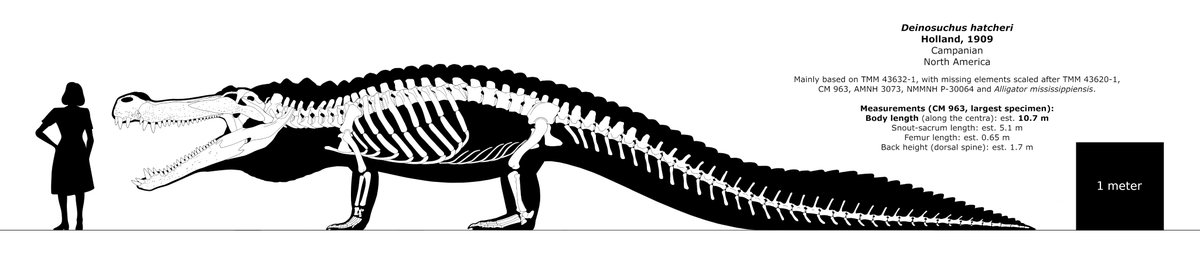
The monstruous alligatoroid Deinosuchus is famous for fossil evidence of having preyed on hadrosaurs and tyrannosauroids, although it seems to have preferred sea turtles. Compared to modern crocodilians, it had a massive skull, even relative to the enormous rest of the skeleton.
10
119
654
18,897
23 Jan 2025
For a detailed explanation of how the size estimate was made, see the Deviantart version: deviantart.com/randomdinos/a…
2
24
3,816
1 Dec 2024
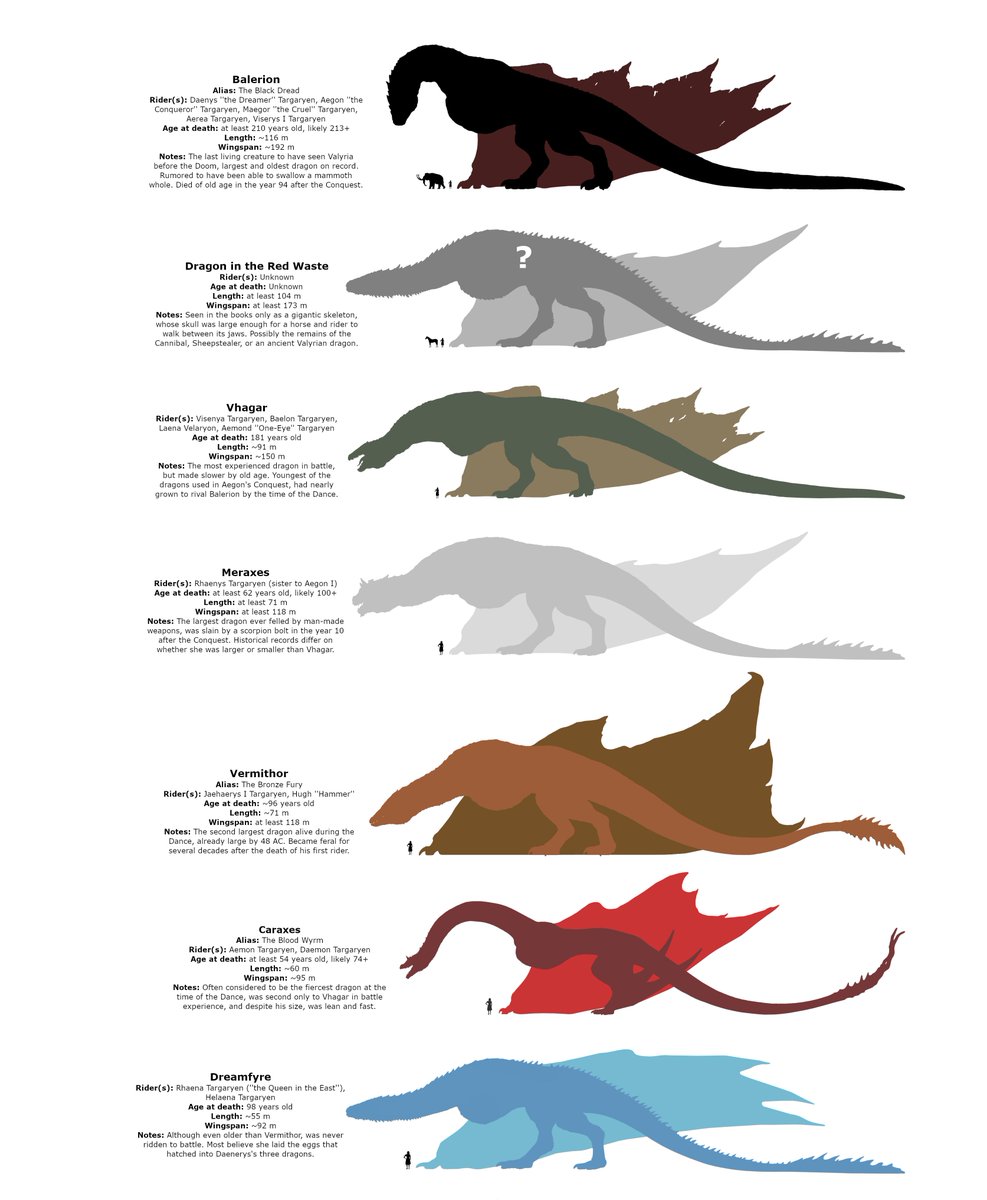
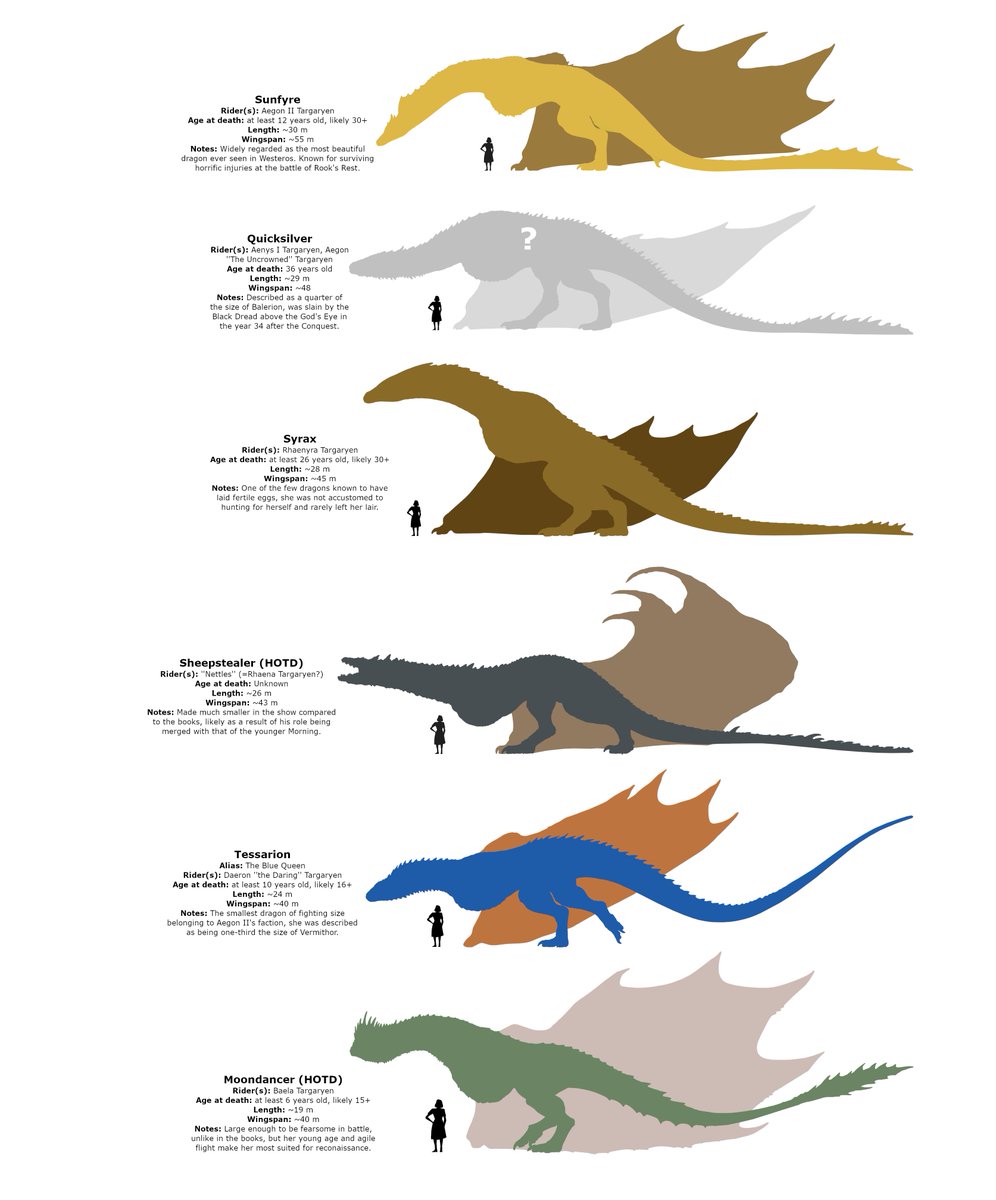
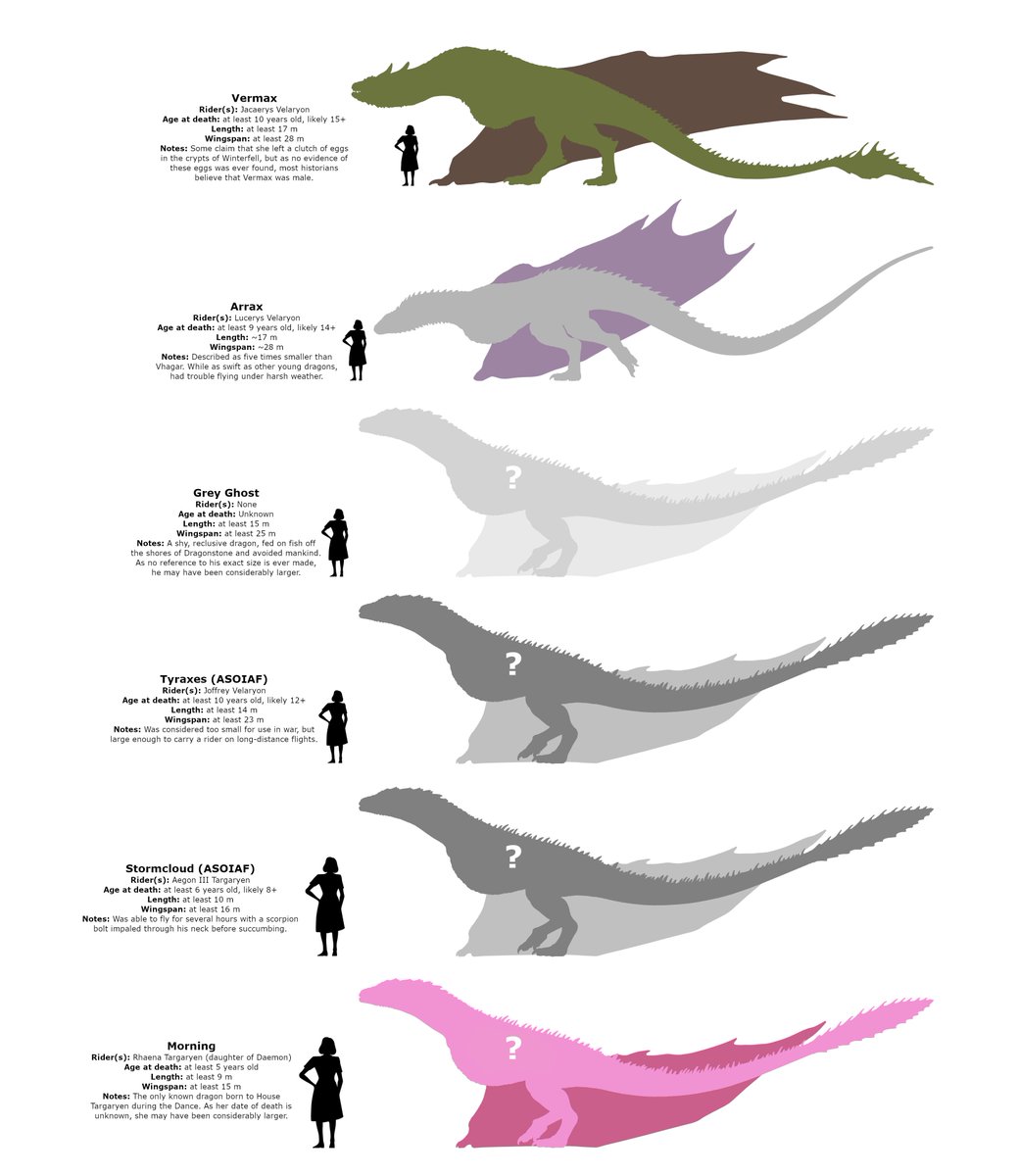
And now for something entirely different: the (approximate) sizes of every dragon in the A Song of Ice and Fire universe. Thanks to @Fang83768513 for help with wingspan estimates and the Meleys silhouette! (1/2)
3
110
801
21,905
1 Dec 2024
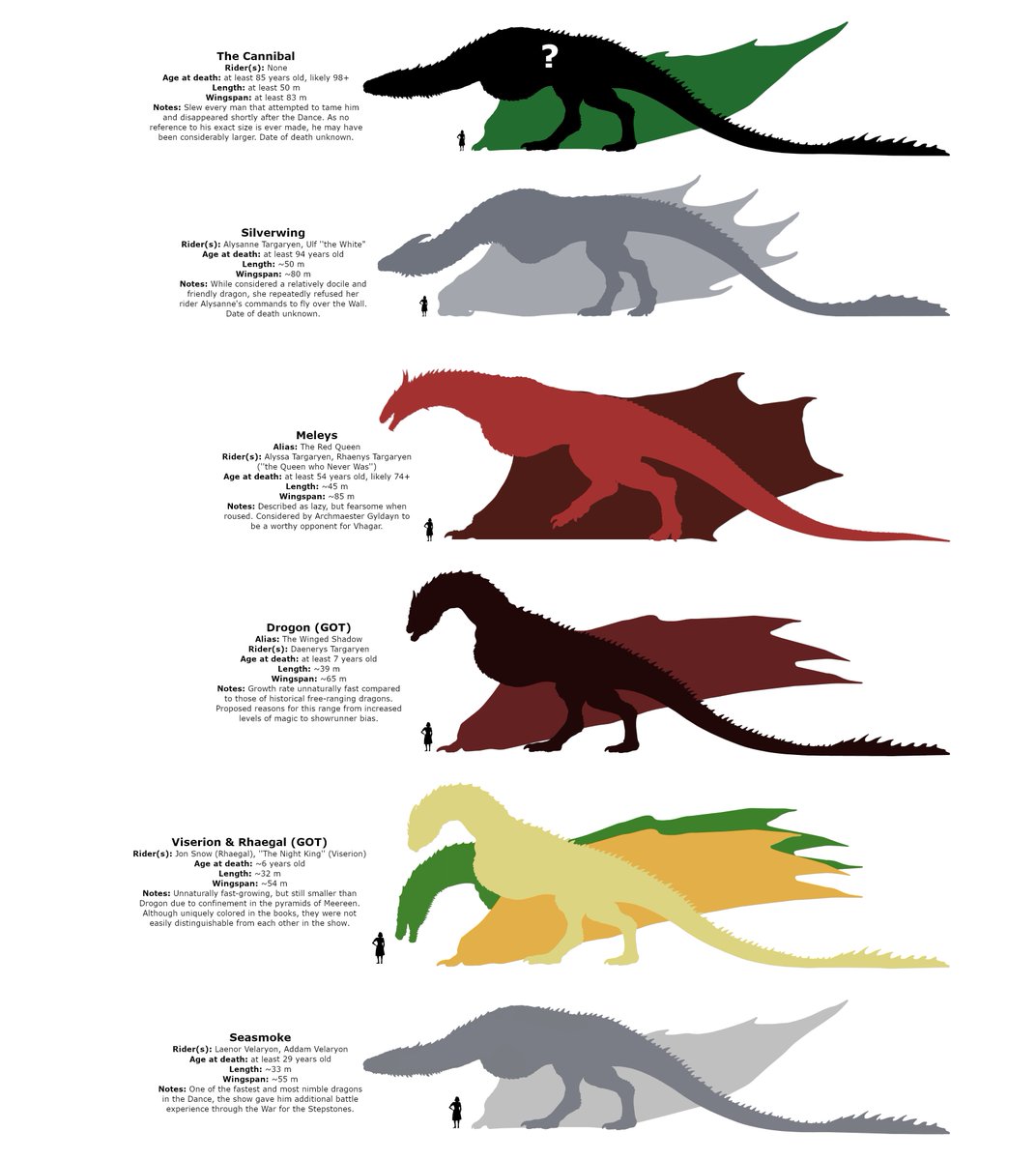
(2/2) Final five, because Twitter wouldn't let me post them all at once. Silhouettes marked with '?' are dragons we haven't yet seen in the TV shows.
15
131
5,879
16 Nov 2024
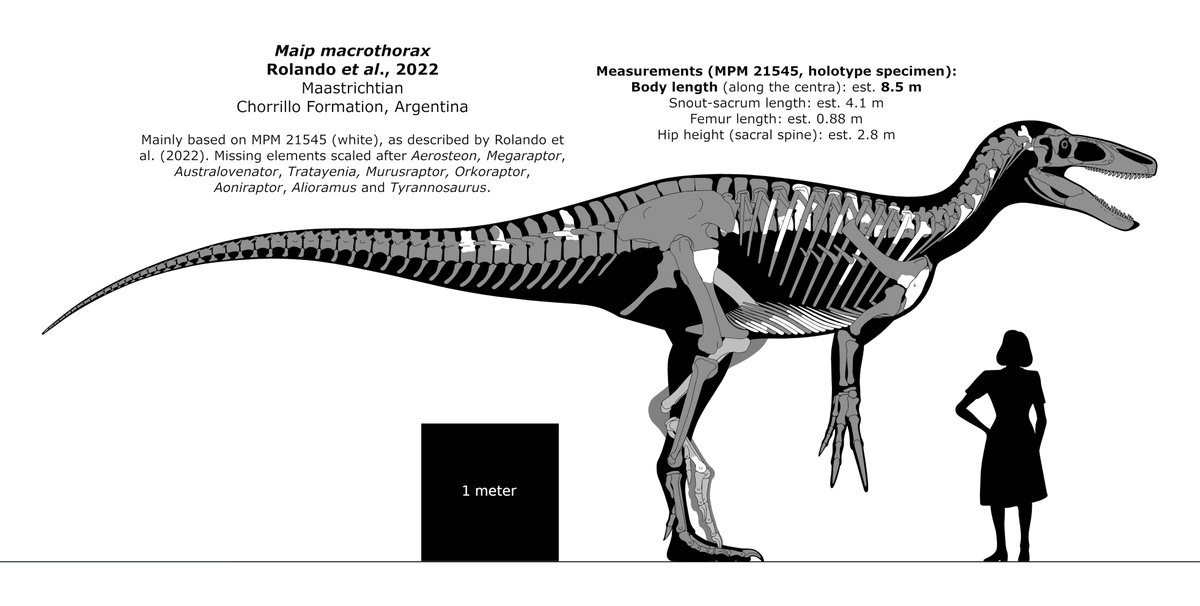
The largest named megaraptorid (though not by much), Maip shows a more typical state of preservation for the group. Its presence confirms that megaraptorans held the apex predator niches in part of South America right up until the end of the Cretaceous.
11
82
492
14,508