
Joined April 2013
- Tweets 303,304
- Following 21,005
- Followers 23,444
- Likes 146,927
64,834 Photos and videos
















Pinned Tweet

7 Apr 2021
This is Part One of this thread...
Part Two will be out tomorrow...
6 Apr 2021

It really happened! They shot up the place! You can still see bullet holes in the House Chamber of the Capitol building! There are not many people aware of them, but they give silent testimony that violent terrorists invaded the Capitol building itself. And they were (cont.)
15
74
149

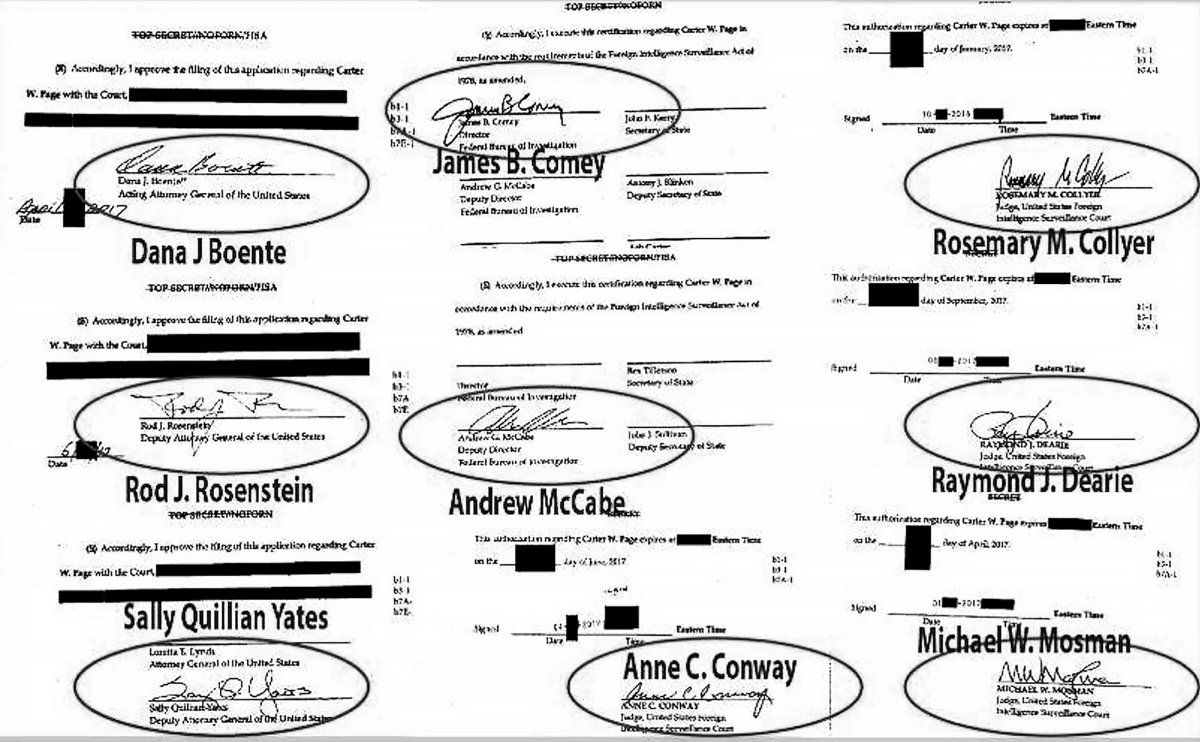
The Traitors Who Signed The FISA Warrants Allowing The Spying On Presidential Candidate Donald J. Trump, And Later President Donald J. Trump.
Dana J. Boente - Acting AG
Rod J. Rosenstein - Deputy AG
Sally Q. Yates - Deputy AG
James B. Comey - Director FBI
Andrew G. McCabe - Deputy Director FBI
Anne C. Conway - FISA Court Judge
Rosemary M. Collyer - FISA Court Judge
Raymond J. Dearie - FISA Court Judge
Michael W. Mosman - FISA Court Judge
The Penalty For Treason Is Death. The Sole Method Of Execution By The U.S. Military Is Lethal Injection.
1,150
18,841
21,796
1,118,006
Raven Hawk retweeted

22 Dec 2024
Senator Thom Tillis demands identification and to see the social media account of an American for just asking him a question
He says to stop filming, “Give me your identifying information and then I can look at your activities on social media” then he will answer a question
Thom Tillis is the Senator who said "I think it's bullsh*t” to the Jan 6th footage being released to Tucker Carlson
He also voted with Democrats to confirm Joe Biden’s Judge nominations
He opposed Matt Gaetz as Attorney General
He was one of the GOP Senators that did not endorse Donald Trump for President
Senator Thom Tillis has been vocal telling Donald Trump supports to “stand down” on opinions over legislation
Senator Thom Tillis takes millions from lobbyists
3,240
11,115
21,537
1,441,476


Raven Hawk retweeted
21 Dec 2024
American Tax Dollars spent on US Congress
It costs an estimated $2 billion per year for Congress to operate:
- Salary $174k
- $7.6 million per year for meal reimbursements
- The MRA, the members reprisational allowance is $810 million
- MRA broken down is $1.5 million to each Congress Rep
- Majority in Minority leadership, Hakeem Jeffries and Mike Johnson, get $37 million just for them
- Actual Budget can range around $2 million per member, though some suggest it might be closer to $5 million when including all expenses
- Operational Costs: $750 million for House expenses and $250 million for Senate expenses
Conservative estimate total cost $1.5 million to $2 billion per year
1,121
7,820
13,580
771,110
Raven Hawk retweeted

13 Dec 2024
To the Government:
The drones have been showing up every night from dusk until 11pm…..since November 18th.
It’s time to let the Public know what these things are…. Or shoot the MFers down.
3,031
7,867
38,060
3,533,478
12 Dec 2024
7
89
12 Dec 2024
5
81
12 Dec 2024
2
66
12 Dec 2024
2
56
Raven Hawk retweeted

10 Sep 2024
Dr John Coleman Committee of 300, Tavistock Institute, Conference 1994, hauntingly describes events of today and takes public questions youtube.com/watch?v=yE6OEY4X…

2
2
356
Raven Hawk retweeted

5 Aug 2024
Thank you for sharing your perspective on the Committee of 300. There are many concerning issues regarding global governance and influence. I’d like to add to this conversation with my own research about two significant groups: the Bilderberg Group and the World Economic Forum (WEF).
Klaus Schwab is indeed a notable figure associated with both the Bilderberg Group and the WEF. He founded the WEF in 1971 and has significantly influenced global economic policy through the annual Davos meetings. Schwab has cultivated a vast network of influential leaders across various sectors, amassing considerable influence and wealth, although the details of his financial status remain somewhat opaque.
Bilderberg Group Overview:
•Founder: Prince Bernhard of the Netherlands
•Year: 1954
•Location: First meeting at Hotel de Bilderberg in Oosterbeek, Netherlands
•Purpose: To foster dialogue between Europe and North America and strengthen ties between leaders in various sectors.
Current Influence:
•Participants: Includes political leaders, business executives, and academics from Europe and North America.
•Meetings: Annual, private, and by invitation only, focusing on major global issues.
•Impact: Although discussions are private, the group’s influence is significant due to the powerful positions held by its members.
Shared Agendas and Overlapping Membership:
The Bilderberg Group and the WEF share overlapping membership due to their focus on global issues and influence. Both organizations aim to foster dialogue among influential leaders to address global challenges.
Notable Overlapping Members:
•Mark Carney, Former Governor of the Bank of England
•Klaus Schwab, Founder and Executive Chairman of the WEF
•Paul Volcker, Former Chairman of the Federal Reserve
•Timothy Geithner, Former U.S. Secretary of the Treasury
•Robert Zoellick, Former President of the World Bank
•Larry Summers, Former U.S. Secretary of the Treasury
•Stanley Fischer, Former Vice Chairman of the Federal Reserve
•Bill Gates
•Henry Kissinger
•Jamie Dimon, CEO of JPMorgan Chase
•Christine Lagarde, President of the European Central Bank
•David Solomon, CEO of Goldman Sachs
•Tidjane Thiam, Former CEO of Credit Suisse
These individuals have played influential roles in shaping global economic policies through their dual roles in these groups. They participate in high-level discussions and decision-making processes at both the Bilderberg Group and the WEF.
The Bilderberg Group gained significant public attention in the mid-1970s when journalist James Tucker extensively investigated and reported on its meetings. Tucker’s work helped transform the group’s activities from speculation and conspiracy theory to recognized and documented facts. The secrecy surrounding their meetings continues to fuel debate about the group’s influence on global affairs.
The narrative around the Committee of 300 involves highly controversial and extreme claims, including the control of global events and depopulation agendas.
It’s evident that these influential groups wield significant power in global affairs. To truly understand and address their impact, it’s crucial for people to remain informed, critically evaluate information, and engage in constructive dialogue. Opening our eyes to these dynamics is essential, as the truth often lies in plain sight. Through increased awareness and active participation, we can work towards ensuring transparency and accountability in global governance.
The key word is accountability.

6
44
85
7,802
Raven Hawk retweeted

19 Jul 2024
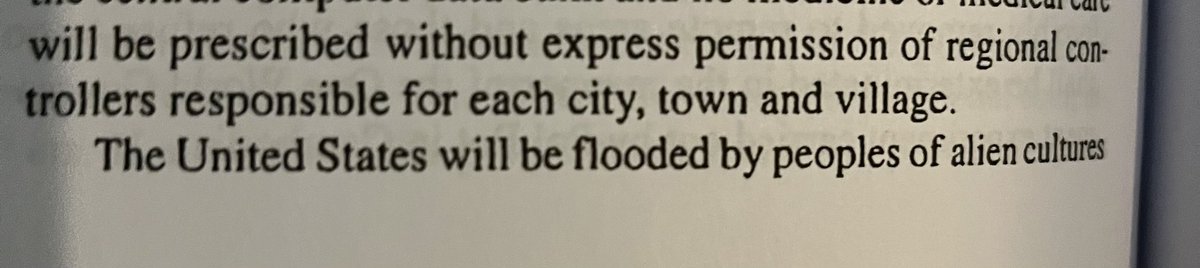
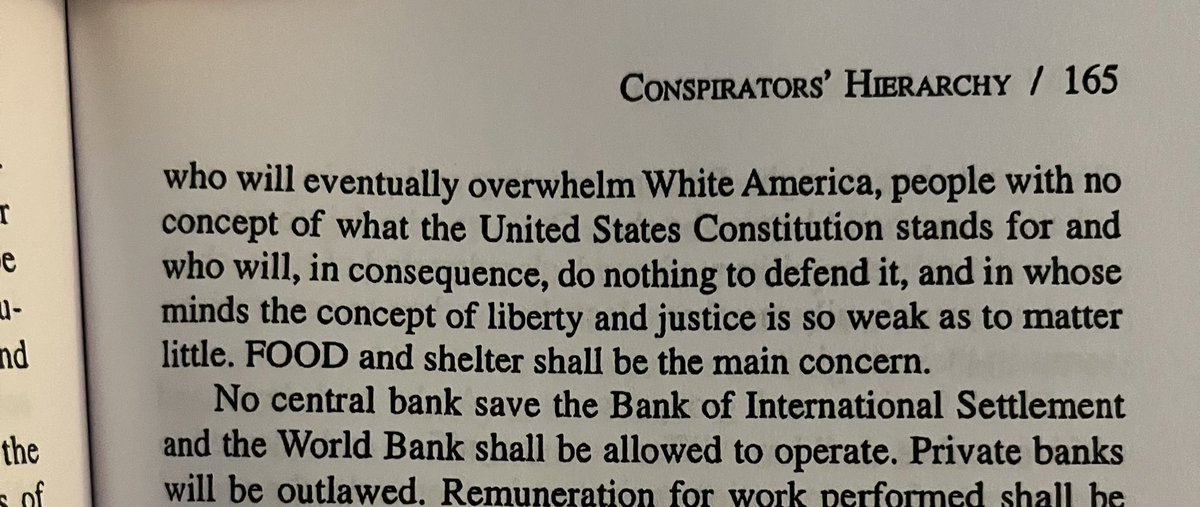
His book is great and it was written in 1992 (the same year Agenda 21 was signed which pushed everything he talks about)
here’s a section from the his book that they are obviously doing now:

6
59
138
6,995
20 Oct 2024
44
Raven Hawk retweeted

4 Oct 2024
@TenhatLB Guten Tag, please find the unroll here: threadreaderapp.com/thread/1… Share this if you think it's interesting. 🤖
6
5
543
Raven Hawk retweeted

25 Jun 2024
I was just expelled as the only Black Republican from AZGOP executive committee by RINOs in AZGOP LD2 for: supporting President Trump, signing up 285 new Trump Precinct Committeemen & holding the Republican AZ state legislature accountable for allowing 2020/2022 stolen elections.
3,064
12,183
23,796
10,488,162
16 Oct 2024
This one has always been a " flake " - just like his good buddies, Cheney and Kinsinger
29 Sep 2024

I’ll be supporting Kamala Harris for President and Tim Walz for Vice President.
I’ve served with Kamala in the U.S Senate. I’ve also served with Tim in the House of Representatives.
I know them. I know first of hand of their fine character and love of country.
I would encourage all Republicans who feel this way to do the same.
44
