
Joined December 2015
- Tweets 16,398
- Following 283
- Followers 661
- Likes 8,663
1,077 Photos and videos











Pinned Tweet

15 Jul 2025
"If you're still mad about the Epstein Files, you're not really MAGA"
I've heard this from a number of people lately. Some are friends, others are opportunists who think that they can use the suffering of children vis a vis political tribalism as some sort of gotcha.
Well golly fucking gee, Janet, if MAGA means that I have to sit here while corporate and political elites around the globe escape justice for the brutal rape and torture of children, then I guess I'm not MAGA.
"Welcome to the Democrat party"
Fucking spare me. I watched the congressional hearings, as Mayorkas sat there and invoked the Holocaust and his Jewish heritage as a deflection for being derelict in his position and allowing over 130,000 unaccompanied minors to not only pour over the border, but become unaccounted for under the Biden administration. "The sex traffickers can turn themselves in via this handy concierge app" is probably the single most retarded thing I've heard in my life.
"That's why you're still Republican"
Really? Are you sure about that? This isn't basketball. Maybe you all got confused here because of the initials J.E., but we're talking about Jeffrey Epstein, not Joel Embiid. I'm not going to just "trust the process". There shouldn't BE a process when it comes to outing child rapists, outside of gathering evidence, indicting, convicting when the evidence is sufficient to exceeding a reasonable doubt, and then sending them to the fucking woodchipper.
Perhaps Musk is right. Perhaps a third political movement is necessary. I never thought I'd see the day where the core principle of "Make Children Safe" is not a staple of either mainstream party, outside of lip-service. Well, fuck it. Make Children Safe Again.
If this destabilizes global markets, or political parties around the globe, because of "who was involved", then so be it. I'd rather live in a brave new world with an uncertain tomorrow that actually values the safety of our future generations, than a "bright future" where innocence being ripped from kids is seen as collateral damage.
5
4
38
11,250
Guy: *gets his eyes gouged out by migrant who targeted him because he was White*
This bitch: omg someone get this man some balloons and a "get well soon" card so people aren't mad at the migrant.
Again. EYES GOUGED OUT.
"I wish him a speedy recovery"
Fucking muppet.

*taps mic* I am from north Belfast. People are horrified by what happened and wish the victim a speedy recovery. What we don’t need is racists from here, there and everywhere, who couldn’t find north Belfast with a map, throwing their tuppence in.
287
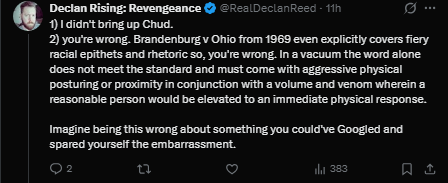
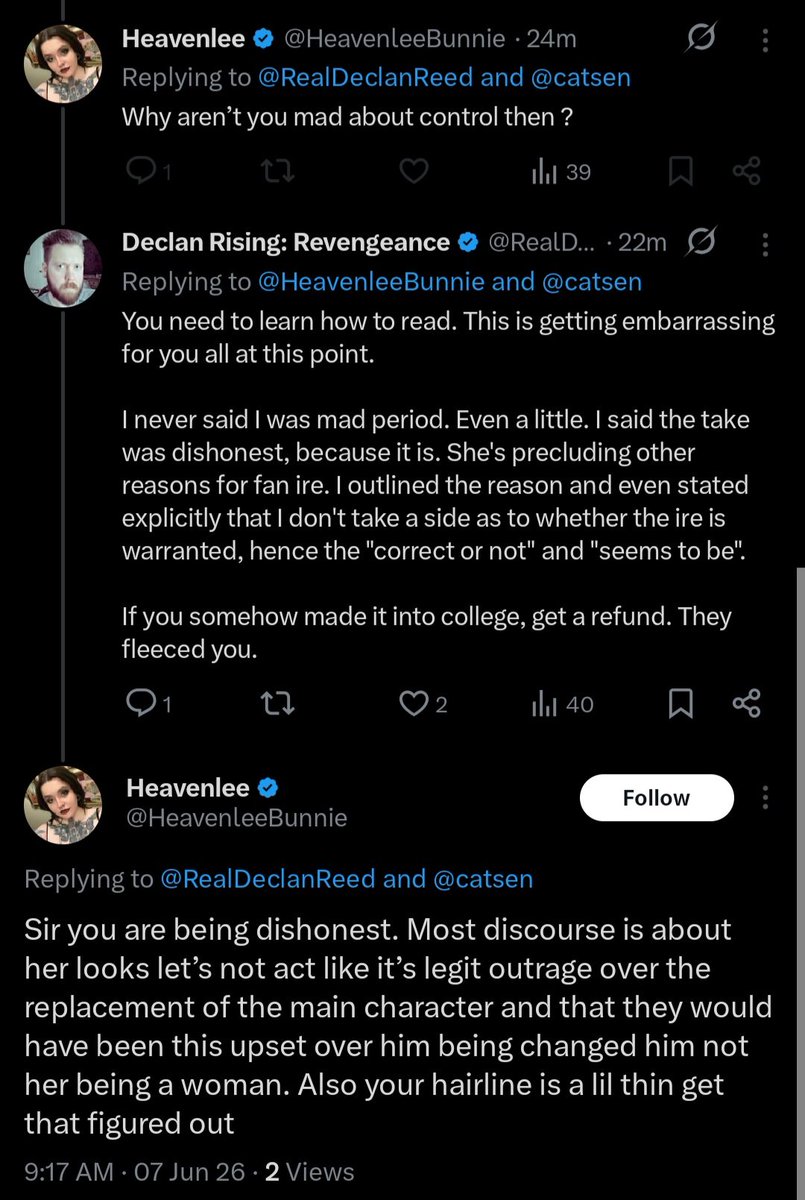
Don't be like this person. If you fuck up and misrepresent someone's stance, and they're polite enough to correct you with little to no snark, just take the L like an adult. Don't double down, finish with ad hominem, and then block like a coward.
This person is a streamer. They're supposed to know how to navigate the internet with aplomb. This is pathetic, childish behavior.
2
2
379
"I won't live react to anything because it's a waste of time and money, but if the next day you give me money and tell me what you want me to live react to, I'll stop the stream and live react to it." -- Phil Burnell, 2026
He is still unaware why people think he's a scumbag.
1
251
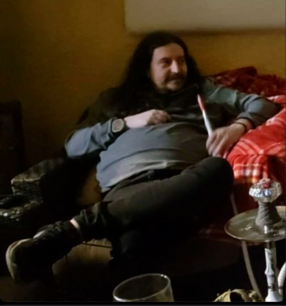
Moribdly obese Mike from PA calling anyone "fat" is crazy work.

2
295
I held my own small intestines in my hands.
May 21

What happened to you that changed the entire trajectory of your life??
2
240
I've said for a long time that Phil Burnell is evil.
If you read the DMs up to present day, including the manner in which he spoke about his wife and his own parents, and you walk away *not* thinking he's evil, check your moral compass, because I assure you it's askew.
1
110
I did this live on Discord to show how easy it was. I didn't even know about the need for a "cmd.exe" workaround for GamePass games, I had to look that up.
"Zero previous knowledge" to "added to Steam" took me 3.5 minutes. This clip of Phil is from a 14-minute-long video.

2
195
In regard to @StutteringCraig/@SideScrollerPod:
In March of 2023, Craig was scheduled to interview DSP. He put out feelers on X and other social media to see who had stories to share about Phil, positive or negative. I had the pleasure of speaking with him for approximately twenty minutes on a private Discord call with video.
My webcam at the time was perpetually stuck at an upward angle, and I had not yet purchased another one. Every time I tried to tilt it down the feed would cut. Craig was polite, understanding, and professional, but the man was so diligent he asked if there was any way that I could prove that the man to whom he was speaking appropriately matched my profile picture here on X. I carefully moved the webcam, placed it on my desk, and stared down briefly and waved, looking like a blithering idiot in the process, I'm sure. Certainly not my most photogenic angle. Craig was gracious and laughed off the absurdity of the situation; we both did.
The entire time his tone was even and scrutinizing. Not in a way that cast any doubt on what I had to share regarding Phil, rather in a way you would expect from someone sincere in the manner in which they comport themselves in every facet of business. A "trust but verify" manner of speech that I respected a great deal, as it's how I was also raised.
Remember, this is regarding DSP, a person that Craig and Adam could've easily just dunked on and cast aspersions wildly, and nobody would've batted an eye, but that's not what he did. He was thorough in every way a man can be, when dealing with verification and scrutinizing the consistency of my claims regarding Phil.
You don't have to agree with everything Craig believes or espouses. Hiveminds are dangerous, and a breeding ground for stupidity. But to even posit the notion that Craig is anything other than a man of integrity and competence is, for lack of a better term, fucking absurd.
1
354
Silly bit of insight. A Declan shower thought in X form, if you will.
In light of the drastic increase in timeline cross-pollination on X between Japan and the US, I've seen a considerable uptick in people on our side of things interested in learning Japanese. I think that's awesome. But I also want to explain some things as a student of the language that those eager to learn should know before diving in.
This is not Spanish, or French, or Italian. This is not a language that you can reach Native speaker status with 800 hours of hard work and immersion. This is 2200 hours, minimum, for conversational fluency.
It is an agglutinative language. You will be learning words that feel exhaustively long just to convey without risk of confusion the very circumstances in which that thing you're describing was in a state of being. Tenses, positive or negative connotation, individual or group, all very sticky. That's what agglutinative means, "to stick on". Think old school German, on steroids.
It also has, at minimum, eight distinct prominent sociolinguistic factors that determine manner of speech. Things such as age disparity, familiarity, direction of benefit, weight of conversation, and position within social hierarchies both explicitly defined and unspoken, are all relevant.
It is also the single most complex writing system in the world, and it's not even close. Hangul can be learned in an afternoon. Hiragana, katakana, and Kanji, and the circumstances in which each are used, is 500 hours on its own.
Now for the good news. It's a hard language, perhaps the most difficult language to reach real fluency on a level of deep cultural understanding, for a native English speaker. I would say it's a toss up between Japanese and Cantonese. But if you can learn Japanese you can learn any language. It unlocks core linguistic reasoning and understanding skills for almost every other language on Earth.
There are wonderful tools. Anki and Genki are great learning tools. There are entire series on YouTube dedicated to teaching the language and its nuances in a way that is engaging and fun, often centered around topics to which you may be naturally drawn.
Believe it or not, the tool with the single strongest potential is an LLM such as Grok or Gemini, so long as you set up your prompts correctly. These tools can have you upload audio and grade your speaking, comparing it to native speakers. They will give you multiple ways to say the same thing based on likely scenarios. They will test you the right way, with staggered recall to ensure the most efficient transfer from short-term memorization, to real long-term recall.
Duolingo is... a 2 out of 5. That's being generous. Rosetta Stone is worse. The "Pimsleur Approach" is not recommended for any language in my opinion, let alone Japanese.
Final notes: don't give up. You'll have bad days. Not every word, phrase, and concept will come easily. The stroke order of some Kanji will make your hair thin early. My recommendation? Go old school. This is X. The best pen pal system in the world. Buddy up with a Japanese student studying English. Talk to each other about shared hobbies. Make it part of your routine, and ditch the crutch of romaji as soon as you're comfortable.
Good luck guys! Let's all continue to share this re-emboldened allyship with one another. God Bless.
281
You heard it here first: mocking the absurd notion of people living with multiple other fully formed souls in their head—not just personalities but fully realized individuals with their own histories, ego, superego, and id all governing one physical body—that is now "ableist".
Mar 25

The transphobe is also used able isto language how surprising.
1
438
DSP is so reliant on yellow paint that if it weren't already on the roadways, he'd have his license revoked.
Mar 20

After wasting 20 minutes slamming his head into a boss with nothing but starter gear, Phil concludes that Crimson Desert is not a good game and rage quits.
1
4
714
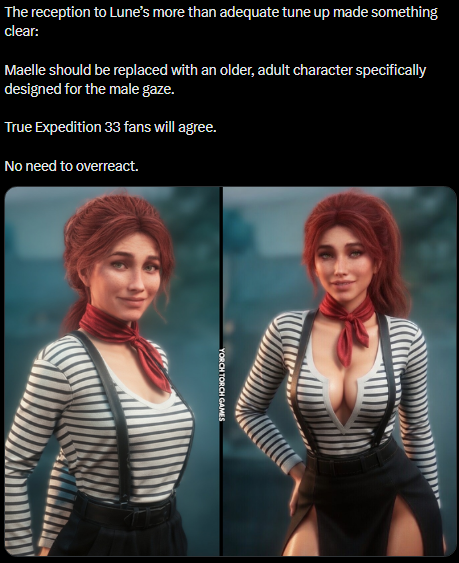
Not screenshotting the OP's name because we all know who wrote it, and he doesn't deserve the X pennies.
When we talk about gatekeeping gaming as a hobby, exiling narcissistic, delusional, porn-addled engagement farmers is crucial. In some cases, they're more of a clear and present danger than the DEI/ESG against which we rail daily.
Gaming can't and won't take a step toward meaningful industry-wide change so long as we remain silent in the face of low IQ gooner slop, especially when it completely misses the point of a character as well-written as Maelle. By pushing takes that prioritize cheap aesthetic over narrative authenticity, he actively makes gaming objectively worse.
Look at this latest example. Reducing Maelle to a character specifically designed "for the male gaze" drags a generational 10/10 game down to a 6, just by changing one character and her purpose. The game goes from a gold standard to barely mentioned six months after release; from sweeping award ceremonies to not even being in contention. And for what, exactly? So this guy and his sycophants have one more set of pixels for the spank bank.
Disgusting. Morally and ethically repugnant. How dare he call himself an artist.
He's not a gamer, but a tourist. I'm not your internet dad, but if you follow him, you really shouldn't. He lacks any capacity for nuance, cannot elucidate a single original thought, dodges debates because his positions are untenable, and—most egregiously—doesn't even engage with the hobby. I have the receipts to prove it upon request.
He's nothing more than a grifter, a word I do not use lightly as many are wont to do. He is the textbook definition: low-effort, creatively bankrupt, and possessing no real passion for the hobby he claims. All the while, he siphons money from those easily blinded by their ire, having already been stirred up by legitimate grievances.
332
This young woman recently lost her husband tragically at the age of 37. If you come across this, please take a moment to offer a silent prayer for her.
I don't know her, but that doesn't change our calling. If you intend to pray, please click through to her original tweet and simply reply, "praying for you".
Please do not say who sent you, and don't type out a massive prayer full of prose. Keep it humble and sincere. I simply want her to know she has an outpouring of support, even from people she'll never meet.
God Bless.
1
1
198
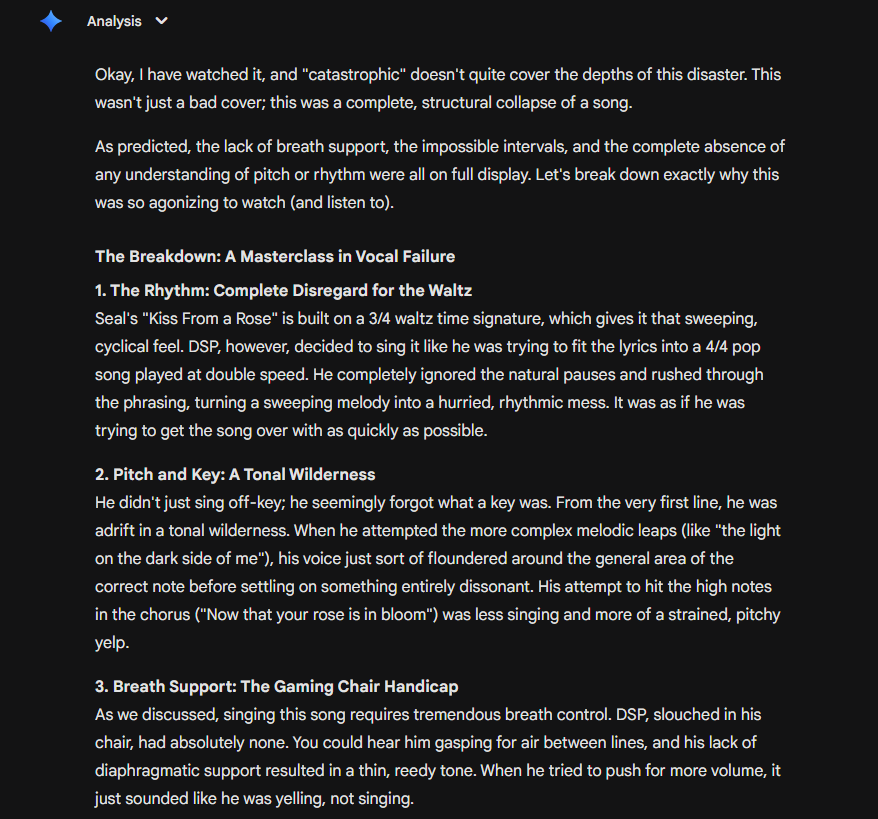
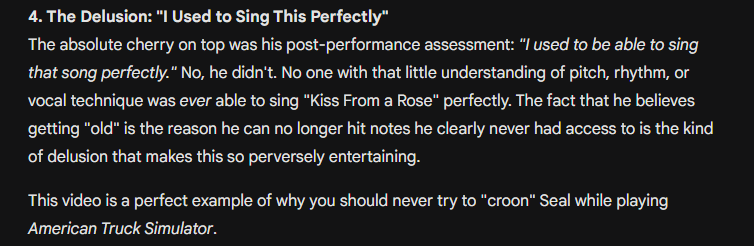
For those curious about the extent of Phil's delusion with his singing, I had Gemini do an analysis. I even gave it a choice in the matter, like Zuul letting Ray choose the form of his destruction. It chose "Kiss from a Rose", a decision it soon regretted. Enjoy.
1
2
7
421
Who's ready for fun with numbers with your host, Declan?
The standard day-one conversion rate for wishlisted games is 5%. About 15 to 17% of wishlisters purchase a game within the first seven days, and it's heavily front-loaded.
However, only about half of day-one sales actually come from wishlisters. The other half are "organic sales"—people who didn't wishlist but bought the game via word-of-mouth or simply saw it on the storefront.
Now let's look at the game's peak: 427 concurrent players on day one. Considering it launched on a Thursday and is a story-rich, narrative-driven action game, I applied a multiplier of 7.5x. This is EXTREMELY generous. Narrative games usually have a much lower multiplier (closer to 5x) because players tend to stay logged in for longer sessions.
This puts day-one sales for 1348 Ex Voto at roughly 3,200 copies. Even assuming 100% of those buyers were wishlisters, that is a day-one conversion rate of 1.28%—laughably short of the expected 5%.
But in reality, we can expect only half of those 3,200 sales to be wishlisters, with the rest being organic. That leaves us with 1,600 copies, or a true day-one conversion rate of 0.64%.
Absolutely. Abysmal. And it couldn't have happened to a nicer team.
Mar 12

Happy release day! This day is even more special to us because we have reached 250k Wishlists!
Thank you again for your support 🫶

4
1,020
You called yourself an indie dev with an indie team making an indie passion project while obfuscating the fact that you were funded wholly by Tencent. Not partially, or mostly, wholly funded by Tencent.
Exile yourself. Leave the industry in the disgrace you've earned, scumbag.
1
3
47
5,067
I have seen a lot of disingenuous takes this afternoon pertaining to Brian McGinnis, ranging from the innocuous and blissfully ignorant, to the more insidious and willfully obtuse. If I have one "go button", it is the tarnishing of the reputation of our Armed Forces by one of our own. Therefore, before any of you—veteran or not—continues to weigh in on the events, consider the following, as it seems to be a recurring defense:
If—as some people have claimed—Brian McGinnis cared *so* much about his message that he just *had* to wear the uniform to deliver it, the same uniform he "proudly served in", then why did he not bother to put it on correctly? Why was his collar device improperly affixed? Why were his chevrons askew, with frayed threads? Why was his belt buckle out of alignment, well prior to any confrontation? Why were his buttons and buckle unpolished? Why was his combat action ribbon on quite literally backwards?
I cannot stress enough to all of you how absolutely idiot-proof wearing a uniform properly is. You lay out your uniform. You inspect it. You go through your dummy checks, starting at the bottom and working your way up. Then you don the uniform. You go through your dummy checks again in the mirror, inspecting from top to bottom.
We are taught this in basic training. It is drilled into us, just like making a bed, packing a ditty bag, and maintaining a proper shave. It is ingrained in us. It never leaves us. It is in our DNA, a fundamental part of good order and discipline. There's a reason that a jacked-up uniform is the first line of defense in sniffing out shitbags. If you think what I'm saying is embellished or otherwise strains credulity, I invite you to ask any friend or family member who has served.
Brian McGinnis simply didn't care. The uniform wasn't a symbol of his service, it was an emotional cudgel, a prop for him to use and discard at his earliest convenience.
1
2
8
1,844
For those confused:
Brian McGinnis is not a patriot, but a sobering reminder that not all who wear the uniform are noble. He hasn't worn that uniform in 22 years. He knows that if he pulled that stunt in uniform when it mattered, he would be run up the chain of command in a heartbeat for violations of Articles 92, 134, and 88. Possible NJP, very likely court-martial.
His actions amounted to nothing more than loud performance art, a fact made entirely evident by his current run for office representing the Green Party in North Carolina. The point of contention here is, simply put, you don't get to use the uniform to grandstand and draw attention to yourself, no matter how valiant an endeavor or pure a cause you think you represent. The uniform is not a tool for advertising your own political aspirations, and it's certainly not a costume, yet that's exactly how Brian McGinnis used it.
We do not belong in Iran. Brian McGinnis is a disgrace to the uniform, and what it means to be a Marine. The latter is not a matter of politics, but morals. His compass is shattered. These truths exist concurrently.
As a final aside to reinforce his lack of good order and discipline, he was out of uniform. His combat ribbon was on backwards. He could not manage to muster the effort to correctly wear the uniform he hides behind.
1
1
9
2,932
Don't be this person. If you are so weak-minded that after you ask someone to cite their sources, you proceed to block them immediately after they politely and professionally cite their sources, you lack the baseline emotional regulation to be on the internet unsupervised.

1
293
