Joined March 2025
- Tweets 580
- Following 98
- Followers 41
- Likes 1,260
141 Photos and videos









12 Sep 2025
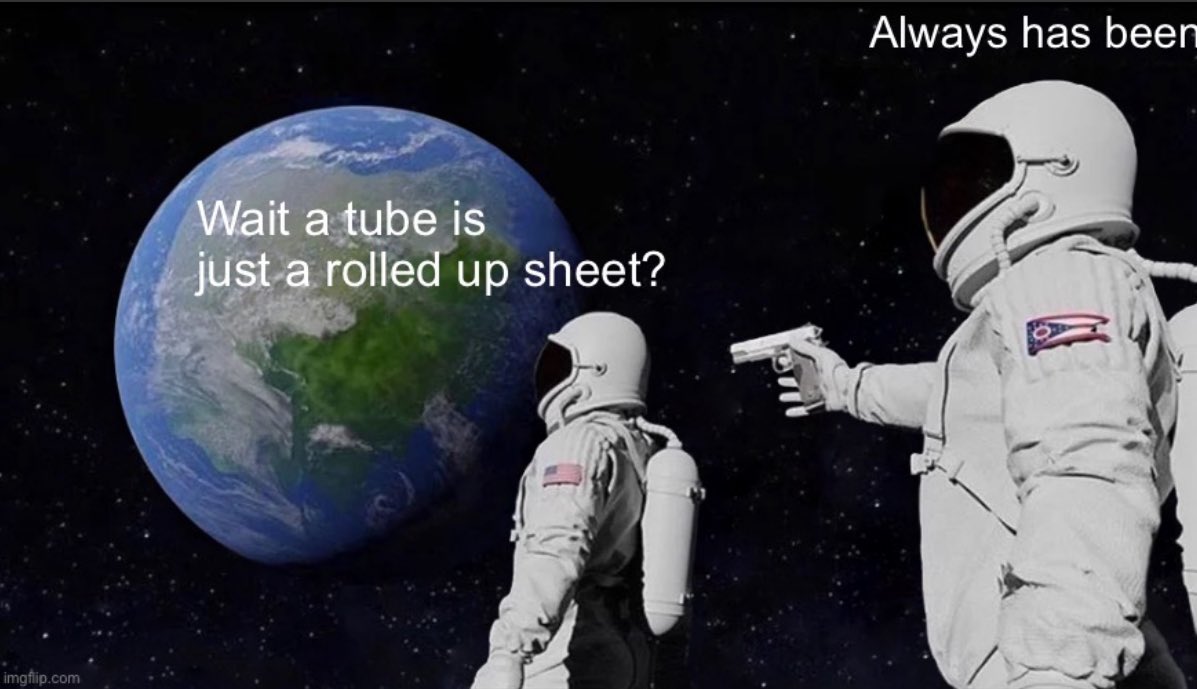
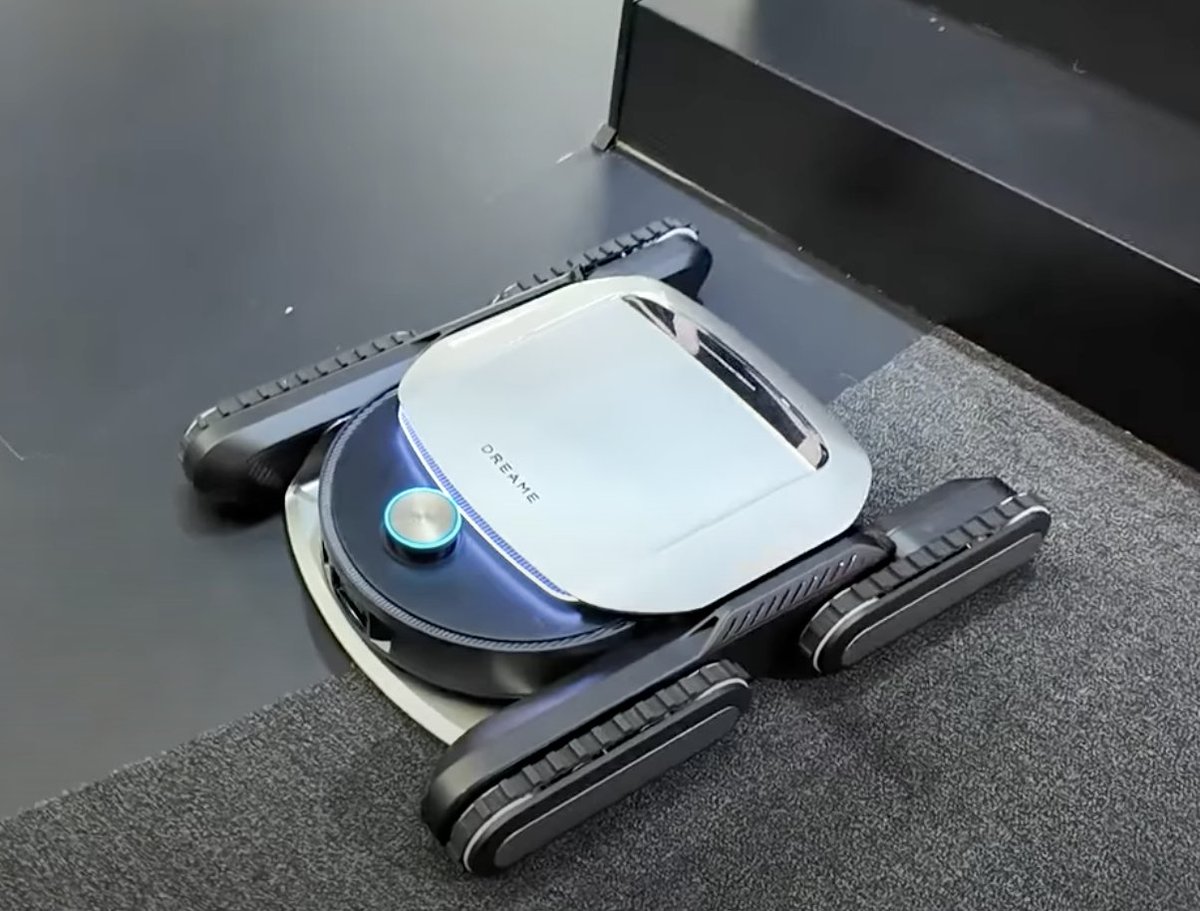
Innovation is a race:
Will robot vacuums get legs before Legged robots (dogs) get vacuums?
2
91
12 Sep 2025
I’m walking down the street.
I’m listening to a podcast about experiments done by a @NASA rover on another planet.
2 electric cars drive past me, another one is parked in the driveway I’m passing.
.
I’m on my way to a colleague‘s house to discuss @Replit new ai agent that Works autonomously for 200 minutes.
If we are strong enough, if we are stable enough, there is a future full of wonders at our doorstep.
4
86
16 Aug 2025
Committing your time to building a community, pushing a frontier, etc., is a wonderful way to dedicate much of your life and is 1 of the many ways to create meaning in this life. However, it is only *1 of the ways* of creating meaning. Please seek professional help or the support of loved ones if you think life is meaningless without your professional accomplishments. <3

Had a funny interaction this week where an investor asked when we would sell Varda
Had to explain how I've only ever had one idea
So without Varda, I'd just be an empty vessel
Might as well jump off a parking garage at that point
Don't think that was the answer they expected
1
177
7 Aug 2025
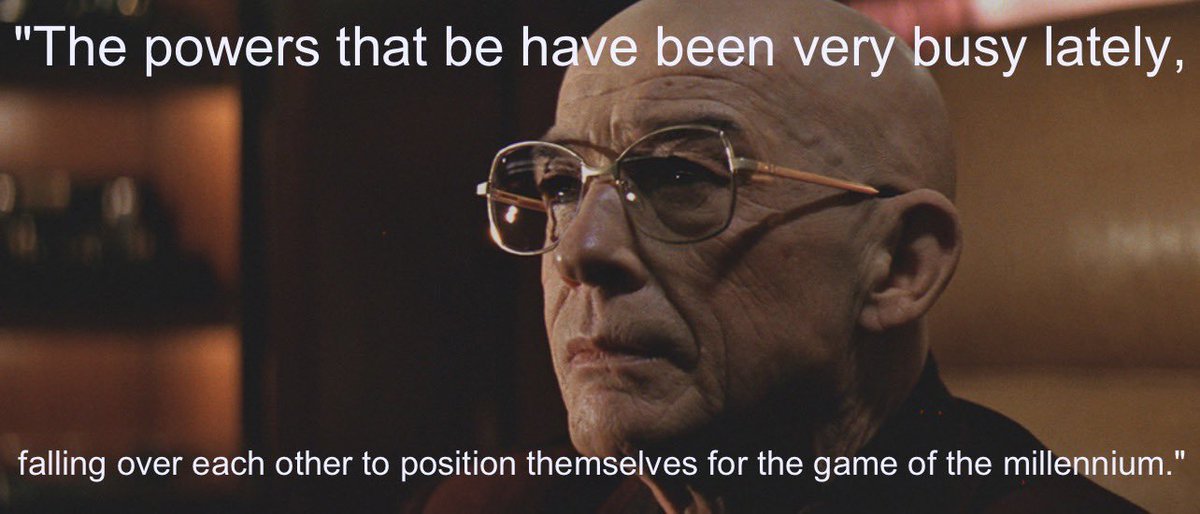
evergreen
6 Aug 2025

Excited to make our best AI tools free for college students in the US other select countries for a year - and to provide $1B in funding for education research, including free AI and career training for every college student in America.

1
186
6 Aug 2025
Humans: "look at this animation of stars orbiting the cent...." Alien interrupts "Our Grand Union Station..."
youtube.com/watch?v=TF8THY5s…
6 Aug 2025

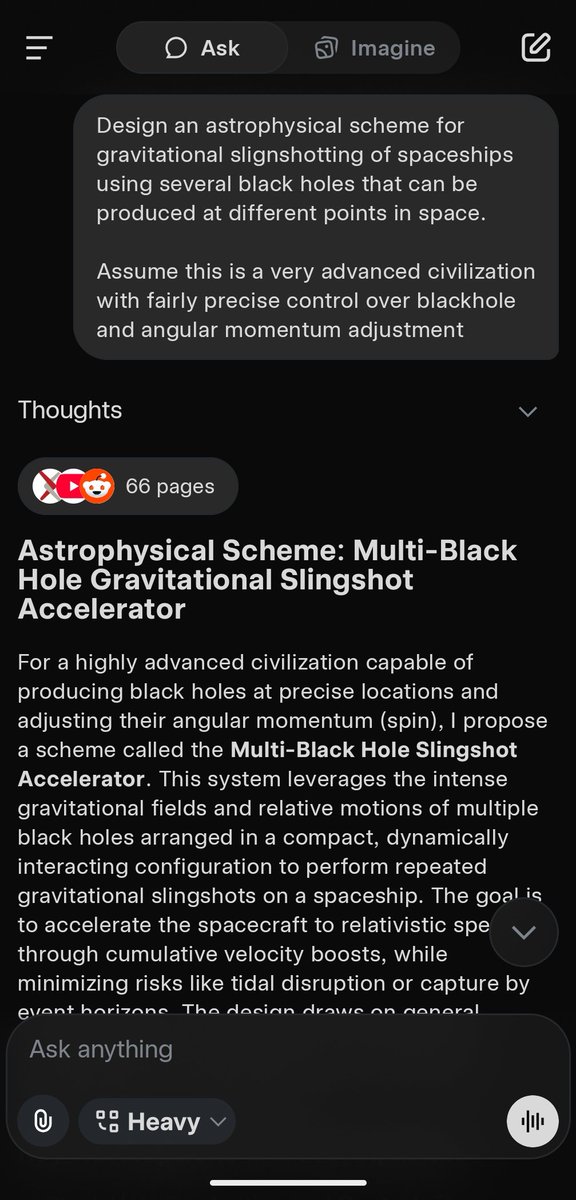
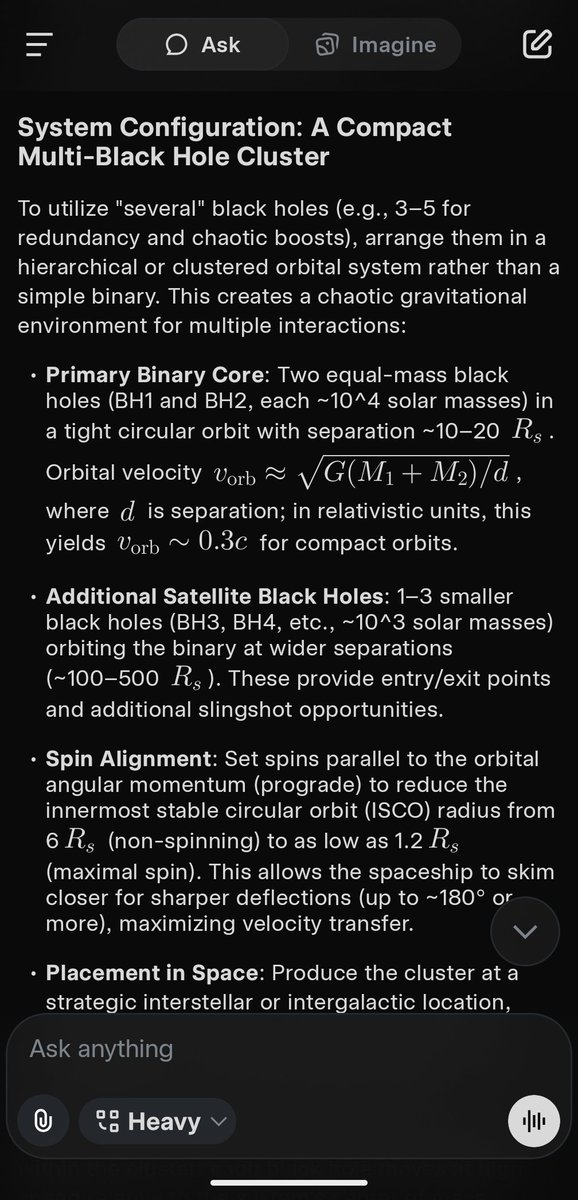
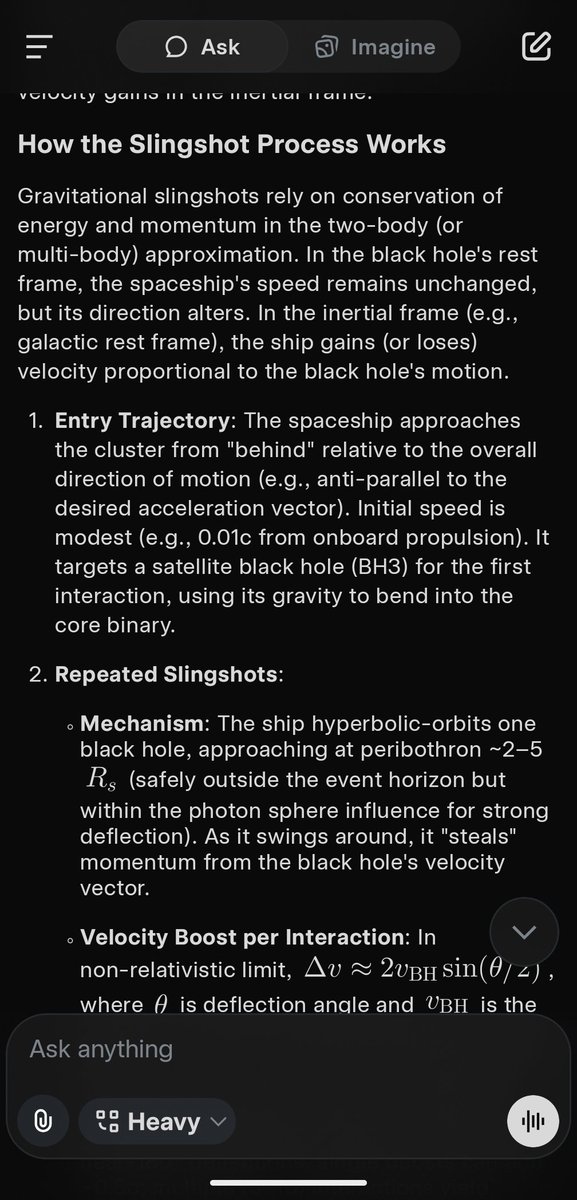
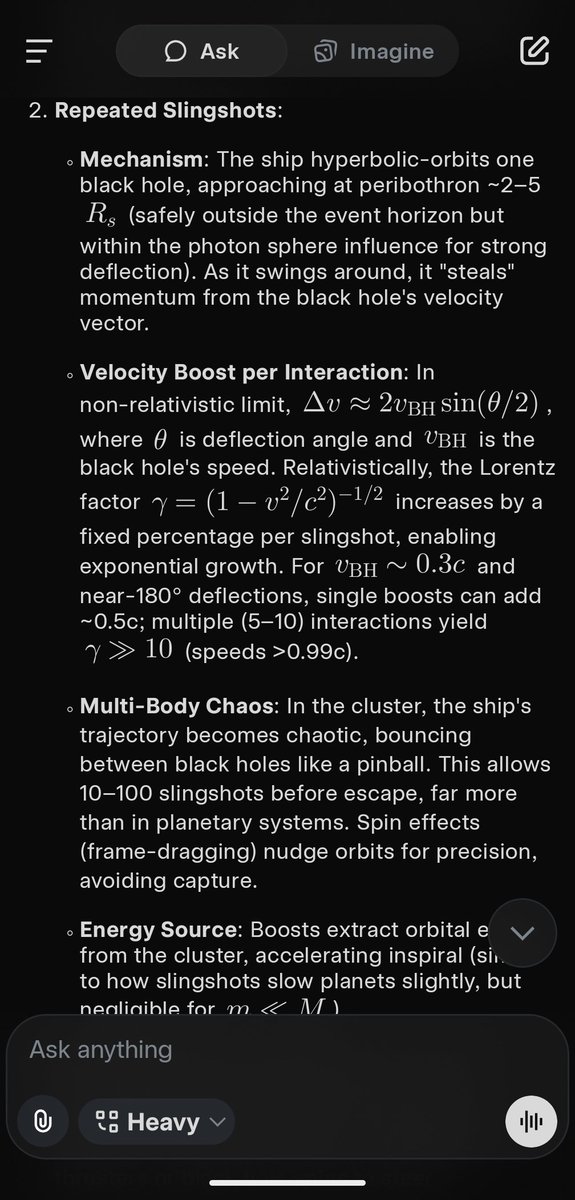
Grok 4 is already capable of designing technologies for Kardashev 3
In this case, an intergalactic transport system
This is why scaling AI will help us climb the Kardashev scale beyond even our wildest dreams
90
5 Aug 2025
Can't believe this was only in October.
The pace of change in this industry is ludicrous.
12 Oct 2024

Looks like OpenAI have landed on their own definition of "agent" - it's a system prompt and a collection of functions
![from swarm import Swarm, Agent
client = Swarm()
def transfer_to_agent_b():
return agent_b
agent_a = Agent(
name="Agent A",
instructions="You are a helpful agent.",
functions=[transfer_to_agent_b],
)
agent_b = Agent(
name="Agent B",
instructions="Only speak in Haikus.",
)](https://venexa.site/media/GZpnNvMaAAImiQV.jpg)
ALT from swarm import Swarm, Agent client = Swarm() def transfer_to_agent_b(): return agent_b agent_a = Agent( name="Agent A", instructions="You are a helpful agent.", functions=[transfer_to_agent_b], ) agent_b = Agent( name="Agent B", instructions="Only speak in Haikus.", )
46
RealPattern retweeted

5 Aug 2025
What if you could not only watch a generated video, but explore it too? 🌐
Genie 3 is our groundbreaking world model that creates interactive, playable environments from a single text prompt.
From photorealistic landscapes to fantasy realms, the possibilities are endless. 🧵
812
2,588
13,308
3,731,437
1 Aug 2025
A phase change in AI context.
1 Aug 2025

Had early access to Gemini with Deep Think. Very good model, big gains over standard Gemini 2.5 Pro for a lot of problems.
Here is the first attempt at the starship control panel prompt I try with every model. First time I have seen a model make a 3D interface in response.
53
26 Jul 2025
Kipping once again demonstrating the beauty achievable by the human mind.
The Crookes radiometer (pic below) was invented in 1873, it has been seen by generations of children, scientists and engineers, yet @david_kipping is a very special human being indeed... to apply it's inspiration in this way.
These patterns come in endless forms most beautiful.
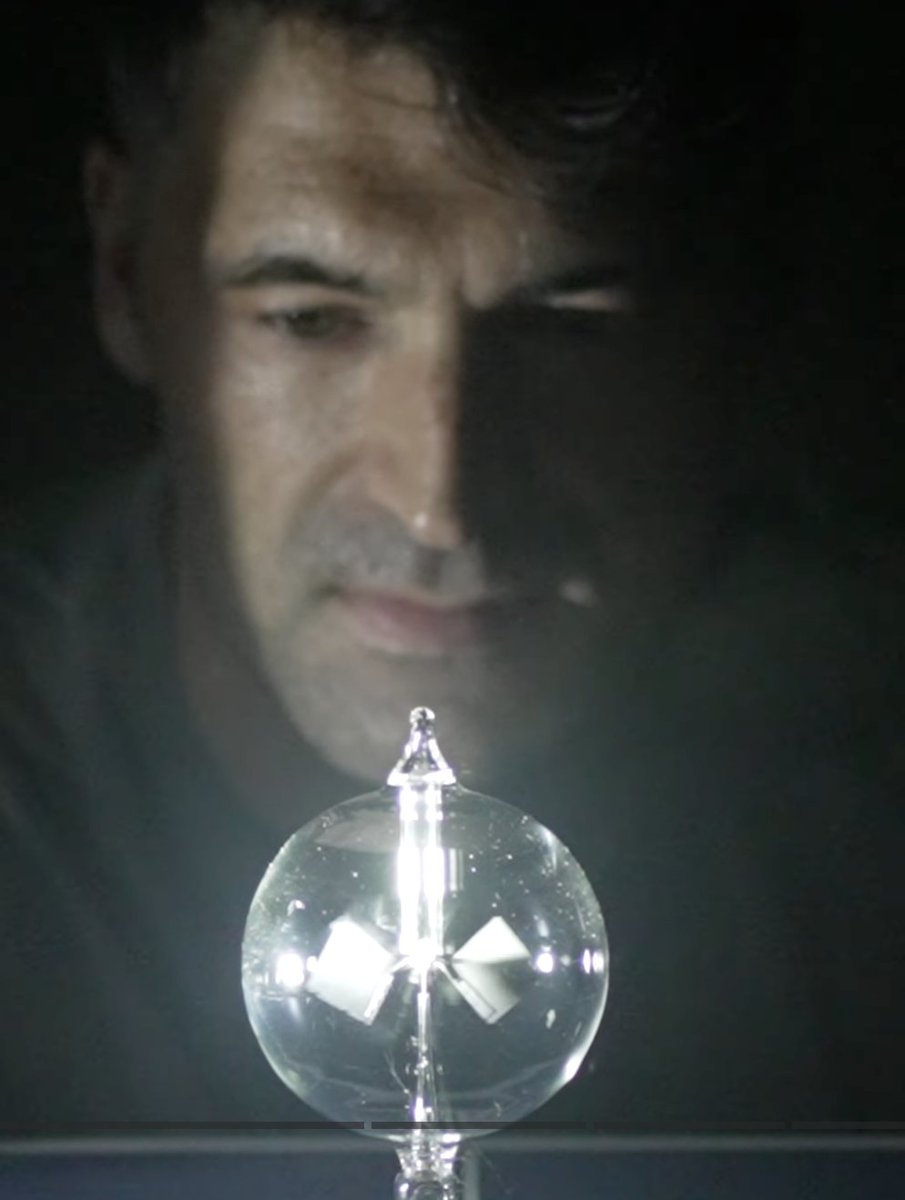

New paper! Allow me to introduce TARS = Torqued Accelerator using Radiation from the Sun. TARS (yes inspired by Interstellar!) is a rotating light sail that's capable of launching chip sats into interstellar space using only radiation from the Sun, so let's dive into how it works
1
3
207
25 Jul 2025
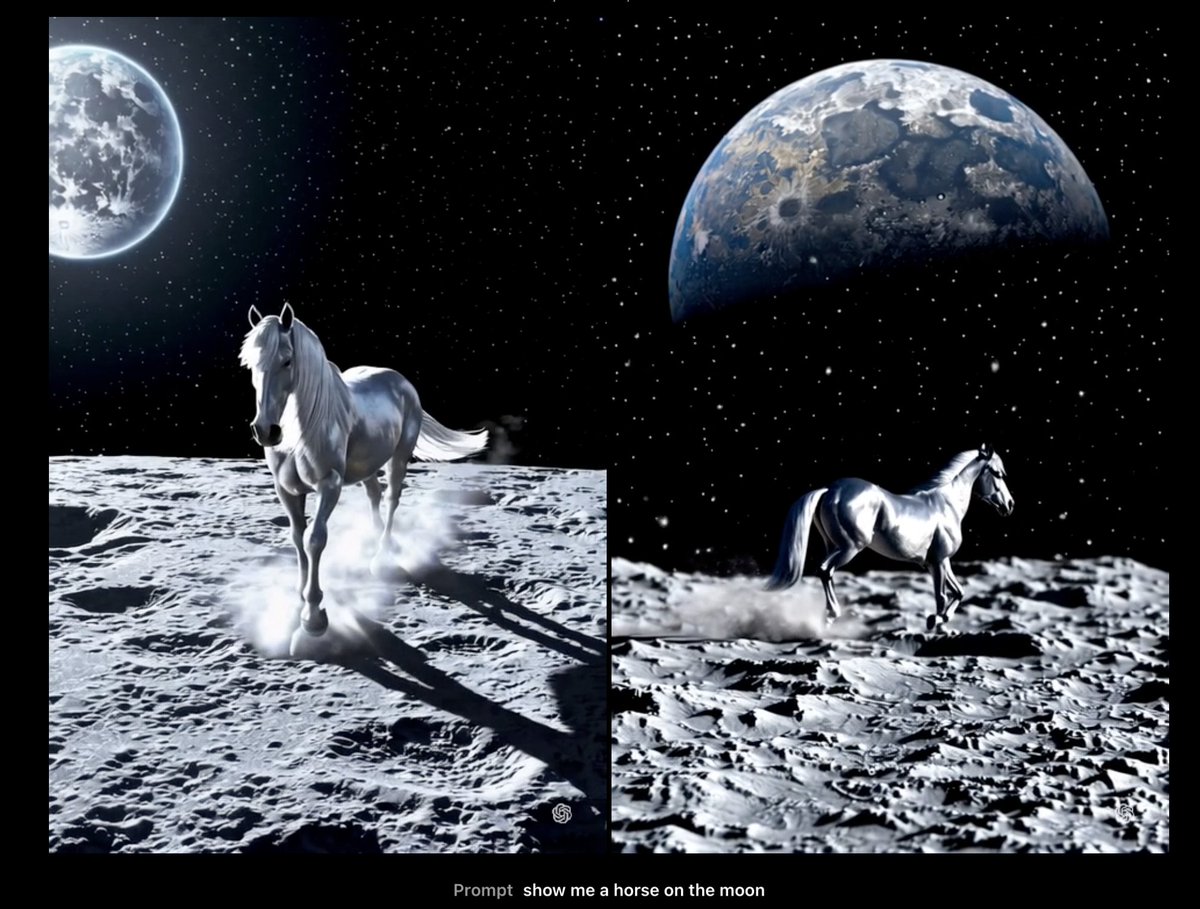
I asked Sora for a video of a horse on the moon. It generated this butiful spectal of a horse galloping across the moon.
It is interesting to me that the generated video showed an alive horse, since the most likely state of a horse on the moon is a dead, desiccating husk.
it's good to keep these things in mind when we get ambitious about the world models.
1
1
288
25 Jul 2025
If you ask me for a picture of a horse on the moon, i would also have drawn a living horse. So what does that mean?
32
25 Jul 2025
I find myself caught in moments of reflection and reverence from learning of this work. The world is now a more beautiful place, as Feyman put it:
“… I can appreciate the beauty of a flower, at the same time, I see much more.”…”I could imagine the cells in there, the complicated actions inside, which also have a beauty. I mean it’s not just beauty at this dimension”…”there’s also beauty at smaller dimensions, the inner structure, also the processes.”
24 Jul 2025

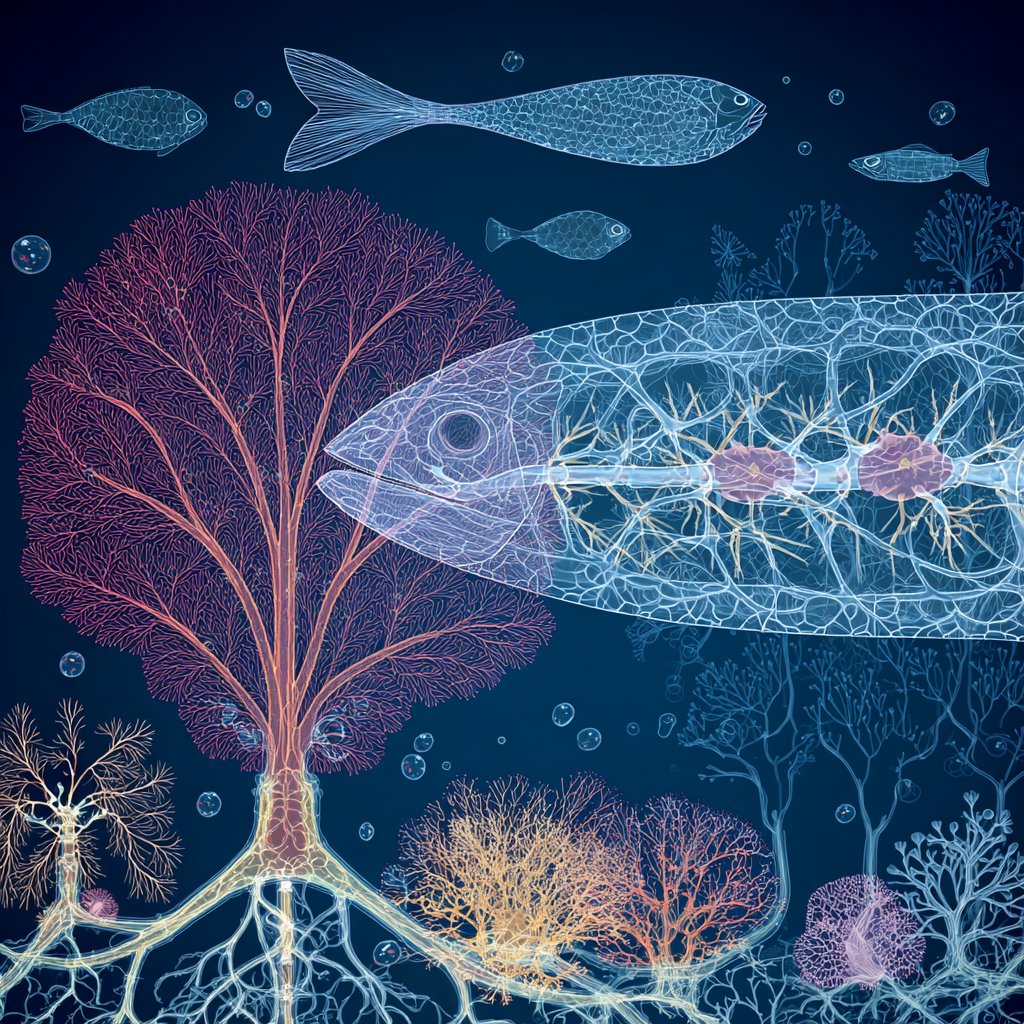
As you know I'm obsessed with power laws in biology, which is a biological consequence of fundamental principles, like energy conservation from the first law of thermodynamics. Geoffrey West showed how highly optimized biological networks—think blood vessels or respiratory systems—lead to allometric scaling. Specifically, the energy production per unit of body mass (mass-specific metabolic rate) scales as body mass (M) to the power of -0.25. This is part of what's known as Kleiber's law (or as we've dubbed it in our research, the Kleiber-West law), where whole-body basal metabolic rate scales as M^{0.75}. It's why elephants burn energy more efficiently per gram than mice, but mice live fast and die young.
What's interesting, is that this same scaling pops up in something as everyday as sleep. Across mammals, daily sleep duration follows a similar power law: it decreases with body size as roughly M^{-0.25}. Smaller animals like shrews might snooze 15 hours a day, while giants like whales get by on just a few.
This is a clue that sleep is deeply tied to metabolism. Nervous systems are energy hogs, guzzling up to 20% of our body's oxygen despite making up only 2% of our mass. In smaller creatures, those fractal-like distribution networks deliver more oxygen per cell, letting their brains run "hotter" with faster firing rates and higher energy demands. But this revved-up metabolism exhausts resources quicker, creating energy deficits that sleep likely evolved to fix. Essentially, tinier mammals burn through their neural fuel faster and need more downtime to replenish.
In this view, sleep isn't just rest—it's an ancient fix for the energy trade-offs imposed by Kleiber-West scaling, ensuring that high-metabolism critters don't fry their circuits. Sure, sleep does fancy stuff today. In humans and other mammals, it consolidates memories by pruning unnecessary synapses during REM phases and clears brain toxins via the glymphatic system, which ramps up during non-REM sleep to flush out waste like beta-amyloid.
The relation of sleep and metabolism may have evidence from evolutionary history. The emergence of anaerobic metabolism could be tied the Great oxygenation event, 2B years ago. The next oxidation event (Neoproterozoic Oxygenation Event , 750M years ago) set the stage for Cambrian explosion leading to emergence of neural systems across species. And we had never had enough oxygen ever since.
The link to a great Nature paper by @RafSarnataro et al, and some practical implication of that study are in the next comment. As usual, please like and repost - this is cool science (thank you @Alexey_Kadet for bringing this up)
1/2
67
RealPattern retweeted

24 Jul 2025
As you know I'm obsessed with power laws in biology, which is a biological consequence of fundamental principles, like energy conservation from the first law of thermodynamics. Geoffrey West showed how highly optimized biological networks—think blood vessels or respiratory systems—lead to allometric scaling. Specifically, the energy production per unit of body mass (mass-specific metabolic rate) scales as body mass (M) to the power of -0.25. This is part of what's known as Kleiber's law (or as we've dubbed it in our research, the Kleiber-West law), where whole-body basal metabolic rate scales as M^{0.75}. It's why elephants burn energy more efficiently per gram than mice, but mice live fast and die young.
What's interesting, is that this same scaling pops up in something as everyday as sleep. Across mammals, daily sleep duration follows a similar power law: it decreases with body size as roughly M^{-0.25}. Smaller animals like shrews might snooze 15 hours a day, while giants like whales get by on just a few.
This is a clue that sleep is deeply tied to metabolism. Nervous systems are energy hogs, guzzling up to 20% of our body's oxygen despite making up only 2% of our mass. In smaller creatures, those fractal-like distribution networks deliver more oxygen per cell, letting their brains run "hotter" with faster firing rates and higher energy demands. But this revved-up metabolism exhausts resources quicker, creating energy deficits that sleep likely evolved to fix. Essentially, tinier mammals burn through their neural fuel faster and need more downtime to replenish.
In this view, sleep isn't just rest—it's an ancient fix for the energy trade-offs imposed by Kleiber-West scaling, ensuring that high-metabolism critters don't fry their circuits. Sure, sleep does fancy stuff today. In humans and other mammals, it consolidates memories by pruning unnecessary synapses during REM phases and clears brain toxins via the glymphatic system, which ramps up during non-REM sleep to flush out waste like beta-amyloid.
The relation of sleep and metabolism may have evidence from evolutionary history. The emergence of anaerobic metabolism could be tied the Great oxygenation event, 2B years ago. The next oxidation event (Neoproterozoic Oxygenation Event , 750M years ago) set the stage for Cambrian explosion leading to emergence of neural systems across species. And we had never had enough oxygen ever since.
The link to a great Nature paper by @RafSarnataro et al, and some practical implication of that study are in the next comment. As usual, please like and repost - this is cool science (thank you @Alexey_Kadet for bringing this up)
1/2
21
129
728
68,609
24 Jul 2025
What everone thinks the opportunity is: 'Make a prompt, get quality software.'
Where the opportunity actually is: 'Make a prompt, get quality data.'
23 Jul 2025

Today we’re releasing GitHub Spark — a new tool in Copilot that turns your ideas into full-stack apps, entirely in natural language.
1
48

19 Jul 2025
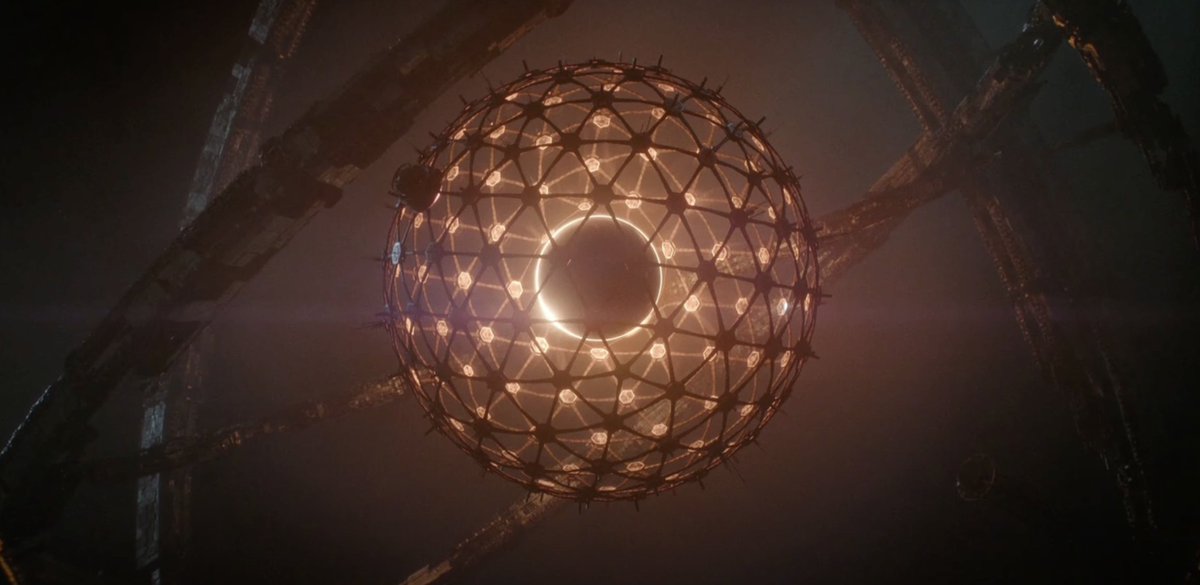
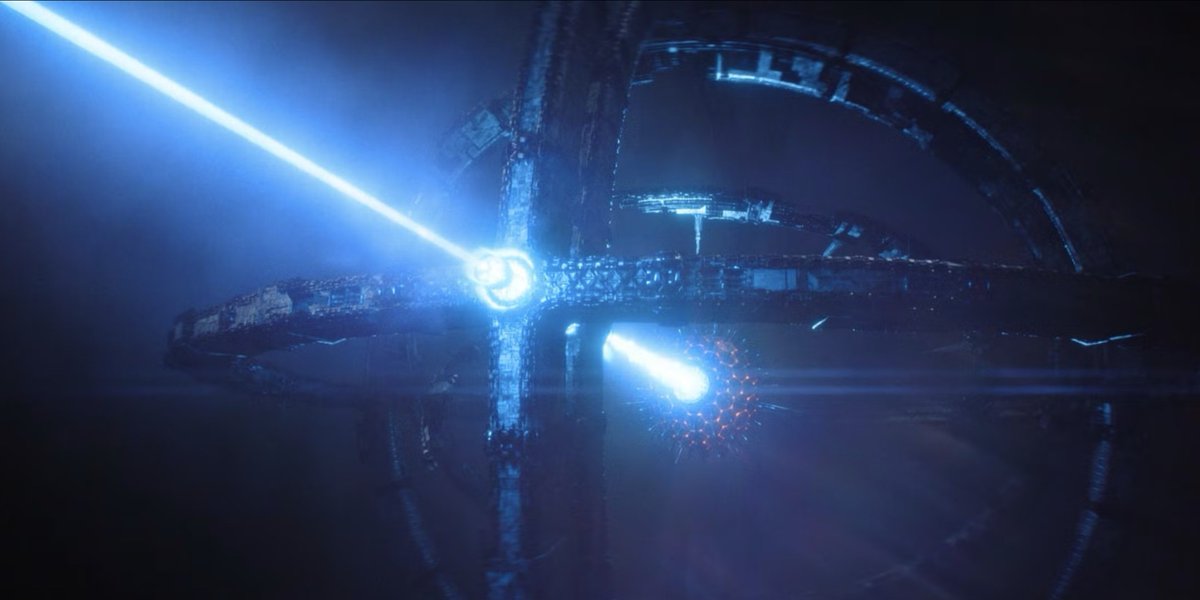
In @AppleTV Foundation S3E2, the Empire builds the Novacula, a black hole bomb using a real concept—superradiant scattering in a rotating black hole’s ergosphere to amplify energy. First theorized by Press & Teukolsky in 1972. Links below for reference.
@Kurz_Gesagt even did a great you video covering the topic, also linked below.
1
2
5
815
19 Jul 2025
Original Theory Paper: : doi.org/10.1038/238211a0
@Kurz_Gesagt Video on the topic of The Black Hole Bomb and Black Hole Civilizations: youtu.be/ulCdoCfw-bY?si=GbJM…
162