Telling the story of the 1960s in real time through tweets, 60 years later. realtime1960s.com
Joined September 2011
- Tweets 11,108
- Following 30
- Followers 1,396
- Likes 508
10,208 Photos and videos
Pinned Tweet

5 Oct 2025
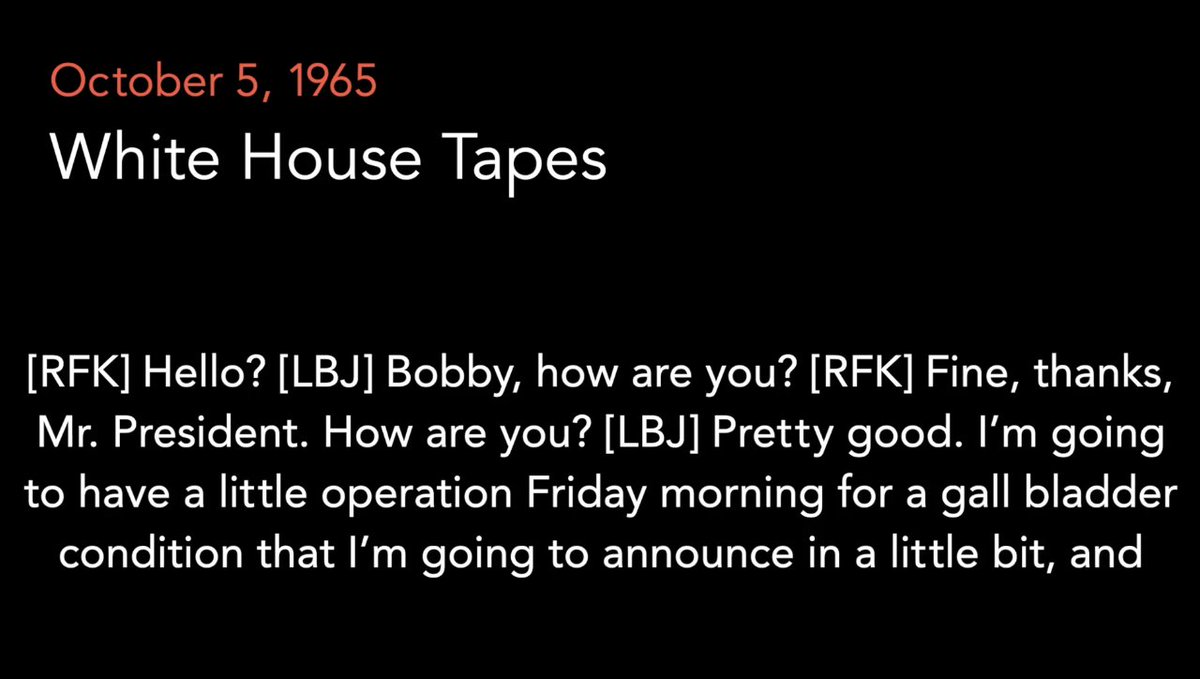
Oct. 5, 1965 - On this call, LBJ informs RFK of his impending gallbladder surgery and consults with the Senator on a Customs Court appointment. Listen here: tinyurl.com/2u3e2xet
3
352
12 Sep 2025
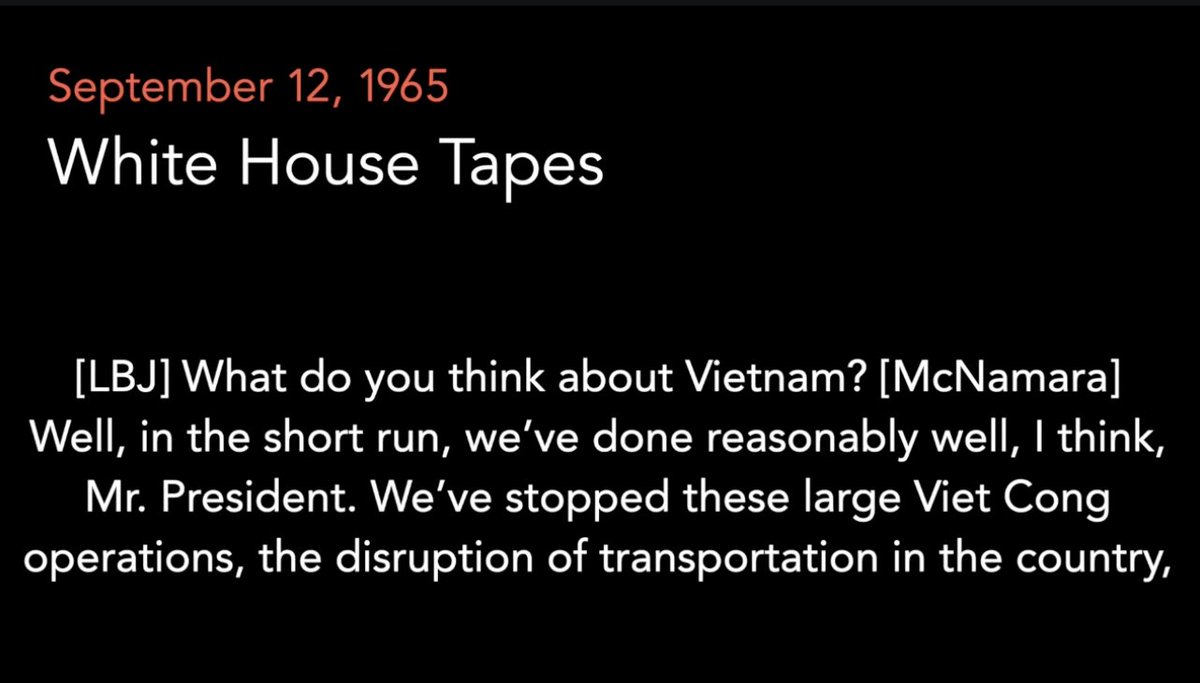
Sept. 12, 1965 - On this call, LBJ gets a sobering update from Defense Secretary Robert McNamara on the war in Vietnam. Listen here: tinyurl.com/yz33zr57
1
2
344
1 Sep 2025
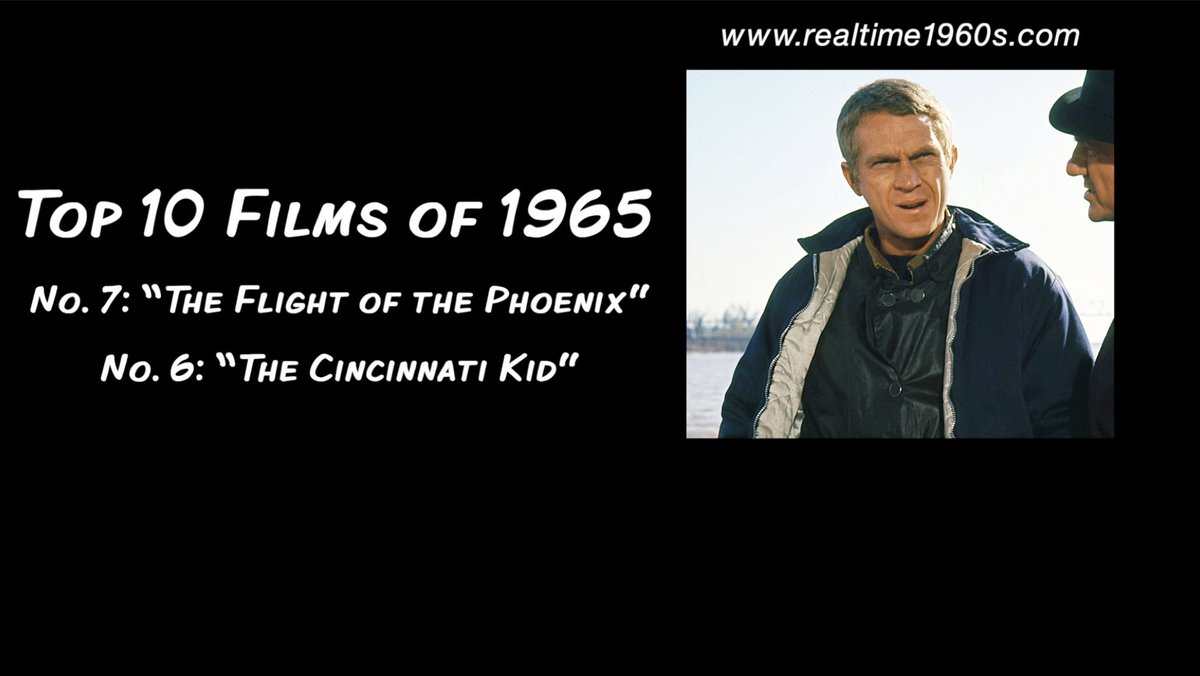
🚨NEW: Top 10 Films of 1965 - “Flight of the Phoenix” and “The Cincinnati Kid”
Listen here: tinyurl.com/mr38appx
In this episode, we review our 7th- and 6th-ranked films for 1965, a disaster film starring James Stewart and directed by Robert Aldrich and a drama starring Steve McQueen and Edward G. Robinson.
1
3
344
27 Aug 2025
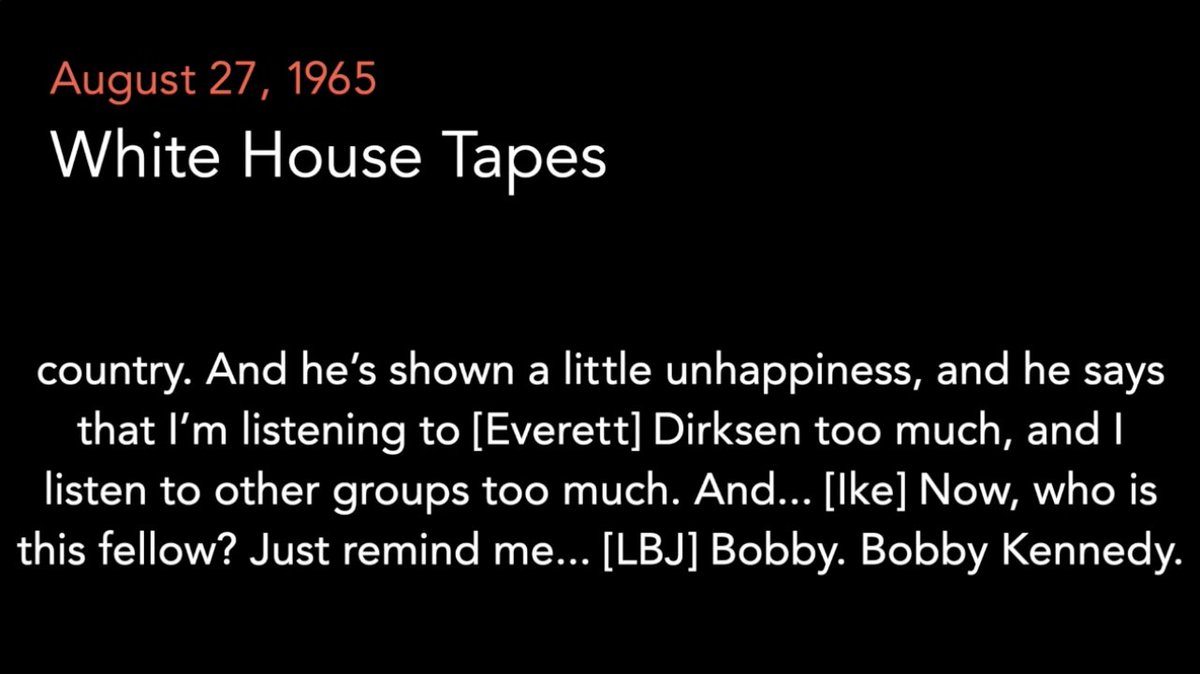
LBJ, concerned that RFK will criticize his foreign policy during Kennedy’s upcoming tour of Latin America, calls President Eisenhower for help, proposing that Eisenhower’s brother Milton counter RFK’s attacks. Listen here: tinyurl.com/s2xfpukz
1
1
263
22 Aug 2025
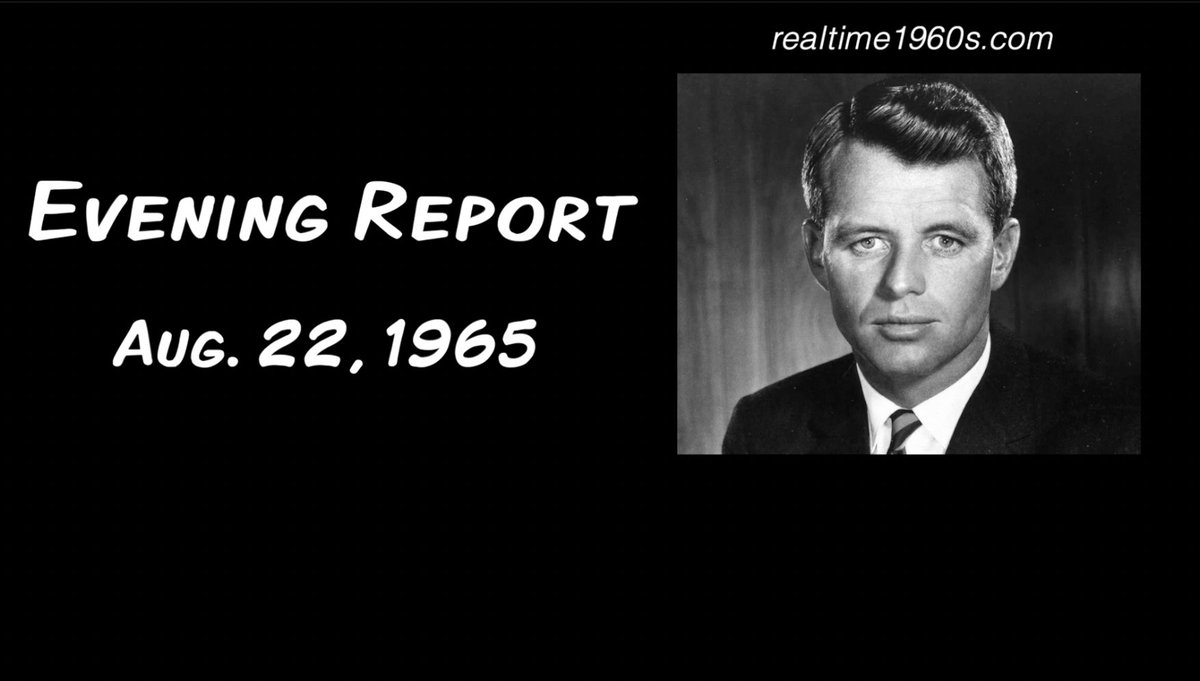
🚨NEW: Evening Report | August 22, 1965
Retro-style news capsule with vintage commercials. Listen here: tinyurl.com/y8r5ptbh
L.A. rioting brings death and destruction; U.S. Marines hit the Viet Cong; the Beatles hit Minneapolis; Juan Marichal hits John Roseboro; Jim Maloney achieves baseball immortality.
4
330
20 Aug 2025
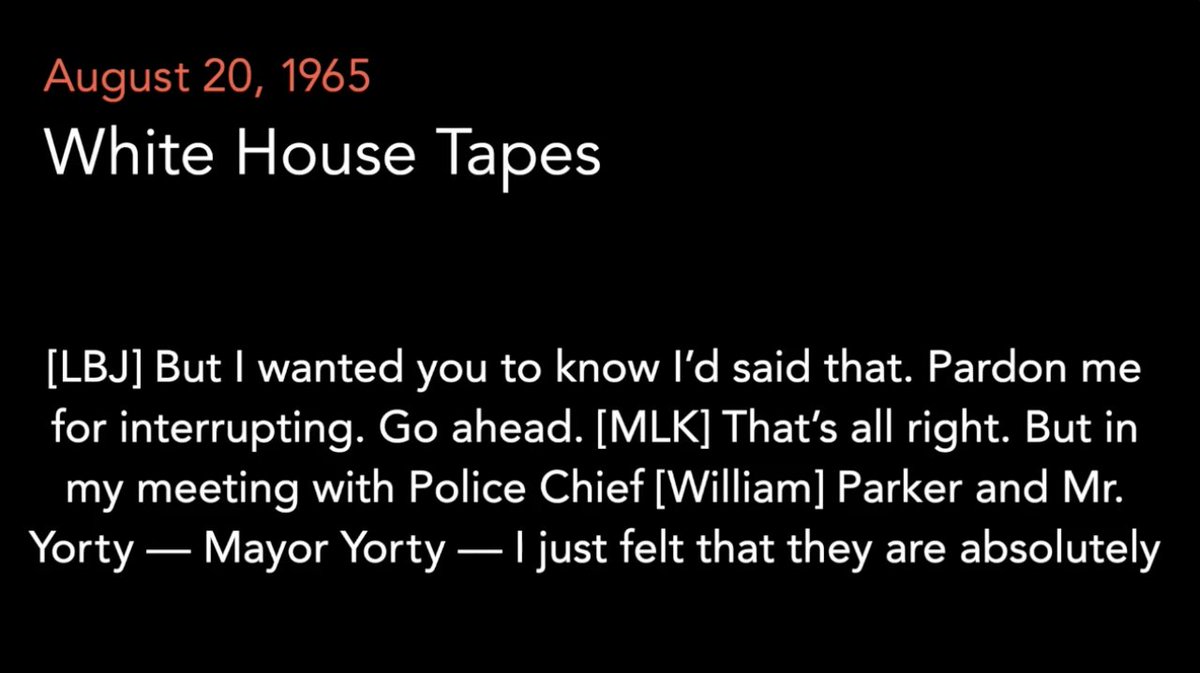
On this call, MLK reports to LBJ on his visit to Los Angeles following the rioting in Watts. He informs the President that the city’s Mayor and Police Chief seem unresponsive to problems in the area, and he urges an intensification of the Administration’s anti-poverty efforts. Listen here: tinyurl.com/2j3rbe95
1
3
225
12 Jul 2025
July 12, 1965 - Ray Collins, the actor who played Detective Lieutenant Tragg on the “Perry Mason” television series, died yesterday at St. John’s Hospital in Santa Monica, Calif., at the age of 75.
A spokesman for CBS said Collins had been suffering from emphysema.
Collins appeared with Raymond Burr (Perry Mason) in the series for more than eight years. His last “Perry Mason” episode was filmed in October 1963 and was televised Jan. 16, 1964. It was “The Case of the Capering Camera.”
Collins was descended from a pioneer California family. HIs great-grandfather was Maj. John Bidwell, who served under Gen. John Fremont in the Mexican War of 1846-48.
As the son of William Collins, drama critic of the Sacramento Bee, Collins was exposed to the theater early in life. He got his first acting role at 14. Later, he organized and starred in his own stock company in Vancouver.
Eventually, Collins moved to Broadway. From the stage, he went into radio in the 1930’s.
When Orson Welles’ Mercury Theater moved to Hollywood in 1939, Collins went with it. Welles signed him for a feature role in his movie, “Citizen Kane.” It was the first of more than 75 film roles for Collins over the next 20 years.
His films included “Leave Her to Heaven,” “A Double Life,” “Command Decision,” “The Fountainhead,” and “The Heiress.”
Filmgoers remembered him best as a business executive, policeman, or military officer.
“If they’ve written it, I’ve played it,” Collins was fond of saying, in regard to his theatrical career.
Survivors include his widow, Joan.
Support this project at patreon.com/realtime1960s
1
3
228
12 Jul 2025
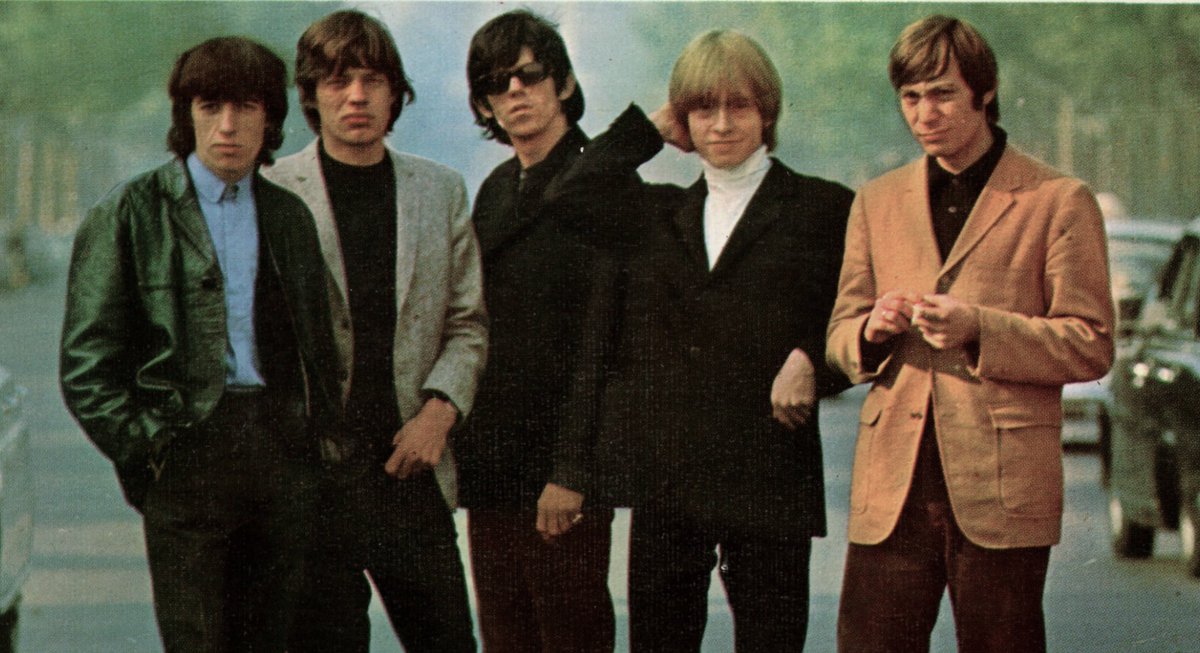
July 12, 1965 - Hitting No. 1 on the Billboard Hot 100 this week was “(I Can’t Get No) Satisfaction,” a single by the Rolling Stones. The single first charted in the week ending June 12 and has now displaced the Four Tops’ “I Can’t Help Myself (Sugar Pie Honey Bunch)” at the top. The single has yet to be released in Great Britain.
The Stones first recorded the track on May 10 at Chess Studios in Chicago. That recording included Brian Jones on harmonica. The group re-recorded it two days later at RCA Studios in Hollywood with a different beat and a Maestro Fuzz-Tone distortion effect adding to the sound of the primary guitar riff.
Keith Richard composed the music and Mick Jagger wrote the lyrics.
The lyrics outline the singer’s irritation and confusion with the increasing commercialism of the modern world, where the radio broadcasts “useless information” and a man on television tells him “how white my shirts can be – but he can't be a man ‘cause he doesn’t smoke the same cigarettes as me” — a reference to Marlboro Cowboy-style advertisements. The lyrics also describe the stress of being a celebrity and the tensions of touring.
Support this project at patreon.com/realtime1960s
1
3
175
12 Jul 2025
July 11, 1965 | Jack Dempsey on “What’s My Line” youtu.be/RpB7R6nyI5Y?si=jE7d… via @YouTube
2
204
8 Jul 2025
July 8, 1965 - Yankee manager Johnny Keane padded shoeless back to his cubicle in the corner of the visitors’ clubhouse at Tiger Stadium. He held a handful of potato chips, set down a bottle of maroon-colored soda, and pulled over a little round stool.
Keane, his uniform shirt open to the waist, peered grim-faced up at the reporters around him. He was silent in the noiseless Yankee dressing room. No question had come, and Keane made no comment.
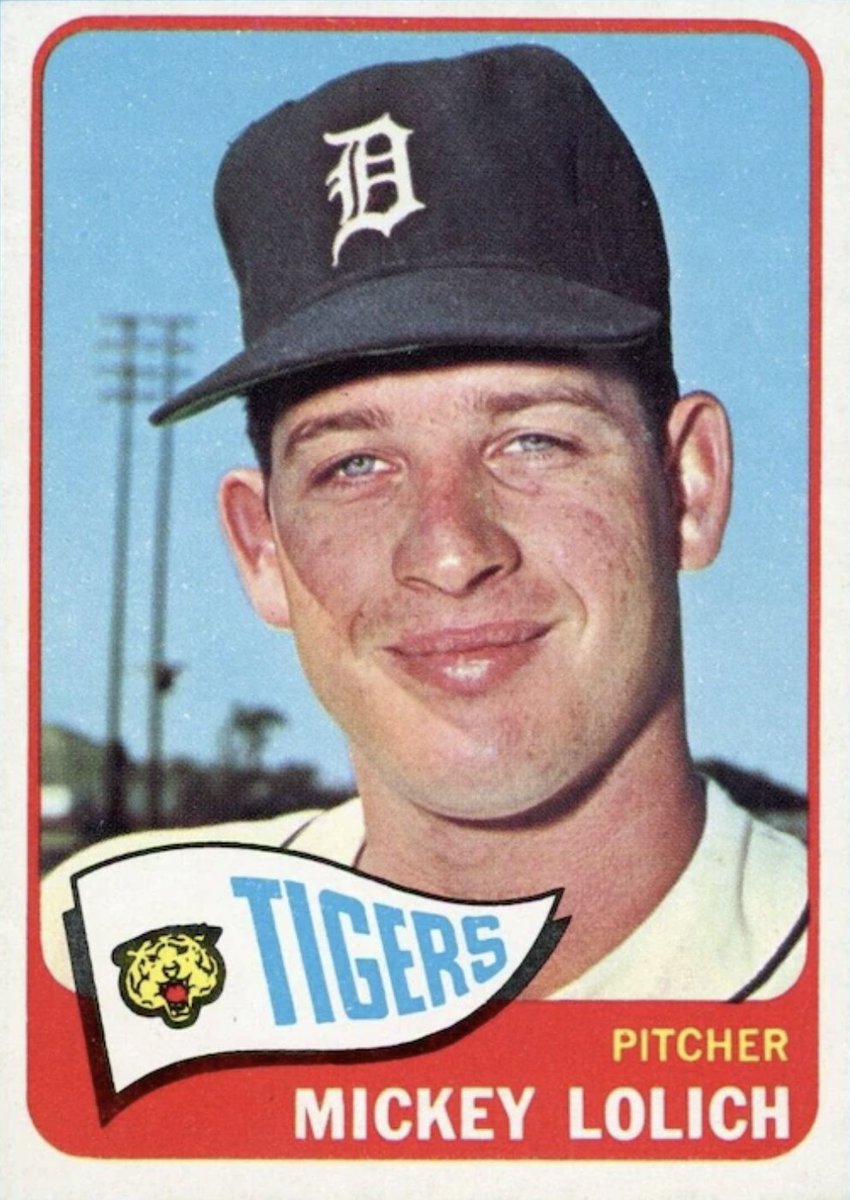
The Tigers had beaten the Yankees, 6-1. Pete Mikkelsen, picked in desperation from the minors, had pitched five innings for New York and allowed two scratchy runs. The Yankees had struck out 10 times and made only five hits against Mickey Lolich, pitching on two days’ rest.
“Mikkelsen pitched all right,” Keane said listlessly. “Mantle looked more comfortable batting right-handed. He still can’t run.”
“I wasn’t hitting,” Keane added, “but Lolich didn’t look too tough to me.”
It is July 8. The Yankees have 79 games remaining and are 12½ games behind. Mantle can hardly stand up in the batter’s box. Roger Maris’s hand is so weak he can’t handle the chore of operating a fingernail clipper. Tom Tresh’s knee is swollen. Jim Bouton’s arm is weak.
The thin cigar curled smoke past Keane’s face.
“Tough few games,” he said without animation.
Was there anything encouraging?
Keane’s eyes opened wide, his face flushed. He threw his hands out wide.
“Is there anything encouraging?” he repeated strongly. “There is nothing.”
Tomorrow, the Yankees begin a four-game series with the league-leading Twins.
Support this project at patreon.com/realtime1960s
1
4
231
8 Jul 2025
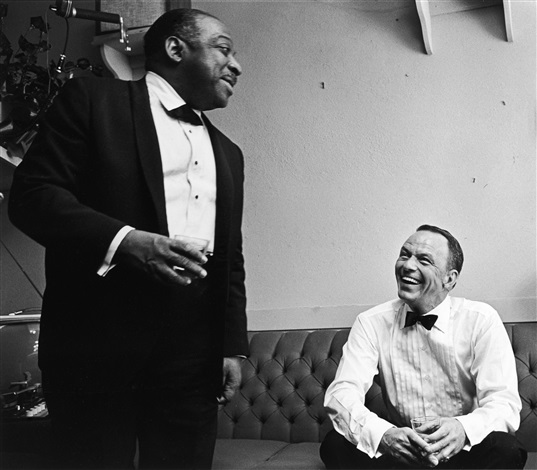
July 8, 1965 - Frank Sinatra and Count Basie opened the sixth Forest Hills Music Festival in Queens tonight and delighted a sell-out audience of 15,000.
It was an orderly, well-dressed crowd, many of the listeners in their 30’s and 40’s. Some had been bobbysoxers in the 1940’s, when Sinatra packed them in at the Paramount.
“Sure, they’re orderly,” said an usher. “They’re elderly.”
It was a warm, personable Sinatra who had his audience firmly under control and mesmerized by delivery, talent, and reminiscence. A few women emitted nostalgic squeals at those low-breaking notes. Then they laughed at themselves and clapped and clapped.
Sinatra sang and recollected.
“Last time I was out here, I wore a Bond clothing store tuxedo, brown shoes, and I think I weighed nine pounds,” he said.
Mrs. Joy Silver, a housewife and mother of two, typified the mood of the audience. She came down from her home in Ossining to hear The Voice.
“I stood in line all morning for Sinatra at the Paramount in 1945,” she recalled. “I was with three girl friends, and we got seats in the front row, where we ate our lunch. A bunch of girls next to us gave him flowers. We squealed, but I didn’t swoon. I’ve always been a fan.”
Sinatra was on stage for almost 90 minutes. He sang about 20 songs, from “I’ve Got You Under My Skin” to “Luck Be a Lady” to “Hello, Dolly!”
Sinatra had wanted to make his entrance by helicopter, as he did last weekend in Newport and as the Beatles did at Forest Hills last summer. But this year, the tennis club decided to rule out helicopters. They don’t do the precious grass any good, less so in a time of water shortages.
Support this project at patreon.com/realtime1960s
2
182
8 Jul 2025
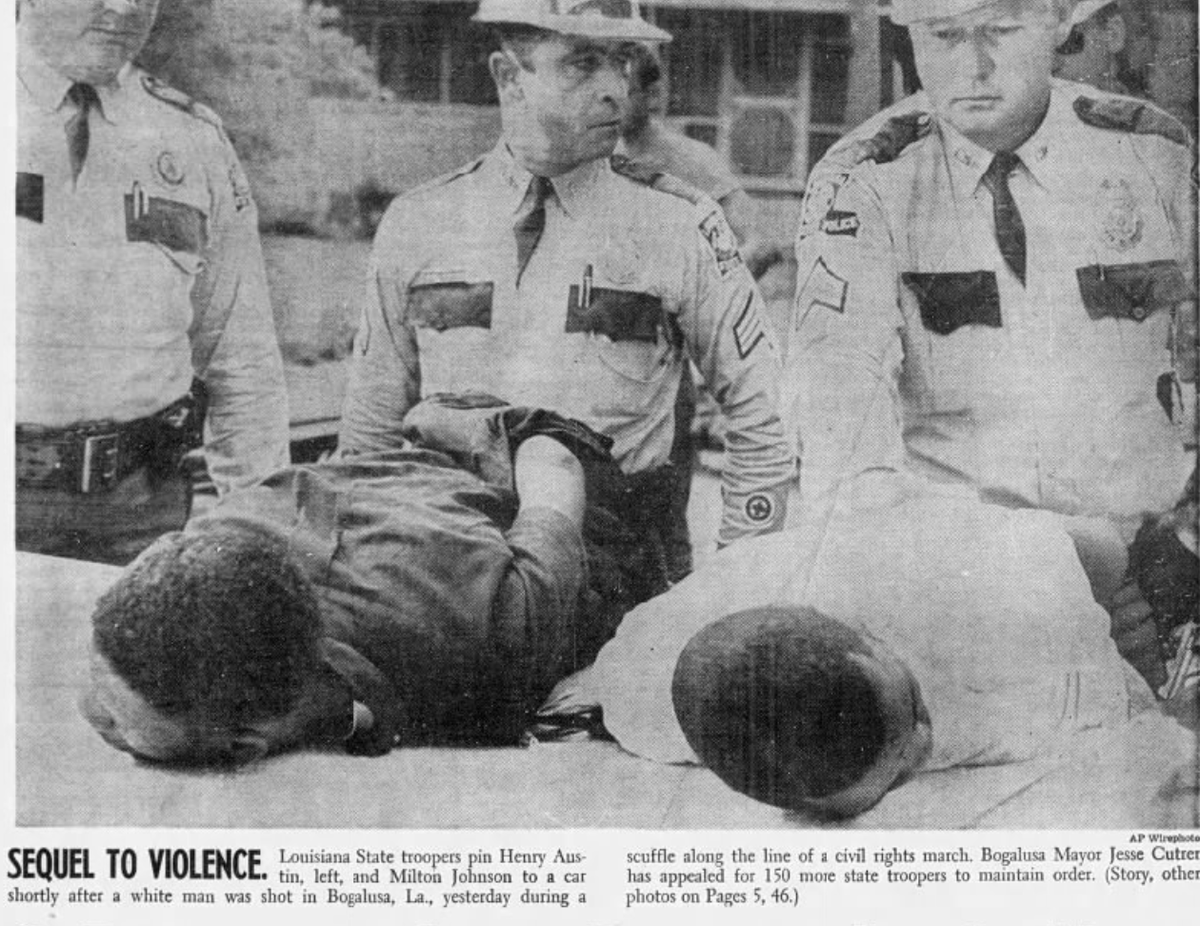
July 8, 1965 - A Negro shot and seriously wounded a white man who attacked him today during a civil rights march on a downtown street in Bogalusa, La.
Police Chief Claxton Knight said the Negro was believed to be a member of the Deacons for Defense and Justice, an armed Negro organization formed last spring to defend Negroes against white terrorists.
The white man, Alton Crowe Jr., 25 years old, of Pearl River, La., was rushed to a hospital with two bullet wounds, one in the chest and one in the neck. His condition was listed as critical.
The man who fired the shot, Henry Austin (left), 21, and a second Negro, Milton Johnson (right), 26 — both of Bogalusa — were arrested at the scene and taken to an unidentified town to protect them from angry whites.
A small crowd of whites shouted threats while policemen held the Negroes. Some whites attacked news photographers.
The violence took place after a group of about 250 Negroes had marched peacefully from the Negro district to City Hall. As they passed a shopping plaza on their way back, they were jeered by about 50 whites who shouted insults and obscenities.
Suddenly, a rock sailed out of the plaza and struck Anna Mae Wills, 17, of Bogalusa, a Negro girl. She fell to the ground, screaming and bleeding from the nose, and a nurse with the civil rights medical committee rushed to her aid.
As the nurse helped the girl toward a car, three white men followed them. The whites began pounding on the car and swinging at the two Negroes inside.
Three shots rang out from inside the car, and Crowe staggered away a few steps and then slumped to the pavement.
State police quickly surrounded the wounded man and the auto as other whites rushed up. One woman screamed hysterically, “Kill them, kill them.”
Austin and Johnson were booked on charges of investigation of aggravated battery. Though a felony, it is a less serious charge than attempted homicide.
Support this project at patreon.com/realtime1960s
1
3
215
8 Jul 2025
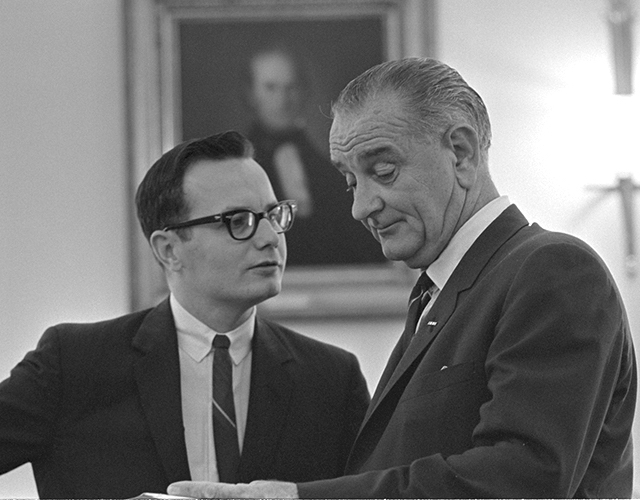
July 8, 1965 - George Reedy, President Johnson’s press secretary, began an indefinite leave of absence today for treatment of a painful foot ailment.
He was replaced by Bill Moyers (left), a special assistant to the President, who will be acting press secretary until Reedy returns or a permanent replacement is designated.
There was no word at the White House on whether Reedy would return to his $28,500-a-year job as press secretary. White House aides speculated that he probably would not.
Reports that Reedy was taking his leave of absence over disagreement with the President’s Vietnam policy could not be confirmed.
Moyers became personal assistant to Johnson in 1959, when Johnson was Senate Democratic leader. He became Johnson’s executive assistant the following year and ran his campaign for the Vice-Presidency.
Moyers helped found the Peace Corps and, in 1963, became its deputy director. When President Kennedy was assassinated, Moyers moved into the White House with President Johnson.
He is an intimate of the President and one of the chief architects of his Great Society program. Recently, he has been taking a growing part in foreign policy discussions.
Support this project at patreon.com/realtime1960s
3
80
8 Jul 2025
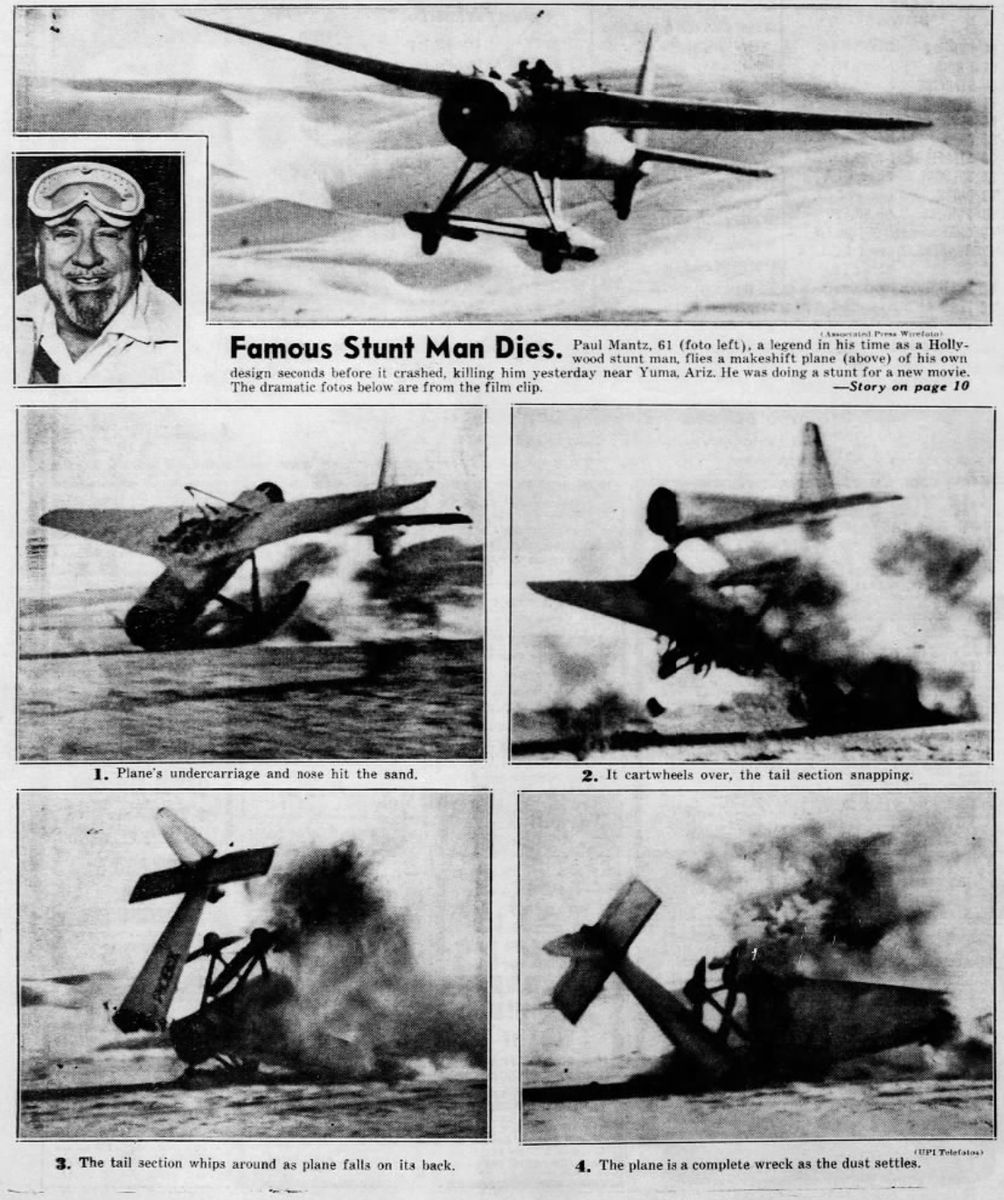
July 8, 1965 - Paul Mantz, a 61-year-old aviation pioneer and legendary movie stunt pilot, was killed in an airplane crash this morning in Yuma, Ariz. As three motion picture cameras were filming, he met his death when the plane he was flying hit a small sand dune, overturned, and disintegrated.
Mantz had performed daredevil stunts in dozens of motion pictures for 35 years. He was participating today in scenes of a 20th Century-Fox film called “Flight of the Phoenix,” starring James Stewart.
Though he was semi-retired from movie stunt flying, Mantz took on the job as a substitute for his partner, Frank Tallman, who six weeks ago broke his leg pushing his son’s go-cart.
A stunt man, 64-year-old Buddy Rose, who was flying with Mantz, was thrown clear and survived. He is in the Parkview Baptist Hospital, Yuma.
Mantz’s craft was built to look like a rattletrap but had passed an engineering checkout by the FAA, according to a mechanic employed by Mantz.
Mantz was doubling for James Stewart. Stewart was in Hollywood at the time of the crash.
From the outset, Mantz had been having trouble with his gray aluminum and plywood aircraft. On one test flight, it overheated. Another time, its landing gear failed. Finally, this morning, Mantz succeeded in making two passes at the camera and was attempting a third when the plane crashed.
Mantz was born in Alameda, Calif., and the aviation bug hit him when he was in his teens. He enlisted in the Army Air Corps, but in 1926 he was washed out by a flight instructor who advised: “Paul, stay away from airplanes. You’ll live longer.”
Mantz turned to commercial aviation and then became interested in stunt flying. In 1930, he got his start in the movies in a film called “Airmail,” when as Pat O’Brien’s double, he piloted a plane into a small hangar and out the back without touching the ground.
In recent years, Mantz had operated a museum at the Orange County Airport, Santa Ana, Calif., where some 85 early aircraft dating to 1909 were on display. All the airplanes were said to be in flying condition.
He is survived by his widow, Theresa, and three children.
Support this project at patreon.com/realtime1960s
1
1
164
8 Jul 2025
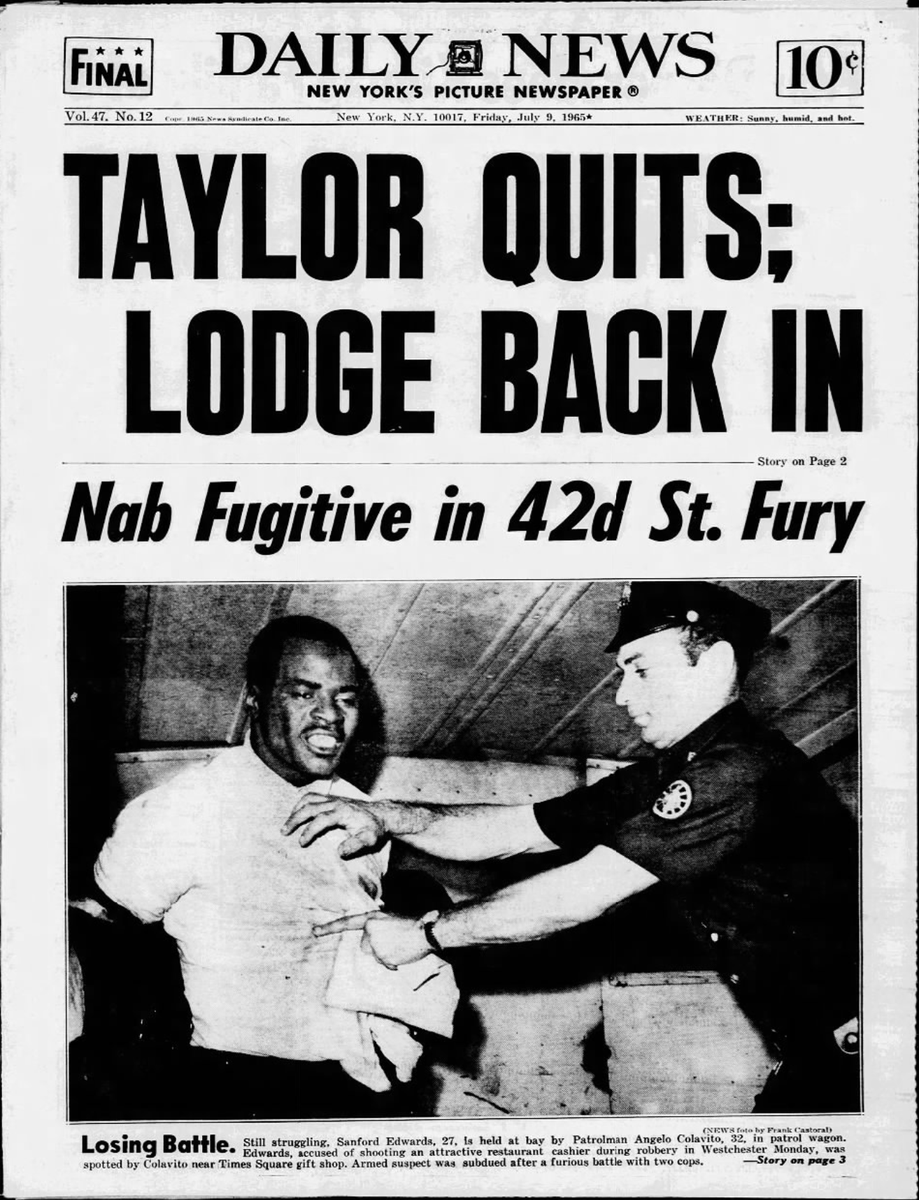
July 8, 1965 - Gen. Maxwell Taylor is stepping out as U.S. Ambassador to South Vietnam, citing a commitment to serve only one year in the post, and will be replaced by the man he succeeded, Henry Cabot Lodge Jr.
In announcing the switch, the White House said President Johnson has asked Lodge and Defense Secretary Robert McNamara to fly to Saigon next Wednesday to confer with Taylor and other U.S. and South Vietnamese officials.
Lodge resigned as Ambassador to South Vietnam about 13 months ago to take part in the presidential campaign. President Kennedy appointed him to the post in 1963. Johnson named Taylor, former chairman of the Joint Chiefs of Staff, to succeed him.
Lodge was appointed last year as a special consultant to the President. He later undertook special missions seeking to enlist support from various nations for the U.S. position in Vietnam.
Administration officials saw no changes in U.S. policy stemming from the shift. Both men have advocated strong pressure on the Viet Cong guerrillas to assure peace and independence for South Vietnam.
“Something noble and brave is going on out there, and I am glad to have this chance to help,” Lodge told newsmen in Beverly, Mass. “I am deeply honored by this mark of confidence and shall spare no effort to justify it.”
The White House said Lodge hopes to take over at Saigon by the middle of August.
Support this project at patreon.com/realtime1960s
84
7 Jul 2025
July 7, 1965 | The Byrds on “Where the Action Is” youtu.be/PSZxchIsCHk?si=adcD… via @YouTube
2
2
136
7 Jul 2025
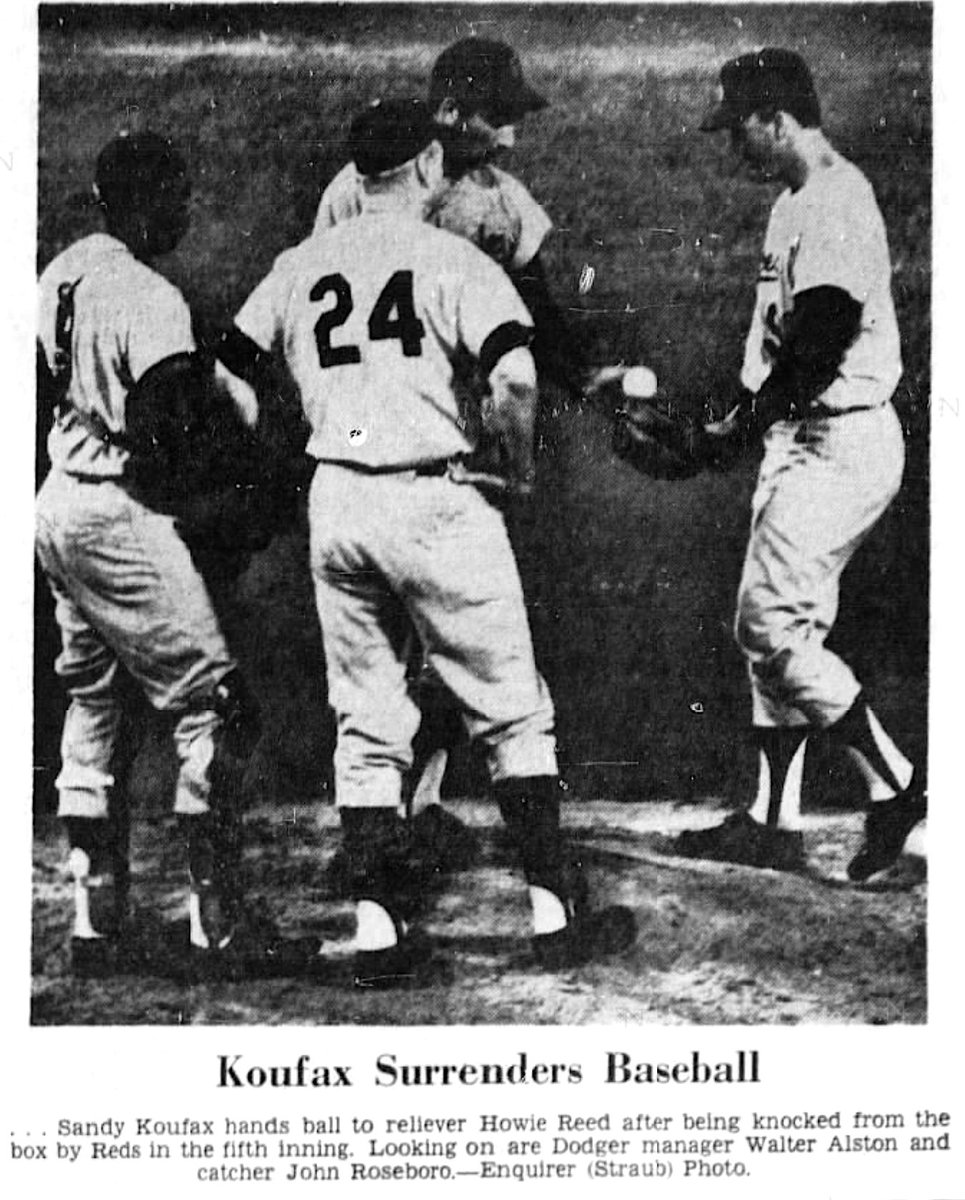
July 7, 1965 - Cincinnati’s shortstop, Leo Cardenas, clubbed his sixth homer with two outs in the last of the ninth inning today at Crosley Field to give the Reds a 7-6 victory as they repossessed first place from the Dodgers.
Cardenas, 7-for-11 during the crucial series, handed Bob Miller his second defeat of the series with a shot that hit the left-field screen at a time when it seemed the National League’s two top clubs were headed for extra innings.
Jim Lefebvre slugged a two-run homer off winner Joe Nuxhall in the eighth to tie the score at 6-6 after the Reds moved into a 5-0 lead at Sandy Koufax’s expense in the first two innings.
It was a free-swinging contest as L.A. dropped into second place again by percentage points after regaining the lead last night on Don Drysdale’s 12th victory.
Frank Robinson’s 18th homer with a man on gave the Reds two runs in the first inning. Cincinnati scored three times in the second on a walk to Tony Perez, a single by Cardenas, and doubles by Tony Harper and Pete Rose.
Rose, the Reds’ All-Star second baseman, led the blistering Cincinnati attack off four L.A. hurlers, including Koufax, with four hits.
For the Dodgers, Lefebvre batted in four runs with a two-run single off Billy McCool in the sixth and then nicked Nuxhall with the equalizer two innings later.
The game was advertised as a duel between the major leagues’ two top pitchers, Koufax (14-3) and Sammy Ellis (12-3), but neither lasted through the sixth.
Ellis had a two-hit shutout until the sixth, when singles by Ron Fairly, John Roseboro, and Lefebvre, and a double by Wes Parker drove in three runs and sent Ellis to the showers.
Maury Wills stole third base in the seventh for his 52nd theft and is now 23 games ahead of his 1962 pace.
Support this project at patreon.com/realtime1960s
125
7 Jul 2025
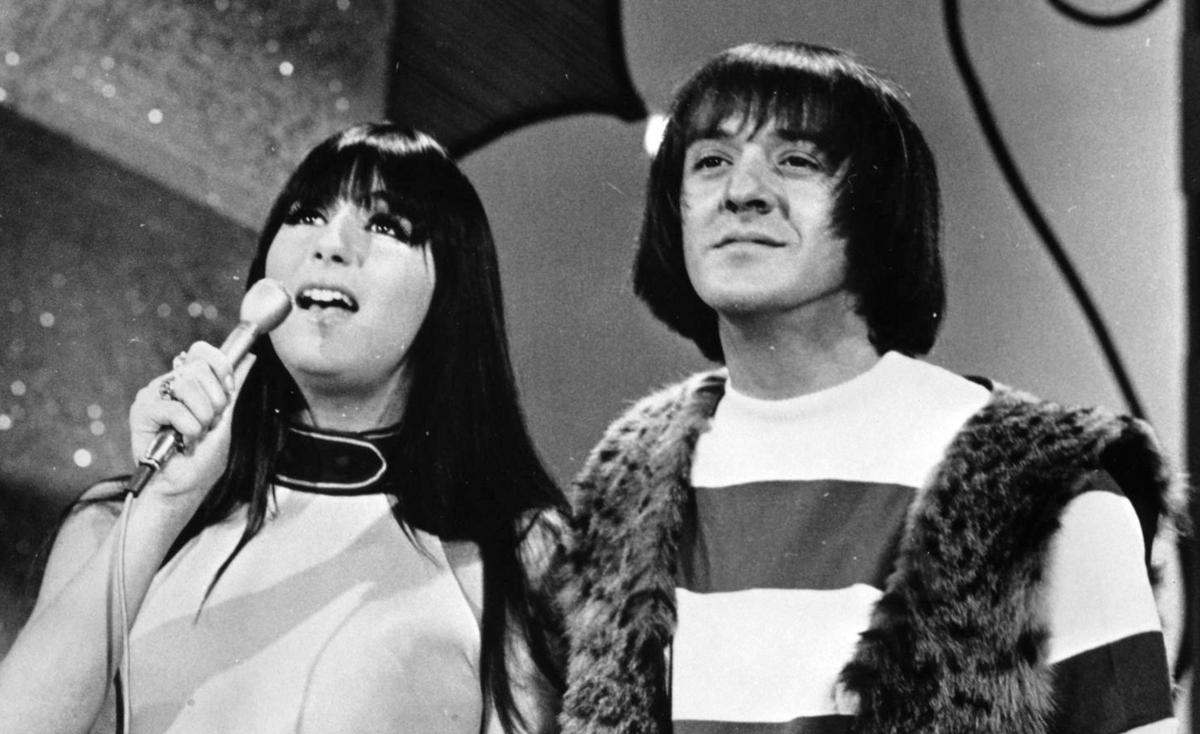
July 7, 1965 - Musical guests on tonight’s edition of “Shindig!” include Sonny and Cher (pictured), Marianne Faithfull, Aretha Franklin, the Kinks, and Bobb Sherman. 8:30 p.m. on ABC.
Support this project at patreon.com/realtime1960s
1
76