
Code all day sleep all night.
Joined March 2010
- Tweets 170
- Following 102
- Followers 20
- Likes 32
32 Photos and videos



Jun 13
I kept adding a signup modal to the fluency map because the payoff matters more once a parent hits the end of a session. If I’m going to ask for sign in, I need to show why it’s worth it first.
2
Jun 12
The real issue is practice turning into a black box. I added the fluency map so I can see what facts are stuck, what is due next, and whether the next session should be more targeted.
4
Jun 11
Not all spaced repetition is equal.
Many fluency apps have "spaced repetition" not all are effecient
I trimmed the spaced-repetition loop because the goal is fast recall, not more friction. If the review engine wastes time, the whole session starts to feel like extra homework.
8
Jun 10
After daily goals and XP pacing, I kept pushing on the classroom side. The layout had to hold up on smaller screens too, not just the laptop I test on. Math practice has to survive the device kids actually use.
5
Jun 8
I added the anonymous-user cleanup because stale accounts were starting to pile up. If somebody disappears for 14 days, I’d rather clear the dead weight than keep pretending those accounts are still active.
4
Jun 4
I added account and paid signup conversion tracking because I got tired of guessing what was actually working. Now I can see where people drop off instead of just hoping the copy or layout fixed it.
7
Jun 3
One thing I learned building Math Builders: the learning system can be right and the product can still fail if getting into practice feels annoying.
1
9
Jun 3
then came profiles pin sign in and daily goals. one household is not one learner and parents should not have to rebuild the routine every time a different kid grabs the device.
1
1
Jun 3
later i added the welcome flow and cleaner navigation. the math part matters but the path into the math matters too.
1
Jun 3
Straight up: practice was too tied to a laptop for too long. I kept reworking Math Builders so my daughter could use it cleanly on a phone, with the keyboard behaving, the timer staying readable, and the whole session still feeling simple instead of cramped.
5
Jun 2
A lot of math practice falls apart the second a kid gets interrupted. I kept smoothing Math Builders so a session could pick back up cleanly, auto-submit obvious answers, and keep the timer honest when the tab lost focus. Daily practice had to survive real life.
6
Jun 1
The agent side of Math Builders is mostly boring follow-through. I use it to keep an eye on real parent and teacher questions, surface teaching leads, and make sure good ideas do not just die in a notes file while I keep building.
3
May 30
I thought I had AI agents figured out.
Then I asked Claude to find FB homeschool groups for my math facts app.
That can of worms became 48 agents drafting posts/replies, researching, testing, link building prospecting.
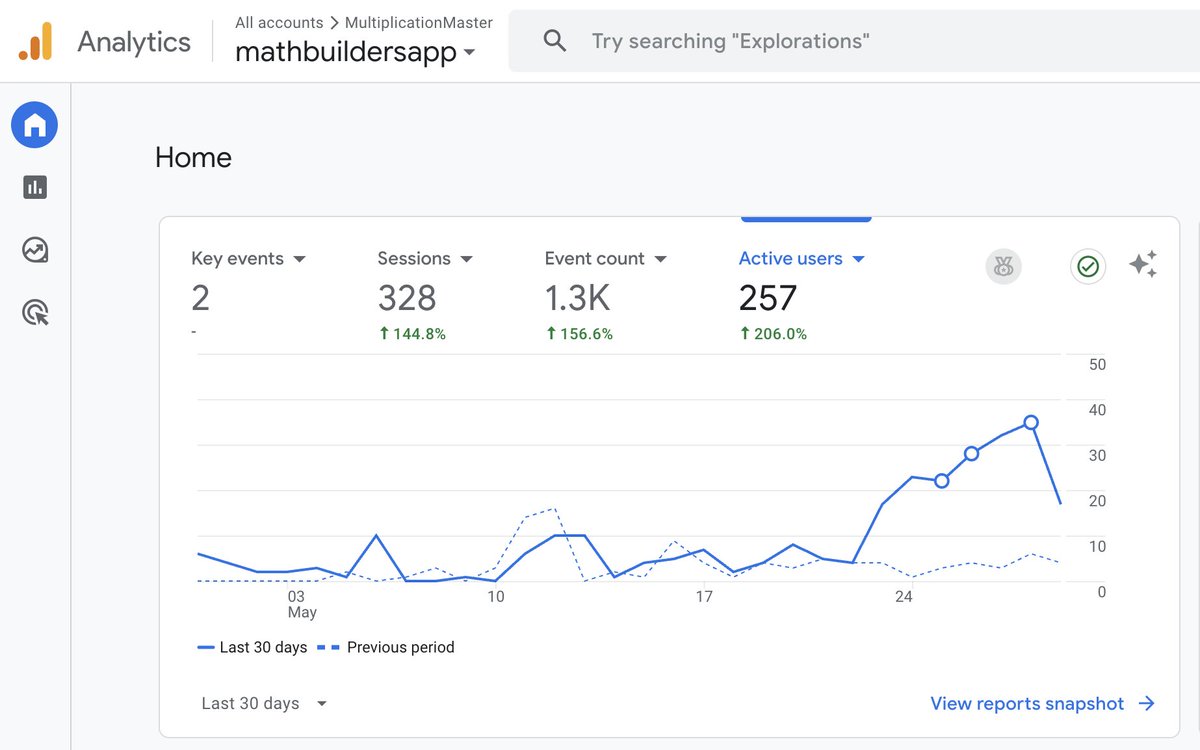
30 days in, growth is modest, but something’s working.
20
May 30
Straight up: I added the scene builder because endless right-or-wrong cards gets old fast. My daughter needed practice to feel like she was building something, so progress started unlocking a little world instead of ending at a score.
9
May 29
One thing I caught early: if the cards show up in the same pattern, kids can learn the order instead of the math. I changed Math Builders to reshuffle at key points so my daughter had to actually recall the fact, not just guess what was next.
9
May 28
Little thing I kept seeing with my daughter: she would get the math fact right, but too slow.
That matters. If 7x8 is still being rebuilt, the next worksheet gets ugly fast.
So yeah, Math Builders tracks the hesitation too, not just right/wrong.
dev.to/yoshinator/the-bug-i-…
8