An organisation committed to protect and conserve marine ecosystems in Malaysia
Joined December 2009
- Tweets 4,598
- Following 322
- Followers 1,275
- Likes 619
532 Photos and videos

Pinned Tweet

14 Oct 2025
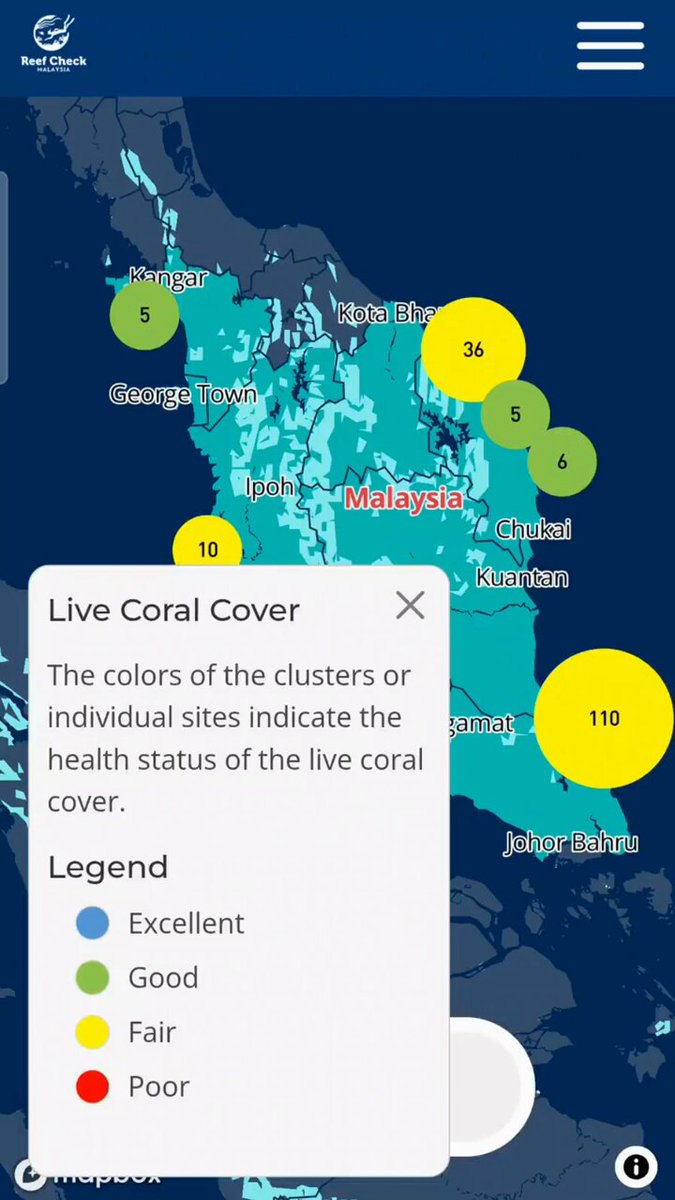
We’ve launched an interactive map that brings years of data from 300 reef sites to your fingertips! This new platform was made possible through The APAC Digital Transformation Program by Infoxchange.
Explore here reefcheck.org.my/interactive… & let us know what you think!
#reefmap
217
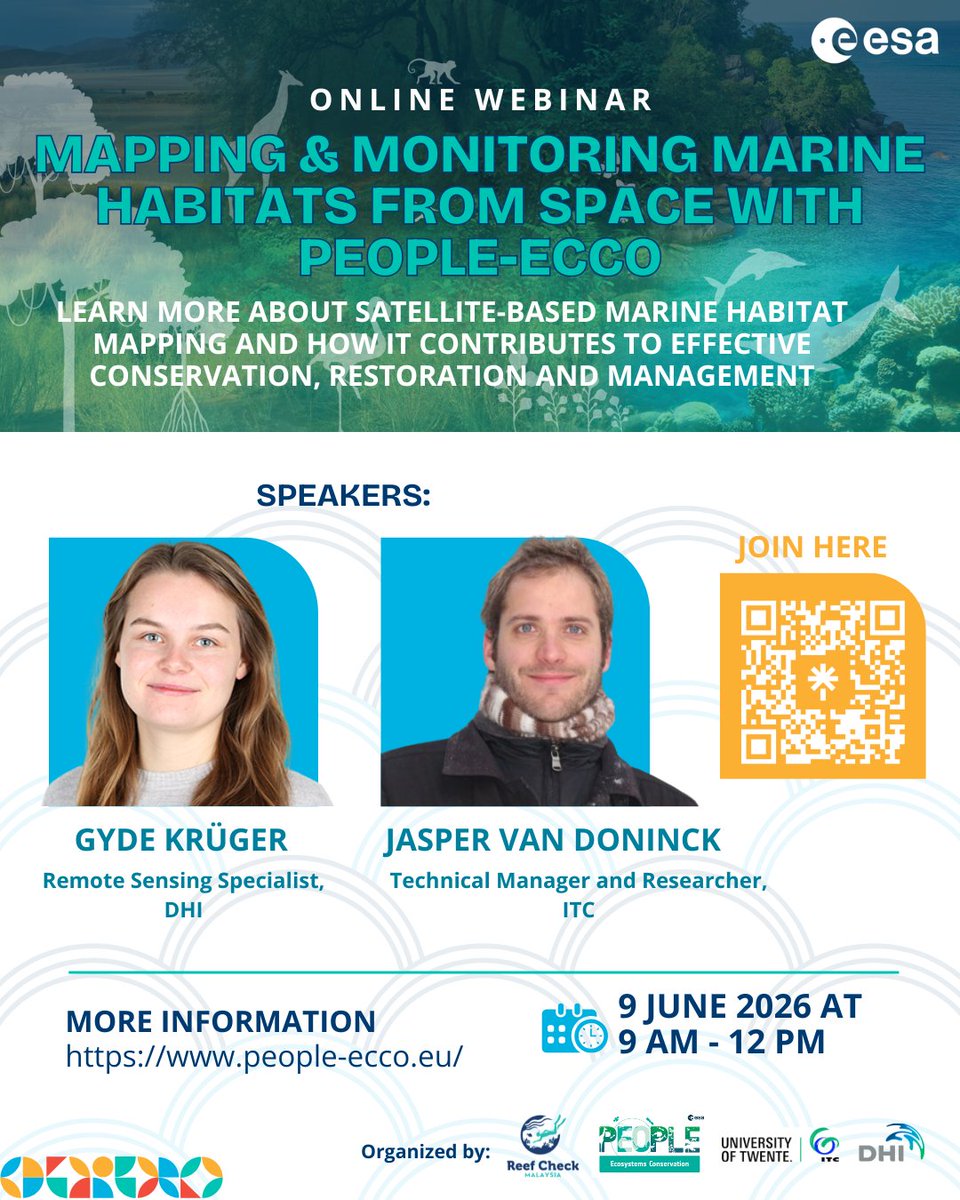
Mapping & Monitoring Marine Habitats from Space with PEOPLE-ECCO
9 June 2026 – Coral Triangle Day
9 AM–12 PM (MYT)
💻Teams (online)
Speakers: Gyde Krüger (Remote Sensing Specialist, DHI) & Jasper Van Doninck (Technical Manager and Researcher, ITC)
tr.ee/people-ecco-webinar
1
48
💻 Online webinar
Mapping & Monitoring Marine Habitats from Space with PEOPLE-ECCO
Who should join?
Researchers, government agencies, NGOs, practitioners (non-EO related), students.
Register here: tr.ee/people-ecco-webinar
1
1
94
💻 Online webinar
Mapping & Monitoring Marine Habitats from Space with PEOPLE-ECCO
Register here: tr.ee/people-ecco-webinar
44
Are our corals bleaching again?
Should we panic? Be concerned? Read more below!
reefcheck.org.my/are-our-cor…
1
19
More mooring buoys have been installed at key marine tourism sites in Semporna to protect coral reef ecosystems. This effort is part of our work to promote sustainable tourism on the islands.
Check out the story below 🔽
nst.com.my/news/nation/2026/…
1
74
Listen to our CEO explaining the findings of our 2025 Reef Check surveys and how decline in reef affects our economy and food security.
S9E2: "From Coral To Community" ft. Reef Check Malaysia | Julian Hyde
youtu.be/6f67Hw3R-yA?si=dt-W… via @YouTube
104
Are we still debating if sewage pollution affects reefs? I thought we are clear on this.
Find out more below 🔽
#marineconservation #wastewater #sewagetreatment #coralreef #coralconservation
reefcheck.org.my/wastewater-…
20
Reef Check Malaysia retweeted

Feb 23
Meet the CLIP 2025 Awarded Projects!
Associate Prof. Tan Chun Hong from Universiti Malaysia Terengganu leads a team of researchers aiming at developing a low-cost, in situ larval restoration system deployable directly on reefs by local communities. They call it the “Larval Highway”.
Coral reef ecosystems are increasingly threatened by climate change, pollution, and other human pressures, leading to widespread degradation and biodiversity loss. Conventional restoration methods, such as coral fragment transplantation, are slow, labour-intensive, and often dependent on costly ex situ infrastructure. They scale poorly in regions with limited resources, and in highly degraded sites natural recovery may take decades, if it occurs at all.
To accelerate progress, scientists have turned to ex situ larval propagation, using land-based systems to fertilize and rear larvae before releasing them back into the sea.
Watch the video to find out how this team of researchers will develop a coral larvae highway to accelerate coral reef recovery.
This is one of sixteen (!) new projects funded under CORDAP’s CLIP 2025 program, supporting 63 researchers from 13 countries with a total investment of USD 1.5 million.
Learn more about CLIP 2025 and the awarded projects: cordap.org/dipl-team-member/…
________________
Project title: Larval-Highway: A Scalable Larval Collection with Targeted Settlement System for Reef Rehabilitation
Project Lead: Assoc. Prof. Dr. Tan Chun Hong
Co-leads: Dr. Poh Seng Chee, Dr. Mathinee Yucharoen, Putri Asma Megat Yusop
Countries involved: Malaysia, Thailand
Takes place: Pulau Bidong and Pulau Redang (Terengganu, Malaysia)
Supporting institutions: Universiti Malaysia Terengganu (@UMT_official), Prince of Songkla University, Reef Check Malaysia (@reefcheckMY)
Duration: 24 months
2
6
201
Listen to our CEO, Julian Hyde, talked about our Reef Check survey 2025 findings with @BFMradio
#marine #marineconservation #coralconservation #foodsecurity
bfm.my/content/podcast/malay…
76
The results of our 2025 Reef Check surveys show that reef health is continuing to decline.
We lost the equivalent of 47,250 football fields of coral last year!
Why does this matter, and what can be done? Read more below.
#marineconservation #coralreef
reefcheck.org.my/2025-reef-c…
1
45
31 Dec 2025
Happy New Year from team Reef Check Malaysia!
It was an eventful 2025 and we look forward to an even better 2026 💙🪸
reefcheck.org.my/rcm-2025-hi…
1
37
20 Dec 2025
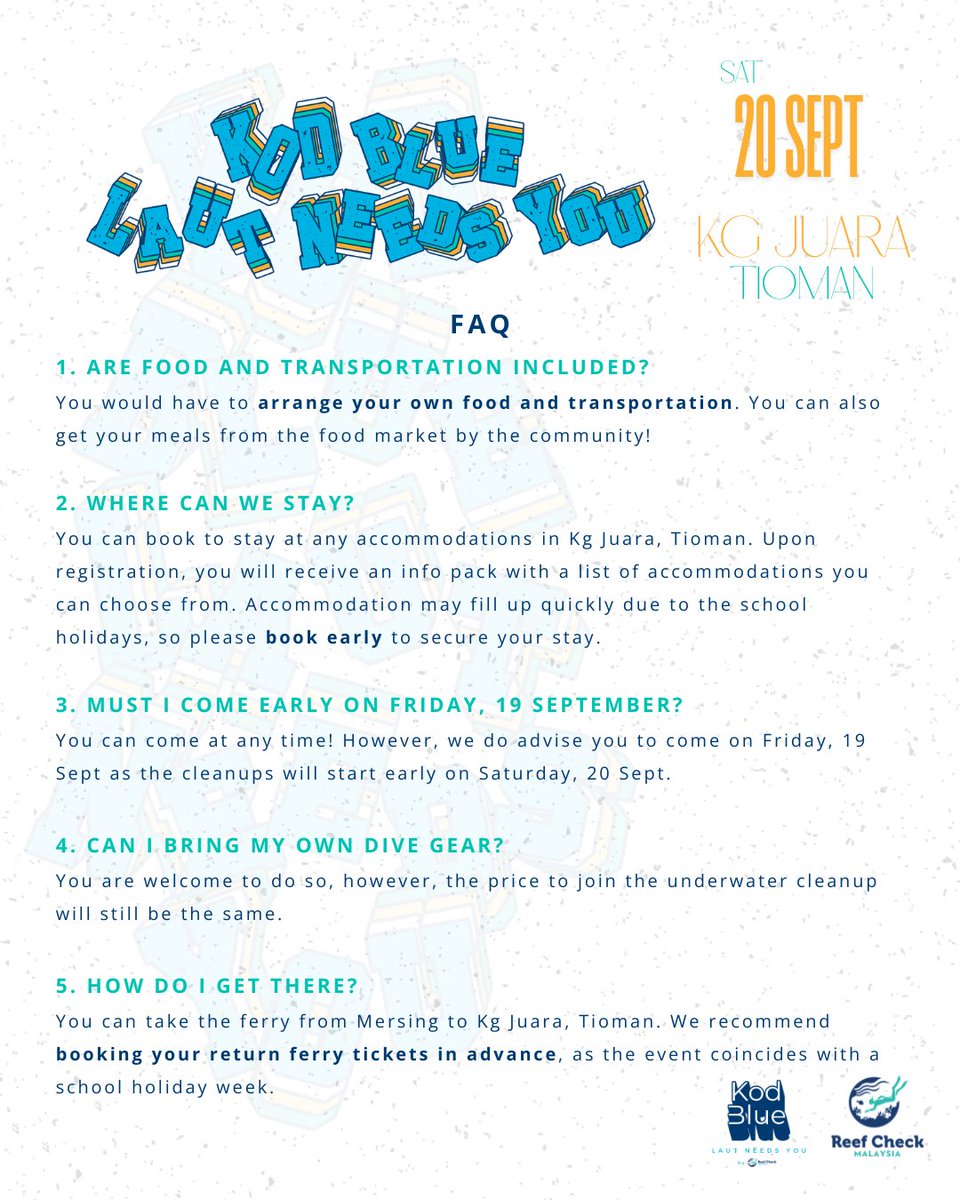
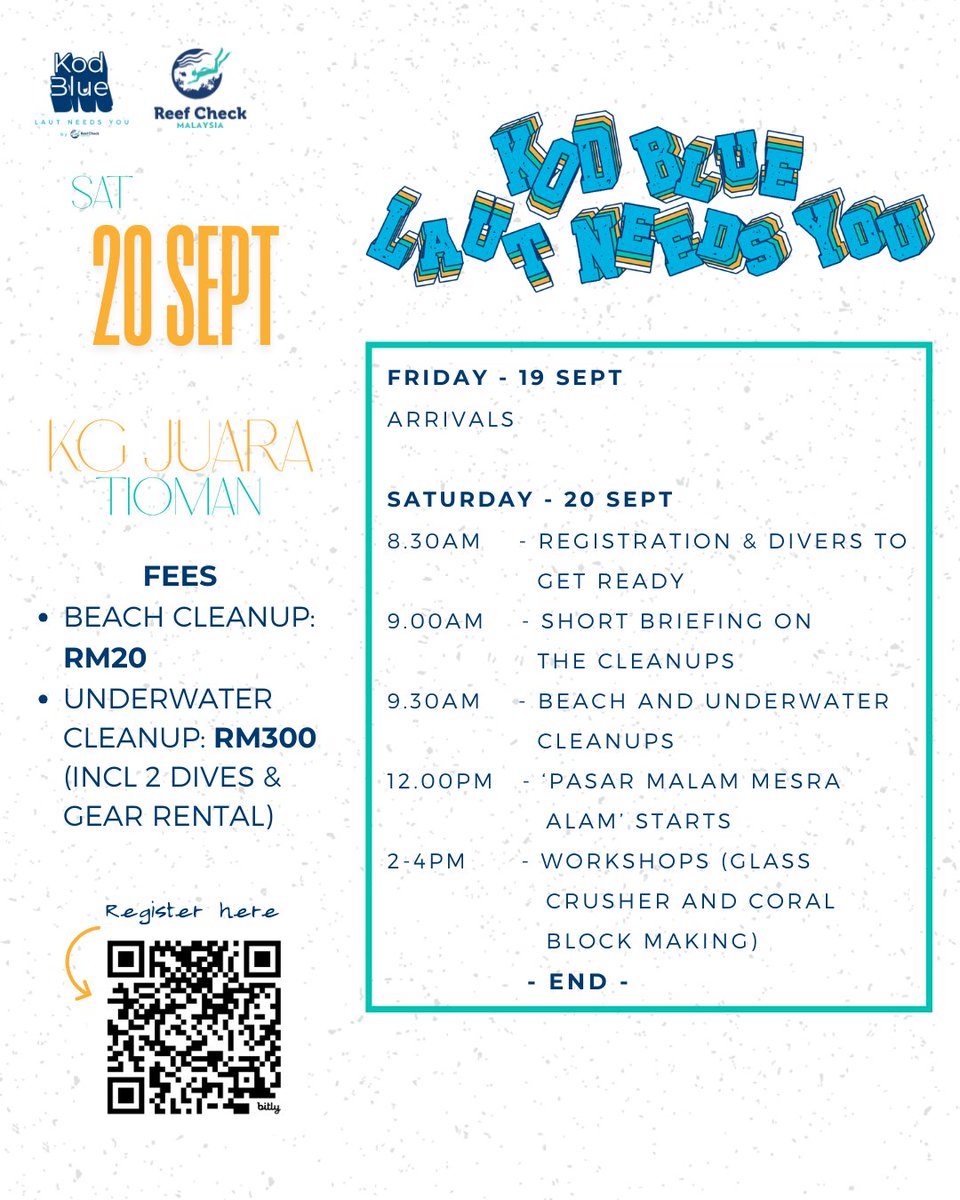
Our #KodBlue2025 event happened in Kampung Juara, Tioman this year!
Together, we removed 434.5 kg of #trash and 198 Crown-of-Thorns Starfish (COTs) from harming our ocean!
Join us next year at #KodBlue2026!
#beachcleanup #cleanocean #staytuned
youtu.be/F690mDVB8F8?si=eka7…
79
19 Dec 2025
It’s the season of giving! ✨
Looking for a Christmas gift, birthday surprise, or a way to celebrate your wins this year? Adopt seKarang and your gift will keep on giving. 💙
Adopt seKarang here: pages.razorpay.com/adoptseka…
#gifts #Christmasgifts #seasonofgiving #adoptacoral
32
17 Dec 2025
The residents of Tioman Island came together to discuss #climatechange adaptation strategies to protect their island and surrounding marine ecosystems.
Discover how they are building resilience against the impacts of #climate change ⬇️
youtu.be/xBjhONIjEbE?si=F-HN…
101
17 Dec 2025
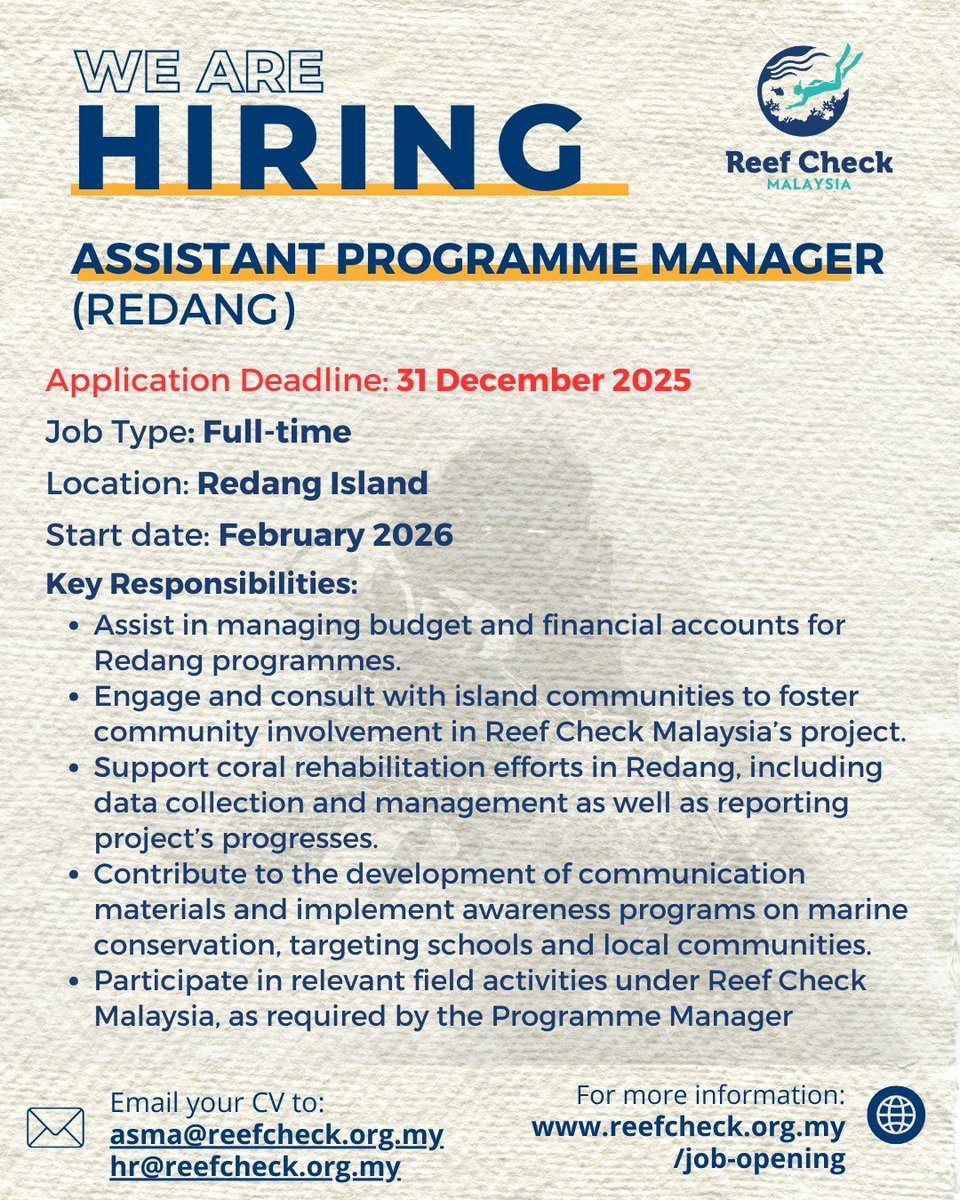
We are #Hiring
We are looking for an Assistant Programme Manager (Redang)
Salary range: RM 2800 – RM 3300
For more info on this opportunity, visit our website here: reefcheck.org.my/job-opening…
#jobs #vacancy #kerjakosong #conservation #marine
117
15 Dec 2025
Our team in Sabah has found that the number of Crown-of-Thorns starfish (COTs) have been on the rise this year. Early figures show that 7,624 COT starfish have been removed through coordinated field operations.
Read more below ⬇️⬇️
nst.com.my/news/nation/2025/…
35
27 Nov 2025
Check out RCM's Annual Event 2025 - Vision 2030: The Next Five Years, where we meet our partners, funders and community for a night of sharing and networking.
We look forward to the next five years!
reefcheck.org.my/2025-rcm-an…
23
14 Nov 2025
Let's protect our ocean together! 💙🌊
Vote for us for Malaysia region: charityvote.riotgames.com/
13 Nov 2025

In-game fundraisers fuel the Riot Games Social Impact Fund—which turns your contributions into real-world impact.
You raised the money, now you can help choose the causes the Fund supports with over $5M going to nonprofits around the world: charityvote.riotgames.com

ALT A poro and Wingman sit on either side of a black lockup that features the Riot Games fist logo and the words “Riot Games Social Impact Fund”
1
91
30 Oct 2025
Was it the right decision to close the Mersing islands?
The answer is more nuanced than a simple yes or no. Read more below ⬇
reefcheck.org.my/dilemma-of-…
50
17 Oct 2025
Everyone has a role to play in protecting our oceans.
Read more below ⬇
thestar.com.my/lifestyle/tra…
38