
Co-Founder of @Tether | Co-Founder & Chairman @stbl_official | @wefi_official
Joined June 2010
- Tweets 562
- Following 267
- Followers 15,080
- Likes 427
80 Photos and videos








Jun 12
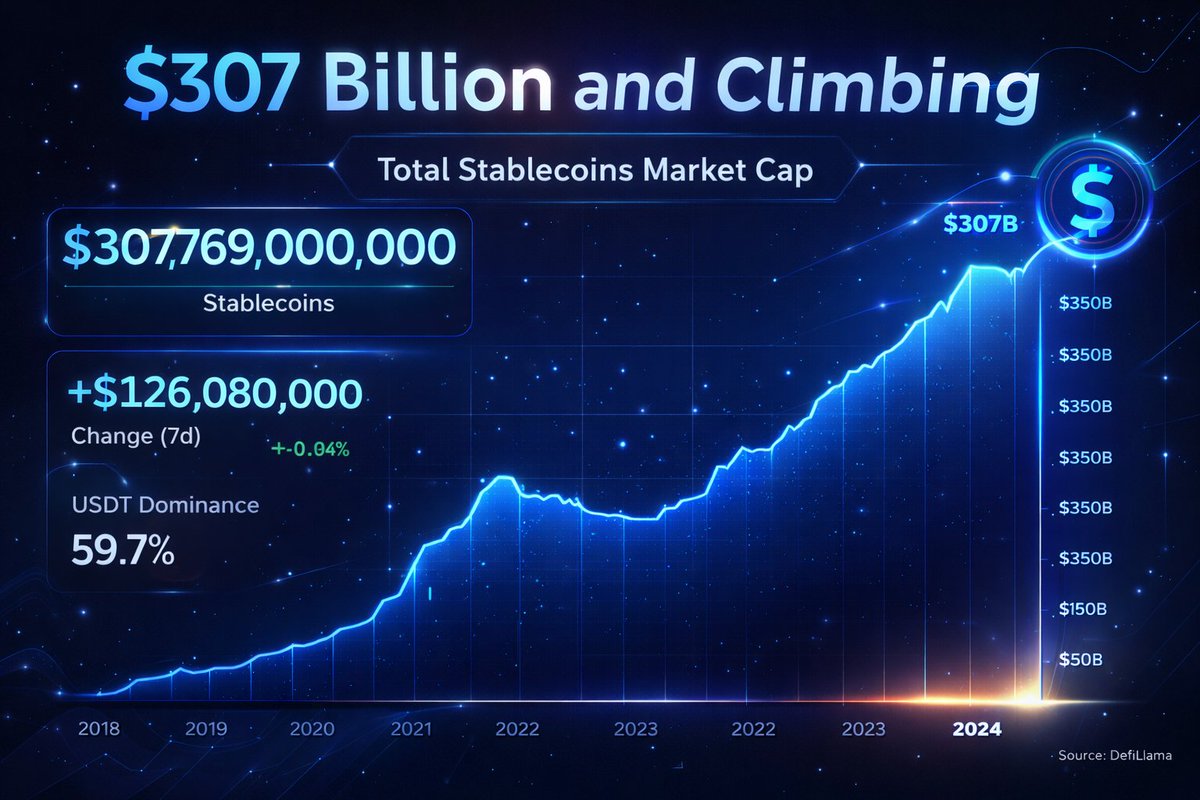
When I was on @CNBC last week Fast Money hosts kept asking about bitcoin’s price. Instead, this is the number to keep an eye on.
Stablecoin supply crossed $300B last fall and has held steady even as Bitcoin didn’t. That’s what I mean when I say BTC is a great asset, but not nearly representative of the future of finance on the blockchain.
defillama.com/stablecoins
5
11
48
5,029
Jun 12
More than 200 companies asked the Senate this week to pass the Clarity Act without delay. Their argument is capital flight. But the better reason is the $20 wire fee.
When governments are ready to free their citizens from extractive rails, @wefi_official will be there. Until then, regulatory ambiguity isn’t neutral. It has a price, and ordinary people pay it. That’s why Euros are 20% of global trade but 0.2% of stablecoin circulation while regulators ponder crypto taxes instead of making MiCA workable.
theblock.co/amp/post/403964/…
4
17
62
5,049
Reeve Collins retweeted

Jun 5
Why RXUSD?
Most stablecoin protocols focus on issuing a single stablecoin.
At STBL, we're building something different.
STBL is the infrastructure layer for programmable stable assets.
At its core, STBL consists of two primitives:
• USST - principal-backed stable liquidity
• YLD - yield ownership and management
Together, these primitives allow yield-bearing assets to be transformed into flexible onchain money while preserving and managing the underlying yield through programmable treasury infrastructure.
But the bigger vision isn't just USST and YLD.
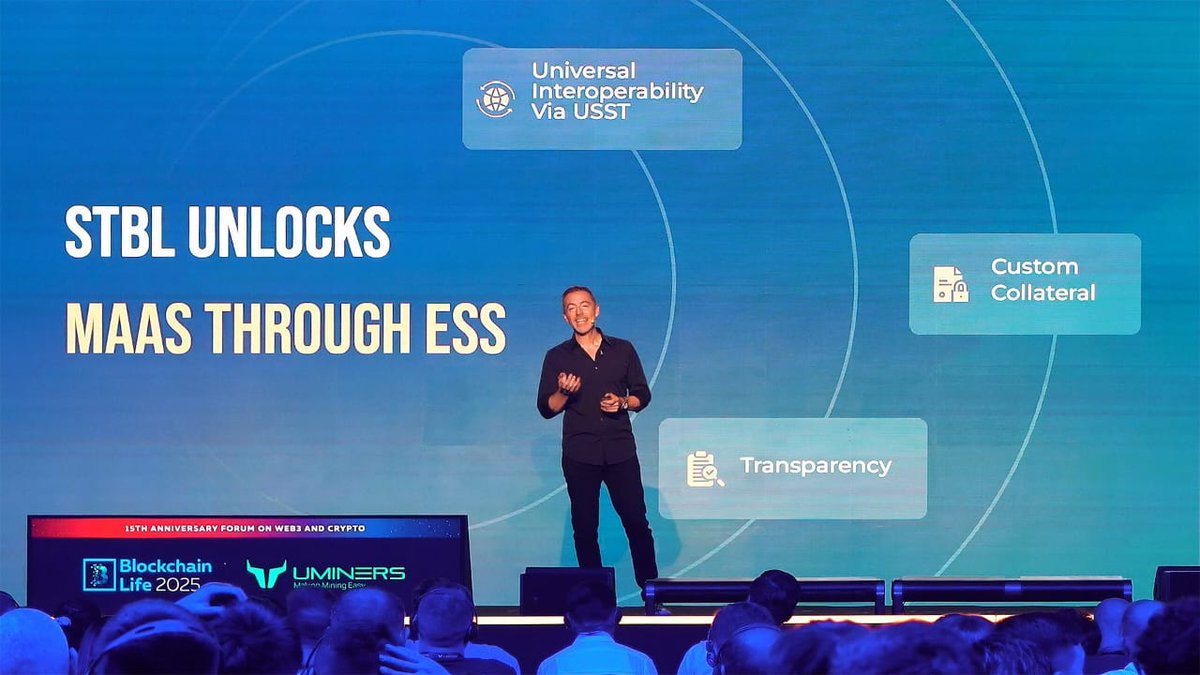
It's ESSs.
Ecosystem Specific Stablecoins.
RXUSD is the first ESS built on STBL and serves as the blueprint for what comes next.
An ESS allows an issuer, ecosystem, protocol, DAO, institution, or community to create its own stable asset by leveraging STBL as a protocol-as-a-service.
Instead of building a stablecoin protocol from scratch, issuers can deploy an ESS on STBL and customize how the stable asset operates, how yield is managed, and how treasury assets are deployed.
This includes:
• Custom vault structures
• Custom collateral configurations
• Custom yield strategies
• Custom yield distribution models
• Custom treasury management
• Custom incentive frameworks
• Custom compliance configurations
In other words, every ESS can have its own monetary and treasury policy while benefiting from STBL's core infrastructure, security, liquidity framework, and future network effects.
RXUSD demonstrates this model in practice.
It is not simply another stablecoin.
It is the first example of how ecosystems can launch their own stable assets and programmable yield economies on top of STBL.
Why does this matter for STBL?
Because every ESS strengthens the protocol.
First, ESSs generate fees.
A portion of the fees generated by each ESS flows directly into the STBL onchain treasury.
As more ESSs launch and scale, protocol revenues increase.
Second, ESS creation requires STBL utility tokens.
Opening and maintaining ESS vaults, treasury systems, and ecosystem infrastructure will require issuers to utilize STBL utility tokens.
Our long-term vision is to make ESS deployment entirely permissionless.
Anyone will be able to establish a vault, configure their treasury framework, and launch an ESS by utilizing STBL utility tokens.
This creates a direct utility layer for STBL while enabling ecosystems to launch and operate their own stable asset economies.
Third, ESS growth creates value accrual.
As ESSs generate revenue, those revenues can be directed toward treasury activities, including buybacks, rewards, ecosystem incentives, and other governance-directed initiatives.
The result is a powerful flywheel:
More ESSs
→ More Assets Under Management
→ More Protocol Revenue
→ Larger Treasury
→ Greater STBL Utility
→ More Demand For STBL
→ More ESS Deployments
Over the course of 2026, we are lining up multiple ESS deployments across a range of markets and use cases.
RXUSD is the first.
It won't be the last.
Our objective is to evolve ESS deployment from a bespoke implementation into a fully automated onchain monetary and treasury management system.
Eventually, launching an ESS should be as simple as:
• Locking STBL utility tokens
• Selecting a yield strategy
• Configuring treasury parameters
• Defining compliance requirements
• Activating a stable asset economy
We're not building a stablecoin.
We're building the infrastructure layer that allows anyone to create, operate, and scale money and yield economies onchain.
RXUSD is the blueprint.
ESSs are how STBL scales.
Stablecoins were Version 1.
Programmable monetary ecosystems are Version 2.
Welcome to Stablecoin 2.0.

21
25
107
12,529
Jun 11
The key takeaway from my @Forbes conversation:
“You don’t care which power company gives you power. You are not going to care which bank sends your money.”
Banking becomes infrastructure. @stbl_official is building the dollar layer. @wefi_official is everything built on top of it.
forbes.com/sites/boazsobrado…
7
29
93
11,564
Jun 11
Sat down with CriptoNoticias, one of LatAm’s largest crypto publications, on why stablecoins aren’t a crypto asset class:
“Most people don’t want a stablecoin. They want a dollar that moves globally, settles fast, runs 24 hours a day, and works natively on the internet.”
criptonoticias.com/comunidad…
3
11
50
3,024
Jun 4
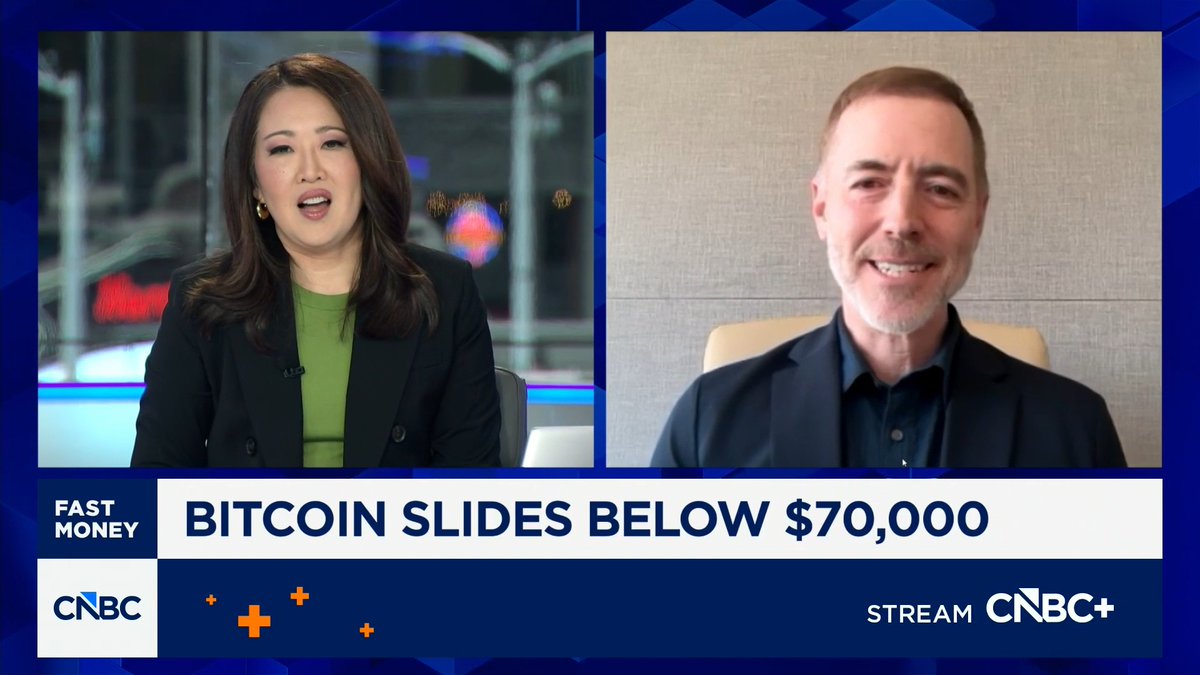
Bitcoin might be having a very bad week. The onchain dollar is having an incredible year.
Joined @CNBC's Fast Money this week to talk about why the short-term BTC rollercoaster is not indicative of the real long-term progress being made in building the next generation of financial infrastructure.
7
10
70
4,428
Jun 3
Discussing how @wefi_official and @stbl_official are shaping the future of finance for the better with Sean at Onchain Capital
x.com/onchaincap_/status/206…

🚨 Reeve Collins, Co-Founder of Tether, joins Onchain Capital.
We discussed how stablecoins evolved from a crypto experiment into global financial infrastructure and why he believes Stablecoin 2.0 is the next step.
Watch now on Youtube 👇
youtu.be/tAzRSFYwU14
3
6
47
3,455
May 21
Good read. The strongest use case for stablecoins isn’t speculation.
It’s solving real payment friction in markets underserved by traditional financial infrastructure.
Cheaper rails are step one. The harder problem is making sure lower costs, yield, and efficiency reach users rather than staying with intermediaries.
That is a big part of what @WeFi_official is focused on, market by market.
coindesk.com/coindesk-indice…
37
18
70
7,738
May 14
The banking lobby just tried to kill stablecoin yield. It won’t work.
The smart banks already know this. The question is no longer whether yield sharing becomes law. It’s who builds the infrastructure for it first.
@stbl_official and @wefi_official were built for this shift
May 11

The arrogance is astounding.
For months, the banking lobby refused to engage on stablecoin rewards. They didn’t make this a red line during the GENIUS Act. They didn’t stop the House from advancing CLARITY. Now, days before markup, after months of saying “we won’t negotiate,” they’re suddenly demanding “immediate engagement.”
Bad faith policymaking. And an eleventh-hour attempt to protect incumbents from competition.
Consumers deserve innovation, competition, and better financial products. Stablecoin rewards aren't radical. The banking lobby had every opportunity to engage constructively. Instead, they chose obstruction, delay, and now panic.
Let's get going and move this forward. See ya Thursday.
39
36
144
18,981
May 7
The Clarity Act just cleared its biggest hurdle. Stablecoin yield sharing now has a legal path in the US.
After years of extractive fee models, regulators are finally catching up to where financial services need to go.
The next generation of financial infrastructure is built around shared upside. That’s the foundation behind @stbl_official and @wefi_official .
11
46
153
12,937
Apr 28
Bridging traditional and on-chain finance so stablecoins work like cash, without friction or loss of control
Apr 28

A lot of "non-custodial" crypto cards aren't actually non-custodial. WeFi went the other way from the start: deobanking keeps asset control and payment execution separate.
Today's collaboration with @Visa across Europe, Asia, and Latin America is what that architecture was always pointed at: stablecoin balances people already hold, spent through a network they already trust, without a custodial handoff in between.
None of this happened without @Reeve_Collins, who co-founded @tether in 2014 and built the stablecoin category from scratch. As Chairman at WeFi he's still pushing the same thesis: stable on-chain money should be usable as money, not just traded as an asset.
From here, it's execution across regions. The architectural question is answered.
@wefi_official

9
18
79
9,084

Apr 3
We started BLOCKv in 2017 to make assets programmable.
Dual is that same vision, refined over nine years, now applied to real-world assets and open financial infrastructure.
Mar 28

🧬 BLOCKv is now Dual
After years powering enterprise Web3 deployments, we are introducing a new identity for everything we have been building:
The infrastructure for the programmable economy
Now opening to the entire Web3 ecosystem. Learn more 👇
dual.org/blog/introducing-du…
9
46
158
13,617
Reeve Collins retweeted

Mar 19
Stablecoins aren’t competing with traditional rails anymore - they are replacing them.
They deliver instant settlement, global liquidity, and programmable value - capabilities legacy finance simply cannot match.
With the latest SEC guidance bringing regulatory clarity - defining asset classes, recognizing stablecoins, and signaling that most crypto assets are not securities - the floodgates for institutional adoption are opening.
The uncertainty is gone. Ecosystem-specific stablecoins will lead this shift, unlocking seamless capital flow across markets, protocols, and geographies.
The lines between crypto and traditional finance will disappear. AI will orchestrate value at scale. And beneath it all, stablecoins and blockchain will power the system.
STBL is building that future.
23
35
165
73,149
Reeve Collins retweeted
Mar 9
“Different forms of digital money, designed for distinct use cases, will inevitably coexist.”
In a layered financial ecosystem, there is no single winner - only seamless integration.
In a new feature by Asset Servicing Times, STBL’s Chief Commercial Officer, Joe Vollono, outlines why global institutions will scale through interoperability rather than reliance on a single dominant digital currency.
As financial infrastructure advances toward near-instant, atomic settlement, the next era of digital finance will be defined by a layered monetary architecture, with central bank money providing finality, while stablecoins enable the seamless movement of value across digital markets and applications.
Read more on the future of interoperable digital finance and the structural role of Stablecoin 2.0
assetservicingtimes.com/spec…
@rjvollono
8
34
141
87,031
Mar 2
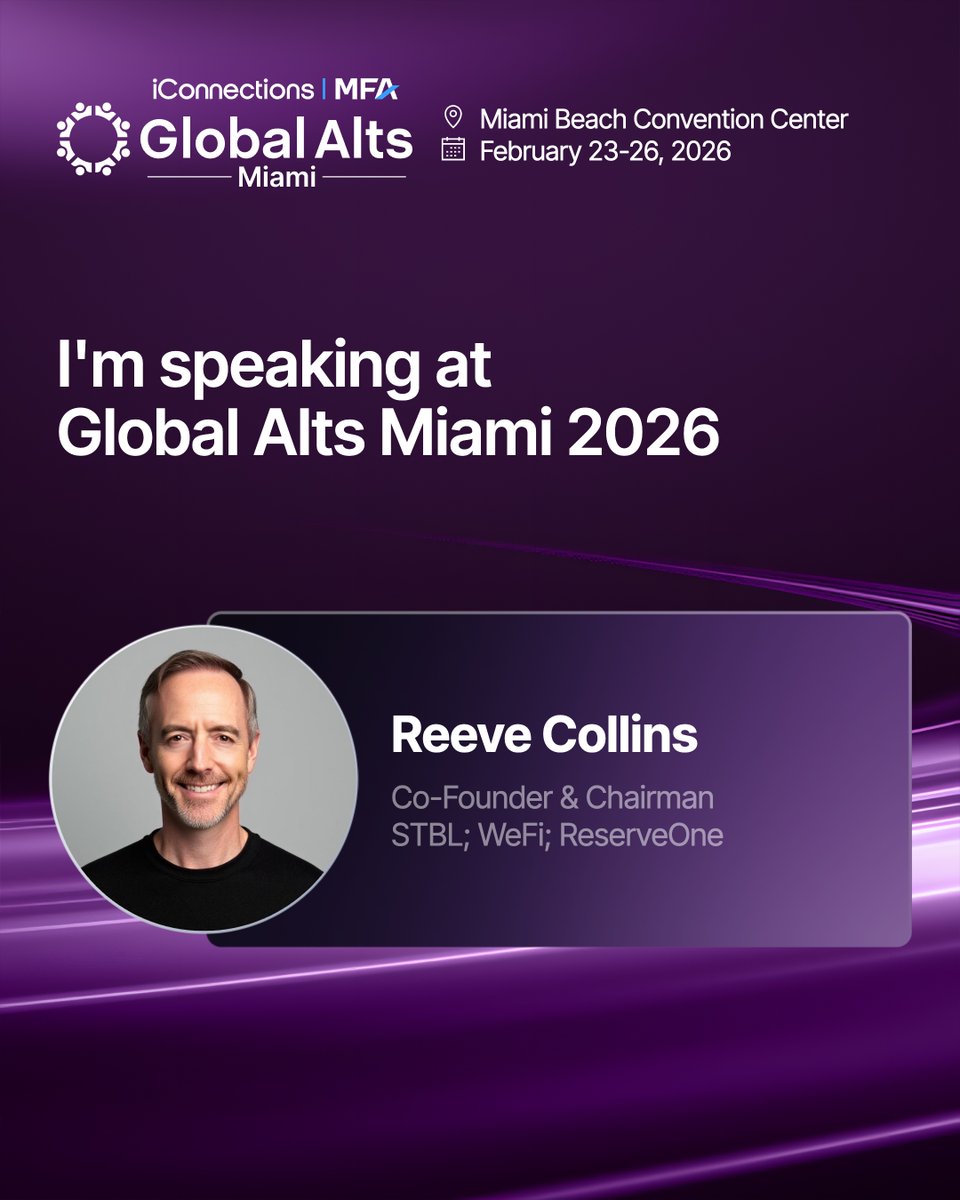
Spoke at Global Alts Miami 2026 on the Digital Dollar Revolution with Owen Lau, @mgiampapa1, @salmaanj, and @FrancisSuarez.
Stablecoins are now a $300B market.
The focus now is scaling responsibly, aligning with regulation, and embedding into global financial infrastructure.
Thanks to @iconnections_io for hosting.
@stbl_official @wefi_official
15
33
128
6,024
Feb 25
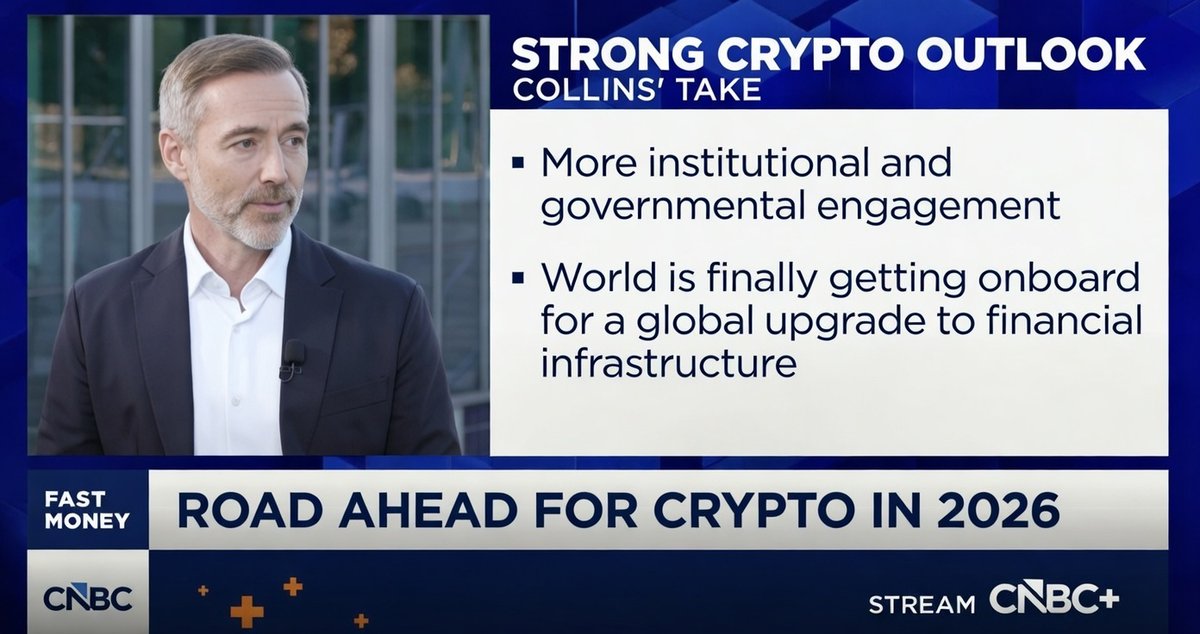
Just wrapped on @CNBC's Fast Money, with $BTC trading near $64K. The conversation focused on potential floors and treasury demand support.
Markets move, no one can pin the exact level in advance.
What stands out is the disconnect: despite price pressure, interest from institutions, corporates, and governments keeps deepening, and the conversations are shifting to implementation, balance sheets, payments, infrastructure.
"Never has there been a time where more governments and institutions are interested in crypto."
Full panel: cnbc.com/video/2026/02/23/cr…
@stbl_official @wefi_official
6
20
98
4,433