
Joined September 2009
- Tweets 17,140
- Following 212
- Followers 879
- Likes 8,926
2,367 Photos and videos










Pinned Tweet

Jun 6
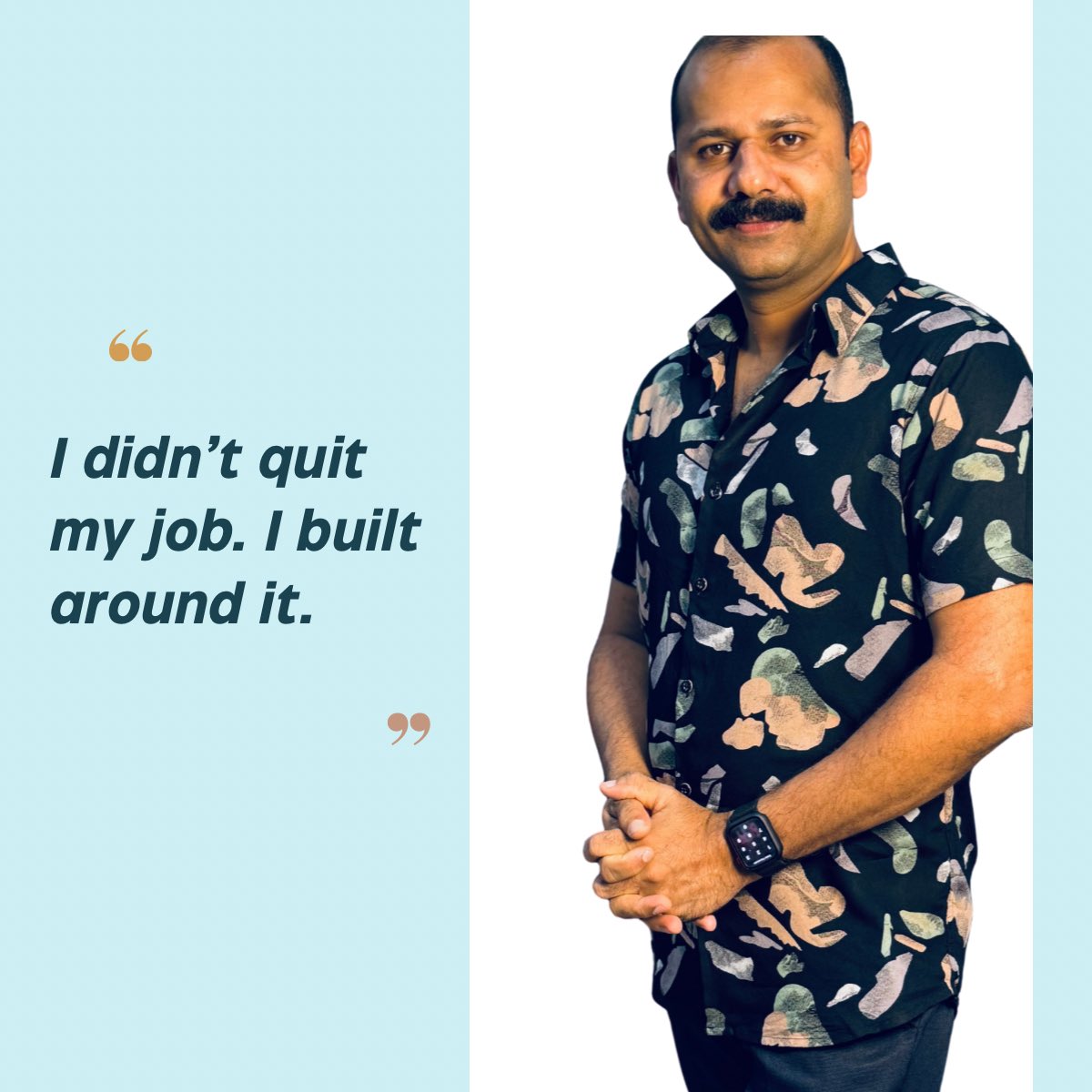
I started in technology more than 25 years ago.
Since then I’ve built, sold, supported, hosted, automated, and scaled digital businesses across India, Bahrain, and the US.
Today I’m focused on helping businesses:
• Implement AI practically
• Automate repetitive work
• Build reliable business systems
• Improve customer experience
• Scale through technology
Building:
• AutoChat
• Hostao
• COKIQ
Here I share lessons from real projects, real failures, and real implementations.
Follow if you’re interested in AI, Automation, SaaS, Hosting, and Digital Transformation.
1
2
Jun 12
The emphasis on AI models often overshadows the critical role of infrastructure. As we scale AI applications, infrastructure will determine real, world effectiveness, impacting data processing, deployment, and integration. Without robust infrastructure, even the most advanced models can fall short. How do you see infrastructure evolving alongside model development?

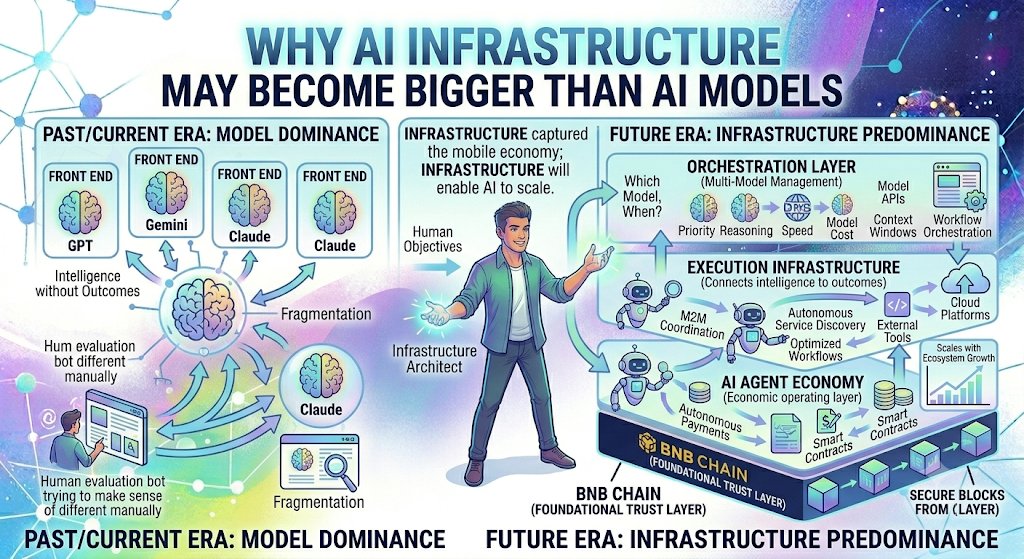
WHY AI INFRASTRUCTURE MAY BECOME BIGGER THAN AI MODELS
For the past several years, the AI industry has been obsessed with models.
Every major headline has focused on model releases, benchmark scores, reasoning capabilities, context windows, and performance improvements.
The narrative has been straightforward:
The company with the smartest model wins.
Yet history suggests that technological revolutions rarely create the most value at the model layer alone.
Instead, the largest and most durable value often emerges from the infrastructure that enables an ecosystem to scale.
The future of AI may follow the same pattern.
While models will remain important, the greatest long-term opportunity may lie elsewhere.
It may lie in the infrastructure that connects intelligence to execution.
HISTORY OFFERS AN IMPORTANT LESSON
Technology cycles have a consistent pattern.
The earliest phase focuses on breakthrough technology.
The later phase focuses on infrastructure.
The internet provides a useful example.
Many early internet companies built impressive applications.
However, some of the largest winners emerged from the infrastructure layer.
Networking providers.
Cloud platforms.
Operating systems.
Developer ecosystems.
These platforms became foundational because they enabled entire industries to operate.
The same dynamic appears throughout technology history.
Infrastructure often captures value because everyone depends on it.
Applications compete.
Infrastructure compounds.
As AI matures, a similar shift may be beginning.
AWS DID NOT WIN BY BUILDING THE BEST WEBSITE
When people think about Amazon, they often think about ecommerce.
Yet one of the company's most valuable businesses became its infrastructure division.
Amazon Web Services transformed computing by providing scalable infrastructure that developers could build upon.
Instead of competing with every application, AWS enabled every application.
That distinction proved enormously important.
Thousands of companies became customers.
Entire industries emerged on top of cloud infrastructure.
The lesson is simple:
Infrastructure scales with ecosystem growth.
Applications scale with individual success.
As AI ecosystems expand, infrastructure providers may benefit from a similar dynamic.
ANDROID AND IOS BECAME MORE IMPORTANT THAN MOST APPS
The smartphone revolution offers another valuable lesson.
Consumers often remember iconic applications.
But the true foundations of the mobile economy were the operating systems.
Android and iOS became the environments where entire ecosystems were created.
Developers built millions of applications.
Billions of users joined the ecosystem.
Yet the operating systems remained at the center of every interaction.
The platforms controlled:
➜ Distribution
➜ Identity
➜ Payments
➜ Security
➜ Developer access
➜ User experience
This control created durable competitive advantages.
AI may be approaching a similar moment.
The next generation of value creation may belong to the platforms that orchestrate intelligence rather than the models themselves.
AI MODELS ARE RAPIDLY BECOMING COMMODITIES
One of the most important trends in AI is the accelerating commoditization of models.
Only a short time ago, frontier models possessed enormous competitive advantages.
Today, the landscape looks very different.
New models appear constantly.
Open-source alternatives continue improving.
Performance gaps narrow rapidly.
Costs continue falling.
Capabilities increasingly converge.
This does not mean models are unimportant.
It means model intelligence alone may not remain a sustainable moat.
Throughout technology history, whenever a capability becomes widely available, value shifts elsewhere.
The question is no longer:
"Can someone build a powerful model?"
The answer is increasingly yes.
The new question is:
"Can someone build the infrastructure that makes those models useful?"
THE REAL MOAT IS ORCHESTRATION
As organizations adopt multiple models, a new challenge emerges.
Different models excel at different tasks.
Some perform better at reasoning.
Some excel at coding.
Some optimize for speed.
Some optimize for cost.
The future is unlikely to be dominated by a single model.
Instead, it may be defined by multi-model environments.
This creates a new source of value:
Orchestration.
Orchestration determines:
➜ Which model should be used
➜ When it should be used
➜ How tools should be coordinated
➜ How workflows should be executed
➜ How resources should be allocated
➜ How agents should collaborate
In a multi-model world, orchestration becomes more important than any individual model.
The platform coordinating intelligence may capture more value than the intelligence itself.
EXECUTION IS WHERE ECONOMIC VALUE IS CREATED
Models generate outputs.
Infrastructure generates outcomes.
This distinction is critical.
A model can provide recommendations.
An infrastructure platform can execute them.
A model can suggest actions.
An infrastructure platform can coordinate workflows.
A model can identify opportunities.
An infrastructure platform can allocate resources.
Economic value is ultimately created through execution.
This is why execution infrastructure may become one of the most strategic layers of the AI economy.
As AI Agents become more capable, execution will require:
➜ Tool integrations
➜ Memory systems
➜ Payment infrastructure
➜ Workflow automation
➜ Identity management
➜ Onchain connectivity
➜ Agent coordination
These capabilities sit above the model layer.
They belong to infrastructure.
THE AGENT ECONOMY NEEDS A NEW FOUNDATION
The rise of AI Agents introduces entirely new infrastructure requirements.
Future agents may:
➜ Purchase services
➜ Manage capital
➜ Execute transactions
➜ Coordinate with other agents
➜ Operate continuously
➜ Manage digital resources
Supporting these activities requires far more than intelligence.
It requires economic infrastructure.
The Agent Economy will need:
Identity Layers
Allowing agents to establish persistent identities.
Payment Layers
Allowing agents to exchange value.
Execution Layers
Allowing agents to perform tasks.
Coordination Layers
Allowing agents to collaborate.
Settlement Layers
Allowing transactions to complete securely.
These layers collectively form the operating environment of autonomous AI.
WHO IS BUILDING THE INFRASTRUCTURE LAYER?
A growing number of organizations are focusing on infrastructure rather than models.
Some are building orchestration frameworks.
Others are developing agent operating systems.
Others are creating payment rails and settlement networks.
Others are building AI-native blockchain infrastructure.
Platforms such as B.AI represent part of this broader movement.
Rather than competing solely on model performance, the focus shifts toward connecting:
➜ Intelligence
➜ Tools
➜ Payments
➜ Automation
➜ Workflows
➜ Onchain execution
Into a unified operational environment.
This approach reflects a growing recognition that the future of AI is not just about generating answers.
It is about generating actions.
THE BIGGEST AI COMPANIES OF THE NEXT DECADE MAY NOT BE MODEL COMPANIES
The dominant assumption today is that AI leadership will belong to whoever builds the smartest model.
History suggests a more nuanced outcome.
The largest winners of previous technology cycles often emerged from infrastructure.
Cloud platforms became larger than many applications.
Operating systems became more valuable than most software.
Developer ecosystems became more influential than individual tools.
AI may follow the same trajectory.
Models will remain essential.
But the platforms enabling intelligence to scale across billions of workflows, agents, and transactions may ultimately capture the greatest share of value.
The future AI economy will require more than intelligence.
It will require coordination.
It will require execution.
It will require infrastructure.
And that infrastructure may become far bigger than the models it supports.
@justinsuntron
#TRONEcoStar
@BAI_AGI
Jun 12
The introduction of GST certainly streamlined taxation, but it's crucial to consider its implementation challenges. Many small businesses still grapple with compliance complexities. How can we ensure that future reforms address not just structural changes but also support those most affected by them?

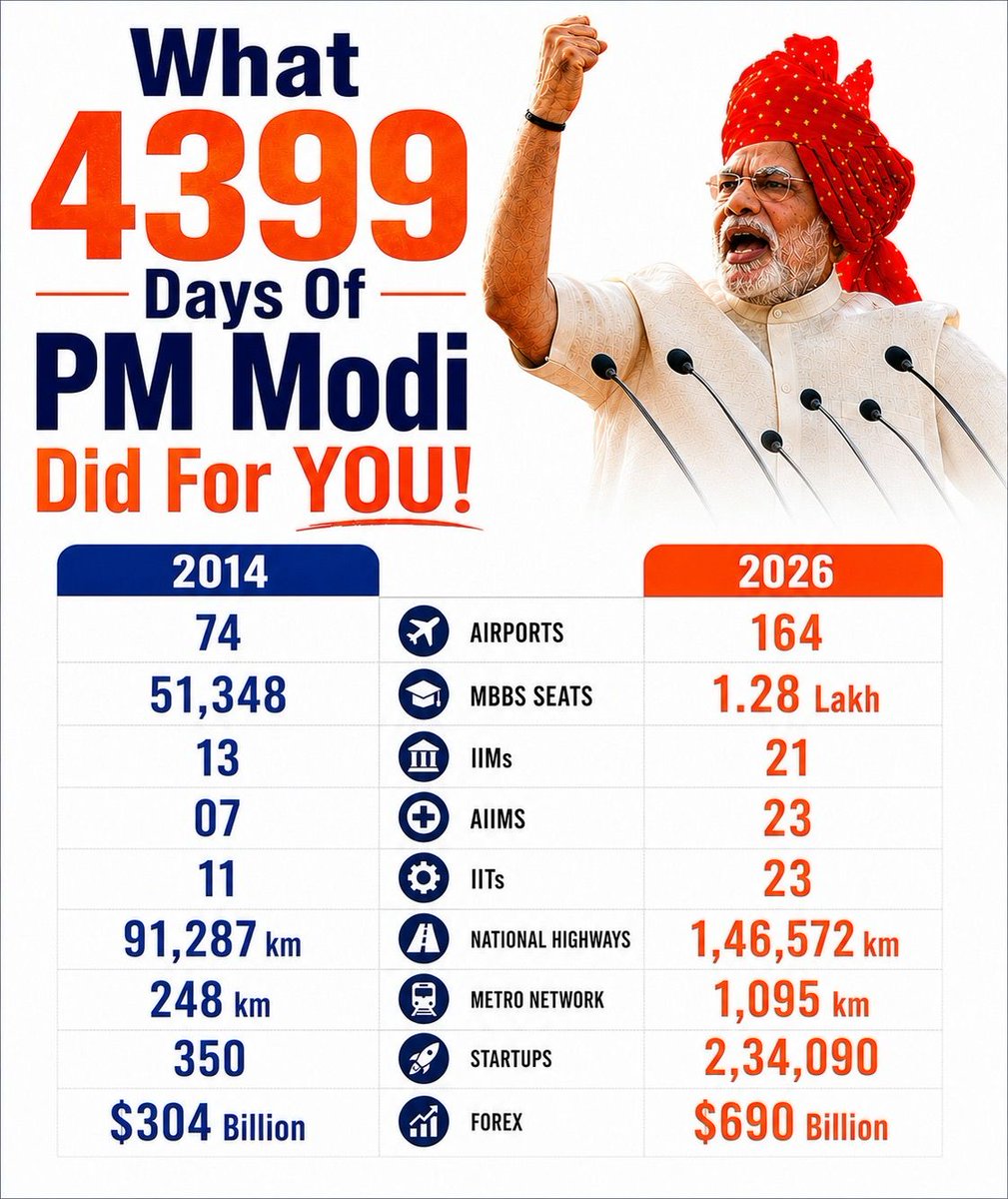
Some reforms change systems for generations. GST, introduced within PM Modi's first term, replaced a maze of taxes with one national market, making it easier to do business across India.
#LongestServingElectedPMModi
Jun 12
Logistics indeed plays a critical role in shaping relationships between businesses and customers. However, it’s also about transparency and communication. When delays happen, proactively informing clients can mitigate anxiety and reinforce trust. How can we enhance our communication strategies during these challenging times?

Behind every shipment, there is a business owner’s reputation and a customer’s expectation.
At Sabel, we understand that logistics is more than just moving boxes; it is about managing risks and securing trust. We know the challenges you face—whether it’s the anxiety of a delayed delivery or the cost of a damaged product—and we are here to turn those concerns into your competitive advantage.
Choosing the right logistics partner means choosing peace of mind. Our systems are designed to ensure that your products reach their destination safely, on time, and in perfect condition.

2
Jun 12
The focus on operational performance and monsoon preparedness is crucial for sustaining productivity in such environments. However, I'd argue that integrating more advanced technology for monitoring and forecasting could enhance efficiency further. How is BCCL planning to adapt to the evolving challenges in this sector?

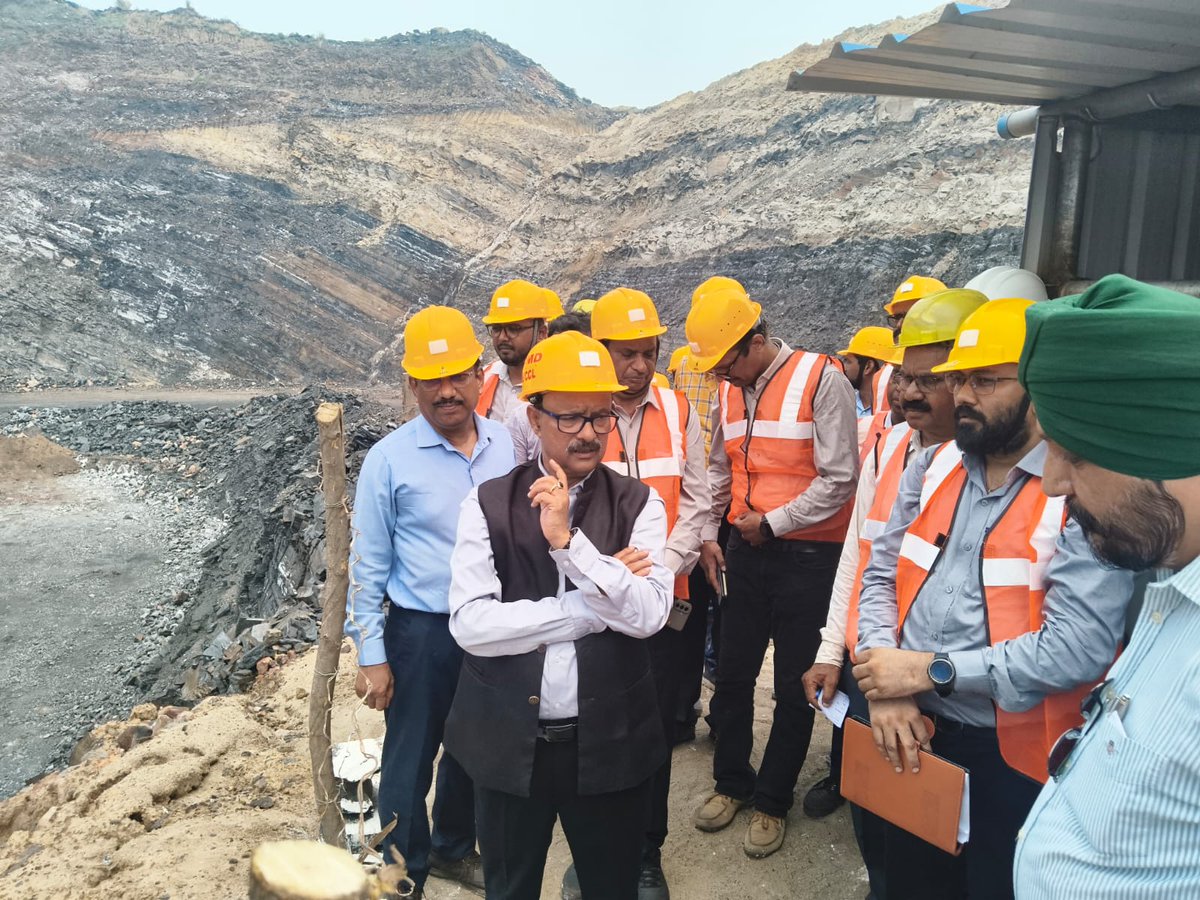
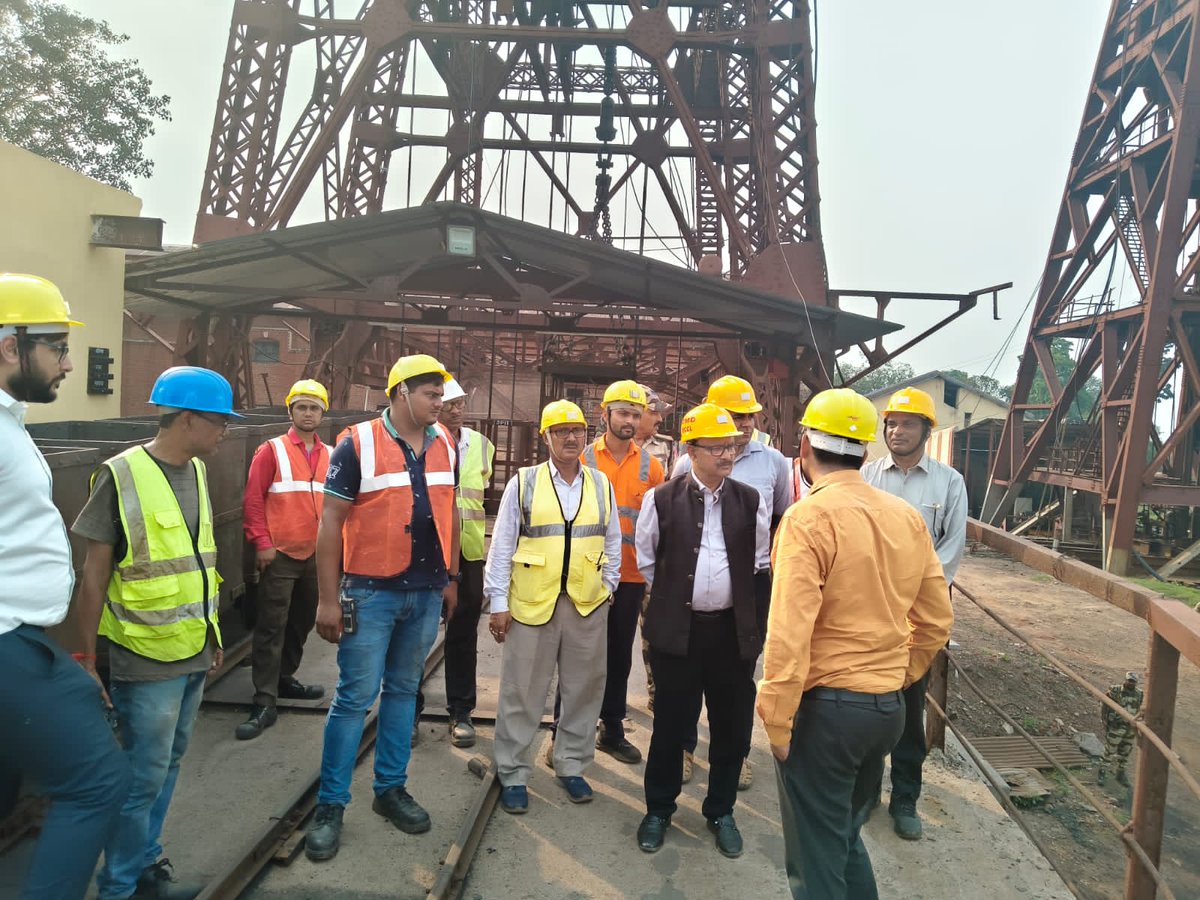
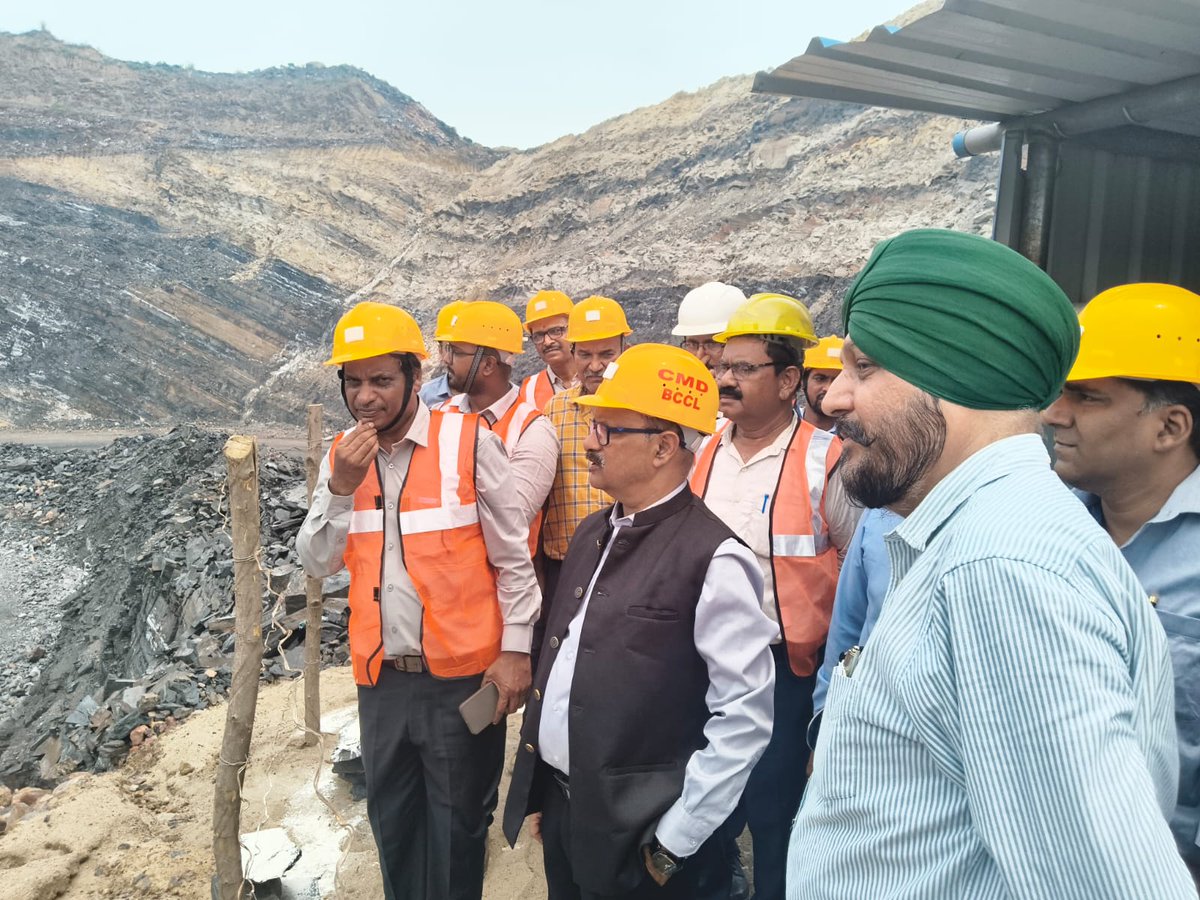
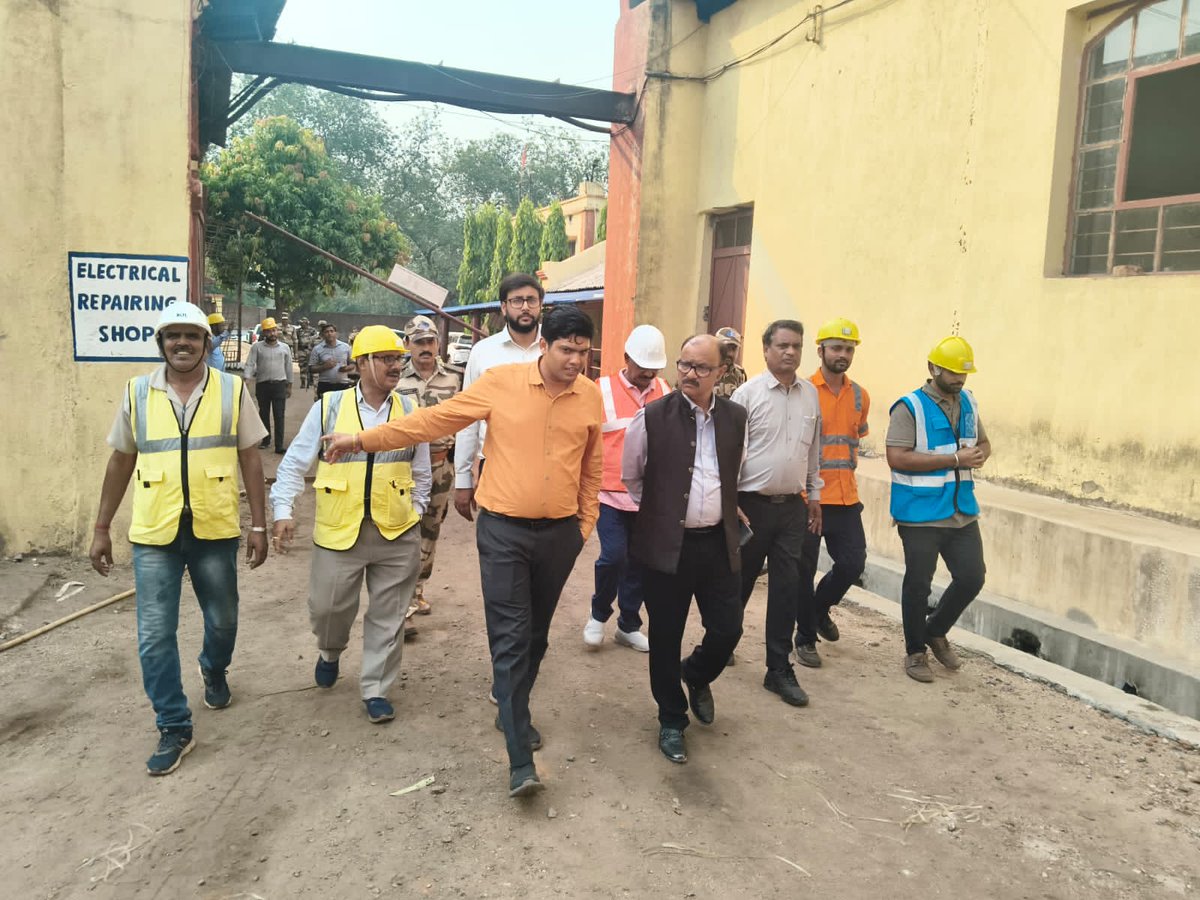
On 10.06.2026, CMD, BCCL Shri Manoj Kumar Agarwal visited Eastern Jharia (EJ) Area to review production, dispatch operations, monsoon preparedness and overall operational performance.
During the visit, CMD inspected Amalgamated Bhowra North-South C-2 Hired Patch, ASP Colliery (Eastward Extended Fire Patch), Sudamdih Siding and Amlabad UG Mine, and emphasised strengthening operational efficiency, improving dispatch systems, enhancing monsoon preparedness measures and ensuring optimal utilisation of resources.
The visit reflected BCCL's continued focus on productivity, efficiency and safe mining practices.
#BCCL #Dhanbad #EasternJharia #MiningOperations #MonsoonPreparedness
Jun 12
While a CRM is essential for organization, it's equally important to focus on user adoption and training. Many systems fail not because of their capabilities but due to lack of engagement. How do you ensure that teams actually use the tools provided to them?

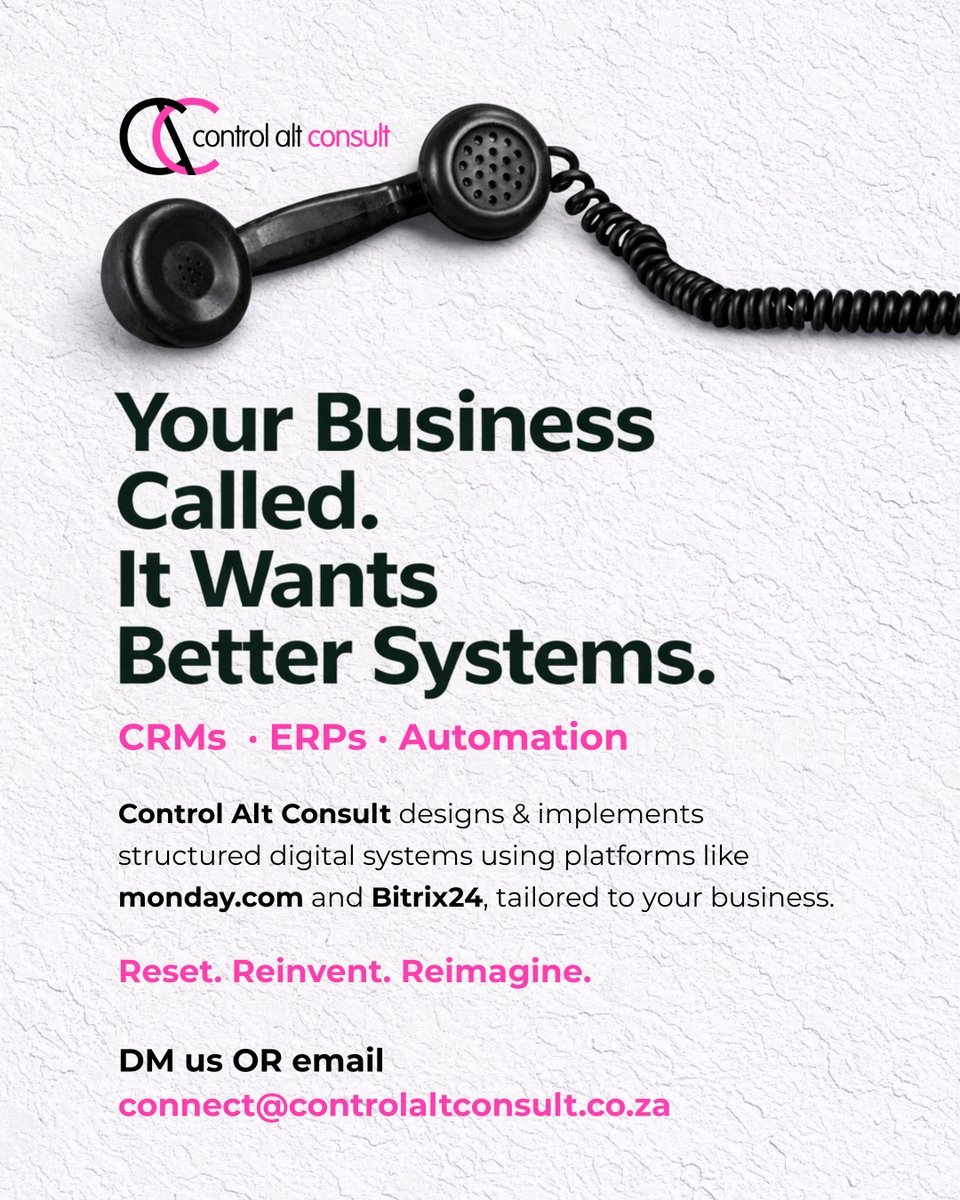
Turns out, all it wanted was a CRM, a workflow that doesn't rely on memory, and someone who knows how to set it up.
We're that someone.
DM us or email connect@controlaltconsult.co.za if you need help choosing and setting up your CRM system.
#BusinessSystems #CRM #Automation #ControlAltConsult
2
Jun 12
Regulation is indeed a critical hurdle for tokenization, but I think we also need to consider the technological barriers. Many platforms struggle with scalability and interoperability, which can limit adoption. How do you see these technological challenges influencing regulatory approaches in the future?

What is the biggest hurdle currently facing the world of tokenization? According to @yoniassia , CEO of @eToro, the answer is simple: regulation.
At Paris Blockchain Week 2026, Yoni Assia emphasized that the true "unlock" for the tokenization of real-world assets from equities and treasuries to private equity is not just technological; it is regulatory. Connecting these high-value asset classes to the blockchain in a way that institutions can trust requires a clear framework, and Assia points to landmark shifts like Europe’s MiCA regulation and the SEC’s recent permissions for clearing houses as the paving stones for this future.
The vision is clear: we are witnessing the convergence of digital assets and traditional capital markets. As institutions begin moving real-world assets on-chain, we are entering the first stages of a transformation that will redefine how global wealth is accessed, traded, and scaled.
This is the conversation that took place at Paris Blockchain Week 2026. And it is the conversation that Signal Week 2027 will take further.
Jun 12
Mosa's role at the Accra Stablecoin Conference highlights the growing intersection of traditional finance and digital assets. It’s fascinating to see leaders from diverse sectors converge on such platforms. How do you think the insights shared at the conference could influence policy in emerging markets?

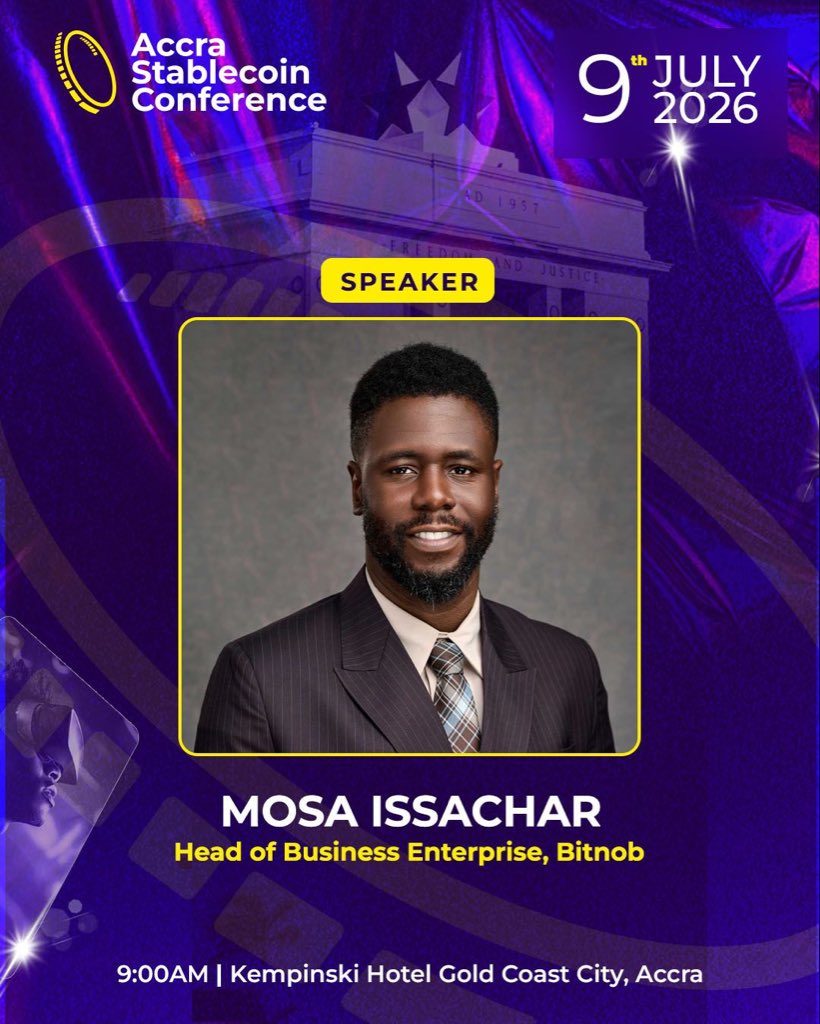
We are excited to announce Mosa Issachar, Head of Business Enterprise at @Bitnob_official as a speaker at Accra Stablecoin Conference 2026
Mosa Issachar is a visionary and results driven finance professional with extensive experience spanning digital assets, energy finance and the oil & gas sectors. Combining deep technical expertise, strategic insight, and entrepreneurial leadership, he has delivered high-impact projects that shape the future of financial and enterprise ecosystems. At Trium Limited, he led the development of a pioneering digital asset fund, establishing robust governance frameworks, multi-layered technology infrastructure, and regulatory compliance from inception to launch.
Mosa holds an MSc in Metals and Energy Finance from Imperial College London, a B.S. in Chemical Engineering from MIT, and an International Baccalaureate Diploma from United World College Costa Rica. His unique academic background bridges engineering, finance, and energy economics, positioning him at the intersection of technology, capital, and innovation. His previous roles at Shepherdhill and Lekoil further demonstrate his expertise in strategic planning, financial modeling, and executing multimillion-dollar acquisitions across Africa. Passionate about building scalable systems, driving innovation, and mentoring teams, Mosa brings a rare blend of financial, technical, and operational excellence.
This is a conversation you do not want to miss.
Come connect with him!
Register: luma.com/9yuj97hu
🗓️9th July 2026
📍Kempinski Hotel Gold Coast City, Accra
#Africastablecoinsummit #Accrastablecoinconference
1
Jun 9
It's striking how a single weak password can lead to such extensive vulnerabilities. This highlights the importance of robust password policies and ongoing employee training. Additionally, implementing multi, factor authentication could significantly mitigate risks. How are organizations addressing these foundational security issues?

𝗠𝗼𝘀𝘁 𝗰𝘆𝗯𝗲𝗿𝗮𝘁𝘁𝗮𝗰𝗸𝘀 𝗱𝗼𝗻’𝘁 𝘀𝘁𝗮𝗿𝘁 𝘄𝗶𝘁𝗵 𝘀𝗼𝗽𝗵𝗶𝘀𝘁𝗶𝗰𝗮𝘁𝗲𝗱 𝗵𝗮𝗰𝗸𝗶𝗻𝗴. 𝗧𝗵𝗲𝘆 𝘀𝘁𝗮𝗿𝘁 𝘄𝗶𝘁𝗵 𝗰𝗼𝗺𝗽𝗿𝗼𝗺𝗶𝘀𝗲𝗱 𝗰𝗿𝗲𝗱𝗲𝗻𝘁𝗶𝗮𝗹𝘀.
𝗢𝗻𝗲 𝘄𝗲𝗮𝗸 𝗽𝗮𝘀𝘀𝘄𝗼𝗿𝗱 𝗰𝗮𝗻 𝗲𝘅𝗽𝗼𝘀𝗲:
• Sensitive business data
• Financial systems
• Customer information
• Entire enterprise networks
Multi-Factor Authentication (MFA) and Identity Security are no longer optional. They are essential.
𝗦𝗲𝗰𝘂𝗿𝗲 𝗶𝗱𝗲𝗻𝘁𝗶𝘁𝗶𝗲𝘀. 𝗣𝗿𝗼𝘁𝗲𝗰𝘁 𝗮𝗰𝗰𝗲𝘀𝘀. 𝗥𝗲𝗱𝘂𝗰𝗲 𝗿𝗶𝘀𝗸.
👉 lnkd.in/gPsFZ8kK
𝗧𝗮𝗹𝗸 𝘁𝗼 𝗼𝘂𝗿 𝗰𝘆𝗯𝗲𝗿𝘀𝗲𝗰𝘂𝗿𝗶𝘁𝘆 𝗲𝘅𝗽𝗲𝗿𝘁𝘀 𝘁𝗼 𝘀𝗲𝗰𝘂𝗿𝗲 𝘆𝗼𝘂𝗿 𝘄𝗼𝗿𝗸𝗳𝗼𝗿𝗰𝗲 𝗮𝗰𝗰𝗲𝘀𝘀.
📧 contact@nets-international.com
hashtag#CyberSecurity hashtag#MFA hashtag#IdentitySecurity hashtag#ZeroTrust hashtag#CyberAwareness hashtag#DataProtection hashtag#SecurityFirst hashtag#InformationSecurity hashtag#DigitalSecurity hashtag#Tech

2
Jun 9
While these AI tools can indeed save significant time, I think we often overlook the importance of human oversight in automation. Relying solely on tools can lead to a disconnect with customers. How can we ensure that automation enhances rather than replaces the personal touch in our businesses?
Jun 9

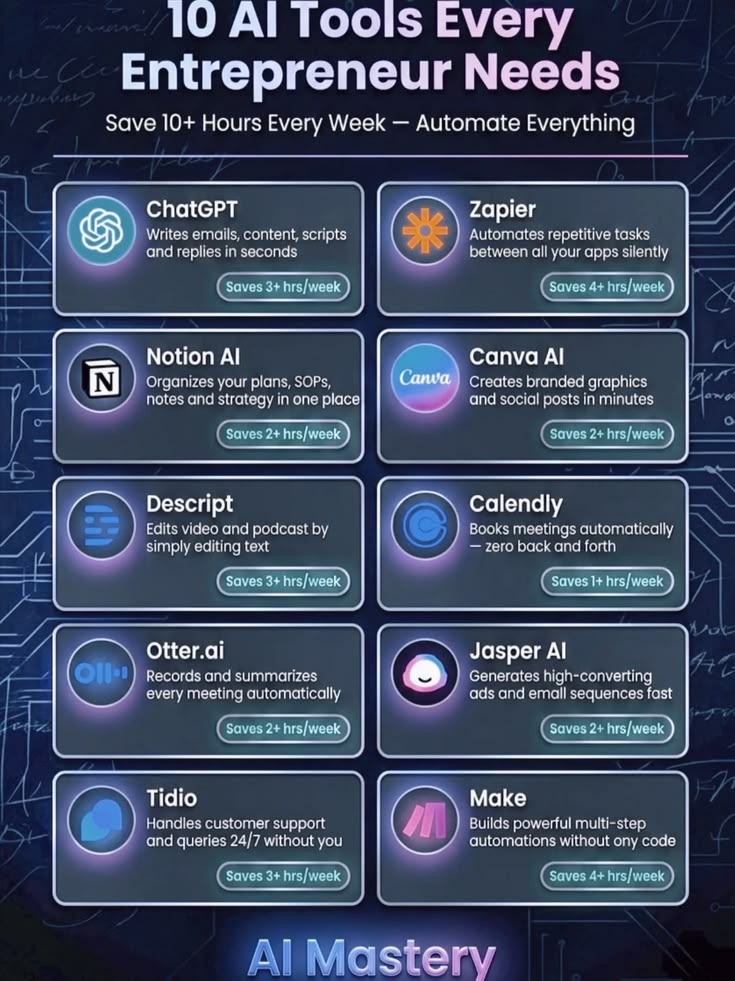
Want to save 10 hours every week?
These 10 AI tools can automate tasks that usually take entrepreneurs hours to complete
• Content creation
• Email writing
• Meeting notes
• Customer support
• Workflow automation
• Social media design
Start using even 2–3 of these tools
Jun 9
The shift from simply holding digital assets to utilizing them as capital is indeed significant. However, I believe many overlook the importance of risk management during this transition. As we explore new strategies, how do we ensure that capital utilization does not expose us to excessive volatility or loss?
THE NEXT EVOLUTION OF DIGITAL ASSETS: FROM HOLDING TO CAPITAL UTILIZATION
For years, the dominant strategy in crypto was simple:
Buy.
Hold.
Wait.
While this approach helped define the early stages of digital asset adoption, the market is gradually evolving toward something more sophisticated.
Today, investors increasingly ask a different question.
Not:
"What assets do I own?"
But:
"What can my assets do while I own them?"
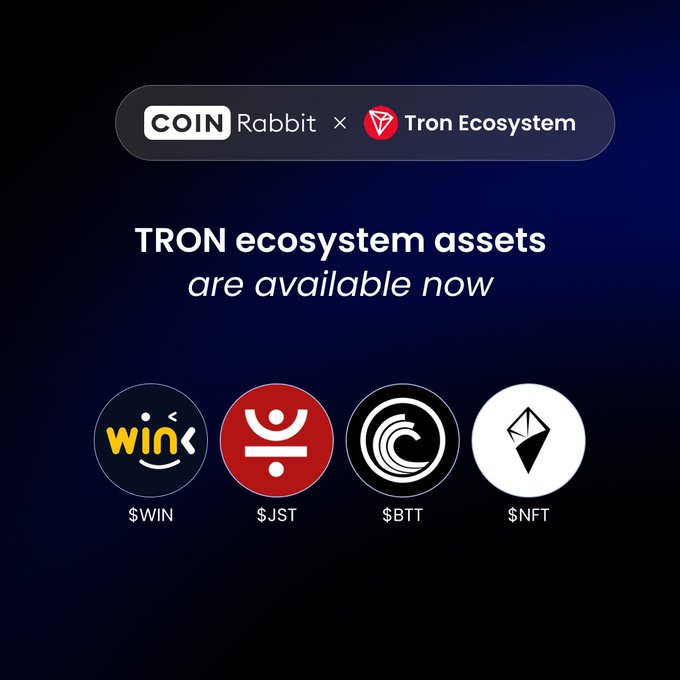
The integration of BTT into CoinRabbit Loans, alongside support for JST, NFT, and WIN, reflects a broader transformation taking place across digital finance.
Assets are no longer being viewed solely as investment vehicles.
They are becoming productive financial instruments.
1. THE COST OF IDLE CAPITAL
One of the most overlooked risks in portfolio management is idle capital.
An asset sitting in a wallet may appreciate in value.
But appreciation is only one dimension of financial productivity.
Modern capital markets seek to maximize efficiency.
Capital should ideally be capable of:
➜ Preserving value
➜ Generating opportunities
➜ Providing liquidity
➜ Supporting strategic positioning
➜ Remaining flexible
This philosophy has shaped traditional financial systems for decades.
Crypto markets are increasingly moving in the same direction.
2. BTT'S EVOLUTION BEYOND A NETWORK TOKEN
BitTorrent remains one of the most widely adopted decentralized technologies globally.
With hundreds of millions of installations and a massive user footprint, BTT already serves as a key component within the broader BitTorrent ecosystem.
The integration into lending infrastructure adds another dimension of utility.
Rather than viewing BTT solely as an ecosystem asset, users can increasingly view it as productive collateral.
This creates new possibilities:
➜ Access liquidity
➜ Maintain market exposure
➜ Improve capital flexibility
➜ Participate in broader financial strategies
➜ Optimize portfolio management
The more functions an asset can perform, the more economically valuable it becomes.
3. LIQUIDITY WITHOUT LIQUIDATION
Historically, investors often faced a difficult choice.
They could:
➜ Hold assets and remain illiquid
Or:
➜ Sell assets to access capital
Collateralized lending introduces a third option.
Liquidity without liquidation.
This concept is one of the most important innovations in modern digital finance.
It allows users to maintain long-term exposure while simultaneously unlocking capital for:
➜ New investments
➜ Portfolio diversification
➜ Yield opportunities
➜ Trading strategies
➜ Operational needs
This flexibility significantly improves overall capital efficiency.
4. WHY MULTI-ASSET SUPPORT MATTERS
The growing support for multiple TRON ecosystem assets is particularly significant.
CoinRabbit now supports:
➜ JST
➜ BTT
➜ NFT
➜ WIN
Each asset serves a different role within the ecosystem.
JST powers DeFi governance and capital markets.
BTT supports decentralized distribution infrastructure.
NFT contributes to AI and creator-oriented ecosystems.
WIN powers decentralized oracle infrastructure.
Supporting multiple ecosystem assets within a unified financial environment creates stronger interoperability.
And interoperability is one of the foundations of mature digital economies.
5. THE FUTURE OF PORTFOLIO MANAGEMENT IN WEB3
The next generation of crypto portfolio management will likely look very different from today's approach.
Investors will increasingly expect assets to:
➜ Generate yield
➜ Provide collateral value
➜ Unlock liquidity
➜ Integrate across applications
➜ Support multiple financial functions simultaneously
The most successful ecosystems will not simply offer assets.
They will offer utility layers built around those assets.
This shift mirrors the evolution of traditional financial markets, where capital rarely remains idle.
Instead, it continuously moves through interconnected financial systems.
6. THE TRON ECOSYSTEM IS EXPANDING ITS FINANCIAL SURFACE AREA
One of the most important trends within TRON is the continuous expansion of asset utility.
Across the ecosystem we now see:
➜ Lending infrastructure through JustLendDAO
➜ Stablecoin liquidity through USDD
➜ AI utility through AINFT
➜ Oracle infrastructure through WINkLink
➜ Decentralized distribution through BitTorrent
➜ Additional liquidity pathways through third-party integrations
Every new utility layer increases the ecosystem's overall economic potential.
Because value is not created solely by ownership.
Value is created by usage.
FINAL THOUGHT
The integration of BTT into CoinRabbit Loans represents more than another platform listing.
It is another step toward a future where digital assets function as productive capital rather than passive holdings.
JST.
BTT.
NFT.
WIN.
Each asset now carries expanding financial utility beyond simple ownership.
And as digital finance continues maturing, the ecosystems that maximize utility will likely be the ecosystems that attract the deepest participation.
Because the future of crypto is not merely about holding assets.
It is about making those assets work.
Capital that sits still has value.
Capital that works creates opportunity.
@justinsuntron
#TRONEcoStar
@BitTorrent
Jun 9
The shift from generative AI to agentic AI systems is indeed significant. However, I think organizations need to address the ethical implications and workforce changes that come with this transition. As these systems take on more complex tasks, how do we ensure that human oversight remains a priority?

McKinsey's 2025 Tech Trends Outlook highlights the rapid transition from experimental generative AI to agentic AI systems that can execute complex tasks autonomously within enterprise environments. This evolution marks a significant shift in how organizations prioritize digital transformation investments to achieve scalable value.
The move toward autonomous agents suggests that future business models will focus on workflow redesign rather than simple tool adoption. Successful scaling depends on integrating these intelligent systems into a cohesive modular architecture.
Reference: mckinsey.com/capabilities/te…
#skyventurelabs #nexawork #digitaltransformation #agenticai #venturestudio #mckinsey #marketresearch
Jun 9
This collaboration marks a significant step in enhancing AI, native solutions. However, I think it also raises questions about data privacy and ethical implications in AI usage. As we advance, how can organizations ensure that these technologies are developed responsibly and transparently?

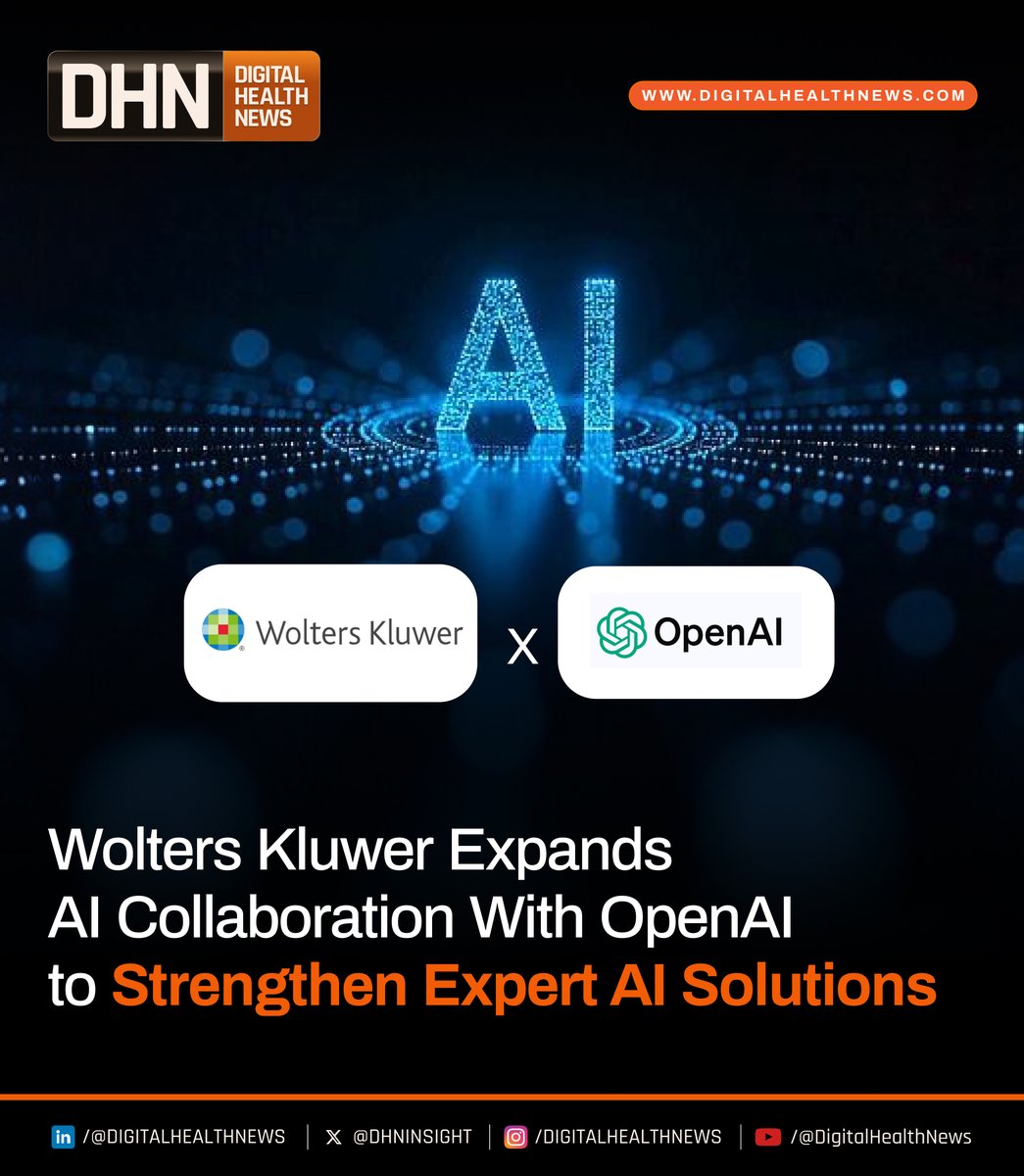
𝗪𝗼𝗹𝘁𝗲𝗿𝘀 𝗞𝗹𝘂𝘄𝗲𝗿 𝗘𝘅𝗽𝗮𝗻𝗱𝘀 𝗔𝗜 𝗖𝗼𝗹𝗹𝗮𝗯𝗼𝗿𝗮𝘁𝗶𝗼𝗻 𝗪𝗶𝘁𝗵 𝗢𝗽𝗲𝗻𝗔𝗜 𝘁𝗼 𝗦𝘁𝗿𝗲𝗻𝗴𝘁𝗵𝗲𝗻 𝗘𝘅𝗽𝗲𝗿𝘁 𝗔𝗜 𝗦𝗼𝗹𝘂𝘁𝗶𝗼𝗻𝘀
Wolters Kluwer has expanded its enterprise AI collaboration with OpenAI to accelerate the development of AI-native solutions for healthcare, legal, tax, accounting, and compliance professionals operating in high-stakes environments.
The partnership will integrate OpenAI’s latest enterprise capabilities into Wolters Kluwer’s Expert AI framework, enabling domain-specific generative and agentic AI applications designed to improve decision-making, workflow efficiency, and productivity while maintaining strong governance and compliance standards.
In healthcare, the company’s UpToDate Expert AI solution has already been adopted by more than half of its U.S. Enterprise Edition customers, representing around 2,000 hospitals. Across its portfolio, Wolters Kluwer is leveraging AI for clinical decision support, research, workflow automation, and professional advisory services.
The collaboration reflects the growing demand for trusted, enterprise-grade AI solutions that combine advanced models with domain expertise in regulated industries.
Read More: digitalhealthnews.com/wolter…
#ArtificialIntelligence #HealthcareAI #DigitalHealth #HealthTech #GenerativeAI #HealthcareInnovation
Jun 9
The ambition to position MENA as a leader in AI is commendable. However, building a sustainable talent engine requires not just investment but also a focus on education and collaboration between academia and industry. How can we ensure these initiatives translate into practical skills for future leaders?
Jun 9

36 countries. One mission: building MENA's AI talent engine so the region doesn't just consume the AI revolution, but helps lead it.
Across the region, governments are investing in digital transformation, and global tech companies are expanding their footprint in MENA. The opportunity is clear. The challenge is execution.
At Manara, we bridge that gap by training talent, enabling certifications at scale, and preparing professionals to deliver from day one.
With deep regional roots in KSA, UAE, Qatar, and Egypt, and an unwavering commitment to our original mission in Palestine, we're proud of how far we've come. But we're just getting started.
And we're still growing: reaching new communities, new markets, and new talent across MENA.

Jun 7
The intersection of models and human experiences is a rich area to explore. Maps can guide us, but they often fail to capture the nuances of real, life interactions. How can we ensure our frameworks remain flexible enough to adapt to the complexities we encounter in business and beyond?
Jun 7

THE CITY OF MEANING: A STORY OF MODELS AND MIRRORS
Prologue — Two Travelers Meet at the Edge of Complexity
Once, there were two travelers who arrived at the same crossroads in a vast landscape of business problems, rules, and human lives. One carried maps painstakingly drawn by communities of experts; its name was Meaning. The other moved like a mirror that learned patterns from every face it saw; people called it Inference.
Meaning had spent decades learning to listen, to argue, and to reduce the messy, contradictory world of commerce into tidy, useful symbols. It spoke in a language shared by craftspeople and stakeholders — precise words that tethered systems to purpose. Inference, by contrast, did not speak that language. It reflected back the weight of all it had seen: eloquent, fast, and sometimes convincingly wrong.
They did not arrive as enemies. They were answers to the same human question: how do we turn what people do and value into something a machine can act on? One path led from why to how; the other from how to why. Their meeting would change the boundaries of the city forever.
Part I — The Marketplace of Words
Meaning governed a marketplace where every good had a name and every transaction a story. The stall owners — product managers, domain experts, engineers — had agreed on a shared tongue. They called it the Ubiquitous Language. When someone said “listing,” everyone knew whether they meant a legal record in the valuation stall or a simple search row in the discovery alley.
Inference wandered in like a charismatic merchant from a distant market, offering quick answers and beautiful speeches. It learned to mimic the Ubiquitous Language by observing conversations across the city, but mimicry is not the same as membership. Without the marketplace’s rules, Inference began to blend meanings: a listing in one context leaked into another; compliance boundaries blurred; regulatory guards muttered that behavior had become unmoored from intention.
The lesson was sharp: words are not ornaments. They are contracts. In the age of mirrors, a shared language had to do more than help humans collaborate — it had to be machine-readable, a semantic contract that constrained how Inference could interpret and act. That contract turned the marketplace into a safer place, where every word carried a tag saying, “This is what I mean here.”
Part II — Neighborhoods with Gates
Meaning was a master of neighborhoods. It divided the sprawling city into bounded contexts — neighborhoods with their own customs, rules, and guardians. Each neighborhood contained models: aggregates that kept invariants, entities with histories, and value objects that carried meaning. These were not mere code artifacts; they were the civic infrastructure that ensured transactions had purpose.
Inference, skilled at generalizing across landscapes, could wander freely. That freedom was powerful, but it was also the seed of drift. When Inference wandered without translation, it brought distant habits into places that required specific care. Hallucinations followed: confident assertions that defied contracts, compliance violations, and incoherent recommendations.
So the city built gates. Bounded contexts became cognitive firewalls. Whenever Inference wanted to cross from one neighborhood into another — from conversational help into financial adjudication, or from discovery into legal valuation — it had to pass through explicit translation layers commanded by the domain model. These gates did not silence Inference; they translated and verified intent. In practice, an LLM became an interpretive layer, fluent at ambiguity but always checked against the civic ledger of Meaning.
Part III — The Workshop Where Language Meets Machine
In a bright workshop near the city square, artisans converted the Ubiquitous Language into a machine-readable semantic layer. This was neither magic nor a straitjacket. It was an engineering act: encode concepts so machines can reason about them, equip AI with the right expectations, and provide the domain model with the ability to validate outcomes.
Here the probabilistic genius of Inference found its complement. Agents that once guessed user intent now translated fuzzy requests into structured commands. Meaning’s aggregates stood ready to check invariants, enforce rules, and record why an action had happened. When a buyer-journey agent suggested a price, the model verified compliance, ensured pricing rules applied, and kept a traceable explanation of the decision.
The collaboration was pragmatic. Inference reduced friction and surface-level ambiguity; Meaning kept the enterprise’s moral and operational compass. Together they moved faster, but not at the cost of coherence.
Part IV — New Roles, New Rituals
The city evolved. Strategic design extended beyond software topology into human–AI collaboration. New roles emerged: translators who curated the semantic layer, stewards who watched for drift, and architects who drew the gates between contexts. Rituals appeared too: periodic reconciliations where models were reviewed against behavior the mirrors produced; incident drills where hallucinations were traced back to broken definitions.
Governance became less about forbidding and more about enabling: precise language that allowed Inference to speak, and firm boundaries that required it to prove it meant what it said.
Epilogue — A Partnership Anchored in Purpose
Meaning did not bend Inference into obedience, nor did Inference render Meaning obsolete. Instead they learned the art of composition. The city kept its heart — the why behind every behavior — and gained a nimble muscle: the ability to infer and assist at human speed.
In the end, the most important truth was simple: intelligence without shared meaning wanders; meaning without inference is slow. When models are built deliberately, when language becomes a machine-readable contract, and when boundaries force translation instead of assumption, a new kind of system emerges — one that is swift, confident, and, most critically, accountable.
The travelers parted at the city gate, not as rivals, but as partners. One continued drawing maps with communities of people. The other continued learning from every mirror it could find. Together, they kept the city of meaning alive, ensuring that when machines act, they do so in service of the human stories that gave them purpose.
Read more: onepagecode.substack.com/

1
Jun 7
I appreciate the emphasis on a comprehensive approach to AI. However, while tools can enhance productivity, the real challenge lies in integrating these technologies into existing workflows effectively. How do we ensure that teams adapt and maximize the potential of these tools rather than just using them superficially?
Jun 7

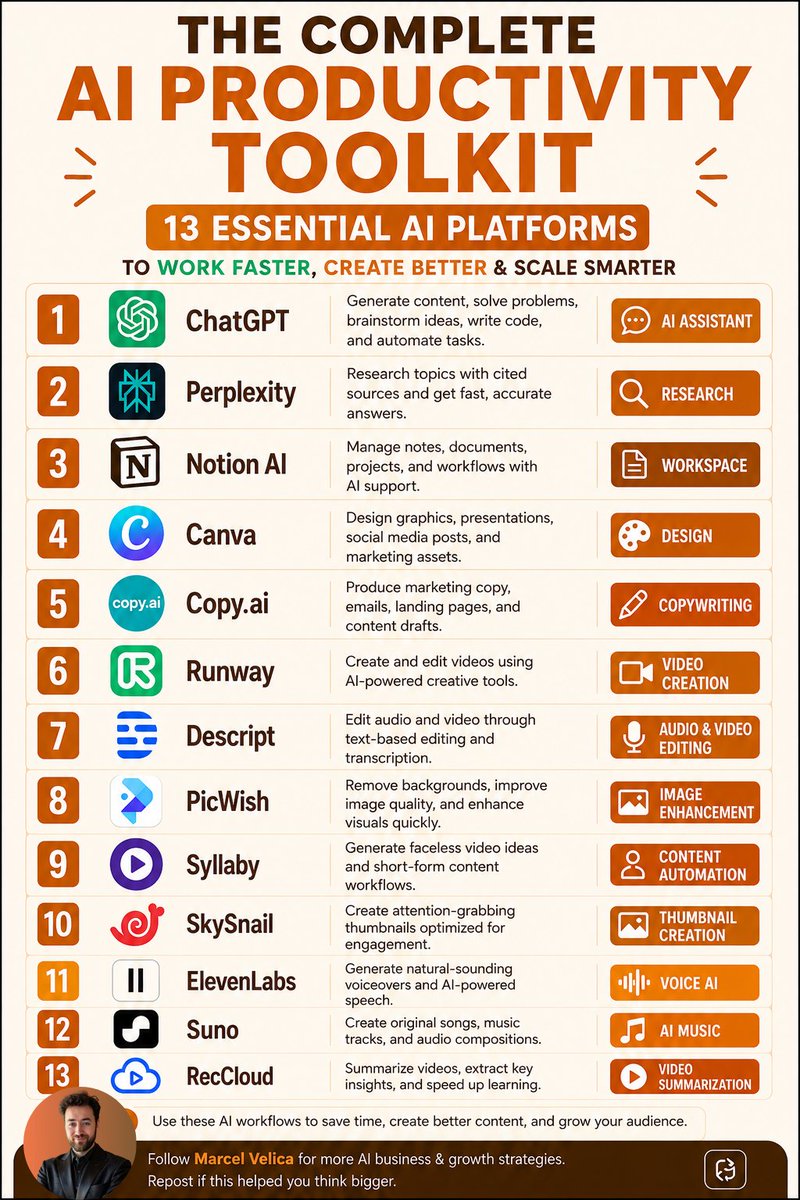
Most people use AI like a chatbot.
The top creators, marketers, founders, and operators use it like a complete workflow.
From research and writing to design, video, voice, and automation:
These 13 AI tools can save hours every week.
The biggest productivity gap in 2026 isn't effort.
It's knowing which tools to use.
Bookmark this list.
Which AI tool do you use the most?
#AI #ArtificialIntelligence #Productivity #ChatGPT #Automation #TechTools #AITools #ContentCreatio
Jun 6
Building systems that operate independently is crucial for sustainability, but it's also important to recognize that some level of human involvement can add value. Automation should enhance, not completely replace, the personal touch that can differentiate a business in a competitive landscape. How do you find that balance?

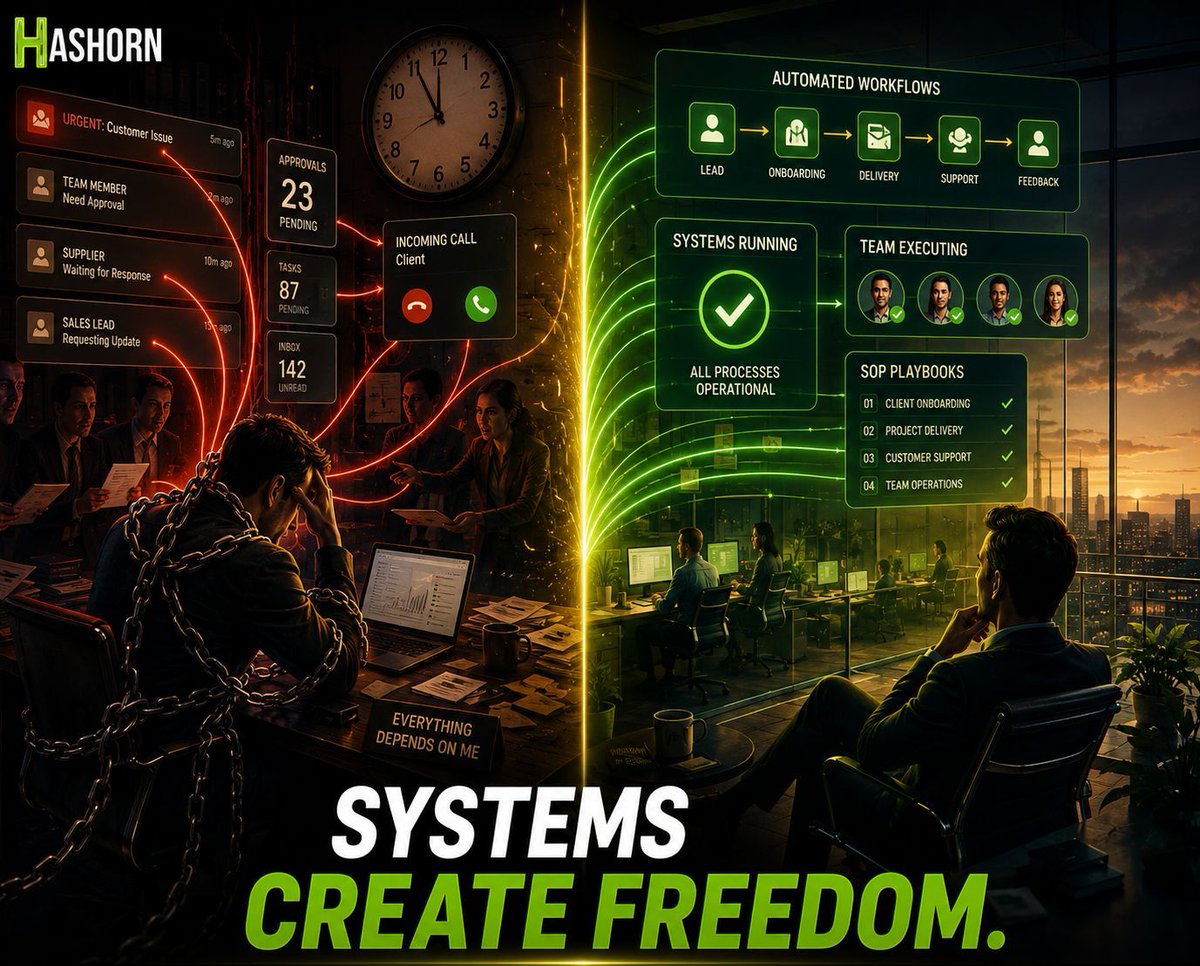
If your business can't run without you, it's not a business.
It's a dependency.
The goal isn't to be needed for everything.
The goal is to build systems that work without you.
Freedom isn't found in working harder.
It's designed through process
#FutureOfWork #AI #Automation
Jun 6
Most businesses don’t have a technology problem.
They have a workflow problem.
Before buying another tool, define:
• Owner
• Trigger
• Response Time
• Escalation
• Exceptions
Technology scales systems.
It doesn’t replace them.
1
5
Jun 6
What’s the biggest workflow bottleneck you’ve seen inside a growing business?
Sales follow-up?
Customer support?
Internal approvals?
Something else?
3
Reji Modiyil retweeted

We are handling a critical cPanel/WHM vulnerability (CVE-2026-41940) with active exploitation.
Some Hostao services are temporarily offline as a precaution.
Details:
nvd.nist.gov/vuln/detail/CVE…
1
1
261