Research Papers in Education is an international peer-reviewed @tandfonline journal aligned to policy and practice in education. Impact Factor = 2.7 (2022).
Joined August 2023
- Tweets 219
- Following 2,282
- Followers 812
- Likes 73
133 Photos and videos
Pinned Tweet

22 Sep 2024
📢📕🚨 REMINDER: JOIN THE TEAM!
We are seeking to recruit two new Associate Editors for the journal - one ongoing and one temporary - starting from January 2025. Revised deadline for expressions of interest: 30th September.
Details available here: think.taylorandfrancis.com/e…
1
3
1,380
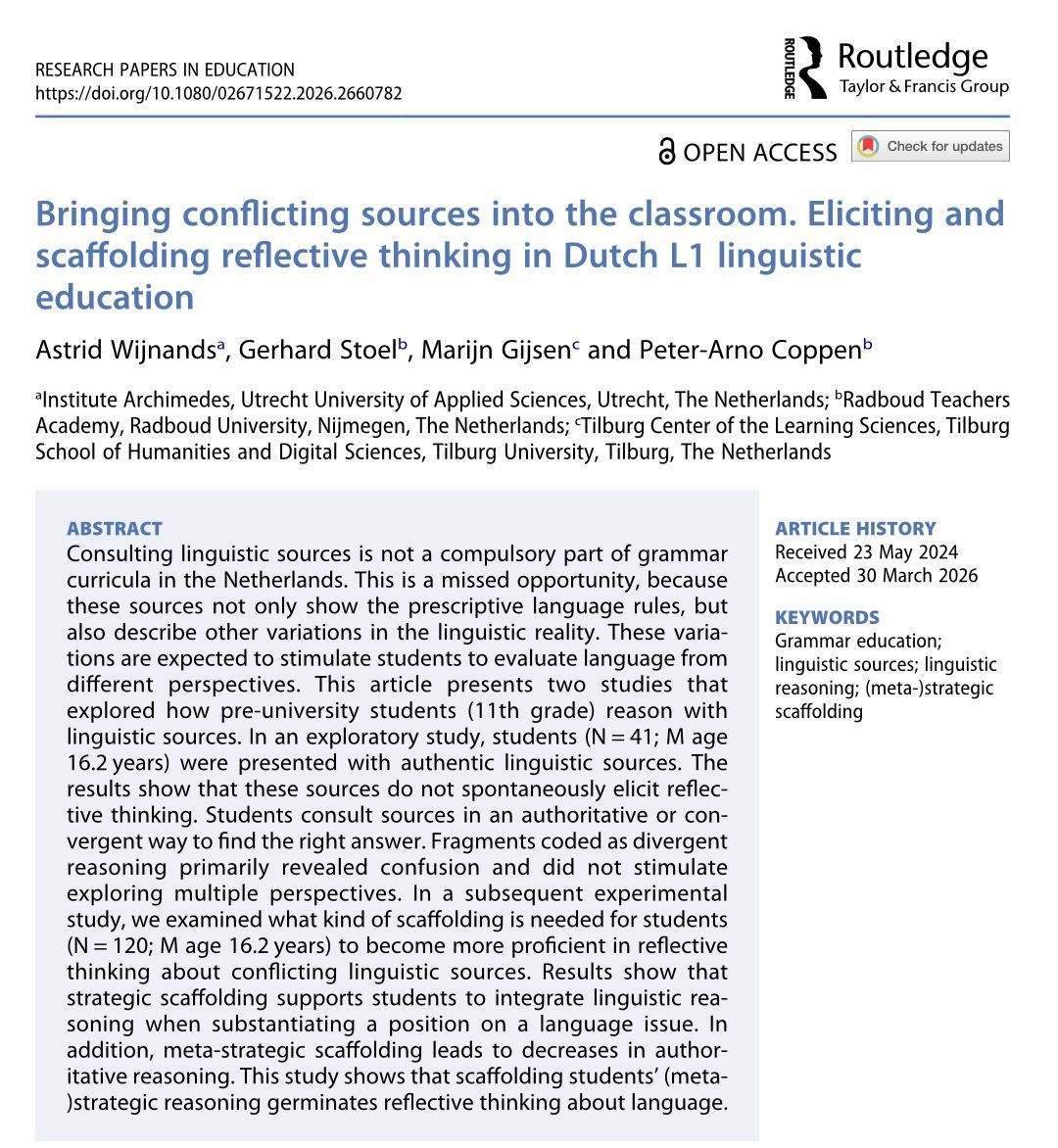
NOW PUBLISHED! 🚨#OPENACCES 🔓
Bringing conflicting sources into the classroom. Eliciting and scaffolding reflective thinking in Dutch L1 linguistic education
Astrid Wijnands, Gerhard Stoel, Marijn Gijsen & Peter-Arno Coppen
buff.ly/7YqAieh
#ResPapersInEduc #L1
38
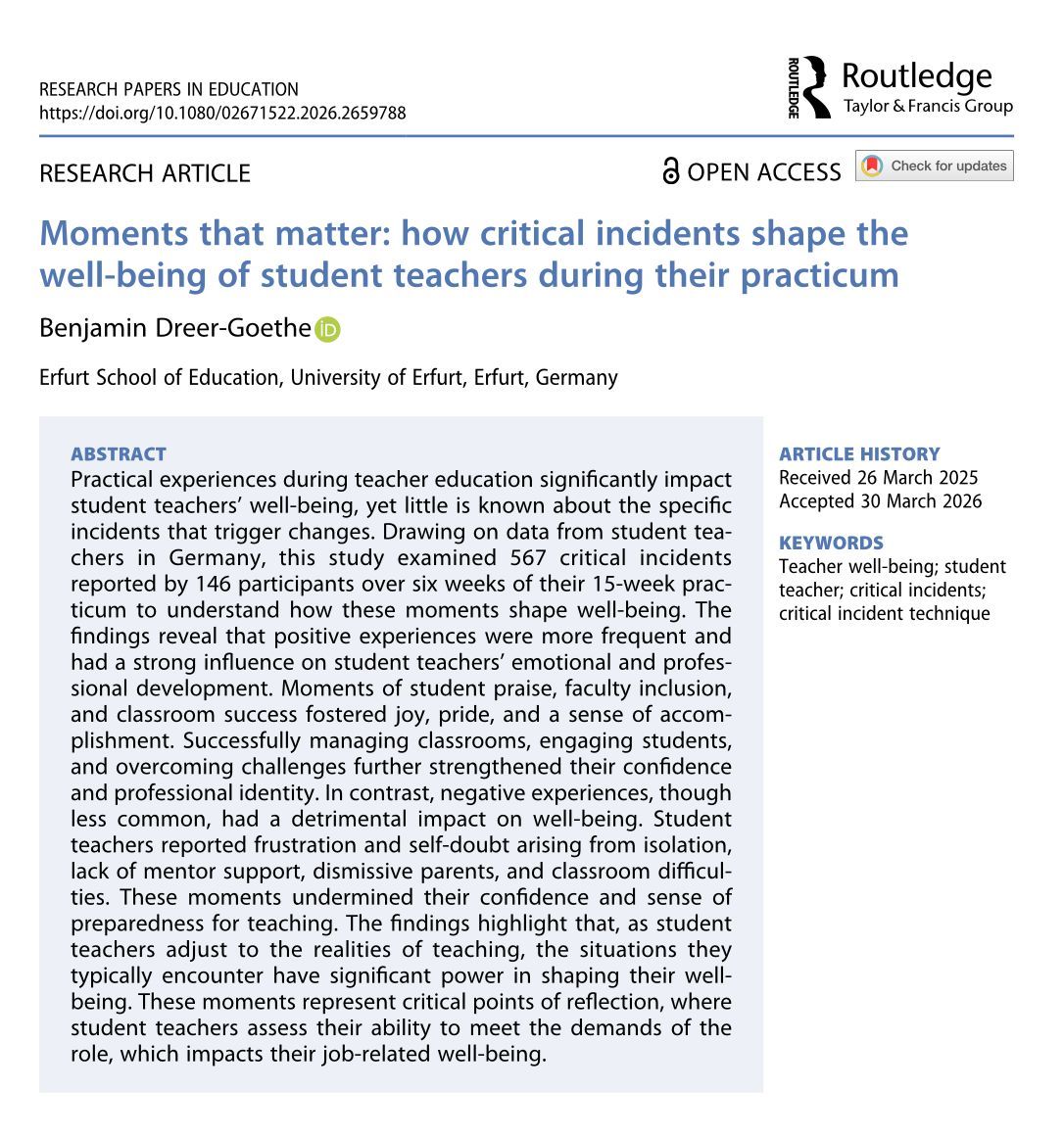
NOW PUBLISHED! 🚨#OPENACCESS
Moments that matter: how critical incidents shape the well-being of student teachers during their practicum
Benjamin Dreer-Goethe
buff.ly/nlUXEFr
#ResPapersInEduc #studentteachers #wellbeing
30
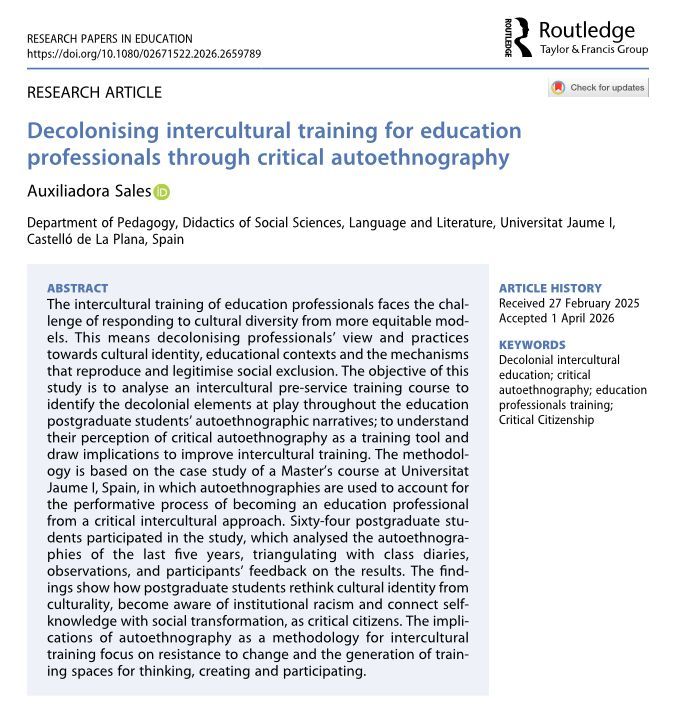
NOW PUBLISHED! 🚨
Decolonising intercultural training for education professionals through critical autoethnography
Auxiliadora Sales
buff.ly/5ubcu6A
#RescPapersInEduc #decolonialisation #intercultural #autoethnography
2
29
NOW PUBLISHED! 🚨
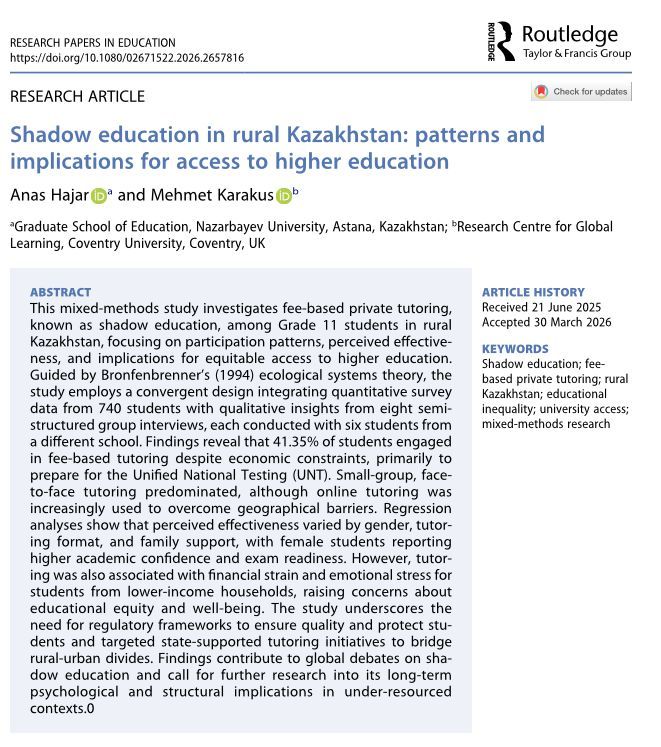
Shadow education in rural Kazakhstan: patterns and implications for access to higher education
Anas Hajar & Mehmet Karakus
buff.ly/5d8KHb4
#RescPapersInEduc #ruraleducation #highereducation
30
NOW PUBLISHED! 🚨
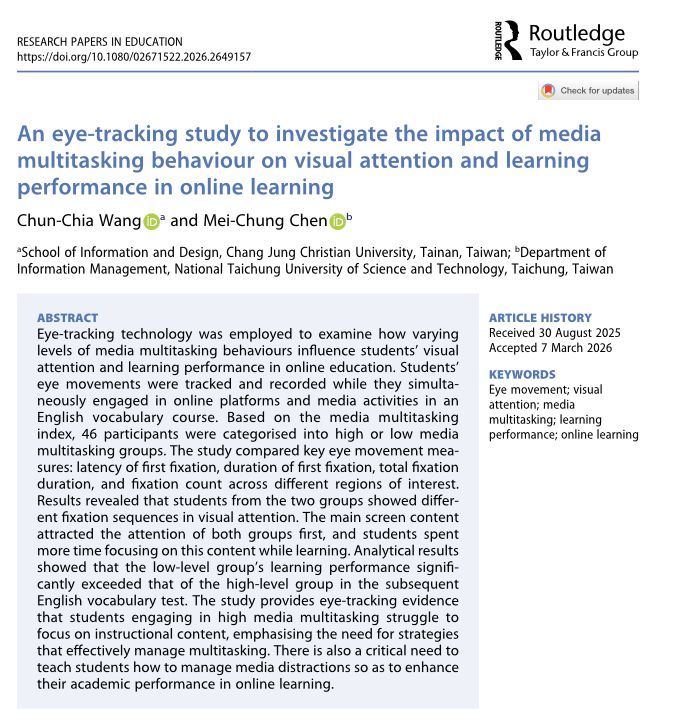
An eye-tracking study to investigate the impact of media multitasking behaviour on visual attention and learning performance in online learning
Chun-Chia Wang & Mei-Chung Chen
buff.ly/66GQYx3
#ResPapersInEduc #onlinelearning #multitasking
1
91
NOW PUBLISHED! 🚨
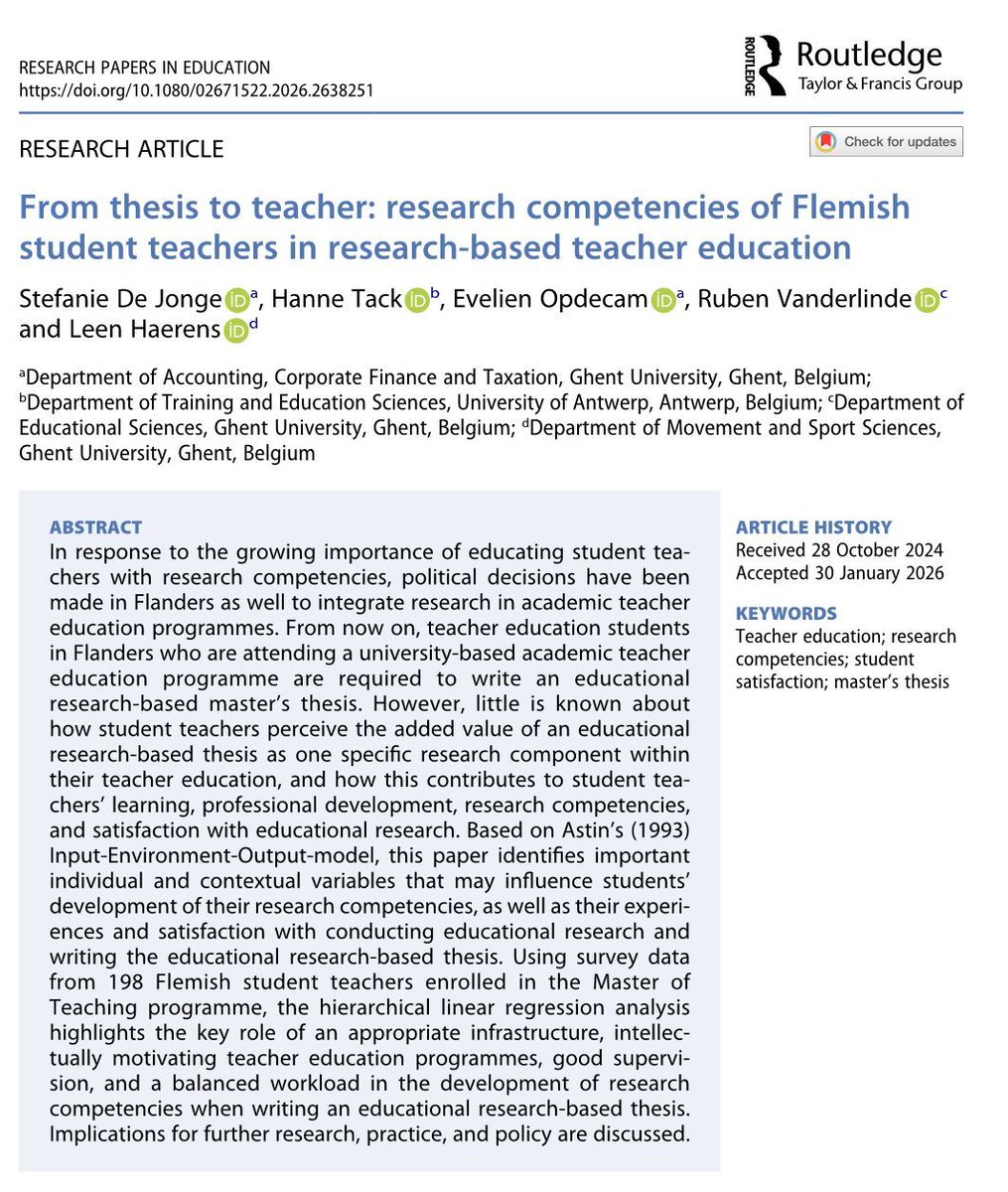
From thesis to teacher: research competencies of Flemish student teachers in research-based teacher education
Stefanie De Jonge, Hanne Tack, Evelien Opdecam, Ruben Vanderlinde & Leen Haerens
buff.ly/OGTsaAV
#ResPapersInEduc #teachered #research
52
NOW PUBLISHED! 🚨 #openaccess
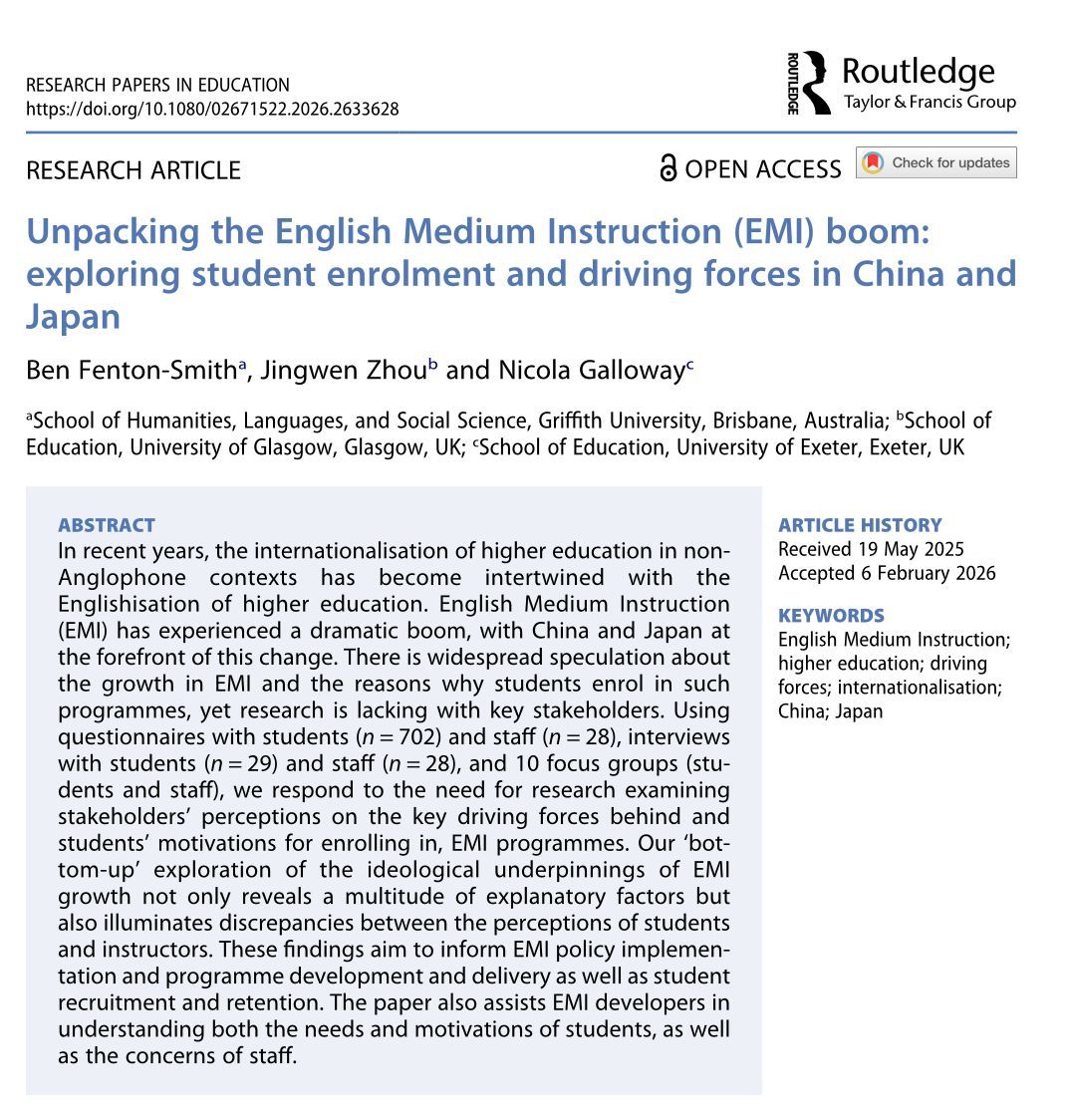
Unpacking the English Medium Instruction (EMI) boom: exploring student enrolment and driving forces in China and Japan
@benjifento, Jingwen Zhou & @DrNicolaG
buff.ly/JtKvImq
#ResPapersInEduc #English #highereducation
58
NOW PUBLISHED! 🚨 #OpenAccess
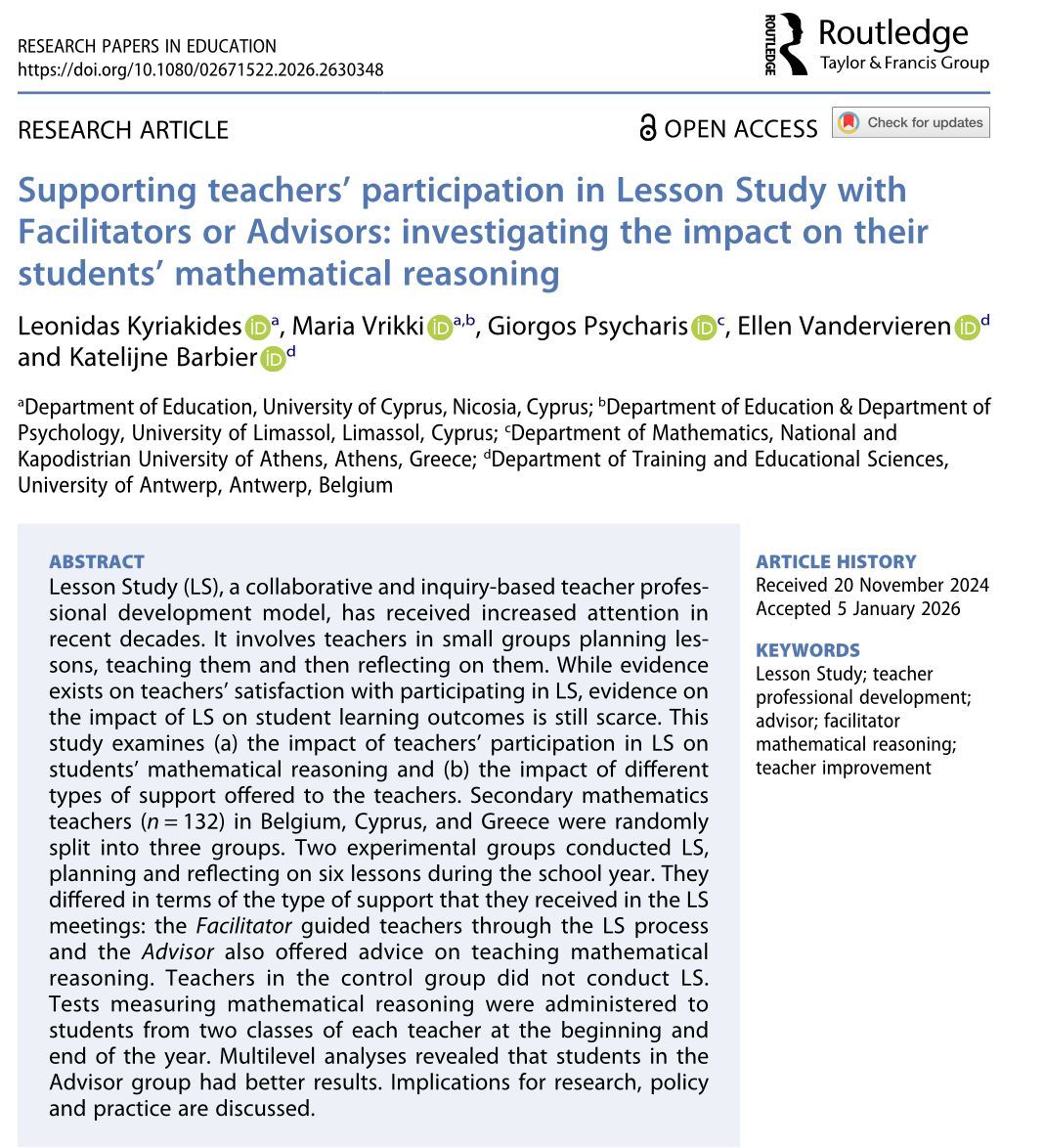
Supporting teachers’ participation in Lesson Study with Facilitators or Advisors
Leonidas Kyriakides, Maria Vrikki, Giorgos Psycharis, Ellen Vandervieren & Katelijne Barbier
buff.ly/fJ6BG7Q
#ResPapersInEduc #lessonstudy
1
58
NOW PUBLISHED! 🚨#openaccess
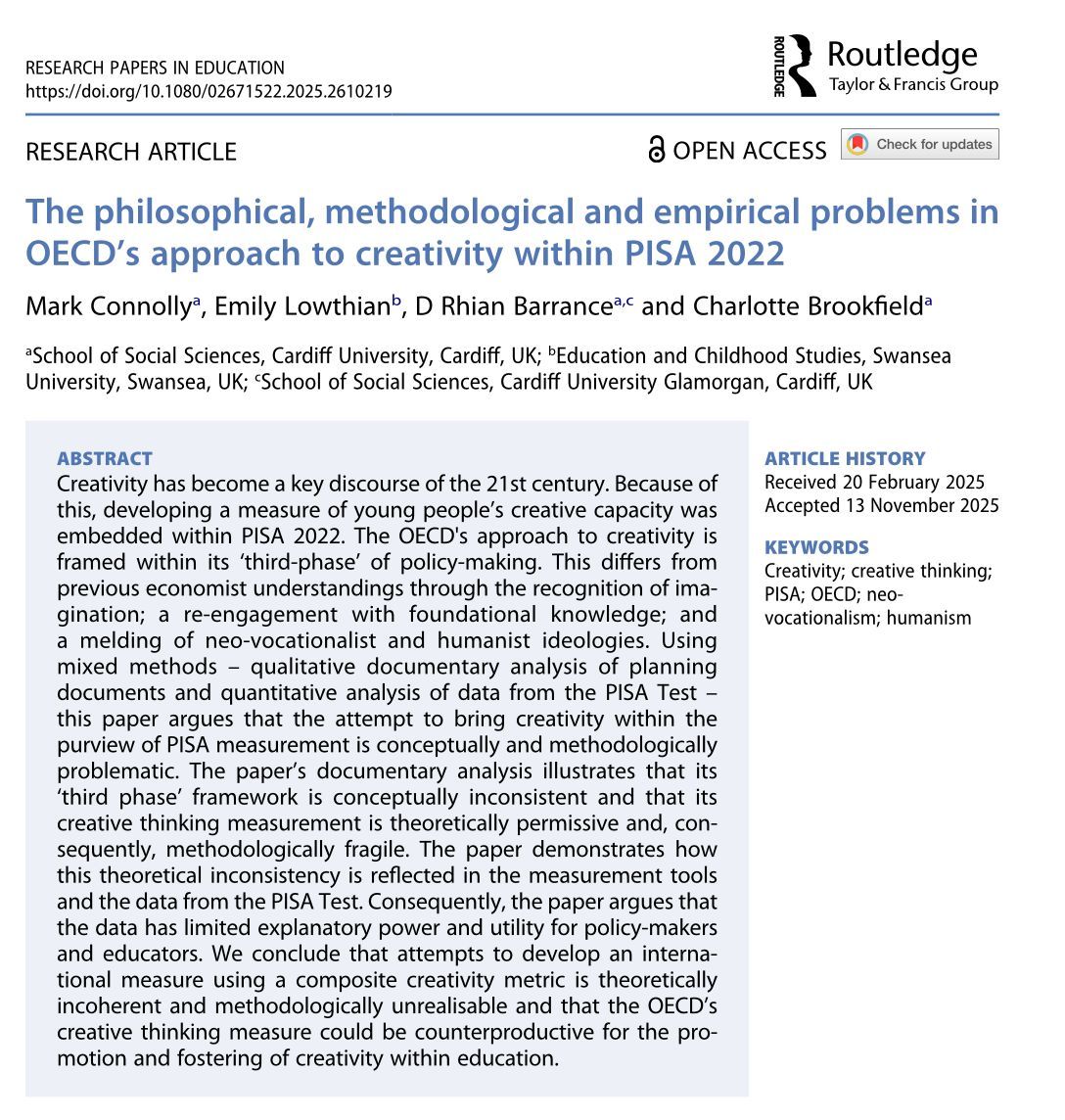
The philosophical, methodological and empirical problems in OECD’s approach to creativity within PISA 2022
Mark Connolly, Emily Lowthian, D Rhian Barrance and Charlotte Brookfield
buff.ly/1FzCkEZ
#ResPapersInEduc #creativity
2
65
Research Papers in Education retweeted
Our most viewed article of 2025?
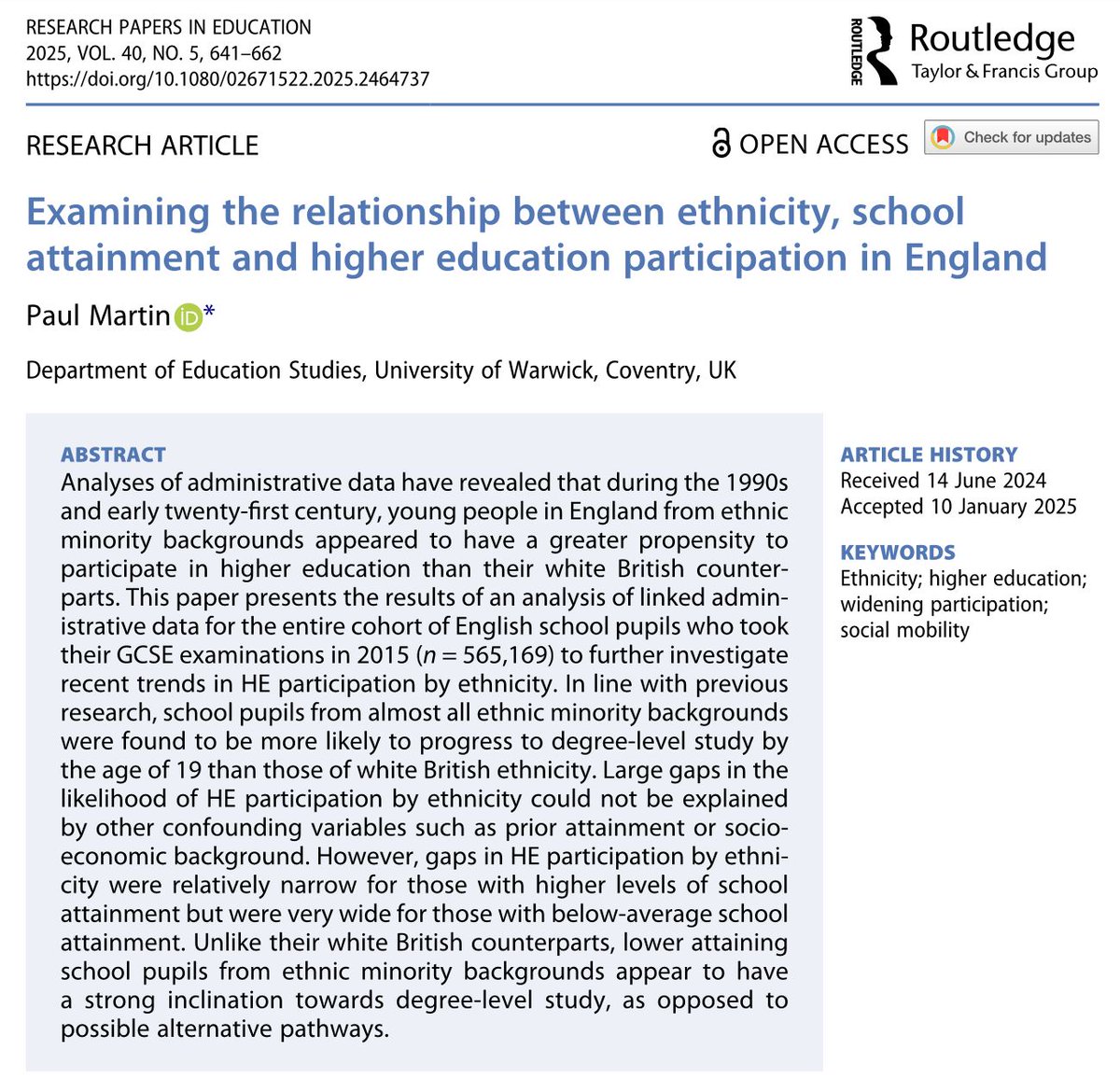
Examining the relationship between #ethnicity, #schoolattainment and #highereducation participation in England - Paul Martin. #OpenAccess
buff.ly/l67JsWo
1
1
59
Our most viewed article of 2025?
Examining the relationship between #ethnicity, #schoolattainment and #highereducation participation in England - Paul Martin. #OpenAccess
buff.ly/l67JsWo
1
1
59
Martin concludes ethnic minority pupils in England are more likely to enter university by age 19 than their white British peers.
These gaps are most extreme among low-attaining students, where they show a preference for degrees over vocational paths.
1
28
The author suggests this more academic route may be a strategic choice to combat potential future labour market discrimination.
Read the whole paper #OpenAccess here: buff.ly/l67JsWo
26
Research Papers in Education retweeted

Jan 28
So, we should embrace every aspect of understanding, without trivialising anything, however, small.
1
1
52
Research Papers in Education retweeted
Jan 28
... clear. We can use the analogy to a puzzle. What we as educators/teachers can do is to look out for 'partial' snippets of understanding in our learners, helping them to put the 'full' puzzle together. ....
1
1
42
Research Papers in Education retweeted
Jan 28
Thank you. I think that one aspect that the research showed was about 'partial understanding' of concepts - at times if we understand x, albeit partial, this should be capitalised to stretch 'full' understanding. Of course, the lines may be blurred; what is 'full' may not be
1
1
42
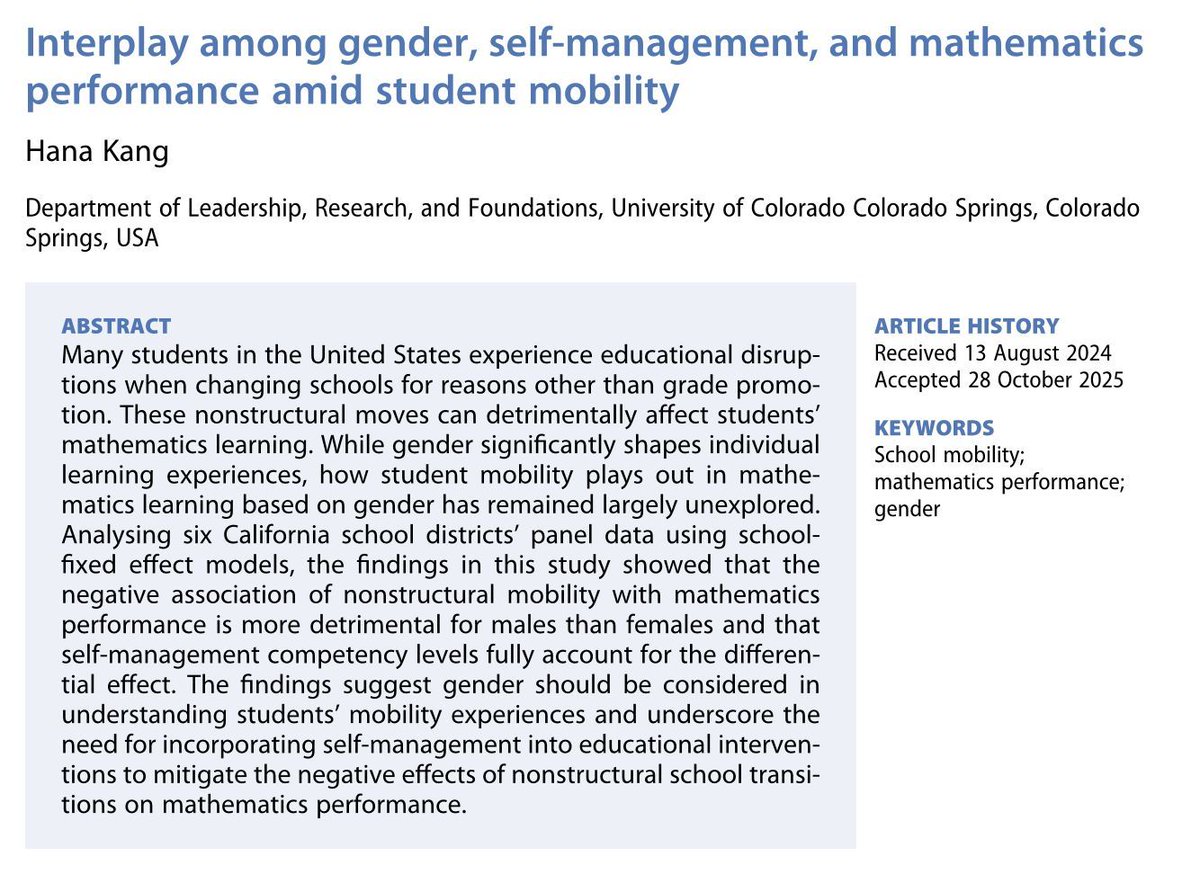
NOW PUBLISHED! 🚨
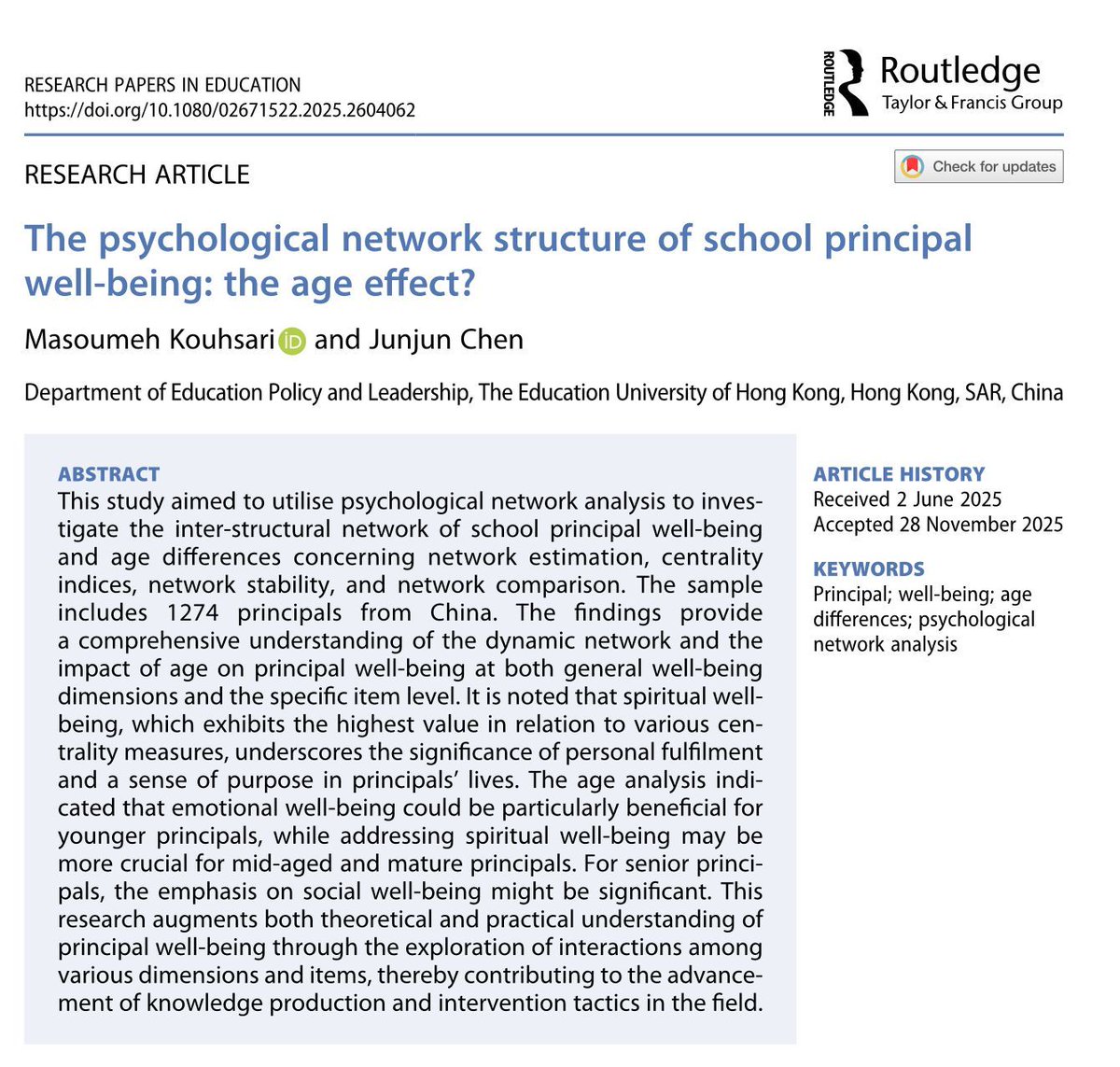
The psychological network structure of school principal well-being: the age effect?
Masoumeh Kouhsari & Junjun Chen
buff.ly/OkLR44s
#ResPapersInEduc #wellbeing #eduction
84
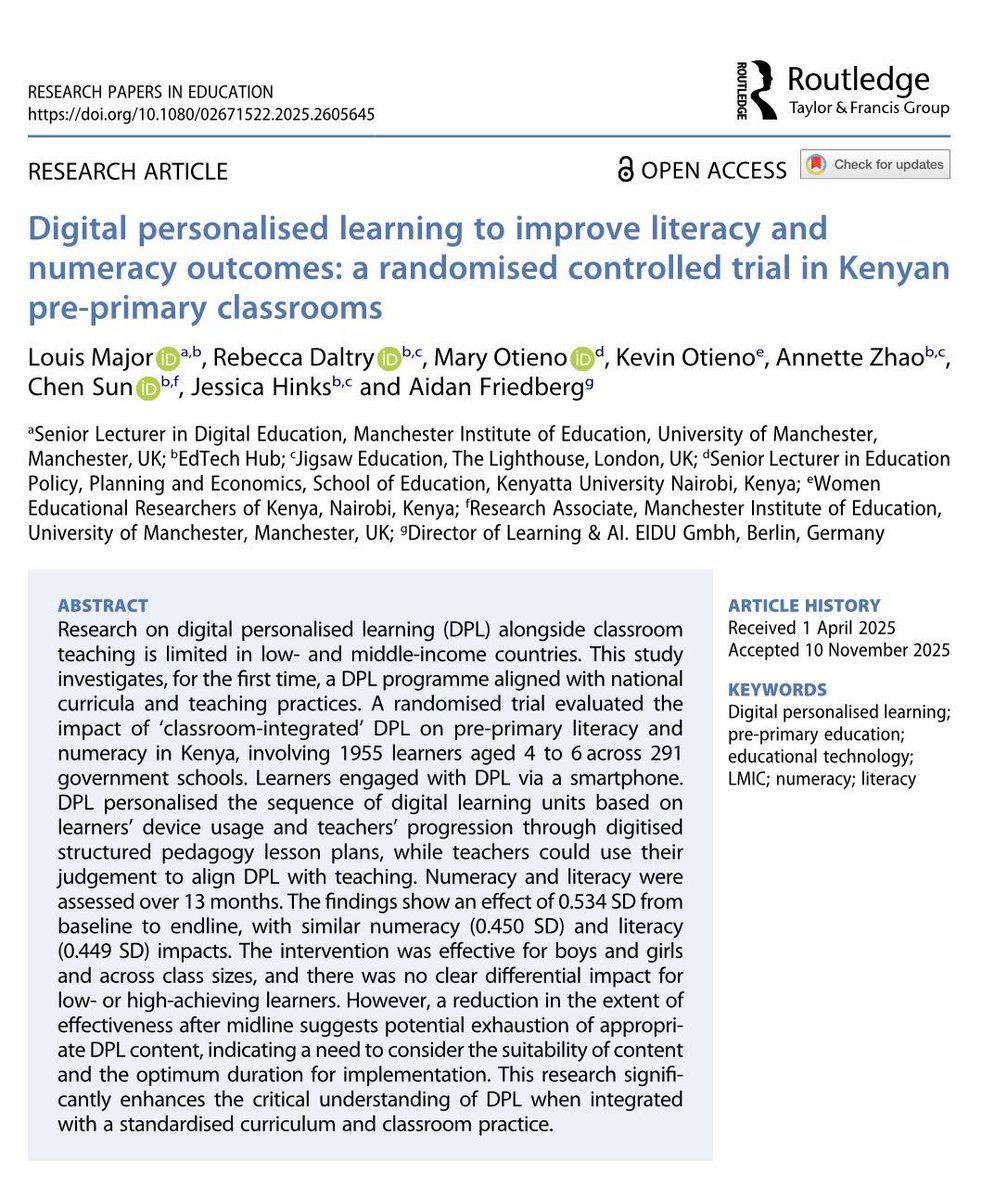
NOW PUBLISHED! 🚨
Digital personalised learning to improve literacy and numeracy outcome
@Louis_Major_ @beckydaltry , Mary Otieno, Kevin Otieno, @DrZhao_ , Chen Sun, Jessica Hinks & Aidan Friedberg
buff.ly/eYUKSTP
#ResPapersInEduc #numeracy #literacy
294
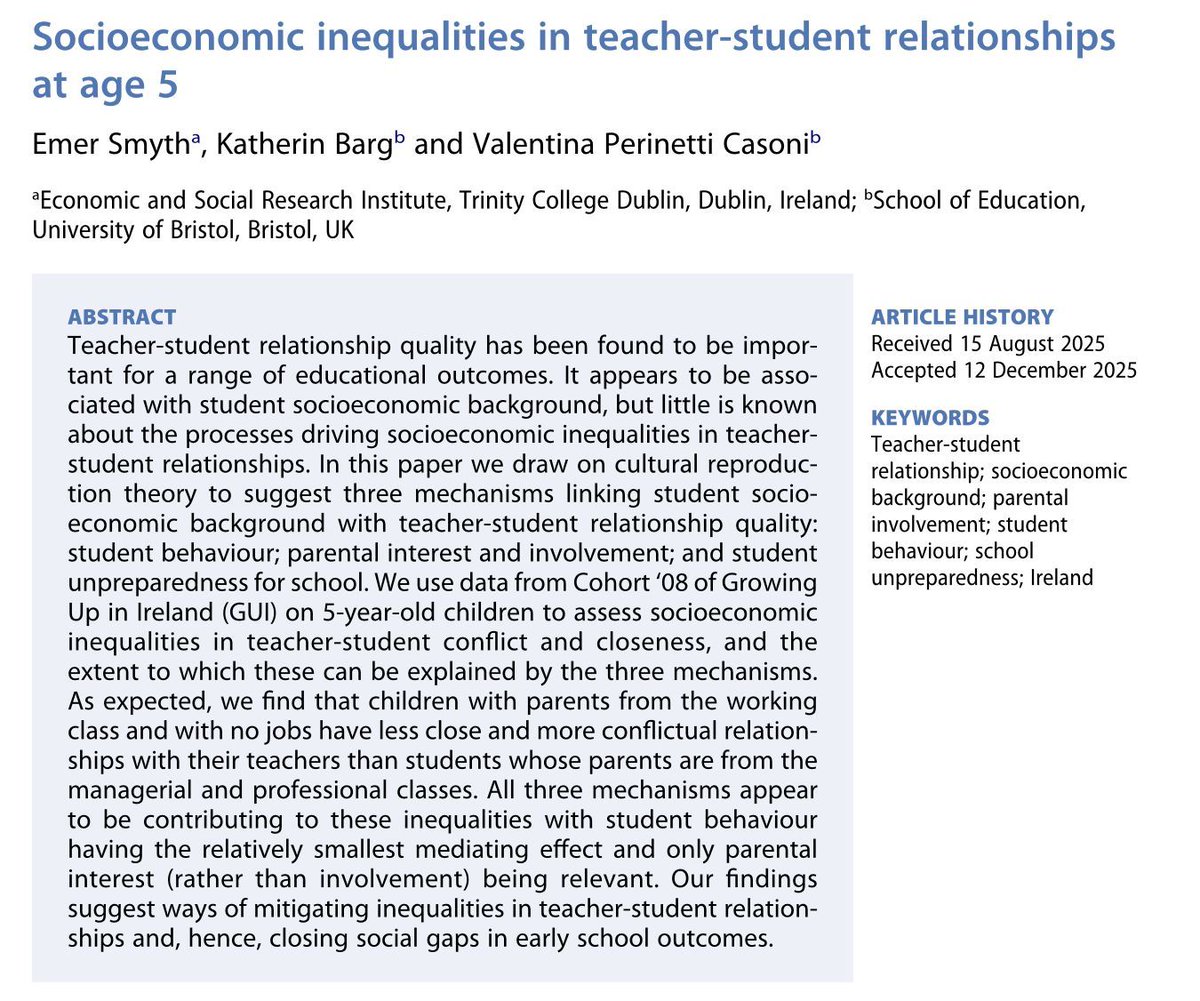
NOW PUBLISHED 🚨
Socioeconomic inequalities in teacher-student relationships at age 5
Emer Smyth, Katherin Barg & Valentina Perinetti Casoni
buff.ly/VSXQm2C
#ResPapersInEduc #education #teacherstudent #socioeconomics #parentalinvolvement
575
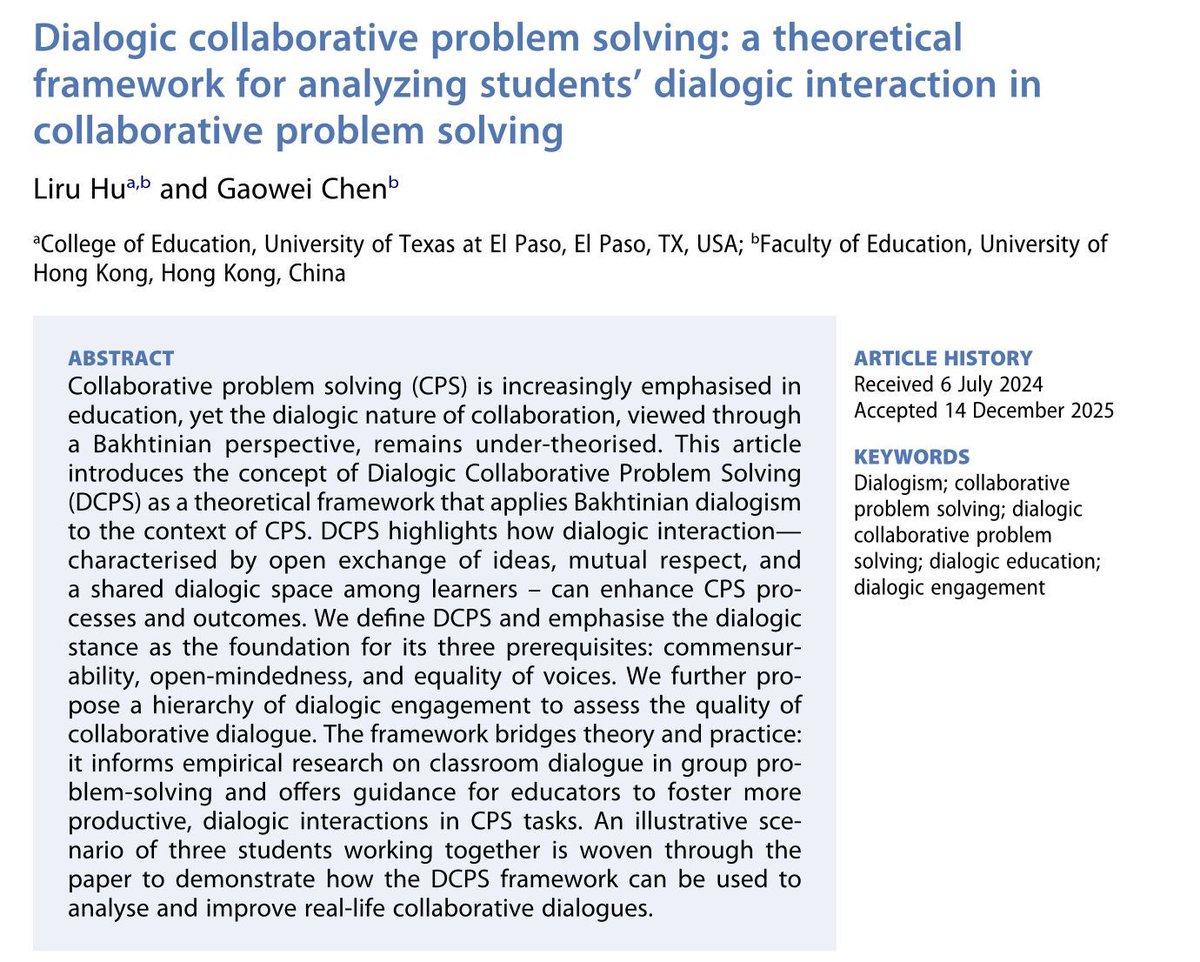
NOW PUBLISHED 🚨
Dialogic collaborative problem solving: a theoretical framework for analyzing students’ dialogic interaction in collaborative problem solving
Liru Hu & Gaowei Chen
buff.ly/adDnCoC
#ResPapersInEduc #dialogism #problemsolving #education
54