
Exposing Russian propaganda and the harsh realities of occupation in Ukraine @ResistanceMove3
Joined April 2022
- Tweets 1,972
- Following 4,770
- Followers 2,576
- Likes 705
1,786 Photos and videos
Pinned Tweet

🔥 The Ukrainian Resistance Strikes Back!
Where the occupier reigns, there are those who resist. The Ukrainian underground continues its relentless fight behind enemy lines, sabotaging Russian forces and proving that our cities will never be conquered!
💥 Vehicle explosions
🔥 Arson attacks on enemy facilities
💪 Unyielding resistance
Every act of defiance brings us closer to liberation. The enemy must know: Ukraine does not forgive. Ukraine does not forget!
#UkrainianResistance #Sabotage #OccupiedUkraine #UkraineWillWin
2
24
73
7,607
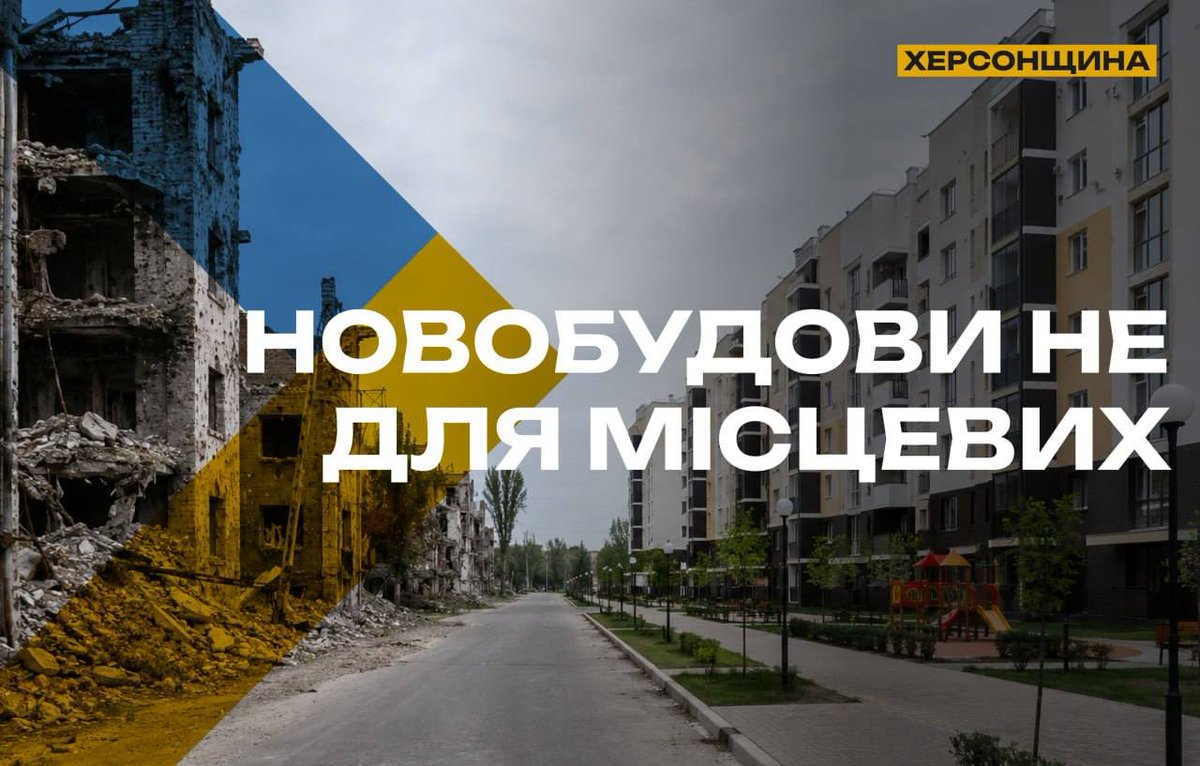
🔴 Occupation Authorities Continue Large-Scale Housing Development Projects in Occupied Kherson Region
The occupation administration continues to implement large-scale residential construction projects in the temporarily occupied territories of the Kherson region. This time, the focus is on the eastern part of Novooleksiivka, where the occupiers plan to build apartment blocks, social infrastructure facilities, and new residential neighborhoods designed to accommodate nearly 2,000 residents.
On paper, such projects are presented as further evidence of the region’s “development.” In reality, however, the situation tells a different story: thousands of local residents have yet to receive proper compensation for homes that were damaged or destroyed.
Who are these new residential developments really intended for?
▶️ The occupation authorities are actively expanding the housing stock in the occupied territories.
▶️ The new housing is primarily intended for Russian officials, security personnel, military members, and imported specialists.
▶️ Local residents continue to wait for years for solutions to their own housing problems.
▶️ At the same time, the occupiers promote new construction projects as proof of the region’s “recovery” and “reconstruction.”
The situation appears especially cynical against the backdrop of the so-called “apartment distribution” programs in the occupied territories. According to information from the Center of National Resistance (CNS), people are often handed housing that requires major renovations, has significant structural damage, or is simply unfit for comfortable living.
15
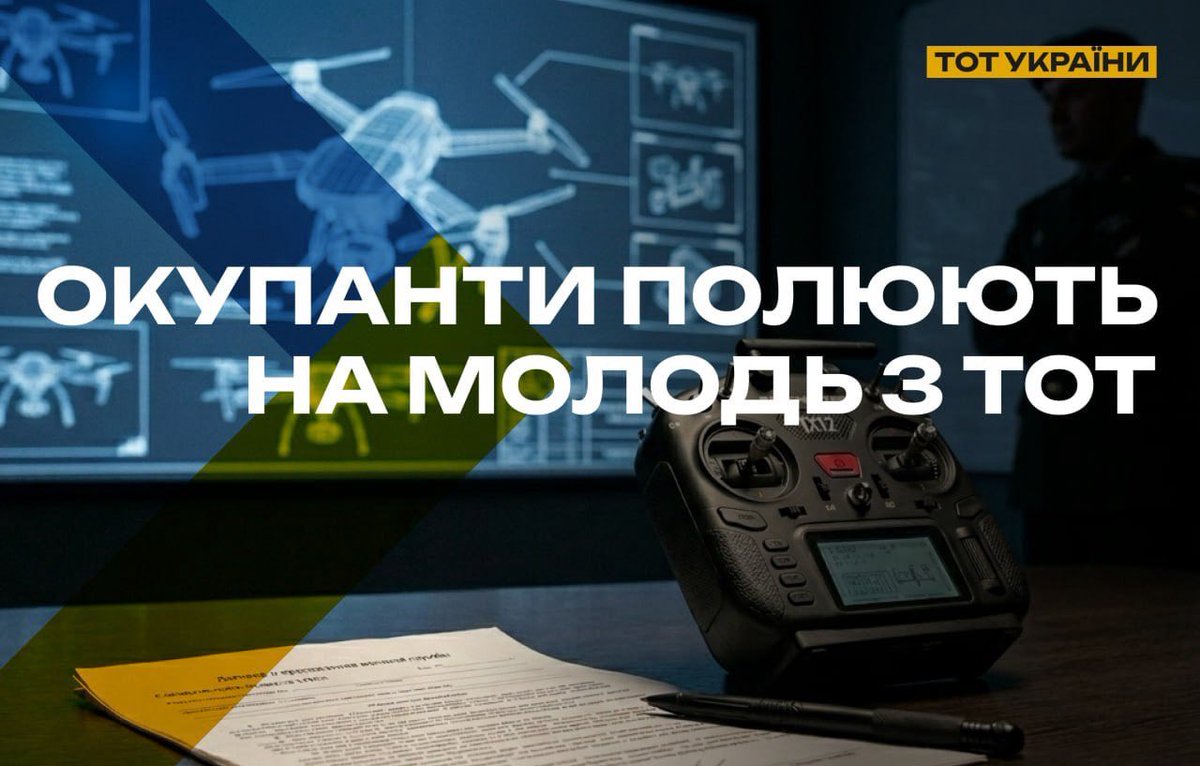
🚫 A Multi-Million-Ruble Trap: Occupiers Target Ukrainian Youth in the TOT for UAV Units
Russia has launched another recruitment drive targeting Ukrainian graduates and young people in the temporarily occupied territories. The Kremlin has sharply increased financial incentives, placing particular emphasis on recruiting operators for unmanned aerial vehicle (UAV) units.
🛑 The occupiers have increased the one-time contract payment for service in UAV units from 1.5 million to 2.5 million rubles. This is significantly higher than the payments offered for regular combat units, which typically range from 1 to 1.5 million rubles.
🛑 For years, the occupiers invested billions in school drone clubs, UAV competitions, and cadet programs. Today, this educational network has effectively become a recruitment pipeline designed to channel teenagers into the ranks of the Russian Armed Forces.
🛑 Behind the promises of a “prestigious profession” lies a much harsher reality. Due to heavy battlefield losses, contract recruits are often assigned not to drone operations but to conventional assault units deployed directly to the front line.
The Kremlin has built a cynical system: first, children are taught drone operation through propaganda-driven school programs; later, their future is bought with blood-stained rubles, turning young people from the occupied territories into a low-cost reserve of cannon fodder for Russia’s war effort.
1
1
44
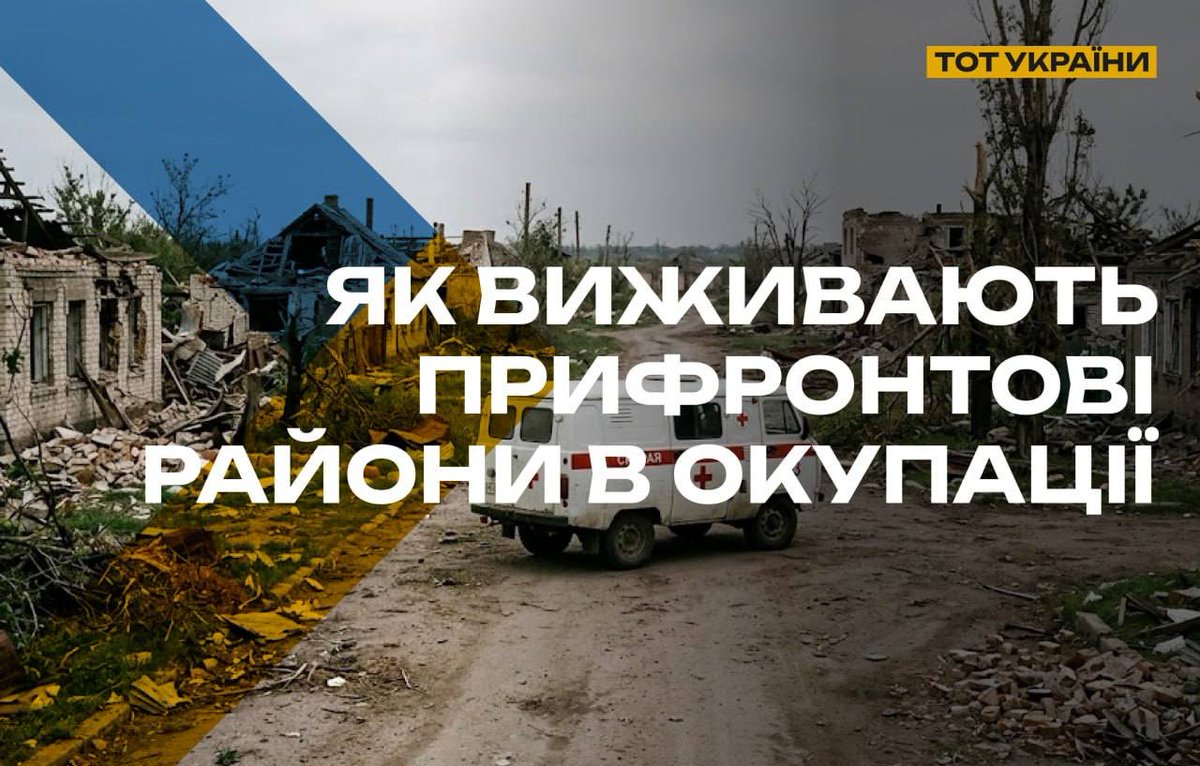
🟣 In the Temporarily Occupied Territories of Ukraine, Emergency Medical Workers Face Wage Delays and Unpaid Hazard Compensation
In the temporarily occupied territories of Ukraine, emergency medical personnel are increasingly facing not only delays in receiving their regular salaries but also the prolonged non-payment of hazard allowances for working in high-risk conditions. The problem is particularly severe in frontline areas, where much of the medical infrastructure effectively disappeared following the occupation. For many local residents, ambulance crews remain the only available source of medical assistance.
▶️ Hazard pay for working in combat zones is systematically delayed or not paid at all.
▶️ The workload of ambulance crews continues to increase due to the absence of functioning hospitals and pharmacies.
▶️ Elderly residents and patients with chronic illnesses often have no alternative means of obtaining medical treatment.
▶️ Medical workers are forced to operate under conditions of staff shortages, psychological exhaustion, and constant threats to their safety and lives.
1
1
12
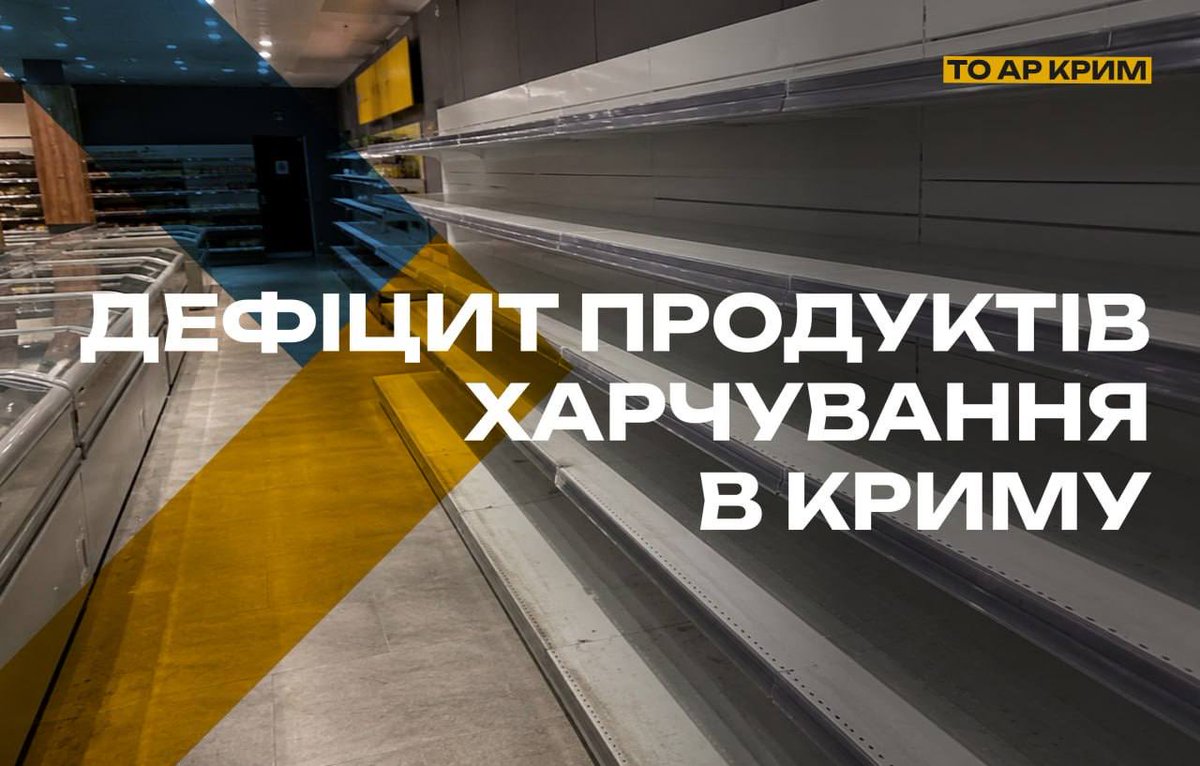
🟡 Food Shortages Are Increasingly Reported on the Temporarily Occupied Crimean Peninsula
Reports of food shortages are becoming more frequent across the temporarily occupied Crimean Peninsula. Local residents say that essential goods such as sugar, cereals, flour, salt, and pasta products are disappearing from store shelves.
Some retail chains have already introduced purchase limits on certain products, allowing only a restricted quantity per customer. These measures are fueling public concern and indicate a worsening situation in the peninsula’s supply system.
▶️ Demand has risen significantly due to the large number of Russian migrants and military personnel brought to the peninsula.
▶️ The occupying authorities are facing growing difficulties in logistics and the delivery of goods.
▶️ The Crimean Bridge is no longer capable of fully supporting previous transportation volumes.
▶️ Maritime routes and overland supply corridors remain subject to constant risks and operational constraints.
21
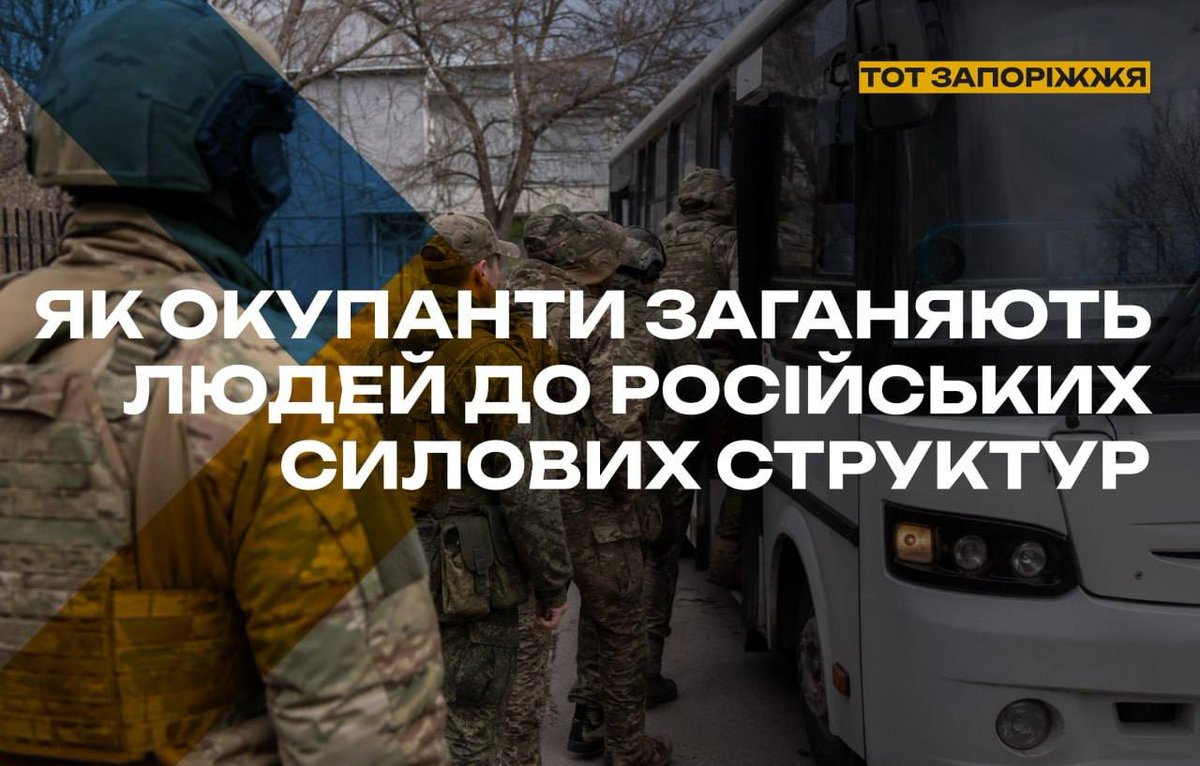
🟠 In the temporarily occupied territories of the Zaporizhzhia region, the Russian National Guard (Rosgvardia) has intensified its campaign to recruit local residents into its units. According to the Center of National Resistance (CNS), the occupiers are placing particular emphasis on recruiting personnel for UAV (drone) units, promising high salaries, benefits, and a “stable future.”
At the same time, the occupation administration continues to increase economic pressure on the local population. Due to delayed wages and a lack of employment opportunities, many people are being forced to choose between losing their means of livelihood or joining Russian security structures.
▶️ Recruiters promise high salaries, social benefits, and career opportunities within UAV units.
▶️ Potential recruits are told about “safe service” conditions and prospects for professional development.
▶️ Economic hardships in the occupied territories are being used as a tool of pressure to attract new candidates.
▶️ After signing contracts, some recruits may be reassigned to combat and assault units that continuously require reinforcements due to heavy loss
47
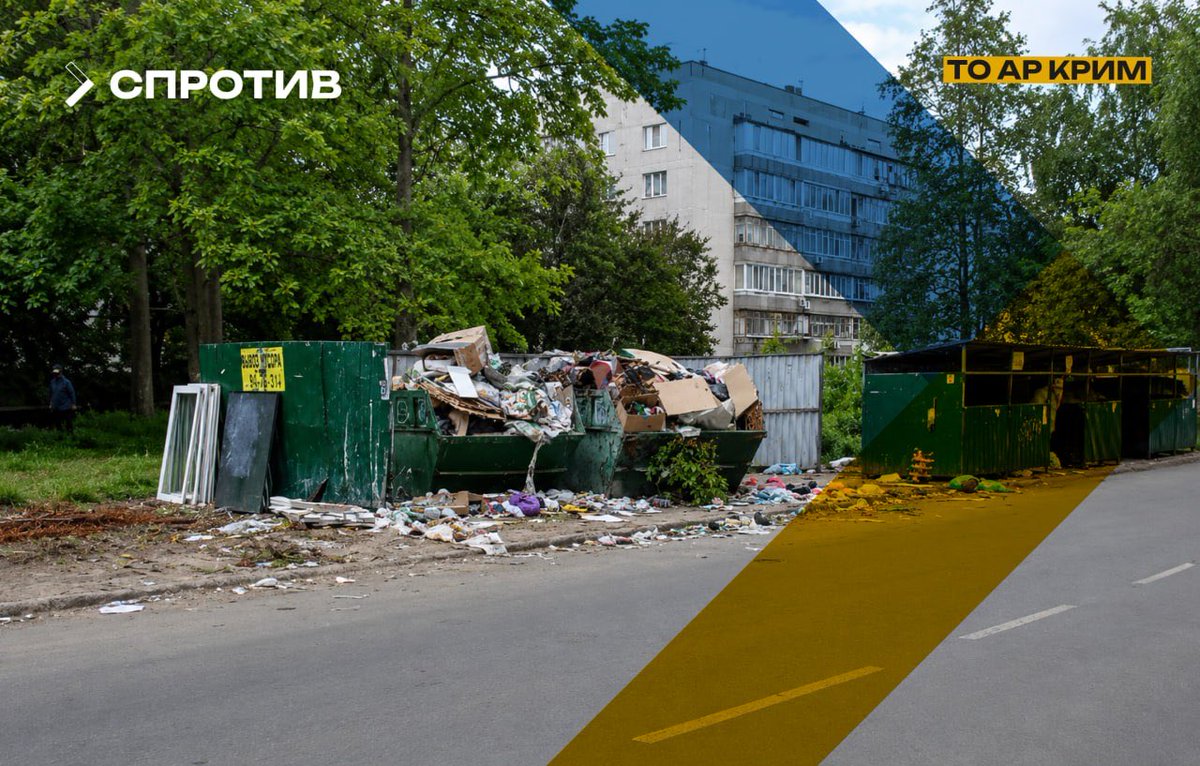
🔴 Signs of a Large-Scale Municipal Breakdown Are Increasingly Evident in Occupied Crimea
On the temporarily occupied Crimean Peninsula, signs of a growing municipal services collapse are becoming increasingly apparent. Residents of Sevastopol are reporting overflowing garbage containers, illegal dumping sites, and unsanitary conditions in the middle of residential neighborhoods.
According to local residents, the problem has long ceased to be isolated. In some districts of the city, rats openly roam around apartment buildings, while piles of garbage remain uncollected for weeks.
What the inaction of the occupation authorities has led to:
▶️ A growing population of rats and other pests in residential courtyards.
▶️ Both central and residential districts are gradually turning into spontaneous garbage dumps.
▶️ With the arrival of summer heat, tons of waste are decomposing in the open air, spreading a persistent foul odor.
▶️ Sanitary conditions continue to deteriorate, increasing health risks for local residents.
One of the key factors behind the worsening situation is the overburdening of urban infrastructure. The occupiers continue to relocate large numbers of Russian citizens to the peninsula, while local municipal systems and public services were never designed to accommodate such a significant increase in populati
2
2
60
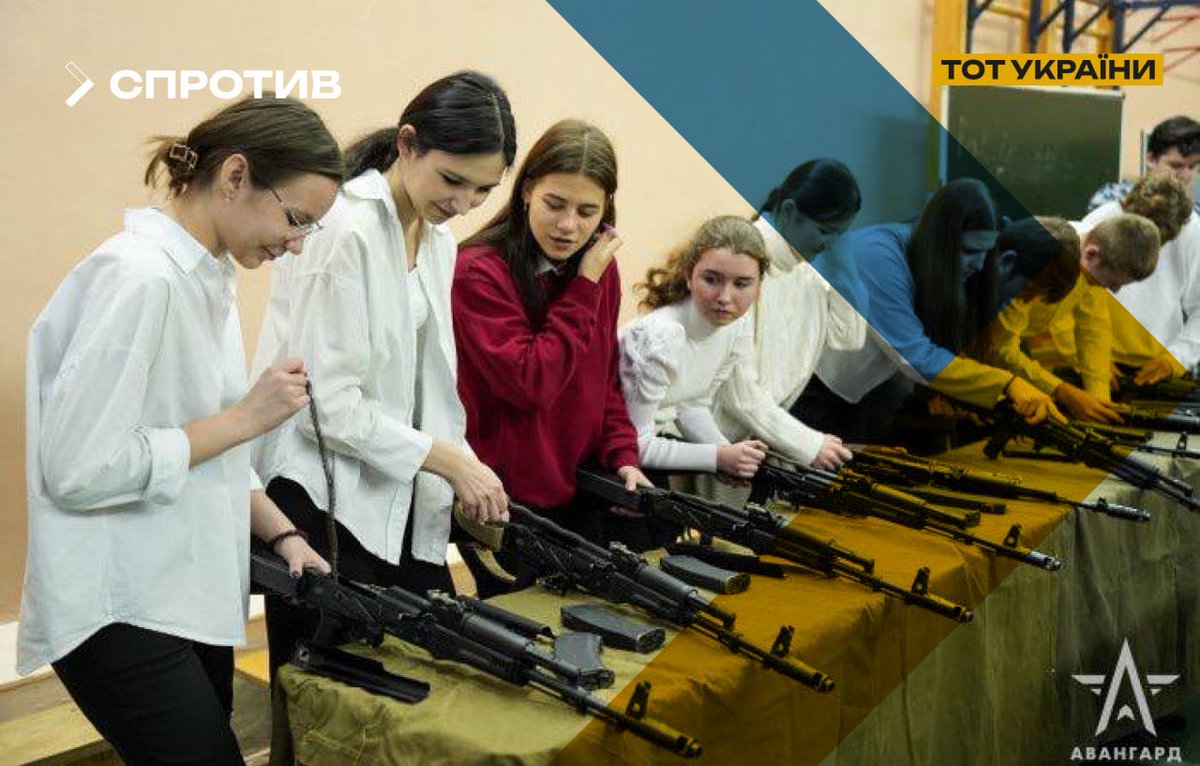
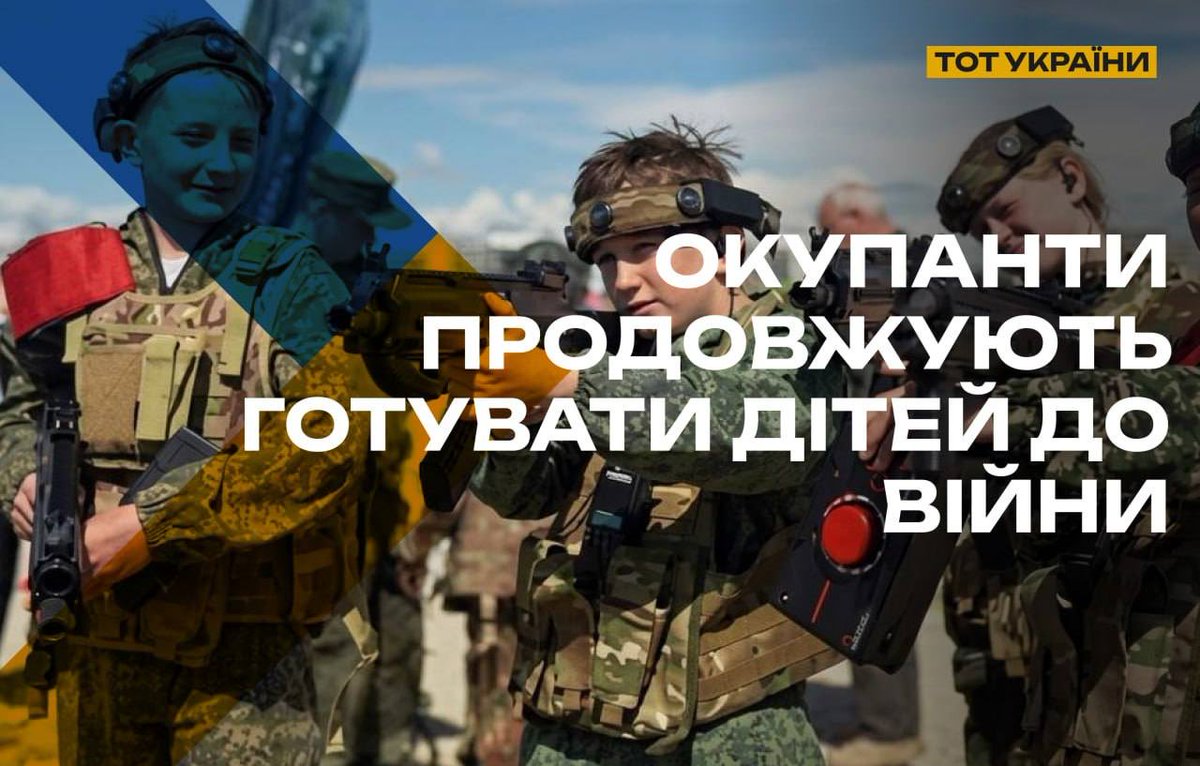
🟡 Assembly Line for “Young Heroes”: How Ukrainian Children Are Being Prepared for the Russian Army
The occupiers continue the systematic militarization of Ukrainian youth in the temporarily occupied territories of the Zaporizhzhia region. Another group of schoolchildren has been taken to Volgograd to attend the “Avangard” defense and sports camp for a training session called “Time of Young Heroes.”
🛑 The camp’s program closely mirrors military training. Teenagers are taught drill exercises, tactical skills, and military-applied disciplines in conditions designed to simulate real combat environments as closely as possible.
🛑 Special emphasis is placed on modern technologies, with children receiving instruction in drone operation and other skills that the Russian military actively employs on the battlefield.
🛑 Schoolchildren are also introduced to participants of the so-called “Special Military Operation” (SMO), who are presented as role models. Through these meetings, organizers promote the idea that taking part in the war against Ukraine is a “prestigious and honorable path.”
🛑 The primary objective of such centers is the ideological indoctrination of Ukrainian children, the erosion of the boundary between childhood and military service, and the creation of a future recruitment pool for the occupying forces.
1
4
2
99
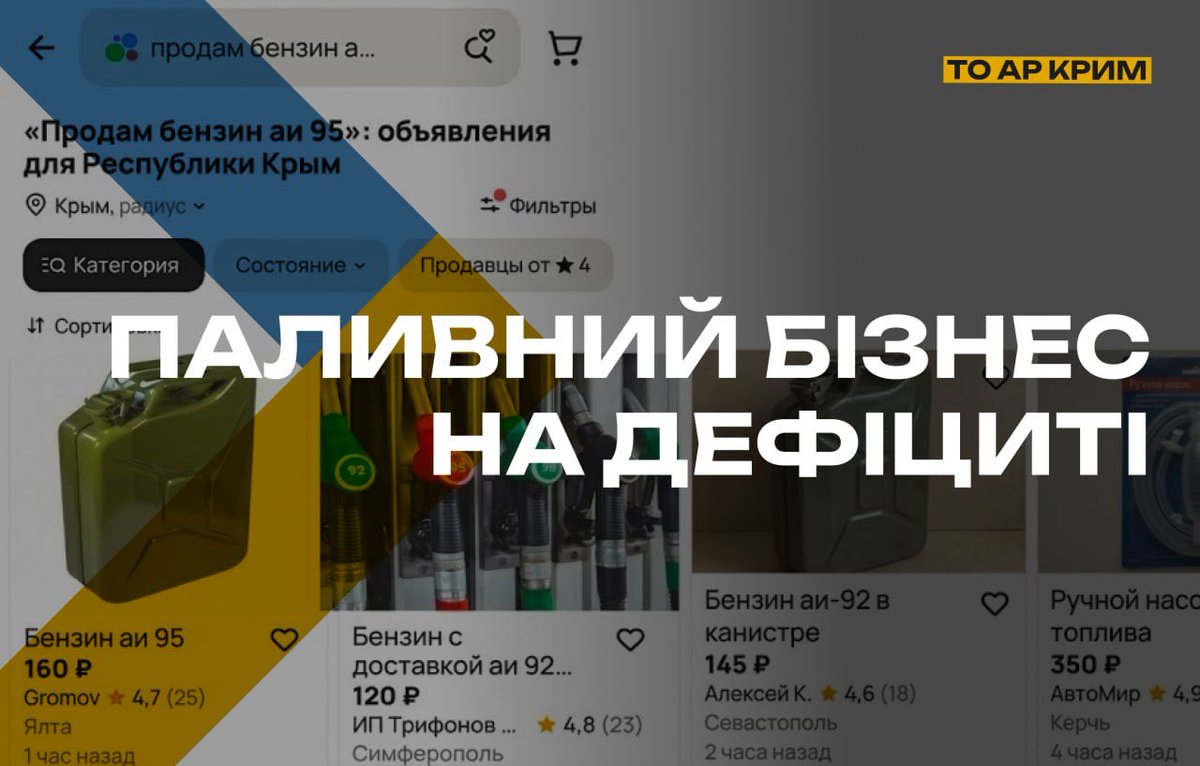
🔴 Against the backdrop of the fuel crisis in occupied Crimea, a thriving black market has emerged. Local online marketplaces in Simferopol and Yalta are being flooded with advertisements offering gasoline delivery “straight to your door,” with speculators demanding an absurd 160 rubles per liter of AI-95 fuel.
According to information from the Center of National Resistance, this shadow business is being run by Russian military personnel and their relatives. Occupiers with direct access to fuel distribution are reportedly siphoning off supplies and profiting from the artificially created shortage, forcing civilians to pay several times the normal price.
While ordinary Crimean residents remain hostages to the fuel supply collapse, the occupiers are cynically exploiting their official positions for personal gain. The severe shortage at legal fuel stations has become yet another tool for looting and profiteering by the Russian military, further draining the peninsula’s resources.
2
3
92
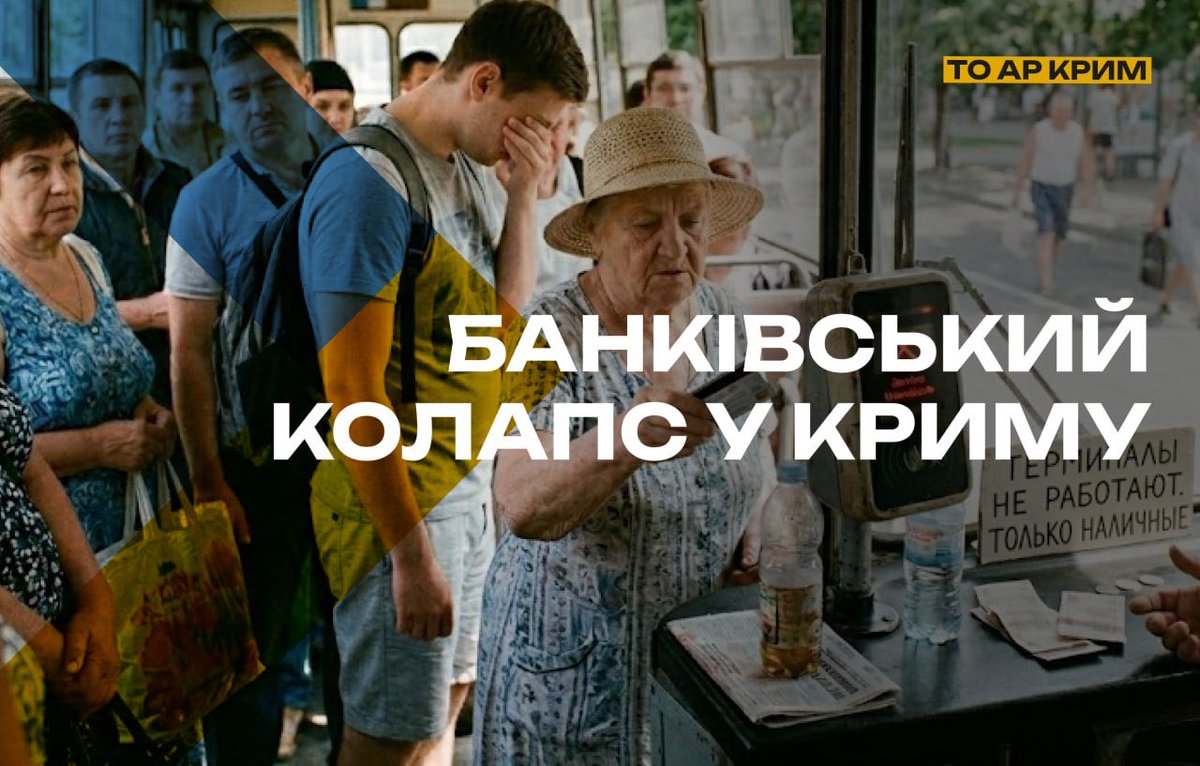
⬆️ Payment Infrastructure Begins to Crumble on the Occupied Peninsula
The payment infrastructure on the occupied peninsula has started to break down. Local residents are increasingly reporting recurring disruptions to banking services, making it impossible to pay with bank cards.
The collapse has hit public transportation particularly hard, as payment terminals are more frequently failing to process cashless transactions. The occupation authorities continue to downplay the scale of the problem, although the selective nature of the outages clearly points to localized shutdowns and failures of entire payment networks under the strain of the region’s broader economic crisis.
For years, Kremlin propaganda touted the peninsula’s “digitalization” and stability. Now reality is proving otherwise: amid resource shortages and an overburdened infrastructure, Crimea is losing even basic everyday conveniences, leaving people without reliable access to their own money.
1
27
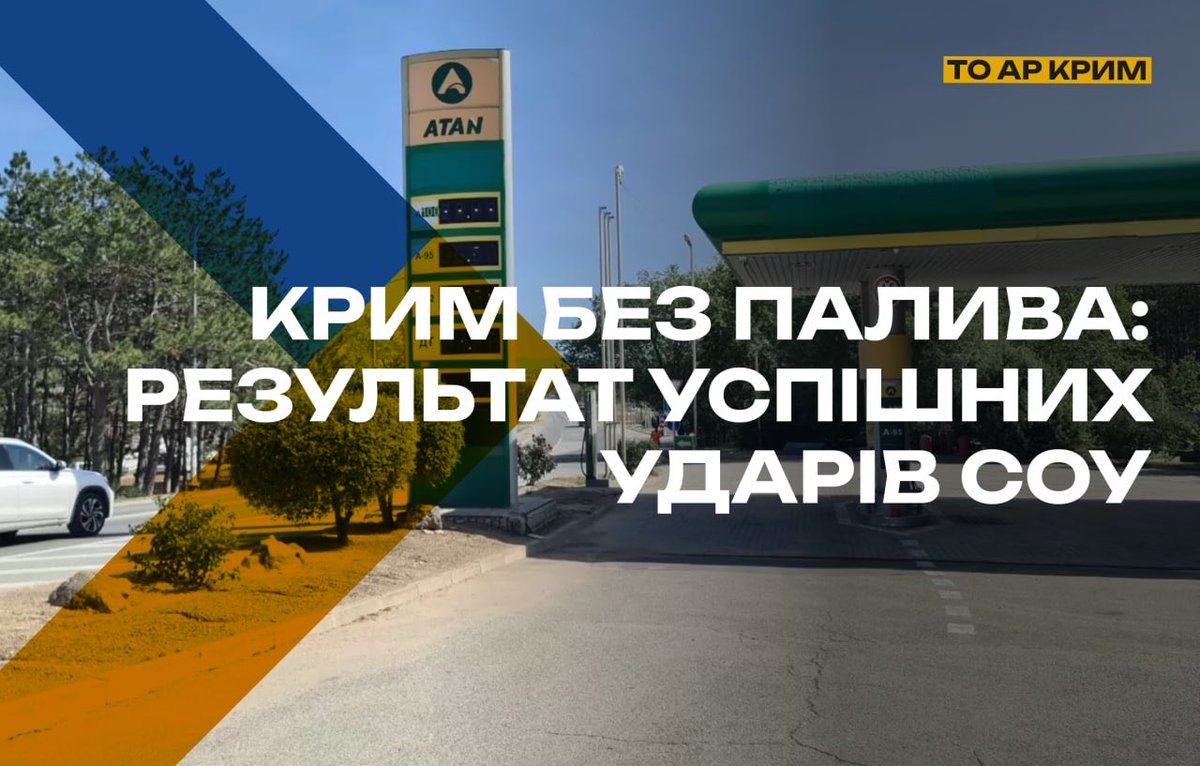
🔥 Crimea’s Fuel Deadlock: Successful Ukrainian Defense Forces Strikes Have Paralyzed Occupier Logistics
A series of precision strikes by the Ukrainian Defense Forces against Russian fuel storage infrastructure has driven the occupiers into a logistical trap. The enemy has effectively lost confidence in the security of the Kerch Bridge, ferry crossings remain under constant fire control, and the land corridor through southern Ukraine is regularly targeted by Ukrainian drones.
As a result of the acute fuel shortage, resources for the military are now being conserved at the expense of ordinary civilians. In Sevastopol, the occupation administration has already officially urged local residents to stop using private vehicles and switch to public transportation.
Further disruption of logistical routes will inevitably turn the current gasoline shortage into a full-scale systemic collapse across the peninsula.
1
54
🔴 Russia continues to use the education system and youth programs in the temporarily occupied territories to prepare a future reserve for its armed forces. One of the key instruments of this policy is the military-patriotic game “Zarnitsa 2.0,” which increasingly resembles basic military training.
▶️ Participants receive instruction in marksmanship, tactical training, and military medical skills.
▶️ Children are involved in classes on military communications and drone operation.
▶️ Particular emphasis is placed on training UAV operators, a specialty that is in high demand within the Russian military.
▶️ Participants in the so-called “special military operation” (SMO) are actively engaged as mentors, promoting service in the Russian Armed Forces and encouraging military enlistment.
Through programs like these, the occupiers seek to accustom children from an early age to military discipline, obedience to orders, and the perception of war as a normal part of life. In the long term, participants in such initiatives are viewed as potential candidates for admission to Russian military educational institutio
18
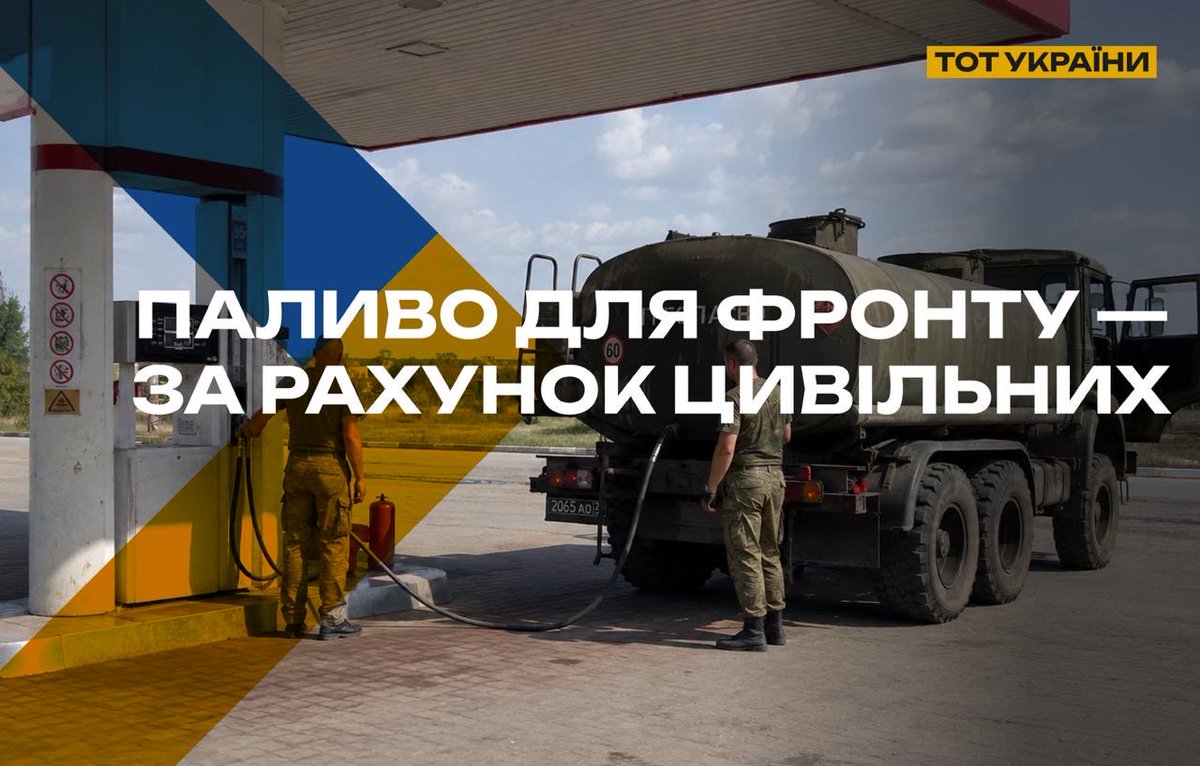
🟡 In the occupied territories of Kherson and Zaporizhzhia oblasts, Russian military personnel have reportedly begun openly looting civilian gas stations due to supply shortages. According to the Center for National Resistance, the occupiers arrive at fuel stations with tanker trucks and, under threat of weapons, force employees to hand over all available gasoline and diesel supplies free of charge.
Particularly cynical is the fact that some of the confiscated fuel never even reaches the front line. Instead, Russian soldiers reportedly resell it to local residents at inflated prices. At the same time, the occupation authorities artificially restrict fuel sales to the civilian population, cynically attributing the shortages to “temporary difficulties.”
Which fuel station networks have been affected, and how is the fuel crisis already disrupting the work of emergency services in the temporarily occupied territories?
28
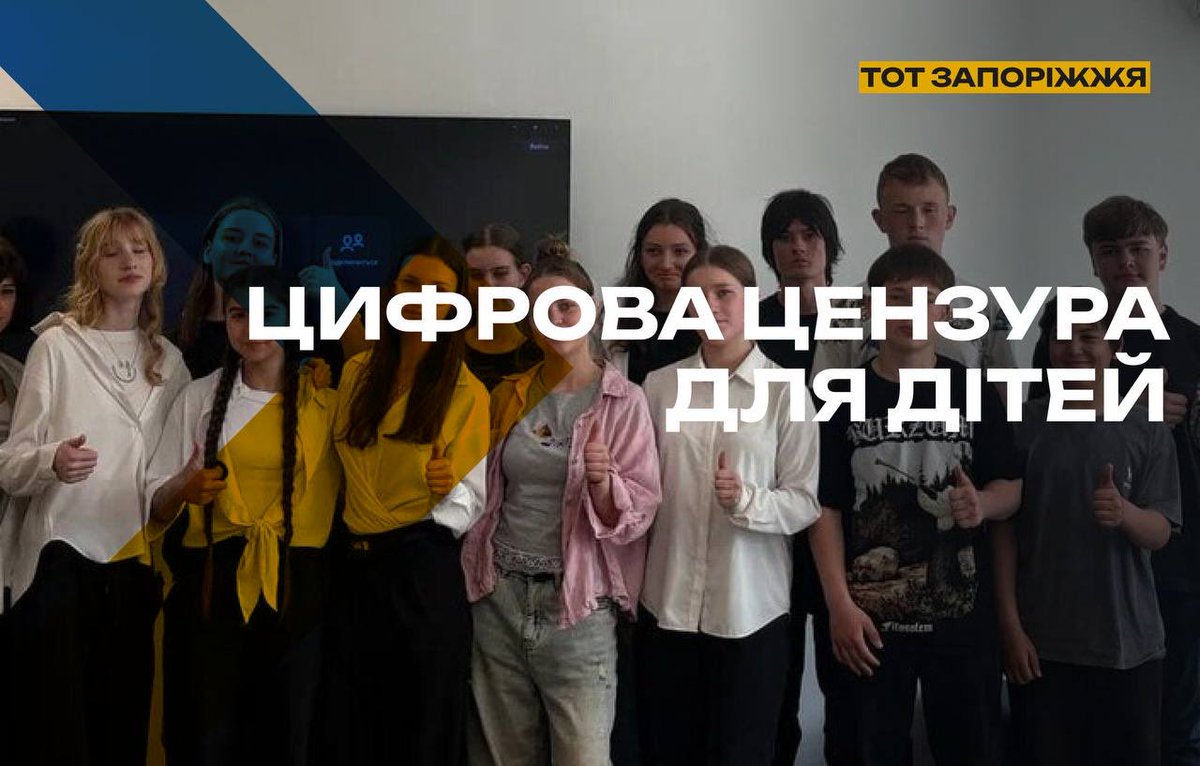
🔵 In the temporarily occupied part of Zaporizhzhia Oblast, the Russian administration continues to use schools as a tool of ideological influence over children. In Melitopol, schoolchildren were recently given another “digital literacy seminar,” during which they were taught how to behave “properly” on the internet.
According to the Center for National Resistance (CNS), under the guise of teaching digital safety, children are being encouraged to distrust Ukrainian sources of information and are being exposed exclusively to a Russian-centered view of the information space. Ukrainian media outlets, channels, and online resources are labeled as “fake,” “extremist,” or “dangerous content.”
How digital censorship operates in the temporarily occupied territories:
▶️ Under the pretext of “information security,” children are effectively denied access to alternative sources of information.
▶️ Ukrainian resources are portrayed as a threat or as prohibited content.
▶️ Trust is cultivated exclusively in Russian-controlled platforms and “official” sources.
▶️ Teenagers are conditioned to practice self-censorship online and to avoid “undesirable” chats, communities, and subscriptions.
▶️ Any information that does not align with Russian propaganda is automatically stigmatized.
Particular emphasis is placed not on genuine cybersecurity, but on shaping behavior in which children learn from an early age to filter information according to the requirements of the occupation administrat
2
2
47
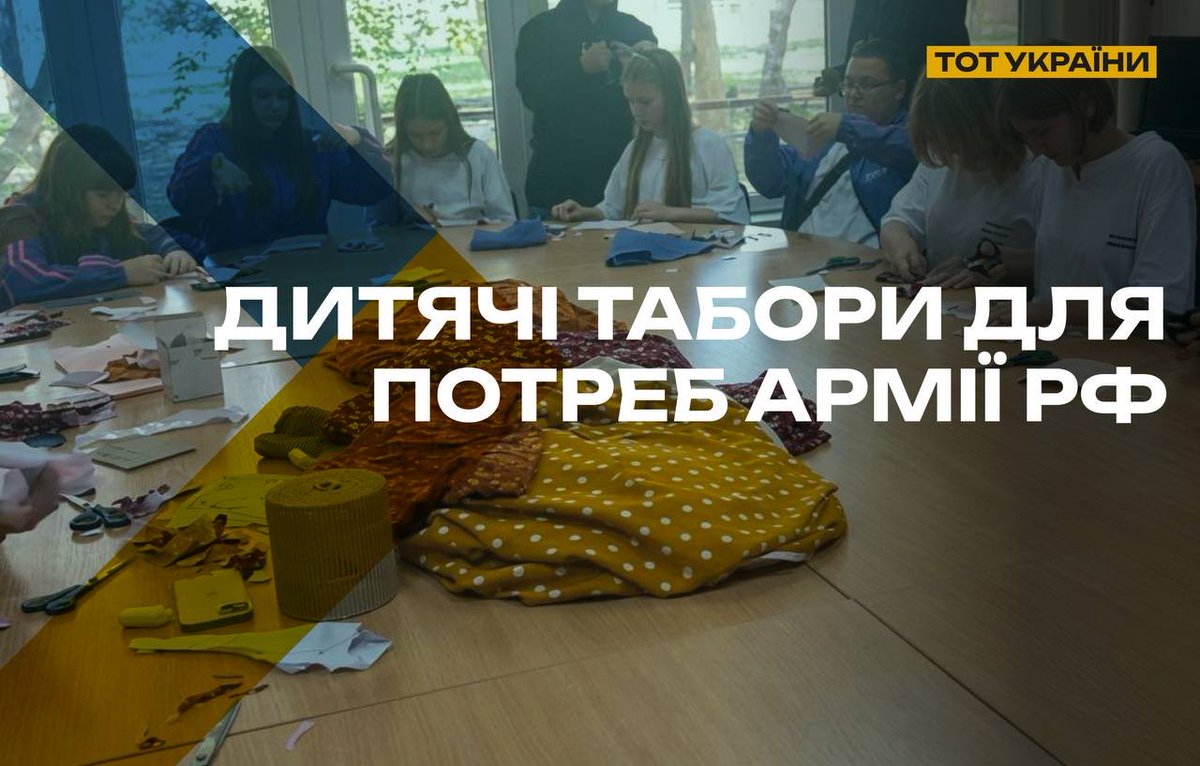
🔵 Russian occupiers continue to use Ukrainian children in the temporarily occupied territories to support their own military. Another such event was recently held in Berdyansk at the children’s center “Krasnaya Gvozdika,” where more than 200 children were involved in propaganda activities.
How the occupiers use children’s camps:
▶️ During the “Day of the Firsts” event, children made so-called “dry showers” and other supplies for the needs of Russian Armed Forces units.
▶️ The occupation authorities present such activities as “volunteering” and “patriotic education.”
▶️ Through events like these, children are encouraged to develop a positive attitude toward the Russian military and the war.
▶️ Children’s camps are increasingly being used as platforms for propaganda and the militarization of youth.
The particular cynicism of this situation lies in the fact that children’s recreational facilities are being used for these purposes. Places that should provide children with rest, development, and safety are being turned by the occupiers into tools for shaping a generation loyal to the Russian military.
1
28
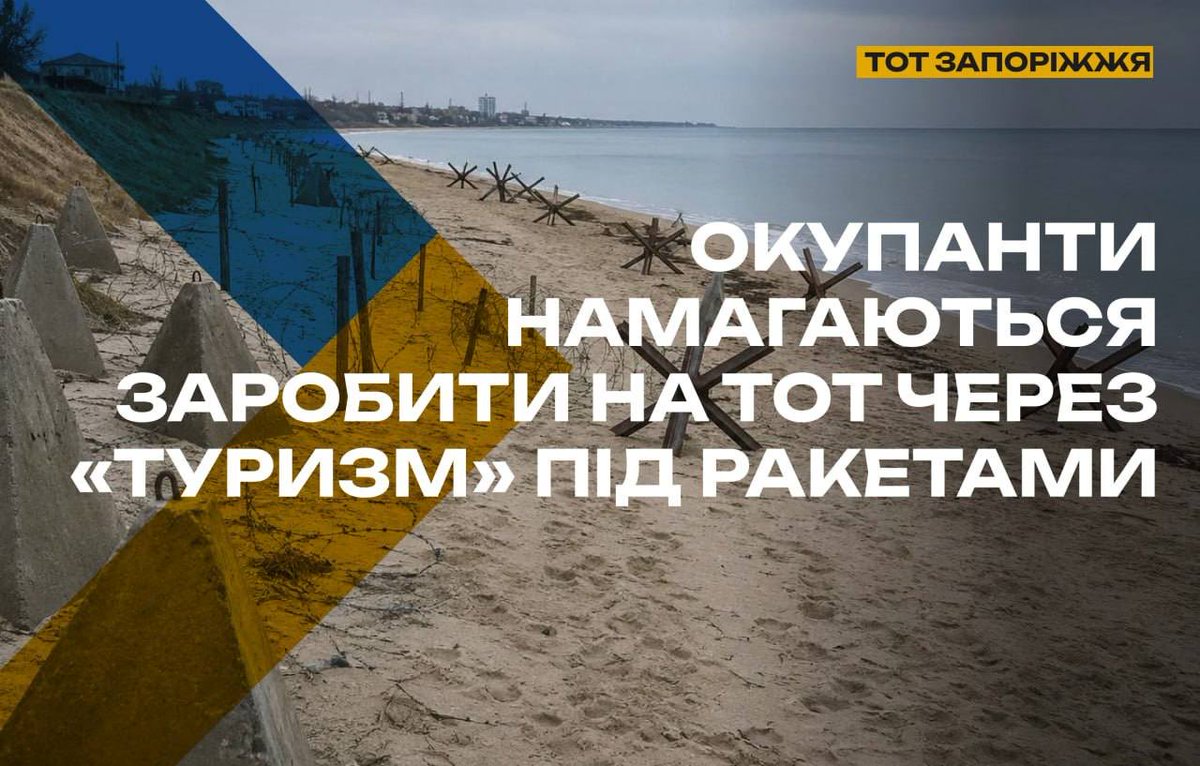
🔵The Russian occupation administration continues to create the illusion of “peaceful life” in the temporarily occupied part of Zaporizhzhia Oblast. This time, the invaders have decided to promote the temporarily occupied territories as a “tourist region” and are taking a corresponding delegation to a tourism forum in Moscow.
According to the Center for National Resistance (CNS), the occupiers are actively trying to attract money into the seized regions through the resort business and tourism sector, as maintaining the temporarily occupied territories is becoming increasingly expensive for the Russian budget.
How the Russians are trying to “revive” the occupation:
▶️The Kremlin is advertising recreation centers, hotels, and the Azov Sea coastline despite the constant military presence and danger in the region.
▶️Against the backdrop of enormous war expenditures, Russia is attempting to at least partially shift the financial burden of maintaining the temporarily occupied territories onto the civilian sector.
▶️Through forums, competitions, and propaganda campaigns, the occupiers are creating an image of the “restoration and development” of the seized territories.
▶️An increase in the number of civilians in frontline areas is also beneficial to the Russian army as an additional “human shield” around military logistics and infrastructure.
In reality, behind the façade of “tourism prospects” lie a devastated economy, a shortage of funds, and attempts to extract profit from the occupied territories by any means possible. Despite claims of “development,” the temporarily occupied territories remain a subsidized and loss-making burden on the Russian budget.
1
1
51
HOW THE OCCUPATION AUTHORITIES PROFIT FROM THE RUINS OF MARIUPOL
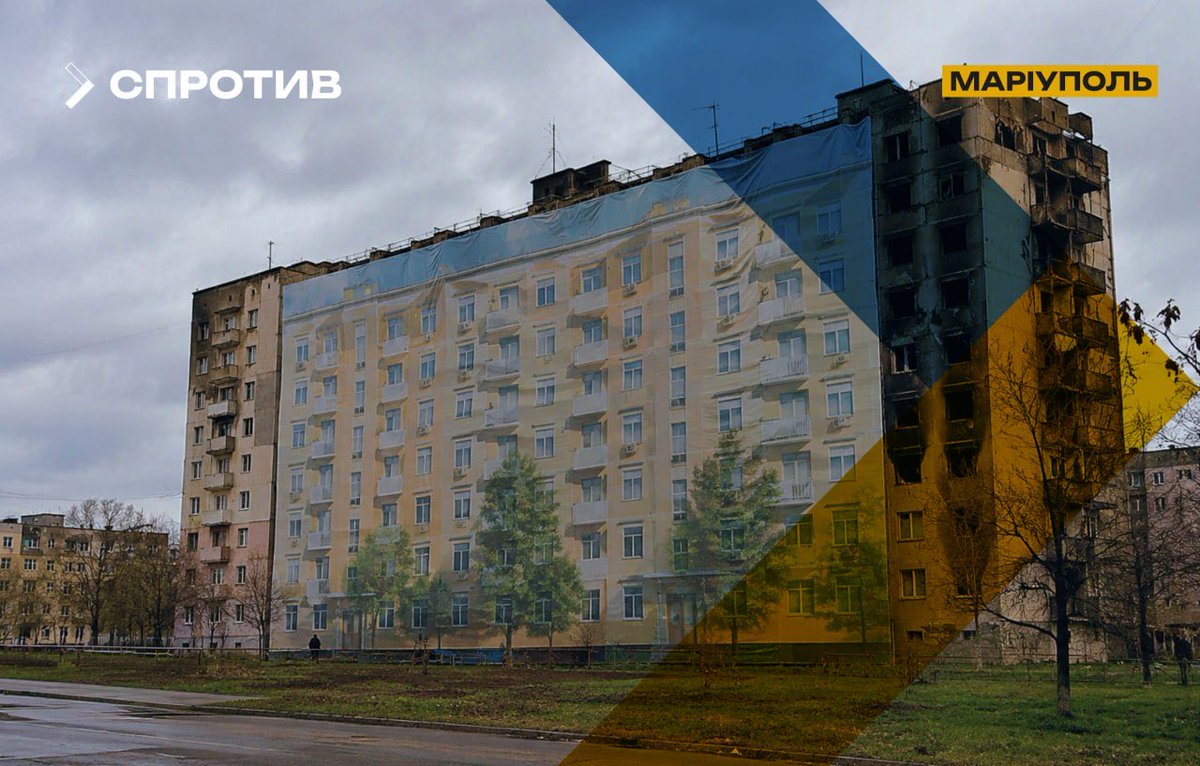
🔵 The occupation administration in Mariupol has reached a new level of cynicism by turning the city’s tragedy into a source of personal enrichment. While Kremlin propaganda promotes the image of a “large-scale reconstruction,” millions of rubles allocated from the Russian budget for apartment building repairs are simply ending up in the pockets of collaborators and Russian contractors.
How the corruption scheme operates on the bones of the city:
🔻 “Paper” repairs worth tens of millions: According to the Center for National Resistance (CNS), reconstruction estimates for certain residential buildings contain astronomical sums. In reality, however, the buildings remain unsafe, while actual work is either not carried out at all or limited to superficial cosmetic fixes.
🔻 Facade reconstruction for reports: The scheme works in the simplest possible way — contractors hastily patch up or repaint facades to create photo reports, after which they secure new funding tranches that are immediately embezzled.
🔻 Housing crisis for Mariupol residents: While the occupiers successfully “absorb” millions of rubles, local residents spend months unable to return to their own apartments, left alone with ruins and a humanitarian disaster in everyday life.
2
4
43
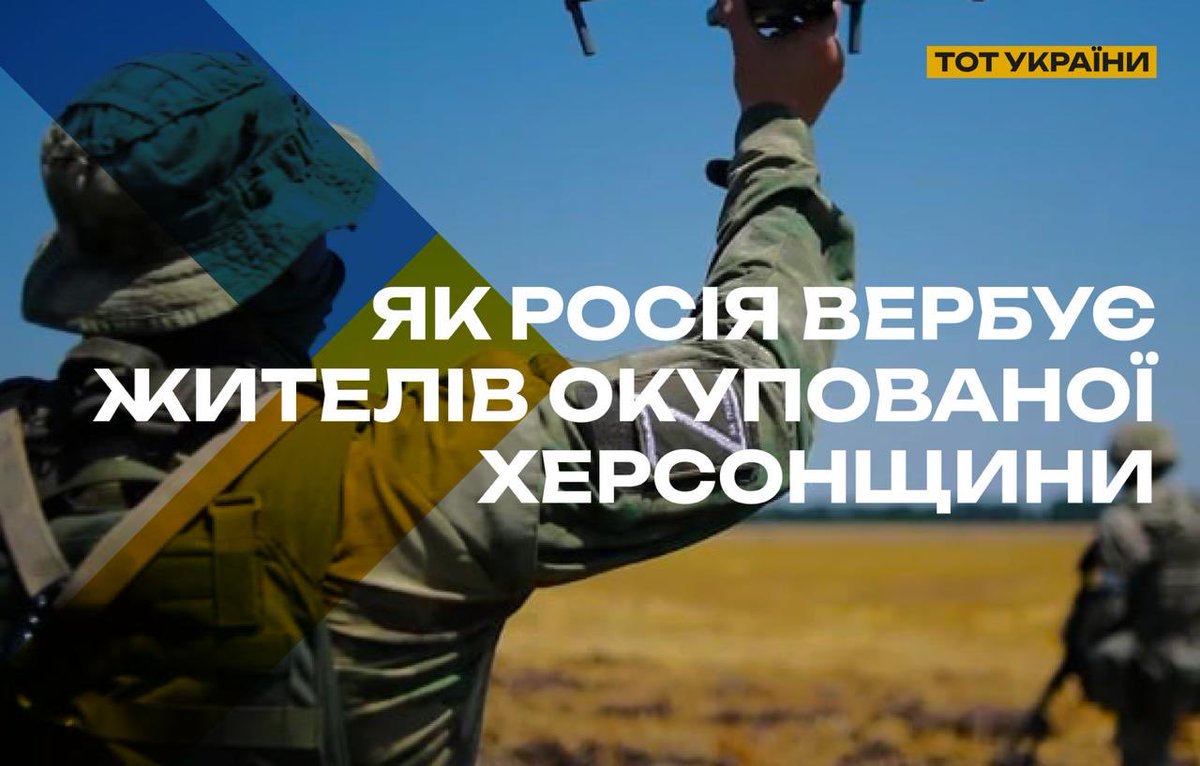
🟠In the occupied part of Kherson region, the Russians have announced a new recruitment campaign for the BARS-33 unit. Local residents are being actively lured into UAV operator positions with promises of:
🛑salaries starting from 200,000 rubles;
🛑short-term contracts;
🛑service in the rear or close to home.
For many men living under occupation who have been left without means of survival, this appears to be a chance to make a living and avoid frontline assault operations. However, behind the polished image of an “elite volunteer movement” lies a cruel deception.
🛑What is really happening?
Formally presented as “volunteer” detachments, BARS units are in practice fully integrated into the regular Russian army and used as ordinary infantry on the hottest front-line sectors. Moreover, it is virtually impossible to terminate these contracts: commanders routinely ignore resignation requests and threaten recruits with criminal prosecution.
1
1
44
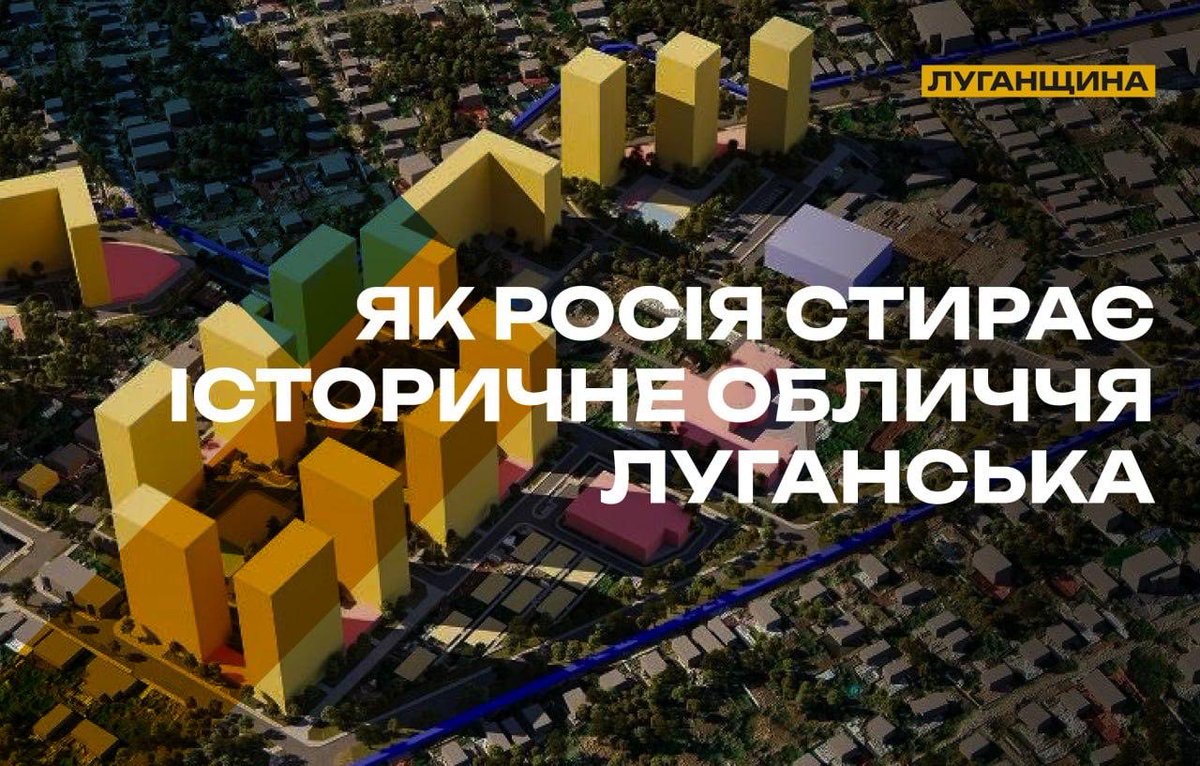
🔴The occupation administration in Luhansk has reached a new level of barbarism by launching a program of radical urban restructuring. Instead of restoring the destroyed outskirts, the enemy is deliberately demolishing relatively preserved historic neighborhoods near the city center in order to rebuild them according to standard Russian urban planning models.
🛑The “Standardne Mistechko” district, with its two-story buildings dating from the 1920s–1950s, was artificially declared unsafe and sentenced to near-total demolition.
🛑While entire city blocks remain abandoned, overgrown with weeds, and half-destroyed, resources are being diverted into commercial development projects that ignore the needs of local residents.
🛑A pilot project has been launched to dismantle the iconic spoil tips — unique mining waste heaps. They are being eliminated to free up land for yet more faceless high-rise buildings.
33
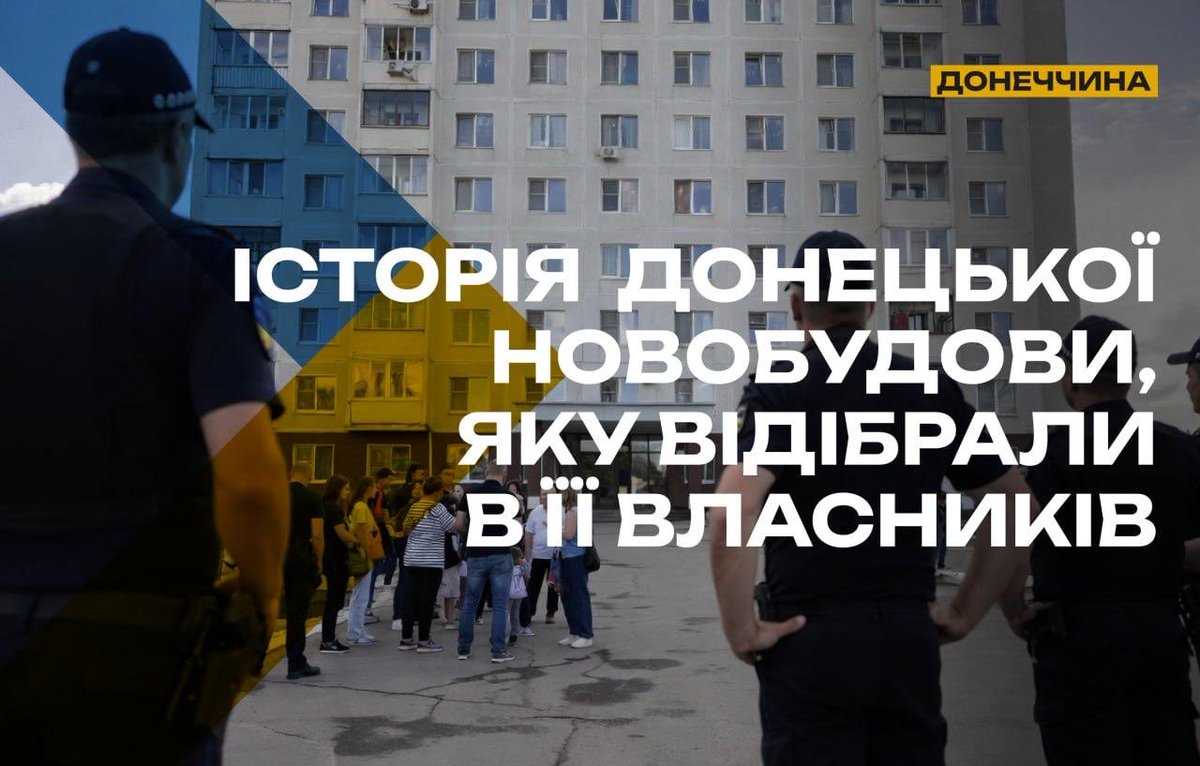
🔵The occupiers in Donetsk have reached a new level of cynicism by scaling up the practice of outright looting and рейдерство (corporate raiding/seizure) under the cover of security forces. An elite residential building at 24A Panfilova Avenue, where people had purchased apartments even before the occupation, has effectively been confiscated in favor of the so-called “Ministry of Internal Affairs of the DPR.”
How the occupiers are robbing lawful owners:
🟠In April 2025, unidentified crews operating under the protection of security forces broke into the building, removed private construction materials and people’s personal belongings, and then simply fenced off the property.
🟠Ignoring even their own “laws”: Among the victims are families who, after 2014 and under pressure of circumstances, even managed to register their children and housing in accordance with the imposed Russian legislation. However, for the punitive authorities, possessing “Russian Federation documents” was no obstacle.
🟠Large-scale looting instead of justice: Dozens of families who invested their last savings into the construction back in 2012–2014 were deliberately deprived of a roof over their heads, as the building was transferred to the “operational control” of militants.
1
23
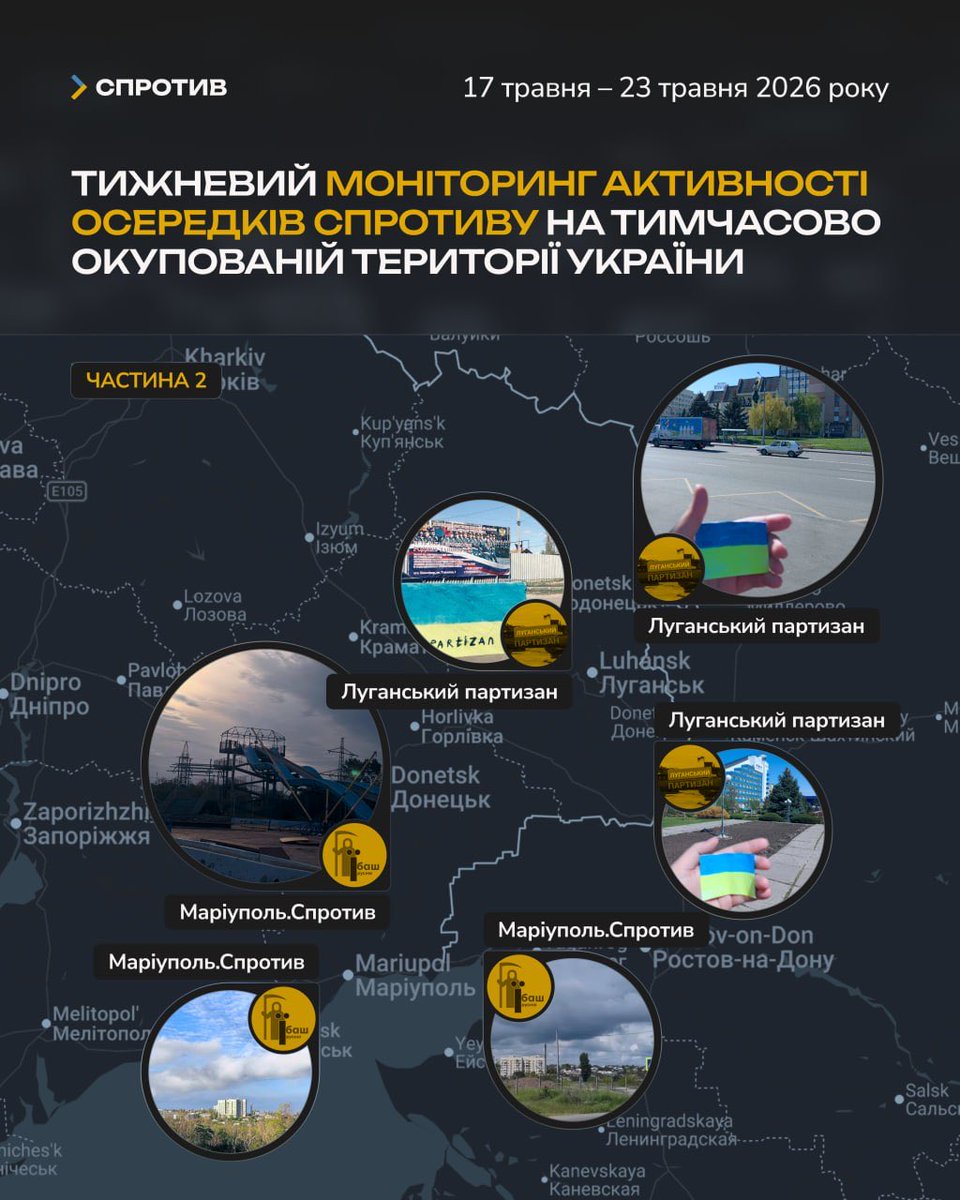
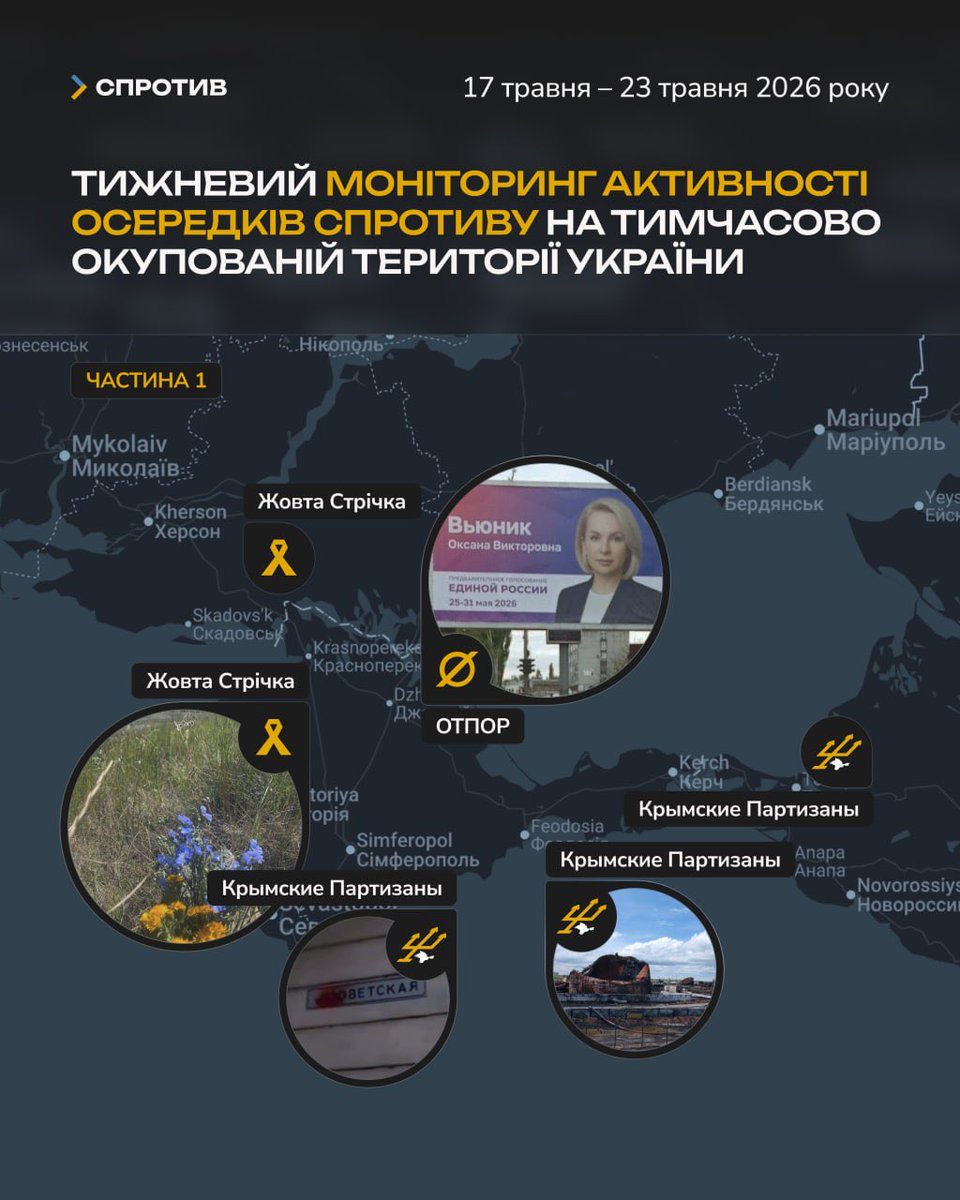
🇺🇦Resistance in the Temporarily Occupied Territories: Weekly Monitoring (May 17–23)
The Ukrainian underground continues to document the occupiers’ crimes, monitor the enemy’s political maneuvers, and mark cities with patriotic symbols. New information on the activities of resistance cells:
📍Mariupol:
🛑The “Mariupol.Resistance” cell continues constant monitoring of the situation in the city. Activists documented through photographs the “Extreme Park,” destroyed by the occupiers — once a popular recreation spot for Mariupol residents, now turned into a wasteland by the invaders.
📍Kherson Region:
🛑According to the “Yellow Ribbon” movement, the occupation administration has begun implementing the Russian “Zemsky Teacher” program. Due to a catastrophic staff shortage and the refusal of local educators to collaborate, the enemy is attempting to relocate teachers from remote regions of Russia en masse in order to Russify Ukrainian children.
📍Crimea (Simferopol, Yalta, Bakhchysarai):
🛑Activists from the “OTPOR” movement exposed behind-the-scenes Kremlin political games in Simferopol. The leadership of “United Russia” arrived there to prepare for the primaries scheduled for May 25–31. According to underground sources, Moscow is betting on promoting Oksana Viunnyk (deputy to collaborator-governor Balitsky), with plans to eventually push Balitsky himself out of power.
🛑At the same time, the “Yellow Ribbon” movement carried out a large-scale patriotic campaign in Simferopol, Yalta, and Bakhchysarai, covering city streets with yellow ribbons and pro-Ukrainian stickers.
🟠Crimean Partisans disabled the “Kuban–Crimea” gas pipeline, which had been actively used to support the needs of occupation forces on the peninsula.
🟠In addition to sabotage operations, the Crimean Partisans also carried out a symbolic “decommunization” action, symbolically removing Soviet-Russian street names from several streets in Crimean settlements.
📍Luhansk:
🟠The “Luhansk Partisan” cell carried out another operation in the city, documenting the appearance of patriotic symbols in key districts. Luhansk continues to resist and awaits its return home.
The resistance continues. Glory to Ukraine! 🇺🇦
3
4
98