This account is no longer active. Visit theresponsibleedge.com/ or connect with us on LinkedIn.
Joined December 2023
- Tweets 509
- Following 36
- Followers 35
- Likes 455
156 Photos and videos






Pinned Tweet

28 Jul 2025
👋 Welcome to @ResponsibleEdge — the podcast that explores what it really takes to grow ethically, lead responsibly, and communicate with transparency.
🎙 Join host Charlie Martin as he sits down with senior professionals and industry leaders to unpack the headlines and hard questions shaping ethical leadership today — from greenwash scandals to boardroom dilemmas.
If you're a business leader, marketer, or changemaker looking for honest conversations and bold ideas to navigate ethical growth, this is the place for you.
🎧 Listen & Subscribe:
📺 YouTube: youtube.com/@TheResponsibleE…
🎵 Spotify: open.spotify.com/show/7kNqh2…
🍏 Apple Podcasts: podcasts.apple.com/us/podcas…
🌐 Website: theresponsibleedge.com/
🔗 LinkedIn: linkedin.com/company/the-res…
🔔 Subscribe to The Responsible Edge and discover how to lead with integrity — without losing your edge.
All episodes brought to you by @truMRK, the independent mark of integrity for sustainability reporting. Visit trumrk.com to learn more.
#TheResponsibleEdge #EthicalBusiness #ResponsibleLeadership #Greenwashing #CorporateEthics #SustainableBusiness
1
1
292
Declaring a public benefit is not the same as delivering one. OpenAI's PBC structure does not close the accountability gap. It redecorates it.
In this episode, Charlie speaks with Asher Jay, @NatGeo Explorer and Chief Network Architect at the @ShareholderDem1. Her argument is simple yet bold. A Delaware PBC requires directors to consider stakeholder interests. It does not require proof that they have. Every restructuring OpenAI has undertaken came with purpose language. None produced an enforceable obligation; no mandatory safety metrics, no output-level disclosure, no civil society standing in governance.
Her suggested was forward is equally simple. Voting seats for civil society organisations on AI lab boards. Not advisory roles. Votes. Market-facing boards cannot represent interests that do not appear in price signals.
💡 The article discussed
Publisher: @FinancialTimes
Can public benefit corporations solve AI's governance challenges? The article asks whether PBC status is adequate for governing frontier AI.
🎯 Who's this for?
Board members, governance leads, and investors being asked to treat PBC status as evidence of accountability rather than a statement of intent.
#AIGovernance #CorporateAccountability #OpenAI #PublicBenefitCorporation
3
18
For context, this is the @FinancialTimes article referenced in the conversation: ft.com/content/3eeb7661-2b63…
6
This show was sponsored by @truMRK, the mark of trusted sustainability reports and communications.
1
5
🎧 Full episode on YouTube, Spotify and Apple Podcasts. 👉 theresponsibleedge.com/opena…
8
RT @theagcharter: Tis the season to be speaking 🎤 So, it's just as well Charlie loves it!
Though, as you can see, his fellow panellist Lou…
3
3
62% of sustainability professionals reported burnout in the past year. The frameworks designed to drive accountability are consuming the people hired to act on it.
In this episode, Charlie speaks with Kelsey Parsons GISEP, consultant at Weaving Green and Innovation Manager for Energy and Sustainability at @Port_of_Tyne. Her argument is this: CSRD, SBTi, GRI and Scope 1 through 3 are each legitimate in origin. Collectively though they produce what she calls the alphabet salad situation, a compliance burden that displaces strategic thinking. Every in-house sustainability professional ends up working on reporting. The degree varies. The pull does not.
Her proposed fix is linguistic but not superficial. Rename sustainability departments as value-making departments. Language shapes what a board hears and what a function is asked to do. Sustainability, in most organisations, sits adjacent to strategy. Her argument is that it should sit inside it.
💡 The article discussed
Publisher: Sustainability Transformations · Author: Dr Enock Ebbah, EngD
"ESG Reporting Fatigue: The Hidden Burnout Crisis in Sustainability Leadership"
The article documents the systemic causes: 249 competing rating products, 57% of executives citing data quality as their biggest challenge, and sustainability teams spending the majority of their time collecting and cleaning data rather than using it. Kelsey's contention is that better process alone will not fix a positioning problem.
🎯 Who's this for?
ESG leads, heads of sustainability, and the CFOs and HR directors deciding whether the sustainability function has the standing to do anything beyond filing the next disclosure.
#ESG #SustainabilityStrategy #CSRDCompliance #CorporateSustainability
3
23
This show was sponsored by @truMRK, the mark of trusted sustainability reporting and communications.
1
13
For context, this is the Sustainability Transformations article referenced in the conversation: sustainabilitytransformation…
2
🎧 Full episode on YouTube, Spotify and Apple Podcasts. 👉 theresponsibleedge.com/when-…
8
One percent of building demolition materials are reused. The sector has a £1.5 trillion circular prize on the table. The gap is not a knowledge problem.
In this episode, Charlie speaks with Amira Damji, chartered structural engineer and Director of Additive Sustainability. Her argument is simple but precise: embodied carbon is committed before most designers get involved, reclaimed timber and steel cost more than virgin supply, and contracts expire at handover before anyone is left accountable. If circularity is optional, she says, people are not going to do it.
Additive Sustainability intervenes before procurement takes over. It assesses existing structures, redirects physical stock from strip-out sites, and sets carbon budgets contractors must procure within. Asset maintenance, not circular economy. The language matters because it changes who is responsible.
💡 The article discussed
Publisher: @wef · Author: Fleming Voetmann
The article makes the investment and policy case for circularity. Amira's view is that it does not go far enough. Procurement still prices virgin material below reclaimed. No contract requires anyone to care what happens after they leave site.
🎯 Who's this for?
Structural engineers, project managers and sustainability leads trying to move circular commitments out of strategy documents and into procurement decisions.
#CircularEconomy #BuiltEnvironment #EmbodiedCarbon #ConstructionSustainability
3
1
1
21
Full episode on YouTube, Spotify and Apple Podcasts. 👉 theresponsibleedge.com/const…
11
This show was sponsored by @truMRK, the mark of trusted sustainability reporting and communications.
1
20
For context, this is the @wef article referenced in the conversation: weforum.org/stories/2025/09/…
7
Promising to clean up only future mess, while leaving the existing mess untouched, is not responsibility. It is accounting.
In this episode, Charlie speaks with Ben Wynn, co-founder of @gladclimate, whose earlier career was spent removing friction from consumer financial decisions.
That experience sharpens his thinking. Climate action does not fail for lack of awareness. It fails because it cannot compete with rent and energy bills. Awareness does not resolve that. Incentive design does.
Glad Climate funds carbon removal through brand marketing budgets and returns the value to members as discounts on essentials. Climate impact becomes embedded in a transaction people were already making. The moral case is incidental. The commercial case is not.
💡 The article discussed
Publisher: @apoliticalco Authors: Michael Shank, Ph.D. and Julia Trezona Peek
The article calls for more human climate communication. Lead with what people prioritise. Sell the outcome, not the framework. Ben's argument is that it does not go far enough. Better framing does not resolve a structural trade-off.
🎯 Who's this for?
Brand and sustainability leaders whose climate programmes are built around communication rather than participation.
#ClimateAction #CarbonRemoval #SustainabilityStrategy #BehaviourChange
3
12
This show was sponsored by @truMRK, the mark of trusted sustainability reporting and communications.
1
14
For context, this is the @apoliticalco article referenced in the conversation: apolitical.co/en/articles/th…
4
🎧 Full episode on YouTube, Spotify and Apple Podcasts. 👉 theresponsibleedge.com/why-c…
1
9

We interested to know how many people in our network have actively thought about their organisation's approach to building trust?
👉 Read more: trumrk.com/how-to-be-believe…
#Sustainability #Transparency #truMRK

3
3
14
So, another Earth Day comes around.
We don’t know about anyone else, but for us it’s always a moment to reflect on impact and, if we're honest, to question whether the work we’re doing is really making a dent.
Then, out of nowhere, you receive a message like this:
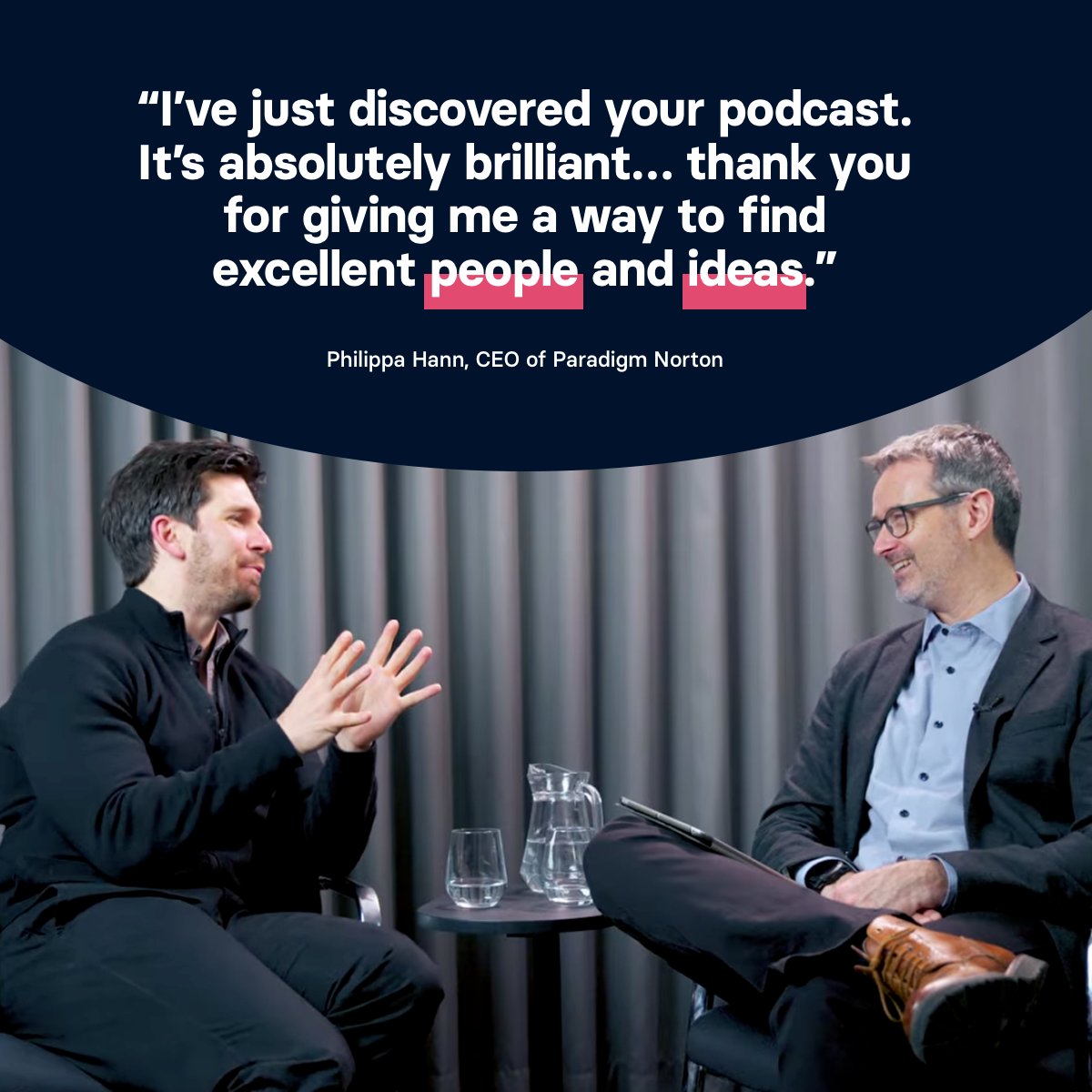
“I’ve just discovered your podcast. It’s absolutely brilliant… thank you for giving me a way to find excellent people and ideas.”
A big thank you to Philippa Hann of Paradigm Norton Financial Planning for sharing those kind words.
And it reminds us that even our small contribution still matters.
@ResponsibleEdge was created to raise awareness of the work we’re doing at @truMRK and @theagcharter to improve standards in sustainability communications. But also to highlight the environmental and social issues we face, and explore possible solutions with people who are thinking deeply about them.
I wonder how others are feeling about the impact of their work this Earth Day?
#EarthDay
3
3
50
If trust is fragmenting, does more data actually change behaviour at the point of purchase?
In this episode, Charlie speaks with Raja Darbari, co-founder and CEO of Ample, whose earlier roles included HSBC and Barclays.
The premise is straightforward. Payments are one of the few systems people use every day at scale, so Ample places merchant-level sustainability and social data directly into that flow. The intervention happens at the moment of transaction, not before it.
The model is intentionally light-touch. Provide clearer information about who a consumer is buying from and allow that to shape future decisions. But the constraints remain stubborn. Cost, convenience and habit continue to dominate, even when better data is available.
Trust is the more difficult variable. More information does not resolve disagreement if the source itself is questioned. Verification can improve confidence, but it does not create shared agreement, particularly in an environment where competing claims are easy to produce and difficult to adjudicate.
💡 The article discussed
Publisher: @axios
Author: @zacharybasu
Global trust data finds our shared reality is collapsing. The article argues that the basic conditions for shared understanding are weakening, with people no longer accepting the same sources, authorities or even the legitimacy of disagreement. Trust is shifting toward smaller, more localised networks.
The episode brings that into a commercial setting. Even when information is embedded directly into behaviour, it still competes with price and routine, and now also with declining confidence in the systems providing that information. Visibility improves access, but it does not guarantee influence.
🎯 Who’s this for?
Payments and banking leaders, ESG and data teams, and product owners building consumer-facing financial tools.
#TrustEconomy #PaymentsInnovation #ConsumerBehaviour #SustainableFinance
2
139
Watch, listen or read the full episode here: theresponsibleedge.com/payme…
2