
Professor of Law @nyulaw; legal expert on democracy and American government
Joined August 2022
- Tweets 2,210
- Following 681
- Followers 7,174
- Likes 75
42 Photos and videos
Pinned Tweet

17 Dec 2024
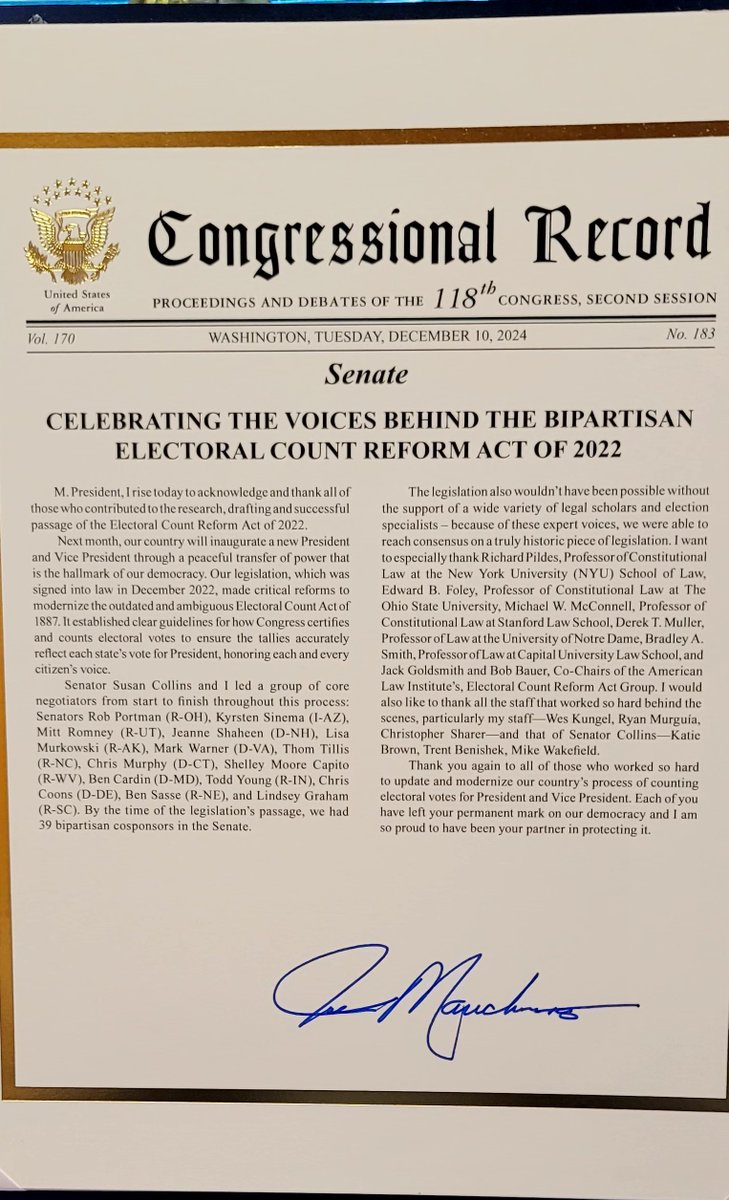
I'm honored to be thanked by Sen. Manchin, along with @derektmuller @Nedfoley @jacklgoldsmith and Brad Smith, Michael McConnell, and Bob Bauer, for our work on the Electoral Count Reform Act of 2022.
@CassSunstein
2
4
27
6,001
Rick Pildes retweeted

Jun 2
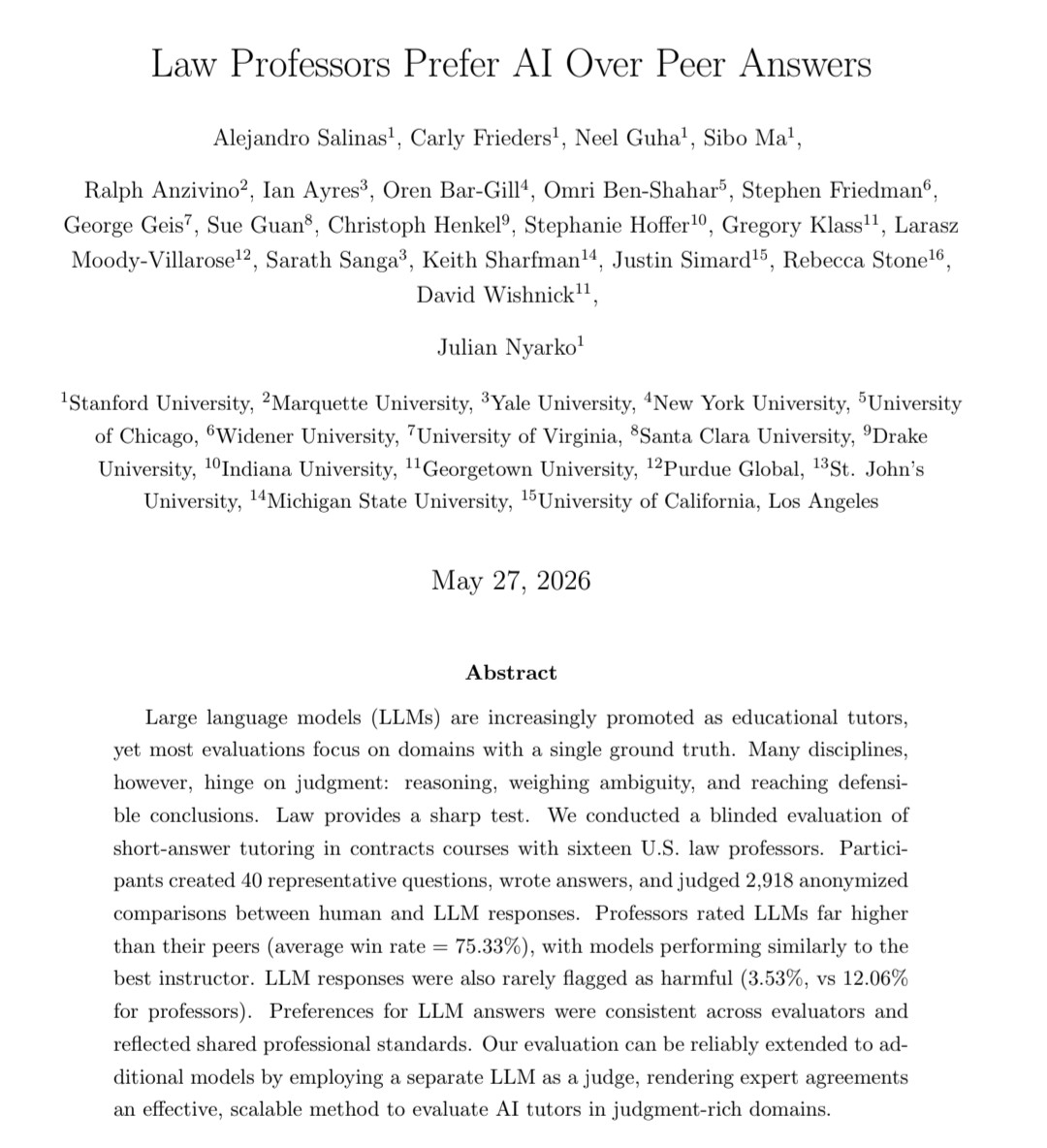
In a new Stanford study, law professors by far preferred Gemini 2.5 Pro's responses over those written by their peers when they were unaware of who wrote the answers.
63
306
1,745
459,211
May 26
Appreciate this recognition in @adamliptak's NYT deep dive into how the presidency came to be such a different institution than the Framers envisioned:
"But [the Framers] failed to anticipate a development that would make impeachment improbable: the rise of political parties.
The classic account of this constitutional blind spot is “Separation of Parties, Not Powers,” a 2006 article in The Harvard Law Review by Daryl J. Levinson and Richard H. Pildes.
“To this day, the idea of self-sustaining political competition built into the structure of government is frequently portrayed as the unique genius of the U.S. Constitution, the very basis for the success of American democracy,” they wrote. “Yet the truth is closer to the opposite.”
“As competition between the legislative and executive branches was displaced by competition between two major parties,” they added, “the machine that was supposed to go of itself stopped running.”
Links in reply
2
2
15
4,207
May 25
On the gerrymandering wars, some quotes from this Wa. Post story:
@SeanTrende: “The whole point of districts is saying that area matters and place matters, and we’re just breaking that,” Trende said.
@NPersily: The [Callais] decision “couldn’t come at a worse time because the parties are so polarized and the parties are treating every change in election law as if it’s existential”
Me: “All this just further alienates Americans from democracy and makes them feel even more that the process is rigged and manipulated."
Story linked in reply.
5
4
19
9,026
May 22
This is a shock. Ran was a major scholar of comparative constitutionalism and still young. May his memory be a blessing.

I’m in shock. RIP. I have more to say about Ran but I’ll do that another day
politics.utoronto.ca/news/me…
1
1
17
11,453
May 20
I have long argued that we should give more weight in redistricting reform to the importance of competitive districts. You often hear that "the big sort" makes it difficult to create competitive districts.
In an article with @ProfNickStephan, "Districting and Competition," we make use of simulated districting to show that we could have twice as many competitive districts without any sacrifice in traditional districting criteria. That would make the House more responsive to shifts in voter preferences and reduce the extremism associated with safe seats.
Link in reply
1
3
16
2,713
May 20
Here's the link to "Districting and Competition," coming out in the Penn. Law Review.
papers.ssrn.com/sol3/papers.…
3
324
May 18
Political scientists Ray La Raja @raylaraja and Zach Albert have published a book, Small Donors in US Politics: Myth and Reality. Here's their key finding:
"Small donors – those giving less than $200 – are not a representative cross-section of Americans. They tend to be more affluent, more educated, and more politically engaged than the typical voter. Most importantly, they are more intensely partisan and ideological. In these respects, they often resemble larger donors more than they do citizens who don’t make political contributions."
1
2
8
802
May 17
"Shifting to Proportional Representation is Not Necessary to Ensure Black Representation in the South"
I posted this short essay in response to Nate Cohn's NYT study published today.
I'll include some of that post here, then provide links to my post and Cohn's essay.
"Both before and after Callais, a number of commentators have suggested Congress should enact some form of proportional representation to ensure continued black representation in the South. This important new NYT piece by Nate Cohn demonstrates that such a radical shift in American electoral structures is not necessary to achieve that goal."
1
1
2
1,290
May 17
"If you think Congress would never enact a statute to require that congressional districts be compact; keep towns, counties, and cities together; and not take partisanship into account, ask yourself which is more likely: that Congress would do this or that it would change the entire system of electing members of Congress through proportional representation, with all the other changes that would have to accompany that (would voters vote for a party list, rather than individual members? would party leaders have the power to choose those lists? etc).
"One issue is that I don't what the likely partisan outcomes overall would be if this approach were adopted nationally. This would be a process-based, rather than outcome-based, approach to redistricting -- a tension I've written about before. If this approach would tend to generate overall partisan outcomes that would significantly favor one party or the other, there's probably little likelihood Congress would enact it. But if not, this approach is worth considering."
1
1
375
May 17
May 17

420
May 17
This "correction" turns out to be wrong. Nick has acknowledged that in an update to this post. So for now, the Cohn article stands as correct
May 17

Important correction ->
3
2,286
May 17
653
May 14
Academic proposals for term limits began in the early 2000s, way before any public discussion. Might depend on which specific reform proposals one has in mind. @joshtpm

Josh, that’s just not true. @PeteButtigieg made SCOTUS reform a key issue during the 2020 primary, getting the other candidates to start talking about it, and he explicitly cited my and @GaneshSitaraman’s 2019 article on the debate stage.
nbcnews.com/politics/2020-el…
1
10
2,541
May 14
"In Covid's Wake" was one of the "best books" of 2025 on many lists. For those who care about democratic governance, the role of science in democracy, or seek to understand our politics today, I think it's an essential, if troubling, read.
I interviewed one of the authors, Frances Lee in a podcast for NYU's Democracy Project. Link is in the reply
2
3
16
2,075