
Pescatarian Presbyterian Views are my own and don't represent the views of FCA or the Cardinals Follow me on instagram @rickystl49
Joined March 2010
- Tweets 5,594
- Following 101
- Followers 50,090
- Likes 976
349 Photos and videos










Rick Horton retweeted

May 17
Shoutout to the incredible Cardinals ushers, Randy Krone, Julie Kruempel, and Pebbels Lovell for keeping us safe and letting us have an amazing time! #gocards

20
39
1,878
37,885
Rick Horton retweeted

Apr 12
Cardinals Bench Coach Daniel Descalso joined @RickyH49 from the dugout during last night's game. Check out the link below
vimeo.com/1182317196/b465045…
3
10
3,927

Mar 15
Beware the Ides of March. Seven players sent back to minor league camp today.
1
22
4,390
28 Dec 2025
Why do they keep showing football when I’m trying to watch commercials #gatorbowl
3
18
3,694
Rick Horton retweeted

15 Dec 2025
@RickyH49 today is my 49th birthday, can you give me a retweet, a shout out or a like?
1
1
9
3,173
17 Nov 2025
Loving this. Debuting On PBS now. Love the inclusion of Native Americans
9
2,699
Rick Horton retweeted

3 Oct 2025
10/3/85
Already posted our daily recap tweet, but this game was big enough that it seems like it would be worthwhile to post the video of the 9th inning again!
Follow for more fun down the stretch and in the 1985 MLB #postseason!
#StLCards #ForTheLou #TheHeatIsOn
2
10
40
3,136
1 Sep 2025
It’s not funny to lose when Nikki Glaser and Greg Warren are at the ballpark. Go Cards!
7
28
3,924
Rick Horton retweeted

26 Jul 2025
@RickyH49 this what else happened on this date, beside you getting released by the @Cardinals. You do have great seat because your my eyes here in Kentucky for me. In listened #stlcardinals 📻 #CaddyshackDay
25 Jul 2025

If you want to feel really old, Caddyshack was released 45 years ago today…
1
1
5
4,362
Rick Horton retweeted

25 Jul 2025
#OTD 1990 - The Cardinals released Ricky Horton.
Sorry @RickyH49 - But you got a pretty good seat now!
#STLCards #ForTheLou
1
2
67
7,328
Rick Horton retweeted

11 Jul 2025
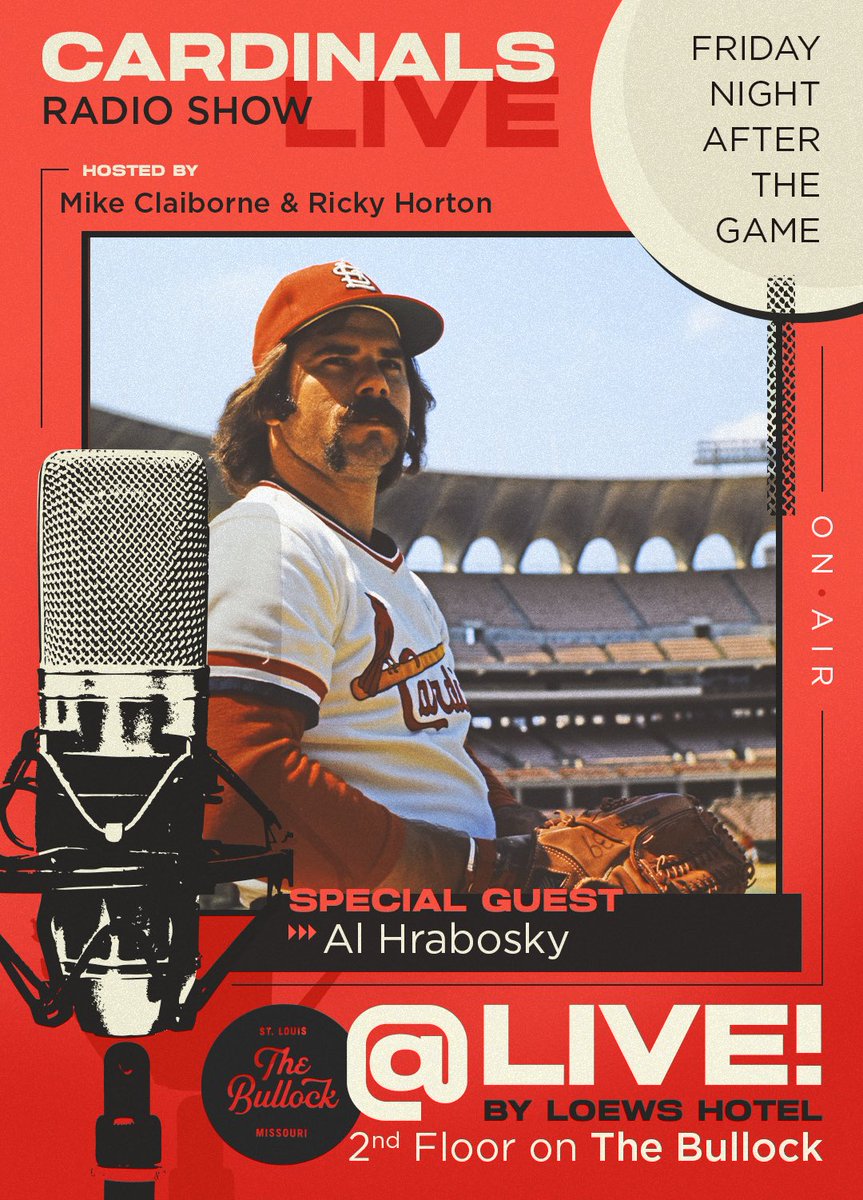
Join us tonight after the game across from Busch on the second level of Live by Loews #STLCards @CardinalsAlumni
5
15
3,757

24 May 2025
Both pitchers equally effective and neither gets what they really want in a crazy scoring. Dampens the Cardinal victory for me. Team first. Yes. But why spit on pitchers ?
3
2
26
6,901
24 May 2025
Pitchers union reports kick in the teeth to Ryan Helsley and Stephen Matz on scoring decision after a cardinal win.
3
23
5,253
Rick Horton retweeted

24 Apr 2025
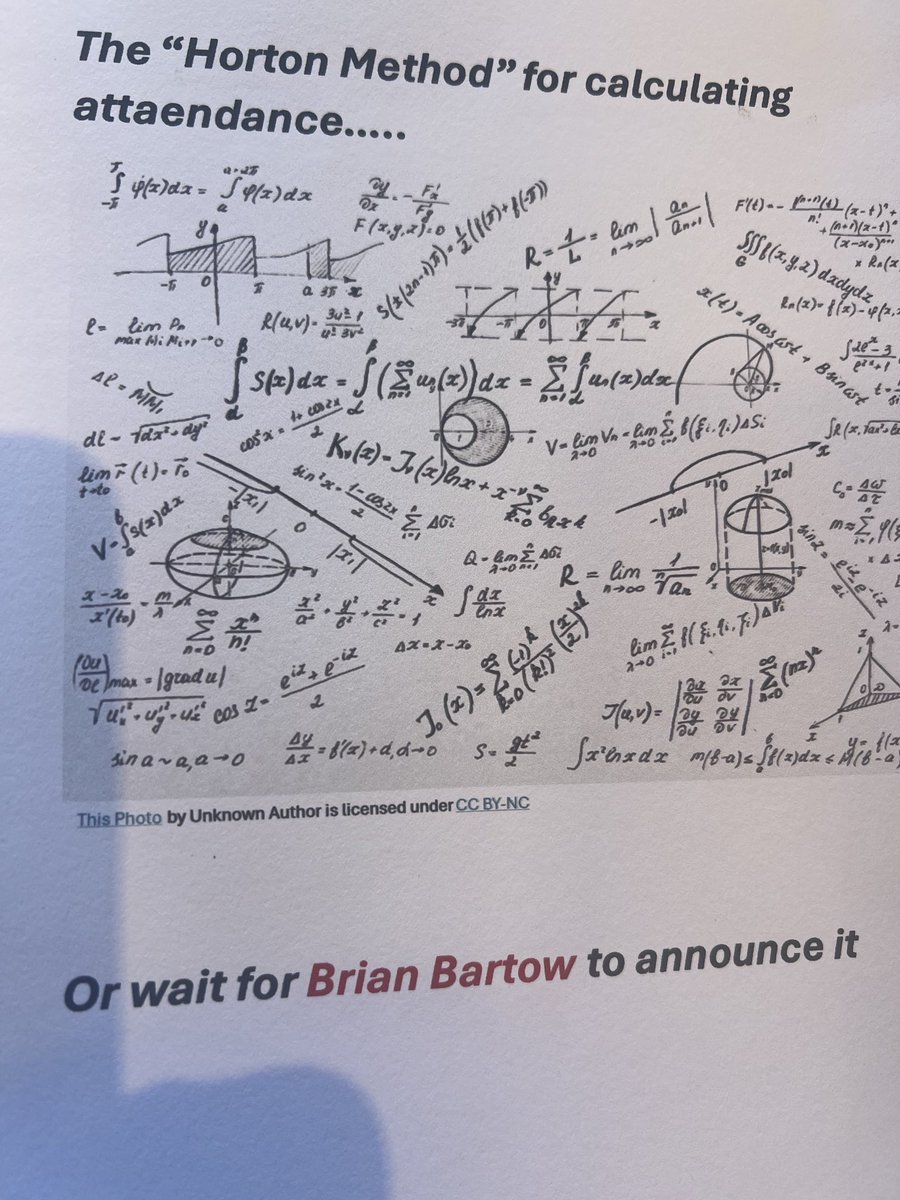
@RickyH49 - To help with those attendance guesses.
Modulus of Baseball
Given the radial nature of both baseball and bat, what is the surface area when full contact is made between baseball and bat?
To calculate the surface area of contact between a baseball and a bat when full contact is made, we need to make some assumptions and simplifications based on the geometry of both objects. The term "radial nature" suggests we consider the spherical shape of the baseball and the cylindrical shape of the bat, with contact occurring at a point where their surfaces meet. Here’s a step-by-step approach:
Assumptions:
Baseball: A standard baseball has a diameter of approximately 2.9 inches (radius ≈ 1.45 inches or 0.0368 meters). It’s a sphere.
Bat: A baseball bat’s barrel is roughly cylindrical where contact typically occurs, with a diameter of about 2.5–2.75 inches (let’s assume a radius of 1.25 inches or 0.0318 meters for the barrel). The bat’s surface is approximated as a cylinder at the point of contact.
Full Contact: "Full contact" is ambiguous, but in baseball, the ball typically contacts a small area of the bat’s surface due to the ball’s spherical shape and the bat’s curvature. We’ll assume the contact forms a circular or near-circular area where the ball’s surface presses against the bat, deforming slightly to conform to the bat’s cylindrical surface.
Deformation: In reality, the baseball compresses slightly upon impact, increasing the contact area. For simplicity, we’ll first estimate the contact area geometrically (without deformation) and then consider deformation effects qualitatively.
Geometric Approach (No Deformation):
When a sphere (baseball) contacts a cylinder (bat) tangentially, the contact area is theoretically a single point if both surfaces are perfectly rigid. However, in practice, the contact area is a small, approximately circular patch due to the relative curvatures. To estimate this, we need the contact area formed when a sphere touches a cylindrical surface.
The contact area depends on the curvatures of the two surfaces:
In contact mechanics, the contact between a sphere and a cylinder produces an elliptical contact patch, but for simplicity, we approximate it as circular. The radius of the contact area can be estimated using the Hertzian contact theory for elastic bodies, which accounts for the elastic properties of the materials and the force of impact. However, without specific force data or material properties (e.g., Young’s modulus of the baseball’s leather/cork and the bat’s wood or aluminum), we’ll estimate geometrically first.
The contact area is influenced by the relative curvature. The effective radius of curvature
Reff for a sphere and cylinder in contact is given by:
However, this gives us the effective curvature, not the contact area directly. Without deformation, the contact is a point (area ≈ 0), so we need to account for deformation.
Deformation-Based Approach (Hertzian Contact):
In reality, the baseball deforms upon impact, creating a finite contact area. The contact area depends on:
The force of the impact (e.g., from a pitched ball at 90 mph struck by a swinging bat).
The elastic properties of the baseball and bat (Young’s modulus, Poisson’s ratio).
The geometry of the contacting surfaces.
For a rough estimate, let’s use Hertzian contact theory. The radius ( a ) of the circular contact area for a sphere on a cylinder is approximately:
Where:
( F ): Normal force at impact (unknown, but we’ll estimate).
Reff : Effective radius (calculated as 0.0171 m).E*: Effective modulus of elasticity, given by:
Eb, Ec : Young’s moduli of the baseball and bat.
Vb, Vc : Poisson’s ratios.
Estimating Parameters:
Force ((F)): A baseball pitch at 90 mph (40 m/s) with a mass of 0.145 kg has momentum p = m \cdot v = 0.145 \cdot 40 = 5.8 \ , \text(kg·m/s). Upon impact, the ball reverses direction (e.g., at 100 mph or 44.7 m/s for a home run), so the change in momentum is roughly \Delta p = 0.145 \cdot (40 44.7) \ approx 12.3 \, \text(kg·m/s). If the contact time is ~0.001 seconds, the force is
Material Properties:
Baseball (leather cover, cork core): ApproximateEb≈ 10 \, MPa = 10 x 106Pa, Vb≈ 0.4.
Bat (wood, e.g., ash):Ec≈ 10 GPa = 10 x 109Pa , Vc ≈ 0.3
CalculateE*:
Contact Radius:
Surface Area: The contact area is approximately circular, so:
A = ∏a2 = ∏ ⋅ (0.00236)2≈ ∏ ⋅ 5.57 x 10⁻⁶≈ 1.75 x 10⁻⁵, m2
Convert to square inches (1 m² = 1550 in²):
Final Answer:
The surface area of contact between a baseball and a bat during "full contact" is approximately 0.027 square inches (or about 17.5 mm²). This estimate assumes a high-impact scenario with slight deformation, modeled using Hertzian contact theory.
3
1
3
2,432