
Co Founder of @Nakama_Labs. Follow me if you want to learn more about the ecosystem on IOTA Smart Contract Chains Shimmer and IOTA. PFP @Repeatr888
Joined April 2014
- Tweets 2,406
- Following 1,413
- Followers 4,243
- Likes 8,118
209 Photos and videos


Kappy retweeted

22 Apr 2025
May 5th will mark the beginning of a new era for @IOTA.
A modular, developer-friendly chain, built on years of research and real conviction.
At #Nakama, we’ve been preparing for this moment.
We’re ready to build what’s next.
#IOTARebased #Nakama #Web3

5.5.2025 → A new IOTA begins.
Built on nearly a decade of research.
Inspired by the best of Web3. Committed to open-source values
🔗 blog.iota.org/rebased-mainne…
Smart contracts, decentralization, real-world adoption – just 2 weeks to launch🧵⤵️ 1/4
1
16
97
1,833
Kappy retweeted

23 Apr 2025
Speaking of the big transition we are going through!
✅Why should you stake your IOTA?
✅ What’s the job of Validators?
✅ How did we find the ones currently in the testnet?
✅ What is happening in Genesis?
✅ What should a staker do / know?
✅ What is slashing?
✅ What about Governance?
✅ What about Commission rates, APY, Rewards Distribution?
✅ How does the active Committee change / rotate?
✅What’s liquid staking and why is it useful?
✅What is Starfish and why will it be a great update?
Probably not gonna have time to talk about it all, but @alexsporn and I will try our best.
🔔 Did you have a good time at the Rebased Townhall? We've got more for you! Join an extra special X-Space tomorrow on staking, validators & the Mainnet launch:
🗓️ April 24th, at 3PM CEST
👥 with @alexsporn & @PhyloIota ⤵️
x.com/i/spaces/1YqKDZbzzkDJV

7
43
161
7,906

5.5.2025 → A new IOTA begins.
Built on nearly a decade of research.
Inspired by the best of Web3. Committed to open-source values
🔗 blog.iota.org/rebased-mainne…
Smart contracts, decentralization, real-world adoption – just 2 weeks to launch🧵⤵️ 1/4
93
384
1,006
357,392
Kappy retweeted

22 Apr 2025
We told you to grab front-row seats… 🎟️
Now the stage is live.
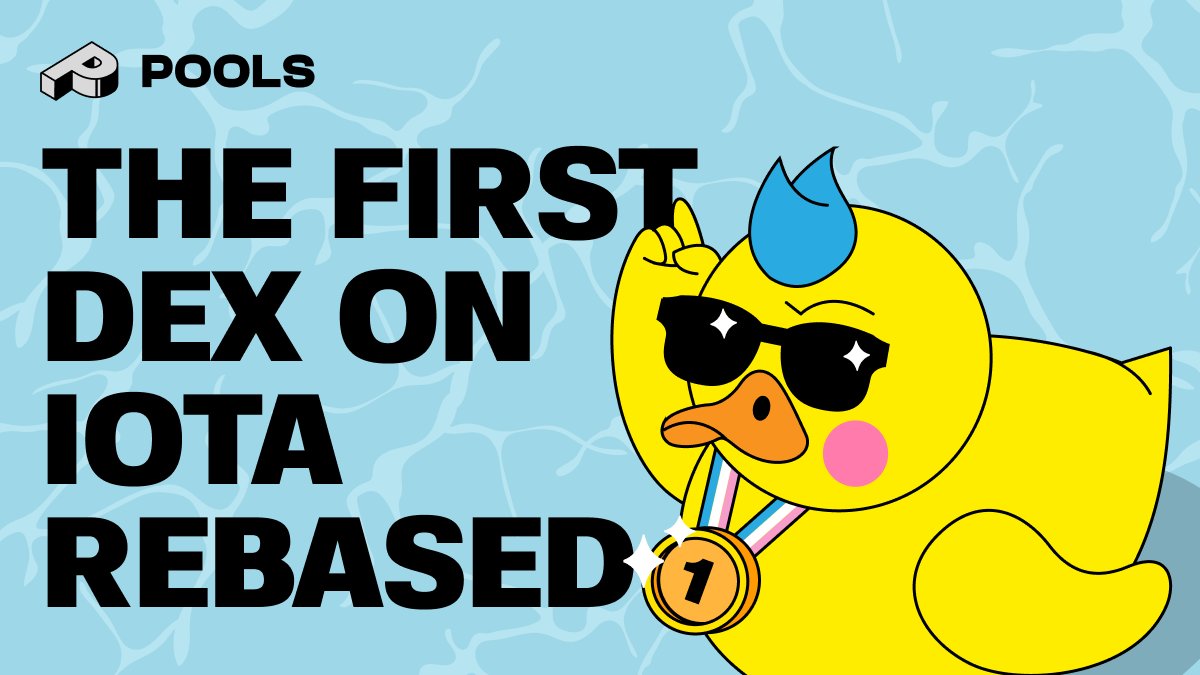
@PoolsFinance is launching its test version on IOTA Rebased 🌊
And yes… $stIOTA will need a market.
This is where it begins 👉 pools.finance
🔗 Read more medium.com/@Pools_Finance/in…
#IOTA #Rebased #DEX
3
37
127
13,273
Kappy retweeted
16 Apr 2025
Over the past few months, we’ve been quiet busy building, planning, and preparing. 🏗️
Now it’s time to share what’s next: Nakama is officially expanding to @IOTA Rebased.
Learn why we made this decision and which #dApps we’re launching on the new chain:
👉 Building Forward: Nakama Expands to IOTA Rebased
🔗 medium.com/@NakamaLabs/52798…
#Nakama #IOTARebased #Web3 #DeFi

10
57
148
10,819
Kappy retweeted
11 Feb 2025
👇 Set your alarms! 👇
See you TODAY at 6PM CET ⏰🚨
🙋♂️🙋♀️ Raise your hand if you’re joining 👇🔥
#DeFi #Crypto
4 Feb 2025

🎙️ Join us for a Nakama X Space AMA! 🚀
📅 February 11th | 6PM CET
Got questions about Nakama and our ecosystem? This is your chance to dive deep into our latest developments, dApps, and what’s ahead in 2025. Don’t miss the conversation!
Drop your questions in our Discord servers ahead of time, and we’ll answer them live! 🎧🔥
🔗 x.com/i/spaces/1dRKZdaanLQJB
Find our Discord links in the bio of @DeeprFinance & @Virtue_Money
#Nakama #AMA #DeFi #Web3 #IOTAEVM

1
10
19
899
Kappy retweeted

21 Jan 2025
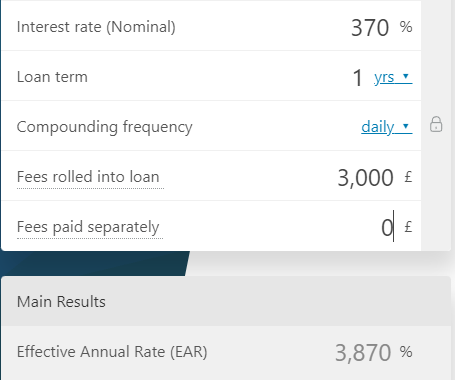
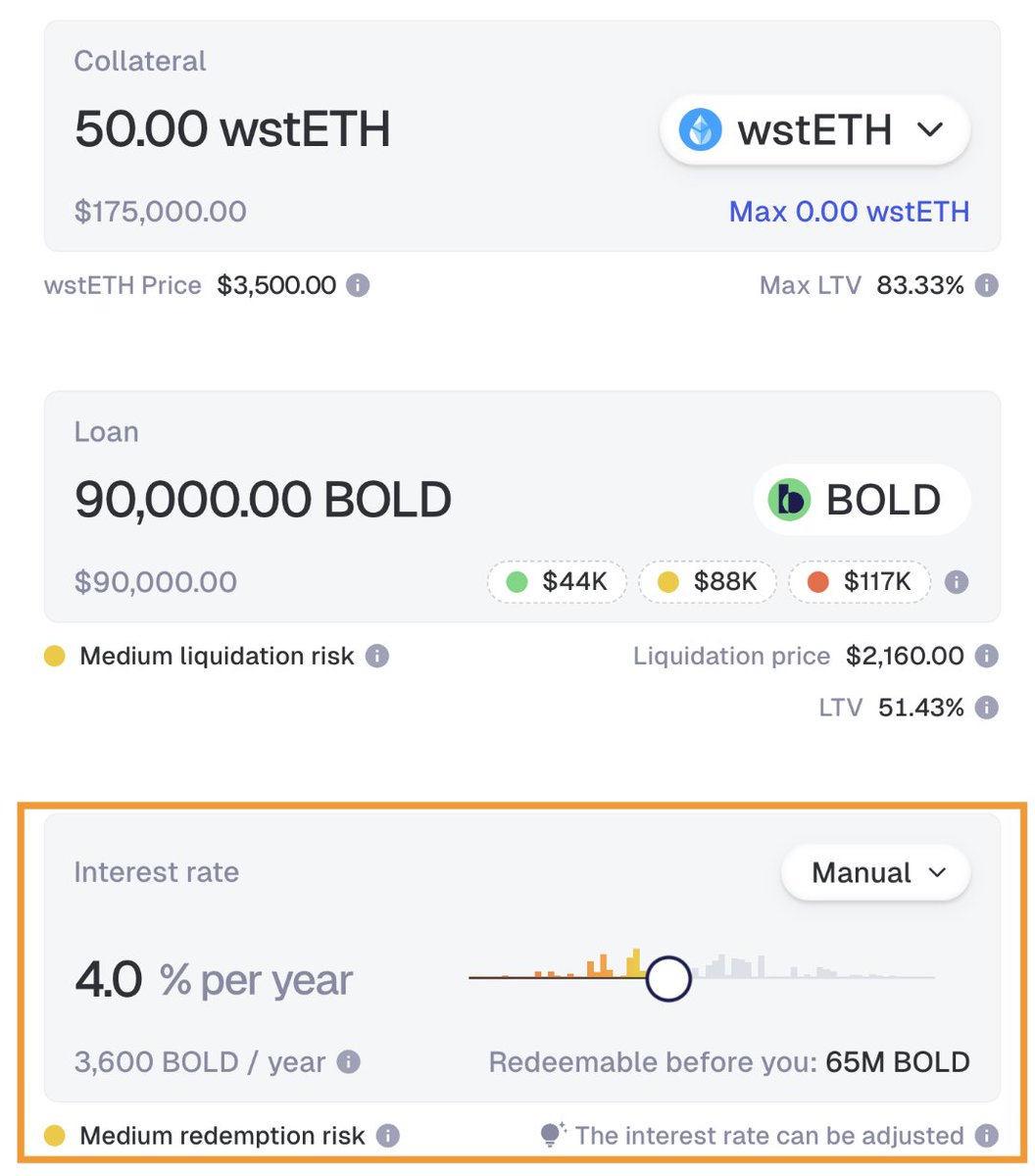
In Liquity V2, users have full control by setting their own interest rates. This introduces a new primitive to DeFi, so let's explore how to use it.
When opening a loan, you need to set your collateral and debt amounts, which determines your loan-to-value ratio. With Liquity V2, you now have a third parameter to control: your interest rate.
The interest rate sets the cost of your loan, as well as your risk of redemption.
These two factors are inversely related. The lower your rate, the cheaper your loan, but the higher your risk of redemption, and vice versa.
This is because $BOLD redemptions for protocol collateral are processed against lowest interest rate positions first.
This creates two primary user types:
- Aggressive: wants the cheapest loan possible and is willing to closely monitor their position and adjust their rate frequently.
- Passive: prefers a hands-off approach, willing to pay a higher rate for the peace of mind that comes with a low-maintenance position.
Between these two stereotypes, there are many different risk profiles. You need to determine where you fit in and act accordingly.
How to set your rate
To determine your ideal rate, you need to consider two factors:
- The rates set by other borrowers, given your redemption risk is relative to other users’ positions.
- Current rates across DeFi, which provide a sense for the market's theoretical equilibrium rate.
The positions of other borrowers can be viewed on the borrow screen. As you adjust your rate, the debt in front and your costs will change.
For example, suppose you see a large number of borrowers on Liquity V2 in the 8.5% range. You could then position yourself at 10% and be confident that you're paying a relatively low rate with lower redemption risk, despite the overall market suggesting it's a riskier position.
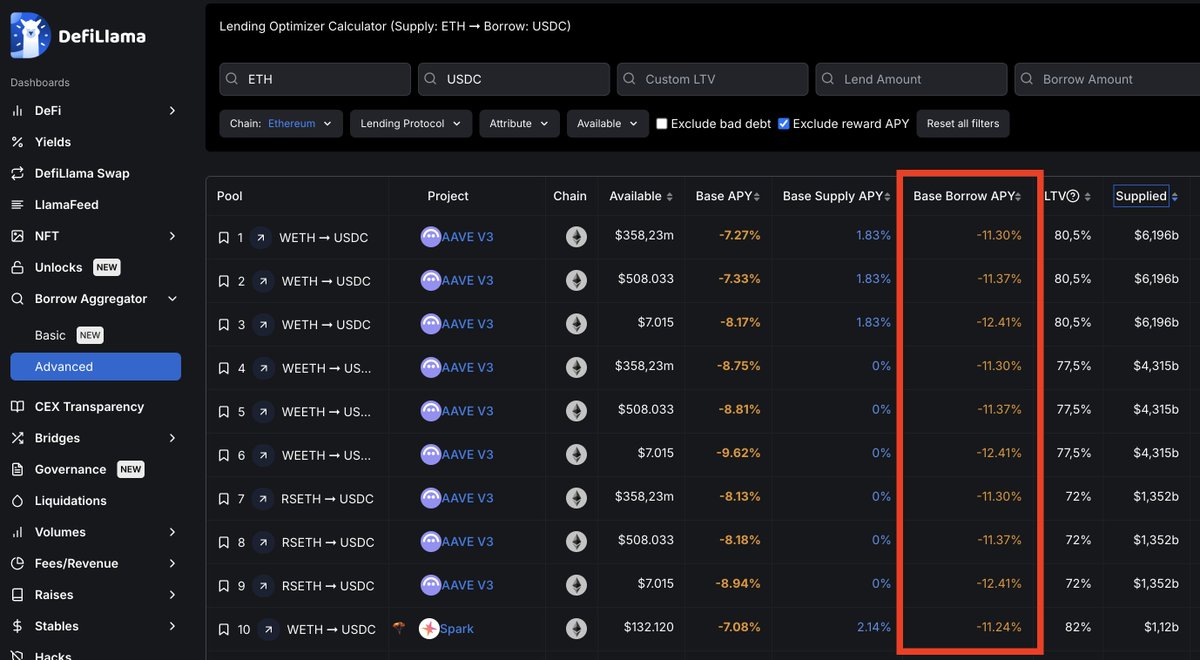
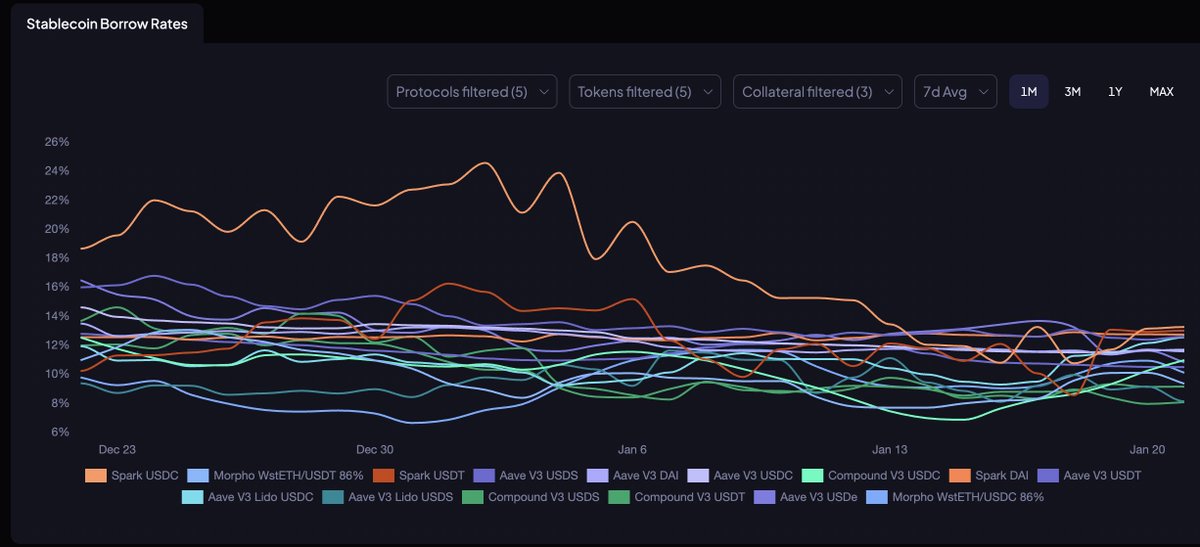
While your primary benchmark is the rate distribution across other borrowers, you can help position yourself by using rate dashboards like @DefiLlama, Sphere by @BlockAnalitica , and @SuperlendHQ.
On this chart from the Sphere dashboard you can see that currently 8% is an aggressive borrow rate, and 16% a passive one.
You can also view current market rates for borrowing stablecoins across multiple markets and compare them in a table format, here an example from DefiLlama.
You can filter it based on various criteria easily, finding the exact data you need.
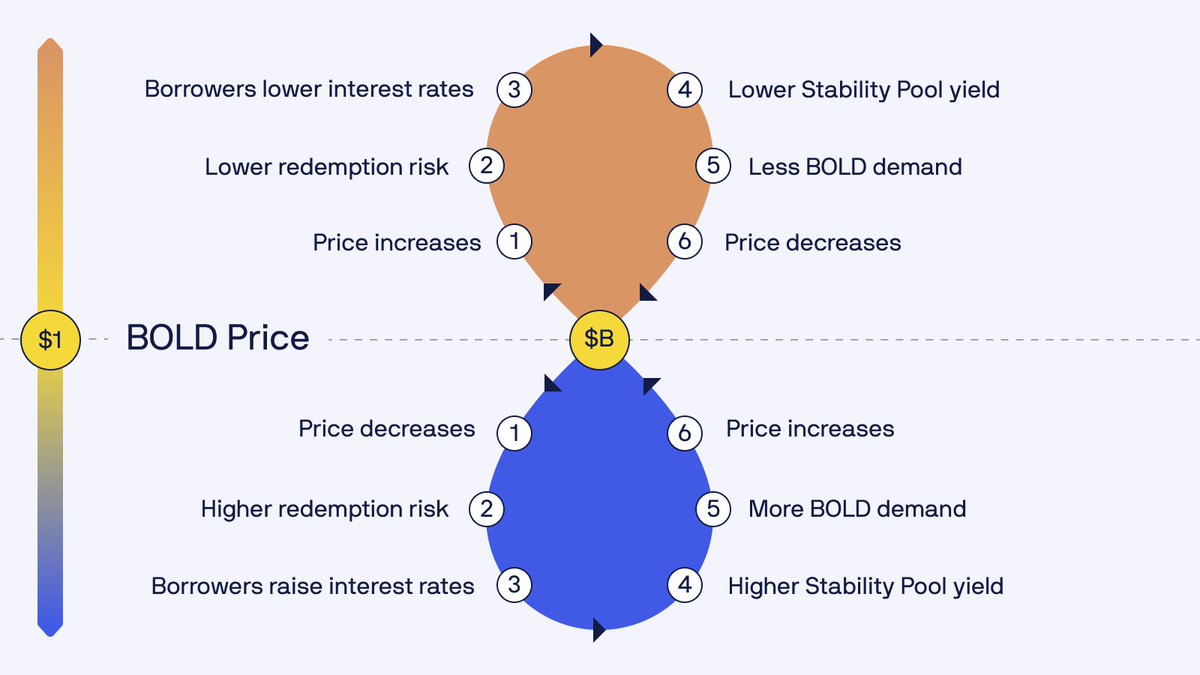
Impact of the BOLD price
Redemptions usually occur through arbitrage when BOLD trades below $1, as they're not profitable otherwise. Therefore, when BOLD is above $1, the risk of redemption is nearly zero.
If BOLD trades above peg for a prolonged period of time, users will adjust their rates to the downside, decreasing their cost and allowing them to increase the circulating supply.
Putting it all together
Your interest rate determines both the cost of your loan and your risk of redemption. Lower rates reduce your cost but increase your redemption risk. Set your rate in line with how actively you want to manage it, and keep an eye on the price of BOLD.
7
17
126
11,160
Kappy retweeted
20 Jan 2025
Liquity V2 will be launching on Jan 23rd ‼️
Get ready to be $BOLD.
30
108
438
83,301
Kappy retweeted

6 Jan 2025
Our team is back in action! 🫡 We are exploring opportunities for events and conferences as we gear up for a monumental 2025.
Get ready for the launch of an unparalleled yield-generating #DeFi ecosystem on top of #tokenized assets. Stay tuned!

1
32
120
3,690
Kappy retweeted
9 Dec 2024
Our CEO and founder, @DomSchiener, is in town for #ADFW2024! Feel free to say hello and chat about the future of @realizefinance


7
64
258
5,500

3 Dec 2024
Workcation with some of the team at @Nakama_Labs in Argentina, together we can achieve our dreams. #IOTA
11
32
178
4,169
Kappy retweeted
22 Nov 2024
#Tokenization is revolutionizing finance, yet many efforts fall short by prioritizing closed ecosystems over real innovation.
At Realize, we focus on breaking these barriers, enabling tokenized assets to thrive in open, interconnected environments.
Our mission is to empower users by maximizing the utility and accessibility of their assets, not restricting them with walled gardens.
We believe tokenization should unlock opportunities across the financial landscape, bridging the gap between #TradFi and #DeFi.
Unlike others, we are building systems that prioritize user value. Together, we will harness the full potential of tokenization, transforming how assets are managed, traded, and utilized. Join us, we are leading the way:
👉 realizeassets.com

1
35
92
2,099
17 Sep 2024
Excited to be at #Token2049 in Singapore with @realizefinance
16 Sep 2024

We are making incredible strides and forging new partnerships with top players in both Web3 and traditional finance.
This week, our team is expanding our network at #TOKEN2049 in Singapore.
Exciting updates coming soon!
Feel free to get in touch.
📩 DMs open!
#IOTA #Ethereum #RWA

11
66
1,744
Kappy retweeted
16 Sep 2024
We are making incredible strides and forging new partnerships with top players in both Web3 and traditional finance.
This week, our team is expanding our network at #TOKEN2049 in Singapore.
Exciting updates coming soon!
Feel free to get in touch.
📩 DMs open!
#IOTA #Ethereum #RWA
5
32
106
21,849
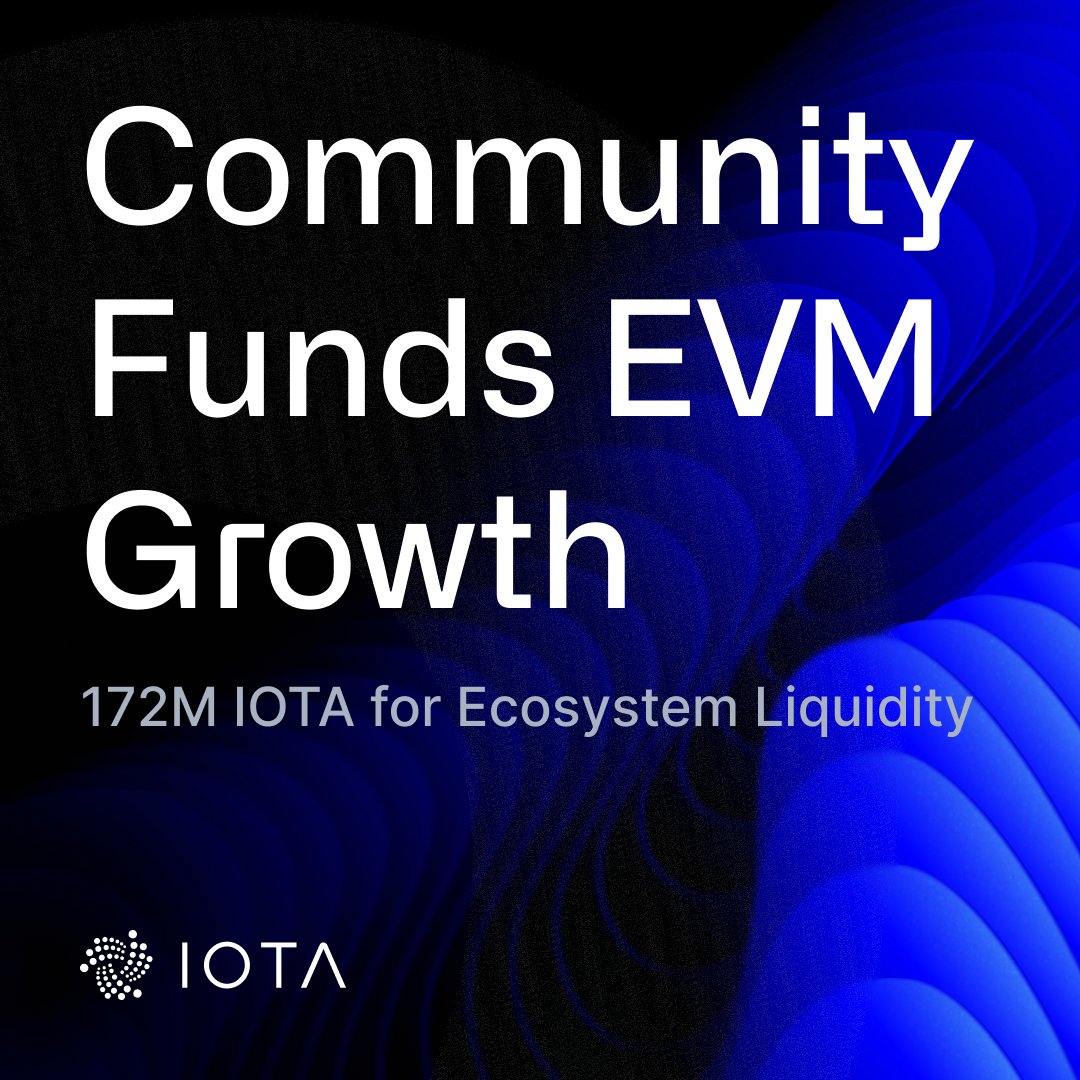
📣 The #IOTA community has voted to kickstart the IOTA EVM ecosystem with a massive liquidity boost!
Get ready for 172 million $IOTA tokens to flood in & power various dApps, creating deeper liquidity and an incredible #DeFi experience. More info 🧵👇
blog.iota.org/community-fund…
20
135
389
64,755
Kappy retweeted
24 Jul 2024
Just less than 2 hours to go! Don’t miss our X Space with @PythNetwork today at 7 PM CEST! 🎉
We’ll dive into why oracles are essential for DeFi dApps like @DeeprFinance.
Join us for an insightful discussion! 🌟
#IOTAEVM #DeFi #decentralized
18 Jul 2024
Save the date for Wednesday, July 24 at 7 PM CEST!
Join us for an exciting X Space with @PythNetwork! 🔮 We’ll discuss why oracles are crucial for #DeFi dApps and how #Pyth enhance data accuracy and security in #Nakama.
Don’t miss out! 🌟
▶️ twitter.com/i/spaces/1gqGvNv…
#DeFi #IOTA #EVM #PythNetwork #Nakama

13
40
2,077
Who is ready for Buildsphere #8 with @ACCU_DeFi in 1hr? Don't miss it! 👇
x.com/i/spaces/1lDxLPnoaWLxm…
BuildSphere #8 is spotlighting @ACCU_DeFi! ✨ Accumulator is bringing auto-compounding for liquidity providers to #IOTA EVM.
Get ready to harvest, Yield Farmers! 🌾
Drop your questions for @Accu_DeFi in the comments! 👇
x.com/i/spaces/1lDxLPnoaWLxm…

3
24
90
8,422

7 Jun 2024
x.com/i/spaces/1YpKkwZAeZEKj
Speaking here now about Nakama and Potluck dApps on IOTA EVM! Join us
2
11
524
Kappy retweeted
4 Jun 2024
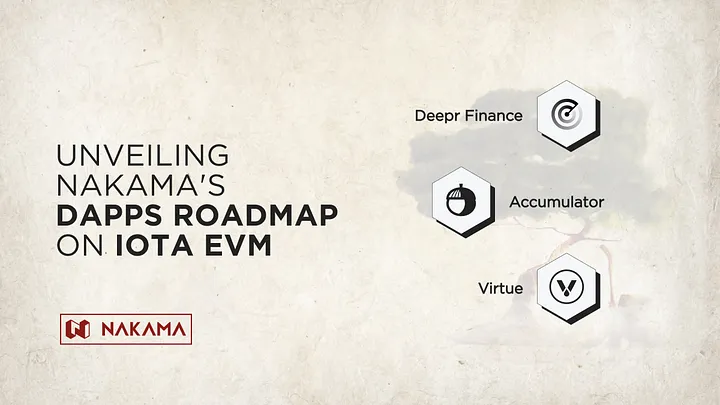
Great news for the Nakama ecosystem! With the successful release of @iota’s #IOTAEVM, we are excited to share the roadmap of our dApps:
medium.com/@NakamaLabs/c08eb…
Comment, like, and repost to win one of 10 Nakama Merch Boxes with a GODAI utility #NFT. Hurry, only a few boxes left! 👀
#IOTA #Web3
169
178
308
10,299